
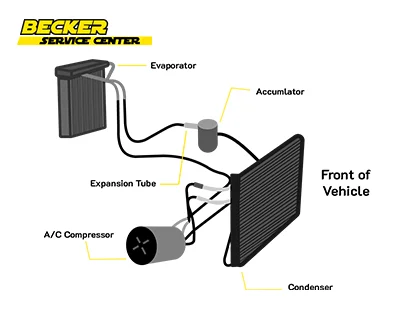
Image Source: beckerservicecenter.com
Why Is My Air Conditioner Not Blowing Air? Common Reasons
Why is your air conditioner not blowing air inside? It usually means there’s a problem with the fan that pushes air, the electrical power, the cooling part freezing up, or how the system gets its instructions from the thermostat. This can stop your whole HVAC system not blowing air and leave your central air not blowing air, giving you no cool air in your home. It’s a common issue, and many things can cause it. Let’s look at why this happens and what you can do about it.
Why Air Doesn’t Flow Well
One main reason your AC unit is not blowing air is simply that the air cannot move through the system the way it should. Think of your system like a giant vacuum cleaner working in reverse. It pulls air in, cools it, and pushes it out. If something blocks the path, the air stops moving.
Clogged Air Filter
This is the most common reason for an AC not blowing air. Your air filter catches dust, dirt, and other tiny bits from the air before it goes into the AC system. This keeps the system clean. But, over time, the filter gets full.
- What happens: When the filter is packed with dirt, air cannot easily pass through it. It’s like trying to breathe through a thick blanket.
- Effect: The blower motor has to work harder to pull air, but it can’t get enough. This means less air, or even no air, comes out of your vents. A clogged air filter AC no air situation is very real and easy to check.
- What to look for: Pull out your air filter. If you can’t see light through it or if it looks gray and fuzzy, it’s clogged.
- Fix: Change the filter. Filters should be changed regularly, usually every 1-3 months, depending on the type of filter and how much you use your AC. A new filter lets air flow freely again.
Blocked Vents or Ducts
The cooled air travels from your AC unit through ducts (air paths) to the vents in your rooms. If these are blocked, air can’t get out.
- What happens: Furniture, curtains, or rugs might be blocking floor or wall vents. Objects might have fallen into vents or ducts. Sometimes, ducts can collapse or get crushed, stopping air.
- Effect: Air backs up in the system. The blower motor might still run, but little to no air comes out the end vents.
- What to look for: Check that all vents in your rooms are open and nothing is sitting on or in front of them. Look for obvious damage to ducts, though many are hidden in walls or attics.
- Fix: Move anything blocking vents. If you suspect a duct problem, this often needs a professional.
Closed Dampers
Dampers are like simple doors in your ductwork. They control which areas of your home get air. If a damper is closed by mistake or isn’t working right, it can stop air from going to a specific room or zone.
- What happens: Dampers are set during installation or maintenance. Sometimes they are adjusted to save energy in empty rooms. If a damper is fully closed for an area you want cooled, you won’t get air there.
- Effect: Airflow is cut off to the part of the home controlled by that damper.
- What to look for: Dampers are usually near the air handler or where main ducts split off. They might have a handle showing if they are open or closed. Look for handles pointing across the duct (closed) versus along the duct (open).
- Fix: Check and open dampers for areas where you need air.
Issues with the Fan or Blower
The fan that pushes the air, called the blower motor, is a key part of your system. If it stops working, no air moves, even if the cooling part is fine. If your AC fan not working, it’s a direct cause of no air.
Blower Motor Not Running
This is a very common reason your AC might be running but not blowing air. The blower motor sits inside the indoor unit (often called the air handler). Its job is to pull air through the filter and coil and then push it out through the ducts. If the blower motor not running, air stops.
- What happens: The motor might fail completely, lose power, or a part it needs to start might be broken. This is why the air handler fan not working is a big problem.
- Effect: The outdoor unit might still be running and making cold air, but there’s no fan to move that air into your home.
- What to look for: Go to your indoor unit. Set your thermostat to COOL and the fan setting to ON (not AUTO). You should hear and feel the blower motor running. If you don’t hear it and the outdoor unit is running, the blower motor is likely the problem.
- Fix: This often needs a professional to diagnose and fix or replace the motor or its parts.
Capacitor Failure
The motor needs a little jolt of electricity to start and run. A part called a capacitor provides this jolt.
- What happens: Capacitors can wear out or fail, especially in hot weather.
- Effect: The blower motor might hum but not start, or it might not do anything at all. It’s a common reason for the AC fan not working.
- What to look for: A bad capacitor often looks swollen or might be leaking. Warning: Capacitors hold electrical charge even when the power is off. Do NOT touch it unless you are trained and the power is completely disconnected and confirmed safe.
- Fix: A technician can test and replace a capacitor fairly quickly and cheaply compared to replacing the motor itself.
Belt Problems (in older systems)
Some older blower motors use a belt to turn the fan.
- What happens: The belt can wear out, become loose, or break.
- Effect: If the belt breaks, the motor spins, but the fan does not.
- What to look for: You might hear squealing sounds before the belt breaks, or you might find a broken belt in the blower compartment.
- Fix: Replace the belt. This can be a DIY job for some, but ensure power is off. Newer systems usually have direct-drive motors without belts.
Motor Overheating or Thermal Limit
Blower motors have a safety feature that turns them off if they get too hot. This is called a thermal limit switch.
- What happens: The motor might overheat if it’s old, has bearing problems, or if airflow is severely blocked (like by a really dirty filter).
- Effect: The motor shuts off to protect itself. It might turn back on after it cools down, only to shut off again later. This leads to the blower motor not running part of the time.
- What to look for: Check if the filter is clean and vents are open. If the motor is hot to the touch (with power off!), this could be the issue.
- Fix: Clearing airflow blockages might fix it. If the motor bearings are worn, it will need professional repair or replacement.
Freezing Issues
Sometimes, the cooling part of your AC system gets too cold and forms ice. This ice can block airflow completely.
Frozen AC Coil
Inside your indoor unit is the evaporator coil. This is where the air from your home gets cooled. If this coil freezes over, it creates a block of ice.
- What happens: The coil gets too cold, often because not enough warm air is passing over it (due to a dirty filter, weak blower, or closed vents) or because the system has low refrigerant. When the coil gets below freezing and moist air hits it, ice forms.
- Effect: As the ice grows, it covers the coil, blocking the path for air. The AC unit might still run, but no air comes out, or only a tiny bit of air comes out the vents because of the Frozen AC coil no air problem.
- What to look for: You might see ice on the pipes near your indoor unit or on the evaporator coil itself. You might also see water leaking from the indoor unit as the ice melts.
- Fix: Turn the AC system OFF at the thermostat, especially the cooling mode. Switch the fan to ON (if it’s working) to help melt the ice faster by blowing warm air over it. It can take several hours for a coil to fully melt. You must then find and fix the cause of the freezing (like changing the filter or calling a technician to check refrigerant levels).
Causes of Freezing
Several things can cause the coil to freeze:
- Low Refrigerant: If the system doesn’t have enough refrigerant (the stuff that cools the air), the pressure drops, and the coil gets too cold, leading to ice. Low refrigerant usually means there’s a leak.
- Airflow Problems: As mentioned, a dirty filter, blocked vents, or a weak blower motor means less warm air passes over the coil. This allows it to get too cold and freeze.
- Dirty Coil: If the coil itself is covered in dirt and grime, it can’t properly transfer heat from the air, leading to temperature problems and potential freezing.
Problems with Power
Your AC system needs power to run the outdoor unit, the indoor blower motor, and the thermostat. If power is cut to the indoor unit or the whole system, it won’t blow air.
AC Circuit Breaker Tripped
Your electrical panel has circuit breakers (or fuses) that protect wiring from too much power draw. If an AC component tries to pull too much electricity, the breaker trips to prevent damage or fire.
- What happens: The breaker for your indoor unit (air handler) or outdoor unit might trip. This cuts power to that part of the system. If the indoor unit’s breaker trips, the blower motor won’t run.
- Effect: The indoor unit is off. No air blows. The outdoor unit might or might not be running depending on which breaker tripped and how the system is wired. An AC circuit breaker tripped is a common electrical issue.
- What to look for: Go to your home’s electrical panel. Look for a breaker that is flipped to the OFF position or is somewhere in the middle. The breaker for the indoor unit is often labeled “Furnace” or “Air Handler” and is usually 15 or 20 amps. The outdoor unit’s breaker is larger, maybe 20-30 amps, and might be outside near the unit or in the main panel.
- Fix: Flip the tripped breaker firmly to the OFF position, then flip it back to the ON position. If it trips again immediately or soon after, there’s a real electrical problem that needs a professional electrician or HVAC technician. Never force a breaker or keep resetting one that keeps tripping.
Blown Fuse
Some older homes or systems use fuses instead of breakers. Like breakers, fuses blow when there’s too much current.
- What happens: The fuse for the indoor or outdoor unit blows, cutting power.
- Effect: Similar to a tripped breaker, power is cut, and the system, or part of it (like the blower), won’t run.
- What to look for: Check your fuse box for a blown fuse (often looks burnt or the metal strip is broken). Some outdoor units have a disconnect box nearby with pull-out fuses.
- Fix: Replace the blown fuse with a new one of the exact same type and rating. If it blows again, call a professional.
Thermostat Power Issues
The thermostat needs power to operate. Some thermostats use batteries, others get power directly from the HVAC system (low voltage).
- What happens: If the thermostat’s batteries are dead, or if the low-voltage wire that powers it is broken or has a problem, the thermostat screen might be blank, or it might not be able to send signals.
- Effect: The thermostat cannot tell the blower motor to turn on, even if the rest of the system is fine. This is part of a Thermostat problem no air scenario.
- What to look for: Check the thermostat display. Is it blank? Does it show a low battery warning? Is the system set correctly (COOL mode, fan set to AUTO or ON, temperature setting below the room temperature)?
- Fix: Change the batteries. Make sure the system switch (usually HEAT/OFF/COOL) and fan switch (AUTO/ON) are set correctly. If it’s a low-voltage issue, a technician is needed.
Wiring Problems
The wires that connect the thermostat to the air handler and outdoor unit carry control signals and low voltage power. Wires can get loose, break, or get chewed by pests.
- What happens: A broken or loose wire can stop the signal from the thermostat from reaching the blower motor or other parts of the system.
- Effect: The system might not start, or only part of it might run. The blower motor is often controlled by a low-voltage wire from the thermostat or control board.
- What to look for: This is hard to check without knowledge of HVAC wiring. Loose wires on the thermostat sub-base or at the control board in the air handler might be visible, but be careful, as higher voltage wires are also present.
- Fix: Wiring issues typically require a professional to safely find and fix.
Control and Signal Issues
The thermostat tells the AC what to do. If the message doesn’t get through, or if the main control center is broken, the system won’t run correctly.
Thermostat Problems
Beyond just power, the thermostat itself can be faulty.
- What happens: The internal parts of the thermostat might be broken, preventing it from accurately reading the temperature or sending the correct command to the blower motor or cooling system. This is a core reason for a Thermostat problem no air situation.
- Effect: Even if set correctly, the thermostat doesn’t trigger the cooling cycle or the fan.
- What to look for: If changing batteries and checking settings doesn’t work, and the screen is on but nothing happens with the AC, the thermostat might be bad. Some thermostats let you force the fan ON; if this doesn’t work, the problem might be elsewhere (like the blower motor or wiring), but the thermostat could still be part of the issue.
- Fix: You can try resetting the thermostat (check the manual). If it’s old or simple, replacing it with a new one is sometimes a fix, but ensure you get a compatible type. If the issue persists, the problem is likely elsewhere in the system.
Control Board Issues
Modern HVAC systems have electronic control boards inside the air handler and sometimes the outdoor unit. These are like the system’s computer.
- What happens: These boards control the sequence of operations: when the blower turns on, when the outdoor unit starts, etc. If the board is bad due to power surges, age, or a defect, it might fail to send the signal to the blower motor.
- Effect: The system acts strangely, or parts of it (like the blower) don’t turn on when they should. The air handler fan not working might be because the control board isn’t telling it to.
- What to look for: There are often indicator lights on the control board that flash codes to show errors. These codes can help a technician diagnose the problem. Do not touch the control board, as high voltage is present.
- Fix: Replacing a control board is a job for a qualified HVAC technician.
Refrigerant Issues
While refrigerant is needed for cooling, problems with it can indirectly cause airflow issues, especially by leading to freezing.
Low Refrigerant
As mentioned under freezing, low refrigerant is usually caused by a leak.
- What happens: With too little refrigerant, the system can’t absorb enough heat from the air, and the pressure drops too low in the evaporator coil, causing it to get too cold.
- Effect: The coil freezes over, which then blocks airflow, leading to no air coming from the vents. The outdoor unit might still run, but the system isn’t cooling properly, and the airflow stops.
- What to look for: Ice on the indoor coil or copper lines, hissing sounds (from a leak), reduced cooling performance, or the system running for a long time without cooling much.
- Fix: A technician must find and fix the leak, then add the correct amount of refrigerant. This is not something a homeowner can do safely or legally (due to environmental rules).
Other Less Common Issues
A few other things can stop your AC from blowing air.
Condensate Drain Line Clog
Your AC removes moisture from the air as it cools it. This water drips into a pan and drains away through a pipe (the condensate line).
- What happens: Algae, mold, or dirt can clog this drain line.
- Effect: The pan fills up with water. Many systems have a safety float switch in the pan that turns off the system, often including the blower motor, to prevent water damage.
- What to look for: Water pooling around the indoor unit, a full drain pan, or error codes related to the condensate drain.
- Fix: You can try clearing the clog using a wet/dry vacuum at the end of the drain line outside or by pouring vinegar down the line (if you can access where it connects near the indoor unit). Make sure the system is off first. If your system has a safety switch and it was tripped, clearing the clog should allow you to restart the system.
Service Panel Switch Off
Near your indoor air handler unit, there’s often a regular light switch mounted on the wall or on the unit itself. This switch controls power to the air handler.
- What happens: Sometimes this switch is accidentally flipped OFF. It looks just like a regular light switch, so people turn it off thinking it does something else, or maybe someone turned it off for maintenance and forgot to turn it back on.
- Effect: Power is cut to the air handler, so the blower motor won’t run. The outdoor unit might still run depending on the wiring, leading you to think the AC is on but just not blowing air.
- What to look for: Find the indoor air handler unit (often in a closet, attic, or basement). Look on the wall nearby or on the unit itself for a standard light switch.
- Fix: Make sure this switch is in the ON position.
Simple Steps to Check Yourself
Before calling a professional, you can check a few easy things if your central air not blowing air.
- Check the Thermostat:
- Is it on? Is the display working?
- Are the batteries good (if it uses them)?
- Is it set to COOL mode?
- Is the temperature setting lower than the current room temperature?
- Is the FAN setting on AUTO or ON? (Try switching it to ON. If the fan comes on, the issue is likely with the cooling cycle, possibly freezing or refrigerant). If it doesn’t come on, the problem is with the blower fan/motor, power to the air handler, or the thermostat itself.
- Check the Air Filter:
- Find your air filter (usually at the air handler or sometimes behind a return vent grill).
- Pull it out and look at it. Is it dirty?
- If it’s clogged, replace it. Make sure you put the new one in facing the right direction (look for arrows showing airflow).
- Check Circuit Breakers/Fuses:
- Go to your electrical panel.
- Look for breakers labeled for your Furnace, Air Handler, or AC (there might be two – one for indoors, one for outdoors).
- Are any tripped (in the middle or OFF position)?
- If so, flip them firmly OFF, then back ON.
- If you have fuses, check those and replace any blown ones with the correct size.
- Check Vents and Dampers:
- Walk around your house. Are all the supply vents open?
- Is anything blocking the vents (furniture, curtains)?
- If you know where your dampers are, check that they are open for the areas you want cooled.
- Check for Ice:
- Turn the system OFF at the thermostat, especially the cooling mode.
- If safe and accessible, look at the large copper pipe and the indoor coil (inside the air handler). Do you see ice?
- If yes, leave the system OFF until the ice fully melts. You can turn the FAN to ON to help it melt faster. Then, address the cause (like changing the filter) before trying to run the AC again.
- Check the Service Switch:
- Find your indoor air handler unit.
- Look for a light switch on the wall nearby or on the unit. Is it ON? If not, flip it ON.
| Problem | What to Look For | Can I Fix It? (Often) | When to Call a Pro |
|---|---|---|---|
| Clogged Air Filter | Dirty, blocked filter | Yes (Replace filter) | If problem persists |
| Blocked Vents/Ducts | Furniture on vents, damaged ducts | Yes (Clear vents) | For duct repair |
| Closed Dampers | Damper handles in closed position | Yes (Open dampers) | If dampers are broken |
| Blower Motor Not Running | No sound/feel of indoor fan, outdoor unit might run | No | Yes (Motor, cap, belt) |
| Capacitor Failure | Blower hums but doesn’t start, or nothing happens | No | Yes |
| Belt Problems | Broken or loose belt (older systems) | Maybe | If unsure or complex |
| Motor Overheating | Motor hot, stops and starts | No | Yes |
| Frozen AC Coil | Ice on indoor coil/pipes, poor cooling | No (Need to find cause) | Yes (Low refrigerant, coil cleaning) |
| AC Circuit Breaker Tripped | Breaker in middle or OFF position | Yes (Reset once) | If trips again |
| Blown Fuse | Burnt or broken fuse | Yes (Replace once) | If blows again |
| Thermostat Power/Settings | Blank display, low battery, wrong mode/temp | Yes (Batt, settings) | If display fine but no action |
| Wiring Problems | Loose or damaged wires | No | Yes |
| Thermostat Faulty | Thermostat doesn’t control system | Maybe (Replace) | If replacement doesn’t work |
| Control Board Issues | Error lights, strange behavior, specific parts don’t run | No | Yes |
| Low Refrigerant | Ice, poor cooling, hissing sounds | No | Yes |
| Condensate Drain Clog | Water leak near unit, full pan | Maybe (Clear simple clog) | If clog is complex or inaccessible |
| Service Panel Switch Off | Light switch near air handler is OFF | Yes (Turn ON) | If switch is ON but no power |
When to Call a Professional
While you can check the easy things, many issues that cause an AC not blowing air require the skills, tools, and knowledge of a trained HVAC technician.
Call a pro if:
- You reset a breaker or replace a fuse, and it trips/blows again.
- You suspect the blower motor is faulty (humming, noisy, or not running when it should).
- You see ice on the coil, and simply changing the filter doesn’t solve it (likely a refrigerant or deeper airflow issue).
- You suspect a refrigerant leak (hissing sounds, poor cooling along with no air).
- You think there’s a problem with the thermostat, wiring, or control board.
- You can’t find the cause after checking the simple things.
- You are not comfortable working near electrical components or inside the AC unit.
Trying to fix complex problems yourself can be dangerous and might cause more damage to your system.
Preventing Airflow Problems
Good maintenance can help prevent most reasons your AC stops blowing air.
- Change Your Air Filter Regularly: This is the single most important thing you can do. Follow the instructions on the filter package (usually monthly for cheap filters, every 3-6 months for better ones).
- Keep Vents Clear: Make sure furniture, curtains, and other items are not blocking airflow from your supply or return vents.
- Consider Regular Professional Tune-ups: A technician can clean the coil, check refrigerant levels, inspect the blower motor, check electrical connections, and clear the condensate drain line. This can catch small problems before they stop your airflow.
- Listen to Your System: Pay attention to strange noises from the air handler or outdoor unit.
Wrapping Up
An air conditioner not blowing air is frustrating, especially when it’s hot outside. The cause is usually related to airflow being blocked, a problem with the fan motor, an electrical issue cutting power, or a control problem from the thermostat or circuit board.
Start by checking the simple, easy things yourself: the thermostat settings, the air filter, circuit breakers, vents, and the service switch. These are common culprits for a central air not blowing air situation. If these checks don’t fix the problem, or if you find issues like a frozen coil, a non-running blower motor, or tripped breakers that won’t reset, it’s time to call a qualified HVAC technician. They have the tools and knowledge to safely diagnose and fix the problem, getting your AC back to blowing cool air into your home.
Frequently Asked Questions
h4 What does it mean if my AC unit is running outside, but no air is coming inside?
If the outdoor unit is running (making noise, fan is spinning), but no air comes from your vents inside, it almost always means the indoor blower motor (the fan that pushes air through your house) is not working. This could be due to a tripped breaker for the indoor unit, a faulty motor or its capacitor, a wiring issue, or a problem with the control board or thermostat not telling the blower to turn on.
h4 Why did my AC suddenly stop blowing air?
A sudden stop often points to an electrical issue, like a tripped circuit breaker for the indoor unit or a safety switch (like a condensate drain float switch) shutting off the system. It could also be a sudden motor failure or capacitor failure in the blower.
h4 Can a dirty filter really stop the air completely?
Yes, a severely clogged air filter can restrict airflow so much that it feels like no air is coming out. It also makes the system work too hard and can lead to the coil freezing over, which also completely blocks airflow.
h4 My AC is blowing warm air instead of cold air. Is that the same problem?
No, if your AC is blowing warm air, the blower motor is working, so air is moving. The problem is with the cooling process itself. This is often caused by low refrigerant, a problem with the outdoor unit (condenser), or a blocked condenser coil. This is different from the AC not blowing air at all.
h4 How much does it cost to fix an AC not blowing air?
The cost varies greatly depending on the cause. Replacing a dirty filter is cheap. Resetting a breaker is free. Replacing a capacitor might cost a few hundred dollars. Replacing a blower motor or fixing a refrigerant leak can cost several hundred to over a thousand dollars. Getting a professional diagnosis is the first step to knowing the cost.
h4 Can I run my AC with a frozen coil?
No, you should turn the cooling OFF immediately if you see ice on the coil or pipes. Running the system with a frozen coil can damage the compressor (a very expensive part). Turn the cooling off and let the ice melt completely (it can take many hours) before investigating the cause and turning the system back on. Run the fan (if it works) to speed up melting.
h4 Where is the air handler unit usually located?
The indoor air handler unit, which contains the blower motor and evaporator coil, is often located in a closet, basement, attic, or sometimes a garage. It’s connected to your home’s ductwork.