
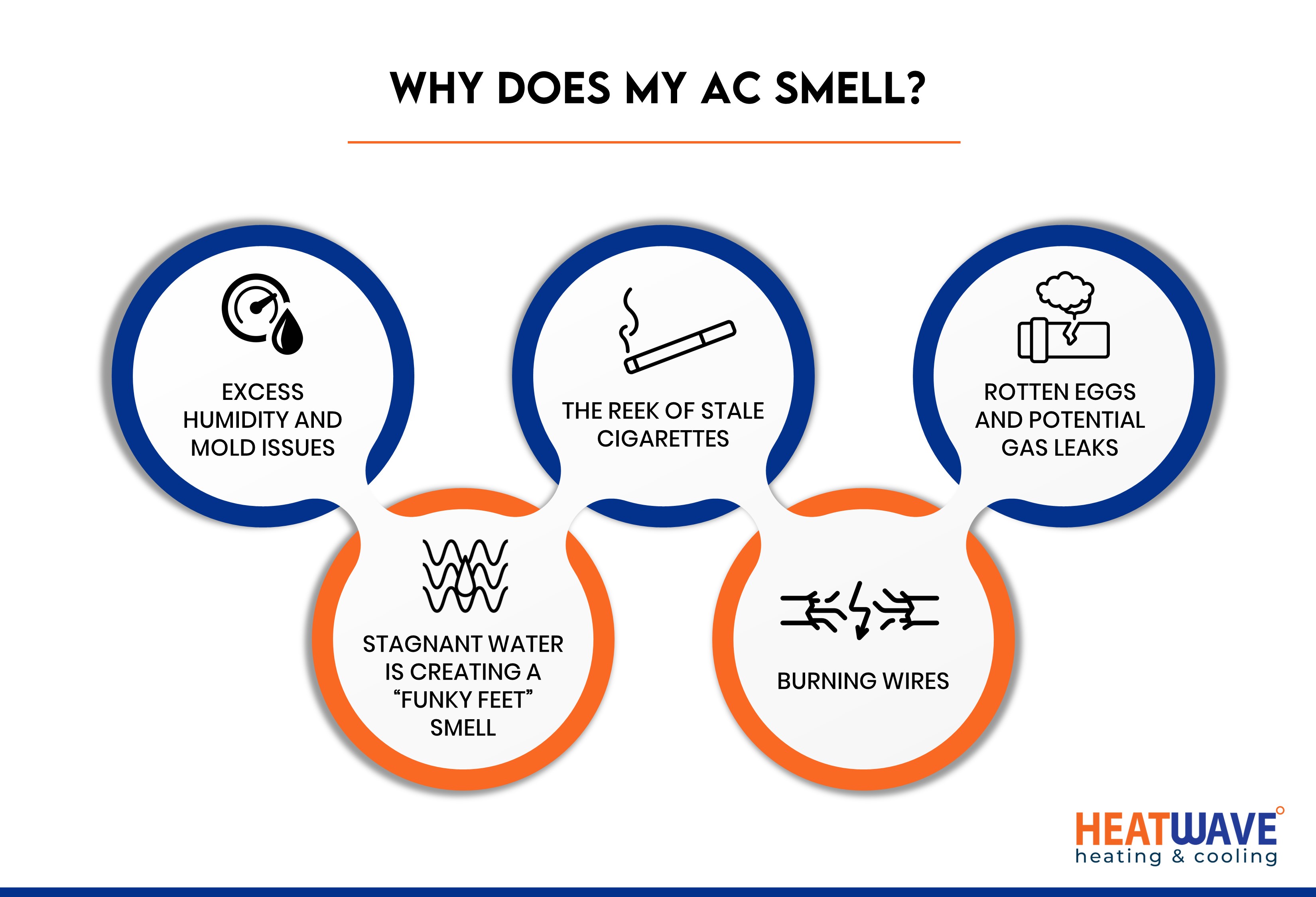
Image Source: heatwaveheatingandcooling.com
Solved: Why Does My Air Conditioner Smell Sweet
When your air conditioner blows a sweet smell, it can be confusing or even worrying. The quick answer is that this smell can come from a few places. It might be a problem with the AC coolant (called refrigerant), mold or bacteria growing inside the unit, a blocked drain line, or even something else nearby getting pulled into the system. Is AC refrigerant leak dangerous? Yes, a leak of AC refrigerant can be dangerous to your health if you breathe it in, especially in large amounts or in a closed space. This is why finding the cause of a sweet smell quickly is important.
Air conditioners work hard to keep your home cool and comfortable. They pull in air, cool it down, take out moisture, and send the cool air back into your rooms. Most times, they just make your home feel nice and cool. But sometimes, they can make a strange smell. A sweet smell is one of the less common ones, and it’s worth checking out. Let’s look into the different things that can make your AC smell sweet.
Why Your AC Might Smell Sweet
A sweet smell coming from your AC unit is not normal. It usually points to something that needs attention. It could be a simple fix or a sign of a more serious issue like an AC refrigerant leak smell. Knowing the possible reasons helps you figure out what to do next.
Here are the main reasons your AC might smell sweet:
- A leak of the cooling liquid (refrigerant).
- Mold or other tiny living things growing in the unit.
- A blockage in the pipe that drains water away.
- A dirty air filter.
- Something outside the AC causing the smell.
We will look at each of these in more detail.
Checking on Coolant Leaks
The main job of your AC is to move heat out of your house using a special substance called refrigerant. This liquid or gas flows through coils inside and outside your home. As it changes state, it pulls heat from the air inside your home and releases it outside.
Normally, this refrigerant stays locked inside the AC system. It should never run out or leak. If your AC system was installed correctly and is not damaged, the refrigerant level should stay the same for years.
However, sometimes leaks happen. Small cracks or holes can form in the coils or pipes. When this happens, the refrigerant can escape.
What Leaking Coolant Might Smell Like
Different types of refrigerants have been used over the years. Older AC units might use a type called R-22. Newer units often use R-410A. The smell can depend on the type of refrigerant.
Some people say that leaking refrigerant has a sweet or sickly-sweet chemical smell. It might also be described as smelling like something artificial or slightly chemical. This is often the air conditioner chemical smell people notice when there’s a leak.
It’s important to know that not everyone can smell refrigerant leaks. Some people might not notice any smell at all, even if there’s a leak. Or the smell might be very faint. If you do notice a sweet, chemical, or unusual smell near your indoor AC unit or outdoor unit, it could be an AC refrigerant leak smell.
Why a Coolant Leak is a Problem
A refrigerant leak is more than just a bad smell. It’s a serious issue for several reasons:
- Poor Cooling: When refrigerant leaks, the AC system doesn’t have enough of it to move heat properly. This means your AC won’t cool your home well. It might blow slightly cool air or even warm air.
- System Damage: Running an AC with low refrigerant puts a lot of stress on the compressor, which is like the heart of the AC system. This can cause the compressor to fail, leading to very expensive repairs.
- Environmental Harm: Refrigerants, especially older types like R-22, can harm the Earth’s atmosphere if they escape.
- Health Risks: This is the big one related to the smell. Is AC refrigerant leak dangerous? Yes, breathing in refrigerant fumes can be harmful. In small amounts in a well-aired space, it might not cause much harm, but in a closed room, the fumes can build up. Breathing in high amounts can cause dizziness, headache, nausea, or even more serious health problems because the refrigerant can push oxygen out of the air. This is why you should not stay in a room with a strong AC refrigerant leak smell.
If you suspect an AC refrigerant leak smell, turn off your AC system right away. Open windows to air out the area if it’s safe to do so. Do not try to find or fix the leak yourself. Refrigerant is a chemical that needs to be handled by trained professionals. They have special tools to find leaks and fix them safely.
Signs of a Refrigerant Leak
Besides the sweet smell or air conditioner chemical smell, look for these signs:
- AC not cooling well: Your home feels warmer than usual.
- Ice on the coils: You might see ice or frost building up on the copper lines of the indoor evaporator coil. This happens because the coil gets too cold without enough refrigerant flowing through it.
- Higher electric bills: The AC runs longer trying to cool your home, using more power.
- Hissing or bubbling sounds: These sounds can sometimes happen as refrigerant escapes.
If you notice any of these signs along with a sweet smell, call an HVAC technician right away.
Why Mold Likes Your AC
Your air conditioner doesn’t just cool air; it also takes water out of the air. This is why you see water dripping from AC units on hot, sticky days. Inside your indoor unit, on the evaporator coil, water collects as the warm, moist air touches the cold surface.
This water usually collects in a tray called the drain pan and then flows out through a drain line to the outside.
However, where there is water, there is a chance for mold, mildew, and bacteria to grow. The inside of your AC unit, especially the evaporator coil and the drain pan, is dark, damp, and can collect dust and dirt (food for mold). This makes it a perfect place for tiny organisms to grow.
What Mold in Air Conditioner Might Smell Like
Mold often causes a musty or damp smell. Think of the smell of wet basement or old, wet laundry. This is the common musty smell from mold in air conditioner parts.
But sometimes, the specific type of mold or bacteria growing can produce different smells. While a strong sweet smell is less common for plain mold, some types of bacteria or a mix of growth in the drain pan or coil can produce an odor that some people might describe as faintly sweet, sour, or just generally unpleasant and “off.” This could explain a musty sweet AC smell. The evaporator coil smell is often linked to this growth because it’s the primary place where condensation forms.
Where Mold Grows
Mold can grow in several places in your AC system:
- Evaporator Coil: The cold fins of this coil collect water. Dust and debris can stick to the wet surface, helping mold grow. This leads to evaporator coil smell.
- Drain Pan: The tray under the evaporator coil catches the water. If water sits here for a long time, mold and bacteria can grow. This can cause smells from a clogged AC drain pan or just growth in the pan itself.
- Drain Line: The pipe that carries water away from the drain pan can also get clogged with slime, algae, or mold. This causes water to back up and can create bad smells, known as AC drain line smell.
- Ductwork: If mold growth is severe or the ductwork is also damp, mold can spread into the air ducts, sending smells throughout your home.
- Dirty Air Filter AC: A dirty air filter traps dust, pet hair, and other particles. If the filter gets damp (due to high humidity or issues with the coil), mold can start growing on the filter itself, adding to smells.
Fixing Mold Smells
Cleaning mold from an AC system can be tricky. Small amounts on accessible parts might be cleaned with special AC coil cleaners or a mix of bleach and water (be very careful and follow safety rules, especially with bleach fumes). However, getting to the evaporator coil or cleaning inside the ductwork is difficult and sometimes harmful without the right tools and safety gear.
If you suspect mold is causing the musty sweet AC smell or evaporator coil smell:
- Check the Air Filter: See if it’s dirty or looks moldy. Change it if needed. A dirty air filter AC is a common problem.
- Look in the Drain Pan: Is there standing water? Does it look slimy or dirty? This suggests a clogged AC drain pan or drain line issue.
- Consider a Professional Cleaning: HVAC technicians can perform deep cleaning of your AC system, including coils and drain lines, using special products to kill mold and bacteria.
Preventing mold involves keeping the system clean and ensuring proper drainage. Regular filter changes are key, as is making sure the drain line isn’t clogged.
Grasping Drain Line Issues
As mentioned, your AC creates water. Lots of it on humid days. This water needs a clear path to drain away. The path is usually from the drain pan, through a drain line (a PVC pipe), and out of your house or into a floor drain.
What Happens When the Drain Clogs
Over time, the drain line can get clogged. Slime, algae, mold, dirt, and bugs can build up inside the pipe. When the pipe clogs, the water has nowhere to go.
The drain pan starts to fill up with water.
- If the pan fills completely, water can overflow, causing leaks and potentially damaging walls, ceilings, or floors.
- The standing water in the pan becomes a breeding ground for bacteria and mold.
This standing, stagnant water and the growth within it often cause a bad smell.
What a Clogged Drain Smells Like
The smell from a clogged AC drain pan or AC drain line smell is usually described as musty, swampy, or like rotten eggs (due to certain types of bacteria).
Could this smell be perceived as sweet? Possibly, though it’s less common than the musty or foul odors. Some types of bacteria can produce different smells depending on what they are feeding on. If you have a musty sweet AC smell that seems related to water buildup, the drain system is a likely suspect.
Fixing Clogged Drains
Clearing a clogged AC drain line is often something a homeowner can attempt, but it requires care.
- Turn off the AC: Make sure the power to the unit (both inside and outside) is off.
- Find the Drain Line: The drain line is usually a white or gray PVC pipe sticking out of your indoor AC unit or near your outdoor unit (check your manual).
- Check for Water: Look in the drain pan inside. Is it full?
- Clear the Clog: You can try pouring a cup of white vinegar down the end of the drain line (the end sticking out outside or where it connects near the indoor unit). Vinegar helps kill algae and slime. Some people use a stiff brush or a drain snake designed for small pipes. Never use harsh chemicals like drain cleaner, as they can damage the pipe or your system.
- Flush with Water: After letting the vinegar sit for 30 minutes or so, carefully pour water down the pipe (or down the opening near the indoor unit if you can access it safely) to see if it flows freely.
If the clog is stubborn, the water backs up again, or you’re not comfortable doing this, call an HVAC professional. A severe clog might need special tools to clear.
The Role of a Dirty Air Filter
Your air filter is the first line of defense for your AC system. It catches dust, dirt, pollen, pet hair, and other airborne particles before they can reach the coils and other parts of the system.
How a Dirty Filter Can Cause Smells
When an air filter gets too full of dirt, it stops airflow. This makes your AC work harder and can cause other problems.
A dirty filter can also trap moisture. If the air in your home is very humid, or if there’s a slight issue with condensation on the coil, the filter can get damp.
- Trapped Particles & Moisture: The combination of trapped dust and moisture can create a breeding ground for bacteria and mold right on the filter itself.
- Circulating Odors: A dirty filter can also trap smells from the house or outside. These smells might become more noticeable or change character as air is forced through the dirty, potentially damp filter.
While a dirty air filter AC is more commonly associated with a dusty, stale, or musty smell, it’s not impossible for trapped substances or specific bacterial growth on a damp filter to contribute to an “off” smell that someone might perceive as slightly sweet or unusual.
Fixing a Dirty Filter
This is the easiest fix!
- Locate the Filter: It’s usually in the air return vent in a wall or ceiling, or in the air handler unit itself.
- Check the Filter: Is it covered in a thick layer of dust and grime? Hold it up to the light – can you see light through it? If not, it’s dirty.
- Replace the Filter: Buy a new filter of the correct size and type. Slide out the old one and put the new one in, making sure the arrow on the filter points in the direction of the airflow (usually towards the air handler).
Changing your air filter regularly (every 1-3 months, depending on the filter type and how much you use your AC) is one of the most important and simplest things you can do for your AC’s health and to prevent many smells.
Outside Sources of Sweet Smells
Sometimes, the sweet smell isn’t actually coming from a problem inside your AC system itself, but from something outside that the AC is pulling in. Your AC system draws in air from outside (for fresh air intake in some systems) or recirculates air from inside your home, which contains air pulled in from outside around windows and doors.
What Kind of Outside Things?
Think about what might be near your outdoor unit’s intake or near open windows.
- Plants or Flowers: Some plants have very sweet-smelling flowers. If they are close to the AC intake or your home, the smell can be pulled in.
- Cleaning Products or Spills: If someone cleaned something with a strong sweet smell (like certain floor cleaners or disinfectants) near an air intake, the smell could get drawn in. A spill of something sweet, like soda or juice, near the outdoor unit or an intake could also cause this.
- Plumbing Vents: Less common, but plumbing vents on your roof or near your home can sometimes release sewer gas. While usually smelling foul, certain conditions or types of bacteria in drains can sometimes produce smells that are described oddly, though typically not sweet.
Maple Syrup Smell From AC
A specific, less common sweet smell reported by some people is a maple syrup smell from AC. This is a peculiar smell. Possible causes explored online often link it to:
- Certain types of bacteria growing in damp places (like the drain pan or coil), although this is not a widely confirmed cause for AC systems specifically.
- Something external, like a spill or product used nearby.
- In rare cases, some people link it to furnace heat exchangers, but your question is about the AC.
- Even rarer theories involve certain building materials or pest issues, but these are less likely to be directly related to the AC running.
If you notice a distinct maple syrup smell from AC, first check for any recent spills or strong smells near your AC unit or air vents. If you can’t find an external source and the smell continues, it’s best to have an HVAC technician investigate. While not as commonly linked to dangerous issues as a chemical sweet smell (refrigerant), any unusual smell from your AC warrants checking.
Summarizing Sweet Smells and Their Causes
Let’s put the main possibilities for a sweet smell from your AC into a simple table.
| Smell Description | Possible Causes | What to Look For | What to Do | Seriousness Level |
|---|---|---|---|---|
| Sweet, Chemical, Artificial | Refrigerant Leak (AC refrigerant leak smell) | Poor cooling, ice on coils, hissing sound, higher bills | Turn off AC, call HVAC pro immediately. | High (Health/System) |
| Musty Sweet AC Smell, Slightly Sweet & Damp | Mold/Bacteria Growth (mold in air conditioner) | Visible mold, slimy drain pan/line, evaporator coil smell, general musty odor. | Check/change filter, clean visible mold (carefully), call pro for deep cleaning. | Medium (Health/Air Quality) |
| Musty, Swampy, Possibly “Off” or Faintly Sweetish | Clogged Drain Pan/Line (clogged AC drain pan, AC drain line smell) | Standing water in drain pan, water overflowing, gurgling sounds in drain line. | Turn off AC, try clearing drain line (vinegar), call pro if stubborn or unsure. | Medium (Water Damage/Mold) |
| Dusty, Stale, Possibly Faint Sweet Note | Dirty Air Filter (dirty air filter AC) | Filter looks clogged with dirt. | Check and change the air filter. | Low (Efficiency/Airflow) |
| Specific Sweet Smell (e.g., Maple Syrup smell from AC) | External Source or Less Common Issue | Spills near unit/vents, strong smells outside, new products used. | Look for external source. If smell persists, call HVAC pro. | Varies (Usually Low/Medium) |
This table helps quickly link the smell you notice to the potential problem.
Taking Steps to Find the Source
If you notice a sweet smell, here are some steps you can take safely:
Step 1: Turn Off Your AC
First, turn off your air conditioner at the thermostat. If you suspect a refrigerant leak (sweet, chemical smell), turn off the power switch near the indoor unit and outdoor unit as well, just to be safe.
Step 2: Smell Around Different Parts
Try to figure out where the smell is strongest.
- Does it come from the vents when the fan runs (even if cooling is off)?
- Is it stronger near the indoor unit (air handler)?
- Is it stronger near the outdoor unit?
- Is it stronger near a specific vent or return vent?
This helps narrow down the problem area.
Step 3: Check Easy Things
With the power off, you can check a few things:
- Air Filter: Look at the air filter. Is it dirty? Change it if it is.
- Drain Pan: If you can safely access the drain pan under the indoor unit, look for standing water or slime.
- Area Around Unit: Look and smell around your indoor and outdoor units for any spills or strong smells from outside.
Step 4: Note Other Symptoms
Think about how well your AC has been cooling.
- Is your home as cool as it should be?
- Have you noticed any water leaks near the indoor unit?
- Have you seen any ice on the pipes near the indoor unit?
- Have your energy bills gone up for no clear reason?
Combine the smell with these other signs. For example, a sweet, chemical smell plus poor cooling and ice is a strong sign of a refrigerant leak. A musty sweet AC smell plus standing water in the drain pan points to a drain issue or mold.
Step 5: Decide if You Need a Pro
Based on what you find and the type of smell, decide if you need to call an HVAC technician.
- Call a Pro Immediately if: You smell a strong sweet or chemical odor, your AC is not cooling well, you see ice on the pipes, or you have any reason to suspect an AC refrigerant leak smell. Remember, is AC refrigerant leak dangerous? Yes, it can be.
- Call a Pro Soon if: You see standing water in the drain pan, you suspect mold growth you can’t easily clean, the smell is strong and doesn’t go away after changing the filter, or you just can’t figure out the source.
- You Might Handle it Yourself if: The smell is faint and goes away after changing a very dirty air filter AC, and there are no other symptoms. Or if you successfully clear a minor drain clog yourself (but be prepared to call a pro if it comes back).
When to Call an HVAC Professional
Some AC problems are simple fixes. Changing a filter or carefully pouring vinegar down a drain line might be okay for a homeowner.
However, many problems that cause a sweet smell require professional help.
- Refrigerant Leaks: Fixing a refrigerant leak requires special tools to find the leak, recover the old refrigerant (which is illegal to release into the air), repair the leak (which might involve welding or replacing parts), and add the correct type and amount of new refrigerant. This is not a DIY job and should only be done by certified technicians. Trying to “top off” refrigerant without fixing the leak is a waste of money and bad for the environment and your system.
- Major Mold Growth: While small surface mold might be tackled with care, extensive mold inside the air handler, on the evaporator coil, or in the ductwork needs professional cleaning. HVAC pros have specialized equipment and cleaning agents to remove mold safely and effectively, improving your home’s air quality.
- Stubborn Drain Clogs: If you can’t clear the drain line yourself, a pro has stronger tools like drain snakes or even vacuum systems to remove the blockage without damaging the pipe.
- Diagnosing Complex Issues: If the smell isn’t clearly from a dirty filter or obvious drain clog, a technician can perform a full inspection of your system to find the exact cause, whether it’s an evaporator coil smell from hidden mold, a subtle AC drain line smell, or something else entirely.
Choosing to call a professional ensures the problem is found correctly, fixed safely, and that your system runs as it should. It can also prevent more damage down the line.
Preventing Future Smells
Once you’ve figured out and solved the sweet smell problem, you can take steps to prevent it from coming back.
- Change Your Air Filter Regularly: This is the easiest and most important step. A clean filter helps airflow, keeps the system clean, and reduces the chance of smells developing on the filter itself. Aim for every 1-3 months, depending on the filter type and how much your AC runs.
- Schedule Annual Maintenance: Have an HVAC technician inspect and clean your AC system once a year, usually before the cooling season starts. They will clean the coils, check the drain line, inspect for leaks, and make sure everything is working correctly. This helps catch small problems (like minor clogs or potential mold growth spots) before they become big, smelly ones.
- Keep the Area Around Units Clean: Make sure the outdoor unit is clear of plants, leaves, and debris. Inside, keep the area around the indoor unit and return vents clean and free of stored items that could block airflow or introduce smells.
- Address Humidity: If your home is very humid, this can make mold growth more likely in the AC. Using a dehumidifier can help reduce overall moisture in the air.
- Clear Drain Line Proactively: Some homeowners pour a cup of white vinegar down their AC drain line every few months as a simple way to help prevent clogs from forming.
By taking these steps, you can keep your AC running smoothly, smelling fresh, and cooling your home well for a long time.
Frequently Asked Questions (FAQ)
Here are some common questions people ask about AC smells:
Is a sweet smell from my AC always a refrigerant leak?
No, while a sweet chemical smell can be a sign of a refrigerant leak (AC refrigerant leak smell), other things like mold growth (musty sweet AC smell), standing water in the drain pan (clogged AC drain pan), or even outside smells can cause a sweet or sweetish odor. It’s important to consider all possibilities and other symptoms.
Can mold in my AC make me sick?
Yes, mold in air conditioner systems can affect indoor air quality. Breathing in mold spores can cause allergic reactions, asthma problems, headaches, and other respiratory issues, especially for people who are sensitive to mold or have existing health problems.
What is AC refrigerant and is it dangerous?
AC refrigerant is a special chemical compound that absorbs and releases heat, allowing your air conditioner to cool your home. Is AC refrigerant leak dangerous? Yes, breathing in concentrated refrigerant fumes can be harmful, causing dizziness, nausea, and potentially more serious health effects by reducing oxygen in the air. Leaks also harm the environment and your AC system.
Why does my AC drain pan fill with water?
The drain pan collects condensation that forms on the cold evaporator coil. It fills with water when the drain line connected to it gets clogged (AC drain line smell, clogged AC drain pan). This clog stops the water from flowing away properly.
How often should I change my AC filter?
Most experts recommend changing standard air filters every 1-3 months. If you have pets, allergies, or live in a dusty area, you may need to change it more often. A dirty air filter AC restricts airflow and can cause problems, including smells.
Can I pour bleach down my AC drain line?
While some people use a small amount of diluted bleach, white vinegar is generally safer and recommended for clearing minor clogs caused by algae and slime. Bleach fumes are strong and can be harmful in enclosed spaces, and it can potentially damage some drain line materials if not used correctly. If vinegar doesn’t work, it’s best to call a professional.
My AC smells like maple syrup, what does that mean?
A maple syrup smell from AC is unusual. It is less commonly linked to standard AC problems like refrigerant leaks or mold. It might be caused by an external source like a spill or product used near the unit or vents. If you can’t find an obvious external cause and the smell continues, have an HVAC technician check your system.
Can a dirty air filter cause other problems besides smells?
Yes, a dirty air filter AC restricts airflow. This makes your AC work harder, which can increase energy bills, reduce cooling efficiency, and even cause the evaporator coil to freeze up. Regular filter changes are crucial for the health of your system.
By understanding the possible reasons behind a sweet AC smell and knowing when to check things yourself or call a professional, you can quickly solve the problem and keep your home’s air clean and comfortable.