
Smelling gas near your air conditioner is a serious concern. It means something is wrong. You might smell natural gas, propane, or something else that just smells like gas. A gas smell from your air conditioner can come from different places. It could be a leak of actual gas (like natural gas or propane), a refrigerant leak, something burning inside the unit, or even sewer gas coming through the vents. Knowing what the smell is and where it’s coming from is key to fixing it safely.
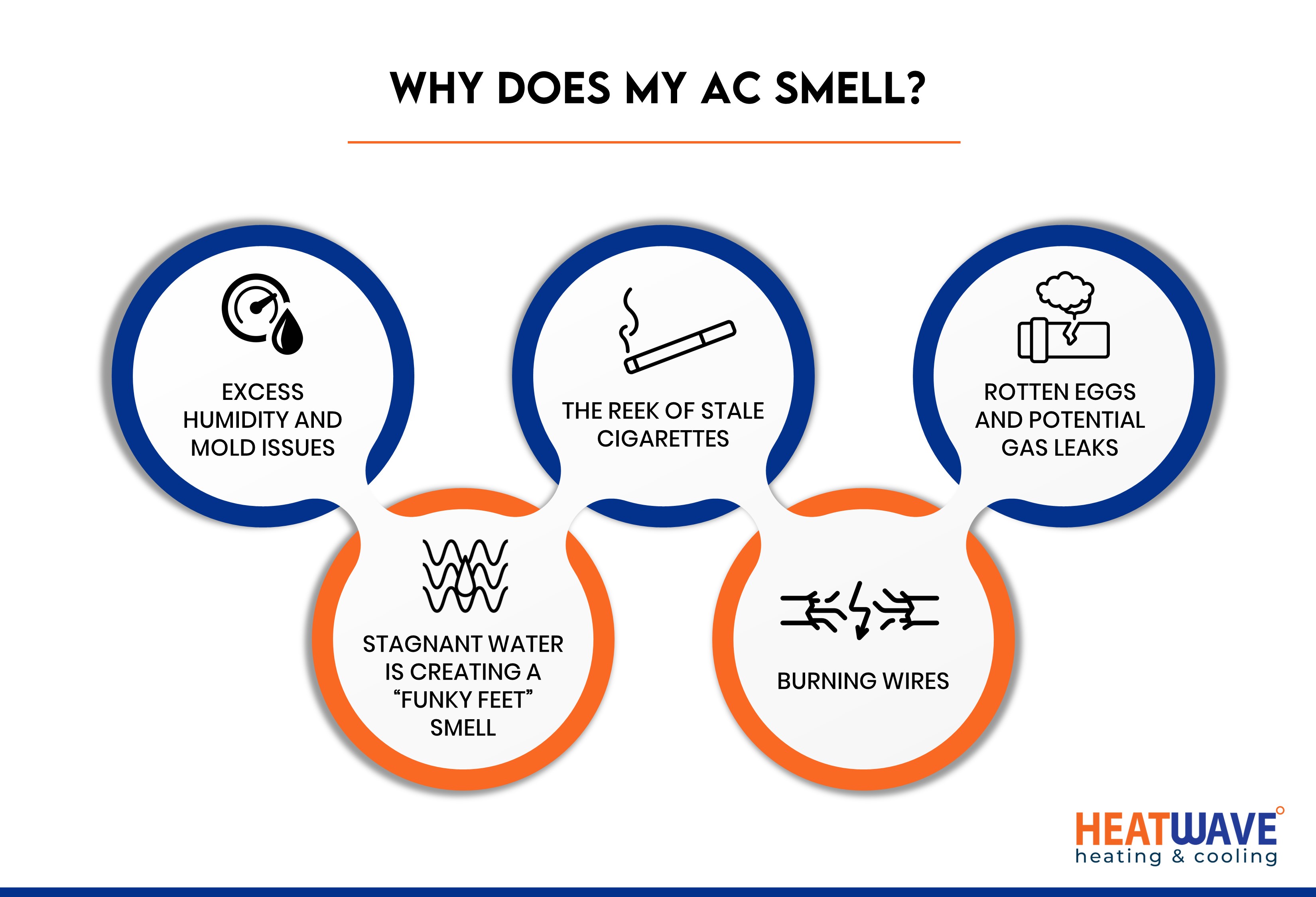
Image Source: heatwaveheatingandcooling.com
Recognizing Different Smells
Not all “gas” smells are the same. What you smell gives clues about the problem.
- Natural Gas or Propane: Utility companies add a strong smell like rotten eggs or sulfur to natural gas and propane. This is a safety measure. Natural gas and propane have no smell on their own. If you smell this rotten egg or sulfur odor, think of it as a gas alarm. This is the most urgent smell.
- Rotten Eggs/Sulfur (not utility gas): This could be sewer gas. Sewer gas also smells like rotten eggs because it contains hydrogen sulfide. This smell can enter your home through drains or vent pipes and get pulled into the AC system.
- Chemical or Sweet Smell: This might be a refrigerant leak. Refrigerant is the stuff that cools the air. It doesn’t smell like natural gas. It often has a chemical or slightly sweet odor, though some types have no smell.
- Burning Smell: This smell is like burning plastic, electrical wires, or rubber. It points to electrical problems inside the AC unit or furnace. This is also serious and can lead to a fire.
- Musty or Moldy Smell: This is usually mold or mildew in the AC system or ducts. It doesn’t smell like gas, but it’s a common AC smell.
This article looks closely at why your air conditioner might smell like gas. We will cover the causes and what to do.
Deciphering Why Your AC Might Smell Like Gas
A gas smell coming from your air vents or your AC unit is alarming. It needs your attention right away. There are several possible reasons for a gas smell from vents. Some are very dangerous, like a natural gas leak air conditioner problem. Others are less dangerous but still need fixing, like a sulfur smell AC unit from sewer gas.
We will break down the main causes. This helps you figure out what might be going on.
Actual Natural Gas or Propane Leaks
This is the most serious cause. Natural gas and propane are used for heating, stoves, water heaters, and dryers. These systems often share space or vents with your HVAC system.
How Gas Gets into Your AC
Your air conditioner and furnace (which is part of your HVAC system) move air around your house.
- Near Leaks: A gas leak from a furnace, water heater, or gas line near the air handler (the indoor part of your HVAC) can be pulled into the return air vent. The AC fan then blows this gas smell from vents into your home.
- Outdoor Leaks: A leak from an outdoor gas meter, buried gas line, or propane tank near the outdoor AC unit (condenser) can also be drawn into the house, especially if windows or doors are open near the leak. Sometimes, gas from an underground leak can even seep into a basement or crawl space and then get pulled into the air system.
Why It Smells Like Rotten Eggs
As mentioned, natural gas and propane companies add a stinky chemical called mercaptan. Mercaptan smells strongly like rotten eggs or sulfur. This is how you can smell a leak that you can’t see.
Danger of Natural Gas/Propane Leaks
- Fire and Explosion: Natural gas and propane are highly flammable. A spark from turning on a light switch, using a phone, or even the AC unit cycling on could ignite the gas. This can cause a fire or a powerful explosion.
- Health Risks: Breathing in gas can be harmful. It can cause dizziness, headache, nausea, and in high amounts, suffocation because it replaces oxygen in the air.
Immediate Action Steps for Natural Gas/Propane Smell
If you smell the rotten egg/sulfur smell strongly, especially if it seems worse near your AC vents or gas appliances:
- DO NOT use any electrical switches (lights, appliances, phone). A spark can cause an explosion.
- DO NOT use your phone while inside.
- DO NOT try to find the leak yourself.
- Leave Immediately: Get everyone (people and pets) out of the house right away.
- Call for Help: Once you are a safe distance away from the house (use a neighbor’s phone or a cell phone far away):
- Call your gas utility company’s emergency number. This number is often on your gas bill or their website. They have people ready to handle gas emergencies.
- Call 911 or your local fire department. They are trained to handle gas leaks and ensure safety.
- Wait Outside: Do not go back inside until the fire department or gas company says it is safe.
This is the most critical situation when your HVAC smells like gas. Treat any potential gas leak seriously.
Sewer Gas (Hydrogen Sulfide)
Sometimes, the rotten egg smell or sulfur smell AC unit issue is not natural gas, but sewer gas. Sewer gas contains hydrogen sulfide, which also smells strongly like rotten eggs.
How Sewer Gas Enters the AC System
- Dry Drain Traps: Every drain in your house (sinks, tubs, showers, floor drains) has a U-shaped pipe called a trap. This trap holds a little water, creating a seal that stops sewer gas from coming up into your home. If a drain is not used often, the water in the trap can dry out. This breaks the seal, letting sewer gas into your house.
- Vent Pipe Issues: Your home’s plumbing system has vent pipes, usually going through the roof. These pipes let sewer gas escape safely outside and help water drain correctly. If a vent pipe is blocked or damaged, sewer gas can build up or escape in places it shouldn’t, potentially near an air intake.
- Cracked Pipes: A crack in a sewer pipe, especially in a basement or crawl space near the air handler or ductwork, can release sewer gas that gets pulled into the system.
Risks of Sewer Gas
- Health: While usually not explosive like natural gas, high levels of hydrogen sulfide can be harmful. It can cause nausea, headaches, dizziness, and eye/throat irritation. Very high levels can be deadly, but this is rare in a home setting.
- Unpleasant Odor: The smell is very unpleasant and makes your home uncomfortable.
Action Steps for Sewer Gas Smell
If the smell is like rotten eggs but you are confident it’s not natural gas (e.g., you don’t have gas appliances, or the gas company checked and found no leak):
- Check Your Drains: Pour a gallon of water down every drain in your house, especially those in spare bathrooms, laundry rooms, or basement floor drains. This refills the traps.
- Check Toilet Seals: Make sure toilets are flushing correctly and don’t wobble. A bad wax ring seal under a toilet can let sewer gas escape.
- Look for Drain Issues: Check for any visible leaks or smells coming directly from drains or pipes.
- Improve Airflow: Open windows to air out the house.
- Call a Plumber: If refilling traps doesn’t work or you suspect a vent pipe or cracked pipe issue, call a plumber. They can find and fix problems with your plumbing system that are letting sewer gas into your home.
This is a less urgent situation than a natural gas leak air conditioner issue, but it still needs to be addressed for health and comfort.
Electrical Burning Smell
Sometimes, a burning smell from air conditioner vents is mistaken for gas. This smell is more like burning plastic, rubber, or wiring.
Causes of Electrical Smells
- Motor Issues: The fan motor (blower motor) in the indoor unit or the compressor/fan motor in the outdoor unit can overheat. This burns the motor’s insulation.
- Wiring Problems: Loose or damaged wiring, faulty capacitors, or problems with circuit boards can cause electrical components to overheat and burn.
- Overheating Components: Relays, contactors, or transformers in the unit can fail and overheat.
Dangers of Electrical Smells
- Fire Hazard: Electrical problems are a major cause of house fires. Overheating components or faulty wiring can ignite nearby materials.
- Equipment Damage: Ignoring an electrical smell can lead to serious damage to your AC unit, requiring expensive AC unit repair smell fixes.
Immediate Action Steps for Electrical Smell
If you smell burning plastic, rubber, or electrical wiring from your vents:
- Turn off the System: Go to your thermostat and turn the system mode to “Off.” This stops power flow to most components.
- Turn off Power at the Breaker: Find the electrical breaker for your HVAC system in your main electrical panel. Flip it to the “Off” position. This completely cuts power to the unit, which is important if there’s a wiring issue.
- Do NOT Run the Unit: Do not turn the system back on until a professional has checked it.
- Call an HVAC Technician: This requires professional help. An HVAC technician can find the faulty component or wiring and fix it safely. Ignoring an electrical smell can lead to a fire.
This type of burning smell from air conditioner use needs quick action, though it is different from a gas explosion risk.
Refrigerant Leaks
A refrigerant leak AC smell is less common to mistake for natural gas, but some people might describe it vaguely as a “chemical” or “sweet” smell, which could be confused with some gas-like odors.
What is Refrigerant?
Refrigerant is a special chemical fluid or gas that circulates in your AC system. It absorbs heat from inside your home and releases it outside, making your home cool. Common refrigerants include Freon (older R-22, being phased out) and Puron (newer R-410A).
What a Refrigerant Leak Smells Like
- Chemical Smell: Some refrigerants have a distinct chemical smell.
- Sweet Smell: Some describe the smell as slightly sweet.
- Odorless: Some newer refrigerants have very little to no smell. You might only notice a leak because the AC isn’t cooling well.
Dangers of Refrigerant Leaks
- Health: Breathing in large amounts of refrigerant can be dangerous. It can reduce oxygen available for breathing and can cause dizziness, nausea, and coordination problems. In enclosed spaces, it can be deadly.
- Environmental: Some older refrigerants are harmful to the ozone layer.
- System Damage: A low refrigerant level makes the AC system work harder. This can cause the compressor to overheat and fail, which is very expensive to fix.
Action Steps for Refrigerant Leak Smell
If you suspect a refrigerant leak (chemical or sweet smell, poor cooling, or hissing/bubbling noise from the unit):
- Turn off the System: Turn the AC off at the thermostat. Running the system with low refrigerant can damage it.
- Improve Airflow: Open windows to ventilate the area.
- Call an HVAC Technician: Refrigerant leaks require professional repair. An HVAC technician has special tools to find the leak, fix it, and safely add the correct type and amount of refrigerant to your system. It’s illegal for people without proper certification to handle refrigerants.
This is not a fire/explosion risk like natural gas, but a refrigerant leak AC smell still points to a problem that needs professional attention quickly to protect your health and your AC unit.
Other Potential Odors
While the above are the most common “gas-like” smells, other things can cause strange odors from your vents.
- Dead Animals: Small animals or insects can get into ductwork and die. As they decay, they create strong, unpleasant odors that can be pulled into the air system. This smell is usually more clearly decomposition than gas, but in some stages, it might be described oddly.
- Mold or Mildew: As mentioned, mold in the ducts or air handler smells musty, not like gas. But a very severe or hidden mold problem might produce unusual odors.
- Stagnant Water: Water pooled in the drain pan (which collects condensation) can grow mold, algae, and bacteria, causing odors.
These issues are generally less urgent or dangerous than gas leaks or electrical problems but still require cleaning or AC unit repair smell services.
Action Table: Identifying Smell, Risk, and What to Do
Here is a table summarizing the main points about smells that might be mistaken for gas from your AC system.
| Smell | Possible Cause | Risk Level | What to Do Immediately | Professional Help Needed? |
|---|---|---|---|---|
| Rotten Eggs / Sulfur | Natural Gas or Propane Leak | HIGH (Explosion/Fire) | 1. Leave Immediately! 2. Call Gas Co. & 911 from safe distance. 3. Do NOT use switches/phone inside. | YES, Gas Company & Fire Dept. |
| Rotten Eggs / Sulfur | Sewer Gas (Dry trap, vent issue, etc.) | Medium (Health, unpleasant) | 1. Pour water down all drains. 2. Check toilet seals. 3. Ventilate. | YES, Plumber if issue persists. |
| Burning (Plastic/Wire) | Electrical Problem (Motor, wire, etc.) | HIGH (Fire) | 1. Turn system “Off” at thermostat. 2. Turn off power at electrical breaker. 3. Ventilate. | YES, HVAC Technician urgently. |
| Chemical / Sweet | Refrigerant Leak | Medium (Health, System Damage, Environment) | 1. Turn system “Off” at thermostat. 2. Ventilate. | YES, HVAC Technician (certified). |
| Decay / Foul | Dead Animal in Ducts | Low (Odor, Health) | Stop using system, try to locate source (if visible). | YES, HVAC Technician or Pest Control. |
| Musty / Moldy | Mold/Mildew | Low to Medium (Health, Respiratory Issues) | Clean visible mold, check drain pan. Improve airflow. | YES, HVAC Cleaning Service if severe. |
Always prioritize safety. If you suspect natural gas or propane, leave first!
Preventing Gas and Other Smells
Regular maintenance helps prevent many HVAC smells.
- HVAC System Checks: Have a qualified HVAC technician inspect your system yearly. They can spot electrical issues, check refrigerant levels, and clean components. This reduces the risk of burning smells from air conditioner parts and refrigerant leaks. They can also perform necessary AC unit repair smell checks during service.
- Gas Appliance Checks: If you have natural gas or propane appliances (furnace, water heater, stove), have them checked regularly by a gas professional. Ensure gas lines are in good condition. This prevents a natural gas leak air conditioner scenario.
- Plumbing Maintenance: Run water in all drains regularly (at least monthly) to keep traps full. Address any slow drains or plumbing smells promptly. This prevents rotten egg smell from vents caused by sewer gas.
- Duct Cleaning: Periodically cleaning your air ducts can remove dust, mold, and other debris that can cause odors, including smells that might be misidentified as gas smell from vents.
- Check AC Drain Pan: Make sure the drain pan under the indoor unit is draining correctly and is clean. Stagnant water here is a source of mold and smells.
Preventative maintenance is the best way to avoid alarming smells and costly emergency AC unit repair smell issues. It keeps your HVAC system running safely and efficiently.
Grasping the Importance of Professional Help
Many of the causes of a gas smell from your AC require professional skills and tools.
- Gas Leaks: Only utility companies and trained professionals should handle natural gas and propane leaks. It’s a matter of public safety.
- Electrical Problems: Working with electrical components in an HVAC unit is dangerous. An HVAC technician knows how to safely diagnose and fix wiring, motors, and control boards. An incorrect fix can cause fires or further damage. This is why an electrical smell air conditioner issue needs a pro.
- Refrigerant Leaks: Finding tiny refrigerant leaks needs special leak detectors. Fixing the leak often involves soldering. Adding refrigerant requires specific tools and knowledge of how much refrigerant the system needs based on pressure and temperature readings. Handling refrigerant without certification is illegal and harmful to the environment. A refrigerant leak AC smell must be fixed by a certified technician.
- Sewer Gas: While you can check simple things like drain traps, more complex sewer gas issues like damaged pipes or vent blockages need a plumber’s expertise.
- Internal Unit Issues: Smells could come from components deep inside the AC unit or furnace that are hard to reach and diagnose without taking the unit apart. This is part of the AC unit repair smell process – identifying the source within the complex machinery.
Don’t try to fix problems like gas leaks, electrical issues, or refrigerant leaks yourself. The risks are too high. Call the right professional (gas company/fire department, HVAC technician, or plumber) depending on the suspected cause.
Interpreting HVAC Smells Like Gas: Common Scenarios
Let’s look at some common scenarios and how they relate to HVAC smells like gas.
- Scenario 1: You turn on the AC for the first time this year, and you smell rotten eggs.
- Possible Cause: Could be a natural gas leak from the furnace (which shares ductwork) that wasn’t noticed until the fan started blowing air. Or it could be sewer gas from a drain that dried out over the winter.
- Action: Treat as a potential natural gas leak first. Leave the house and call the gas company/911. If no gas leak is found, check drains and call a plumber if needed.
- Scenario 2: Your AC unit outside is making strange noises, and you smell something chemical or sweet.
- Possible Cause: Likely a refrigerant leak from the outdoor unit (condenser). The strange noise could be related to the compressor struggling with low refrigerant.
- Action: Turn off the AC at the thermostat. Call an HVAC technician for a refrigerant leak AC smell repair.
- Scenario 3: You smell burning plastic or rubber when the AC fan runs.
- Possible Cause: An electrical problem, possibly in the indoor fan motor or wiring.
- Action: Turn off the AC at the thermostat and flip the breaker. Call an HVAC technician urgently for the burning smell from air conditioner unit.
- Scenario 4: You notice a sulfur smell AC unit issue, but it seems to come and go, and you don’t use natural gas.
- Possible Cause: Most likely sewer gas. The smell might be stronger when the wind blows a certain way or when the air pressure changes, pulling gas from a drain or vent issue into the house and the AC system.
- Action: Check and refill all drain traps. If the smell continues, call a plumber.
These scenarios show why it’s important to pay attention to the type of smell and when you smell it.
Frequently Asked Questions About AC Smells
Can an air conditioner really leak natural gas?
No, the air conditioner unit itself does not use or contain natural gas. However, it can pull in natural gas from a leak nearby. If there’s a gas leak from a furnace, water heater, or gas line in your home, the AC’s air intake can draw that gas into the ductwork and blow it out through the vents. This is a serious natural gas leak air conditioner problem.
Does a refrigerant leak smell like natural gas?
No, a refrigerant leak AC smell is different. Natural gas (with the added odorant) smells like rotten eggs or sulfur. Refrigerant usually has a chemical or slightly sweet smell, or sometimes no smell at all.
What should I do if my AC smells like sulfur but I don’t have natural gas?
If you don’t use natural gas, the sulfur smell AC unit is most likely sewer gas (hydrogen sulfide). This can enter your home through dry drain traps or plumbing vent issues. Pour water down all your drains to refill the traps. If the smell continues, call a plumber.
Is a burning smell from my air conditioner dangerous?
Yes, a burning smell from air conditioner use is dangerous. It usually means there is an electrical problem, like an overheating motor or wiring. This is a fire hazard. Turn off the system immediately at the thermostat and the electrical breaker, then call an HVAC technician.
My HVAC smells like gas, but it’s a propane system. Is it the same risk as natural gas?
Yes. Propane is also odorless on its own, and companies add the same rotten egg/sulfur smell (mercaptan) to it for safety. A propane smell AC system issue carries the same high risk of fire and explosion as a natural gas leak. Follow the same immediate safety steps: leave the area and call your propane supplier or 911 from a safe distance.
Can a gas smell from vents be caused by something outside?
Yes. If there is an outdoor gas leak (from a meter, underground line, or propane tank) near your house, especially near air intakes or windows, the smell can be drawn into the house and circulated by the AC system.
My AC smells weird, like gas, but only sometimes. Why?
Intermittent smells can be harder to figure out.
* Sewer gas smells might come and go depending on plumbing use, wind, or air pressure.
* Electrical smells might only happen when a specific component heats up after running for a while.
* Even gas leaks can sometimes seem stronger or weaker based on air movement.
Any recurring gas smell from vents needs investigation.
What is an AC unit repair smell?
An “AC unit repair smell” isn’t a specific type of smell. It refers to the fact that if your AC unit smells like gas or burning, it almost certainly needs repair by a professional. It means the smell indicates the need for an AC unit repair.
Conclusion
A gas smell from your air conditioner or vents is never normal and should never be ignored. The cause could range from relatively minor issues like a dry drain trap to extremely dangerous situations like a natural gas or propane leak. Knowing the difference between smells and understanding the risks helps you take the right steps quickly.
If you smell the distinct rotten egg or sulfur odor of utility gas, prioritize safety above all else: get out of the building and call for help from a safe distance. For other concerning smells like burning plastic or chemicals, turn off the system and call a qualified professional (HVAC technician or plumber) immediately. Regular maintenance can help catch potential problems before they lead to alarming smells. Don’t delay in getting help – your safety and the proper function of your home depend on it.