
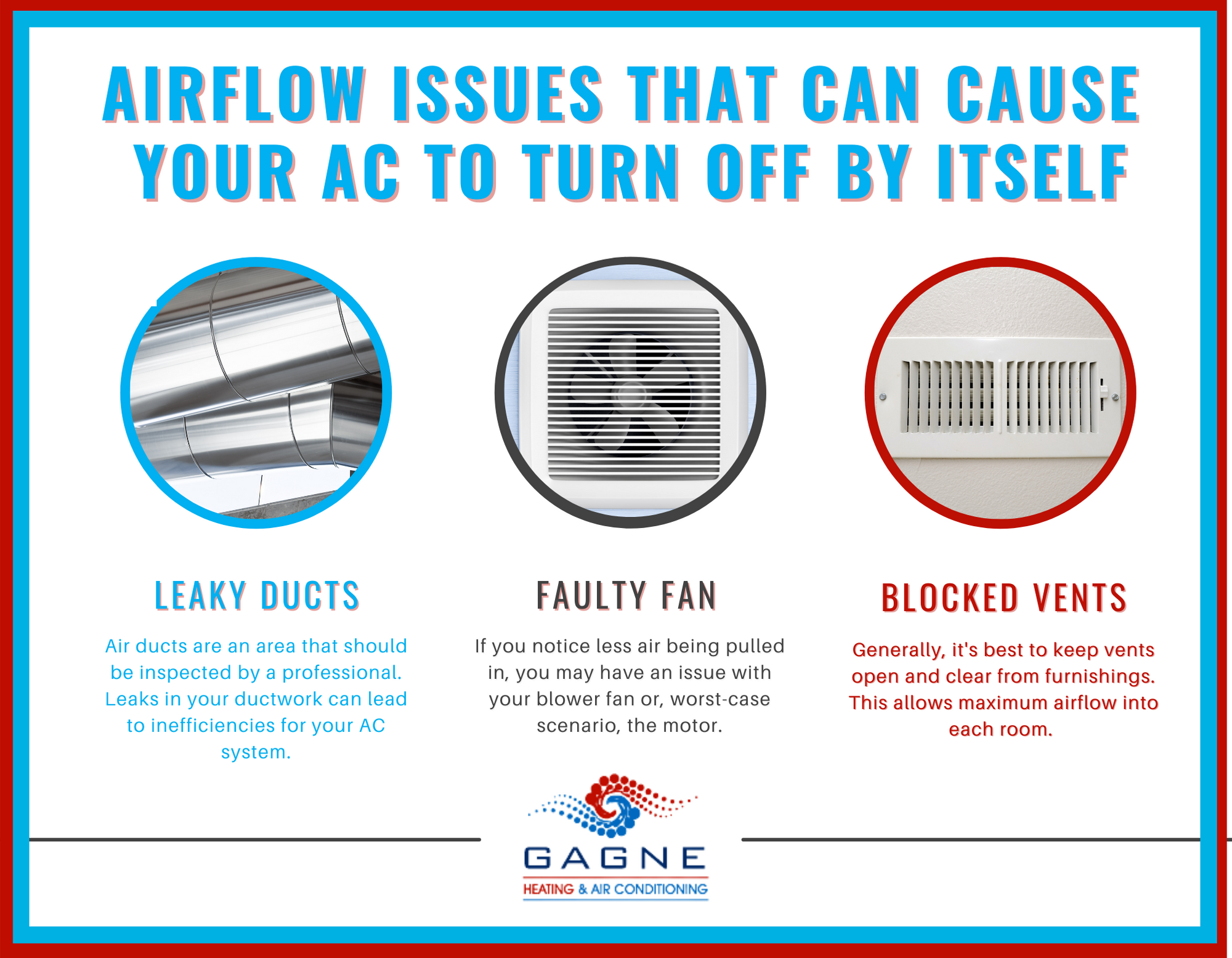
Image Source: gagneac.com
Why Does My Air Conditioner Keep Turning Off And On: Solved
Your air conditioner keeps turning off and on frequently because of a problem called AC short cycling. This happens when your AC unit starts its cooling cycle but stops too quickly before finishing the job. It’s often a sign that something is wrong within the system, from simple issues like a dirty filter to more complex mechanical failures or even the unit being the wrong size for your home. Let’s look into why this happens and how to fix it.
Short cycling is not just annoying. It puts extra stress on your AC’s parts. Think of your car engine turning on and off every minute instead of running smoothly. This wears down the starter and other parts much faster. Your AC works the same way. Short cycling can lead to higher energy bills and potentially expensive breakdowns if you don’t fix it.
Grasping AC Short Cycling
What does AC short cycling mean? It’s when your air conditioner runs for a short time, maybe just a few minutes, and then turns off. A normal cooling cycle should last longer, often 15 to 20 minutes or more, depending on the weather outside. The AC should cool your home to the set temperature and then shut off until the temperature rises again. When it cycles on and off too fast, it’s called short cycling.
Why is this bad?
* It wastes energy. Starting the AC uses more power than running it.
* It wears out parts faster. The compressor, the main part that cools the air, works hardest when it starts. Frequent starts shorten its life.
* It doesn’t cool your home properly. The air doesn’t stay on long enough to remove enough heat or humidity.
* It could point to a serious problem that needs fixing before it causes bigger damage.
Many things can make your AC short cycle. Some are easy fixes you can do yourself. Others need help from a trained HVAC technician.
Common Reasons Your AC Short Cycles
Let’s look at the main culprits behind your AC turning off and on too often. We’ll cover different problems, from simple to more complex.
Issue 1: Your Air Filter is Clogged
One of the most common and easiest problems to fix is a dirty air filter AC. The air filter catches dust, dirt, and pet hair from the air in your home. This keeps the air clean and protects the inside parts of your AC.
What happens when the filter is dirty?
* Air can’t flow through the filter easily.
* This reduces the amount of air that reaches the AC’s indoor coil.
* With less airflow, the coil gets too cold.
* This can cause the coil to freeze (we’ll talk more about frozen AC coil next).
* A frozen coil or very restricted airflow can cause the AC to shut down early as a safety measure.
Signs of a dirty filter:
* Weak airflow from vents.
* Higher energy bills.
* The filter looks gray or black and is full of gunk.
* Ice forming on the indoor AC unit or refrigerant lines.
Fixing it:
* Check your air filter every month, especially during cooling season.
* If it looks dirty, change it. Filters are cheap and easy to replace.
* Make sure you use the correct filter size and type for your system.
This simple step can often stop short cycling and improve your AC unit not cooling problem.
Issue 2: Low Refrigerant Levels
Your AC uses a chemical called refrigerant (sometimes called Freon) to cool the air. The system is sealed, so the refrigerant level should stay the same. If the level is low, it means there’s a leak. Low refrigerant AC is a serious problem.
What happens with low refrigerant?
* The AC can’t absorb enough heat from your home’s air.
* The pressure inside the system drops.
* This causes the indoor coil to get too cold.
* This often leads to a frozen AC coil.
* Safety sensors in the AC detect the low pressure or freezing and shut the unit off.
* The unit then tries to start again shortly after, leading to short cycling.
Signs of low refrigerant:
* Your AC unit not cooling your home well.
* Blowing warm or not-very-cool air.
* Hissing or gurgling sounds from the AC lines.
* Ice on the outdoor unit’s large refrigerant line or on the indoor coil.
* Higher energy bills.
Fixing it:
* Adding more refrigerant without fixing the leak is a temporary fix. The refrigerant will just leak out again.
* A technician needs to find and repair the leak.
* After fixing the leak, they will add the correct amount of refrigerant.
Dealing with low refrigerant requires a professional. It’s illegal for homeowners to handle refrigerants because they are harmful to the environment.
Issue 3: A Frozen AC Coil
We’ve mentioned this a couple of times. A frozen AC coil, specifically the evaporator coil inside your home, is a common outcome of other problems like a dirty filter or low refrigerant AC.
What happens with a frozen coil?
* Ice builds up on the coil.
* This blocks airflow even more than a dirty filter.
* The AC struggles to move air and cool the space.
* The thermostat still calls for cooling, but the AC might shut off quickly because of safety limits or simply because it can’t work with the ice blockage.
Causes of a frozen coil:
* Dirty air filter.
* Blocked return air vents or supply vents (make sure all your vents are open!).
* A weak HVAC fan motor issues (the blower motor that moves air inside).
* Low refrigerant AC.
Signs of a frozen coil:
* Ice visible on the indoor unit or refrigerant lines.
* Water leaking from the indoor unit (as the ice melts).
* Poor cooling performance (AC unit not cooling).
* Limited airflow from vents.
Fixing it:
* Turn off your AC at the thermostat and the breaker panel.
* Let the ice melt completely. This can take several hours.
* While it’s melting, check for the cause. Is the filter dirty? Are vents blocked?
* Address the underlying problem (change filter, open vents).
* If the problem was low refrigerant or a fan issue, you’ll need a technician.
* Do not try to chip away the ice; you can damage the coil.
Running your AC with a frozen coil can damage the compressor. Always let it thaw and fix the root cause before turning it back on.
Issue 4: Problems with Your Thermostat
The thermostat is the control center of your AC system. If it’s not working right, it can tell your AC to turn on and off at the wrong times. Thermostat issues AC are a frequent cause of short cycling.
What kind of thermostat issues can cause short cycling?
* Bad placement: If the thermostat is in direct sunlight, near a heat source (like a lamp or appliance), or near a draft, it will read the temperature incorrectly. It might think the room is cool enough when it’s not, or think it’s hot when it just got a blast of warm air, causing the AC to cycle improperly.
* Poor calibration: Older, non-digital thermostats can get out of whack and not read the temperature accurately.
* Loose wiring: Wires connecting the thermostat to the AC system can come loose, causing iletişim problems.
* Low batteries: If your digital thermostat uses batteries, low power can cause it to act strangely, including incorrect temperature readings or losing its settings.
* Internal malfunction: The thermostat itself might be broken.
Signs of thermostat issues:
* The temperature on the thermostat doesn’t match the actual room temperature.
* The AC turns on or off right after you set the temperature.
* The display is blank or flickering (for digital thermostats).
* The AC behaves erratically, not following your settings.
Fixing it:
* Check the thermostat’s location. Is it away from heat sources, direct sun, or drafts?
* For digital thermostats, check the batteries and replace them if needed.
* Make sure the settings are correct (cool mode, desired temperature).
* Clean dust from inside the thermostat (carefully, after turning off power).
* If it’s an old manual thermostat, it might need calibrating or replacing.
* If wiring seems loose or you suspect an internal problem, call a technician.
A functioning thermostat is key for your AC to run correctly and avoid AC short cycling.
Issue 5: Your AC Unit is Too Big
It might seem counterintuitive, but an oversized air conditioner can cause short cycling. You’d think a bigger AC is better, right? Not always.
What happens if your AC is too big?
* It cools your home too quickly.
* It reaches the thermostat’s set temperature very fast.
* The AC turns off before it runs a full cycle.
* It hasn’t had enough time to properly dehumidify the air.
* The temperature rises slightly, and the big AC turns on again, cools rapidly, and shuts off.
* This results in frequent, short cycles.
Problems with an oversized unit:
* Short cycling wears out the system faster.
* It doesn’t remove humidity well, leaving your home feeling cold but sticky.
* It wastes energy with frequent starts.
Signs of an oversized unit:
* The AC cycles on and off every few minutes.
* Your home feels cold but humid.
* The system was recently installed and this problem started right away.
* The installer might not have performed a proper “Manual J” load calculation for your home’s specific needs.
Fixing it:
* Unfortunately, there’s no easy fix for an oversized unit short of replacing it with one that’s properly sized.
* Some technicians can try workarounds like adjusting airflow or refrigerant levels, but these are often temporary or not fully effective.
* If you’re getting a new AC, ensure the contractor performs a load calculation to choose the right size.
This is one of the more costly causes to fix, often requiring professional consultation or replacement.
Issue 6: Clogged Drain Line
Your air conditioner removes moisture from the air as it cools. This water normally drips into a drain pan and flows out through a drain line, often a PVC pipe. If this line gets blocked by algae, mold, or debris, you have a clogged AC drain line.
What happens with a clogged drain line?
* Water backs up into the drain pan.
* Many AC systems have a safety float switch in the drain pan.
* When the water level rises, this switch is triggered.
* The float switch turns the AC off to prevent water damage.
* The AC might try to start again later as the water level drops slightly (due to evaporation) or might stay off until the drain is cleared. This can sometimes cause short cycling behavior, or just cause the unit to shut off entirely.
Signs of a clogged drain line:
* Water pooling around the indoor AC unit or furnace.
* Water stains on the ceiling or walls below the indoor unit.
* The AC unit shutting off completely and not turning back on until the pan is dry.
* Sometimes, gurgling sounds from the drain line.
Fixing it:
* Turn off the AC system power at the thermostat and breaker.
* Find the drain pan and the drain line (often a white or black PVC pipe near the indoor unit).
* If there’s standing water, you can carefully use a wet/dry vacuum to suck it out of the end of the drain line outside.
* You can also try to clear the clog by pouring a cup of undiluted white vinegar into the drain line’s access point near the indoor unit (often a T-shaped vent with a cap). Wait 30 minutes, then flush with water. Do NOT use bleach, as it can damage the pan or pipes.
* If the clog is severe or you can’t find the access point, call a technician.
Regular maintenance can prevent clogged drain lines by cleaning the line before it gets blocked.
Issue 7: AC Capacitor Problems
The capacitor is a small electrical component in your AC unit that provides the initial jolt of electricity needed to start the fan motors and the compressor. Your AC unit has two main capacitors: the start capacitor (gives a quick boost to start) and the run capacitor (helps keep the motor running efficiently). Problems with either can cause the AC to short cycle or fail to start. AC capacitor problems are a common cause of AC failures.
What happens with a bad capacitor?
* If the capacitor is weak or failing, it might not give the motor (either the blower fan or the compressor) enough power to start or keep running.
* The motor might hum but not start, or it might start and then quickly shut off.
* The system might try to start again, leading to short cycles, or fail to start at all (AC unit not cooling).
Signs of capacitor problems:
* The outdoor fan is not spinning, or spins slowly, but the compressor is running (or vice-versa).
* The indoor blower fan doesn’t turn on.
* The unit hums loudly but doesn’t start.
* The AC starts but quickly trips the circuit breaker.
* The unit starts sometimes but not always.
Fixing it:
* Capacitors store a high electrical charge even after power is off. They are dangerous to handle.
* Replacing a capacitor requires electrical knowledge and safety precautions.
* It is best to call an HVAC technician to test and replace capacitors.
This is definitely a job for a professional due to the electrical risk and the need to diagnose which capacitor is failing.
Issue 8: Problems with the Fan Motors
Your AC system has fan motors: one in the indoor unit (blower motor) that pushes cool air through your ducts, and one in the outdoor unit that pulls air over the condenser coil. If there are HVAC fan motor issues, it can cause problems that lead to short cycling.
What happens with fan motor issues?
* Indoor blower motor: If this motor is weak or not working, air doesn’t move across the indoor coil. This is similar to a dirty filter problem and can lead to a frozen AC coil and the AC shutting down due to low airflow.
* Outdoor fan motor: If this motor isn’t working, the outdoor unit can’t get rid of the heat it’s pulling from your home. The system can overheat, causing pressure to build up. High-pressure safety switches will trip, shutting the unit off quickly.
Signs of fan motor issues:
* No air coming from your vents indoors when the AC is running.
* The outdoor fan isn’t spinning, even though the compressor is running (you might hear a hum).
* Unusual noises from either the indoor or outdoor unit (grinding, squealing).
* The outdoor unit feels very hot to the touch (be careful touching it).
Fixing it:
* Turn off the AC power.
* Check if anything is blocking the fan blades (sticks, leaves outdoors). Remove blockages carefully.
* Some motors have bearings that can be oiled (check your manual, but many newer motors are sealed).
* If the motor hums but doesn’t spin, it might be a capacitor problem (see Issue 7).
* If the motor is clearly broken, making bad noises, or not running, you need a technician to diagnose and potentially replace it.
Fan motor issues often require professional repair or replacement.
Issue 9: Refrigerant Line Issues
Beyond just having low refrigerant AC from a leak, the refrigerant lines themselves can cause issues. These are the copper pipes connecting your indoor and outdoor units.
What happens if refrigerant lines have issues?
* Kinks or bends: A kinked line restricts the flow of refrigerant. This reduces the system’s ability to cool and can cause pressure imbalances, leading to short cycling or poor cooling (AC unit not cooling).
* Improper insulation: The larger, cooler line (suction line) should be insulated. If the insulation is missing or damaged, the refrigerant warms up before reaching the outdoor unit. This makes the system work harder and can affect performance.
* Too long or too short: If the lines installed are not the correct length recommended by the manufacturer, it can impact system pressure and efficiency.
Signs of refrigerant line issues:
* Visible bends or kinks in the copper pipes.
* Missing or damaged foam insulation on the fatter pipe.
* Ice forming on the refrigerant lines (often linked to low refrigerant AC or airflow issues, but the lines are where you see it).
* Poor cooling performance (AC unit not cooling).
Fixing it:
* Do not attempt to bend kinked lines back yourself; they can break and release refrigerant.
* Replace damaged insulation on the suction line. You can buy foam pipe insulation at hardware stores.
* Significant line problems, like kinks or incorrect length, require a professional HVAC technician to repair or replace. Handling refrigerant is also necessary for these repairs.
These are problems often found during installation or during deeper system checks.
Issue 10: Compressor Problems
The compressor in the outdoor unit is the heart of your AC system. It pumps the refrigerant and is essential for the cooling process. If the compressor is failing, it can cause the AC to short cycle or stop working entirely.
What happens with a failing compressor?
* The compressor struggles to start or run.
* It might overheat or draw too much power.
* Internal safety switches within the compressor or the system will detect the problem and shut the AC off quickly.
* The unit might try to restart repeatedly, leading to short cycling.
Signs of compressor problems:
* A loud grinding, rattling, or buzzing noise from the outdoor unit when it tries to start.
* The outdoor unit hums loudly but the fan and compressor don’t run.
* The AC unit not cooling at all, even though the indoor fan might be running.
* The circuit breaker for the AC keeps tripping.
Fixing it:
* Compressor repair is complex and expensive.
* Often, replacing the compressor or the entire outdoor unit (condenser) is necessary.
* This requires a qualified HVAC technician.
Compressor failure is one of the most serious and expensive reasons for AC short cycling.
Other Potential Causes for Short Cycling
While the above are the most common reasons, a few other things could cause your AC to turn off and on too much.
- Electrical Issues: Loose wiring connections, a failing contactor (an electrical switch in the outdoor unit), or issues with the circuit breaker can all interrupt power to the AC, causing it to stop unexpectedly.
- Dirty Outdoor Unit (Condenser): If the outdoor coil is covered in dirt, leaves, or grass clippings, it can’t release heat properly. This causes the system pressure to rise and can trip safety switches, similar to a failing outdoor fan.
- Safety Switches: AC units have various safety sensors that detect problems like high pressure, low pressure (low refrigerant AC), freezing (frozen AC coil), or high temperatures. When these sensors are tripped, they shut down the system to prevent damage. Short cycling can happen if a sensor trips, resets, and the unit tries to start again quickly before the underlying problem is resolved.
- Control Board Issues: The electronic control board in your AC system manages the different components. A faulty control board can send incorrect signals, causing the unit to turn on and off erratically.
Addressing Short Cycling: What to Do
When your AC starts AC short cycling, what should your first steps be?
- Check the Thermostat: Is it set correctly? Are the batteries okay? Is it in a bad location? This is the easiest thing to check first.
- Check the Air Filter: Look at it. Is it dirty? Change it if needed.
- Check Vents: Make sure all return and supply vents in your home are open and not blocked by furniture or curtains.
- Check the Outdoor Unit: Is it clean? Are there leaves or debris blocking the sides? Clear them away. Listen for the fan. Is it spinning?
- Look for Ice: Check the indoor unit and the large copper line outside for ice buildup (frozen AC coil). If there’s ice, turn the system off and let it thaw.
- Check the Drain Line: Look for water leaks or a clogged drain line (clogged AC drain line).
If these basic checks don’t reveal the problem or fix the AC short cycling, the issue is likely more complex and requires professional help.
When to Call an HVAC Technician
For many of the causes of short cycling, especially those involving refrigerant, electrical components (AC capacitor problems, wiring), fan motors (HVAC fan motor issues), or internal system pressures, you need a qualified HVAC technician.
Call a pro if:
* You suspect low refrigerant AC.
* The frozen AC coil comes back after you thawed it and changed the filter.
* You hear strange noises from the unit.
* The outdoor fan or indoor blower motor isn’t working right.
* You suspect AC capacitor problems or other electrical issues.
* You think your unit might be oversized air conditioner.
* Basic troubleshooting steps (filter, thermostat, vents) didn’t work.
* Your AC unit not cooling and is also short cycling.
A technician has the tools and knowledge to properly diagnose the problem, whether it’s a leak, a failing part, or a pressure issue. Trying to fix complex AC problems yourself can be dangerous and lead to more expensive damage.
Preventing AC Short Cycling
Regular maintenance is the best way to prevent AC short cycling and keep your system running well.
- Change Your Air Filter: Do this every 1-3 months, or more often if you have pets or allergies. This prevents dirty air filter AC issues and reduces the risk of a frozen AC coil.
- Get Annual Professional Maintenance: Schedule a tune-up with an HVAC technician every spring before cooling season starts. They will:
- Clean the coils (indoor and outdoor).
- Check refrigerant levels and look for leaks (low refrigerant AC).
- Inspect electrical components (AC capacitor problems, wiring, contactor).
- Check the drain line and clean it (clogged AC drain line).
- Inspect and lubricate fan motors (HVAC fan motor issues).
- Check thermostat calibration.
- Check system pressures and temperatures.
- Keep the Outdoor Unit Clean: Trim bushes and remove debris from around the outdoor unit. Ensure there’s good airflow around it.
- Keep Vents Open: Do not close off vents in rooms, as this restricts airflow throughout the system.
- Consider Thermostat Location: If you’re having issues and your thermostat is poorly placed, consider moving it.
Think of maintenance as like getting the oil changed in your car. It helps the system run more efficiently, prevents breakdowns, and extends its lifespan. It can catch small issues like minor refrigerant leaks or weakening capacitors before they cause major problems like AC short cycling or a completely failed AC unit not cooling.
The Impact of Ignoring Short Cycling
Ignoring AC short cycling because your home still gets somewhat cool can lead to bigger problems down the road.
- Increased Wear and Tear: The frequent starting and stopping puts immense stress on the compressor and other electrical components. This significantly shortens the lifespan of these expensive parts and the unit itself.
- Higher Energy Bills: As mentioned, starting the unit uses more power than running it. Short cycling constantly starts the unit, wasting energy. Plus, if the system isn’t cooling efficiently due to the problem causing short cycling, it will run longer overall trying to reach the set temperature, further increasing bills.
- Reduced Comfort: A short-cycling AC doesn’t run long enough to properly dehumidify your home. This leaves the air feeling clammy and less comfortable, even if the temperature is cool. Your AC unit not cooling effectively is a clear sign something is wrong.
- System Breakdown: Eventually, the stress from short cycling or the underlying issue (like low refrigerant AC or a failing compressor) will cause the system to break down completely. This usually happens on the hottest day of the year when you need your AC the most. Repairing a major breakdown is far more expensive than fixing the initial problem that caused the short cycling.
Addressing AC short cycling quickly saves you money and hassle in the long run.
Table: Quick Guide to Short Cycling Causes & Actions
Here’s a simple table summarizing common causes and what action to take:
| Cause | Signs | What to Do First | When to Call a Pro |
|---|---|---|---|
| Dirty Air Filter AC | Weak airflow, filter looks dirty, ice on coil. | Check/Change filter. | If problem continues after filter change. |
| Low Refrigerant AC | Poor cooling, ice on lines/coil, hissing, high bills. | Look for ice (don’t touch!). Turn off AC. | Always call a pro to find/fix leak & refill. |
| Frozen AC Coil | Visible ice on indoor coil or large line outside, water leaks. | Turn off AC, let thaw. Check filter/vents. | If ice returns, or suspected low refrigerant/fan issue. |
| Thermostat Issues AC | Wrong temp reading, erratic behavior, blank display, bad placement. | Check batteries, location, settings. | If issues persist, suspect wiring or internal fault. |
| Oversized Air Conditioner | AC cools very fast, cycles often, home feels humid but cool. | Check if it’s cycled this way since install. | Consult pro for assessment, potentially resizing. |
| Clogged AC Drain Line | Water leak near indoor unit, water stains, AC shuts off completely. | Turn off AC. Try clearing with vacuum/vinegar. | If you can’t clear it, or if water damage is severe. |
| AC Capacitor Problems | Motor hums but won’t start, outdoor fan not spinning, unit tripping breaker. | Turn off power. | Always call a pro – high voltage risk. |
| HVAC Fan Motor Issues | No airflow indoors, outdoor fan not spinning, strange motor noises. | Turn off power. Check for blockages. | If motor is not running, making noise, or suspected failed. |
| Refrigerant Line Issues | Visible kinks in pipes, missing insulation, ice (often linked to low refrigerant). | Replace insulation if missing. | Always call a pro for kinks or leaks. |
| Compressor Problems | Loud grinding/buzzing, outdoor unit not starting, unit tripping breaker. | Turn off power. | Always call a pro – usually requires replacement. |
Frequently Asked Questions (FAQ) About AC Short Cycling
Q: What is AC short cycling?
A: It means your air conditioner turns on for only a few minutes at a time before shutting off. A normal cycle is usually 15-20 minutes or longer.
Q: Why is short cycling bad?
A: It wastes energy, puts stress on your AC’s main parts (especially the compressor), wears them out faster, doesn’t cool or dehumidify your home properly, and often points to an underlying problem that needs fixing.
Q: Can a dirty air filter cause short cycling?
A: Yes, a dirty air filter AC is a very common cause. It blocks airflow, which can lead to the coil freezing (frozen AC coil) and the unit shutting down too soon.
Q: Can I add refrigerant myself if I think it’s low?
A: No, handling refrigerant is illegal without proper certification. Low refrigerant AC means there’s a leak, and a professional must find and fix the leak before adding refrigerant.
Q: How can I tell if my AC unit is oversized?
A: An oversized air conditioner cools your home too quickly and cycles on and off very frequently, often leaving the air feeling cold but humid because it doesn’t run long enough to remove moisture. This issue usually starts right after a new unit is installed.
Q: My thermostat seems okay, but the AC is still short cycling. What else could it be?
A: If your thermostat issues AC are ruled out, the problem could be anything from a dirty filter, low refrigerant AC, a frozen AC coil, a clogged drain line (clogged AC drain line), or problems with electrical parts (AC capacitor problems) or motors (HVAC fan motor issues). Many of these need a professional to diagnose.
Q: My outdoor AC unit fan isn’t spinning, and the unit is short cycling. What’s wrong?
A: This strongly suggests an issue with the outdoor fan motor or its capacitor. If the fan isn’t running, the unit can’t release heat, causing it to overheat and shut down quickly. This needs a technician to check the HVAC fan motor issues and AC capacitor problems.
Q: My AC is short cycling and the air isn’t cold. What’s the likely problem?
A: If your AC unit not cooling effectively and short cycling, it often points to a problem related to refrigerant (like low refrigerant AC or a leak), airflow restrictions (like a dirty air filter AC or frozen AC coil), or a major component like the compressor or a fan motor failing.
Q: Is it okay to keep running my AC if it’s short cycling?
A: It’s not recommended. Running a short-cycling AC can cause more damage to the system, especially the compressor. Turn the unit off and call a technician to find the problem before it gets worse.
Q: How can regular maintenance help prevent short cycling?
A: Routine maintenance helps catch potential problems like low refrigerant, dirty air filter AC, or weak capacitors before they cause short cycling. Keeping the unit clean and checking components ensures it runs smoothly and efficiently, preventing the conditions that lead to constant turning on and off.
Short cycling is a sign your AC is in distress. Addressing the problem early can save you from bigger headaches and repair bills down the line. Pinpointing the cause, from a simple filter change to a more complex component issue, is the first step to getting your AC back to running cool and steady.