
Why does my air conditioner keep freezing up? Your air conditioner likely keeps freezing up because something is preventing warm indoor air from properly flowing over the very cold indoor coil (the evaporator coil), or there isn’t enough of the special fluid (refrigerant) inside the system. The most common culprits causing your AC to ice up include a dirty air filter blocking airflow, blocked vents, a dirty evaporator coil, or a low refrigerant level often due to a leak. These issues stop the coil from absorbing enough heat, making it drop below freezing and turn the moisture in the air into ice.
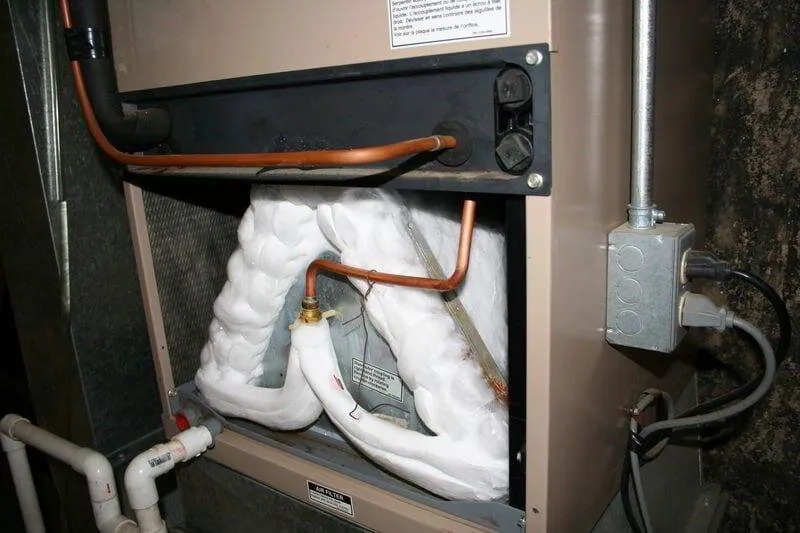
Image Source: content.app-sources.com
Seeing the Signs: Symptoms of a Frozen AC Unit
How can you tell if your air conditioner is freezing up? There are clear symptoms of a frozen AC unit. It’s important to spot these signs early to stop damage.
- Warm Air: The most obvious sign. Your AC runs, but the air coming out of the vents isn’t cold or isn’t as cold as it should be.
- Ice: You might see ice on the copper lines outside your house, especially the fatter, insulated one. You might also see ice on the indoor coil if you can safely look at it. This is
evaporator coil freezingin action. - Water Leaks: As the ice melts, water can drip or pour from your indoor unit. This is because the frozen condensate drain pan overflows, or ice build-up blocks the path to the
blocked drain line AC. - Weak Airflow: Less air comes out of your vents than usual. This is a key sign of
airflow restriction AC, which leads to freezing. - Unit Runs All the Time: The AC struggles to cool your home, so it keeps running and running without cycling off.
- Strange Noises: Sometimes, you might hear dripping sounds as ice melts, or maybe a knocking sound if ice hits the fan blades.
Seeing these signs means you need to act. A frozen AC isn’t just annoying; it can seriously damage your system if not fixed.
Figuring Out Why Your AC Freezes: Troubleshooting
If you notice symptoms of a frozen AC unit, the first step is troubleshooting AC freezing up. This helps you figure out the cause.
Safety First: Always turn off your air conditioner immediately if you suspect it’s frozen. Turn it off at the thermostat and at the breaker box that controls the outdoor unit. Let the ice melt completely. This can take anywhere from a few hours to a full day, depending on how much ice there is and the temperature outside. Running an AC with ice on it can damage the compressor, which is very expensive to fix.
Once the ice is gone, you can start looking for the problem. Here’s how to troubleshoot:
- Check the Air Filter: Find your air filter. Pull it out and look at it. Is it thick with dust and dirt? A
dirty air filteris one of the simplest but most common reasons forairflow restriction ACand freezing. - Look at the Evaporator Coil: If you can safely access the indoor unit (usually in your furnace or air handler), look at the coil. Is it clean? Or is it covered in dirt and grime? A dirty coil can’t absorb heat well, leading to
evaporator coil freezing. - Check Vents and Return Grilles: Walk around your house. Are any supply vents (where cold air comes out) closed or blocked by furniture, curtains, or rugs? Are return grilles (where air is sucked back into the system) blocked? Blocked vents cause
airflow restriction AC. - Inspect the Outdoor Unit: Look at the outdoor unit (the condenser). Is it clean? Is the fan spinning freely? While less common for causing freezing (which happens on the indoor coil), a very dirty outdoor coil or fan issue can affect system performance.
- Look at the Drain Line: Find the condensate drain line. It’s usually a PVC pipe coming from your indoor unit that goes outside. Is it clogged? A
blocked drain line ACcauses water to back up, which can be a symptom of melting ice overflow, even if not the primary cause of the freeze itself. - Listen to the Blower Fan: When the system is on (after thawing!), does the indoor fan sound strong? Is air coming out of the vents with good pressure? A weak fan or
airflow restriction ACis a major freezing cause.
By checking these things, you can often find the reason why is my AC icing up.
Common Reasons Your AC Turns to Ice
Let’s dive deeper into the specific problems that cause your AC to freeze. Evaporator coil freezing happens when the metal coil that cools the air gets too cold – below 32°F (0°C). Moisture in the air then freezes onto the coil, building up a layer of ice. This ice acts like a blanket, stopping the coil from working right.
Not Enough Refrigerant: Low Refrigerant Level
One of the main reasons for evaporator coil freezing is a low refrigerant level. Refrigerant is the substance that absorbs heat from your indoor air and releases it outside. Think of it as the AC’s working fluid.
- Why Low Refrigerant Causes Freezing: Your AC system is a closed loop. The amount of refrigerant is set by the manufacturer for peak performance. If the level drops, usually because of a leak, there isn’t enough refrigerant circulating to properly absorb heat from the indoor air. The pressure drops inside the coil. This causes the refrigerant inside the coil to get much, much colder than it should be, dropping below the freezing point of water. The air passing over this super-cold coil loses its heat, but the moisture in the air freezes onto the coil surface.
- Leaks are the Cause: Refrigerant is not used up like gas in a car. If your
low refrigerant levelis low, it means there’s a leak somewhere in the system. Adding more refrigerant without fixing the leak is like topping off a leaky tire – it will just go flat again. - Professional Help Needed: Fixing a
low refrigerant levelrequires finding and repairing the leak, then refilling the system to the correct charge. This is not a DIY job. It requires special tools and training. You’ll needAC repair frozen coilservice from a certified technician.
Blocked Air Flow
Any issue that stops enough warm air from reaching the evaporator coil can cause it to freeze. Less air means less heat is carried away, and the coil gets too cold. This is often called airflow restriction AC.
Dirty Air Filters: The Biggest Culprit
The most common reason for airflow restriction AC is a dirty air filter.
- How Filters Work: Air filters catch dust, dirt, pet hair, and other particles from the air before it enters your AC system. This keeps the air clean and protects the AC components, especially the coil.
- When Filters Get Dirty: Over time, the filter collects more and more debris. A filter thick with dirt acts like a wall, making it hard for the air handler (the fan) to pull air through it.
- Leading to Freezing: When the filter is blocked, less air flows over the cold evaporator coil. The coil still tries to cool the air, but with less air passing by, the coil temperature drops too low, below freezing. Water vapor in the limited air hitting the coil freezes, leading to
evaporator coil freezing. - Simple Fix: Checking and changing your
dirty air filterregularly (usually every 1-3 months) is the simplest way to preventairflow restriction ACand freezing.
Blocked Vents or Returns
Other things can block airflow besides the filter.
- Closed or Blocked Supply Vents: If you close too many vents in rooms you aren’t using, or if furniture, rugs, or curtains block the airflow from the vents, the total amount of air moving through the system decreases.
- Blocked Return Grilles: Return grilles are large openings where the AC system sucks air back into the unit to be cooled. If these are blocked by furniture or debris, the system can’t pull enough air in, causing
airflow restriction AC.
Problems with the Blower Fan
The blower fan inside your indoor unit pushes air through the system. If this fan isn’t working right – maybe it’s running too slow, or the motor is failing – it won’t move enough air over the coil. This lack of proper airflow restriction AC also causes the coil to get too cold and freeze. This usually requires AC repair frozen coil from a technician.
Clogged Condensate Drain Line: Blocked Drain Line AC
While a blocked drain line AC doesn’t directly cause the coil to freeze, it’s a common issue found with frozen ACs and leads to the annoying symptom of water leaks.
- Water is Normal: As the AC cools warm, humid air, it pulls moisture out, like water beading on a cold drink. This condensation drips off the evaporator coil into a collection pan.
- The Drain’s Job: A drain line carries this water away, usually outside or into a drain.
- Why it Clogs: Algae, mold, dirt, or debris can build up in the drain line, creating a
blocked drain line AC. - Overflow: When the drain is blocked, the water backs up in the pan. If the AC coil freezes, the melting ice adds to this water, quickly overflowing the pan and causing leaks.
- Checking the Drain: Checking and clearing a
blocked drain line ACis part of good maintenance andtroubleshooting AC freezing upwhen you have leaks.
Issues with the Thermostat
Less common, but sometimes a thermostat issue can contribute. If the thermostat is set too low (e.g., trying to cool your house to 60°F), or if it’s faulty and telling the AC to run constantly when it shouldn’t, the system might struggle and the coil could get too cold, especially if combined with minor airflow issues.
Dirty Evaporator Coil
Over time, the evaporator coil itself can get covered in a layer of dirt, dust, and grime. Even with a clean filter, some fine particles can get through and stick to the wet coil.
- How Dirt Hurts: This layer of dirt acts like an insulator. It prevents the coil from effectively absorbing heat from the air passing over it. Just like
airflow restriction ACfrom adirty air filter, this means the refrigerant inside the coil doesn’t get warm enough, causing the coil surface to drop below freezing. - Professional Cleaning: Cleaning a dirty evaporator coil is tricky because it’s hard to access and delicate. This is often part of professional
AC repair frozen coilor maintenance.
Running the AC in Very Cold Weather
Air conditioners are designed to work within a certain range of outdoor temperatures. If you try to run your AC when the outdoor temperature is too low (often below 60-65°F or 15-18°C, depending on the system), the pressure in the refrigerant lines drops too much. This makes the evaporator coil get excessively cold, leading to evaporator coil freezing even if everything else is working perfectly. Modern systems often have sensors to prevent this, but older ones might not.
How to Bring Your AC Back to Life: How to Fix a Frozen Air Conditioner
If you find your AC is frozen, here is how to fix a frozen air conditioner. Remember, the first step is always to stop it from running and let it thaw.
Step 1: Turn the System Off
This is critical. Turn off the AC at the thermostat. Set the system switch to ‘Off’ and the fan switch to ‘Auto’ (or ‘Off’ if there’s no ‘Auto’ option). To be extra safe, turn off the power switch near the indoor unit and the breaker for the outdoor unit.
Step 2: Let the Ice Melt
This is the most important part of how to fix a frozen air conditioner. You must let all the ice melt from the evaporator coil and refrigerant lines.
- Time: This can take several hours. Be patient. Don’t try to chip or scrape the ice off, as you can easily damage the delicate coils.
- Speeding it Up (Optional): You can speed up thawing slightly by setting the thermostat fan switch to ‘On’ (if you only turned off the AC, not the power to the whole unit). This circulates air over the coil, helping the ice melt faster. Make sure the cooling is still off.
- Dealing with Water: Place towels or buckets around the indoor unit to catch water as the ice melts. This water comes from the melted ice overflowing the condensate pan, often because of a
blocked drain line ACor simply too much water from the large amount of melting ice.
Step 3: Address the Root Cause
While the AC is thawing, or after it’s fully thawed, you need to figure out and fix why is my AC icing up. Go through the troubleshooting steps mentioned earlier.
- Check the Air Filter: This is the easiest fix. If it’s dirty, replace it immediately. This solves
airflow restriction ACcaused by the filter. - Check Vents and Returns: Make sure all supply vents are open and not blocked. Clear furniture or other items away from return grilles.
- Look at the Drain Line: If you had a water leak during thawing, your
blocked drain line ACmight be the cause. Try to clear it (more on this below). - Check the Outdoor Unit: Make sure the outdoor coil is relatively clean and free of debris (leaves, grass clippings).
- Look at the Indoor Coil: If the filter was clean but the coil itself looks very dirty, this is likely the reason for
evaporator coil freezing. Cleaning the coil can be part ofAC repair frozen coil.
Step 4: Restart the AC (Carefully)
Once the system is completely thawed and you have addressed the likely cause (like changing the filter or opening vents), you can turn the power back on and try running the AC again.
- Wait: Wait at least 3-4 hours after the ice is gone before turning the AC back on. This gives the system parts time to stabilize.
- Monitor: Turn the AC on and listen to it. Feel the air coming from the vents. Is it cold? Is the airflow strong? Check the indoor and outdoor units after an hour or two to make sure ice isn’t starting to form again.
If the AC starts freezing up again after thawing and checking the simple things (filter, vents), the problem is likely more complex, like a low refrigerant level, a dirty evaporator coil needing professional cleaning, or a fan motor issue.
Fixing Specific Issues
Here’s how to tackle some of the common problems found during troubleshooting AC freezing up.
Dealing with a Dirty Air Filter
- The Fix: Replace your
dirty air filterwith a clean one of the correct size. - Frequency: Check your filter monthly, especially during heavy use. Replace it every 1-3 months, depending on the filter type (some last longer) and how much dust/pets are in your home. Write the date on the new filter to remember when you changed it.
Clearing Airflow Blocks
- The Fix: Simply open any closed supply vents. Move furniture, curtains, or anything else blocking supply vents or return grilles. Make sure the area around your indoor and outdoor units is clear.
- Why: Ensuring proper
airflow restriction ACis crucial for the AC to work efficiently and prevent freezing.
Handling a Blocked Drain Line
If you suspect a blocked drain line AC is causing water leaks, you can try to clear it.
- What You Need: White vinegar, a wet/dry vacuum (shop vac), paper towels, maybe a stiff brush or plumber’s snake.
- How to Clear It:
- Find the end of the drain line outside your house.
- Use the wet/dry vac to suction the clog from the outside end of the pipe. Make a tight seal around the pipe with the vacuum hose and run it for a few minutes. This often pulls out the blockage.
- If you can access the pan near the indoor unit, pour about a cup of white vinegar down the drain opening (usually a T-shaped vent). The vinegar can kill algae and loosen blockages. Do not use bleach, as it can damage parts of the system.
- Wait about 30 minutes.
- Pour a cup or two of water down the drain line (if you can access the opening near the pan) to see if it flows freely out the other end.
- When to Call a Pro: If you can’t clear the clog, or if the water continues to back up, you might need
AC repair frozen coilhelp from a technician with specialized tools to clear the line.
What to Do About Low Refrigerant
If you’ve checked the filter, vents, and drain, and the AC still freezes up, the problem is very likely a low refrigerant level.
- Call a Pro: You absolutely must call a qualified HVAC technician for
AC repair frozen coil. - Why DIY Doesn’t Work: You cannot buy refrigerant legally or safely without certification. More importantly, simply adding refrigerant without finding and fixing the leak is a waste of money and bad for the environment. A technician has tools to detect leaks, repair them, and then charge the system with the exact amount of refrigerant needed.
Cleaning the Evaporator Coil
A dirty evaporator coil also causes airflow restriction AC and prevents proper heat transfer, leading to evaporator coil freezing.
- Access: Accessing the evaporator coil can be difficult and varies by system. It’s usually located inside the air handler or furnace.
- Cleaning: Small amounts of surface dust might be gently brushed off (with power off!). However, coils have delicate fins that bend easily. Deep cleaning requires special coil cleaners and tools to get into the tight spaces.
- Recommendation: For a truly dirty coil causing freezing, professional
AC repair frozen coilcleaning is usually necessary to avoid damaging the coil.
Dealing with Fan Motor Problems
If the blower fan isn’t working or is running slowly, this creates severe airflow restriction AC.
- The Fix: A fan motor issue requires
AC repair frozen coilservice from a qualified technician. They can diagnose if the motor is failing, if a capacitor needs replacing, or if there’s an electrical issue.
Keeping Your AC from Freezing Again: Prevention Tips
Preventing your AC from freezing up saves you hassle, discomfort, and potentially expensive AC repair frozen coil bills.
- Change Your Air Filter Regularly: This is the simplest and most effective prevention step. Check it monthly and replace it when it looks dirty (typically every 1-3 months). This ensures good
airflow restriction ACisn’t the problem. - Keep Vents and Returns Clear: Make sure all supply vents are open and no furniture or items block vents or return grilles. Ensure proper
airflow restriction ACthroughout your home. - Schedule Annual Professional Maintenance: Have a qualified HVAC technician inspect and tune up your system yearly, ideally before the cooling season starts. They will:
- Clean the outdoor condenser coil.
- Check and clean the indoor evaporator coil (if needed).
- Check the
refrigerant leveland look for leaks. - Check the condensate drain line for clogs and clear it if necessary (
blocked drain line AC). - Inspect the blower motor and other components.
- This proactive service can catch issues like
low refrigerant levelor adirty evaporator coilbefore they cause freezing.
- Monitor Your System: Pay attention to how your AC is running. Does the air feel as cold as usual? Is the airflow strong? Are there any strange noises or smells? Noticing
symptoms of a frozen AC unitearly allows you to address issues before severe freezing occurs. - Check the Drain Line Periodically: Especially if you live in a humid area, check the condensate drain line a couple of times during the cooling season to make sure water is flowing freely and it’s not becoming a
blocked drain line AC.
By following these steps, you greatly reduce the chances of seeing your AC turn into an ice block.
When to Call a Pro
While some issues like a dirty air filter or blocked vents are easy to fix yourself, others absolutely require professional AC repair frozen coil service.
Call an HVAC technician if:
- You suspect a
low refrigerant level. Adding refrigerant requires certification and fixing the leak requires specialized tools. This is the most common reason you’ll need professional help for freezing. - The
evaporator coil freezinghappens again after you’ve changed the filter, cleared vents, and checked the drain. This points to a more complex issue like a dirty coil or fan problem. - You can’t access or safely check parts of your system (like the evaporator coil or fan motor).
- You hear strange noises coming from the unit after it thaws and restarts.
- There are electrical issues.
- You’re uncomfortable
troubleshooting AC freezing upyourself.
A professional technician can properly diagnose the problem, make necessary AC repair frozen coil, and ensure your system is running safely and efficiently. They have the knowledge and tools to deal with low refrigerant level, dirty evaporator coil cleaning, fan motor repairs, and stubborn blocked drain line AC issues.
Common Questions
Heres are some common questions people ask about why is my AC icing up.
Can I run my AC while it’s frozen?
No, absolutely not. Running a frozen AC can cause severe damage to the compressor, which is the heart of the system and very expensive to replace. Turn the unit off immediately and let it thaw completely.
How long does it take for a frozen AC to thaw?
It depends on how much ice has built up and the temperature/humidity around the unit. It can take anywhere from 2-3 hours for light frost to 24 hours or more for a thick block of ice. Setting the fan to ‘On’ (with cooling off) can speed it up slightly.
Is a frozen AC dangerous?
While the ice itself isn’t usually dangerous, the underlying problem and the consequences can be. Running a frozen unit can cause costly damage. Melting ice can cause significant water damage to your home, leading to mold growth. Electrical components can also be affected by water.
How often should I change my air filter?
Check standard disposable filters monthly. Change them every 1-3 months depending on usage, filter type, and household conditions (pets, smoking, nearby construction). Thicker filters (3-4 inches) can last longer, often 6-12 months, but should still be checked periodically.
Why does my AC keep freezing up after I fixed it?
If you fixed something simple like changing the filter and it froze again, it means the dirty air filter wasn’t the only problem, or wasn’t the main problem. There might be another issue causing airflow restriction AC (like blocked vents or a weak fan) or, most likely, a low refrigerant level from a leak that needs professional AC repair frozen coil.
Can high humidity cause my AC to freeze?
Indirectly, yes. High humidity means there’s more moisture in the air. If your coil is already getting too cold due to poor airflow or low refrigerant, that extra moisture will freeze onto the coil more quickly and build up ice faster. A blocked drain line AC can also contribute to humidity issues around the unit.
Does turning the temperature down very low cause freezing?
Setting the thermostat extremely low (e.g., below 70°F) can sometimes contribute to freezing, especially if there are already minor issues like slight airflow restriction AC or a slightly low refrigerant level. The system works harder to reach that low temperature, making the coil colder than usual.
Wrapping Up
A frozen air conditioner is a clear sign that something is not working correctly in your system. While it’s alarming to see ice where there shouldn’t be any, understanding the common causes – like a dirty air filter, low refrigerant level, or other airflow restriction AC issues leading to evaporator coil freezing – helps you figure out what to do.
Always start by turning off the unit and letting it thaw. Then, check the easy things like the air filter and blocked vents yourself as part of troubleshooting AC freezing up. However, for more complex problems like low refrigerant level, a very dirty evaporator coil, fan issues, or persistent blocked drain line AC, professional AC repair frozen coil is necessary. Addressing the root cause is key to how to fix a frozen air conditioner permanently and keep your home cool and comfortable. Regular maintenance is the best way to prevent why is my AC icing up in the first place.