
Why does my air conditioner keep blowing fuses? When your air conditioner keeps blowing a fuse, it’s a clear sign of an electrical problem in the system, often caused by a component drawing too much power (an overload) or a direct path for electricity to escape (a short circuit). This is not normal operation and requires attention because fuses blow to protect wires and components from damage or fire.
Your air conditioner uses electricity to run different parts. Think of the fuse like a safety valve. If too much electricity tries to pass through, or if the electricity goes where it shouldn’t, the fuse sacrifices itself. It melts or breaks a connection to stop the flow of power. This protects expensive parts and prevents wires from overheating, which could start a fire.
When a fuse blows more than once, it means the problem isn’t just a fluke. Something is seriously wrong. Trying to just replace the fuse repeatedly is dangerous and doesn’t fix the root cause. It’s like putting a bigger band-aid on a wound that needs stitches. You need to find out why the fuse is blowing.
This guide will walk you through the main reasons this happens. Many of these problems involve high voltage and complex wiring. Always turn off the power to your AC unit at the main breaker box before looking at anything electrical. For most of these issues, you will need a trained HVAC technician. Working with electricity can be very dangerous if you don’t know what you are doing.
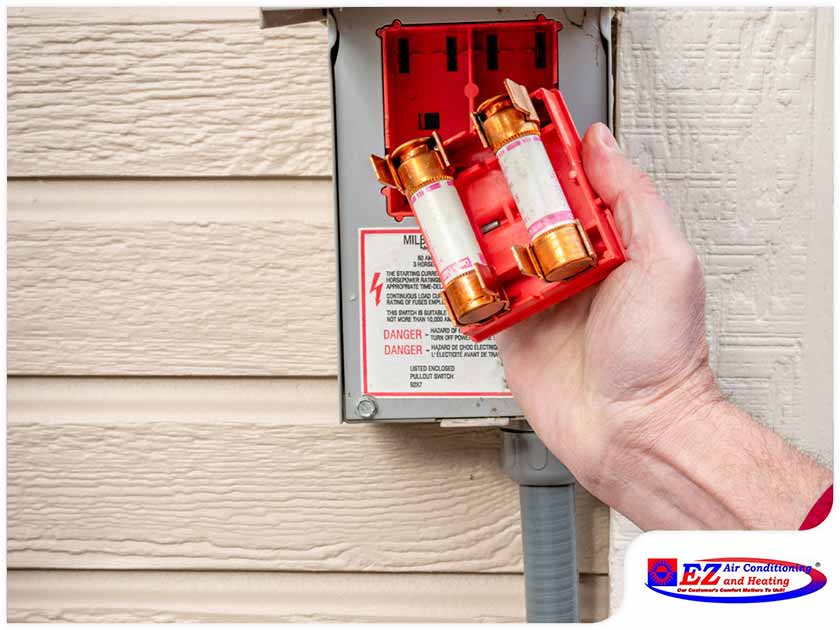
Image Source: www.ezacandheat.com
Seeing What Causes the Power Problem
When your AC unit kicks on, several things happen. The fan starts, the compressor starts, and other parts get power. Each part needs a certain amount of electricity to work. If a part uses too much power, it creates an air conditioner electrical overload. This overload makes the wires heat up and can cause the fuse to blow.
An overload often happens when a part is struggling to run or is about to fail. It pulls more power than it should. The fuse sees this extra power demand and stops the flow.
Another big reason fuses blow is a short circuit air conditioner. This happens when electricity finds a shortcut out of its normal path. Instead of going through a motor or other component, it might touch a metal frame or another wire it shouldn’t. This creates a sudden, massive surge of power that the fuse quickly stops.
Think of electricity flowing like water in pipes. A short circuit is like punching a big hole in the pipe right after the pump. All the water gushes out at once instead of going where it should. This sudden rush can break things. The fuse is the emergency shut-off valve that closes when it sees this happen.
Finding an electrical overload or a short circuit needs someone who understands electrical systems. They use special tools to test different parts of your AC.
Learning About Common Problem Spots
Several parts inside your air conditioner are known to cause fuses to blow. These are often the parts that use the most electricity or are exposed to wear and tear.
Seeing Issues with the AC Compressor
The compressor is the heart of your AC system. It’s a large motor that pumps refrigerant, which is the stuff that cools your air. The compressor uses a lot of power, especially when it starts up.
An AC compressor failure is a very common reason for fuses to blow. If the compressor motor is failing, it might try to start but get stuck (a “locked rotor”). When it tries to start and can’t turn, it pulls a huge amount of electricity – much more than normal. This surge causes an extreme electrical overload, and the fuse blows right away.
Signs of a failing compressor might include:
- The AC hums loudly but doesn’t cool.
- The unit tries to start but quickly shuts off (and the fuse blows).
- The compressor is hot to the touch (when the power is off!).
- You might hear clicking sounds before the fuse blows.
A failing compressor is a major problem. Replacing it is expensive and complex. A technician will test the compressor’s electrical windings and its ability to start.
Looking at AC Capacitor Problems
Capacitors are like small batteries that give parts of your AC a powerful jolt of electricity to help them start. Your AC unit usually has at least two main capacitors: one for the fan motor and one for the compressor. The compressor capacitor, often called the run capacitor or start capacitor, helps the compressor get going.
AC capacitor problems are very common and can easily cause a fuse to blow.
- Bad Start Capacitor: If the start capacitor is weak or dead, the compressor might try to start but not get enough power to overcome its initial resistance. It will sit there drawing too much current, leading to an overload and a blown fuse.
- Bad Run Capacitor: A faulty run capacitor can cause the compressor to run inefficiently, drawing more power than it should over time, or make it hard to start correctly. This can also lead to overloads.
- Short Circuit in Capacitor: Sometimes, a capacitor fails internally and creates a short circuit. This sends a sudden, large amount of power where it shouldn’t go, causing the fuse to blow instantly.
Symptoms of a bad capacitor might include:
- The fan motor doesn’t start, but the compressor hums (or vice versa).
- The unit makes a clicking sound and then stops.
- The outdoor unit hums loudly but nothing seems to be running.
- Sometimes, a visibly swollen or leaking capacitor is a sign, but often they look fine.
Capacitors are relatively inexpensive parts, but they hold electrical charges that can be dangerous even after the power is off. Testing and replacing them should be done by a professional.
Finding Air Conditioner Fan Motor Issues
Your AC unit has fans: one inside (blower fan) and one outside (condenser fan). The outdoor fan motor helps cool the refrigerant by blowing air over the outdoor coil. The indoor fan motor pushes cool air through your home’s ducts.
Air conditioner fan motor issues can also cause fuses to blow, especially the outdoor fan motor.
- Motor Failing: If the motor is old, worn out, or overheating, it might draw too much power to keep running. This leads to an overload.
- Seized Motor: If the motor’s bearings fail and the motor gets stuck, it acts much like a locked rotor in a compressor. It tries to turn, draws huge power, and blows the fuse.
- Short Circuit in Motor: Wires inside the motor can rub and short circuit to the motor casing. This causes a direct short and blows the fuse.
Signs of fan motor problems include:
- The fan doesn’t spin or spins very slowly.
- You hear grinding or squealing noises from the motor.
- The outdoor unit looks like it’s running, but the fan isn’t turning.
- The fan motor feels very hot (when power is off).
Fan motors can be replaced. A technician will test the motor’s windings and check if the shaft spins freely.
Spotting a Bad AC Contactor
The contactor is an electrical switch in the outdoor unit. It’s controlled by low-voltage wires from your thermostat and indoor unit. When your thermostat tells the AC to cool, the contactor pulls in, connecting high-voltage power to the compressor and the outdoor fan motor.
A bad AC contactor is another common part that can cause a fuse to blow.
- Pitted or Welded Contacts: Inside the contactor are contacts that connect the wires. Over time, these contacts can get pitted or even weld themselves shut. If contacts are damaged, they can create resistance, causing parts to draw more power (overload). If they get stuck connecting power when they shouldn’t, it can cause issues.
- Short Circuit in Coil: The contactor has a low-voltage coil that pulls the switch closed. If this coil shorts out, it can cause a short circuit in the low-voltage control circuit, which might blow a smaller fuse (often found on the indoor unit’s control board or transformer) or sometimes trip the main fuse depending on the system design.
- Mechanical Failure: If the contactor doesn’t pull in cleanly, it can cause arcing (electrical sparks) across the contacts, leading to high current draws and potentially blowing a fuse.
Signs of a bad contactor might be:
- A chattering or buzzing sound from the outdoor unit’s electrical panel.
- The unit cycles on and off rapidly.
- The outdoor unit doesn’t start when the indoor unit does.
- Visible signs of burning or pitting on the contactor contacts (power must be off to inspect!).
Contactors are relatively inexpensive to replace compared to compressors or motors. A technician will inspect the contactor visually and test its operation.
Examining Air Conditioner Wiring Issues
Electricity flows through wires. If the wires are damaged, old, or connected incorrectly, it can cause major problems, including blown fuses and short circuits.
Faulty AC wiring covers many potential issues:
- Damaged Insulation: The plastic coating on wires can get old, cracked, chewed by pests, or pinched. If the bare wire touches metal (like the unit’s frame) or another wire it shouldn’t, it causes a short circuit.
- Loose Connections: Wires are held in place by screws or clips. If these connections are loose, they can create resistance, heat up, and cause an overload or even arcing, leading to a short.
- Incorrect Wiring: If the unit was installed incorrectly, or if someone tried to do DIY repairs, wires might be connected to the wrong terminals. This can cause components to fail or create immediate short circuits.
- Water Damage: Water can cause wires and connections to corrode or create pathways for electricity to short circuit.
Signs of wiring problems include:
- Visible signs of chewed wires or damaged insulation.
- Burning smells near the AC unit or electrical panel.
- Discolored wires or terminals.
- Fuses blowing right away when the unit tries to start.
Checking for faulty wiring requires turning off all power and carefully inspecting connections and wire paths. This is best left to a professional electrician or HVAC technician who knows what to look for and has the right tools to test wires safely.
Interpreting Fuse and Circuit Breaker Actions
Your AC system has fuses or uses circuit breakers to protect its electrical circuits.
- Fuses: These are typically found in a disconnect box near the outdoor unit and sometimes on the control board of the indoor unit. They contain a metal link that melts and breaks the circuit when too much current flows. Once a fuse blows, it must be replaced (HVAC fuse replacement). You must replace it with a fuse of the exact same type and rating. Putting in a fuse with a higher rating is dangerous and defeats the safety purpose; it could lead to wiring damage or fire before the fuse blows.
- Circuit Breakers: Your home’s main electrical panel has circuit breakers. Your AC system likely has a dedicated breaker. A circuit breaker is a reusable switch that trips (turns off) when it detects an overload or short circuit. If your circuit breaker trips frequently, it’s doing the same job as a blowing fuse – protecting the system from a problem.
Whether it’s a blowing fuse or a tripping breaker, the cause is the same: too much electricity flowing due to an overload or short circuit. A breaker that trips frequently is a sign of a problem that needs finding, just like a blowing fuse. Don’t just keep resetting a breaker without finding the cause.
Comprehending System Diagnosis
When a technician comes to figure out why your fuse is blowing, they perform a HVAC system diagnosis. This is a step-by-step process to check the electrical components and wiring.
Here’s a simplified look at what they might do (remember, they have training and special tools):
- Safety First: Turn off power to the unit at the main electrical panel and the disconnect box near the outdoor unit.
- Gather Information: Ask you questions about when the fuse blows (right away? after running for a while? when the compressor kicks on?).
- Visual Inspection: Look for obvious signs like burnt wires, swollen capacitors, damaged contactors, or signs of pests.
- Check Fuses/Breakers: See which fuse blew or which breaker tripped. Check for the correct fuse rating.
- Test Components: Use a multimeter (a tool to measure electrical properties) to test:
- Capacitors: Check their capacity and if they have a short.
- Motors (Compressor, Fans): Check the resistance of their windings. Infinite resistance or resistance to the frame can show a short or open circuit. Check if the motor spins freely.
- Contactor: Test the coil and the contacts for proper operation and continuity.
- Wiring: Check connections and test for shorts between wires or from wires to the frame.
- Check Power Supply: Make sure the correct voltage is coming into the unit.
- Look for Overloads: Sometimes, if a component is pulling slightly too much power but not enough for a hard short, the technician might need to measure the current draw while the unit tries to run (carefully and briefly, as it will likely blow the fuse again). This helps confirm an overload issue.
They use their readings and observations to pinpoint the exact component or wiring issue causing the problem. They won’t just replace the fuse; they’ll find and fix what made it blow.
Considering Other Less Common Causes
While compressor issues, capacitors, motors, contactors, and wiring are the most frequent culprits, a few other things could potentially cause a fuse to blow:
- Oversized Unit: If the AC unit is too big for the electrical circuit it’s on, the starting current might be too high, causing issues, though this is less common if it was installed correctly originally.
- Dirty Coils: Extremely dirty outdoor coils can make the compressor work much harder, potentially drawing more power. While less likely to cause a hard short or instant blow, it can contribute to overloads, especially on older systems.
- Refrigerant Issues: Severe problems like a blocked line or very low refrigerant could make the compressor struggle and overheat, potentially leading to failure and blown fuses.
- Transformer Issues: A faulty low-voltage transformer (often in the indoor unit) can short out and blow a smaller fuse on the control board or sometimes impact the main fuse/breaker.
These are less direct causes of a fuse blowing compared to a failed component or a direct short, but a good diagnosis will consider all possibilities.
Deciphering the Need for Professional Help
As we’ve discussed, the reasons for a blown AC fuse usually involve electrical problems within major components or the wiring itself. These are not simple fixes.
- Safety: High voltage electricity is dangerous. Touching the wrong wire or component can cause severe injury or death. Even with power off, capacitors can hold a charge.
- Complexity: AC systems are complex. Finding the exact cause requires knowledge of how the parts work together and how to use electrical testing tools safely and correctly.
- Right Parts: You need the exact replacement part (capacitor, contactor, motor) and the correct type and size of fuse. Using the wrong part can cause more damage.
- Warranty: Attempting DIY electrical repairs can void warranties on your AC unit or replacement parts.
For these reasons, it is highly recommended to call a qualified HVAC technician when your air conditioner keeps blowing fuses. They have the training, tools, and experience to diagnose the problem accurately and repair it safely.
Preventing Future Fuse Problems
While you can’t stop parts from failing eventually, regular maintenance can help catch potential issues before they cause a fuse to blow.
- Schedule Annual Maintenance: Have a technician inspect your AC system every year, ideally before the cooling season starts.
- Cleanliness: Keep the outdoor unit clear of debris, grass, and dirt. Clean coils help the system run more efficiently, putting less strain on components.
- Check for Pests: Sometimes, rodents or insects can get into the unit and chew on wires, leading to shorts.
- Listen to Your AC: Pay attention to strange noises, like humming, buzzing, or grinding. These can be early signs of a part starting to fail.
Preventive maintenance helps ensure components are checked, connections are tight, and the system is running as it should. This can help identify failing parts like capacitors or contactors before they short out or cause a severe overload that blows a fuse.
Table: Common Symptoms and Possible Causes
Here is a simple table showing symptoms and what they might mean for a blown fuse:
| Symptom | Possible Cause(s) |
|---|---|
| Fuse blows right when AC tries to start | AC compressor failure, AC capacitor problems, Short circuit air conditioner, Bad AC contactor, Faulty AC wiring |
| Fuse blows after AC runs for a while (cooling) | Air conditioner electrical overload, Overheating AC compressor failure, Failing Air conditioner fan motor issues |
| Fuse blows when outdoor unit tries to start | AC compressor failure, AC capacitor problems, Bad AC contactor, Air conditioner fan motor issues (outdoor fan) |
| Fuse blows when indoor unit tries to start | Air conditioner fan motor issues (indoor blower), Faulty transformer, Faulty AC wiring (indoor) |
| Circuit breaker trips frequently | Same causes as blowing fuses – Air conditioner electrical overload, Short circuit air conditioner, Failing components |
| Hear humming/buzzing but nothing runs (or fan only) | AC compressor failure, AC capacitor problems, Bad AC contactor |
| Burning smell | Faulty AC wiring, Overheated motor |
(Remember, this table is a general guide. A proper diagnosis is needed.)
FAQ: Questions About Blowing Fuses
Here are answers to common questions about your AC unit blowing fuses or tripping breakers.
h4: Can I Just Replace the Fuse Myself?
You can replace the fuse itself if you are comfortable working around the unit and have turned off all power at the main electrical panel and the disconnect box. However, simply replacing the fuse without finding the reason it blew is dangerous. The new fuse will likely blow again quickly, or worse, it might not blow if it’s the wrong type or if the underlying problem is severe, leading to component damage or fire. It’s always best to find and fix the cause first.
h4: Is it Safe to Keep Resetting a Tripped Circuit Breaker?
No, it is not safe to keep resetting a circuit breaker that trips frequently. Just like a blowing fuse, a tripping breaker is a safety warning. It means there is an electrical problem like an overload or a short circuit. Repeatedly resetting it forces electricity into a faulty system. This can cause wires to overheat, damage components, or start a fire. Resetting it once to see if it was a fluke is usually okay, but if it trips again, leave it off and call a technician for HVAC system diagnosis.
h4: What Type of Fuse Does My AC Unit Use?
AC units use different types of fuses depending on the system’s size and design. Most outdoor units use a “time-delay” or “slow-blow” cartridge fuse. These are designed to handle the temporary surge of power when the compressor starts, but will blow if the high current lasts too long (overload) or if there’s a sudden large surge (short circuit). The correct fuse type and amperage rating are crucial. This information is usually printed on the old fuse or inside the disconnect box cover. Always replace with the exact same type and rating.
h4: Where Are the Fuses Located?
The main fuses for the outdoor unit are typically located in a small electrical box called a “disconnect” box mounted on the wall near the outdoor unit. You have to pull a handle or open a cover to access them after turning off the main power. The indoor unit (air handler or furnace) might have smaller fuses, often automotive-style fuses, located on the control board, particularly for the low-voltage control circuit.
h4: How Much Does it Cost to Fix an AC Unit That Keeps Blowing Fuses?
The cost varies greatly depending on what is causing the fuse to blow.
* Replacing a Bad AC contactor or AC capacitor problems is usually the least expensive fix, often costing a few hundred dollars for parts and labor.
* Fixing Faulty AC wiring can range from simple reconnection to more complex rewiring, costing anywhere from a couple hundred to several hundred dollars.
* Addressing Air conditioner fan motor issues can cost several hundred dollars depending on the motor type and location.
* An AC compressor failure is the most expensive repair, often costing well over a thousand dollars, sometimes thousands, making unit replacement a possibility depending on the age of the system.
An HVAC system diagnosis itself usually has a service call fee plus the time for testing.
h4: Could Pests Cause My Fuse to Blow?
Yes, pests like rodents or insects getting into the outdoor unit are a known cause of Faulty AC wiring and Short circuit air conditioner problems. They can chew through wire insulation or build nests that interfere with components, leading to shorts or overloads. This is why keeping the area around your outdoor unit clean and clear is part of good maintenance.
Final Thoughts
A fuse that keeps blowing is your air conditioner’s way of telling you there’s a serious problem inside. It’s an electrical safety measure working to protect your home and your equipment. While it’s frustrating when your AC stops working, especially on a hot day, resist the urge to just keep replacing the fuse or resetting the breaker.
The most common reasons point to failing electrical components like the compressor, capacitors, fan motors, or contactor, or problems with the wiring itself. These issues require skilled HVAC system diagnosis and repair.
Turning off the power is the first step you can take, but for everything else, calling a qualified technician is the safest and most effective way to get your AC running reliably again and prevent potential hazards. They will correctly identify the cause of the air conditioner electrical overload or short circuit air conditioner and perform the necessary HVAC fuse replacement only after the underlying issue is fixed.