
Why does a fridge leak water? A fridge leaks water mostly because its drain line is blocked, a part like the ice maker or water filter is broken, or the drip pan under the fridge gets too full or cracks. When ice melts inside, the water needs a clear path to drain out. If this path is blocked, or other water systems fail, water can spill out onto the floor.
Water pooling on the floor near your fridge is a problem. It can damage your floor. It can be a slip danger. It means something is not working right inside your fridge. Let’s look at the main reasons this happens. We will also show you how to fix it.
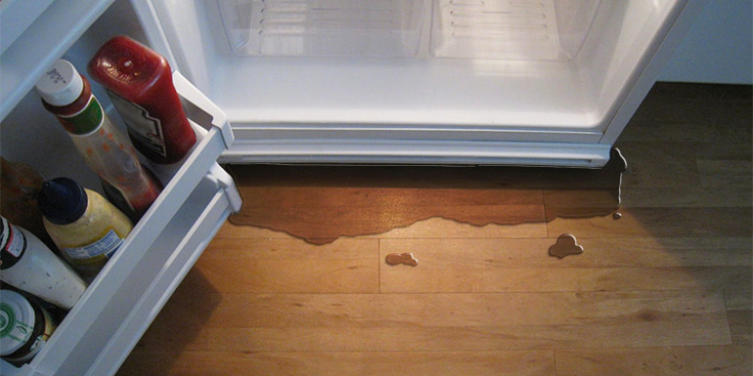
Image Source: www.mrrooter.com
Why Water Is On Your Floor
Seeing refrigerator leaking water on floor is a common issue. It happens for a few reasons. Most point back to the system that handles melting ice or the system that provides water for ice and drinks.
Interpreting The Defrost Drain System
Fridges work by making things cold. This creates ice build-up inside, especially in the freezer. Fridges have a plan for this. They have a defrost cycle. This cycle warms up just enough to melt the ice. The melted water needs a place to go.
- Melted water runs down a channel.
- This channel leads to a drain hole.
- The drain hole connects to a
fridge drain tube blockedor clear. - The tube sends water to a small dish, or pan, under the fridge.
- The water in the pan slowly dries up from the heat of the fridge motor.
If any part of this path is blocked, the water cannot go where it should. It backs up. Then, it finds another way out. That way is often onto your floor.
Common Spots Where Fridges Leak Water
Water can come from different places on your fridge. Where you see the water helps tell you what is wrong. Is it under the freezer door? Is it near the bottom front? Is it coming from the back? Each spot hints at a different cause.
Clogged Defrost Drain Line Issues
This is perhaps the most common reason for a refrigerator leaking water on floor. As we talked about, the defrost cycle makes ice melt. If the drain line for this water gets blocked, water backs up.
- How it gets blocked: Small bits of food, ice, or dirt can fall into the drain hole. Over time, this makes a clog.
- What happens: Water melts but cannot go down the tube. It freezes in the channel or overflows.
- Where water appears: Often, water leaks from the freezer section. It might build up on the freezer floor. Then, it drips or runs down into the fridge section. Finally, it leaks out onto the floor from the bottom or door seals.
Finding the clogged defrost drain line is key to fixing this leak. The drain hole is usually at the back wall of the freezer. It might be behind a panel.
Refrigerator Drain Pan Overflowing
The drain pan is under the fridge. It catches water from the defrost drain line. Normally, this water is a small amount. It dries up fast.
- Why it overflows: The main reason is the drain line above it is blocked. This sends a lot of water to the pan at once. The pan cannot hold it all. Or, the drain pan itself might be cracked or damaged.
- What happens: Water fills the pan too fast. It spills over the sides.
- Where water appears: Water is found directly under the fridge, especially at the front or sides near the bottom. This is a common cause for
fridge leaking from bottom.
Checking the refrigerator drain pan overflowing needs you to look under the fridge. You might need to pull the fridge out.
Ice Maker System Leaks
If your fridge has an ice maker, it has a water supply line and valves. Issues with these parts cause ice maker water leak.
- How it leaks:
- The water fill tube that goes into the ice maker might be cracked or blocked. When water flows, it spills out.
- The water inlet valve, which lets water into the fridge, might stick open a little. This sends too much water, causing spills or ice blockages that lead to leaks.
- The water supply line hose itself might be loose or damaged.
- What happens: Water leaks inside the freezer near the ice maker. It can pool there or drip down.
- Where water appears: You might see water inside the freezer or leaking from the freezer door. It can also drip down and cause
freezer leaking water, eventually reaching the floor.
Fixing an ice maker water leak means looking closely at the ice maker and its water connections.
Freezer Leaking Water
When you see freezer leaking water, it’s often connected to the issues above.
- Common causes:
- A
clogged defrost drain linecan cause water to pool on the freezer floor. - An
ice maker water leakhappens inside the freezer. - Sometimes, a door seal on the freezer is bad. Warm air gets in, melts ice fast, and creates extra water that the drain cannot handle.
- A
- What happens: Water collects inside the freezer. It might freeze again, making layers of ice. Or, it might find a way out, usually dripping down into the fridge section or onto the floor.
- Where water appears: Inside the freezer, under the freezer door, or dripping from the bottom of the fridge if the water goes down that far.
Dealing with freezer leaking water means checking the drain line, the ice maker, and the door seals for problems.
Refrigerator Water Filter Leaks
Many modern fridges have a water filter. It cleans the water for the ice maker and water dispenser. If this filter is not installed right or breaks, it can leak.
- How it leaks:
- The filter was not put in correctly after changing it. The seal is bad.
- The filter housing (where the filter sits) is cracked.
- The filter itself is faulty.
- What happens: Water leaks from the filter area. This area is often inside the fridge compartment or behind a panel at the bottom front.
- Where water appears: Water can be found inside the fridge or leaking onto the floor from the front bottom of the fridge. This is a clear sign of a
refrigerator water filter leak.
If you see a refrigerator water filter leak, check the filter first. Make sure it’s seated right.
Refrigerator Condensation Leaks
Condensation is water drops that form from moist air hitting cold surfaces. It’s normal to have some inside a fridge. A refrigerator condensation leak happens when too much builds up or it can’t drain away.
- How it leaks:
- A poor door seal lets warm, moist air into the cold fridge or freezer. This creates a lot of condensation.
- The normal drain path for condensation (the defrost drain) is blocked.
- What happens: Water pools inside the fridge, often on shelves or at the bottom. If there’s a lot, it can spill out.
- Where water appears: Inside the fridge, dripping from shelves, or leaking from the bottom of the fridge. This can look like a
fridge leaking from bottom.
A refrigerator condensation leak often points back to a door seal problem or a blocked drain line.
Fridge Leaking From Bottom
A fridge leaking from bottom is a general symptom. The actual source of the leak is usually one of the issues higher up.
- Possible sources:
- An
overflowing refrigerator drain pandirectly under the fridge. - A
clogged defrost drain lineletting water run down through the fridge. - A
freezer leaking waterthat drips all the way to the bottom. - A
refrigerator water filter leaklocated at the bottom front.
- An
- What happens: Water appears under the appliance base.
- Where water appears: Under the front, sides, or back of the fridge on the floor.
When your fridge leaking from bottom, you need to check the likely sources: the drain pan, the defrost drain, the ice maker/filter area.
Pinpointing The Cause Of The Leak
To how to fix a leaking fridge, you must find where the water is coming from. This takes a little looking.
Steps To Find The Leak Source
- Unplug the fridge: Safety first. Always unplug the appliance before looking around inside or behind it.
- Pull the fridge out: Move the fridge away from the wall. This lets you see the back and under parts.
- Look under the fridge: Find the drain pan. Is it full? Is it cracked? Is there water pooled around it?
- Look at the back of the fridge: See if any water lines (like for the ice maker) are wet or dripping. Check valve connections.
- Open the freezer door: Look for ice build-up where it shouldn’t be (like on the floor or back wall). Find the defrost drain hole (usually at the back bottom inside the freezer). Is there ice or water pooled there?
- Open the fridge door: Look for water on shelves or at the bottom. If you have a water filter inside, check around it. Look at the back wall for a drain channel. Is it clear?
- Check door seals: Close the doors on a piece of paper or a dollar bill. Can you pull it out easily? If yes, the seal is bad.
Taking these steps helps you narrow down the problem. Based on where you see the water, you can guess the cause.
- Water under fridge: Drain pan overflow, clogged drain line (water followed path), bottom filter leak.
- Water inside freezer: Clogged defrost drain line, ice maker leak.
- Water inside fridge: Clogged defrost drain line (backed up from freezer), condensation leak (bad seal or drain), inside water filter leak.
- Water dripping from door: Bad door seal, ice maker leak (freezer), or clogged drain line (freezer).
Stopping The Leak: Step-By-Step Fixes
Once you know why your fridge is leaking water, you can fix it. Here are solutions for the common problems.
Fixing A Clogged Defrost Drain Line
This fix often stops refrigerator leaking water on floor from the freezer area.
- Needed tools: Towels, warm water, turkey baster or syringe, thin flexible tool (like wire or pipe cleaner), possibly a hairdryer.
- Steps:
- Empty the freezer. Unplug the fridge.
- Find the drain hole. It’s usually at the back of the freezer, often below the cooling coils, possibly behind a panel. You might need a screwdriver to remove the panel. Take a picture before you remove it.
- Clear ice from the hole. If you see ice blocking the hole or channel, melt it. Use a hairdryer on a low setting or pour a little warm water carefully. Use towels to catch melting ice.
- Clean the drain line. Once the hole is clear, use a thin, flexible tool. Gently push it into the drain hole. Move it up and down the tube to break up clogs. Push it down as far as it goes.
- Flush the line. Use a turkey baster or syringe. Fill it with warm water mixed with a little baking soda or mild soap. Squirt the mix into the drain hole. See if the water goes down easily. If it backs up, the clog is still there. Repeat step 4 and 5.
- Put panels back. Once water drains freely, reattach any panels you removed.
- Plug fridge back in. Wait a few hours for it to cool down before putting food back.
This process directly addresses the fridge drain tube blocked issue.
Solving An Overflowing Drain Pan
This is usually a result of the drain line clog, but the pan itself might need care.
- Needed tools: Towels, gloves, possibly a sponge or small cup.
- Steps:
- Unplug the fridge. Pull it out from the wall.
- Find the drain pan. It’s usually at the bottom back of the fridge. It might slide out.
- Remove the pan carefully. It might be full of water. Slide it out gently. Be ready for spills. Some pans might be attached and hard to remove fully. You might need to tilt it and soak up water.
- Empty and clean the pan. Pour the water out. Wash the pan with soap and water. Check for cracks. If it’s cracked, it needs to be replaced.
- Check the drain tube opening. Look at where the drain tube from the freezer/fridge drips into the pan. Make sure that opening is clear. Sometimes gunk builds up there.
- Put the pan back. Slide it back into its spot. Make sure it’s seated correctly.
- Plug fridge back in.
If the drain pan overflowed because the drain line was blocked, fixing the drain line (above) should stop the pan from overflowing again, assuming the pan is not damaged. If the pan itself is cracked, you need a new one.
Repairing An Ice Maker Water Leak
Fixing an ice maker water leak depends on the exact part that failed.
- Needed tools: Towels, screwdriver, possibly a wrench, replacement parts (valve, tube, filter).
- Steps:
- Unplug the fridge. Turn off the water supply valve to the fridge. This valve is often under the sink or behind the fridge.
- Find the leak source. Look around the ice maker inside the freezer. Check the water line going to it. Look at the water inlet valve (usually at the back of the fridge where the house water line connects). Check the connection point of the water line to the fridge.
- Tighten loose connections. If a connection is just loose, use a wrench or screwdriver to tighten it gently.
- Replace faulty parts.
- Water fill tube: If the plastic tube filling the ice maker is cracked or has an ice blockage causing overflow, clear the ice. If cracked, the tube might need replacing or sealing.
- Water inlet valve: If the valve is dripping or not closing right, it needs to be replaced. This is a part at the back of the fridge. You’ll need to disconnect water lines and electrical wires.
- Water supply line: If the hose from the wall valve to the fridge is leaking, tighten connections. If the hose is damaged, replace it. Use the correct type of hose (usually braided stainless steel is best).
- Turn water back on slowly. Check for leaks.
- Plug fridge back in.
Repairing freezer leaking water related to the ice maker will involve these steps.
Fixing A Refrigerator Water Filter Leak
A refrigerator water filter leak is often easy to fix.
- Needed tools: Towels, maybe a shallow pan.
- Steps:
- Turn off the water supply to the fridge. Unplug the fridge if the filter is at the bottom front.
- Remove the current filter. Follow your fridge’s guide. Be ready with towels or a pan to catch drips.
- Check the old filter and housing. Look at the rubber O-rings on the old filter. Are they damaged or missing? Look inside the filter housing on the fridge. Is it cracked? Is there debris?
- Install a new filter correctly. Make sure it’s the right filter for your model. Follow the instructions exactly. Filters usually twist or push into place. Make sure it’s seated firmly and correctly aligned.
- Turn water back on slowly. Check for leaks around the filter area.
- If leak stops, you’re done. If it still leaks, the housing might be cracked. This is a bigger fix or needs a repair person.
- Plug fridge back in (if unplugged).
Stopping Refrigerator Condensation Leaks
This often means fixing a door seal or a drain problem already discussed.
- Needed tools: Flashlight, maybe a cleaner, paper or dollar bill.
- Steps:
- Check door seals. Look closely at the rubber seals (gaskets) around the fridge and freezer doors. Are they torn, cracked, or dirty? Clean them with warm, soapy water. Dry them.
- Test the seal. Close the door on a piece of paper. If it pulls out easily, the seal is bad. Do this all around the door edge.
- Adjust doors (if possible). Sometimes the door hangs a little off. This makes a gap in the seal. Check your fridge manual to see if doors can be adjusted.
- Replace bad seals. If cleaning doesn’t help and the paper test fails, the seal needs replacing. Get the right part for your fridge model. This can involve pulling off the old seal and pressing or screwing on a new one.
- Check the drain line. If seals are good, but you still have lots of condensation, it could be a
clogged defrost drain line. Fix that using the steps above.
Fixing the seal reduces warm air entry, which cuts down on condensation and stops related leaks.
Addressing Fridge Leaking From Bottom
As noted, this means looking at the possible sources under or behind the fridge.
- Steps: Follow the diagnosis steps above. Look for:
- An overflowing or cracked drain pan.
- Water dripping from the end of the defrost drain tube into the pan area (might indicate a clog higher up).
- A leak from the water filter housing (if it’s at the bottom front).
- A leak from the water inlet valve or supply line at the back bottom.
Based on what you find, use the specific fix from the sections above (drain pan, drain line, filter, water line). Learning how to fix a leaking fridge that leaks from the bottom means checking these specific low-down parts.
When To Call A Repair Person
Sometimes, fixing a leaking fridge is more than a simple DIY task.
- Complex issues: If you can’t find the leak source, or if it seems to be from a sealed system part (like the cooling coils themselves), you need an expert.
- Difficult repairs: Replacing a water inlet valve or a door seal might be tricky for some people. If you’re not comfortable, call a pro.
- Still leaking: You tried a fix, but the
refrigerator leaking water on floorcontinues. A repair person has more tools and knowledge to find hidden problems. - Fridge is old: Sometimes, constant leaks mean the fridge is reaching the end of its life. A repair person can tell you if it’s worth fixing or if buying a new one is better.
Keeping Your Fridge From Leaking
Some simple steps can help prevent many fridge leaks.
- Clean the defrost drain regularly: Make cleaning the drain hole part of your fridge cleaning. Use warm water and a thin tool a few times a year. This helps prevent
fridge drain tube blocked. - Check the drain pan: Look at the drain pan under the fridge now and then. Clean it if it looks dirty. Make sure it’s not cracked.
- Inspect door seals: Check your door seals often. Clean them. Make sure they seal tight. Replace them if they are bad.
- Change water filter right: When you change the water filter, follow the steps carefully. Make sure it’s seated correctly to avoid a
refrigerator water filter leak. - Check water lines: Look at the water line to the ice maker/dispenser. Make sure it’s not bent or crimped. Check connections for tightness.
| Leak Location | Common Cause | What to Check | Simple Fix |
|---|---|---|---|
| Under Fridge | Overflowing Drain Pan | Drain Pan, Defrost Drain Line | Empty Pan, Clear Drain Line |
| Under Fridge (Front) | Water Filter Leak | Water Filter, Housing | Reinstall Filter, Check Housing |
| Inside Freezer | Clogged Defrost Drain Line | Drain Hole in Freezer | Clear Drain Line |
| Inside Freezer | Ice Maker Leak | Ice Maker, Water Line, Valve | Tighten/Replace Parts |
| Inside Fridge | Clogged Defrost Drain Line | Drain Channel in Fridge | Clear Drain Line |
| Inside Fridge | Condensation Leak (excess) | Door Seals, Defrost Drain Line | Clean/Replace Seals, Clear Drain |
| Dripping from Doors | Bad Door Seals, Internal Leaks | Door Seals, Drain/Ice Maker | Replace Seals, Fix Internal Leak |
| Freezer Floor | Clogged Defrost Drain Line | Drain Hole in Freezer | Clear Drain Line |
By taking care of these parts, you can stop most leaks before they start and avoid refrigerator leaking water on floor.
FAQ: Your Questions About Fridge Leaks Answered
H5 What does it mean if water is leaking from my fridge?
Water leaking means there’s a problem with how your fridge handles water. It’s usually due to a blocked drain line, a full or broken drain pan, or a leak in the water supply for the ice maker or filter.
H5 Can a clogged drain pan cause a fridge to leak?
Yes, a refrigerator drain pan overflowing is a direct cause of a fridge leaking from bottom. The pan fills up and spills water onto the floor. The pan overflows because the drain line feeding it is blocked, or the pan itself is damaged.
H5 How do I find my defrost drain in my freezer?
The defrost drain hole is typically on the back wall inside the freezer. It’s usually a small hole or opening. You might need to remove a panel at the bottom of the back wall to see it clearly. Look below the freezer’s cooling coils.
H5 How do I clear a clogged defrost drain line?
First, unplug the fridge. Locate the drain hole in the freezer. Use warm water and a thin, flexible tool (like a pipe cleaner) to gently push into the hole and break up any ice or debris. Flush with warm water until it drains freely into the pan below.
H5 Why is my new refrigerator leaking water?
Even new fridges can leak. Common causes include:
* The water supply line for the ice maker/dispenser wasn’t connected right during setup.
* The water filter was not installed correctly.
* The fridge wasn’t level, causing drainage issues (less common, but possible).
* A part was faulty from the start (rare, but happens).
Check the water line connections and the water filter installation first.
H5 Can a faulty water filter cause a leak?
Yes, absolutely. A refrigerator water filter leak happens if the filter is not put in right, or if the filter or its housing is cracked or broken. Water will leak from the filter area.
H5 Is a little bit of water under the fridge normal?
No, you should not see standing water under your fridge. The water in the drain pan is meant to dry up quickly. Visible water on the floor means something is wrong and needs to be checked.
H5 How serious is a fridge water leak?
A fridge water leak should be fixed fast. Water can damage your floor, your cabinets, and even the fridge itself over time. It can also cause mold or mildew. Plus, it’s a safety hazard – someone could slip.
H5 Can ice build-up in the freezer cause a leak?
Yes, excess ice build-up can cause freezer leaking water. This often happens because warm air is getting into the freezer (bad seal) or the defrost system isn’t working. When the ice melts (during defrost or if the door is left open), the amount of water can be too much for a partly blocked drain, causing it to leak.
H5 What should I do first when I see my fridge leaking?
First, find where the water is coming from. Is it under the fridge, inside the freezer, inside the main part, or from a door? Unplug the fridge if you need to pull it out or check inside electrical areas like the back. Then, based on where the water is, check the likely cause (drain pan, drain line, ice maker, water filter, door seals).
Finding and fixing the source of a fridge leak quickly can save you money and prevent damage. Most common leaks are fixable with basic tools and steps.