
What is a TV show screenplay, and can I write one? A TV show screenplay is a written document that outlines a television program. It details the dialogue, actions, and settings for each scene. Yes, you can write one with dedication and practice! This comprehensive guide will walk you through the essential steps to master the art of TV script writing.
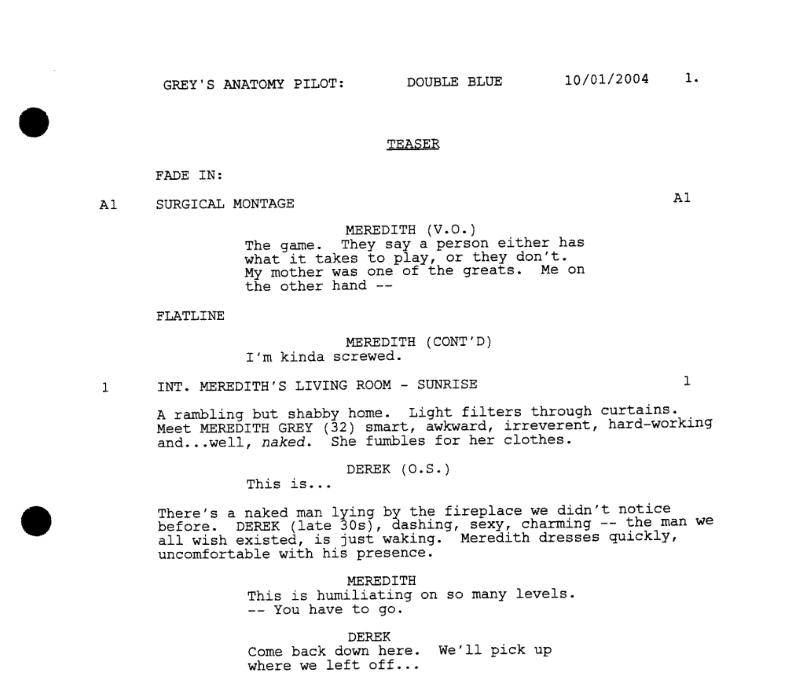
Image Source: screencraft.org
The Foundation: Crafting Your Television Series Bible
Before you even think about writing a single line of dialogue, you need a solid foundation. For a television series, this often takes the form of a television series bible. Think of this as the blueprint for your entire show. It’s a living document that holds all the critical information that makes your series unique.
What Belongs in Your Series Bible?
- Logline: A one-sentence summary that hooks the reader and conveys the core conflict of your show.
- Synopsis: A brief overview of the show’s premise, central themes, and overall narrative direction.
- Characters: Detailed backstories, motivations, goals, and relationships for your main and recurring characters. This is crucial for strong character development.
- World-Building: The rules, setting, and atmosphere of your show’s universe.
- Thematic Exploration: What are the underlying messages or ideas you want to explore?
- Season Overviews: A breakdown of the major plot points and character arcs for each season.
- Pilot Episode Outline: A more detailed plan for the first episode.
A well-developed series bible ensures consistency and depth throughout your television series. It’s your ultimate reference point.
Deconstructing the Pilot Episode: Your First Impression
The pilot episode is your golden ticket. It needs to grab the audience and the network’s attention, clearly defining the show’s tone, style, and potential. It must introduce your main characters, establish the core premise, and hint at the larger story arc.
Key Elements of a Strong Pilot:
- Hook: An immediate, compelling reason for viewers to keep watching.
- Introduction of Core Conflict: What is the central problem or tension that drives the series?
- Character Introductions: Make your main characters memorable and relatable.
- Establish the World: Let viewers know where and when the story takes place.
- Hint at Future Episodes: Create intrigue and make viewers want to see what happens next.
- Clear Tone and Genre: Is it a comedy, drama, sci-fi thriller? The pilot must communicate this.
Your pilot needs to function as a self-contained story while also setting the stage for many more episodes.
Mastering Screenplay Format: The Language of Film and TV
Adhering to screenplay format is non-negotiable. It’s the industry standard that production teams rely on. Correct formatting ensures clarity and professionalism. Think of it as the universal language of filmmaking.
Essential Screenplay Format Components:
| Element | Description | Example |
|---|---|---|
| Scene Heading | Indicates whether the scene is INT. (interior) or EXT. (exterior), Location, and Time of Day. | INT. COFFEE SHOP – DAY |
| Action Line | Describes what the audience sees and hears. Written in the present tense. | ANNA sips her coffee, gazing out the window. |
| Character Name | Centered above their dialogue. | ANNA |
| Parenthetical | Brief direction for the actor, placed below the character name, in parentheses. | (whispering) |
| Dialogue | What the character says. | I can’t believe this is happening. |
| Transition | Indicates how a scene ends or transitions to the next. Placed on the right margin. | FADE OUT. |
Professional screenplay software (like Final Draft, Celtx, or WriterDuet) will automatically handle most of these formatting rules, but it’s vital to understand them.
Action Lines: Show, Don’t Just Tell
Action lines are your visual storytelling tools. They describe the physical world of your story and the actions of your characters.
- Be Concise: Every word counts.
- Use Active Voice: “John walks across the room” is stronger than “The room is crossed by John.”
- Describe What’s Visible and Audible: Focus on sensory details.
- Keep it in the Present Tense: As if it’s happening right now.
Dialogue: The Heartbeat of Your Characters
Dialogue writing is where characters truly come alive. It’s not just about what they say, but how they say it.
Crafting Authentic Dialogue:
- Voice: Each character should have a distinct voice. Consider their background, personality, and education.
- Subtext: What is not being said is often as important as what is. Dialogue should hint at underlying emotions and motivations.
- Purpose: Every line of dialogue should serve a purpose – revealing character, advancing the plot, or building tension.
- Naturalism: Read your dialogue aloud. Does it sound like real people talking? Avoid overly formal or unnatural phrasing.
- Economy: Trim unnecessary words. Make every word count.
Dialogue writing is an art that requires constant practice.
Building Compelling Characters: The Soul of Your Series
Exceptional character development is what makes audiences connect with a show. Your characters need to be more than just names on a page; they need to feel real, with flaws, desires, and believable motivations.
Developing Your Characters:
- Backstory: What happened before the story began that shaped them?
- Motivation: What do they want more than anything? This drives their actions.
- Goals: What are they actively trying to achieve in the short and long term?
- Flaws: Perfect characters are boring. Give them weaknesses that create conflict.
- Relationships: How do they interact with other characters? These dynamics reveal much about them.
- Internal Conflict: What are the battles happening within them?
Character development is an ongoing process. As your series progresses, your characters should evolve and change based on their experiences.
Structuring Your Narrative: The Backbone of Your Story
Every compelling story needs a strong structure. For a TV show, this often involves a season-long arc and individual episode arcs.
Understanding Plot Structure:
- Three-Act Structure: While often associated with movies, the three-act structure can be adapted for individual episodes.
- Act I: Introduction of characters, setting, and the inciting incident.
- Act II: Rising action, obstacles, and complications.
- Act III: Climax, falling action, and resolution (or a cliffhanger).
- Episodic vs. Serialized:
- Episodic: Each episode tells a complete story, with minimal carry-over from one to the next (e.g., many sitcoms).
- Serialized: Episodes build upon each other, with ongoing plotlines and character arcs (e.g., dramas like Breaking Bad). Most modern TV shows are heavily serialized.
- Story Arc: This refers to the overarching narrative journey of the series and its characters over multiple episodes or seasons. It’s about growth, change, and the cumulative impact of events.
Scene Writing: The Building Blocks of Your Script
Each scene writing instance is a crucial piece of the puzzle. A scene should advance the plot or reveal character, ideally both.
Elements of Effective Scene Writing:
- Purpose: What is the goal of this scene? What information needs to be conveyed or what action needs to happen?
- Conflict: Even quiet scenes benefit from a degree of tension or unspoken conflict.
- Pacing: Vary the length and intensity of your scenes.
- Visuals: Think about how the scene will look on screen.
Scene writing requires a keen eye for detail and a clear understanding of how each moment contributes to the overall narrative.
Creating a Professional Screenplay: Polishing Your Work
To create a professional screenplay, your writing needs to be clear, concise, and compelling. This involves not only the story and characters but also the presentation.
Tips for a Professional Polish:
- Read Through Aloud: Catch awkward phrasing and clunky dialogue.
- Get Feedback: Share your script with trusted readers and be open to constructive criticism.
- Revise, Revise, Revise: The first draft is rarely perfect. Rewriting is an essential part of the process.
- Proofread Meticulously: Typos and grammatical errors can undermine your professionalism.
- Formatting Check: Ensure your screenplay format is perfect.
Frequently Asked Questions (FAQ)
Q1: How long should a TV pilot script be?
A1: For a one-hour drama, a pilot script is typically between 50-60 pages. For a half-hour comedy, it’s usually 22-30 pages.
Q2: Do I need special software to write a screenplay?
A2: While not strictly necessary, professional screenplay software like Final Draft, Celtx, or WriterDuet is highly recommended. They automate formatting, saving you time and ensuring accuracy.
Q3: How do I develop unique character voices?
A3: Spend time on character development. Think about their past, their education, their social circle, and their personality quirks. These factors shape how they speak. Reading your dialogue aloud from different characters’ perspectives helps immensely.
Q4: What’s the difference between a spec script and a studio script?
A4: A spec script is an original screenplay written on the assumption that it will be bought and produced. A studio script is commissioned by a studio or production company.
Q5: How do I pitch my TV show idea?
A5: You typically need a television series bible and a compelling logline. Pitching often involves a verbal presentation of your concept, characters, and story potential. Networking and building relationships are also crucial.
By focusing on a strong television series bible, a captivating pilot episode, meticulous screenplay format, engaging dialogue writing, deep character development, a solid plot structure, and effective scene writing, you can master the art of crafting a professional screenplay and bring your television show to life. Happy writing!