
Why is AC not blowing cold air? This is a common problem. It often means the air conditioner is not working right. The air coming from the vents should be cold, not warm. Is the AC compressor running? This is key. The compressor is like the heart of the AC system. If it is not running, the system cannot make cold air. If your AC unit is blowing warm air, or you think the AC compressor is not running, you need to do some checks. This guide helps you tell if your air conditioner is working and shows you steps for troubleshooting AC issues. You will learn how to find symptoms of air conditioner problems and what to do next. We will cover checking AC airflow, what warm air from vents means, basic AC diagnostic steps, signs of low refrigerant, why your AC is not blowing cold air, and how to test air conditioner performance.
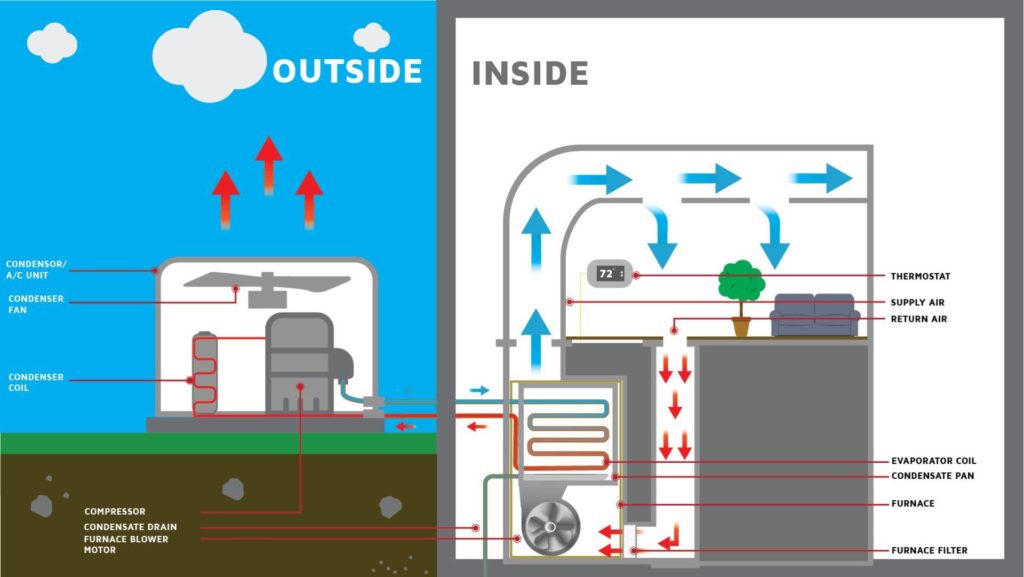
Image Source: callrandazzo.com
Deciphering if Your AC is Working Right
Your air conditioner should keep your home cool and comfortable when it is hot outside. When it works well, you don’t think about it much. But sometimes, it stops working as it should. How can you tell for sure if it is having problems? It is not always just that the house feels warm. There can be other signs. Knowing these signs helps you know when to act.
Symptoms of Air Conditioner Problems
Many things can show you your AC unit is not working right. Some symptoms are easy to spot. Others are more hidden. Here are common signs that tell you something is wrong with your air conditioner.
- Air is Not Cold: The most clear sign is that the air coming from the vents is not cold. It might be just cool, room temperature, or even warm. This is a big sign that the AC is not cooling properly.
- Warm Air from Vents: If you feel air blowing, but it is warm air from vents, this is a major issue. The AC should cool the air before sending it into your home. Warm air means the cooling part is broken.
- Weak Airflow: Is the air coming out of the vents slowly? Good AC airflow should be strong. If it feels weak, it means air is not moving through the system right.
- Strange Noises: Your AC unit makes some noise when it runs. But new, loud, or strange sounds are bad signs. Listen for banging, grinding, hissing, buzzing, or clicking that sounds different from normal.
- Bad Smells: Does the air from your vents smell moldy, musty, or like something is burning? This is not normal. Smells can mean mold in the system, electrical problems, or dirty parts.
- High Energy Bills: If your power bill jumps up but you are using the AC the same amount, the unit might be working too hard. This can happen when parts are failing or the system is not running well.
- Water Leaks: Seeing water around your indoor unit or the outdoor unit (besides normal condensation drip from the outdoor unit) is a sign of a problem. This can be blocked drains or frozen coils.
- Unit Turns On and Off Quickly: If the AC turns on, runs for a short time, then turns off repeatedly, this is called “short cycling.” It means the unit is struggling.
- Ice on Coils or Lines: Check the copper lines going to the outdoor unit and the indoor coil (in your furnace). If you see ice, this is a big sign something is wrong, often pointing to low refrigerant or airflow issues.
These symptoms of air conditioner problems tell you it is time to check your system more closely. Troubleshooting AC issues starts with noticing these signs.
Troubleshooting AC Issues: First Steps
When you see signs that your AC is not working, don’t worry too much yet. There are simple checks you can do. These basic AC diagnostic steps can often find simple problems or help you explain things to a repair person.
h4 Basic Checks to Start
Begin with the easiest things. These don’t need special tools or knowledge.
- Check the Thermostat:
- Make sure the thermostat is set to COOL.
- Is the temperature setting lower than the temperature in your home? The AC won’t turn on if the house is already cooler than the setting.
- Is the fan setting on AUTO? This is normal for cooling. If it’s on ON, the fan will blow all the time, even if the AC is not cooling. This can make it feel like warm air from vents is blowing.
- Are the batteries in the thermostat good? Change them if they are old or the screen is blank.
- Check the Power:
- Find the circuit breaker for your AC system. It might be in your main electrical panel or a small box near the outdoor unit.
- Has a breaker tripped? If so, it will be between the ON and OFF positions or fully OFF. Flip it firmly to OFF, then back to ON. Caution: Only do this once. If it trips again right away, do not reset it. There is a serious problem.
- Is there a power switch near the outdoor unit? It often looks like a light switch in a gray box mounted on the wall. Make sure it is ON.
- Check the power switch near your indoor unit (furnace or air handler). It might look like a light switch. Make sure it is ON.
- Check Air Filters:
- A dirty air filter is a very common cause of AC problems. A clogged filter stops air from moving freely. This can cause weak airflow, ice buildup, and make the AC not cooling well.
- Find your air filter. It is usually in the return air vent, in the furnace/air handler cabinet, or in a filter box nearby.
- Pull it out. Is it covered in dust and dirt?
- Change it if it is dirty. Use the right size filter. This is a key step in troubleshooting AC issues. A clean filter helps the AC work much better.
- Check Vents and Returns:
- Walk around your house. Are any supply vents (where cold air comes out) closed? Open them all.
- Are any return air vents (where the AC sucks air in) blocked by furniture, rugs, or curtains? Move anything blocking them. Return vents need to pull air freely.
These simple checks fix many common AC problems. If your AC is still not cooling after these steps, you need to look closer at the unit itself.
Checking AC Airflow
Good airflow is vital for your AC to work well. If air isn’t moving right, the system can’t cool your home. Checking AC airflow involves feeling the air and looking at the vents.
h4 Feeling the Air
- Go to a supply vent (where air blows out) in a room.
- Put your hand near the vent. Do you feel air blowing out?
- Is the air blowing out with good speed? Or does it feel very weak?
- Is the air cold? It should feel much colder than the room air. If it feels like warm air from vents, something is wrong.
h4 Looking at Vents and Ductwork
- Make sure all supply vents are open. People sometimes close vents in rooms they don’t use. This can mess up the air balance in the system and hurt performance.
- Check return air vents. These are usually larger than supply vents. Are they clean? Are they blocked? They need to pull in a lot of air.
- Look near the indoor unit (furnace/air handler). Are there any obvious leaks in the ductwork near the unit? Leaks mean cooled air is escaping before it gets to your rooms, or uncooled air is being pulled in. This reduces AC airflow.
Weak AC airflow can cause many problems. It means the AC is not cooling your home as it should. Causes can be a dirty filter, blocked vents, problems with the fan motor (in either the indoor or outdoor unit), or issues inside the ductwork itself.
Inspecting the Indoor Unit
The indoor unit is usually part of your furnace or air handler. It contains the evaporator coil (which gets cold) and the blower fan (which pushes air). Problems here directly impact AC airflow and cooling.
h4 What to Look and Listen For Inside
- Listen for the Blower Fan: When the AC is supposed to be on, can you hear the fan running inside? If not, the fan motor might have a problem or not be getting power. No fan means no AC airflow.
- Check the Evaporator Coil: If you can safely access the coil (usually inside the furnace cabinet, with power OFF), look at it.
- Is it frozen? A layer of ice on the coil means it cannot absorb heat from the air. This is a major cause of warm air from vents and weak airflow.
- Is it very dirty? A thick layer of dirt on the coil blocks airflow and stops it from cooling the air well.
- Check the Drain Pan: There is a pan under the evaporator coil to catch condensation (water that forms as air cools).
- Is the pan full of water? A clogged drain line can cause the pan to fill up. Some systems have a safety switch that turns off the AC when the pan is full to prevent leaks.
- Listen for Strange Noises: Grinding or scraping sounds from the indoor unit often mean a problem with the blower fan motor bearings.
Important Safety Note: Always turn off the power to the indoor unit at the breaker before opening panels or touching anything inside. Electrical shock is dangerous.
Inspecting the Outdoor Unit
The outdoor unit contains the compressor and the condenser coil. This is where the heat from inside your home is released outside. It needs to work properly for the AC to cool. This is where you check if the AC compressor is running.
h4 What to Look and Listen For Outside
- Listen for the Compressor: When the thermostat is set to cool and the indoor fan is running, go outside to the unit.
- Do you hear a low hum or buzzing sound? This is often the sound of the compressor running.
- Do you hear a clicking sound, but no hum? The compressor might be trying to start but failing.
- Do you hear nothing at all? The compressor may not be getting power or is broken. Is the AC compressor running? If not, the AC won’t cool.
- Look at the Fan: There is a large fan on top of the outdoor unit.
- Is the fan spinning? It should be spinning rapidly when the AC is cooling.
- If the fan is not spinning, the motor may be bad or not getting power.
- Check for Obstructions: Is the outdoor unit covered in dirt, leaves, grass clippings, or other debris? Are there plants or fences too close to it?
- Clear away anything blocking the sides or top of the unit. It needs clear space to pull in and push out air. A dirty or blocked condenser coil cannot release heat well, which hurts performance and can cause the unit to overheat.
- Check the Electrical Disconnect: There is usually a small box with a switch or pull-out handle near the outdoor unit. Make sure the switch is ON or the handle is pushed in. This is the local power disconnect for the outdoor unit.
- Listen for Strange Noises: Grinding, rattling, or screeching sounds from the outdoor unit can mean problems with the fan motor or compressor. Hissing or bubbling sounds can be signs of low refrigerant.
Checking these points at the outdoor unit helps you figure out why your AC is not blowing cold air and if the AC compressor is running. If the compressor is not running and the outdoor fan is not spinning, it strongly suggests a problem with the outdoor unit or its power supply.
Deciphering Warm Air from Vents
Feeling warm air from vents when the AC is on is frustrating. It means the cooling cycle is not happening. This can be caused by several issues, many of which relate back to the checks you just did.
h4 Common Reasons for Warm Air
- Low Refrigerant: This is a frequent cause. Refrigerant is the stuff that absorbs heat from indoor air and releases it outside. If the level is low (usually due to a leak), the AC cannot cool the air properly. You might see ice on coils or lines. Signs of low refrigerant include reduced cooling, ice, and sometimes hissing/bubbling sounds.
- Compressor Problem: If the AC compressor is not running, the cooling cycle stops. This means the outdoor unit isn’t pumping refrigerant, so the indoor coil doesn’t get cold. Warm air just blows through.
- Fan Problems (Indoor or Outdoor): If the indoor fan isn’t running, no air gets pushed over the cold coil. If the outdoor fan isn’t running, the system can’t release heat outside, causing the system to overheat and potentially shut down.
- Dirty Coils: Both the indoor evaporator coil (if frozen or dirty) and the outdoor condenser coil (if dirty) can stop the system from cooling air effectively.
- Dirty Air Filter: A very clogged filter severely limits airflow over the indoor coil. The coil can get too cold and freeze up. Then you get weak airflow and warm air as the ice melts.
- Electrical Issues: Power problems, tripped breakers, or faulty wiring can prevent the compressor or fans from turning on.
- Thermostat Issues: If the thermostat is not calling for cool, the system won’t try to cool.
Pinpointing the exact reason for warm air from vents often requires going through the AC diagnostic steps systematically.
Grasping Signs of Low Refrigerant
Low refrigerant is a common issue that stops an AC from cooling. Refrigerant is important because it moves heat. If there is not enough, the AC cannot work right. Low refrigerant is almost always because of a leak, not because it gets “used up.”
h4 How to Spot Low Refrigerant
- Poor Cooling: The most obvious sign is that the AC is not cooling well. The air might be slightly cool, but not cold enough to lower the house temperature much.
- Ice Formation: You might see ice buildup on the copper lines going to the outdoor unit (especially the fatter line) or on the evaporator coil inside the furnace/air handler. When there’s not enough refrigerant, the pressure drops, causing parts of the system to get too cold, below freezing.
- Hissing or Bubbling Sounds: Sometimes, a refrigerant leak can make a hissing or bubbling sound, often heard near the indoor or outdoor unit.
- Higher Energy Bills: An AC running low on refrigerant has to work harder to try to cool, using more power.
- Compressor Running Constantly: If the system is trying to cool but can’t reach the thermostat setting due to low refrigerant, the outdoor unit might run non-stop.
If you suspect low refrigerant based on these signs, you need a professional. Finding and fixing the leak, and then adding the correct amount of refrigerant, requires special tools and training. Adding refrigerant without fixing the leak is a waste of time and money, as it will just leak out again. Signs of low refrigerant are a clear signal to call an HVAC technician.
Fathoming How to Test Air Conditioner Performance
You can do some simple tests to get an idea of how well your AC is cooling. These tests give you numbers that can help you know if the system is cooling as it should. This is how to test air conditioner performance in a basic way.
h4 Checking the Temperature Split
The key test is measuring the “temperature split.” This is the difference between the temperature of the air going into the indoor unit (return air) and the temperature of the air coming out of the vents (supply air).
Steps to Test Temperature Split:
- Make sure the AC has been running for at least 15-20 minutes. This lets the system reach steady operation.
- Get two thermometers. Simple indoor/outdoor digital thermometers work, or you can use probe thermometers if you have them.
- Measure the Return Air Temperature:
- Find a large return air vent. If possible, place one thermometer right inside the vent, making sure it’s not in direct sunlight or near other heat sources.
- Wait a few minutes for the temperature reading to settle. Write down the temperature.
- Measure the Supply Air Temperature:
- Find a supply vent (where cold air blows out) that is close to the indoor unit. This gives a better reading before the air travels far through the ducts.
- Place the second thermometer right in the airflow coming out of the vent.
- Wait a few minutes for the temperature reading to settle. Write down the temperature.
- Calculate the Temperature Split:
- Subtract the supply air temperature from the return air temperature.
- Return Air Temp – Supply Air Temp = Temperature Split
What the Number Means:
- For most home AC systems, a healthy temperature split is usually between 16°F and 22°F (about 9°C to 12°C).
- If your temperature split is much lower than 16°F (like 10°F or less), it means the AC is not cooling the air enough. This points to a problem, possibly low refrigerant, a weak compressor, dirty coils, or airflow issues.
- If the split is higher than 22°F, it could mean airflow is too low over the coil (like from a dirty filter or blocked vent), causing the air that does pass over it to get very cold. While this seems good, it can also cause the coil to freeze.
This simple test gives you a data point. If the temperature split is outside the normal range, it confirms your AC is not cooling as it should. It tells you that you need to investigate further or call a professional. How to test air conditioner performance this way is a good first step beyond just feeling if the air is cold.
AC Diagnostic Steps: Putting it Together
When your AC is not cooling, you need to use a step-by-step process to find the problem. This is like being a detective for your air conditioner. Here is a summary of AC diagnostic steps.
- Check Thermostat & Power: Start with the easiest things. Is the thermostat on and set correctly? Are breakers and power switches on?
- Check Filter & Vents: Is the air filter clean? Are all supply and return vents open and clear? These are very common issues.
- Listen & Feel Indoor Unit: Is the indoor fan running? Do you hear strange noises? Can you see ice on the coil (with power off)? Is the drain pan full?
- Listen & Look Outdoor Unit: Is the outdoor fan spinning? Can you hear the compressor running (low hum)? Is the unit clean and clear of debris? Do you hear strange noises like hissing or grinding?
- Check Airflow Quality: Feel the air from a supply vent. Is it blowing with good force? Is it cold? Is it just warm air from vents?
- Look for Signs of Low Refrigerant: See any ice on the outdoor lines or indoor coil? Hear any hissing? Poor cooling combined with ice or hissing strongly suggests a refrigerant leak.
- Test Performance (Temp Split): Measure the return and supply air temperatures. Is the difference in the normal range (16-22°F)?
| Symptom/Observation | Possible Cause(s) | Action |
|---|---|---|
| AC not cooling / Warm air | Low refrigerant, compressor failure, electrical issue, dirty coils, airflow blockages | Follow diagnostic steps. Check for ice/hissing. Is the compressor running? |
| Weak AC airflow | Dirty filter, blocked vents/returns, problem with indoor fan motor, dirty indoor coil | Change filter, clear blockages. Check indoor fan. |
| Strange noises (banging, grinding) | Fan motor problems (indoor or outdoor), issues with compressor | Turn unit off if noise is bad. Call technician. |
| Hissing/Bubbling sound | Refrigerant leak | Do not add refrigerant yourself. Call technician. |
| Ice on coils/lines | Low refrigerant, very dirty filter, blocked airflow, fan problem | Change filter, check airflow. If ice persists, likely low refrigerant – call technician. |
| Outdoor fan not spinning | Fan motor issue, capacitor problem, electrical issue, safety switch triggered | Turn unit off. Check breaker/disconnect. Call technician. |
| Outdoor unit hums but fan/compressor not running | Capacitor failure, motor issue | Turn unit off. Call technician. |
| AC Short Cycling | Unit is overheating, low refrigerant, electrical issue, wrong size system | Follow diagnostic steps. Call technician if problem continues. |
This table helps connect symptoms of air conditioner problems to possible causes and actions. Many troubleshooting AC issues can be found with these steps.
When to Call a Professional
While many basic checks are simple and safe, some problems need help from an HVAC technician.
Call a professional if:
- You find ice on the coils or lines. This usually means low refrigerant, which requires leak repair and proper recharging.
- You hear hissing or bubbling sounds. This also points to a refrigerant leak.
- The outdoor unit (compressor or fan) is not running, and resetting the breaker doesn’t fix it. There could be electrical problems, capacitor failure, or compressor failure.
- The indoor fan is not running, and the power is on. The fan motor might be bad.
- You hear loud grinding, banging, or screeching noises.
- You suspect a serious electrical problem.
- You have followed all the basic AC diagnostic steps and still cannot find the problem.
- You measured the temperature split, and it is far outside the normal range (below 16°F or above 22°F).
- The unit is old, and you suspect major component failure like the compressor.
HVAC technicians have the tools and knowledge to safely handle refrigerant, diagnose complex electrical issues, and repair or replace major parts. Trying to fix these things yourself can be dangerous and cause more damage.
Keeping Your AC Working Well
Finding out if your AC is working and troubleshooting problems is one part of owning a system. Keeping it working well helps prevent many issues.
h4 Simple Maintenance Tips
- Change Air Filters Regularly: This is the most important thing you can do. Check your filter every month, especially during heavy use seasons. Change it when it looks dirty. Clean filters keep AC airflow strong and help prevent coil freezing and weak cooling.
- Keep Outdoor Unit Clean: Clear away leaves, grass, and dirt from around the outdoor unit. Trim back plants at least two feet from the unit sides and top. This helps the unit breathe and release heat efficiently.
- Keep Indoor Unit Area Clear: Don’t store things right next to your furnace or air handler. Ensure there is space for air movement and for a technician to access the unit.
- Check Drain Line: The drain line removes condensation. If it gets clogged (often with algae or mold), water backs up. You can sometimes clear it by pouring a little bleach or vinegar mixed with water down the access point near the indoor unit or using a shop vacuum on the outdoor end of the drain pipe. Do this a few times a year.
- Schedule Professional Tune-Ups: Have an HVAC technician inspect and clean your system once a year, ideally before the cooling season starts. They can spot small problems before they become big ones, clean the coils safely, check refrigerant levels, and make sure electrical parts are safe. This is the best way to prevent symptoms of air conditioner problems.
Taking care of your AC helps it last longer, cool better, use less energy, and need fewer big repairs. Knowing how to tell if air conditioner is working by checking it helps you know when it needs a little care or a professional fix.
Conclusion
Knowing how to tell if air conditioner is working is key to staying cool and comfortable. Start by recognizing the common symptoms of air conditioner problems, like warm air from vents, weak AC airflow, or strange sounds. Then, follow the basic AC diagnostic steps: check your thermostat, power, air filter, and vents. Inspect both your indoor and outdoor units, listening for the AC compressor running and looking for signs of low refrigerant or other obvious issues. Test your air conditioner performance by checking the temperature split. If these steps don’t find a simple fix, or if you see signs of major issues like ice or strange noises, it is time to call a professional HVAC technician. Regular maintenance, like changing filters and keeping units clean, will help your AC work well for years to come and prevent many troubleshooting AC issues before they start.
Frequently Asked Questions (FAQ)
h4 How often should I change my air filter?
Check your filter every month. If it looks dirty, change it. Some filters are thicker and can last 3-6 months, but it’s still best to check monthly, especially during heavy use.
h4 Is it okay if there is ice on the outdoor AC lines?
No, ice on the lines or coils is a sign something is wrong. The most common causes are low refrigerant or not enough airflow. Turn the AC off and call a technician.
h4 What should the temperature difference be between the air going in and coming out of the AC?
The temperature split should usually be between 16°F and 22°F (9-12°C). If it is much lower, the AC is not cooling enough. If it is much higher, airflow might be too low.
h4 Why is my outdoor AC unit making a loud buzzing noise but not running?
This could mean the compressor is trying to start but cannot. A common reason is a bad start or run capacitor. Turn the unit off immediately and call a technician. Running it with a bad capacitor can damage the compressor.
h4 Can I add refrigerant to my AC system myself?
No, this is not recommended. Adding refrigerant requires specific tools to measure pressure and the correct type and amount of refrigerant for your system. If the refrigerant is low, it means there is a leak. A technician is needed to find and fix the leak before adding refrigerant.
h4 My AC blows air, but it’s not cold. What’s the first thing I should check?
First, check your thermostat settings (make sure it’s on COOL and set low enough). Then, check your air filter – a very dirty filter is a frequent cause of poor cooling. If those are okay, listen to the outdoor unit to see if the compressor and fan are running.
h4 How long should my AC run before it cools the house?
On a very hot day, an AC might run for long periods, even hours, to lower the temperature. It should cycle on and off, but the run times will be longer the hotter it is outside. Short cycling (turning on and off every few minutes) is a problem.
h4 Why is my AC blowing warm air from some vents and cool air from others?
This can happen if ductwork is damaged, blocked, or not connected right. It could also be an airflow balance issue in your home. Check for blocked vents first. If it continues, you might need a technician to inspect your ductwork.
h4 Is a regular maintenance check really necessary?
Yes, regular maintenance helps your system run better, use less energy, lasts longer, and prevents unexpected breakdowns. A technician cleans key parts, checks refrigerant, inspects electrical parts, and can find minor issues before they become expensive repairs. It’s like getting the oil changed in your car.