
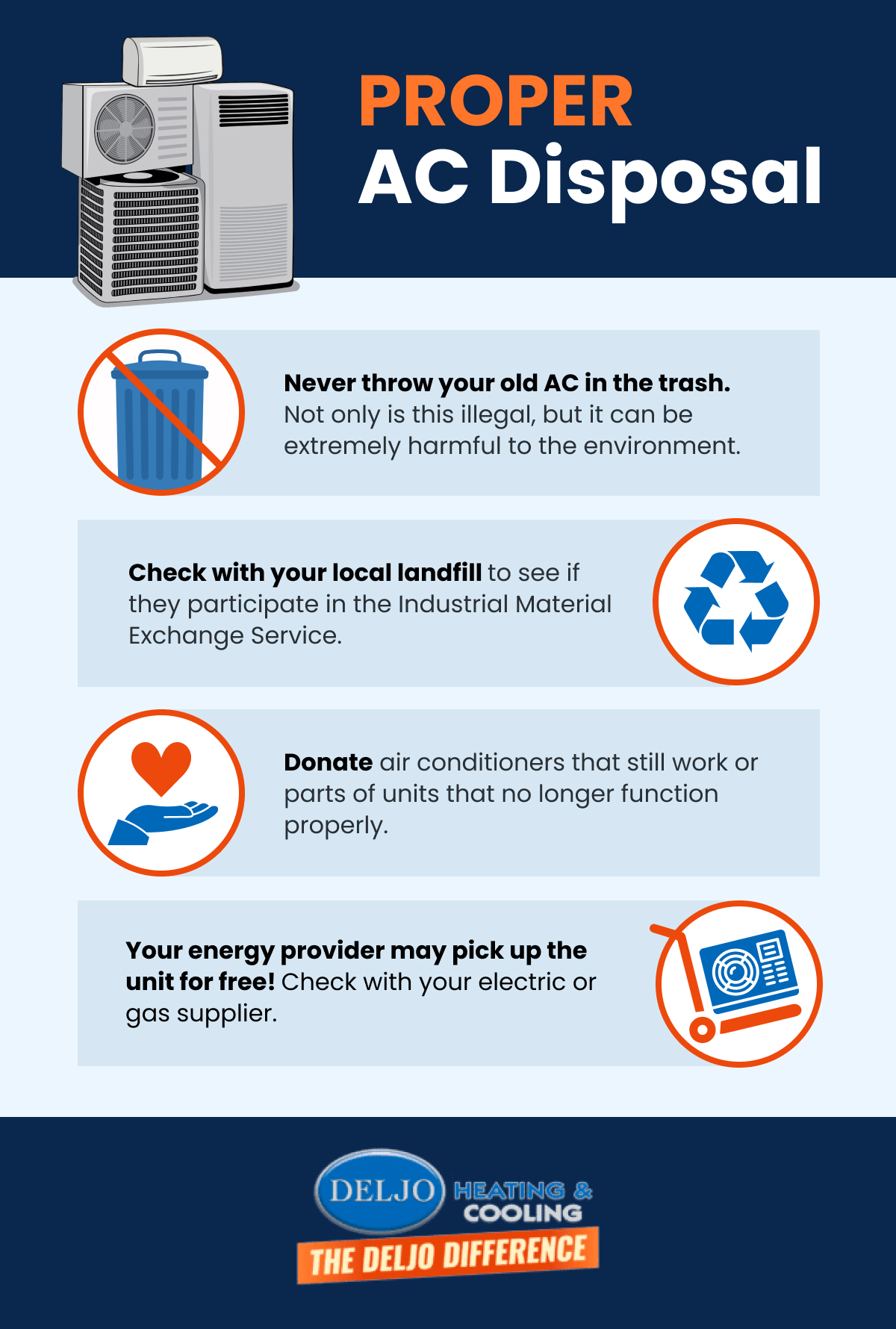
Image Source: deljoheating.com
Dispose Safely: How To Recycle Air Conditioner Guide
Can you recycle an old air conditioner? Yes, you can and should recycle old AC units because they hold special gases that hurt the air and planet if they get out. How do you recycle an AC unit safely? You must first get the dangerous gas out, then take the unit to a special place that knows how to break it down right. Is an AC unit hazardous waste? Yes, mainly because of the refrigerant gas inside, which is very bad for our air, making proper AC unit disposal important.
When an old air conditioner stops working, don’t just throw it away. AC units are not regular trash. They have things inside that can harm the environment. One big problem is the cooling gas. This gas helps your AC make cold air. But it is also a strong greenhouse gas. It traps heat in the air around Earth. This makes the planet warmer. This gas is called refrigerant. Older units might use R-22, also known as Freon. Newer ones use other types like R-410A. All these gases must be handled with care.
Throwing an AC unit in the trash lets these gases escape into the air. This adds to climate change. Also, AC units have valuable parts. They have metal like copper and aluminum. They have plastic and glass. Recycling these parts saves energy. It also means we don’t have to dig up new materials from the ground. So, recycling an old AC unit is good for the Earth and saves resources. It is the right way for AC unit disposal.
Why AC Units Need Special Care
AC units are not like old clothes or paper. They are complex machines. They have different parts mixed together. Some parts are safe. Some parts are not.
What Makes an AC Unit Different?
AC units have many parts.
* Metal frames and covers (steel, aluminum)
* Copper coils (very valuable)
* Aluminum fins
* A compressor (has oil and the cooling gas)
* A fan motor
* Control boards (electronics)
* Plastic parts
* Capacitors (some can have harmful chemicals)
The main reason AC units are special waste is the cooling gas. Getting this gas out needs special tools and training. It is the most important step in safe AC unit disposal.
Grasping the Problem with Refrigerant
The cooling gas, refrigerant, is a powerful greenhouse gas. If just one kilogram of R-22 gas escapes, it can trap as much heat as about 1,810 kilograms of carbon dioxide over 100 years. That’s like driving a car about 4,500 miles! This gas also harms the ozone layer in the sky. The ozone layer helps protect us from the sun’s harmful rays.
Rules are in place because of this danger. The US Environmental Protection Agency (EPA) has strict rules about handling refrigerants. These are called EPA regulations AC. Only people with special training and tools can take out this gas. They do Refrigerant recovery. They safely remove the gas and store it. They can then clean it to use again. Or they send it to be safely destroyed. This process is also called Freon recycling when dealing with older R-22 gas.
Beside the gas, some older units might have other harmful things. For example, some capacitors might contain PCBs. PCBs are chemicals that are bad for health and the environment. While newer units usually don’t have PCBs, it’s another reason to treat AC units as hazardous waste AC. This is why a normal trash service cannot just pick it up. They are not set up to handle these dangers.
Steps for Proper AC Unit Disposal
Getting rid of an old AC unit the right way takes a few steps. It’s not hard, but you must follow the rules.
Step 1: Checking If It Still Works
First, think about if the AC unit still works.
* If it works well: Maybe someone else can use it. You could sell it or give it away. Check with local charities. Some might take working appliances. This is the best option if the unit still has life left. It saves energy and resources used to make a new one.
* If it works, but not well: It might be useful for parts. Some repair shops might buy it for spares.
* If it does not work: Then recycling is the best plan. It needs proper AC unit disposal.
Step 2: Getting the Gas Out Safely
This is the most important step. You must not try to do this yourself. You need a certified technician. They have the training and tools for Refrigerant recovery.
* Find a certified HVAC technician. Look for one trained to handle refrigerants. Ask if they offer refrigerant recovery services for old units.
* The technician will connect special tools to the AC unit.
* They will pump the refrigerant out of the unit.
* They store the gas in a special tank.
* They will give you proof that the gas was removed safely. This might be needed later.
Trying to release the gas yourself is against the law. It is harmful to the environment. It can also be dangerous for you. This step is required by EPA regulations AC. It makes sure the hazardous waste AC part (the refrigerant) is handled right. This is key for Freon recycling or recycling other types of refrigerant.
Step 3: Deciding Where to Take It
After the gas is out, the AC unit is still not normal trash. It’s now safer, but it’s still bulky and has parts that can be recycled. You have a few choices for AC unit disposal.
- Option A: An AC Recycling Center: This is often the best choice. These places know how to take apart old machines. They can recycle the different materials.
- Option B: Scrap Metal Dealer: Some scrap yards will take AC units. Make sure they know the refrigerant has been removed. They are often interested in the metal parts, like copper coil recycling.
- Option C: Bulky Waste Pickup: Some cities or towns offer special pickup for large items. Check with your local waste service. Ask if they take AC units and what the rules are. Some might require proof of refrigerant removal. Some services for Haul away air conditioner might be part of this.
- Option D: Hire a Hauling Service: Private companies can pick up big items like old ACs. Choose one that says they recycle properly. They often take the unit to an AC recycling center or scrap yard for you. This is a good way if you can’t move the unit yourself. This is the Haul away air conditioner service.
You need to check the rules in your area. Different places have different rules for AC unit disposal. Some places might have programs to help you recycle large appliances.
Step 4: Getting It Ready for Transport
Once the gas is out and you know where it’s going, you might need to get the unit ready.
* Make sure it’s disconnected safely from power.
* If it’s a window unit, make sure it’s easy to carry.
* If it’s a large central air unit, it will need to be taken apart somewhat (by the technician who did the recovery).
* Have the paper from the technician saying the gas was removed ready.
If you are using a Haul away air conditioner service, they might do some of the prep work. But confirming the gas removal is often your job.
What Happens at the AC Recycling Center?
When your old AC unit arrives at an AC recycling center, trained workers take over. They know how to handle different parts safely. They start by Dismantling air conditioner.
Taking the Unit Apart
This process is careful work.
* Workers use tools to separate materials.
* They might remove outer metal panels (steel or aluminum).
* They take out the fan and motor.
* They carefully remove the compressor. Even after refrigerant recovery, there might be oil inside. This oil also needs safe handling.
* They get to the heat exchanger coils. These coils are usually made of copper tubes with aluminum fins. This is where Copper coil recycling happens. These metals are very valuable.
* They separate plastic parts.
* They remove electronics.
Sorting Materials
After dismantling, the materials are sorted into different piles.
* Metal goes to metal recyclers. Copper, aluminum, and steel are separated. Copper coil recycling is a key part here.
* Plastic is sent to plastic recycling plants.
* Electronics might go to e-waste recyclers.
* Hazardous parts, like certain capacitors or leftover oil, are sent to special facilities that handle hazardous waste AC.
* Any remaining refrigerant from the recovery tank is either cleaned for reuse or safely destroyed.
Why This Dismantling is Important
Taking the unit apart and sorting helps recycle as much as possible. It keeps harmful things out of landfills. It also allows valuable materials to be used again. Scrap air conditioner units provide a lot of metal that can be melted down and turned into new products. This saves energy compared to making new metal from raw materials.
Copper coil recycling is especially important. Copper is expensive and takes a lot of energy to mine and process. Recycling copper uses much less energy. Old AC coils are a good source of high-quality copper.
Finding the Right People and Places
Knowing where to take your old unit and who can help is key for proper AC unit disposal.
Finding a Certified Refrigerant Technician
This is the first and most critical step.
* Ask your local HVAC company. Many offer this service.
* Check online directories for certified technicians in your area.
* Look for certifications like EPA Section 608 Technician Certification. This proves they are trained to handle refrigerants.
* Get a few quotes. The cost for refrigerant recovery can vary.
* Make sure they give you a receipt or document showing the refrigerant was removed.
It is illegal for anyone without this certification to remove refrigerant from an appliance before disposal. This rule protects the environment and follows EPA regulations AC.
Locating an AC Recycling Center or Scrap Yard
Once the refrigerant is out, find a place to take the unit.
* Search online for “AC recycling near me” or “appliance recycling center.”
* Call local scrap metal yards. Ask if they accept AC units that have had the refrigerant removed.
* Check your city or county waste management website. They often list places that accept large appliances or have special collection events.
* Look for programs that Haul away air conditioner units. Some energy companies or stores selling new ACs might offer to take away your old one. Sometimes they even give you money back for energy savings.
When calling places, always mention that the refrigerant has been professionally removed. Some places might require the paperwork from the technician. This proves it’s no longer hazardous waste AC in terms of gas content.
Using a Haul Away Air Conditioner Service
If you can’t move the unit yourself, a hauling service is helpful.
* Look for junk removal services in your area.
* Ask if they handle large appliances like AC units.
* Confirm that they dispose of them properly, usually by taking them to a licensed recycling or scrap facility.
* Again, you still need to make sure the refrigerant was removed before they pick it up, unless the service specifically includes this as part of their offering (which is rare and will cost more as they need a certified person).
Choosing a service that properly handles the unit is important. You don’t want your old AC to end up illegally dumped or taken to a place where the remaining materials are not recycled. Good Haul away air conditioner services work with proper recycling centers.
Rules and Regulations
Dealing with ACs and refrigerants is serious business. There are rules you need to know.
EPA Regulations AC
The Environmental Protection Agency (EPA) has the main rules in the United States.
* Section 608 of the Clean Air Act is the most important rule for refrigerants.
* It says only certified technicians can remove refrigerant from appliances before disposal.
* It requires refrigerant to be recovered using approved equipment.
* It bans purposely releasing refrigerants into the air.
Breaking these rules can mean big fines. The EPA takes this seriously because of the harm refrigerants cause to the environment. These rules are why Refrigerant recovery is mandatory before most types of AC unit disposal. They aim to prevent refrigerant from becoming hazardous waste AC in the environment.
State and Local Rules
Besides federal rules, your state or city might have more rules.
* Some places might ban throwing any appliance with refrigerant in the regular trash, even if the gas is out.
* Some areas might require proof of refrigerant removal before accepting the unit at a transfer station or landfill.
* Some cities have special days or places for dropping off bulky waste or appliances.
Always check with your local waste management office. Their website or a phone call can tell you the specific rules for AC unit disposal where you live. They can also help you find approved AC recycling center options.
Benefits of Proper AC Recycling
Recycling your old AC unit the right way does a lot of good things.
Helping the Environment
- Protecting the Atmosphere: The biggest benefit is preventing refrigerant release. Proper Freon recycling and recovery stop harmful gases from warming the planet and damaging the ozone layer. This is key to combating climate change.
- Saving Resources: Recycling metal (like copper coil recycling), plastic, and other parts means less need to mine new materials. Mining uses a lot of energy and can damage land.
- Saving Energy: Recycling metal uses much less energy than making new metal. For example, recycling aluminum uses about 95% less energy than making it from scratch. Copper recycling also saves a lot of energy.
- Keeping Landfills Cleaner: Hazardous materials like refrigerants, oils, and potentially PCBs are kept out of landfills. This stops them from possibly leaking into the ground and water over time. Treating the unit as hazardous waste AC and recycling properly reduces this risk.
Economic Benefits
- Job Creation: The recycling process, from recovery to dismantling and sorting, creates jobs.
- Value from Materials: Scrap air conditioner units are valuable! The metals inside, especially copper, are worth money. This value helps pay for the recycling process. Copper coil recycling provides a significant amount of usable material.
Proper AC unit disposal is part of a bigger system that protects our planet and uses resources wisely.
Interpreting the Costs Involved
Getting rid of an old AC unit properly might cost some money. It’s important to know what to expect.
Cost of Refrigerant Recovery
Paying a certified technician for Refrigerant recovery is usually the main cost.
* The price can depend on where you live and the technician.
* It might cost anywhere from $50 to $150 per unit.
* Sometimes, if you are getting a new AC installed, the company installing the new one might take the old one and recover the gas as part of the service fee or for a smaller extra charge. Always ask about this when buying a new unit.
Do not skip this step to save money. The environmental harm and possible fines are much worse than the cost of proper Freon recycling. This cost covers the technician’s time, training, special tools, and the safe handling/storage of the hazardous waste AC gas.
Cost of Disposal or Recycling
Once the refrigerant is out, the cost to get rid of the unit varies.
* AC Recycling Center: Some centers might charge a small fee per unit. This helps cover their costs for dismantling and sorting. The fee might be $10-$30. Sometimes, they might even pay you a small amount if the scrap metal value is high enough, especially if it’s a large unit with lots of copper.
* Scrap Yard: If they accept units with gas removed, they usually pay you based on the weight of the metal. This can sometimes offset the recovery cost. This is where the Scrap air conditioner value comes in.
* Bulky Waste Pickup: Your city might offer this for free on certain days. Or there might be a small fee added to your trash bill.
* Haul Away Air Conditioner Service: These services charge for pickup and transport. The cost depends on your location, the size of the unit, and how easy it is to access. This can range from $50 to $150 or more, depending on the service and if they are handling multiple items.
Compare costs for recovery and disposal options in your area. Remember to factor in the value of your time and effort if you transport it yourself versus using a Haul away air conditioner service.
Planning Your AC Unit Disposal
Here is a simple plan to follow when you have an old AC unit you need to get rid of.
- Step 1: Check the Unit: Does it work? Can it be reused?
- Step 2: Find a Technician: Search for a certified technician for Refrigerant recovery. Get quotes. Schedule an appointment.
- Step 3: Get the Gas Recovered: Have the technician safely remove the refrigerant. Get paperwork.
- Step 4: Choose a Disposal Method: Decide between an AC recycling center, scrap yard, city pickup, or Haul away air conditioner service.
- Step 5: Find a Location/Service: Search for options in your area. Call to check rules and costs. Confirm they accept units with gas removed.
- Step 6: Get Unit Ready: Disconnect power, make it easy to access.
- Step 7: Transport or Schedule Pickup: Take the unit to the chosen location or have it hauled away. Provide paperwork if needed.
- Step 8: Recycle! You have successfully completed AC unit disposal the safe and responsible way.
Thinking ahead makes the process easier. Don’t wait until the last minute. Proper planning ensures you follow EPA regulations AC and handle the hazardous waste AC correctly.
Dismantling Air Conditioner: A Closer Look
What exactly happens during Dismantling air conditioner? It’s more than just smashing it apart. It’s a careful process to separate different materials.
Tools and Techniques
Workers at an AC recycling center use various tools:
* Screwdrivers and wrenches to remove fasteners.
* Cutters to cut metal tubing.
* Saws for plastic or thicker metal parts.
* Lifts or hoists for heavy parts like the compressor.
* Magnets to separate steel from other metals.
They work systematically. They often start by removing the outer casing. Then they get to the inside components.
Focusing on Valuable Parts
The main goal after safety is getting the valuable parts out.
* Copper Coils: The coils are usually made of copper tubes with aluminum fins. Workers separate the copper from the aluminum. The copper tubes are very clean and high quality for recycling. This is the heart of Copper coil recycling.
* Aluminum: The fins on the coils and sometimes the casing are aluminum. Aluminum is light and valuable for recycling.
* Steel: The main frame and outer panels are often steel. Steel is also widely recycled.
* Compressor: The compressor motor contains metal and maybe some oil. It’s recycled separately.
Handling Less Valuable or Hazardous Parts
Not everything is high value.
* Plastic: Plastic parts like fan blades or covers are separated. They are recycled if possible, but sometimes plastic recycling is harder than metal recycling.
* Electronics: Control boards and wiring are electronics (e-waste). They contain metals but also sometimes hazardous materials. They are sent to specialized e-waste recyclers.
* Capacitors/Oil: Any capacitors or oil remaining after the technician’s work are treated as potential hazardous waste AC and disposed of following strict rules.
By carefully Dismantling air conditioner units, recycling centers can recover most of the materials. This turns what was a waste product into useful resources. The Scrap air conditioner is transformed back into raw materials for new products.
The Importance of Freon Recycling and Refrigerant Recovery
We talked about this a lot, but it’s worth repeating because it’s so vital. Freon recycling (or recycling other refrigerants) through Refrigerant recovery is the single most important step in AC unit disposal.
Why It’s Not Just About “Old” Freon
While older units used R-22 (Freon), newer units use hydrofluorocarbons (HFCs) like R-410A. HFCs do not harm the ozone layer as much as R-22 did. But they are still powerful greenhouse gases. R-410A has a global warming potential about 2,088 times higher than carbon dioxide. This means releasing just one pound of R-410A is like releasing over one ton of CO2.
So, Refrigerant recovery is not just about “old Freon.” It’s about all refrigerants used in ACs. Proper handling prevents a major source of greenhouse gas emissions. It’s a direct action to fight climate change. Following EPA regulations AC for refrigerant handling is not optional; it’s a legal and environmental duty.
What Happens to the Recovered Gas?
The gas captured by the technician goes into a special tank. What happens next?
* Reclamation: The gas can be cleaned and processed to meet purity standards. This cleaned gas is called reclaimed refrigerant. It can be sold back to HVAC companies to be used in other systems. This is true recycling.
* Destruction: If the gas is too mixed up or dirty to be cleaned, it must be safely destroyed. This happens at special facilities that break down the chemicals into harmless substances.
Both reclamation and destruction prevent the gas from reaching the atmosphere. This is why hiring a certified professional for Refrigerant recovery is non-negotiable for responsible AC unit disposal. It turns the most hazardous part of the AC into something managed safely, rather than letting it escape as hazardous waste AC.
Frequently Asked Questions (FAQ)
Here are answers to common questions about recycling AC units.
Q: Can I just put my old window AC unit on the curb?
A: No, you should not. Most cities have rules against putting appliances with refrigerant in regular trash. The gas inside is harmful and must be removed first by a certified person. Check your local rules; you might get a fine.
Q: Does anyone buy old AC units for scrap?
A: Yes, some scrap metal yards will buy old AC units, but only if the refrigerant has been safely removed. The value comes from the metal inside, especially copper. You will likely need paperwork proving the gas is gone.
Q: How do I know if a technician is certified to remove refrigerant?
A: Ask them! They should have an EPA Section 608 Technician Certification. This is a card or certificate they can show you. There are different types of certification; make sure they are certified for the type of equipment (Type I for small appliances like window units, Type II for larger systems like central air).
Q: Can I remove the copper coils myself to sell?
A: Not legally, if the refrigerant is still in the unit. The coils are part of the sealed system containing the refrigerant. Trying to cut them open will release the gas. Only after a certified technician has performed Refrigerant recovery can you consider dismantling for scrap, and even then, leaving it to a proper AC recycling center is safer and ensures all parts are handled right.
Q: What if my AC unit is very old?
A: Very old units are more likely to contain R-22 (Freon) and possibly PCBs in parts like capacitors. These are even more reason to handle the unit as hazardous waste AC and ensure proper Refrigerant recovery and recycling at a certified AC recycling center. Do not try to guess what chemicals are inside.
Q: Are there programs that help with AC recycling?
A: Yes. Some power companies have programs that pay you to turn in old, inefficient appliances like ACs. They do this because old units use a lot of electricity. They often handle the pickup and recycling for you. Some appliance stores also offer to take your old unit when you buy a new one. Check for these options in your area.
Q: Is it expensive to recycle an AC unit?
A: There is a cost, mainly for the professional Refrigerant recovery. This usually costs $50-$150. Disposal at a recycling center or scrap yard might have a small fee or even pay you a little for the metal. Hiring a Haul away air conditioner service will cost extra for convenience. Think of it as paying a fee to protect the environment and follow the law.
Q: What is the difference between Refrigerant recovery and recycling?
A: Refrigerant recovery is the act of safely removing the gas from the appliance and putting it into a tank. Refrigerant recycling (or reclamation) is cleaning that recovered gas so it can be used again or safely destroying it if it can’t be cleaned. Recovery is the first step, recycling/reclamation is what happens to the gas afterward. Both are needed for proper Freon recycling (or other refrigerants).
Recycling your old air conditioner unit is a crucial step for protecting our planet. By following these steps – especially getting the refrigerant removed by a pro and taking it to an approved facility – you ensure safe AC unit disposal. You help prevent harmful gases from escaping, save valuable resources through Copper coil recycling and other material recovery, and support responsible waste management. Don’t let your old AC become hazardous waste AC sitting in a landfill. Recycle it right.