
Does your air conditioner frequently freeze up? Can you fix a frozen AC unit yourself? Yes, often you can address common causes of a frozen AC unit with simple DIY steps. This guide will help you keep your air conditioner running smoothly and prevent it from freezing up. A frozen AC unit isn’t just inconvenient; it can also damage your system.
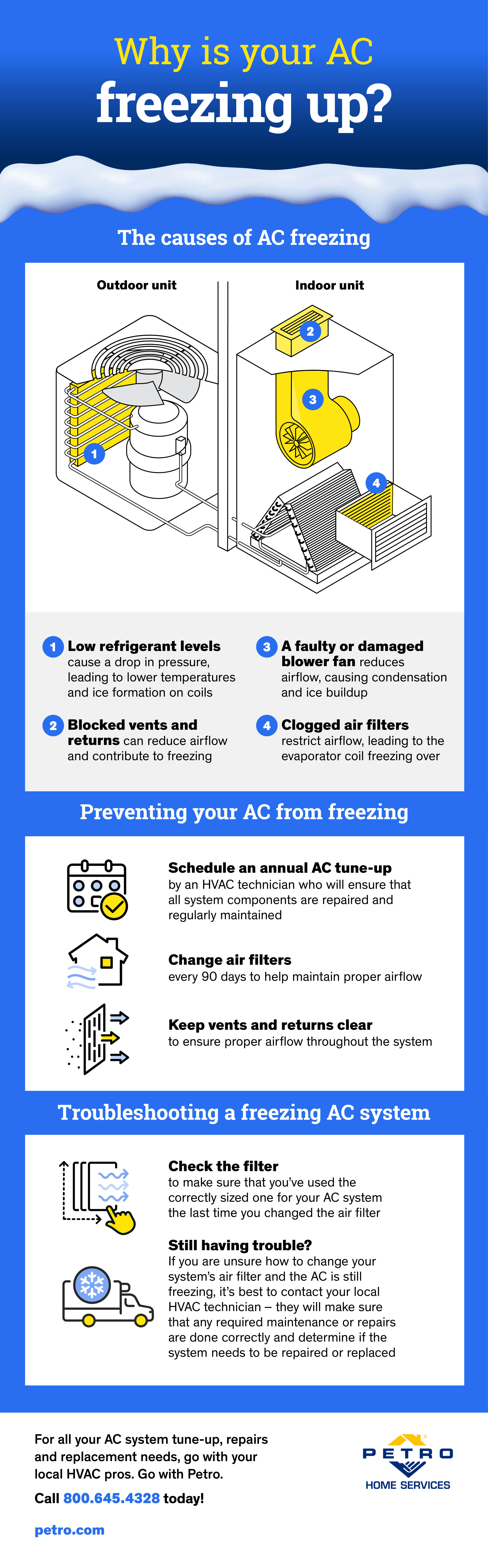
Image Source: www.petro.com
Why Does an Air Conditioner Freeze Up?
An air conditioner works by circulating refrigerant, which absorbs heat from your home. This process cools the air. For this to happen efficiently, the refrigerant needs to be at the correct pressure and temperature. When something disrupts this balance, ice can form on the evaporator coil, the part inside your home that cools the air. This ice buildup restricts airflow and prevents your AC from cooling effectively, leading to a frozen AC problem.
Common Culprits Behind a Frozen AC
Several issues can lead to your air conditioner freezing up. Most of them relate to a lack of airflow or problems with the refrigerant.
1. The Dreaded Clogged Filter
A clogged filter is by far the most common reason an AC unit freezes. Your air filter’s job is to trap dust, dirt, and other airborne particles. When it gets too dirty, it blocks air from reaching the evaporator coil. This lack of airflow causes the coil to get too cold, and the moisture in the air freezes onto it.
- How it happens: Over time, filters collect debris. If not changed regularly, they become completely blocked.
- The result: Reduced airflow over the evaporator coil leads to a drop in pressure and temperature, causing ice to form.
2. Insufficient Airflow: Blocked Vents and Ducts
Even with a clean filter, blocked vents or obstructed ductwork can also cause airflow problems. If air can’t circulate freely throughout your home and back to the AC unit, the evaporator coil won’t receive enough warm air to keep its temperature above freezing.
- What to look for: Furniture blocking vents, closed-off rooms, or kinks in flexible ductwork.
- Impact: This lack of proper airflow starves the evaporator coil of warm air, leading to it becoming excessively cold and potentially freezing.
3. Low Refrigerant Levels: A Leaky Situation
If your AC system has a leak, it can lose refrigerant. Refrigerant is what makes your AC cool. When the levels are low, the pressure inside the system drops. This lower pressure causes the refrigerant to get much colder than it should, leading to the evaporator coil freezing up.
- Signs of a leak: Hissing sounds from the unit, higher energy bills, and reduced cooling.
- Important: Low refrigerant usually indicates a leak that needs professional repair before more refrigerant can be added.
4. Dirty Coils: Inhibiting Heat Transfer
The evaporator coil (indoor) and condenser coil (outdoor) are crucial for the AC’s operation. If the evaporator coil is covered in dirt and grime, it cannot absorb heat from the air effectively. Similarly, if the condenser coil (outdoor unit) is dirty, the system can’t release heat properly. Both scenarios can lead to temperature and pressure imbalances that result in freezing.
- Evaporator Coil Frosting: When the evaporator coil itself is dirty, it struggles to pick up heat. This leads to the coil getting too cold, and moisture can then freeze on its surface, creating evaporator coil frosting.
- Condenser Coil Issues: While a dirty condenser coil is less likely to directly cause the indoor coil to freeze, it puts extra strain on the system and can contribute to overall inefficiency and potential problems.
5. Thermostat Settings and Malfunctions
Incorrect thermostat settings can also contribute to your AC freezing. Setting the thermostat too low, especially during very humid or cool weather, can make the system run constantly without providing enough airflow to prevent freezing. A malfunctioning thermostat might also send incorrect signals to the AC.
- Ideal Settings: Avoid setting the thermostat too low. A good starting point is usually between 72-78°F (22-26°C).
- Fan Setting: Ensure the thermostat’s fan setting is on “Auto” unless you specifically want continuous air circulation.
6. Drain Line Blockage: Water Woes
Your AC unit produces condensation as it cools the air. This water is supposed to drain away through a drain line. If this line becomes clogged with algae, mold, or debris, water can back up. In some cases, this backup can lead to water freezing at the point where it meets the cold evaporator coil, causing a drain line blockage that contributes to the freeze-up.
- What happens: Trapped water can freeze on the coil, exacerbating the problem.
- Detection: You might notice water pooling around your indoor unit or no water dripping from the outdoor drain pipe.
Troubleshooting a Frozen AC Unit: Your Step-by-Step Guide
If you discover your air conditioner has frozen up, the first thing to do is turn off the cooling system.
Step 1: Turn Off Cooling and Turn On Fan
- Action: Go to your thermostat and switch the system from “Cool” to “Fan Only” or “Off.”
- Purpose: This stops the AC from running and allows the ice to melt. Running the fan helps speed up the defrosting process.
- Caution: Do NOT run the AC in “Cool” mode while it’s frozen. This can damage the compressor.
Step 2: Inspect and Clean or Replace the Air Filter
This is your first line of defense and the most common fix.
- Locate the filter: It’s usually in the return air duct, near the air handler unit (indoor part of your AC).
- Check the filter: Hold it up to a light. If you can’t see light through it, it’s time for a change.
- Replace or clean: If it’s a disposable filter, replace it with a new one of the same size and MERV rating. If it’s a washable filter, clean it thoroughly according to the manufacturer’s instructions.
- Frequency: Check your filter monthly and replace it every 1-3 months, depending on your home environment and filter type.
Step 3: Ensure Proper Airflow
Once the filter is addressed, check for other airflow restrictions.
- Check Vents: Make sure all supply and return vents are open and not blocked by furniture, curtains, or other objects.
- Clear Ducts: If you suspect internal duct blockages, this might require professional inspection.
- Room Usage: Avoid closing too many vents in unused rooms. This can disrupt the system’s balance and pressure.
Step 4: Let the Unit Defrost Completely
This can take several hours, sometimes up to 24 hours, depending on how badly the unit is frozen and the ambient temperature.
- What to expect: You’ll see water dripping as the ice melts. Ensure the area around the indoor unit can handle water accumulation. You might want to place towels or a shallow pan to catch drips.
- Patience is key: Resist the urge to turn the cooling back on too soon.
Step 5: Inspect the Drain Line (Advanced DIY)
A drain line blockage can trap water, which can then freeze.
- Locate the drain line: It’s typically a PVC pipe coming from the indoor unit, usually near the outdoor unit or a nearby floor drain.
- Check for clogs: You can try to clear a minor clog using a wet/dry vacuum attached to the end of the pipe or by carefully using a stiff wire (like a coat hanger) to dislodge debris.
- Flushing: Some homeowners pour a cup of bleach or vinegar down the line to kill mold and algae, followed by water. Caution: Check your manufacturer’s recommendations before using cleaning solutions. If you’re uncomfortable, call a professional.
Step 6: Check for Dirty Coils
While cleaning coils is often a job for professionals, you can do a visual inspection.
- Indoor Evaporator Coil: This is harder to access and usually requires removing a panel. If you can see visible dust or grime on the fins, it needs cleaning.
- Outdoor Condenser Coil: This is much easier to see and access. If it looks dirty or clogged with debris like leaves and grass clippings, you can gently clean it with a hose (low pressure) and a coil cleaner spray. Ensure the power to the unit is OFF before doing any cleaning.
Step 7: Reset the Thermostat and Test
Once you’re confident the unit has defrosted and you’ve addressed potential causes like filters and airflow:
- Switch to Cool: Set your thermostat back to “Cool” mode.
- Monitor: Listen for the unit to start up normally. Check if cool air is blowing from the vents.
- Observe: Keep an eye on the system for the next few hours to ensure it doesn’t freeze up again.
Preventive Maintenance: The Best Way to Avoid Freezing
Regular HVAC maintenance is crucial for preventing your air conditioner from freezing up and for ensuring its longevity and efficiency.
Regular Filter Replacement: Your First Line of Defense
- Frequency: As mentioned, change or clean your air filter every 1-3 months. This is the single most effective preventive measure.
- Filter Quality: Use filters that are rated appropriately for your system. Overly restrictive filters (high MERV rating) can sometimes reduce airflow too much if not properly sized or if the system isn’t designed for them.
Schedule Professional HVAC Tune-Ups
An annual or semi-annual professional inspection by a qualified HVAC technician can catch problems before they lead to freezing.
- What technicians do:
- Check refrigerant levels and pressure.
- Clean evaporator and condenser coils.
- Inspect and clean the drain line.
- Test thermostat operation.
- Inspect electrical components.
- Check blower motor and fan operation.
- Ensure overall system efficiency.
Maintaining Proper Airflow Year-Round
- Seasonal Checks: Before each cooling season, do a quick check of your vents and return grills for obstructions.
- Ductwork: Ensure your ductwork is well-sealed and insulated to prevent air leaks and maintain proper airflow.
Smart Thermostat Settings
- Avoid extreme settings: Don’t set your thermostat drastically lower than the outside temperature. A good rule of thumb is to maintain a difference of no more than 20°F (11°C).
- Programmable thermostats: Use them to adjust temperatures when you’re away or asleep, rather than setting it extremely low for extended periods.
Keep Outdoor Unit Clear
- Clearance: Ensure at least 2 feet of clearance around your outdoor condenser unit. Remove any plants, leaves, or debris that could obstruct airflow.
What If It Keeps Freezing Up?
If you’ve followed these steps and your air conditioner continues to freeze up, it’s time to call a professional HVAC technician. Persistent freezing can indicate more serious issues, such as:
- Major Refrigerant Leak: The system might be losing refrigerant rapidly.
- Faulty Blower Motor: If the fan isn’t pushing enough air, the coil will get too cold.
- Evaporator Fan Issues: Problems with the fan itself can severely impact airflow.
- Kinked Refrigerant Lines: Damaged or bent lines can restrict refrigerant flow.
- Low Outdoor Temperature: Running AC when outdoor temperatures are below 60-65°F (15-18°C) can sometimes cause freezing, especially if other airflow issues exist.
A technician has the tools and expertise to diagnose and repair these complex problems. They can accurately measure refrigerant levels, check for leaks, and identify any mechanical failures.
Table: Common AC Freezing Causes and Solutions
| Cause of Freezing | How it Happens | DIY Solution | Professional Solution |
|---|---|---|---|
| Clogged Filter | Dirty filter blocks airflow to the evaporator coil. | Replace or clean the air filter monthly. | N/A (if filter is replaced) |
| Blocked Vents/Ducts | Furniture, debris, or closed vents restrict airflow. | Ensure all vents are open and clear. | Inspect and clean ductwork for internal blockages. |
| Low Refrigerant | Leak in the system causes pressure drop and colder coil temps. | Not a DIY fix. Monitor cooling performance. | Find and repair the leak, then recharge refrigerant. |
| Dirty Evaporator Coil | Dust on the coil prevents efficient heat absorption. | Visual inspection. Professional cleaning is usually recommended due to access. | Clean evaporator coil. |
| Dirty Condenser Coil | Hinders heat release, straining the system. | Gently hose down the outdoor unit’s coil with water. | Professional cleaning of condenser coil. |
| Drain Line Blockage | Water backs up and can freeze on the coil. | Clear minor clogs with a wet/dry vac or stiff wire. Flush with water. | Professional drain line cleaning and inspection. |
| Thermostat Settings | Setting too low or continuous fan without adequate airflow. | Set thermostat to a reasonable temperature (72-78°F). Ensure fan is on “Auto.” | Check thermostat for proper calibration and function. |
| Extreme Outdoor Temperatures | Running AC when outdoor temps are too low can affect pressure. | Avoid running AC when outdoor temps are below 60-65°F (15-18°C). | Advise on appropriate operating temperatures. |
| Faulty Blower Motor/Fan | Insufficient air movement across the coil. | Listen for unusual noises from the indoor unit’s fan. | Repair or replace the blower motor or fan assembly. |
Frequently Asked Questions (FAQ)
Q1: How long does it take for an AC to defrost?
A1: It can take anywhere from a few hours to 24 hours for an AC unit to fully defrost, depending on the extent of the ice buildup and the ambient temperature. It’s best to leave the system in fan-only mode until all ice has melted.
Q2: Can I use a hairdryer or heat gun to defrost my AC?
A2: While tempting, it’s generally not recommended. High heat can damage the delicate components of your AC unit, particularly the plastic parts and insulation. Letting it melt naturally or using a fan is safer.
Q3: My AC froze up again after defrosting. What should I do?
A3: If your AC freezes up again shortly after defrosting and you’ve replaced the filter, it indicates a more persistent problem, such as a refrigerant leak, a dirty coil you can’t access, or a fan issue. It’s crucial to call a qualified HVAC technician to diagnose and fix the root cause.
Q4: Is it safe to run my AC when it’s humid but not very hot?
A4: Yes, your AC also dehumidifies the air. However, on very humid days with moderate temperatures, setting the thermostat too low can still lead to freezing if airflow is compromised. Always ensure your filter is clean and vents are open.
Q5: What is the best MERV rating for my air filter?
A5: MERV ratings range from 1 to 20. For most residential systems, a MERV rating between 8 and 13 offers a good balance of air filtration without overly restricting airflow. Consult your HVAC system’s manual or a professional for the recommended MERV range for your specific unit.
By regularly maintaining your air conditioning system and addressing potential issues promptly, you can prevent the frustrating problem of a frozen AC and ensure your home stays cool and comfortable throughout the warmer months. Remember, preventive care is always less costly than emergency repairs!