
When an old air conditioner stops working or you upgrade to a new one, you can’t just put it out with the regular trash. Old AC units, whether big central systems or small window units, hold special chemicals and valuable materials that need careful handling. Knowing how to dispose of old air conditioner the right way protects the planet and follows the law. This guide will walk you through the steps for proper disposal of air conditioner units.
The main reason for careful disposal is the refrigerant inside the AC. This is a special gas that helps the unit cool air. Many older ACs use refrigerants like Freon (a common name for certain types). These gases are very harmful to the Earth’s ozone layer, which helps protect us from the sun. Letting these gases escape into the air is against the law in many places, like the United States under EPA regulations AC disposal rules. You could face big fines if you do not get the refrigerant recovered properly.
Beyond the harmful gas, air conditioners are made of metal, plastic, and other parts. Much of this can be recycled. Throwing an AC in a landfill means these materials are wasted, and the harmful gas could still leak out over time. Recycling old air conditioner parts helps save resources and stops pollution.
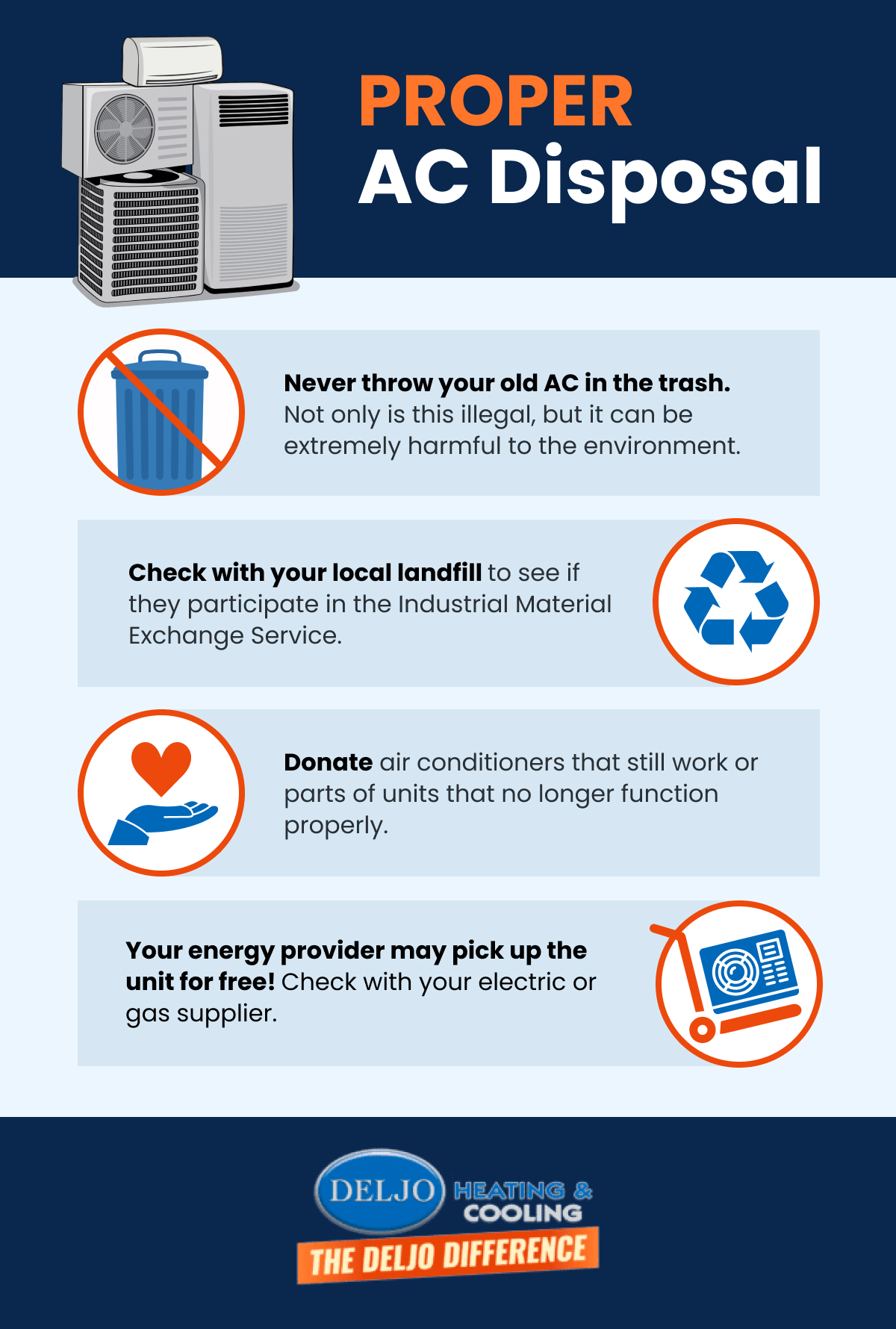
Image Source: deljoheating.com
Why Safe Disposal Matters
Old air conditioners are more than just junk metal. They contain parts and substances that can hurt the environment if not handled the right way.
Harm From Special Gases
The most serious problem is the refrigerant. This gas, also called coolant, is needed for the AC to work. But many older types of refrigerants, such as CFCs and HCFCs (like Freon R-22), are bad for the upper layer of air that shields the Earth (the ozone layer). Damaging the ozone layer lets in more harmful rays from the sun. Newer ACs use refrigerants that are better for the ozone but can still trap heat in the air near the ground, adding to climate change.
Rules set by the Environmental Protection Agency (EPA) in the U.S. make it against the law for anyone who is not certified to remove or release refrigerant from an appliance. Letting this gas out is a serious offense.
Other Bad Stuff Inside
Besides the gas, AC units have other parts that need care.
- Oils: The compressor uses oil. This oil can get mixed with the refrigerant and must be handled as hazardous waste AC materials.
- Metals: ACs have lots of metal, like copper, aluminum, and steel. While these can be recycled, some parts might be coated or mixed with other substances that need special treatment.
- Plastics: Various types of plastic are used. Some are easy to recycle, others are not.
- Electronics: Circuit boards and wires contain small amounts of metals that can be harmful in landfills.
Putting an old AC in the trash lets these materials break down in landfills, possibly leaking harmful substances into the soil and water.
Steps For Getting Rid Of An Old AC
Getting rid of an old air conditioner correctly involves a few key steps. You need to make sure the harmful refrigerant is taken out safely before the rest of the unit is recycled or disposed of.
Step 1: Get The Refrigerant Removed
This is the most important step and required by law.
- Find a Certified Person: You must hire a technician certified by the EPA to remove the refrigerant. These are often HVAC (heating, ventilation, and air conditioning) repair companies or appliance service companies.
- Schedule Recovery: Call the technician and tell them you need refrigerant recovery AC service for an old unit you want to dispose of. They have special tools to safely pump the gas out of the AC unit and store it in a safe tank.
- Get Proof: Ask the technician for proof that they removed the refrigerant. Some recycling centers or junk yards might ask to see this paperwork before they take the unit.
Trying to drain or remove the refrigerant yourself is illegal and dangerous. You can get fined a lot of money, and the gas can harm you and the environment.
Step 2: Find A Place To Take The Unit
Once the refrigerant is out, the AC unit is much safer to handle. Now you need to find where to take it. You have a few options:
- Appliance recycling center
- Local waste or recycling programs
- Scrap metal yards
- Junk removal old AC unit services
- Retail store take-back programs
Let’s look at each of these more closely.
Sending It To An Appliance Recycling Center
One of the best ways to dispose of an old AC is to take it to a place that specializes in recycling large machines.
What These Centers Do
Appliance recycling centers are set up to handle old items like refrigerators, freezers, and air conditioners. They know how to take these items apart safely. They make sure any remaining harmful parts, like oils or trace amounts of refrigerant, are dealt with correctly. Then, they separate the different materials (metals, plastics, etc.) so they can be sent off to companies that reuse them.
Using these centers helps ensure that as much of the AC unit as possible gets recycled. This reduces waste and the need to create new materials from scratch.
How To Find A Center
- Check Online: Search for “appliance recycling near me” or “where to recycle air conditioner”.
- Call Local Waste Services: Your city or county waste management department can usually tell you about local options, including their own facilities or approved private centers.
- Look For Specific Programs: Sometimes utility companies or government groups run special programs for old appliances, offering incentives to recycle them properly.
What To Expect
- Proof of Refrigerant Removal: The center will likely ask for paperwork showing the refrigerant was professionally removed.
- Cost: There is often a fee to drop off an old appliance, including AC units. The cost can vary greatly depending on your location and the specific center. It might be anywhere from $10 to $50 or more. This is part of the Cost to dispose of AC unit properly.
- Drop-off: You will likely need to transport the unit yourself to the center. Make sure you have a vehicle big enough and any help you need to lift it.
Sending your old AC to an appliance recycling center is a reliable and environmentally friendly choice for recycling old air conditioner parts.
Using Local Waste And Recycling Programs
Many cities and counties have programs to help residents get rid of large items like appliances.
Curbside Pick-Up
Some areas offer special pick-up days or by-appointment pick-up for bulky waste.
- Check Local Rules: Visit your city’s or county’s waste management website or call them. Ask about disposing of air conditioners.
- Refrigerant Rule: Most places require you to certify or prove that the refrigerant has been removed before they will pick up the unit. They might even require a sticker or tag from a certified technician.
- Schedule: If pick-up is available, you’ll likely need to call ahead to schedule it and find out the fee.
- Cost: There is almost always a fee for bulky waste pick-up, separate from your regular trash service. This adds to the Cost to dispose of AC unit.
Drop-Off Sites
Some local governments have specific sites where residents can drop off certain types of waste, including appliances.
- Location and Hours: Find out where the site is and when it is open.
- Rules: Again, they will require refrigerant removal first. There may be size limits or limits on how many units you can drop off.
- Fees: There is usually a fee, often based on the type of item.
Local programs can be convenient, but you must follow their specific rules about refrigerant recovery.
Taking It To A Scrap Metal Yard
Old AC units contain a good amount of metal, which has value. Scrap metal yards buy metal by weight.
How It Works
- Prepare the Unit: The scrap yard will only be interested in the metal. You absolutely must have the refrigerant removed beforehand. They will not take the unit if the refrigerant is still inside because it’s a hazard and illegal for them to handle.
- Find a Yard: Look for local scrap metal recycling yards. Call them first to ask if they accept air conditioners (after refrigerant removal) and what kind of price they pay. Prices for metal change often.
- Take It In: Transport the unit to the yard. They will weigh it and offer you money based on the weight and the current market price for the metals.
Scrap Metal Value Air Conditioner Considerations
- It Won’t Be Much: Don’t expect to get a lot of money. An old window unit might only contain $5-$20 worth of metal, depending on size and market price. Central AC units have more metal and higher potential value, but also require more effort to handle.
- You Might Still Pay: Even if the metal has value, you might have paid a technician $50-$150 or more to remove the refrigerant. So, you are likely still paying overall for the disposal process.
- Not Full Recycling: Scrap yards are mainly interested in the metal. Other parts, like plastics and electronics, might not be recycled properly and could end up in the landfill.
Taking an AC to a scrap metal yard can help you recover a tiny bit of the Cost to dispose of AC unit, but it’s often not the most environmentally complete way to dispose of it compared to an appliance recycling center.
Hiring A Junk Removal Service
If you don’t want to deal with removing the AC yourself, finding where to take it, or coordinating refrigerant removal, a junk removal service can be an option.
What They Offer
Junk removal companies come to your home or business and haul away unwanted items for a fee. Some specialize in appliance removal.
- Convenience: This is the easiest option from your perspective. They do the heavy lifting and transport.
- What They Do With It: This is important to ask. A responsible junk removal service should ensure the AC unit goes to a proper disposal location. They should use partners who can perform refrigerant recovery AC service legally and recycle the unit’s components.
- Ask Questions: Before hiring one, ask them specifically how they handle old air conditioners. Do they have certified technicians remove the refrigerant before dropping it off at a recycling facility? Do they provide proof? Avoid companies that just say they’ll take it to the dump.
Cost of Junk Removal
Hiring a junk removal old AC unit service is usually the most expensive option.
- Pricing: They often charge based on the amount of space your items take up in their truck or a flat rate per item.
- Typical Cost: Disposing of a single air conditioner (especially a window unit) might cost anywhere from $75 to $200 or more, depending on your location, the type of unit, and the company’s pricing structure. This is often the highest Cost to dispose of AC unit.
While convenient, make sure you choose a reputable service that follows proper environmental procedures for disposal.
Retail Store Take-Back Programs
Sometimes, when you buy a new appliance, the store that sells it will offer to take your old one away.
How It Works
- Ask Before You Buy: When shopping for a new air conditioner (or refrigerator, which also has refrigerant), ask the salesperson if they have a take-back program for old units.
- Delivery and Haul Away: If they do, they will usually pick up your old unit when they deliver and install your new one.
- Fees: There is usually an extra fee for this service, separate from the delivery or installation cost.
- Check Their Process: It’s a good idea to ask how they ensure the old unit is disposed of correctly, especially regarding refrigerant recovery. Reputable retailers work with certified partners.
This is a very convenient option if you are replacing an old unit, but it’s not available everywhere or for all types of ACs.
Dealing With Different Types Of AC Units
The disposal process can vary slightly depending on whether you have a window unit or a central air conditioning system.
Window Unit AC Disposal
Window units are smaller and easier to move than central systems.
- Refrigerant Still Applies: Even a small window unit contains refrigerant that must be recovered legally. Do not just put it on the curb.
- Easier Transport: Once the refrigerant is out, a window unit is light enough for one or two people to lift and transport in a car or small truck. This makes taking it to an appliance recycling center or scrap yard easier.
- Local Programs: Window unit AC disposal is often specifically mentioned in local bulky waste rules. Check their requirements.
- Retail Programs: Some retailers will take back old window units, especially during promotions or when you buy a new one.
Even though they are small, the same rules and environmental concerns apply to window units as to larger systems.
Central Air Conditioner Disposal
Central AC systems have outdoor units (condensers) and indoor units (air handlers or furnaces with cooling coils). Both parts contain refrigerant and other materials.
- Professional Removal Required: You will almost certainly need a professional HVAC technician to remove a central AC system. They will handle the refrigerant recovery from both the indoor and outdoor parts.
- Larger Size: The outdoor unit, especially, is heavy and bulky. You will likely need a professional or a junk removal service to haul it away after the refrigerant is recovered.
- Scrap Value: Central units contain significant amounts of copper (in the coils), aluminum, and steel. This makes their scrap metal value air conditioner potential higher than window units. However, the cost of professional removal and separation usually outweighs this value for a homeowner.
- Contractor Handling: Often, when you get a new central AC system installed, the HVAC company will handle the disposal of the old one. Their service should include legal refrigerant recovery and proper disposal or recycling of the components. Make sure this is part of your agreement with them.
Never try to dismantle or remove a central AC system yourself, especially not the outdoor unit. There are electrical hazards and the mandatory requirement for professional refrigerant handling.
Rules And Legal Stuff (EPA Regulations AC Disposal)
It’s really important to know the rules about getting rid of ACs. The biggest rule comes from the U.S. Environmental Protection Agency (EPA).
The Clean Air Act
The Clean Air Act is a big law in the U.S. It has rules about things that hurt the air we breathe and the upper layer of air (ozone layer).
- Section 608: This part of the law specifically talks about things that use refrigerants, like ACs and refrigerators.
- The Main Rule: It is against the law to knowingly release refrigerants into the air. This means you cannot vent or let the gas escape when getting rid of an AC.
- Who Can Handle Refrigerant: Only technicians who have passed a test and are certified by the EPA can legally remove (recover) refrigerant from appliances.
Why The Rules Matter
These rules are in place to stop harm to the ozone layer and reduce climate change. Breaking these rules can lead to big fines.
- Fines: The EPA can fine individuals and companies thousands of dollars per violation for releasing refrigerants or handling them without the right certification.
- Responsibility: As the owner of the old AC unit, it is your responsibility to make sure it is disposed of legally. This means ensuring the refrigerant is properly recovered before you give it away, sell it for scrap, or have it hauled off.
When you use an appliance recycling center, a reputable junk removal service, or an HVAC company for replacement, they should handle the EPA regulations AC disposal requirements for you, but it’s wise to ask them how they do it. Getting proof of refrigerant recovery is always a good idea.
How Much Does It Cost To Dispose Of An AC Unit?
There’s often a Cost to dispose of AC unit properly. It’s not usually free because of the need to handle the refrigerant and recycle the materials safely.
What Adds To The Cost
- Refrigerant Recovery: This is often the biggest single cost. A certified technician will charge for their time and service to safely remove the gas. This can range from $50 to $150 or sometimes more, depending on the unit type, how easy it is to access, and your location.
- Disposal Fees: Appliance recycling centers, local drop-off sites, and even some scrap yards will charge a fee to accept the unit. This fee covers their costs for further processing and recycling. This could be $10 to $50.
- Pick-Up/Hauling: If you use a local bulky waste pick-up service or a junk removal old AC unit company, you pay for the convenience of them coming to you. This can range from $25 for a municipal pick-up to $75-$200+ for a private service.
- Dismantling (for central units): If you’re getting rid of a central system separately from buying a new one, the cost to have it professionally removed and the refrigerant recovered will be significant.
Estimating The Cost
- DIY (with professional recovery): If you pay a technician for refrigerant recovery and then take the unit to a recycling center yourself, the cost is mainly the technician fee plus the recycling center fee. Probably $60 to $200 total.
- Local Pick-up (with professional recovery): Technician fee + municipal pick-up fee. Maybe $75 to $175 total.
- Junk Removal: This service often includes arranging for refrigerant recovery (they should!) and handling the recycling. The cost is higher for the convenience, typically $75 to $200+.
- New Unit Replacement: Often, the cost to dispose of the old unit is included or offered as an add-on service when you buy a new one. Ask for the price break down.
While you might get a small amount of money from scrap metal value air conditioner parts, it rarely covers the costs of proper refrigerant recovery and disposal fees. Think of the Cost to dispose of AC unit as a necessary expense for protecting the environment and following the law.
Proper Disposal Of Air Conditioner: A Summary
Here’s a quick look at the steps and options for proper disposal of air conditioner units:
- Safety First: Make sure the AC unit is unplugged or disconnected from power.
- Mandatory Step – Refrigerant Recovery: Hire an EPA-certified technician to remove the refrigerant gas. Get proof they did this. This is non-negotiable and required by EPA regulations AC disposal rules.
- Choose Your Disposal Method: Decide how you will get rid of the unit itself after the gas is out.
- Recycling Center: Take it to an appliance recycling center for the most thorough recycling of materials. (Recycling old air conditioner)
- Local Waste Program: Check if your city/county offers special pick-up or drop-off for appliances with refrigerant removed.
- Scrap Metal Yard: Take it to a scrap yard if they accept ACs after refrigerant removal. Don’t expect much scrap metal value air conditioner.
- Junk Removal Service: Hire a service that handles ACs properly, ensuring refrigerant recovery and recycling. (Junk removal old AC unit)
- Retailer Take-Back: If buying a new AC, ask if the store will take your old one.
- Pay Fees: Be prepared to pay fees for refrigerant recovery, disposal, or pick-up (Cost to dispose of AC unit).
- Transport: Move the unit safely, getting help for heavy central or window units.
- Protect The Planet: By following these steps, you prevent harmful substances (Hazardous waste AC) from polluting the environment and ensure valuable materials are recycled.
Comparing Disposal Options
Let’s look at the pros and cons of the main ways to dispose of an old AC after the required refrigerant recovery.
| Disposal Method | Pros | Cons | Typical Cost (after refrigerant recovery) | Environmental Benefit | Notes |
|---|---|---|---|---|---|
| Appliance Recycling Center | Most comprehensive recycling | Requires you to transport; usually a fee | $10 – $50 drop-off fee | Maximizes recycling of materials; safe handling of hazardous waste | Best option for ensuring materials are reused and hazardous parts are handled correctly. Requires proof of refrigerant removal. |
| Local Waste Program | Can be convenient (pick-up) or close (drop-off) | Strict rules apply (refrigerant proof needed); often fees; pick-up is scheduled | $0 – $50 depending on service | Good for local recycling infrastructure | Check specific city/county rules and schedule. Fees vary. |
| Scrap Metal Yard | Potential to get a little money | Requires you to transport; might not recycle all parts; low value | Might get $5-$20 back (less than recovery cost) | Recycles metal components | Only possible after refrigerant is verified as removed. Not all yards accept ACs. |
| Junk Removal Service | Most convenient (they pick up) | Most expensive; need to verify they dispose of properly (refrigerant recovery!) | $75 – $200+ | Depends on their practices; should ensure proper disposal | Ask detailed questions about their process for ACs before hiring. |
| Retailer Take-Back | Convenient when buying new | Only an option if buying new; not always offered; usually a fee | $15 – $50 add-on fee | Depends on the retailer’s partner disposal methods | Ask about their process and included services when purchasing a new unit. |
Remember, the Cost to dispose of AC unit always includes the mandatory refrigerant recovery step, regardless of which final disposal method you choose.
Ensuring Proper Refrigerant Handling
Because refrigerant handling is so critical and legally required, it’s worth repeating the importance.
Why Only Certified People Can Do It
- Training: Certified technicians have received training on identifying different types of refrigerants and using the correct equipment to capture them without letting them escape.
- Equipment: They use special recovery machines and tanks designed to safely hold the gas under pressure.
- Knowledge of Rules: They understand the EPA regulations AC disposal rules and how to follow them.
What Happens To The Recovered Gas?
The recovered refrigerant is taken by the certified technician to a licensed facility. There are different options:
- Reclamation: The refrigerant can be cleaned and processed to meet purity standards. Once reclaimed, it can be sold and reused in other AC systems. This is the most environmentally friendly outcome for the gas itself.
- Destruction: If the refrigerant is too contaminated or is a type that is being phased out (like R-22), it might be sent to a facility that safely destroys it through processes like incineration, preventing it from entering the atmosphere.
Either way, getting the refrigerant recovery AC service ensures the harmful gas does not escape into the air.
Avoiding Illegal Or Harmful Disposal
Many people might be tempted to take shortcuts when getting rid of an old AC because of the cost or effort involved. However, improper disposal has serious consequences.
Don’t Just Put It Out For Trash
Regular garbage collectors are not equipped or legally allowed to handle appliances with refrigerants. Even if they take it, it will likely end up in a regular landfill where the gas can leak out over time.
Don’t Try To Drain It Yourself
Breaking open lines or trying to release the gas is illegal and dangerous. Refrigerants can cause frostbite if they touch your skin, and breathing large amounts can be harmful. Plus, you’re directly releasing a harmful substance into the atmosphere.
Be Wary Of Unscrupulous Collectors
Some people might offer to take your old AC for free or for a low price, intending to illegally vent the refrigerant to get at the valuable scrap metal inside. If someone isn’t asking about or performing refrigerant recovery, they are not disposing of it properly, and you could still be held responsible.
Consequences
- Environmental Harm: Releasing refrigerants damages the ozone layer and contributes to climate change.
- Legal Penalties: You can face significant fines from the EPA for improper disposal or for allowing refrigerant to be vented from your unit.
- Wasted Resources: Failing to recycle means valuable metals and materials are lost in landfills instead of being reused.
Proper disposal of air conditioner units is not just a suggestion; it’s a legal and environmental requirement.
Thinking About Replacement
If you are replacing an old AC because it’s broken or inefficient, consider this: new units use refrigerants that are less harmful to the ozone layer and are much more energy-efficient. Upgrading saves energy and money in the long run and avoids the problem of disposing of an older, more problematic unit later.
Many energy companies or government programs offer rebates or incentives for replacing old, inefficient appliances with new, energy-efficient ones. Sometimes these programs include free or discounted pick-up and disposal of the old unit, ensuring it is handled correctly, including refrigerant recovery AC requirements. Check with your local utility company for potential programs.
Planning For Disposal
Before your old AC unit’s final day, make a plan.
- Research Options: Look into local appliance recycling centers, bulky waste pick-up rules, and reputable junk removal services in your area.
- Factor In Cost: Understand the potential Cost to dispose of AC unit, including the required refrigerant recovery fee. Budget for it.
- Schedule Recovery First: Contact a certified technician to schedule the refrigerant removal before you plan to move or dispose of the unit itself.
- Arrange Transport: Figure out how you will get the unit to the disposal location if needed.
Having a plan makes the process smoother and ensures you follow all the necessary steps for safe and legal disposal.
Common Questions About AC Disposal
Is it illegal to throw an air conditioner in the trash?
Yes, in most places in the U.S., it is illegal to put an air conditioner (or other appliances with refrigerant) in the regular trash. This is mainly because of the harmful refrigerant gas inside. EPA regulations AC disposal rules require that the refrigerant be removed by a certified technician before the unit can be disposed of.
How do I know if the refrigerant has been removed?
A certified technician will use special equipment to recover the refrigerant. Ask the technician for written proof that the refrigerant has been properly removed according to EPA guidelines. Some localities or disposal sites might require this documentation or a sticker on the unit.
Can I get money for recycling an old air conditioner?
You might get a small amount of money if you take the unit to a scrap metal yard after the refrigerant has been removed. The scrap metal value air conditioner parts offer is usually based on weight and current metal prices, and it’s often less than the cost you paid for refrigerant recovery.
What is refrigerant recovery AC?
Refrigerant recovery AC is the process of safely removing the refrigerant gas from an air conditioning unit using special equipment. This must be done by an EPA-certified technician to prevent the harmful gas from escaping into the atmosphere.
Where can I take an old air conditioner?
After the refrigerant is recovered, you can take an old AC to places like an appliance recycling center, a local waste or recycling drop-off site that accepts appliances, or potentially a scrap metal yard. Alternatively, you can use a junk removal old AC unit service or see if a retailer will take it back when you buy a new one.
Is an old air conditioner considered hazardous waste AC?
Yes, primarily because of the refrigerant gas and potentially the compressor oil. These substances are harmful to the environment and must be handled according to specific regulations, classifying the unit as hazardous waste until these components are safely removed.
How much does it cost to dispose of an old AC unit?
The Cost to dispose of AC unit varies but usually includes the mandatory fee for refrigerant recovery (often $50-$150) plus a potential fee for drop-off at a recycling center or waste facility ($10-$50) or a higher fee for a junk removal service ($75-$200+).
Can I sell my old AC for scrap?
You can sell the metal parts for scrap only after the refrigerant has been completely removed by a certified professional. Scrap yards will check for this and may refuse the unit or charge a fee if not done correctly. The scrap metal value air conditioner provides is usually low.
Are the rules different for window unit AC disposal?
No, the core rule about refrigerant recovery by a certified technician applies to all AC units, including small window units. While window unit AC disposal might be easier to transport, the environmental and legal requirements for the gas inside are the same as for larger units.
In Conclusion
Getting rid of an old air conditioner requires more than just throwing it away. Because of the refrigerants they contain, old ACs must be handled carefully and legally. By following the steps outlined – most importantly, getting the refrigerant recovered by a certified technician – you ensure you protect the environment from harmful gases and metals.
Whether you choose an appliance recycling center, a local program, or a junk removal service, make sure they handle the unit properly after the essential refrigerant recovery AC service is complete. While there is usually a Cost to dispose of AC unit, it’s a necessary part of responsible ownership. Proper disposal of air conditioner units is a small but important step we can all take to help the planet. Recycling old air conditioner components conserves resources, and safely managing hazardous waste AC prevents pollution. Know the EPA regulations AC disposal requirements in your area and do your part for safe disposal.