
Getting rid of an old window air conditioner is not as simple as just throwing it in the trash. These units contain special chemicals, like refrigerants (often called Freon), and other parts that can harm the environment if not handled correctly. Knowing how to dispose of an old air conditioner unit the right way keeps harmful stuff out of the air and water. It also helps recycle valuable parts. We will look at different safe ways to get rid of your old AC unit, like recycling, special pickup, and finding programs in your area. This guide helps you make the best choice for proper AC disposal.
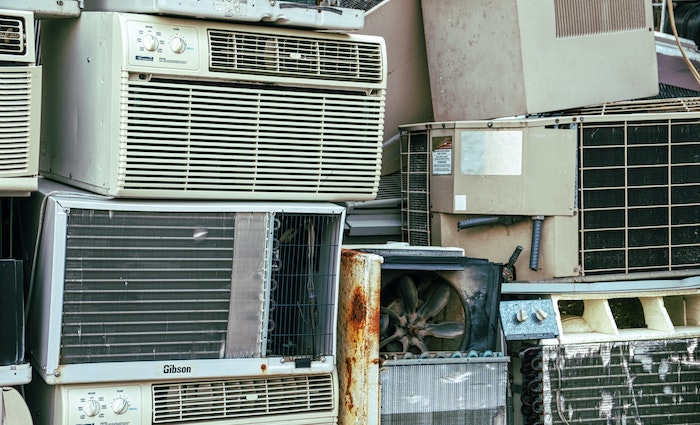
Image Source: goloadup.com
Why Disposing of Your Old AC Unit Matters
Getting rid of an old air conditioner unit needs care. It is more than just an old appliance. Inside, these units have materials that can be bad for the planet.
One main concern is the refrigerant inside the cooling system. This is often called Freon, though that’s a brand name for a specific type of refrigerant. These chemicals help cool the air. But if they get into the air, they can hurt the layer high up in the sky that protects us from the sun’s harmful rays. Some older types of refrigerant are really bad for this sky layer. Newer ones are better but can still trap heat in the air, adding to climate change.
Because of these dangers, laws are in place about handling refrigerants. You cannot just let them leak out. Only people trained and certified can remove them safely. This is a key part of Freon removal AC unit.
Besides the refrigerant, AC units have other parts that can be harmful. These include:
- Oils mixed with the refrigerant.
- Mercury in some older switches.
- Heavy metals like copper and aluminum (though these are valuable to recycle).
- Plastic and foam that can take a very long time to break down in a landfill.
Putting an AC unit with these things straight into a landfill is bad news. It can pollute the ground and water over time. Sending it to a regular dump might also be against your local rules. This is why understanding proper AC disposal is so important.
Proper disposal helps the Earth. It stops bad chemicals from escaping. It also lets useful materials like metals be recycled. Recycling saves energy because making new metal from old scrap uses less power than digging it out of the ground. When you recycle air conditioner parts, you help save resources.
So, even though it takes a little more effort, getting rid of your old AC unit the right way is the responsible thing to do for our environment.
Getting Ready to Dispose of Your AC
Before you say goodbye to your old window AC, there are a few things you should do. Taking these steps makes the disposal process easier and safer.
First, make sure the AC unit is truly old or broken. Is it not working at all? Is it using too much energy compared to newer models? Sometimes, a simple repair could give it more life. But if it’s really at the end, it’s time to plan for disposal.
Cleaning the Unit: Give the outside of the unit a quick clean. Remove any big dirt or debris. This makes it nicer for whoever handles it next, whether it’s a recycling center or a pickup service. You don’t need to take it apart yet. Just a surface clean is fine.
Finding Unit Information: Try to find the make and model of your unit. This info is often on a sticker or plate on the side or back of the unit. Knowing the model might help when you call places that handle appliance disposal. Some places might have rules based on the size or type of AC.
Check Your Unit’s Age: Older units are more likely to contain refrigerants that are now banned or heavily controlled. Knowing the age can help you figure out if special handling for Freon removal AC unit is definitely needed (which it almost always is for any AC).
Taking Out the Unit: Carefully take the unit out of the window. These can be heavy! Get help if you need it to avoid hurting yourself or dropping the unit. Once it’s out, put it somewhere safe, like a garage or shed, until you can get rid of it. Do not leave it somewhere a child could get stuck in it or hurt by it.
Do Not Try This Yourself: Never try to drain or remove the refrigerant yourself. This is harmful and illegal if you are not certified. Freon removal AC unit must be done by a trained professional. Disposing of the refrigerant yourself is a major part of why AC units are seen as hazardous waste AC unit.
Once your unit is out and you have basic info about it, you are ready to explore your disposal options.
Where Can You Actually Get Rid of It?
Knowing where to dispose of AC unit is the next big step. You have several choices, but not all might be available in your area. Also, some choices are better for the environment than others.
Let’s look at the main ways you can handle appliance disposal for an old air conditioner.
Options for Proper AC Disposal
There isn’t one single way that works for everyone. It depends on where you live and the services available to you. Here are common options:
- Recycling Centers: Many centers that recycle electronics or appliances will take AC units. They have the means to handle the hazardous parts and separate valuable metals. This is a great way to recycle air conditioner parts.
- Junk or Scrap Metal Yards: These places buy old metal by weight. An old AC unit has a lot of metal (copper, aluminum, steel). However, a scrap air conditioner unit still has the refrigerant inside. Many scrap yards will only accept AC units if the refrigerant has already been professionally removed. You must call ahead and ask their rules. They often pay you a small amount for the metal, but the cost of Freon removal might be more than you get back.
- Appliance Stores or Retailers: Sometimes, when you buy a new air conditioner, the store will take your old one away. This is called a “take-back” program. It’s very convenient. Ask about this when you buy your new unit. They usually handle the proper disposal themselves.
- Local Government or Waste Department Programs: Your city or town might have special ways to get rid of old appliances. They might have specific drop-off days or locations for hazardous waste AC unit or large appliance disposal. They might also offer a bulk trash pickup air conditioner service, but you MUST check if they accept AC units and if they require proof of refrigerant removal beforehand.
- Utility Companies: Some electric or gas companies have programs to pick up old, energy-hogging appliances like refrigerators and AC units. They often give you a small payment or credit for letting them take it. This is because getting rid of old, inefficient appliances helps save energy overall. Check your local utility’s website.
- Certified Refrigerant Handlers/HVAC Companies: You can pay a company that works on air conditioners (HVAC technician) to come to your home and remove the refrigerant properly. After the refrigerant is out, they might take the unit for a fee, or you can then take it to a scrap yard or recycling center that requires the Freon to be gone. This ensures proper Freon removal AC unit.
- Donation: If your window AC unit is still working well, but you just upgraded, you might be able to donate window AC to a charity or someone in need. However, most charities can only accept items in good working order. If it’s broken, donation is not an option.
- Special Hazardous Waste Events: Some areas have specific days or locations where residents can bring items considered hazardous waste AC unit, which includes items with refrigerants. These events might not happen often, so you need to plan ahead.
Each of these options has different steps, potential costs, and rules. It’s important to find out what is available and allowed where you live.
Researching Local Options
The best way to figure out how to dispose of an old AC unit is to check your local resources.
- Visit Your City or County Website: Look for sections on “Trash,” “Recycling,” “Solid Waste,” or “Hazardous Waste.” They will usually list what they accept and where. Look for details on appliance disposal or refrigerant-containing items.
- Call Your Local Waste Management Department: If the website is unclear, call them directly. Ask specifically about disposing of a window air conditioner. Ask if they require refrigerant removal first, if there’s a fee, and where you can drop it off or if they offer pickup (like bulk trash pickup air conditioner).
- Use Online Recycling Locators: Websites like Earth911 or the EPA’s (Environmental Protection Agency) site might have search tools where you can enter your zip code and the item you want to recycle (like “air conditioner” or “appliances”). These tools can help you find recycling centers or special programs near you that handle this type of item.
- Contact Local Scrap Yards: Call scrap metal businesses in your area. Ask if they accept AC units and, crucially, if the refrigerant needs to be removed before you bring it in. Get the cost or payment details.
- Check with HVAC Companies: Call local businesses that fix air conditioners. Ask if they offer refrigerant removal services for old units and what they charge. Ask if they will take the unit afterward or if you need to arrange separate disposal.
Gathering this information will help you understand the rules and options in your specific location for Proper AC disposal.
Deciphering the Importance of Freon Removal
We’ve mentioned Freon removal AC unit several times. Let’s look closer at why this step is so critical and often legally required.
Refrigerants used in air conditioners are powerful chemicals. When they escape into the air, they can cause significant environmental harm.
Older refrigerants, like Chlorofluorocarbons (CFCs) and Hydrochlorofluorocarbons (HCFCs), are known to damage the Earth’s ozone layer. This layer helps block dangerous ultraviolet (UV) radiation from the sun. A damaged ozone layer means more UV radiation reaches us, increasing risks of skin cancer and other problems. Because of this, the production and use of these older refrigerants have been phased out under international agreements (like the Montreal Protocol) and national laws.
Newer refrigerants, like Hydrofluorocarbons (HFCs), do not harm the ozone layer as much. However, they are very strong greenhouse gases. This means they are highly effective at trapping heat in the atmosphere, much more so than carbon dioxide. Releasing HFCs contributes significantly to climate change.
Because of these environmental dangers, U.S. federal law (specifically the Clean Air Act) requires that refrigerants be removed from appliances like air conditioners by certified technicians before the appliance is disposed of. It is illegal for individuals or uncertified people to knowingly vent or release refrigerants into the atmosphere.
What happens during professional Freon removal?
A certified technician uses special equipment to safely capture the refrigerant from the AC unit’s sealed system. This equipment pulls the refrigerant out and stores it in a recovery tank. The refrigerant can then often be recycled, reclaimed (cleaned up for reuse), or properly destroyed. The key is that it is captured and not released into the air.
Who can do this?
Only technicians certified under EPA regulations are allowed to handle refrigerant removal. These are typically HVAC professionals. They have the training and the right tools to do the job safely and legally.
What if you don’t get the Freon removed?
- Environmental Harm: The refrigerant will likely leak out over time wherever the unit ends up (landfill, scrap yard), harming the environment.
- Legal Penalties: You or the disposal site could face fines from the EPA if the unit is found to have been improperly disposed of with the refrigerant still inside.
- Disposal Site Refusal: Many legitimate recycling centers, scrap yards, and waste facilities will not accept AC units unless you provide proof that a certified technician has removed the refrigerant. They don’t want the legal risk or the environmental hazard.
So, while paying for professional Freon removal AC unit adds a cost, it is often a necessary step for proper AC disposal, required by law and needed to protect the environment.
Comparing Different Disposal Methods
Let’s look at the pros and cons of the common ways to get rid of a Junk old AC unit.
| Disposal Method | Pros | Cons | Typical Cost/Outcome | Keyword Connection |
|---|---|---|---|---|
| Recycling Center (Specialized) | Handles hazardous parts properly; Recycles metals; Good for environment. | Might require refrigerant removal first; Drop-off only; Limited locations. | Might have a fee ($10-$50). | Recycle air conditioner |
| Scrap Metal Yard | You might get paid for the metal. | Almost always requires professional Freon removal first; Only takes unit after Freon is out. | Pay small amount for metal. | Scrap air conditioner, Junk old AC unit |
| Retailer Take-Back Program | Very convenient; Done when buying new unit; They handle everything. | Only an option when buying new; Not all stores offer it. | Often free with purchase. | Appliance disposal |
| Local Waste Department Drop-off | Often cheaper or free for residents; Ensures proper handling. | Might require refrigerant removal proof; Specific drop-off locations and hours. | Free or small fee. | Proper AC disposal, Hazardous waste AC unit |
| Local Bulk Trash Pickup | Convenient (they come to you). | Often does NOT accept AC units or requires proof of Freon removal; Rules vary widely. | Free or small fee. | Bulk trash pickup air conditioner |
| Utility Company Program | May pay you; Convenient pickup; Focuses on energy saving. | Only for working units; Limited programs; Eligibility rules apply. | May pay you ($25-$50). | Appliance disposal |
| Hire HVAC Technician | Ensures legal & safe Freon removal. | Costs money for the service; You still need to dispose of the unit afterward. | Fee for service ($75-$150+). | Freon removal AC unit, Proper AC disposal |
| Donation (Working Unit) | Helps others; Good for environment (reuse). | Unit must be in good working order; Finding a charity that accepts them can be hard. | Free (for you). | Donate window AC |
| Special Hazardous Waste Event | Designed for items like ACs with Freon. | Events are infrequent; Specific dates and locations; Might have limits. | Often free for residents. | Hazardous waste AC unit, Where to dispose of AC unit |
As you can see, the “best” way depends on your unit’s condition (working or broken), your budget, and what services are available where you live. For a broken unit, getting the Freon removed and then taking it to a recycling center or scrap yard is a common route, ensuring you Recycle air conditioner metals after hazardous materials are handled. If your town offers a specific appliance or hazardous waste drop-off that accepts ACs with Freon, that’s often the easiest and cheapest compliant option for proper AC disposal.
Grasping Local Rules and Finding Where to Dispose of AC Unit
Rules about getting rid of old air conditioners differ greatly from one place to another. What is allowed in one city might be against the rules in a town just next door. This is why checking your local rules is a must for proper AC disposal.
Your local waste management office is the main place to get this information. They will tell you exactly what their rules are. Do they offer bulk trash pickup air conditioner service that includes ACs? Do you need to take the unit to a special place? Do you absolutely have to get the Freon removed first and show proof?
- Some towns have a main dump or transfer station where residents can bring large items. They might have a specific area for appliances or metals.
- Other towns might have special collection days once or twice a year for hazardous items, which would include AC units.
- Some places might require you to schedule a special pickup for a large appliance like an AC, and there might be a fee.
It is important not to guess the rules. A simple phone call or check of their website saves you time and ensures you do things the right way. Ask them “Where to dispose of AC unit?” and “What are the requirements for items with refrigerant?”
Also, remember that laws about refrigerant removal come from the federal government (EPA). So, while the place you take it might be local, the need to remove the Freon is a national rule. Any place that properly handles appliance disposal with refrigerants must follow these federal guidelines.
Using online search tools can also help you find places. Search for terms like:
* “Appliance recycling near me”
* “Scrap metal yard that takes AC units”
* “Hazardous waste disposal [your city/county]”
* “How to get rid of air conditioner [your city/county]”
When you find potential places (like recycling centers or scrap yards), call them before you go. Confirm they accept AC units and ask about their specific rules regarding refrigerant. Don’t just show up!
For example, calling a scrap air conditioner yard and asking “Do you take old AC units?” might get a “yes.” But the crucial follow-up is, “Do they need to have the Freon removed first?” Most legitimate places will say yes.
Taking the time to do this local research is a key step in ensuring your old unit is handled correctly and you avoid any fines or issues. It helps make sure you are doing proper AC disposal.
Interpreting the Cost of Proper Disposal
Getting rid of an old AC unit the right way often involves some cost. It’s rarely free, especially if the unit is broken and contains refrigerant. Let’s look at the potential costs.
Cost of Professional Freon Removal AC Unit: If you need to hire a certified technician to remove the refrigerant before disposal, this is usually the biggest cost. Prices vary based on location and company, but you can expect to pay anywhere from $75 to $150 or more for this service. This ensures the Hazardous waste AC unit component (the refrigerant) is handled legally and safely.
Disposal Fees: Even after the Freon is out, the place you take the unit might charge a fee.
* Recycling centers might charge a per-unit fee, often $10 to $50, to cover their costs of dismantling and handling. This fee helps them properly Recycle air conditioner materials.
* Local waste facilities might charge a small fee for large appliance disposal, though some offer it for free to residents.
* Scrap yards might pay you a small amount for the metal, but it’s usually just a few dollars and might not cover the cost of getting the Freon removed.
Pickup Fees: If you use a service that picks up the unit from your home (like a special city pickup or a private Junk old AC unit service), there will likely be a fee for the convenience. This could range from $20 to over $100 depending on the service. Remember, even pickup services might require Freon removal first.
Utility Rebates/Payments: In some cases, you might actually get money back. If your utility company has a program to take old, working ACs to save energy, they might pay you $25 to $50. This helps offset the cost of buying a new, more efficient unit. However, this is for donating window AC or getting rid of a working unit, not usually a broken one.
Cost Comparison Example (Illustrative):
Let’s say you have a broken AC and live in a place where the recycling center requires Freon removal first.
- Option 1: Hire technician ($100) + Drop off at recycling center ($30 fee) = Total Cost: $130
- Option 2: Hire technician ($100) + Take to scrap yard (get $5 for metal) = Total Cost: $95
- Option 3: Your town has a special hazardous waste day that accepts ACs with Freon (Free drop-off) = Total Cost: $0 (assuming you can transport it)
- Option 4: Pay a bulk trash pickup air conditioner service (they might not take it, or might charge extra if Freon is not removed, let’s say they charge $75 and require proof of Freon removal) = Hire technician ($100) + Pickup ($75) = Total Cost: $175
This shows that the cost varies a lot based on the route you take and the specific rules of your area. It’s important to factor in the required Freon removal cost when budgeting for proper AC disposal. Don’t skip this step just to save money, as it’s illegal and harmful.
Sometimes, the easiest option is the retailer take-back program when buying a new unit, as the cost is often built into the new purchase or offered as a free service.
Environmental Impact of Improper Disposal
Let’s spend a little more time on why avoiding improper disposal is so crucial for the environment. When an old AC unit is just thrown into a regular landfill, several bad things can happen over time.
Refrigerant Leaks: The biggest threat is the release of refrigerants. The pipes inside an AC unit are sealed, but they can break open when the unit is crushed or sits in a landfill for years. Once these chemicals escape, they rise into the atmosphere.
- Older CFCs and HCFCs travel to the stratosphere and break down the ozone layer. Even small amounts can cause damage.
- Newer HFCs are powerful greenhouse gases. One pound of common AC refrigerant (like R-410A) can trap as much heat in the atmosphere over 20 years as several tons of carbon dioxide! Letting this leak out contributes significantly to climate change.
Proper Freon removal AC unit by a certified professional prevents this. The captured refrigerant can be cleaned and reused or destroyed in a way that neutralizes its harmful effects.
Other Hazardous Materials: AC units also contain other potentially harmful substances:
- Oils: The oil that lubricates the compressor can leak out, possibly polluting soil and groundwater.
- Metals: While valuable for recycling (Scrap air conditioner), some metals can be toxic in certain forms or combinations if they corrode in a landfill and their chemicals leach into the ground.
- Mercury: Some old switches might contain tiny amounts of mercury, a very toxic heavy metal that can harm human health and wildlife if it gets into the environment.
- Plastics and Foams: These materials break down very slowly, taking up valuable space in landfills. Recycling these materials saves resources and landfill space.
When you choose methods like recycling air conditioner units at proper facilities or using hazardous waste AC unit collection services, you ensure these materials are handled responsibly. Metals are recycled, plastics and foams might be recycled or processed separately, and hazardous components like refrigerants and mercury are managed to prevent environmental release.
Simply discarding a Junk old AC unit with regular trash ignores these risks. It puts convenience ahead of environmental protection. While the cost might be slightly higher for proper disposal, the long-term benefit to the planet is immense. It’s part of being a responsible consumer. Making the effort to find out where to dispose of AC unit properly is an investment in a healthier environment for everyone.
Grasping the Process of Recycling an Air Conditioner
Recycling an air conditioner unit is more complex than recycling a plastic bottle or aluminum can. It involves several steps to safely remove hazardous materials and then break down the unit to recover valuable components. This is what happens after you drop off your unit at a facility that promises to Recycle air conditioner parts properly.
- Intake and Inspection: The unit arrives at the recycling facility. They might check if the refrigerant has already been removed (if their process requires it) or if they need to do it on-site.
- Refrigerant and Oil Recovery: This is the most critical step. Certified technicians at the facility use specialized equipment to tap into the sealed system and extract all the refrigerant gas and the oil mixed with it. This ensures proper Freon removal AC unit on a larger scale. The recovered refrigerant is stored safely for further processing (recycling, reclaiming, or destruction). The oil is also managed properly.
- Removal of Hazardous Components: Any other parts considered hazardous waste AC unit are carefully removed. This might include mercury switches, capacitors (which can contain harmful chemicals), and possibly some types of foam insulation depending on local rules and the unit’s age.
- Dismantling and Separation: Once the hazardous materials are out, the unit is broken down. This can be done by hand for larger components or using machinery. The goal is to separate the different types of materials:
- Metals: Steel, aluminum, and copper make up a large portion of an AC unit. These are very valuable scrap air conditioner materials. They are sorted by type.
- Plastics: The casing, fan blades, and other parts are often plastic. These are separated.
- Glass: Some units might have glass components.
- Other Materials: Foam, wiring insulation, etc., are also separated as much as possible.
- Processing and Selling Materials: The separated materials are then prepared for sale to companies that use recycled materials.
- Metals are often shredded or baled and sent to smelters to be melted down and made into new metal products. This is where the Scrap air conditioner value comes in.
- Plastics might be ground up and sent to manufacturers who can use recycled plastic.
- Recovered refrigerant is sent to licensed reclaimers.
This detailed process is why specialized appliance recycling centers or hazardous waste facilities are the best places for appliance disposal of an old AC unit. They have the equipment and expertise to handle the unit in an environmentally sound way, ensuring that valuable materials are recovered and harmful substances are contained and managed correctly. Simply putting it out for bulk trash pickup air conditioner (unless specifically allowed and handled properly by your local service) misses these crucial steps.
Choosing a facility that performs this full recycling process is the most responsible way to get rid of your old unit and contribute to a circular economy where materials are reused.
Considering Donation or Resale (If Working)
What if your old window AC unit isn’t broken, but you’re replacing it with a central air system or a newer, more efficient model? In this case, disposal might not be the only option. If the unit is still in good working condition, you might be able to donate window AC or even sell it.
Requirements for Donating or Reselling:
- Must Be Working: The unit needs to cool effectively, the fan should work, and there should be no major issues like strange noises, leaks, or smells.
- Must Be Clean and Presentable: A dirty, dusty unit is less likely to be accepted or sold. Clean the filters and the exterior.
- Energy Efficiency: While older units use more energy than new ones, they might still be useful to someone who can’t afford a new unit. However, very old, inefficient units might be harder to give away or sell.
Where to Donate a Working AC Unit:
- Local Charities: Organizations like Habitat for Humanity ReStore or other local charities that accept building materials or appliances might take working AC units. Call ahead to confirm they accept them and check their condition requirements.
- Community Centers or Shelters: Some local community organizations or homeless shelters might need AC units, especially during hot weather. Reach out to see if they have a need.
- Freecycle or Buy Nothing Groups: These online groups allow people to give away items for free in their local community. It’s a great way to ensure the unit gets reused by someone who needs it.
Where to Resell a Working AC Unit:
- Online Marketplaces: Websites and apps like Craigslist, Facebook Marketplace, or OfferUp are popular places to sell used items locally. Take clear photos and describe the unit’s condition accurately. Price it reasonably based on age and condition.
- Garage Sale/Yard Sale: If you’re having a sale, you can include the AC unit.
Why is this better than disposal?
Donating or reselling gives the unit a second life. This is higher up on the waste management hierarchy than recycling or disposal. Reusing an item saves all the energy and resources that would have been used to manufacture a new one. It also delays the need for proper appliance disposal until the unit truly stops working.
However, if the unit is old and very inefficient, it might end up costing the new owner a lot in electricity bills. In some cases, properly disposing of the old unit and helping the person buy a new, energy-efficient one (if possible through a program) might be a better long-term solution, both for the environment and the recipient’s wallet. But if the need is immediate and budget is tight, a working used unit can provide much-needed cooling.
Always be honest about the unit’s condition if you are selling or donating it. If it has quirks or uses a lot of power, mention it.
FAQs About Disposing of Window Air Conditioners
Here are some common questions people ask about getting rid of old AC units.
Q: Can I just put my old window AC out with the regular trash?
A: Likely no. Most places do not allow AC units in regular household trash because they contain refrigerants and other hazardous materials. This is considered improper disposal and can lead to fines. Always check your local waste rules first.
Q: Does my old AC unit definitely have Freon in it?
A: Almost all air conditioners use a refrigerant chemical in a sealed system to cool the air. “Freon” is a common name, but the specific chemical varies. If your unit is older than ~2010, it might have R-22 (an HCFC). Newer units often use R-410A (an HFC). Both are controlled substances that must be handled properly, so assume professional Freon removal AC unit is required unless told otherwise by a certified expert or disposal facility.
Q: How do I know if the refrigerant has been removed?
A: When a certified technician removes the refrigerant, they often put a sticker on the unit saying that the refrigerant has been recovered and include their name and certification number. Some disposal sites might require you to show documentation from the technician.
Q: Can I take my AC unit to any scrap metal yard?
A: You can take the metal after the refrigerant and other hazardous parts are removed. Most legitimate scrap air conditioner yards will not accept AC units with the refrigerant still inside due to legal and environmental risks. You must call and confirm their specific rules.
Q: Is there a way to get rid of it for free?
A: Maybe, but it depends on where you live and the unit’s condition.
* Some city/county drop-off sites might be free for residents.
* Special hazardous waste collection events are often free.
* Retailer take-back programs might be free with a new purchase.
* Utility company programs might even pay you (for working units).
* Donating a working unit is free for you.
However, paying for proper Freon removal AC unit is often necessary for broken units, which adds cost.
Q: What is appliance disposal?
A: Appliance disposal refers to the process of getting rid of large household machines like refrigerators, washing machines, and air conditioners. Because these items can contain refrigerants, oils, metals, and electronics, proper appliance disposal often involves special handling, recycling, and sometimes hazardous waste procedures rather than just throwing them away.
Q: What happens to an AC unit when it’s properly recycled?
A: A proper facility will first safely remove the refrigerant and other hazardous parts (like mercury switches). Then, they will break down the unit to separate materials like steel, aluminum, copper, and plastic. These materials are then sent to processors who use them to make new products. This process helps Recycle air conditioner materials and reduces waste.
Q: My town offers bulk trash pickup air conditioner. Can I use that?
A: You need to check their specific rules. Many bulk trash services do not accept AC units, or they require proof that the refrigerant has been removed before they will pick it up. Putting it out without following their rules means it might just be left on the curb, or you could face a fine.
Q: What are the environmental dangers of just dumping an AC unit?
A: The main dangers are the release of refrigerants, which harm the ozone layer and contribute to climate change. Other risks include pollution from oils and heavy metals leaking into soil and water as the unit breaks down in a landfill, and the long-term waste created by plastics and other materials that don’t decompose quickly. This is why it’s considered Hazardous waste AC unit if not processed correctly.
Q: Where can I find out where to dispose of AC unit in my area?
A: Start with your local city or county waste management or public works department website or phone number. They are the best source for local rules and collection sites. You can also search online recycling databases (like Earth911) for appliance recyclers or hazardous waste facilities near you. Always call the facility directly to confirm they accept AC units and understand their requirements.
Taking the time to handle your old window air conditioner correctly protects the environment, follows the law, and helps recover valuable materials. It’s an important part of being a responsible resident.