
This blog post will guide you through the process of safely and responsibly disposing of an old air conditioner. Can you put an old air conditioner in your regular trash? No, you generally cannot put an old air conditioner in your regular trash because they contain refrigerants and other components that require special handling to protect the environment.
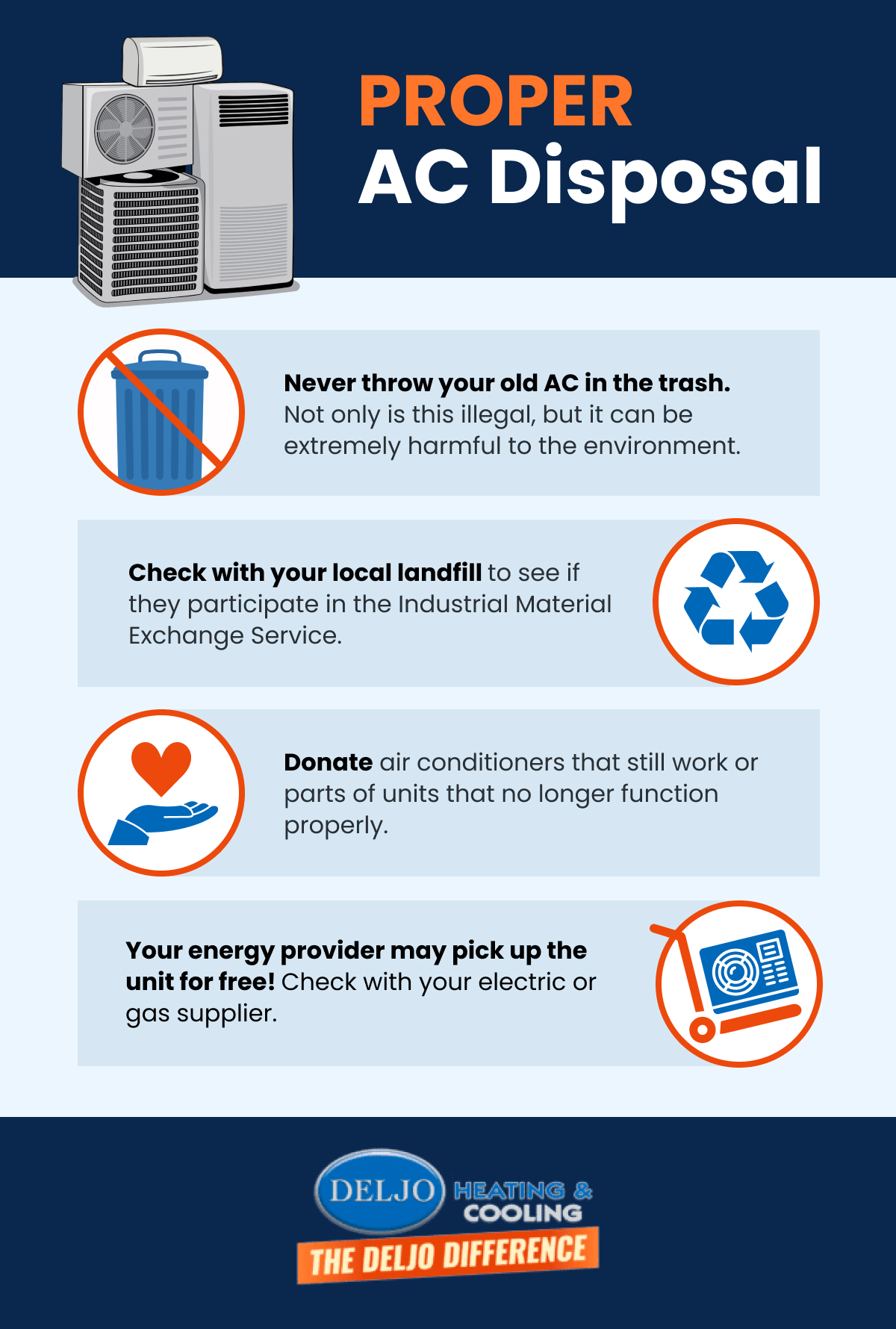
Image Source: deljoheating.com
How To Dispose Of An Air Conditioner Safely
Replacing an old air conditioner is a significant task. Whether you’re upgrading to a more energy-efficient model or dealing with a unit that’s simply given up the ghost, you’ll eventually face the question: “What do I do with the old one?” Air conditioner disposal isn’t as simple as tossing it on the curb with your weekly refuse. These cooling systems, particularly older ones, contain materials that can be harmful to the environment if not handled correctly. This guide will walk you through the best practices for AC unit removal and old air conditioner recycling, ensuring you dispose of your appliance responsibly.
Why Proper Disposal Matters
The primary reason for careful air conditioner disposal centers on the refrigerants contained within the cooling coils. Substances like Freon (CFCs and HCFCs) were once common in air conditioning units. These chemicals, when released into the atmosphere, can contribute to ozone depletion and climate change. Modern units use more environmentally friendly refrigerants, but they still require careful handling and recovery by certified professionals.
Beyond refrigerants, air conditioners are complex appliances made of metal, plastic, and electrical components. Improper disposal can lead to these materials ending up in landfills, taking up valuable space and potentially leaching harmful substances into the soil and groundwater. HVAC disposal regulations are in place to prevent this, promoting a circular economy where valuable materials can be reclaimed and reused.
Your Options for AC Unit Removal
When it comes to removing your old air conditioner, you have several avenues to explore, each with its own benefits:
1. Professional Installation and Removal Services
The most common and often the easiest way to handle air conditioner disposal is to let the professionals who install your new unit take care of the old one.
- Convenience: Most HVAC companies offer certified appliance removal as part of their installation service. They are equipped to safely disconnect, transport, and dispose of the old unit according to regulations.
- Expertise: Technicians are trained in handling refrigerants and ensuring compliance with environmental laws. They know the proper channels for environmentally friendly AC disposal.
- Efficiency: They can often handle the removal on the same day your new unit is installed, saving you the hassle of storing or transporting the old one.
When getting quotes for a new AC unit, always inquire about their disposal services. Ask about any associated fees and confirm they have a plan for responsible recycling or disposal.
2. Local Recycling Centers and Hazardous Waste Facilities
Many municipalities and counties have designated recycling centers or hazardous waste drop-off locations that accept large appliances like air conditioners.
- Community Focus: These facilities are designed to process items that require special handling, including old air conditioner recycling.
- Cost-Effectiveness: Sometimes, dropping off the unit yourself can be cheaper than having a service do it, although you’ll need to factor in the cost and effort of transport.
- Check Requirements: It’s crucial to contact your local center beforehand. They will likely require you to drain the refrigerant professionally before drop-off, or they may have specific collection days or procedures for appliances. Some facilities might charge a small fee to cover disposal costs.
3. Retailer Take-Back Programs
Some appliance retailers offer take-back programs when you purchase a new unit from them.
- Integrated Service: This can be a seamless option, where the retailer arranges for the pickup of your old appliance when they deliver your new one.
- Environmental Commitment: Many retailers partner with certified recyclers to ensure proper appliance disposal.
- Availability: This service isn’t universal, so it’s essential to ask about it at the point of purchase.
4. Salvage Yards and Scrap Metal Dealers
If your air conditioner is relatively old and you’re looking to get a small return, scrap metal dealers might be an option.
- Material Value: They are primarily interested in the metal components of the unit.
- Pre-Processing: You will likely need to ensure the refrigerant has been professionally removed before they will accept the unit. They may also have other requirements.
- Limited Environmental Focus: While they will recycle the metal, their focus isn’t typically on the broader environmentally friendly AC disposal of all components, so it’s important to ensure other materials are handled responsibly.
Steps for Responsible Air Conditioner Disposal
No matter which removal method you choose, there are important preparatory steps to ensure safe and compliant air conditioner disposal.
Step 1: Professional Refrigerant Recovery
This is the most critical step for any AC unit removal.
- Legal Requirement: In many places, it is illegal to vent refrigerants into the atmosphere.
- Certified Technicians: Only EPA-certified technicians can legally recover refrigerants. They use specialized equipment to safely extract the coolant and store it for proper disposal or recycling.
- When to Schedule: Arrange for this service before your old unit is picked up or dismantled. Your HVAC installer can often perform this, or you may need to hire a separate technician.
Step 2: Disconnecting the Unit
Once the refrigerant is recovered, the unit needs to be safely disconnected from power and any refrigerant lines.
- Electrical Safety: Ensure the power to the unit is turned off at the breaker box.
- Line Sets: Refrigerant lines should be properly sealed after recovery to prevent any residual gas from escaping.
Step 3: Transportation
Getting the unit to its final destination requires care.
- Weight: Air conditioners, especially central units, can be heavy. Use proper lifting techniques or a dolly.
- Securing the Unit: If you’re transporting it yourself, ensure it’s securely fastened in your vehicle to prevent shifting or damage during transit.
Step 4: Choosing a Disposal Partner
Selecting the right partner for your old air conditioner recycling is vital.
- Verify Certifications: Ensure any company handling the unit, especially for refrigerant recovery, is properly certified by the EPA or your local environmental agency.
- Reputation: Look for companies with good reviews and a clear commitment to environmentally friendly AC disposal.
- Transparency: Ask about their disposal process and where the unit will ultimately go.
What About Different Types of Air Conditioners?
The principles of air conditioner disposal largely apply across different types of units, but there are some nuances.
Window Air Conditioners
- Size and Weight: Generally lighter and smaller than central units, making them easier to transport.
- Disposal: Many local recycling centers readily accept window units. The refrigerant recovery step is still essential.
Portable Air Conditioners
- Similarities to Window Units: These also contain refrigerants and require professional recovery.
- Ease of Movement: Their portability makes them easy to bring to a drop-off location.
Mini-Split and Ductless Systems
- Multiple Components: These systems have both an indoor and an outdoor unit. Both components will need to be disconnected and disposed of.
- Refrigerant Lines: The lines connecting the indoor and outdoor units will need to be handled by a certified technician for refrigerant recovery.
Central Air Conditioners
- Larger and Heavier: These are the most substantial units and typically require professional removal due to their size and complexity.
- Refrigerant in the Outdoor Unit: The primary refrigerant charge is in the outdoor compressor unit.
Refrigerator Disposal Guidelines Comparison
While this article focuses on air conditioners, it’s worth noting that refrigerator disposal guidelines share some similarities, particularly concerning refrigerant. Refrigerators and freezers also contain refrigerants (often HFCs) that must be recovered by certified technicians. Both appliances are considered major appliances and often fall under similar bulky item disposal rules and recycling programs. The key takeaway is that appliances with cooling systems require special attention due to their refrigerant content, irrespective of whether they cool air or food.
The Role of Recycling in HVAC Disposal
Old air conditioner recycling is a crucial aspect of responsible appliance disposal.
- Resource Recovery: Air conditioners contain valuable metals like copper, aluminum, and steel, which can be salvaged and reused.
- Component Reuse: Some parts may be salvageable for repair or resale.
- Hazardous Material Management: Recycling facilities are equipped to safely handle and dispose of or treat any hazardous components, including refrigerants.
When choosing a disposal method, prioritize options that emphasize old air conditioner recycling. This not only helps the environment by diverting waste from landfills but also conserves natural resources.
Finding Certified Professionals for AC Unit Removal
Knowing who to trust for AC unit removal and refrigerant handling is important.
- HVAC Contractors: Reputable HVAC companies will have technicians certified by the EPA (Environmental Protection Agency) under Section 608 of the Clean Air Act.
- Manufacturer Recommendations: Check the websites of AC manufacturers or your local utility company for lists of certified installers and service providers.
- Local Authority Resources: Your local government or environmental agency may provide lists of certified technicians or licensed appliance recyclers.
Always ask for proof of certification when hiring someone to handle refrigerant recovery or HVAC disposal.
Environmental Impact of Improper Disposal
Ignoring proper air conditioner disposal can have far-reaching negative consequences.
- Ozone Layer Damage: Older refrigerants (CFCs and HCFCs) deplete the ozone layer, which protects us from harmful UV radiation.
- Climate Change: Many refrigerants are potent greenhouse gases, contributing significantly to global warming. Venting them releases these gases directly into the atmosphere.
- Landfill Contamination: If not properly dismantled, the various materials in an AC unit can leach into the soil and water supply.
Making an Environmentally Friendly AC Disposal Choice
To ensure your air conditioner disposal is as green as possible:
- Prioritize Refrigerant Recovery: This is non-negotiable.
- Choose Certified Recyclers: Opt for services that explicitly state they recycle components responsibly.
- Support Take-Back Programs: If your retailer offers it, use their service.
- Inquire About Recycling Rates: Ask your chosen disposal service what percentage of the unit is recycled.
Responsible Electronics Disposal Considerations
Air conditioners, like many modern appliances, are essentially complex electronic devices. Therefore, responsible electronics disposal principles apply. This means not only recovering refrigerants but also ensuring that the electrical and electronic components (e-waste) are handled appropriately. Many recyclers process e-waste separately to recover valuable metals and prevent hazardous substances from entering the environment.
Hiring a Certified Appliance Removal Service
For many homeowners, the most straightforward and responsible approach is to hire a certified appliance removal service.
- What to Look For:
- EPA certification for refrigerant handling.
- Proper licensing and insurance.
- A clear process for disposal and recycling.
- Positive customer reviews.
- Benefits: They handle all the logistics, from disconnection and refrigerant recovery to transportation and final disposal or recycling, ensuring proper appliance disposal.
Cost Considerations for AC Disposal
The cost of disposing of an air conditioner can vary:
- Included with New Unit Installation: Often, the disposal fee is rolled into the installation cost, making it the most economical option. Expect this to range from $50 to $150, depending on the company and region.
- Separate Removal Service: If you’re not replacing the unit, hiring a dedicated removal service might cost more, potentially $100-$250 or more, again depending on location and the specific service.
- DIY Drop-off: If you can safely transport the unit and have had the refrigerant professionally removed, dropping it at a municipal recycling center might only incur a small processing fee, perhaps $20-$50, or even be free in some areas.
Always get quotes and clarify what services are included in the price.
Frequently Asked Questions (FAQ)
Q1: Can I just leave my old air conditioner on the curb?
A1: No, in most areas, you cannot leave an old air conditioner on the curb for regular trash collection. It contains refrigerants and other materials that require special handling and disposal methods to protect the environment.
Q2: What is the best way to dispose of an old window air conditioner?
A2: The best way is to contact your local recycling center or hazardous waste facility to see if they accept window units. If you’re buying a new one, ask the installer to take the old one. Ensure the refrigerant is recovered by a certified technician before disposal.
Q3: Who is responsible for removing the refrigerant from an old AC unit?
A3: An EPA-certified technician is legally responsible for recovering the refrigerant from an old air conditioner. This is a critical step in the disposal process.
Q4: How much does it typically cost to dispose of an air conditioner?
A4: Costs vary, but it can range from free (if included with a new purchase and handled efficiently) to $50-$250 if you hire a separate removal service or pay drop-off fees.
Q5: Can I recycle parts of an old air conditioner myself?
A5: While you can salvage metal parts, the refrigerant must be recovered by a certified professional first. It’s generally best to use a full-service recycling program to ensure all components are handled correctly.
Q6: Are there any incentives for recycling old air conditioners?
A6: Some utility companies or local governments offer rebates or incentives for upgrading to energy-efficient units, which may indirectly cover some disposal costs. Less commonly, you might receive a small credit from a scrap dealer for the metal content, but this is after refrigerant removal.
Q7: What are the dangers of releasing refrigerant into the air?
A7: Releasing refrigerants can damage the ozone layer and contribute to global warming. It is also illegal and can result in fines.
Q8: What information should I look for when hiring a disposal service?
A8: Look for proof of EPA certification for refrigerant handling, proper licensing, insurance, and a clear plan for environmentally friendly disposal and recycling.
By following these guidelines, you can ensure your old air conditioner is disposed of safely and responsibly, protecting both your community and the planet.