
If your air conditioner is not cooling your home, and you see ice on air conditioner parts, it means your unit is freezing up. You need to know how to defrost air conditioner unit right now to fix the problem and get cool air back. Why is my AC freezing up? This happens when the cold parts inside the unit get too cold. It can be from low refrigerant AC levels, not enough air moving through the unit, or other issues. The first step is always to stop the freezing and let the ice melt. This post tells you exactly what to do to thaw a frozen AC and find out why it happened.
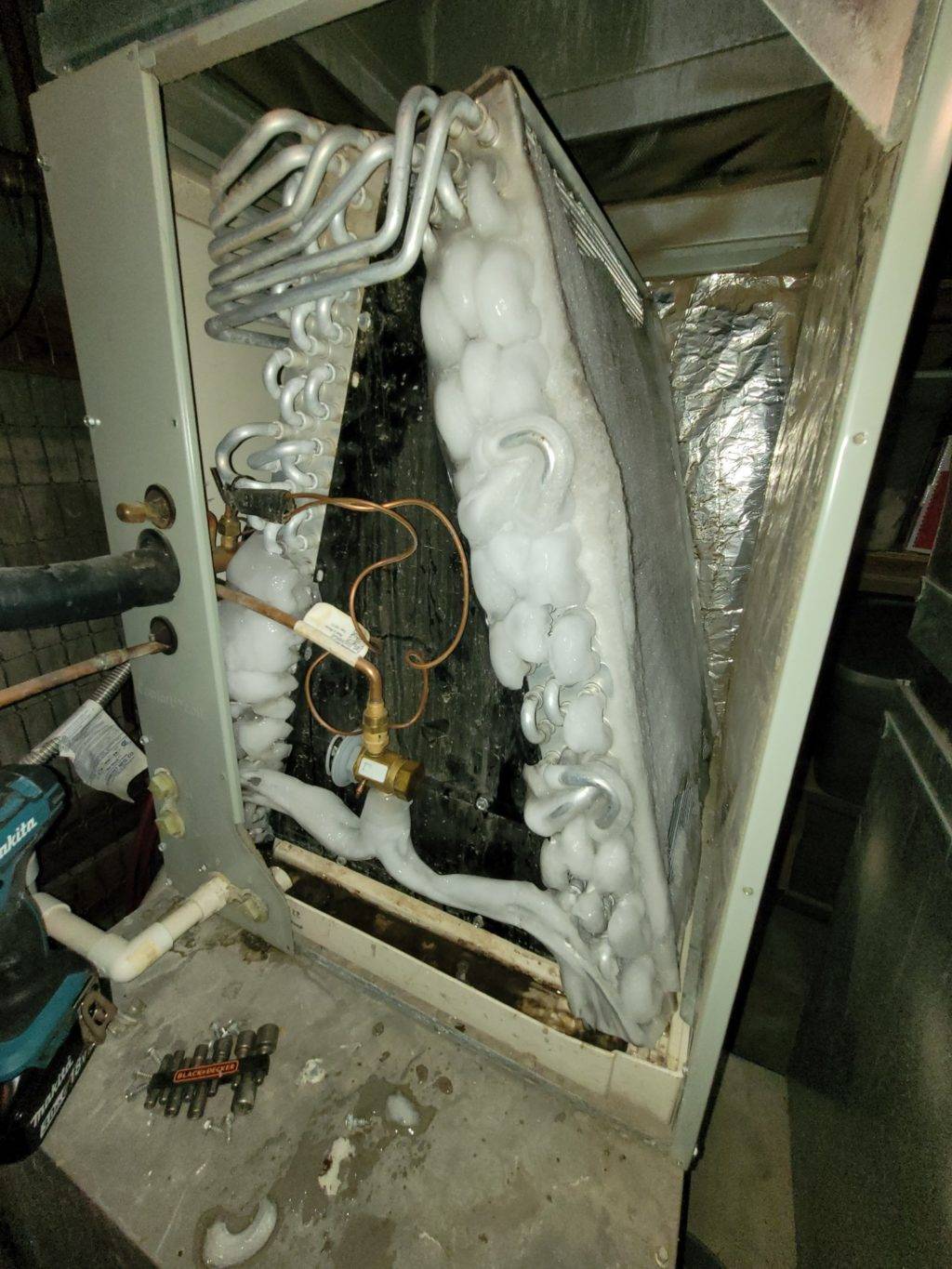
Image Source: www.manmadediy.com
Grasping Why Your AC Unit Freezes
Your air conditioner makes your home cool by moving heat from inside to outside. It uses a special liquid or gas called refrigerant to do this job. Inside your home, a part called the evaporator coil gets very cold. Warm air from your rooms blows over this cold coil. The coil takes heat out of the air, and the cool air goes back into your rooms.
Normally, moisture in the warm air turns into water drops on the cold coil. These drops usually fall into a pan and drain away. But if the coil gets too cold, or if air does not move well over it, the water drops can turn into ice. This ice builds up. When ice covers the frozen AC coil, air cannot move over it anymore. This makes the whole system work badly or stop cooling at all.
Seeing ice on air conditioner parts is a clear sign of a problem. It means your AC unit ice build up is stopping the system from working. This needs to be fixed quickly to avoid more damage.
Spotting the Signs of a Frozen AC
How do you know if your AC unit is freezing up? There are clear signs to watch for.
- Warm Air Blowing: The most common sign is that your air conditioner is running but only blowing warm or not-so-cool air. This is because the ice on the evaporator coil stops it from taking heat out of the air. The air conditioner not cooling is a big clue.
- Visible Ice: You might see ice on the outdoor unit’s copper line (the bigger, insulated one) or on the indoor unit’s coil. The indoor part is where the evaporator coil freezing happens. You might need to open a panel to see the coil, but sometimes ice is visible on the pipes near the unit.
- Strange Sounds: Sometimes, you might hear dripping or hissing sounds as the ice melts.
- Higher Energy Bills: A frozen AC unit works harder but does not cool well. This can make your energy bill go up.
- Water Leaks: As the ice melts, it can cause water to overflow from the drain pan inside the house, leading to water damage. This is especially common with evaporator coil freezing.
If you see any of these signs, it is likely you have a frozen AC coil. You need to take action right away.
What Causes Your AC to Freeze?
Several things can make your AC unit freeze up. AC troubleshooting frozen problems often starts by looking at these causes.
Low Refrigerant Levels
- The Problem: Refrigerant is the fluid that cools your air. If the amount of refrigerant is too low (often due to a leak), the pressure in the system drops. Low pressure makes the evaporator coil get much colder than it should. This extreme cold causes moisture in the air to freeze onto the coil quickly.
- Why it Matters: Low refrigerant AC is a very common reason for a frozen AC coil. It means there is a leak somewhere. Just adding more refrigerant is not a fix; the leak must be found and repaired first.
Poor Airflow
- The Problem: Your AC system needs a lot of warm air to blow over the cold coil. This airflow helps the coil soak up heat and keeps it from getting too cold. If the airflow is blocked or too low, the coil does not get enough warm air to balance its coldness. It gets super cold, and ice forms.
- Common Causes of Low Airflow:
- Dirty Air Filter AC: A clogged air filter is a very frequent cause. It blocks air from entering the system. Imagine trying to breathe through a thick blanket; that’s what your AC does with a dirty filter.
- Blocked Vents/Registers: If furniture, rugs, or other things cover the vents in your rooms, air cannot flow out properly. This reduces the total amount of air moving through the system.
- Closed Doors/Registers: Closing too many doors or air vents in rooms can also limit airflow back to the air handler.
- Blocked Return Vents: The large vents where air is pulled into the system (return vents) must be clear.
- Problem with the Fan: The fan (blower motor) that pushes air through your ducts might be working slowly or not at all.
- Dirty Evaporator Coil: If the coil itself is covered in dirt and grime, air cannot pass over it easily, even if the filter is clean. This also causes evaporator coil freezing.
Other Possible Reasons
- Running the AC in Very Cold Weather: Air conditioners are made to work in warm weather. If the outside temperature is too low (usually below 60-65°F or 15-18°C), the pressure inside the system can drop, making the coil too cold and causing the AC unit ice build up.
- Dirty Outdoor Unit (Condenser Coil): While less common as a direct cause of indoor coil freezing, a very dirty outdoor unit makes the whole system work harder and less effectively. This can sometimes lead to issues that contribute to freezing.
- Mechanical Problems: Faulty parts like a bad expansion valve or a problem with the thermostat could also lead to freezing, though these are less common for simple AC troubleshooting frozen checks by a homeowner.
Knowing these causes helps you figure out the fix after you defrost the unit. The first step is always the thawing process.
Steps for Thawing a Frozen AC Unit
The most important thing to do when you see ice on air conditioner parts is to melt the ice safely. Do not try to chip or scrape the ice off the frozen AC coil. This can easily damage the delicate fins on the coil or puncture refrigerant lines, leading to very expensive repairs (especially if you create a low refrigerant AC issue by puncturing a line).
Here is how to defrost air conditioner unit the right way:
Step 1: Turn the System Off
- What to Do: Go to your thermostat. Switch the system from “Cool” to “Off.”
- Why: This stops the AC unit from trying to cool. If the system keeps running while frozen, it can harm the compressor, a very costly part to replace.
- Important: Make sure the fan is also turned off. Some thermostats have an “Auto” and “On” setting for the fan. Turn the whole system off.
Step 2: Let the Ice Melt
- What to Do: This is the main part of thawing a frozen AC. Leave the system turned off. The ice will melt on its own.
- How Long It Takes: This can take anywhere from a few hours to 24 hours or more, depending on how much ice has built up and how warm your home is.
- Speeding Up Melting (Optional – Use Caution):
- Turn the Fan On (Sometimes): Only do this if your thermostat lets you run just the fan (usually labeled “Fan: On” while the system is “Off”). This blows warm air from your house over the frozen AC coil, which can help melt the ice faster. Make absolutely sure the cooling (“Cool”) is off. If you turn on the fan and the cooling, it will make the freezing worse.
- Open Windows (If Warm Outside): If the weather outside is warm and not humid, opening windows can bring warmer air into your home, which can help melt the ice on the indoor unit.
- Use a Fan (Carefully): You can place a portable fan near the indoor unit’s air return vent or near the coil itself (if you can access it safely and easily) to blow room temperature air onto the ice. Be careful not to damage anything.
- Warm Water (Very Carefully – Not Recommended for Beginners): Some people carefully use warm (not hot) water to pour over the outdoor unit’s frozen pipes, but this is risky. Water can get into electrical parts or refreeze in cold weather. It’s much safer to just wait. Never pour water on the indoor coil.
Step 3: Manage the Melted Water
- What to Do: As the ice melts, it will turn into water. This water should go into the drain pan below the indoor unit and flow outside through the drain line.
- Checking the Drain Pan: Look at the drain pan under your indoor air handler. If it looks full or overflowing, the drain line might be blocked. You might need to clear the drain line. A wet-dry vacuum can often clear clogs at the end of the drain line outside or at the pan itself.
- Dealing with Leaks: If water is leaking from the unit or ceiling, place towels and buckets to catch it and prevent damage.
Step 4: Confirm All Ice is Gone
- What to Do: Before you turn the AC back on, check the evaporator coil and any visible frozen pipes again.
- How to Check: Look closely. Feel the pipes (the bigger one should feel cool, but not freezing). Make sure there is no ice left anywhere on the frozen AC coil or lines.
- Why: Turning the system on while there is still ice will likely cause it to freeze up again immediately. Be patient.
This process addresses the immediate symptom – the ice on air conditioner parts. But thawing a frozen AC is only the first step. You must find out why it froze in the first place.
Figuring Out Why Your AC Froze (AC Troubleshooting Frozen)
Once the ice is completely gone, you need to do some AC troubleshooting frozen to find the root cause. Running the system again without fixing the problem will just make it freeze again.
Check Your Air Filter
- Importance: A dirty air filter AC is one of the most common reasons for poor airflow and freezing.
- What to Do: Find your air filter. It’s usually in the return air vent in a wall or ceiling, or in the air handler unit itself. Pull it out and look at it.
- What to Look For: Is it clogged with dust, dirt, and pet hair? Hold it up to the light. Can you see light through it? If not, it’s time for a new one.
- Action: Replace a dirty filter with a clean one of the correct size and type. Make sure you put the new filter in with the arrow pointing in the direction of the airflow (usually towards the air handler).
- Frequency: Check your filter monthly, especially during heavy use. Change it every 1-3 months depending on the filter type and how much you use your system.
Check Your Vents and Returns
- Importance: Blocked vents restrict airflow.
- What to Do: Walk around your house. Look at every supply vent (where cool air comes out) and return vent (where warm air is pulled in).
- What to Look For: Are any vents blocked by furniture, rugs, curtains, or other items? Are any supply registers closed?
- Action: Move anything blocking the vents. Open all supply registers. Make sure return vents (they are usually larger) are completely clear. Avoid closing too many supply vents in unused rooms; this can unbalance the system and reduce overall airflow.
Check the Fan (Blower Motor)
- Importance: The fan pushes air through the system. If it’s weak or off, airflow is poor.
- What to Do: With the system still off, check if the fan motor is working properly when it’s supposed to run (like when you had it set to “On” for thawing, or briefly turn the fan setting to “On” at the thermostat). You should hear it and feel air moving at the vents.
- What to Look For: Does the fan sound normal? Is the airflow coming from the vents strong? If the fan is noisy, not turning, or airflow is weak even with a clean filter and open vents, the blower motor might have a problem.
- Action: If you suspect a fan issue, you will likely need a technician to check it.
Examine the Outdoor Unit (Condenser)
- Importance: While less likely to cause freezing, a very dirty outdoor unit can affect overall system performance.
- What to Do: Look at the outdoor unit. Is it covered in dirt, leaves, grass clippings, or other debris?
- Action: Carefully clean the outside of the unit. Turn the power off to the outdoor unit at the disconnect switch near it before cleaning. You can use a garden hose (not high pressure) to gently spray water through the fins from the inside out to remove dirt.
Check for Leaks (Low Refrigerant AC)
- Importance: Low refrigerant is a major cause of freezing, and it means there’s a leak.
- What to Do: Look at the copper lines running from the outdoor unit to your house. One is usually thinner and one is thicker and insulated. If the bigger, insulated line is frozen solid even after the system has been off for a while, it’s a strong sign of low refrigerant. Sometimes you might see oily residue around pipe connections; this can be a sign of a refrigerant leak.
- Action: You cannot check refrigerant levels or fix leaks yourself. This requires special tools and knowledge. If you suspect low refrigerant AC is the cause, you must call a qualified HVAC technician. They will find the leak, fix it, and add the correct amount of refrigerant.
When to Call a Professional
While you can handle thawing a frozen AC and checking basic things like the air filter and vents, many issues require a professional.
You should call an HVAC technician if:
- The unit freezes up again after you have defrosted it, replaced the filter (if dirty), and checked vents.
- You suspect low refrigerant AC (seeing ice on the bigger line, suspecting a leak).
- You hear strange noises from the indoor or outdoor unit.
- The fan (blower motor) does not seem to be working right.
- You cannot find any obvious cause like a dirty filter or blocked vent.
- You are not comfortable checking parts of the system.
- The problem is recurring.
An HVAC technician can properly diagnose complex issues like:
- Refrigerant leaks and proper recharging.
- Problems with the expansion valve or metering device.
- Issues with the compressor.
- Blower motor faults.
- Control board problems.
- Hard-to-find blockages in ductwork or drain lines.
Trying to fix these yourself can cause more damage and be dangerous.
Getting Your AC Running Again After Defrosting
Once the ice is completely gone and you have checked for obvious issues (like a dirty filter), you can try turning the system back on.
- Step 1: Go back to your thermostat.
- Step 2: Switch the system from “Off” back to “Cool.”
- Step 3: Set the temperature lower than the current room temperature to tell the AC to start cooling.
- Step 4: Listen to the system turn on. Go to a vent and feel the air. It should feel cool.
- Step 5: Monitor the system for the next few hours. Check the indoor unit and outdoor unit again for any signs of ice starting to form on air conditioner parts.
If the AC unit starts freezing up again quickly, turn it off immediately and call a technician. The problem is likely more serious than a simple dirty filter.
Preventing Future AC Freezing
Preventing your AC unit from freezing up is easier and cheaper than dealing with the problem after it happens. Regular maintenance is key.
Table: AC Freezing Prevention Steps
| Task | How Often? | Why It Helps | What to Do |
|---|---|---|---|
| Change Air Filter | Every 1-3 Months | Ensures good airflow, prevents dirty air filter AC | Replace filter with correct size and type. Check monthly. |
| Clear Vents/Returns | Check Monthly | Maintains proper airflow distribution | Make sure furniture/items don’t block vents. Keep registers open. |
| Clean Outdoor Unit | Once or Twice a Year | Allows system to work efficiently | Turn power off, gently rinse fins with hose from inside out. Keep area clear. |
| Clean Evaporator Coil | Every 1-2 Years (Pro) | Prevents evaporator coil freezing from dirt | Hire a technician for professional cleaning. |
| Check Drain Line | Once or Twice a Year | Prevents water backup that can freeze | Pour a cup of vinegar down the drain line (if accessible) to kill algae/mold. |
| Schedule Pro Check | Once a Year | Catches problems early, prevents low refrigerant AC | Technician checks refrigerant levels, checks parts, cleans coil. |
Detailed Prevention Tips:
- Don’t Skip Filter Changes: This is the easiest and most important thing you can do. A dirty air filter AC is the top cause of freezing. Mark it on your calendar or set phone reminders.
- Maintain Proper Thermostat Settings: Avoid setting your thermostat extremely low, especially when it’s very hot. Trying to cool your home too much or too fast can sometimes contribute to freezing issues, particularly if other factors (like slightly low refrigerant) are already present. Also, avoid running the AC when outside temperatures are too low.
- Ensure Adequate Insulation and Sealing: Good insulation and sealed windows/doors help your AC cool your home without overworking. This leads to more consistent operation and reduces strain on the system.
- Listen to Your System: Pay attention to how your AC sounds and feels. Strange noises, weak airflow, or air conditioner not cooling as well as it used to can be early warnings of a problem before ice even forms.
- Get Regular Professional Maintenance: An annual check-up by a qualified HVAC technician is highly recommended. They will clean components, check refrigerant levels, look for potential issues, and make sure your system is running correctly. This can catch problems like low refrigerant AC leaks or a dirty evaporator coil freezing issue before they cause a breakdown and ice build-up.
Taking these steps will help prevent AC unit ice build up and keep your system running smoothly and efficiently, providing reliable cool air when you need it.
Comprehending the Risks of Running a Frozen AC
It might seem like you can just let a frozen AC unit keep running, hoping it will work through the ice. This is a bad idea. Running a system with a frozen AC coil can cause serious damage.
- Compressor Damage: The compressor is the “heart” of your AC system. It pumps the refrigerant. When the evaporator coil is frozen, the refrigerant cannot properly change from a liquid to a gas. This can cause liquid refrigerant to flow back to the compressor, which is designed to pump gas, not liquid. Pumping liquid can ruin the compressor. Replacing a compressor is one of the most expensive AC repairs possible.
- Fan Motor Strain: The fan that blows air over the frozen AC coil has to work harder to push air through the blockage. This can wear out or burn out the fan motor.
- Water Damage: As the large amount of ice melts, it can overwhelm the drain system, leading to water leaks inside your home. This can damage walls, ceilings, floors, and furniture, and can also lead to mold growth.
- Reduced System Lifespan: Repeated freezing and running a frozen system puts stress on all components. This can shorten the overall life of your air conditioner.
- Poor Cooling: The main reason you turn on the AC is to cool your home. A frozen unit cannot cool properly, leaving you uncomfortable.
This is why learning how to defrost air conditioner unit properly and then finding the cause is so important. Ignoring the ice on air conditioner parts is like ignoring a major warning sign for your system.
Step-by-Step Defrosting Review
Let’s quickly review the steps for thawing a frozen AC:
- Turn Off Power: Go to the thermostat, switch System to “Off.” Do not just turn off the cooling; turn the whole system off.
- Wait for Melting: Let the ice melt naturally. This takes time (hours to a full day).
- Help Melting (Optional): If your thermostat has a “Fan: On” setting, use it to blow warm air over the coil (make sure “Cool” is Off). You can also place a fan nearby or open windows if the weather helps.
- Check for Meltwater: Make sure the drain pan isn’t overflowing. Clean the drain line if needed.
- Verify Ice is Gone: Look and feel the coil and pipes to confirm all ice is gone before restarting.
- Troubleshoot Causes: Check the air filter, vents, and look for signs of low refrigerant before turning the unit back on.
- Restart and Monitor: Turn the system to “Cool” and watch it closely to ensure it doesn’t freeze again.
This process of thawing a frozen AC is crucial for protecting your equipment.
FAQ: Common Questions About Frozen AC Units
Here are some common questions people ask about AC unit ice build up.
Q: Can I run my AC unit with ice on it?
No, absolutely not. Running a frozen AC unit can cause serious damage, especially to the compressor, which is expensive to repair or replace. You must turn it off and let the ice melt completely.
Q: How long does it take for an AC unit to defrost?
It depends on how much ice is there and the temperature of the air blowing over it (if you use the fan). It can take anywhere from a few hours to 24 hours or even longer. Be patient.
Q: What if my AC freezes up again right away after I defrost it?
If you’ve defrosted the unit, checked/changed the air filter, and made sure vents are clear, and it freezes again quickly, it’s a strong sign of a bigger problem. The most likely cause is low refrigerant AC, which means you have a leak. You need to call a professional HVAC technician to find and fix the leak and recharge the system.
Q: Can a dirty air filter really cause my AC to freeze?
Yes, a dirty air filter AC is one of the most common reasons for freezing. It blocks the necessary airflow over the cold coil. Not enough warm air means the coil gets too cold and freezes the moisture in the air.
Q: Is it okay to chip the ice off my AC coil?
No, never do this. The fins on the coil are very thin and easily bent. There are also refrigerant pipes within the coil that can be punctured. Damaging the coil or pipes can lead to very expensive repairs and release harmful refrigerant. Always let the ice melt on its own.
Q: I see ice on the big copper pipe outside, but not the coil inside. Is that still a problem?
Yes. Ice on the larger, insulated copper line outside is a classic sign of low refrigerant AC. This means there’s a leak in the system, and the refrigerant pressure is too low, causing the coil (and the line connected to it) to get too cold. You need a technician to address this.
Q: What if I don’t see ice, but the AC isn’t cooling well?
If the air conditioner not cooling is the problem, but there’s no ice, it could be many other issues. It might still be an airflow problem (dirty filter, blocked vents), an issue with the outdoor unit (dirty condenser coil, fan not running), a problem with the thermostat, or even an electrical issue. While not frozen, it still needs troubleshooting, and potentially a professional check-up.
Q: How can I speed up the defrosting process?
The safest way to speed it up is to turn the system off at the thermostat but turn the fan setting to “On” (if your thermostat allows). This blows warmer house air over the frozen coil. Opening windows (if it’s warm and dry outside) or using a fan nearby can also help, but ensure “Cool” is off.
Q: My drain pan is full. What should I do?
A full drain pan means the ice is melting, but the water isn’t draining away. The drain line is likely clogged. You can try to clear the clog yourself if you can access the end of the drain line outside (often looks like a small PVC pipe sticking out of the house near the unit). A wet-dry vacuum can sometimes suck out the clog. If you can’t clear it, a technician can.
Q: My AC unit froze in the winter when I tried to use it. Why?
Air conditioners are not made to run in cold outside temperatures (usually below 60-65°F). Running them in cold weather can cause pressure drops in the system, leading to freezing. Only run your AC when the outside temperature is warm enough for it to work properly.
Conclusion
Dealing with a frozen AC unit requires patience and a careful approach. Knowing how to defrost air conditioner unit properly is the first step to prevent damage. Always turn the system off and let the ice on air conditioner parts melt naturally. Once thawed, you must investigate the cause. Simple checks like looking at your dirty air filter AC or blocked vents can often solve the problem. However, issues like low refrigerant AC always require a trained technician. Regular maintenance, especially changing filters often, is the best way to avoid AC unit ice build up and keep your system running smoothly, preventing the frustrating problem of your air conditioner not cooling when you need it most. Don’t ignore the signs of a frozen AC coil; act fast to protect your system and restore comfort.