
Bi-amping means using more than one amplifier channel for one speaker. You use one amplifier channel for the speaker’s low sounds (the bass) and another amplifier channel for the speaker’s high sounds (the treble). This can make your music sound clearer and better. You might ask, “What is bi-amping?” Simply put, it’s splitting the work of powering your speaker between two amplifier sections instead of one.
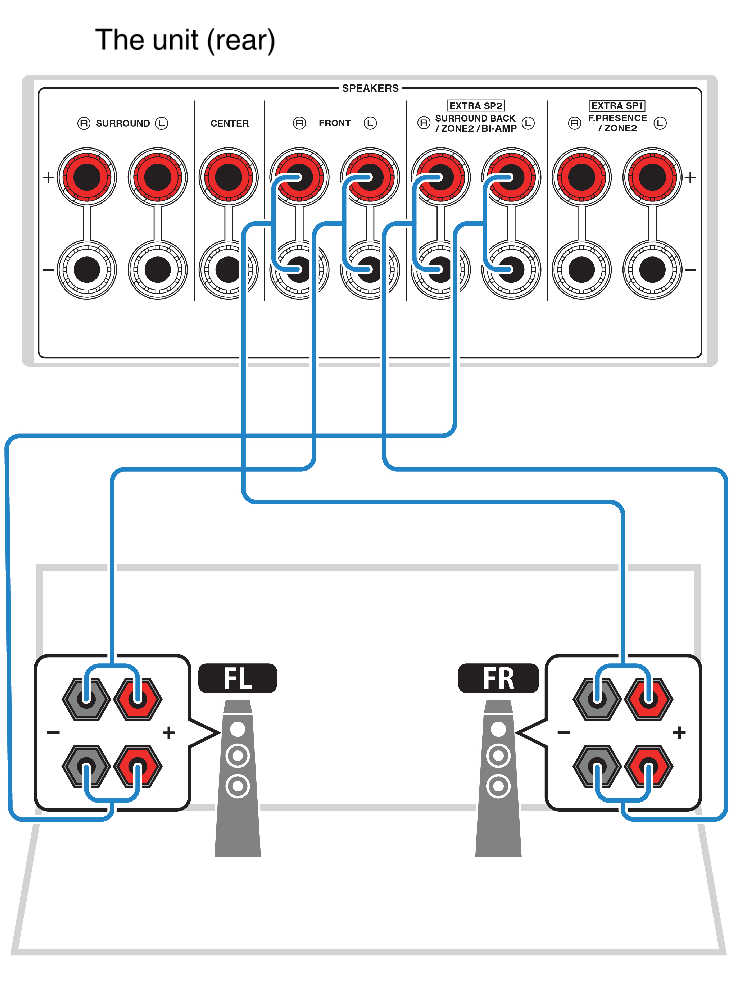
Image Source: manual.yamaha.com
Why Bi-amping Matters for Your Sound
Think of a speaker like a team. A normal setup uses one amplifier channel for the whole team. This one amp sends power for all the sounds, from deep bass drums to high cymbal crashes. It’s like one person doing every job.
Bi-amping changes this. You use one amplifier channel for the bass parts and another amplifier channel for the treble parts. This means separate amplifiers for highs and lows. It’s like having one person handle the heavy lifting (bass) and another person handle the fine details (treble).
Why do this? It offers many bi-amping benefits.
- Clearer Sound: Bass sounds need a lot of power. When an amp tries to make loud bass, it can sometimes mess up the high sounds. By using a separate amp for the high sounds, those high sounds stay clean, even when the bass is loud. This helps improve sound quality bi-amping.
- More Power: Each part of the speaker (bass and treble) gets its own dedicated power. This means the speaker can play louder and sound better doing it.
- Better Control: With separate amps, you can control the power going to the bass and treble parts more exactly. This can help the speaker sound more balanced.
- Less Work for Each Amp: Each amp channel only handles part of the sound. This makes the amps work less hard. They stay cooler and sound cleaner.
These benefits come from giving each part of the speaker the power it needs without making one amplifier try to do everything at once. It’s a way to fine-tune how your system works and often leads to noticeably better sound, especially at higher volumes.
Finding Out If Your Speaker Can Bi-Amp
Not all speakers can be bi-amped. Your speaker needs to be built in a special way. You need bi-ampable speakers.
How do you know if your speakers can do this? Look at the back of your speaker. This is where you connect the speaker wires from your amplifier.
On a normal speaker, you see two connection points (called binding posts) for the speaker wire. You connect the positive (+) wire to the positive post and the negative (-) wire to the negative post.
On a bi-ampable speaker, you will see four connection points. There will be two posts for the low sounds (often marked “Low” or “LF”) and two posts for the high sounds (often marked “High” or “HF”).
These four posts might look like they are joined together. This is normal. New bi-ampable speakers often come with metal strips or thick wires connecting the ‘Low’ posts to the ‘High’ posts. These are called jumpers.
The Key First Step: Remove Speaker Jumpers
If your speaker has four posts and they are connected by metal strips or wires, you must remove speaker jumpers before bi-amping.
These jumpers are there so you can use the speaker with just one amplifier channel. The single amplifier signal comes in through the ‘Low’ posts (or ‘High’ posts, it doesn’t matter when jumpers are in place). The jumpers carry the signal to the other set of posts, powering the whole speaker from that single signal.
When you bi-amp, you want to send the low part of the sound to the ‘Low’ posts and the high part of the sound to the ‘High’ posts using separate wires from separate amplifier channels. If you leave the jumpers on, you will connect the outputs of two different amplifier channels together through these jumpers. This is very bad! It can damage your amplifiers.
So, look closely at the back of your speaker. If you see four posts and metal strips or wires connecting the top two to the bottom two, carefully take them off. You might need a small tool or just your fingers. Keep them safe in case you ever want to go back to using just one amplifier.
Important: Only remove speaker jumpers if you are planning to use four wires (two pairs) from two amplifier channels for each speaker. If you are still using only one pair of wires per speaker, you MUST leave the jumpers on or your speaker will only play either high sounds or low sounds.
Two Main Ways to Bi-Amp: Active vs Passive
There are two main ways to bi-amp your speakers. The difference is where the sound signal is split into high and low parts.
- Passive Bi-amping
- Active Bi-amping
Let’s look at each one. Knowing the difference is key to setting things up correctly. This is the main point of Active vs passive bi-amping.
Passive Bi-amping Explained
In passive bi-amping, the speaker itself still has its own internal crossover network. A crossover is a set of electronic parts (like coils and capacitors) inside the speaker box. Its job is to take the full range sound signal and split it. It sends the low frequencies to the bass driver (woofer) and the high frequencies to the treble driver (tweeter).
With passive bi-amping, you use two amplifier channels before this internal crossover.
- One amplifier channel sends the full range signal to the ‘Low’ input posts on the speaker.
- The other amplifier channel sends the full range signal to the ‘High’ input posts on the speaker.
The speaker’s internal crossover still does the work of directing the low sounds from the ‘Low’ posts to the woofer and the high sounds from the ‘High’ posts to the tweeter.
Why do this if the internal crossover is still splitting the sound?
- The main benefit here is that each amplifier channel only sees either the low frequency part or the high frequency part after it passes through the internal crossover. The current paths inside the speaker are separated for lows and highs going back to the amplifier binding posts.
- This separation prevents the large current swings needed for bass notes from affecting the delicate current needed for high notes at the amplifier’s output stage. This is where a lot of the bi-amping benefits come from in this setup. The amplifier for the highs isn’t “polluted” by the demands of the bass driver.
Passive bi-amping is usually easier to set up because you don’t need extra equipment like an electronic crossover. You just need an amplifier with enough channels and speakers with four binding posts.
Active Bi-amping Explained
Active bi-amping is different. It splits the sound signal before it gets to the amplifiers and before it gets to the speaker’s internal crossover.
This means you do not use the speaker’s internal crossover network at all. If your speaker is designed for active bi-amping, it might have a way to bypass or remove the internal crossover parts. If not, you might need to modify the speaker, which should only be done by someone who knows how to do it properly.
In active bi-amping, you need an electronic crossover setup. This is a separate piece of audio equipment, or it might be built into your pre-amplifier or receiver.
The electronic crossover takes the full range sound signal from your source (like a CD player or music streamer) or your pre-amplifier. It then splits this signal into two or more frequency bands (lows, highs, sometimes mids).
- The low frequency signal output from the electronic crossover goes to one amplifier (or pair of amplifier channels).
- The high frequency signal output from the electronic crossover goes to a different amplifier (or pair of amplifier channels).
These amplifiers then connect directly to the speaker’s drivers. The amplifier for the lows connects straight to the woofer. The amplifier for the highs connects straight to the tweeter. This requires bypassing or removing the speaker’s internal crossover.
Benefits of active bi-amping:
- More Control: An electronic crossover lets you precisely choose the frequency where the sound is split. You can also often adjust the slope (how quickly the sound cuts off) and levels for each frequency band. This gives you much more control over the speaker’s sound.
- Amps Connect Directly to Drivers: The amplifiers are connected right to the speaker parts that make sound (the drivers). This means the amplifier has better control over the driver’s movement. It also avoids the loss of power that happens when the signal goes through a passive crossover’s parts (like coils and capacitors).
- No Power Loss in Crossover: Passive crossovers waste some power as heat. Active crossovers process a low-level signal before the amplifier, so there is no power loss there. The full power from the amplifier goes straight to the driver.
Active bi-amping is more complex and usually costs more because you need the electronic crossover and potentially modifications to your speaker. But it offers the biggest potential for improving sound quality and customizing the sound.
What Gear You Need to Bi-Amp
Setting up bi-amping requires more than just special speakers. You also need the right amplifiers. This is about Amplifier requirements bi-amping.
For each speaker you want to bi-amp, you need two amplifier channels.
- For a stereo setup with two speakers, you need a total of four amplifier channels.
How can you get four amplifier channels?
- Use two stereo power amplifiers: A stereo power amp has two channels. If you use two of these, you get four channels total. You would use one stereo amp for the low frequencies of both speakers (one channel for the left speaker’s low, one for the right speaker’s low). You use the second stereo amp for the high frequencies of both speakers (one channel for the left speaker’s high, one for the right speaker’s high).
- Use a multi-channel amplifier: Some power amplifiers have more than two channels, like four or five channels. A four-channel amp is perfect for bi-amping a stereo pair of speakers. You use channels 1 and 2 for the lows of the left and right speakers, and channels 3 and 4 for the highs of the left and right speakers.
- Use two integrated amplifiers: An integrated amplifier combines a pre-amplifier and a power amplifier in one box. While possible, using two integrated amps can be tricky because you need a way to get the signal out of the first amp before its power section to feed the second amp. This is not the usual or easiest way to bi-amp. It’s better to use separate power amps or a multi-channel amp.
Important Amplifier requirements bi-amping:
- Matching Gain: Ideally, the amplifier channels you use should have similar gain. Gain is how much the amplifier increases the strength of the audio signal. If one amp has much higher gain than the other, the highs might be much louder than the lows, or vice versa. This makes balancing the sound difficult. We’ll talk more about gain matching bi-amp later.
- Power Output: The amplifiers don’t necessarily need to have the same power output. Sometimes, you might use a more powerful amp for the lows and a less powerful amp for the highs, as the low frequencies often need more power to sound right. However, using amps with similar power is also fine and often simpler. What matters is that each amplifier has enough power for the frequency range it’s handling.
So, to summarize the Amplifier requirements bi-amping: you need enough amplifier channels (four for a pair of stereo speakers), and it’s best if the channels you use (especially for passive bi-amping) have similar gain characteristics. For active bi-amping, the electronic crossover often has level controls to help balance amps with different gains.
Step-by-Step Setup: Passive Bi-amping
Let’s go through how to set up passive bi-amping. This is the simpler method.
- Check Your Speakers: Make sure your speakers are bi-ampable speakers. Look for the four connection posts on the back.
- Remove Speaker Jumpers: If there are metal strips or wires connecting the low posts to the high posts, remove speaker jumpers. Store them safely.
- Choose Your Amplifiers: Get your amplifier(s) ready. You need two stereo power amps or one four-channel power amp. Make sure they meet the Amplifier requirements bi-amping.
- Prepare Speaker Wires: You need two pairs of speaker wires for each speaker. So, for two speakers, you need four pairs of wires total. Cut your speaker wire to the length you need. Prepare the ends (strip off insulation, add connectors like banana plugs or spades if you use them).
-
Connect Wires to Amplifiers:
- Decide which amplifier (or pair of channels) will power the lows and which will power the highs. Label them if it helps.
- Connect one pair of speaker wires from the LEFT “Low” amplifier channel(s) to one end of the wire.
- Connect another pair of speaker wires from the LEFT “High” amplifier channel(s) to the other end of the wire.
- Do the same for the RIGHT speaker using the RIGHT “Low” and “High” amplifier channels.
Example using two stereo amps:
* Amp 1 (Lows): Left channel goes to Left Speaker Low; Right channel goes to Right Speaker Low.
* Amp 2 (Highs): Left channel goes to Left Speaker High; Right channel goes to Right Speaker High.Example using one four-channel amp:
* Channels 1 & 2 (Lows): Channel 1 goes to Left Speaker Low; Channel 2 goes to Right Speaker Low.
* Channels 3 & 4 (Highs): Channel 3 goes to Left Speaker High; Channel 4 goes to Right Speaker High. -
Connect Wires to Speakers: This is the speaker wiring bi-amp step.
- Take the wire pair coming from the LEFT “Low” amplifier channel. Connect the positive (+) wire to the positive (+) ‘Low’ post on the back of the LEFT speaker. Connect the negative (-) wire to the negative (-) ‘Low’ post on the back of the LEFT speaker.
- Take the wire pair coming from the LEFT “High” amplifier channel. Connect the positive (+) wire to the positive (+) ‘High’ post on the back of the LEFT speaker. Connect the negative (-) wire to the negative (-) ‘High’ post on the back of the LEFT speaker.
- Repeat these steps for the RIGHT speaker, using the wires from the RIGHT amplifier channels and connecting them to the ‘Low’ and ‘High’ posts on the back of the RIGHT speaker.
-
Connect Amps to Source/Preamp: Connect the inputs of your “Low” amplifier(s) and “High” amplifier(s) to the outputs of your pre-amplifier or source component.
- If using a pre-amplifier with two sets of outputs (like “Main Out 1” and “Main Out 2”), you can connect “Main Out 1” to the “Low” amp inputs and “Main Out 2” to the “High” amp inputs.
- If your preamp only has one set of outputs, you will need a Y-cable or splitter to send the signal to both sets of amplifier inputs. You split the Left channel output to both the Left Low amp input and the Left High amp input. You split the Right channel output to both the Right Low amp input and the Right High amp input.
-
Double Check Connections: Look at everything closely. Make sure positive (+) goes to positive (+) and negative (-) goes to negative (-). Make sure you connected to the correct ‘Low’ and ‘High’ posts on the speaker. Make sure the jumpers are removed! This double check is very important to avoid damaging your gear.
Now you are passively bi-amped! The signal from your source goes to your preamp. The preamp sends the full signal to both the “Low” amps and the “High” amps. The “Low” amps power the low inputs on the speakers. The “High” amps power the high inputs on the speakers. The internal crossover in the speaker then splits the signal from each input set and sends it to the correct driver.
Step-by-Step Setup: Active Bi-amping
Active bi-amping is more involved because you need an external electronic crossover and you bypass the speaker’s internal crossover. This involves an electronic crossover setup.
- Check Your Speakers: Confirm your speakers can be actively bi-amped or are designed for it. This might mean they have a way to bypass the internal crossover, or you plan to modify them (get professional help if needed).
- Remove Speaker Jumpers: If your speakers have jumpers, remove speaker jumpers.
- Choose Your Amplifiers: You need two stereo power amps or one four-channel power amp, just like with passive bi-amping.
- Get an Electronic Crossover: You need an active electronic crossover unit. This can be a separate box, or sometimes it’s built into high-end preamps or digital signal processors (DSPs).
- Connect Source to Crossover: Connect the output from your source (CD player, streamer) or pre-amplifier to the INPUT of the electronic crossover.
- Connect Crossover to Amplifiers: This is where the split happens.
- The electronic crossover will have separate outputs for different frequency ranges (e.g., “Low Out,” “High Out”).
- Connect the “Low Out” from the crossover to the INPUTS of the amplifier(s) you chose for the low frequencies. For a stereo setup, you’ll connect the Left Low Out to the Left Low amp input and the Right Low Out to the Right Low amp input.
- Connect the “High Out” from the crossover to the INPUTS of the amplifier(s) you chose for the high frequencies. Connect the Left High Out to the Left High amp input and the Right High Out to the Right High amp input.
- Connect Amps Directly to Drivers (Speaker Wiring Bi-Amp – Active): This is different from passive bi-amping. Since you are bypassing the internal crossover, the amplifier outputs connect directly to the speaker drivers’ input posts.
- Take the wire pair from the LEFT “Low” amplifier channel. Connect the positive (+) wire to the positive (+) ‘Low’ post on the back of the LEFT speaker. Connect the negative (-) wire to the negative (-) ‘Low’ post on the back of the LEFT speaker. These posts should now lead directly to the woofer.
- Take the wire pair from the LEFT “High” amplifier channel. Connect the positive (+) wire to the positive (+) ‘High’ post on the back of the LEFT speaker. Connect the negative (-) wire to the negative (-) ‘High’ post on the back of the LEFT speaker. These posts should now lead directly to the tweeter.
- Repeat for the RIGHT speaker.
-
Set Up the Electronic Crossover: This is a critical step in the electronic crossover setup.
- Consult your speaker’s manual or the manufacturer’s website to find the recommended crossover frequency. This is the point where the sound is split. For example, if the recommendation is 2000 Hz, the crossover sends everything below 2000 Hz to the Low outputs and everything above 2000 Hz to the High outputs.
- Set the crossover frequency on your electronic crossover unit.
- Also, check the recommended crossover slope (how quickly the frequencies cut off). Set this on your crossover unit.
- You will also need to adjust the relative levels of the Low and High outputs on the electronic crossover. This is part of gain matching bi-amp. You need to make sure the low frequencies are not too loud or too quiet compared to the high frequencies. Many electronic crossovers have level knobs for this.
-
Double Check Connections and Settings: Review all your cable connections. Make sure positive goes to positive and negative to negative. Verify that the output from the Low crossover channels goes to the Low amp, and High to High. Check your crossover settings (frequency, slope, levels). Make sure the speaker jumpers are removed.
Active bi-amping gives you precise control via the electronic crossover setup, but it requires more gear and careful setup. The benefits of separate amplifiers for highs and lows are fully realized as the amps are connected directly to the drivers.
Getting the Levels Right: Gain Matching
One challenge in bi-amping is making sure the low frequencies are the right loudness compared to the high frequencies. This is called gain matching bi-amp.
If your amplifiers have different gain levels (how much they boost the signal), or if the efficiency of your speaker’s woofer and tweeter are different, you might find that the bass is too quiet or the treble is too loud (or vice versa).
How to handle gain matching bi-amp:
- Passive Bi-amping: With passive bi-amping, the speaker’s internal crossover is still in place. This crossover is designed to balance the levels between the woofer and tweeter. If you use amplifiers with roughly similar gain, the balance should be close to correct. If you notice a large imbalance, it might be because your amps have very different gains, or perhaps your speaker was designed assuming a specific amplifier characteristic. Some speakers or passive crossovers have ways to adjust levels, but this is not common. In passive bi-amping, using amps with similar gain is the easiest path to good balance.
- Active Bi-amping: This is where gain matching bi-amp is most flexible and important. Your electronic crossover unit should have level controls for each output (Low and High). You can use these controls to make the low frequency signal louder or quieter before it goes to the amplifier, and do the same for the high frequencies.
How to roughly gain match with active bi-amping:
- Start with the level controls on the electronic crossover set to the middle or ‘0 dB’ position if they have markings.
- Play some music you know well. Listen carefully. Does the bass sound balanced with the treble? Is one too loud or too quiet?
- Adjust the Low level or High level control on the electronic crossover slightly. Make small changes. Listen again.
- Keep adjusting and listening until the balance sounds natural and correct to you for different types of music.
For more precise gain matching bi-amp, you could use a test CD with pink noise signals for different frequency bands and a sound level meter to measure the output from your speaker for lows and highs, then adjust the electronic crossover levels until they measure the same loudness. However, trusting your ears with music you know is often a good starting point for achieving sound that you like.
Proper gain matching bi-amp is crucial for achieving the best possible improve sound quality bi-amping. If the levels aren’t matched, the speaker won’t sound like it was designed to, despite the bi-amping setup.
Listening and Fine-Tuning
Once everything is connected, it’s time to listen.
Start with the volume low. Play some familiar music. Listen carefully.
- Does sound come out of both speakers?
- Does each speaker sound full-range (you hear both bass and treble)?
- Are the left and right speakers balanced in volume?
- For active bi-amping, does the bass sound too loud or too quiet compared to the treble? (Adjust the electronic crossover levels if needed).
- For passive bi-amping, does the bass sound too loud or too quiet? (If significantly off, check amp gains or consider using different amps).
Listen to different types of music. Pay attention to how the bass sounds, how the treble sounds, and how they blend together.
Bi-amping, especially active bi-amping with an adjustable electronic crossover, allows for fine-tuning. You might experiment with the crossover frequency (in active bi-amping) based on your listening room and personal preference, although sticking close to the speaker manufacturer’s recommendation is usually the best starting point.
The goal is to achieve a balanced, clear, and dynamic sound that you enjoy. The potential bi-amping benefits include tighter bass, cleaner highs, and a greater sense of ease and detail in the music.
Common Questions About Bi-Amping
FAQ
-
Does bi-amping double my speaker’s power?
No, not exactly. You are using more total amplifier power, but it doesn’t mean the speaker will play twice as loud. Loudness is related to power in a complex way (doubling power usually gives only a small increase in loudness). Bi-amping helps the amplifiers control the speaker drivers better and keeps the sound cleaner, especially at higher volumes. -
Do I need special speaker wire for bi-amping?
You need more speaker wire (two sets per speaker instead of one), but you don’t necessarily need a special type of wire. Using good quality speaker wire that is suitable for the distance and power is recommended, just like in a standard setup. -
Can I bi-amp my speakers using the A and B speaker outputs on my receiver?
Usually, no. Most receivers with A and B speaker outputs are designed to power two different pairs of speakers (A speakers or B speakers, or sometimes A+B speakers). When used for A+B, the receiver typically just shares the power supply and amplifier channels between the two outputs. It does not provide separate amplifier channels specifically for the low and high inputs of a single bi-ampable speaker. Using A+B for bi-amping often leaves the jumpers in place and connects two outputs of the same amplifier channel together, which is incorrect and can cause damage. To bi-amp, you need amplifier channels that are truly separate from each other, either from two different amplifiers or a multi-channel amplifier, connected to the speaker after removing the jumpers. -
Is passive bi-amping worth doing?
Many audiophiles say yes. While it doesn’t offer the control of active bi-amping, separating the current paths for lows and highs back to the amplifier output can still provide noticeable bi-amping benefits like improved clarity and dynamics, especially with demanding music or at higher volumes. The main benefit is often seen as freeing up the amplifier channels powering the tweeters from the demands of the power-hungry woofers. -
Is active bi-amping always better than passive bi-amping?
Active bi-amping offers more control and theoretically higher performance due to bypassing the passive crossover and direct coupling of amps to drivers. However, it requires more complex setup, an electronic crossover (which adds its own sound characteristics), and potentially modifying speakers. A well-executed passive bi-amp with good components can sound better than a poorly set up active bi-amp. Active bi-amping requires more expertise and tuning to get right. -
What is ‘vertical bi-amping’?
This is a type of bi-amping where you use two identical mono-block amplifiers (or two channels from the same stereo amp). You dedicate one amplifier entirely to the LEFT speaker (powering both its low and high inputs) and the second amplifier entirely to the RIGHT speaker (powering both its low and high inputs). This requires speakers that can be bi-amped and removes the jumpers. The benefit here is that each speaker has its own dedicated power supply from its own amplifier, preventing power demands from one speaker affecting the other. This is different from the more common ‘horizontal bi-amping’ discussed in this article, where one amp powers the lows for both speakers and another amp powers the highs for both speakers. -
Can I mix different amplifier brands or models when bi-amping?
Yes, you can, but it’s best if the amplifiers have similar gain levels, especially for passive bi-amping. If gains are very different, you might struggle to balance the sound. In active bi-amping, the electronic crossover’s level controls can help compensate for different amplifier gains. However, using different amps can sometimes introduce subtle differences in sound character between the lows and highs. Using identical amplifiers is often recommended for the most seamless sound. -
Do I still use my amplifier’s volume control when active bi-amping?
Yes. The electronic crossover usually takes a fixed level signal from your source or preamp. The volume control is typically located before the electronic crossover, often in your pre-amplifier. You adjust the main system volume using your pre-amplifier’s volume control. The level controls on the electronic crossover are usually set once during setup to balance the low and high outputs relative to each other.
Bi-amping can be a rewarding upgrade for your audio system, potentially bringing noticeable improve sound quality bi-amping. It requires careful setup and the right equipment, but by following these steps and understanding the principles of Active vs passive bi-amping, Amplifier requirements bi-amping, Speaker wiring bi-amp, and the importance of removing remove speaker jumpers and managing gain matching bi-amp and electronic crossover setup (for active), you can get better sound from your bi-ampable speakers using separate amplifiers for highs and lows.