
You want to write for TV shows. That’s a big dream. Many people want this job. It takes hard work and time. Can you really do it? Yes, you can. But it’s a long road. What does it take? It needs talent, lots of practice, and meeting the right people. This guide will show you the steps.
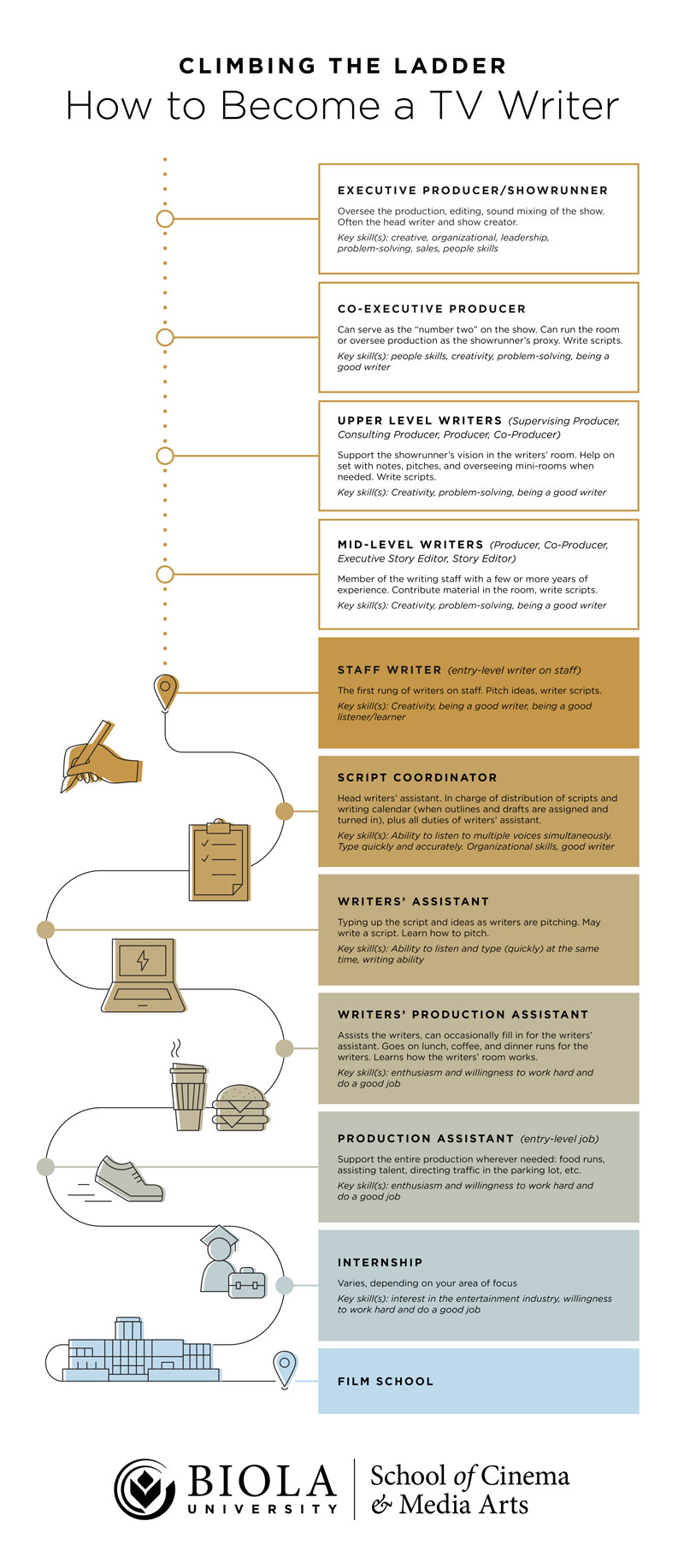
Image Source: assets.biola.edu
Grasping the Dream
Writing for TV is a special job. You help make stories for millions of people to see. You work with a team. You help shape characters and plot lines. It’s not just writing alone. It’s building a world with others.
It’s a creative job. But it is also a business. TV shows are expensive to make. They need to get viewers. Writers are key to making a show good. A good show can run for many years.
Thinking about this career? It’s exciting. It’s also tough. Many people try to get in. Few make it fast. But if you love stories and TV, it might be for you.
Learning the Craft: Screenwriting Tips for TV
You must learn how to write well for TV. This is not like writing a book or a play. TV has its own rules.
Rules for TV Writing
- Structure: TV has acts. There are breaks for ads (on older TV) or just planned breaks (on streaming). Stories are built around these acts.
- Episodes: A show is broken into episodes. Each episode needs its own story. But it also fits into a bigger story for the whole season.
- Characters: Viewers watch for the characters. They must be real and interesting. They must change or grow over time.
- Dialogue: How people talk in the script. It must sound real for that character. It also moves the story forward.
- Pacing: TV moves fast. Things happen in each episode. You can’t wait too long for something important.
These are just some basic screenwriting tips for TV. There are many more. You need to study how TV shows are made. Watch shows you love. Watch them closely. How do they start an episode? How do they end an act? How do they end the episode? How do they build a story over many episodes?
Resources for Learning
Where can you learn?
- Books: Many great books teach screenwriting. Read books by famous teachers. They explain the structure and craft.
- Scripts: Read scripts of TV shows. You can find many online. See how pro writers format their scripts. See how they write action and dialogue. This is a must-do step.
- Classes: Take writing classes. Find classes about screenwriting or TV writing. Some are online. Some are in person.
- Workshops: Some places offer short, strong workshops. These can help you focus on specific skills.
- Mentors: If you can find an experienced writer who will help you, that is gold. They can give you advice.
Film School for Screenwriting
Is Film school for screenwriting needed? No, not always.
- Pros: Film school can teach you the craft. You get practice. You get feedback. You make connections with teachers and other students. These students might be future coworkers. Some schools have good ties to the industry.
- Cons: Film school is very expensive. It takes a lot of time. You can learn the craft without school. You can read books, scripts, and take cheaper classes. The connections you make in school are not the only way to meet people.
Many successful TV writers did not go to film school. They learned by doing. They wrote a lot. They read scripts. They took classes outside of a full degree program. It depends on you. Think about the cost and time. Think about how you learn best.
Your Writing Samples: Showing Your Skills
You need to show people you can write. How? With writing samples. These are full scripts you write on your own. They must be very good. They are your ticket in.
Writing a TV Pilot Script
This is the most important sample you will write. A Writing a TV pilot script is the script for the first episode of your own TV show idea.
- What it is: It starts a new story. It shows the main characters. It sets up the world of the show. It gives the main problem or idea for the series. It must make someone want to see episode two.
- Why it’s key: This shows off your unique voice. It shows you can create a world and characters. It proves you can tell a story over a season, not just one episode. Industry people (agents, managers, producers) read pilots to find new talent.
- Tips for your pilot:
- Make your idea clear and fresh.
- Create characters people will care about.
- The story in the pilot must be good, but it should also promise more story to come.
- Format is important. Make it look like a real script.
- Write many drafts. Get notes from other writers. Make it better and better.
Writing a TV Spec Script
A Writing a TV spec script is a script for an existing TV show. You write an episode of a show that is already on the air.
- What it is: You pick a popular show. You write a new episode for it. You must capture the voice of the show. You must write the characters how they act on the show. You must tell a story that fits that show.
- Why it was used: In the past, spec scripts were the main way to show you could write in the TV format. It showed you understood structure and dialogue for an existing world.
- Why it’s less key now: Pilots are generally preferred now. They show your own ideas and voice. However, a spec script can still be useful. It shows you can write within limits. It proves you can copy a style. Some fellowships or jobs still ask for one.
How Many Samples?
You need at least one great pilot script. Most writers have two or three strong samples ready. Maybe two different pilots and one spec script. Or three pilots in different genres (like one comedy, one drama). Make sure each sample is polished and shows your best writing.
Breaking into Television Writing: Getting Your Foot in the Door
Writing great scripts is step one. Getting someone important to read them is step two. This is the part about Breaking into television writing. It’s often the hardest part.
How to Get Seen
- Contests: Enter reputable screenwriting contests. Some focus on TV pilots or specs. Winning or placing high can get your script read by industry people.
- Fellowships: Many TV studios and networks have writing fellowships. These programs are designed to find new writers. They usually have a specific time when they accept applications. They are very competitive. Getting into one can be a fast track. They often require a pilot and maybe a spec script.
- Assistants and Interns: Many writers get their start working on a TV show. Not as a writer at first. Maybe as a writer’s assistant, a showrunner’s assistant, or an office PA (Production Assistant).
- Why this helps: You are on set or in the writer’s room. You see how things work. You meet the writers and producers. If you work hard and are good, people see you. You can learn the business. Sometimes, assistants get a chance to write an episode (called a “buy-in” or “staffing up”).
- This is a common path. It’s not always fun work. Pay can be low to start. But the learning and connections are huge.
- Networking: We will talk more about this. Meeting people is key.
The Role of Agents and Managers
Agents and managers help writers get jobs.
- Managers: Usually the first step. They help you with your career plan. They help make your scripts better. They send your scripts to agents and producers. They take a cut of your pay when you get a job.
- Agents: They find you writing jobs. They make deals for your pay and contract. They take a cut of your pay too. You usually get an agent after you have a manager, or after your script creates buzz.
How do you get one? They find you through contests, fellowships, or someone they know tells them about you. You can’t usually just send them your script unless they ask. This is why getting your script noticed is so important.
Inside the TV Show Room: The Writer’s Room Explained
TV shows are usually written by a team. This team works in a “writer’s room.”
How the Room Works
The writers meet together, often daily when a show is being made. They brainstorm ideas. They plan the stories for the season and for each episode. They work out plot problems. They pitch jokes or dramatic moments.
Once the stories are planned, each writer is usually assigned to write an outline or a script for a specific episode. Then they get notes from the head writer or Showrunner. They rewrite based on the notes.
It’s a group effort. You need to be able to share your ideas. You need to listen to others. You need to take notes well. It’s a mix of being creative and working as a team.
The Showrunner Definition
Who is in charge of the writer’s room and the show? That’s the Showrunner definition. The Showrunner is the main creative voice of the show. They are like the head writer and often a producer too.
- They hire the writers.
- They guide the stories.
- They work with the actors, directors, and studio.
- They make the final decisions about the script and the show’s direction.
Getting a writing job means the Showrunner chose you and liked your writing samples.
The Staff Writer Role
The most common first job in a writer’s room is Staff Writer.
- What you do: You are the lowest level writer in the room. You listen a lot. You pitch ideas. You might help research things for stories. You might write parts of scripts or full episodes, usually with lots of guidance. You learn how the room works.
- TV Staff Writer Salary: What kind of money do you make? A TV staff writer salary is set by the Writers Guild of America (WGA). There is a minimum pay rate. This rate changes. It depends on the type of show and how long you work. It can be weekly pay or per episode pay. For a staff writer, it’s often weekly. The minimum is okay, but not rich. As you move up (Story Editor, Executive Story Editor, Producer, etc.), the pay gets higher. The WGA minimum for a Staff Writer can be a few thousand dollars a week when working on a show. It’s important to remember that TV writing jobs are not always year-round. You work when the show is “in season” or when the room is open.
Networking for TV Writers: Meeting People
You’ve heard it before: “It’s all about who you know.” This is often true in TV. Networking for TV writers is very important.
Why Networking Matters
- Jobs often come through people you know.
- Your script might get read because someone you met gave it to someone else.
- You learn about the business from others.
- You find writing partners or people to swap scripts with for notes.
How to Network (Simply)
Networking might sound scary. It just means meeting people and building relationships.
- Take Classes: Meet other students and teachers.
- Go to Events: Attend writing events, talks, or festivals.
- Online Groups: Join groups for TV writers online (but be careful and professional).
- Informational Interviews: Ask a writer or assistant if they have 15 minutes to chat. Ask about their path. Be respectful of their time. Don’t ask them to read your script right away.
- Be an Assistant: As mentioned, this is great networking. You meet people you work with daily.
- Be Nice and Professional: People hire people they like and trust. Be reliable. Be kind.
Networking is not just collecting business cards. It’s building real connections over time. Help others when you can. Be interested in their work.
Interpreting the Writers Guild of America (WGA)
Once you get a writing job on a show that has signed an agreement with the Writers Guild of America, you will likely join the WGA.
What is the WGA?
The Writers Guild of America is a labor union. There are two main branches: WGA West (in Los Angeles) and WGA East (in New York). Most TV writing jobs in Hollywood fall under WGA West.
What Does the WGA Do?
- Contracts: They make deals with TV studios and networks. These deals set minimum pay rates for writers. They set rules about working conditions, credits, and rights for writers.
- Minimums: They set the lowest amount a writer can be paid for different types of work (staff writer, episode script, etc.).
- Health and Pension: The WGA plans help provide health insurance and retirement money for writers who work enough under WGA contracts.
- Credits: The WGA decides who gets writing credit on an episode. This is important for pay and for your career record.
- Protections: The WGA protects writers’ rights and helps when there are problems with contracts or unfair treatment.
Being a WGA member is a big step. It means you are working at a professional level in the industry under a union contract. It offers important protections and benefits. You typically become eligible to join once you have a WGA writing job or earn a certain amount from WGA work.
How Things Are Now: TV Writing Jobs Remote and Changes
The TV world is always changing. How writers work is changing too.
TV Writing Jobs Remote
Before 2020, writer’s rooms were almost always in person. Writers met in an office building. Now, many TV writing jobs remote are happening.
- How it works: Writers meet online using video calls. They work from their homes.
- Pros: Writers can work from anywhere. This can help people who don’t live in Los Angeles or New York. It can save time and money on travel.
- Cons: It can be harder to connect with people online. The feeling of being in a room together is different. Some people miss the in-person interaction. It might be harder for new writers to get noticed or make strong connections when not physically present.
Will it stay this way? Maybe a mix. Some rooms are back in person. Some are still remote. Some might try a mix. It’s a new part of the job.
More Places to Make TV
It used to be mainly the big TV networks (like ABC, CBS, NBC, Fox). Then cable became big (HBO, AMC). Now, streaming services are huge (Netflix, Max, Apple TV+, Hulu, Amazon Prime Video, etc.).
This means more places are making TV shows. This creates more chances for writers. But it also means the business is complex. Each place might work a little differently.
The core job of writing a good script stays the same.
Fathoming the Path: Keep Going
Becoming a TV writer takes time. It takes effort. It takes not giving up.
- Write Constantly: Keep writing scripts. Finish them. Start new ones. Your writing will get better with practice.
- Get Notes: Share your work with trusted writers. Listen to feedback. Use the notes to make your scripts stronger.
- Watch TV: Study shows. See what is working now.
- Read Industry News: Keep up with what shows are being made. Who is making them?
- Be Patient: It can take years to get your first job. Many successful writers took 10 years or more from when they started writing to getting staffed.
- Be Ready: When a chance comes, you need to have great samples ready to share.
- It’s a Marathon: Think of it as a long race, not a sprint. There will be ups and downs. Keep moving forward.
The TV writing world is competitive. But people do break in every year. They are people who learned the craft, wrote amazing samples, networked, and did not stop trying.
Frequently Asked Questions (FAQ)
How long does it take to become a TV writer?
It takes most people many years. Often 5 to 10 years from starting to write seriously to getting a first job. Some are faster, some take longer.
Do I need to live in Los Angeles?
Historically, yes. Most jobs and networking happen there. But with TV writing jobs remote, it might be possible to live elsewhere, especially once you have some experience. For breaking in, being near Los Angeles or New York helps a lot for networking and entry-level assistant jobs.
How much do TV writers make?
Pay varies a lot based on experience and the type of show. A TV staff writer salary is set by the WGA minimums. It’s a decent wage when you are working. But jobs can be short-term (a few months for a season). Higher level writers make much more.
What is the best way to get my script read?
Winning or placing high in known contests or fellowships is a good way. Getting an agent or manager is another way. Networking can lead to people asking to read your script.
Should I write a spec script or a pilot script?
Focus on Writing a TV pilot script for your own idea. This is what industry readers look for most now. A spec script (Writing a TV spec script) for an existing show can be a second or third sample.
What’s the difference between a showrunner and a writer?
The Showrunner definition is the person in charge of the whole TV show’s creative side. They hire and lead the writing staff. Writers are part of the team who work for the Showrunner to create the scripts.
Is film school worth it for writing?
Film school for screenwriting can help teach you the craft and provide contacts. But it’s not required. You can learn on your own and through other classes. It’s expensive.
How important is networking?
Networking for TV writers is very important. Many jobs and opportunities come through people you know. Build real relationships, don’t just ask for favors.
Wrapping Up
Becoming a TV writer is a tough journey. But it is possible. It needs passion for storytelling, lots of practice to build your skills, creating great writing samples (especially pilot scripts!), meeting people in the industry through Networking for TV writers, and understanding the business side, like the role of the Writers Guild of America and TV staff writer salary.
The path is not straight. There is no single way to break in. Keep writing. Keep learning. Keep connecting. Be ready for when your chance comes. Your dream of writing for TV could become real.