
A camper fridge, usually an absorption type, uses a small amount of propane. It does not use much gas. Most RV refrigerators use about 0.4 to 0.6 gallons of propane each day. This is an average. How much propane is used can change. Many things make it use more or less gas.
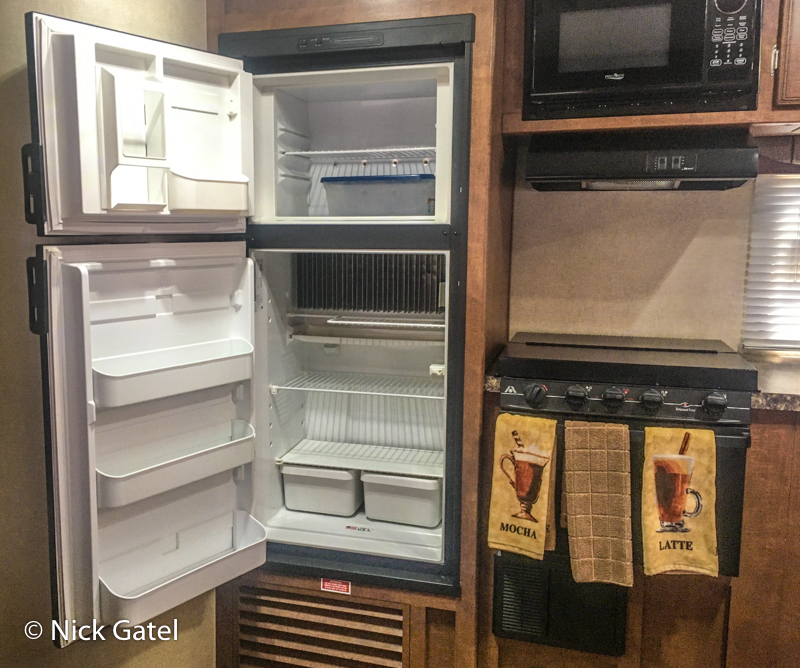
Image Source: popupbackpacker.com
Deciphering Camper Fridge Propane Usage
Camper fridges are different from the fridge in your house. Your home fridge uses a motor and electricity. It works by making cold air. A camper fridge often uses heat to make cold. It is called an absorption fridge. This heat can come from electricity or propane gas. When you are camping far away from power, you use propane. The propane flame makes the heat the fridge needs to work.
This kind of fridge moves a special liquid mix. It uses heat and gravity. It goes through coils. This process takes heat away from inside the fridge. This makes the inside cold. It uses a small flame when on propane. This flame stays on most of the time. But it does not use a lot of gas at once.
Why Figure Out Propane Use?
Knowing how much gas your fridge uses is helpful. It helps you know how long your propane tank will last. You can plan your trips better. You will know if you need to fill your tank soon. This is important when you are camping for a long time. It is also good to know for cost. You can compare the cost of using propane versus electricity.
Factors Affecting RV Fridge Propane Use
Many things change how much propane your camper fridge uses. It is not the same every day. Some things make it work harder. When it works harder, it uses more gas.
Outside Heat
The temperature outside matters a lot. If it is very hot outside, the fridge must work harder. It has to push heat away from the inside. This means the propane flame runs more often or stays on longer. On cool days, the fridge does not work as hard. It uses less propane.
Inside Fridge Temperature Setting
You can set how cold you want the fridge. If you set it to be very cold, the fridge works harder. It uses more propane to get to that low temperature and stay there. Setting it to a normal cool temperature uses less gas. Do not set it colder than you need.
How Often You Open the Door
Every time you open the fridge door, warm air from outside gets in. The fridge must then work to cool that air down. If you open the door many times, or leave it open for a long time, it uses more propane. Try to get what you need quickly. Close the door fast.
What You Put Inside
Putting warm food or drinks into the fridge makes it work harder. The fridge must cool down everything you put in. If you fill the fridge with warm things, it uses a lot of propane at first. It works hard to make them cold. Try to cool things before you put them in the RV fridge.
Air Flow Around the Fridge
RV fridges need good air flow. There are vents on the outside of your RV for the fridge. Hot air from the fridge needs to go out. Cool air needs to come in. If the vents are blocked, or if there is not enough air moving, the fridge gets hot. It cannot cool well. It works harder and uses more propane. Make sure the outside vents are clean. Make sure nothing blocks them.
Size and Model of the Fridge
Bigger fridges use more propane than smaller ones. They have more space to keep cold. They also have more food and air to cool. Different fridge models might also use slightly different amounts of gas.
- Dometic RV fridge propane use: Dometic makes many RV fridges. Their usage rates are usually in the 0.4 to 0.6 gallons per day range for typical sizes. A very small model might use less. A large model might use slightly more. Check your fridge manual if you have it. It might give a guide.
- Norcold RV fridge propane use: Norcold is another big name in RV fridges. Their fridges work like Dometic ones. Their propane usage is also usually around 0.4 to 0.6 gallons per day. Again, size matters. Look at your Norcold manual if you can.
Condition of the Fridge
An old or broken fridge might use more propane. If the door seals are bad, cold air leaks out. Warm air gets in. The fridge runs more often. If the cooling parts are not working right, it also runs more. Keeping your fridge clean and in good shape helps it use less gas.
Camper Fridge Propane Usage Per Day
Let’s look at the numbers. How much propane does a camper fridge use per day? As said before, the average propane use RV fridge is about 0.4 to 0.6 gallons a day. This number comes from testing under normal conditions.
- Small fridges (like 3 cubic feet): Might use closer to 0.3 gallons per day.
- Medium fridges (like 6-8 cubic feet): Often use 0.4 to 0.5 gallons per day.
- Large fridges (like 10-12 cubic feet): Could use 0.5 to 0.7 gallons per day.
These are just guesses. Your actual usage can be higher or lower. Remember the factors we talked about. A hot day will push usage up. A cool day will bring it down.
Measuring Your Own Usage
You can check how much gas your fridge uses.
- Fill your propane tank fully.
- Use your RV fridge on propane only for a few days. Try to keep things normal.
- Note how many days you used it.
- Go and get the tank filled again.
- The person filling the tank can tell you how many gallons they put in.
- Divide the gallons put in by the number of days you used the fridge. This gives you your average usage per day.
Example: You use the fridge for 5 days. You put 2 gallons back in the tank.
2 gallons / 5 days = 0.4 gallons per day.
This is a good way to know your specific RV refrigerator propane consumption.
Propane Tank Life for RV Fridge
Now we know how much gas the fridge uses each day. We can figure out how long a propane tank might last. RVs have different size propane tanks. Some are built into the RV. Some are portable tanks you connect. Propane is measured in pounds or gallons. One gallon of liquid propane is about 4.2 pounds.
Common built-in RV tanks (often called ASME tanks):
* 20-pound tank: Holds about 4.7 gallons.
* 30-pound tank: Holds about 7 gallons.
* 40-pound tank: Holds about 9.4 gallons.
Portable tanks (often DOT tanks):
* 20-pound tank (like for a grill): Holds about 4.7 gallons.
* 30-pound tank: Holds about 7 gallons.
* Twin 30-pound tanks: 14 gallons total.
Let’s guess the fridge uses 0.5 gallons per day (average propane use RV fridge).
| Tank Size (Pounds) | Tank Size (Gallons) | Days Fridge Might Run (at 0.5 gal/day) | Notes |
|---|---|---|---|
| 20 | 4.7 | About 9 days | Small tank, runs out faster |
| 30 | 7 | About 14 days | Common size, good for shorter trips |
| 40 | 9.4 | About 19 days | Larger built-in tank |
| Two 30s | 14 | About 28 days | Many RVs have two tanks for longer trips |
Remember, this is only for the fridge. If you also use propane for:
* Heater (furnace)
* Water heater
* Stove/Oven
* Outdoor grill
The tank will run out much faster. The furnace uses a lot of propane. Using the water heater uses some. The stove uses very little usually.
So, the propane tank life for RV fridge use alone can be quite long. But most people use propane for other things too. This means you need to think about all your propane use.
RV Fridge Propane vs Electric Usage
Most RV absorption fridges can run on two kinds of power: propane or electricity.
* Propane: Uses the small gas flame to make heat. Works anywhere you have gas in the tank. Does not use much battery power (just a tiny bit for the control board).
* Electric: Uses an electric heater element to make heat. Needs to be plugged into shore power (campground power) or have a large battery bank and inverter (this uses a lot of battery).
Which is better? It depends on where you are and what you are doing.
- Boondocking (no hookups): Propane is the best choice. You do not have shore power. Running the fridge on electricity from batteries would drain them very, very fast.
- Campground with hookups: Electric is usually better. The power is included in your camping fee. You save your propane. It uses campground electricity instead of your gas.
- Driving: You can use propane while driving. Or, some RVs have a setting that runs the fridge on 12V electricity from the engine. The 12V method is often not as effective at keeping the fridge cold, especially in hot weather. Propane is usually better for cooling while driving. Check your fridge manual to see if it is safe and allowed to run on propane while driving (most newer ones are designed for this).
Efficiency
Is one more efficient?
* Propane uses a certain amount of gas to make heat.
* Electric uses a certain amount of electricity to make heat.
Both methods create the heat needed for the cooling process. The process itself is not super energy efficient compared to a home compressor fridge. But for RV use where options are needed, it works.
From a cost point of view, electric is often cheaper if you are already paying for shore power. If you are paying for propane separately, you need to compare the cost of a gallon of propane to the cost of the electricity used.
Cost of Running RV Fridge on Propane
How much does it cost to run your camper fridge on propane? This depends on two things:
1. How much propane the fridge uses per day.
2. The price of propane per gallon.
Let’s use our average usage number: 0.5 gallons per day.
Propane prices change a lot. They are different in different places and times. It might be $2.50 per gallon. It might be $3.50 or more. Let’s guess $3.00 per gallon.
Cost per day = (Gallons used per day) x (Cost per gallon)
Cost per day = 0.5 gallons/day x $3.00/gallon = $1.50 per day
So, running your fridge on propane might cost around $1.50 each day.
If you run it for a week (7 days):
Cost per week = $1.50/day x 7 days = $10.50
If you run it for a month (30 days):
Cost per month = $1.50/day x 30 days = $45.00
This cost is just for the fridge. If you use other propane things, your total propane cost will be higher.
Compare this to electricity. If you are plugged into shore power at a campground, the electricity cost for running the fridge is usually included. It costs you nothing extra at that moment. But you pay for it in the camping fee. If you pay for electricity by the kilowatt-hour (kWh) at a long-term spot, an RV fridge uses about 3 to 5 kWh per day. If electricity is $0.15 per kWh, that’s $0.45 to $0.75 per day. In this case, electricity might be cheaper if you pay for it this way. But again, for most campers at a standard campground, the electric cost is “free” because it is in the site price.
So, the cost of running RV fridge on propane is a real cost you see when you fill the tank. Running on campground electric feels free.
Average Propane Use RV Fridge: Putting it Together
We have talked about a lot of numbers. Let’s bring them back to the main point. The average propane use RV fridge is about 0.4 to 0.6 gallons per day.
- This means a 20-pound tank (4.7 gallons) could last about 8-11 days running only the fridge.
- A 30-pound tank (7 gallons) could last about 11-17 days running only the fridge.
- A twin 30-pound tank setup (14 gallons) could last about 23-35 days running only the fridge.
These are averages. Your actual experience will change based on:
* Outside heat
* How full the fridge is
* How often you open the door
* How cold you set the fridge
* The size and model of your specific fridge (Dometic RV fridge propane use, Norcold RV fridge propane use, etc.)
Think of 0.5 gallons per day as a good number to start with for your planning. It is a reasonable guess for an average size fridge on an average temperature day.
Comprehending Propane Savings
You can do things to use less propane for your fridge. Using less propane means your tank lasts longer. It also saves you money.
Reduce Door Openings
Think before you open the fridge. Get everything you need at once. Close the door quickly. This stops warm air from getting in.
Cool Food Before Storing
Let hot food cool down outside the fridge first. Putting hot items inside makes the fridge work very hard to cool them.
Keep Fridge Full (But Not Too Full)
A fridge works better when it is fairly full. The cold items help keep each other cold. But do not pack it so tight that air cannot move inside. Air needs to flow around items to keep them cold.
Check Door Seals
The rubber seals around the door keep cold air in. Check them to make sure they are clean and not ripped. You can test them. Close the door on a piece of paper. If you can pull the paper out easily, the seal might be bad. Bad seals make the fridge run more.
Ensure Good Venting
Check the outside vents for your fridge. Make sure they are clean. Make sure nothing (like bird nests or dirt) blocks them. The fridge needs good air flow to work right. Sometimes, adding small fans to the outside upper vent helps move hot air out faster.
Set the Right Temperature
Do not set the fridge colder than you need. Food stays safe and cold enough at normal settings. Super low settings make the fridge work much harder.
Preheat Fridge Before Adding Food
Turn the fridge on the day before you add food. Let it get cold inside. This is much better than filling a warm fridge with food and then turning it on.
Use Electric When Available
If you are at a campground with power hookups, use the electric setting. This saves your propane for when you are camping without power. It is often part of your camping fee anyway. This relates directly to RV fridge propane vs electric usage. Use electric when it makes sense to save propane.
Fathoming Maintenance Impacts
Proper care of your RV fridge can help it run better. A fridge that runs better usually uses less propane.
Cleaning
Keep the inside of the fridge clean. Wipe up spills quickly. Outside, keep the vents clean. Sometimes bugs or spiders can build nests near the propane burner. This can stop it from working right or make it less efficient. Check the outside area behind the fridge (where the burner and coils are) now and then. Make sure it is clean.
Leveling
An absorption fridge needs to be level to work right. If your RV is not level, the liquids inside the fridge might not flow correctly. This makes the fridge not cool well. It will try harder and use more propane, or it might not work at all. Always level your RV when parked for more than a short stop.
Checking the Flame
The propane flame should be blue. If it is yellow or orange, it might not be burning cleanly. This can mean something is blocking the burner. A dirty burner uses more propane and does not cool as well. If you see a yellow flame, it might need cleaning or service.
These maintenance steps help keep your absorption fridge running as it should. This helps control your absorption fridge propane usage.
Frequently Asked Questions
h4 What happens if my RV fridge is not level on propane?
If your RV fridge is not level when running on propane (or electric), the special liquids inside will not flow correctly. The cooling process will stop or be very poor. The fridge might get warm. It can also damage the cooling unit over time if run off-level for too long. Always level your RV when using the fridge.
h4 Does running the fridge on propane use my RV battery?
Yes, but very little. The propane part of the fridge uses a small amount of 12V power from your RV battery. This power is needed for the control board and the safety systems (like the gas valve). It uses much, much less battery power than running the fridge on its electric element via an inverter.
h4 How long can a 20lb propane tank run a camper fridge?
A 20-pound propane tank holds about 4.7 gallons. If your fridge uses about 0.5 gallons per day, the tank could run the fridge alone for around 9 days. This does not include using propane for heating, hot water, or cooking.
h4 Is it safe to run my RV fridge on propane while driving?
Most newer RV absorption fridges are designed to be run safely on propane while driving. They have safety systems that will shut off the gas if there is a problem. Check your RV and fridge manuals to be sure. Make sure the flame is lit before driving off. Some people turn it off for safety when getting gas at a station.
h4 Why does my RV fridge use more propane in hot weather?
In hot weather, there is more heat outside trying to get into the fridge. The fridge has to work harder to push this extra heat out. The propane flame runs more often to keep the inside cold against the higher outside temperature.
h4 Can I run my RV fridge on electric and propane at the same time?
No. RV fridges are designed to run on one power source at a time. You choose either propane or electric (AC or DC, if available). The fridge automatically switches between AC electric and DC electric if you have that option. But it will not use propane and electric heating elements together.
h4 Does the size of my RV fridge affect how much propane it uses?
Yes. Larger RV fridges need more energy to cool a bigger space and more food. They will generally use more propane per day than smaller models. This is part of the Factors affecting RV fridge propane use.
h4 How much propane does a Dometic RV fridge use compared to a Norcold?
Dometic and Norcold are the main brands for RV absorption fridges. Their propane usage is very similar for comparable size fridges. Both typically fall within the 0.4 to 0.6 gallons per day range for average models. There is no major difference just based on brand, but it can vary slightly by specific model.
h4 Is the Cost of running RV fridge on propane high?
Compared to using shore power electric (which is often included in a campground fee), running on propane has a direct cost when you refill the tank. Based on average use (0.5 gal/day) and propane price ($3/gal), it might cost around $1.50 per day. This is not extremely high, but it is a cost to consider, especially on long trips without electric hookups.
h4 What is the average propane use RV fridge?
The average propane use for an RV absorption fridge is widely accepted to be around 0.4 to 0.6 gallons per day. This is a good rule of thumb for planning, but remember actual usage can vary greatly depending on several factors like outside temperature, usage habits, and the fridge’s size.
Knowing how much propane your camper fridge uses helps you plan your trips. It helps you manage your resources. While they do use propane, it is usually a small amount per day compared to things like the furnace. By managing factors like outside heat and how often you open the door, you can help keep your propane usage lower.