
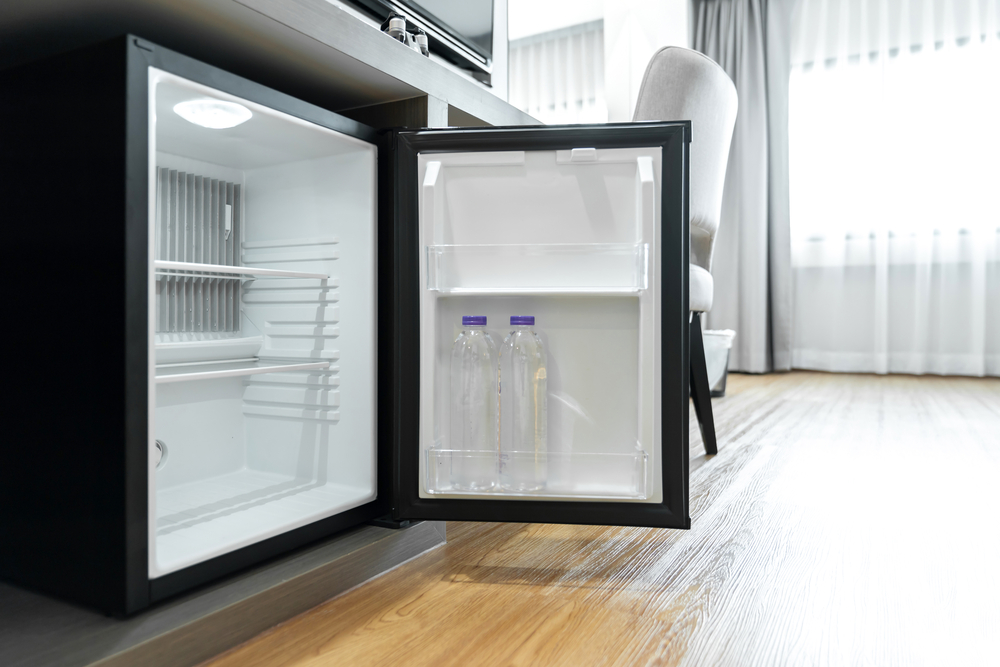
Image Source: www.electricrate.com
Mini Fridge Power Usage: How Much Electricity Does A Mini Fridge Use Per Month?
A mini fridge typically uses between 50 to 150 watts of power when running, but this can vary. The actual electricity a mini fridge uses per month depends heavily on its energy efficiency rating, how often its door is opened, its temperature settings, and the ambient room temperature. While an exact figure is impossible without knowing these specifics, we can break down the factors involved to help you estimate your mini fridge’s monthly electricity cost.
Mini fridges, often called compact refrigerators, are popular for their convenience, fitting easily into dorm rooms, offices, dens, and small apartments. But with their compact size comes a question: how much electricity do they consume, and what will that mean for your monthly bills? Let’s delve into the intricacies of mini fridge power consumption and illuminate the path to understanding your mini fridge energy usage.
Deciphering Mini Fridge Wattage
Every electrical appliance has a wattage rating, which indicates how much power it draws at any given moment. For a mini fridge, this is a crucial starting point for calculating its energy use.
What is Mini Fridge Wattage?
The mini fridge wattage refers to the amount of electrical power the appliance consumes while its compressor is actively running. This is usually measured in watts (W). However, it’s important to note that a mini fridge doesn’t run at its maximum wattage constantly. The compressor cycles on and off to maintain the desired internal temperature.
- Compressor Wattage: This is the primary driver of power consumption. When the compressor kicks in, it uses the most electricity.
- Standby Power: Even when the compressor is off, a mini fridge might still draw a small amount of power for its internal electronics, thermostat, and any indicator lights.
Typical Mini Fridge Wattage Range
Most mini fridges fall into a wattage range of 50 to 150 watts when the compressor is running. Smaller, more basic models might be at the lower end of this spectrum, while those with freezers, more advanced features, or larger capacities can lean towards the higher end.
Calculating Mini Fridge kWh Per Month
To accurately estimate your mini fridge kWh per month, we need to move from wattage to kilowatt-hours (kWh), which is the standard unit of energy consumption used by utility companies.
The Formula for kWh
The basic formula for calculating energy consumption is:
Energy (kWh) = (Power (kW) × Time (hours)) / 1000
Let’s break this down for a mini fridge:
- Power (kW): Convert the mini fridge’s wattage to kilowatts by dividing by 1000. For example, a 100-watt mini fridge is 0.1 kW.
- Time (hours): This is the total number of hours the appliance runs. This is where it gets tricky, as a mini fridge doesn’t run 100% of the time.
Estimating Run Time
A key factor in mini fridge energy usage is its “duty cycle,” which is the percentage of time the compressor is actually running. For most refrigerators, this duty cycle is typically between 30% and 60%. This means a mini fridge with a 100-watt compressor might only be actively consuming 100 watts for 30-60% of the hour.
Let’s assume a mini fridge has a mini fridge wattage of 100 watts and a duty cycle of 50%.
- Actual running wattage: 100 watts × 50% = 50 watts
- Hours in a month: 24 hours/day × 30 days/month = 720 hours
- Estimated kWh per month: (50 watts × 720 hours) / 1000 = 36 kWh per month
If we consider a range of wattages and duty cycles:
| Mini Fridge Wattage (Running) | Estimated Duty Cycle | Average Running Wattage | kWh per Month (Approx.) |
|---|---|---|---|
| 50W | 40% | 20W | 14.4 kWh |
| 75W | 50% | 37.5W | 27 kWh |
| 100W | 60% | 60W | 43.2 kWh |
| 125W | 50% | 62.5W | 45 kWh |
| 150W | 40% | 60W | 43.2 kWh |
Note: These are estimates. Actual duty cycles can fluctuate based on external factors.
Factors Influencing Mini Fridge Energy Usage
Several variables significantly impact how much electricity your mini fridge consumes. Optimizing these factors can lead to lower energy bills and contribute to overall refrigerator energy efficiency.
Temperature Settings
The colder you set your mini fridge, the harder its compressor has to work, and the more electricity it will consume.
- Ideal Settings: Most manufacturers recommend setting the refrigerator compartment between 35-38°F (1.7-3.3°C) and the freezer compartment (if applicable) between 0-5°F (-18 to -12°C).
- Over-cooling: Setting the thermostat too low is a common cause of excessive electric usage mini fridge.
Ambient Room Temperature
The temperature of the room where your mini fridge is located plays a crucial role.
- Warmer Rooms = More Work: If the mini fridge is in a hot environment (e.g., a garage on a summer day, direct sunlight, near a heat source), it will have to run more frequently and for longer periods to maintain its internal temperature.
- Cooler Rooms = Less Work: Conversely, placing a mini fridge in a cooler environment will reduce its workload and energy consumption.
Door Openings and Seal Quality
Every time the door is opened, cold air escapes, and warm air enters, forcing the compressor to work harder to re-cool the interior.
- Frequent Opening: Minimizing how often and how long you open the door is essential for mini fridge running cost efficiency.
- Door Seals: Ensure the door gasket (the rubber seal around the door) is clean and intact. A damaged or dirty seal allows cold air to leak out, increasing energy use. You can test the seal by closing the door on a piece of paper. If you can easily pull it out, the seal might need cleaning or replacement.
Fridge Load and Food Placement
What you store inside and how you store it can also affect efficiency.
- Full vs. Empty: A moderately full fridge is generally more energy-efficient than an empty one. The food items inside help maintain the cold temperature. However, an overstuffed fridge can impede air circulation, making cooling less efficient.
- Airflow: Avoid blocking the air vents inside the fridge, as this disrupts the cooling process.
Defrosting (for Freezers)
If your mini fridge has a freezer compartment that is not frost-free, ice buildup can reduce its efficiency. Frost acts as an insulator, making the cooling coils work harder. Regular manual defrosting is necessary for non-frost-free models.
Comparing Mini Fridge Energy Efficiency
When purchasing a mini fridge, looking at its energy efficiency rating is paramount. This is where the concept of refrigerator energy efficiency truly comes into play.
ENERGY STAR Certification
Appliances with the ENERGY STAR label have been certified by the U.S. Environmental Protection Agency as meeting strict energy efficiency guidelines.
- Benefits: ENERGY STAR certified mini fridges can use 10-15% less energy than standard models.
- Checking the Label: Look for the ENERGY STAR logo on the appliance or its packaging.
The EnergyGuide Label
The yellow EnergyGuide label found on new appliances provides an estimated annual energy consumption in kWh and an estimated yearly operating cost. This is an excellent tool for comparing the appliance energy consumption of different models.
- How to Read It: The label will show a range of operating costs for similar models, allowing you to see how a specific mini fridge stacks up.
Estimating the Mini Fridge Running Cost
The mini fridge running cost is directly tied to its monthly kWh consumption and the price of electricity in your area.
Finding Your Electricity Rate
Your electricity bill will state your rate per kWh. This can vary significantly by region and even by the time of day or season depending on your utility plan.
- Example Rate: Let’s assume an average electricity rate of $0.15 per kWh.
Calculating Monthly Cost
Using our previous estimate of 36 kWh per month for a 100W mini fridge running 50% of the time:
- Monthly Cost: 36 kWh × $0.15/kWh = $5.40 per month
Let’s see how costs can range:
| Estimated kWh per Month | Electricity Rate ($/kWh) | Estimated Monthly Cost |
|---|---|---|
| 14.4 kWh | $0.10 | $1.44 |
| 27 kWh | $0.15 | $4.05 |
| 43.2 kWh | $0.20 | $8.64 |
| 45 kWh | $0.25 | $11.25 |
As you can see, even with a modest electricity rate, a less efficient mini fridge can add up.
Tips for Optimizing Mini Fridge Efficiency
To reduce your electric usage mini fridge and lower your small refrigerator power cost, consider these practical tips:
- Placement is Key:
- Keep it away from direct sunlight.
- Ensure at least a few inches of clearance around the sides, back, and top for proper ventilation.
- Avoid placing it near heat sources like ovens or radiators.
- Temperature Control:
- Set the thermostat to the recommended settings (35-38°F for fridge, 0-5°F for freezer).
- Don’t over-cool; it wastes energy.
- Door Management:
- Minimize door openings.
- Close the door promptly.
- Check and clean door seals regularly.
- Load Management:
- Don’t overstuff the fridge, but avoid keeping it completely empty.
- Ensure food is cooled to room temperature before placing it inside.
- Keep vents clear for optimal airflow.
- Regular Maintenance:
- For non-frost-free freezers, defrost regularly when ice builds up.
- Clean the condenser coils at the back or bottom of the unit annually. Dust buildup can make the compressor work harder.
- Consider an ENERGY STAR Model: If you’re buying a new mini fridge, prioritize ENERGY STAR certified models. The initial investment may be slightly higher, but you’ll save money on electricity over the appliance’s lifespan.
- Use a Smart Plug: For less frequently used mini fridges (e.g., in a guest room), a smart plug can help you monitor usage and automatically shut it off when not needed, though this is less practical for primary refrigerators.
Mini Fridge vs. Full-Size Refrigerator Energy Consumption
It’s worth noting that while mini fridges are smaller, they aren’t always proportionally more energy-efficient than their full-size counterparts. Sometimes, smaller units have less insulation and less advanced cooling systems, which can make them less efficient on a per-cubic-foot basis.
- Efficiency Per Cubic Foot: When comparing, it’s useful to consider the energy consumption relative to the fridge’s capacity. A highly efficient full-size refrigerator might use less energy overall than a very inefficient mini fridge, even though its total wattage is higher when running.
- Purpose Matters: Mini fridges are designed for secondary use or specific locations, not usually as the primary food storage for a household. Their convenience often outweighs absolute energy efficiency.
Frequently Asked Questions (FAQ)
Q1: How many kWh does a typical mini fridge use per month?
A1: A typical mini fridge electricity consumption can range from about 15 kWh to over 45 kWh per month, depending on its efficiency, wattage, and usage patterns.
Q2: Can a mini fridge significantly increase my electricity bill?
A2: While a mini fridge doesn’t use as much power as a full-size refrigerator, a particularly inefficient model or one that’s poorly maintained can contribute noticeably to your electricity bill, especially if you’re in an area with high electricity rates.
Q3: What is the average wattage of a mini fridge?
A3: The mini fridge wattage when the compressor is running is typically between 50 and 150 watts.
Q4: Are mini fridges energy efficient?
A4: Some are, especially ENERGY STAR certified models. However, many standard mini fridges are less efficient per cubic foot than modern full-size refrigerators due to their simpler designs and less insulation.
Q5: What is the annual energy consumption of a mini fridge?
A5: Based on monthly estimates, a mini fridge can consume between 180 kWh and 540 kWh per year. Checking the EnergyGuide label on new models will provide a more precise estimate.
Q6: How can I reduce my mini fridge’s electricity usage?
A6: Ensure proper placement away from heat, maintain correct temperature settings, minimize door openings, check door seals, and keep condenser coils clean for optimal mini fridge energy usage.
Q7: What is the cost to run a mini fridge per year?
A7: The annual cost depends on the mini fridge kWh per month and your local electricity rate. For example, 36 kWh per month at $0.15/kWh translates to $64.80 per year ($5.40 x 12).
By considering these factors, you can gain a clearer picture of your mini fridge’s power consumption and take steps to ensure it operates as efficiently as possible, keeping your small refrigerator power cost in check.