
How many watts does an oven use? A typical electric oven uses between 2,000 and 5,000 watts when heating up. This amount varies based on the oven’s size, type, and what it’s doing. Knowing your oven’s wattage helps you figure out its oven power consumption and how much electricity does an oven use. It’s a key part of appliance wattage that affects your home’s energy bill and electrical system.
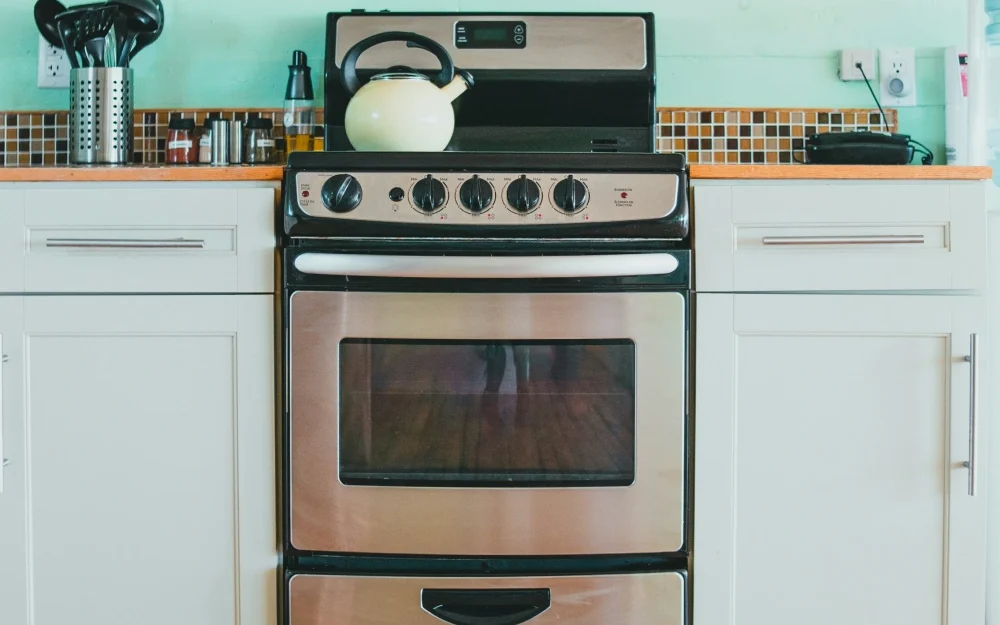
Image Source: bkvenergy.com
What is Oven Wattage?
Wattage is a way to measure power. For an electric oven, wattage tells you how much energy the oven uses at any given moment when it’s turned on. Think of it like how fast a car can go. A higher wattage means the oven can use more power quickly.
Ovens need a lot of power to make heat. This is why their wattage is often higher than many other kitchen appliances. A microwave might use 1,000 to 1,500 watts, while a toaster might use around 1,000 watts. An oven is in a different class for power use.
The electric oven wattage number is usually found on a sticker or plate on the oven itself. This plate often lists the model number, serial number, voltage, and wattage or amperage. The wattage listed is usually the maximum power the oven might use, like when it is first heating up or using the broiler.
Why Oven Wattage Matters
Knowing your oven’s wattage is useful for a few reasons.
First, it helps you guess your average oven energy usage. The more watts an oven uses, the more electricity it consumes over time. This affects your electricity bill.
Second, wattage relates to oven electrical requirements. Your oven needs to be connected to the right kind of electrical circuit. This circuit must handle the power your oven uses safely. The circuit size is often based on the oven’s amperage, which is directly related to its wattage and voltage.
Third, it can help you understand how quickly your oven heats up. An oven with higher wattage might heat up faster than one with lower wattage, assuming everything else is the same.
Typical Electric Oven Wattage Ranges
Most standard electric ovens for homes fall into a certain range for wattage.
- Standard baking element: The main heating part at the bottom often uses between 2,000 and 3,000 watts.
- Broiler element: The heating part at the top used for broiling food usually uses between 3,000 and 4,000 watts.
- Convection fan and heater: If your oven has a convection feature, the fan uses a small amount of power, maybe 25-50 watts. If it has a special convection heating element (often around the fan), it might add another 500 to 1,000 watts.
- Self-cleaning feature: This uses heating elements to reach very high temperatures. The self-cleaning oven wattage is very high, often between 4,000 and 5,000 watts or even more, as both the main and broiler elements might be on at the same time.
It’s important to know that an oven does not run at its maximum wattage all the time it is on. When the oven reaches the set temperature, the heating elements cycle on and off to keep the temperature steady. During these cycles, the oven uses much less power than when it is first heating up.
Here is a simple table showing typical ranges:
| Oven Part / Function | Typical Wattage Range |
|---|---|
| Bake Element | 2,000 – 3,000 watts |
| Broil Element | 3,000 – 4,000 watts |
| Convection Element | 500 – 1,000 watts |
| Convection Fan | 25 – 50 watts |
| Self-Clean Cycle | 4,000 – 5,000+ watts |
Keep in mind these are just common ranges. Your specific oven might be different. Always check your oven’s label or manual for the exact number.
Factors Affecting Oven Power Use
Several things change how much power your oven uses and its average oven energy usage.
Size of the Oven
A larger oven cavity needs more energy to heat up and stay hot. This is because there is more space and more air to heat. A small apartment oven will likely use less power than a large double oven in a big kitchen. The elements inside a larger oven might also be more powerful, meaning higher wattage.
Oven Temperature
Setting a higher temperature requires the oven to work harder and longer to reach that heat. It will use more power during the heat-up phase. While keeping the temperature steady uses less power, maintaining a very high temperature still means the elements cycle on more often than if you set a lower temperature. Baking at 400°F (200°C) uses more energy than baking at 325°F (160°C).
Cooking Time
The longer your oven is on, the more energy it uses. This seems simple, but it’s a big factor in oven power consumption. Baking something for two hours uses more electricity than baking something for 30 minutes, even if the wattage of the oven is the same.
How Often You Open the Door
Every time you open the oven door, hot air escapes. The oven then has to use more power to heat the inside back up to the set temperature. Try to peek through the oven window instead of opening the door too often.
Oven’s Age and Condition
Older ovens might be less energy-efficient. Seals around the door can wear out, letting heat escape. Insulation might not be as good as in newer models. A well-maintained, newer oven usually uses less power than an old, poorly maintained one.
Using the Self-Cleaning Feature
The self-cleaning cycle uses a lot of energy. This is because the oven heats itself to extremely high temperatures (around 800-1000°F or 430-540°C) to burn away food spills. The self-cleaning oven wattage is very high for a long time, usually several hours. This is often the most power-hungry function of an oven.
Using the Convection Feature
A convection oven wattage can be slightly higher than a standard oven if it has a separate heating element around the fan. However, convection cooking often cooks food faster and more evenly. This means you might be able to set a lower temperature and cook for a shorter time. In many cases, using the convection feature can save energy overall because the oven is on for less time or at a lower temperature.
Finding Your Oven’s Wattage
The best way to know your specific oven’s wattage is to look at the appliance itself.
Most appliances have a rating plate or sticker. This is usually found:
- Around the edge of the oven door.
- On the back of the oven.
- On the side of the storage drawer (if it has one).
- In the owner’s manual.
Look for a number listed as “Watts (W)”. If the label only gives volts (V) and amps (A), you can figure out the wattage using a simple formula:
Watts (W) = Volts (V) × Amps (A)
For example, if your oven uses 240 volts and 20 amps, its maximum wattage is 240V × 20A = 4800 watts.
This number tells you the peak power draw. Remember, the oven might not use this much power continuously.
Knowing this helps with understanding your oven electrical requirements. The amperage listed is crucial for making sure the oven is on a circuit breaker that can handle the load.
Oven Amps and Electrical Requirements
Ovens use a lot of power, so they need special electrical circuits. This is where oven amps and oven electrical requirements come in.
Standard wall outlets in most homes are 15 amps or 20 amps and operate at 120 volts. An electric oven needs much more power than this. They usually need a 240-volt connection and a dedicated circuit breaker of 20, 30, 40, or even 50 amps.
Why 240 volts? Appliances that need a lot of heat, like ovens, clothes dryers, and water heaters, use 240 volts because it lets them draw less amperage for the same amount of power (wattage). Using less amperage means the wiring and breakers can be smaller and safer for high-power loads.
For example, a 4800-watt oven:
* At 120 volts would need 4800W / 120V = 40 amps. This is a very high amperage for standard home wiring.
* At 240 volts needs 4800W / 240V = 20 amps. This is much more manageable and safer for home wiring.
The amperage requirement is key for safety. The circuit breaker protects the wiring in your walls from getting too hot. If an appliance tries to pull more amps than the breaker is rated for, the breaker trips, shutting off the power.
- An oven needing 20 amps usually requires a 20 or 30 amp circuit breaker and specific wiring.
- An oven needing 30 amps usually requires a 30 or 40 amp circuit breaker and heavier wiring.
- An oven needing 40 amps might need a 40 or 50 amp circuit and even heavier wiring.
- Ovens with high self-cleaning oven wattage, often drawing 40+ amps, definitely need a dedicated, heavy-duty circuit (40 or 50 amp).
Always check your oven’s manual or rating plate for its specific voltage and amperage needs. This is crucial for safe installation. If you are replacing an old oven, check the electrical hookup. If the new oven has different needs, you might need an electrician to change the circuit breaker and wiring.
Calculating Oven Energy Usage
Knowing the wattage helps estimate how much electricity does an oven use over time.
Electricity usage is measured in kilowatt-hours (kWh). One kilowatt-hour is equal to using 1,000 watts for one hour.
To figure out your oven’s energy usage for a specific cooking task, you need to estimate:
- The average wattage used during the cooking time. This is tricky because it cycles on and off. It’s highest during heat-up and lower while maintaining temperature. A good estimate might be the average wattage over the whole cooking period. Often, sources suggest estimating based on the maximum wattage but for a shorter period or using an average factor.
- The total time the oven is on in hours.
A simpler way for a rough estimate: Assume the oven uses its peak wattage for a certain fraction of the time it’s on. Or, use an average wattage figure for the whole cooking duration.
Let’s try a simpler approach for estimating oven power consumption:
Say your oven’s maximum wattage is 3000 watts (3 kW).
You bake a chicken for 1 hour at 375°F.
Estimate the energy used:
* Heat-up phase (maybe 15-20 minutes): Uses close to maximum wattage (3 kW).
* Baking phase (40-45 minutes): Elements cycle on and off, maybe averaging 1/3 to 1/2 of the peak wattage (1 kW to 1.5 kW).
It’s hard to get exact without a special meter. Energy Star uses a calculation assuming a mix of heating cycles. A common rough estimate for average oven energy usage is that an electric oven uses about 0.87 kWh per hour of use for baking. This is lower than the peak wattage might suggest because the elements cycle.
Let’s use this average:
Usage in kWh = Average kWh per hour × Hours of use
If you use the oven for 1 hour:
Usage = 0.87 kWh/hour × 1 hour = 0.87 kWh
If you use the oven for 30 minutes (0.5 hours):
Usage = 0.87 kWh/hour × 0.5 hours = 0.435 kWh
Remember, this 0.87 kWh per hour is just an average estimate for standard baking. Broiling or self-cleaning will use much more power per hour.
- Broiling might be closer to the peak wattage for the time used.
- Self-cleaning can use 4-5 kWh per hour or even more because of the high self-cleaning oven wattage. A 3-hour self-clean cycle could use 12-15 kWh or more.
Calculating the Running Cost of Oven
Once you know the energy usage in kWh, you can figure out the running cost of oven.
You need two things:
1. Energy used in kWh (calculated above).
2. The cost of electricity per kWh from your utility bill. This varies greatly depending on where you live and your energy plan. Let’s say, for example, electricity costs $0.15 per kWh.
Cost = Energy used in kWh × Cost per kWh
Using the baking example (1 hour, 0.87 kWh usage):
Cost = 0.87 kWh × $0.15/kWh = $0.13
So, baking something for an hour might cost around 13 cents in electricity.
Using the self-cleaning example (3 hours, assuming 4.5 kWh/hour usage):
Total kWh = 4.5 kWh/hour × 3 hours = 13.5 kWh
Cost = 13.5 kWh × $0.15/kWh = $2.03
The self-cleaning cycle costs much more per use than a typical baking session. This shows why self-cleaning oven wattage has a big impact on your electricity bill when you use that feature.
To estimate your monthly or yearly running cost of oven, you would need to keep track of how often and how long you use your oven for different tasks (baking, broiling, self-cleaning) and multiply the total kWh by your electricity rate.
Here is an example table for estimated costs using the $0.15/kWh rate:
| Task | Estimated Usage Time | Estimated kWh Used | Estimated Cost ($0.15/kWh) |
|---|---|---|---|
| Baking (avg) | 1 hour | 0.87 kWh | $0.13 |
| Baking (avg) | 2 hours | 1.74 kWh | $0.26 |
| Broiling (high) | 15 minutes (0.25 hr) | ~1 kWh (peak) | $0.15 |
| Self-Clean | 3 hours | ~13.5 kWh | $2.03 |
These are estimates. Your actual costs will depend on your specific oven, how you use it, and your electricity price.
Comparing Oven Types: Electric vs. Gas
This guide focuses mainly on electric oven wattage. Gas ovens work differently.
Gas ovens use natural gas or propane to create heat. They still use a small amount of electricity, typically under 200 watts, to power:
* The electronic control panel and clock.
* The igniter (to light the gas).
* The interior light.
* The convection fan (if it has one).
The main heat source is gas, not electricity. So, the high wattage numbers we talk about for electric ovens do not apply to the main heating function of a gas oven. Their energy cost is mainly from the gas used, plus a small amount for the electricity components.
While a gas oven might have a lower appliance wattage for its electrical parts, its overall energy cost depends on gas prices, which also change.
Most homes in North America have 240-volt outlets for electric ovens or a gas line for gas ovens. You usually cannot swap one type for the other without changing the utility hookup to your kitchen.
Energy-Saving Tips for Ovens
Since ovens use a lot of power, especially with their high electric oven wattage, saving energy can lower your running cost of oven.
Here are simple ways to reduce your oven power consumption:
- Use the right size pan: A dark metal pan absorbs heat better than a shiny one. This can help food cook more evenly or slightly faster.
- Preheat only when needed: Many dishes, like casseroles and roasts, don’t require a long preheat. For others, like bread or pastries, preheating is important. Don’t preheat for longer than needed.
- Use the oven efficiently: Cook multiple dishes at once if you can. If the oven is already hot, put in another dish right after taking one out. This uses the stored heat.
- Don’t open the door: As mentioned, opening the door lets heat out. Use the oven light and window to check on food.
- Turn off the oven early: For dishes with long cooking times, you can often turn the oven off 5-10 minutes before the food is done. The heat inside will finish the cooking.
- Use residual heat: After cooking, if the oven is still warm, you can use the leftover heat for other things, like warming plates or crisping snacks (with the oven off).
- Make sure the door seal is good: A leaky seal lets heat escape, making the oven work harder. You can test your seal by closing the door on a piece of paper. If you can pull the paper out easily, the seal might be worn.
- Consider using smaller appliances: For small tasks, a toaster oven, microwave, air fryer, or slow cooker often uses much less energy than a full-size oven. For example, heating up a few leftovers in a microwave uses far less appliance wattage and energy than heating the whole oven.
- Use the convection setting: If your oven has it, the convection oven wattage might be higher initially, but it often reduces cooking time and temperature, leading to lower overall average oven energy usage for the cooking task.
- Limit self-cleaning: The self-cleaning oven wattage is very high. Only use this feature when truly necessary. Wipe up spills when the oven is cool to prevent needing the self-clean cycle as often.
By following these tips, you can reduce how much electricity does an oven use and save money on your energy bills.
Deciphering Oven Specifications
When you look at a new oven or check your current one, you might see different numbers.
- Wattage (W): This is the power rating. It’s usually the maximum power the oven can draw. As discussed, this is key to electric oven wattage.
- Voltage (V): This is the electrical pressure. In North America, electric ovens usually need 240 volts.
- Amperage (A): This is the electrical current draw. This is directly related to wattage and voltage (W = V × A). This number is critical for matching the oven to the correct circuit breaker and wiring, which are part of oven electrical requirements.
- kWh (Kilowatt-hours): This is a measure of energy used over time. Utility companies charge based on kWh. Your oven’s manual might give an estimated annual kWh usage, but this is based on average use and may not match yours. This relates to oven power consumption and calculating the running cost of oven.
When buying a new oven, look at the EnergyGuide label. This label provides an estimate of the oven’s yearly energy use in kWh and how that compares to similar models. While it doesn’t list the wattage, it gives you a clear idea of the average oven energy usage you can expect.
Interpreting Average Oven Energy Usage
The term average oven energy usage can mean different things.
It could mean:
* The average kWh used per hour of operation (like the 0.87 kWh/hour estimate).
* The average total kWh used per year for a typical household.
The yearly average provided on an EnergyGuide label is based on standard tests and assumes a certain number of baking, broiling, and self-cleaning cycles per year. For electric ovens, this average is often in the range of 300-500 kWh per year.
However, your actual usage might be higher or lower. If you bake a lot, use the broiler often, or run the self-clean cycle frequently, your oven power consumption will be higher than this average. If you rarely use your oven or mostly use smaller appliances, your usage will be lower.
Thinking about this average helps you compare the energy efficiency of different models when buying a new oven. A model with a lower estimated yearly kWh usage will generally have a lower running cost of oven over its lifetime, assuming similar use patterns.
Appliance Wattage in the Kitchen
It’s useful to compare oven wattage to other kitchen appliance wattage. This helps put the oven’s power needs into perspective.
| Appliance | Typical Wattage Range | Notes |
|---|---|---|
| Electric Oven | 2,000 – 5,000+ W | High power, cycles on/off |
| Electric Range Hob | 1,200 – 3,000 W per element | Varies by size and setting |
| Microwave Oven | 600 – 1,500 W | High peak, but short use time |
| Toaster | 800 – 1,500 W | High peak, very short use time |
| Electric Kettle | 1,000 – 1,700 W | High peak, short use time |
| Refrigerator | 100 – 200 W (running) | Uses little power, but runs all time |
| Dishwasher | 1,200 – 2,400 W | Uses power mostly for heating water |
As you can see, the electric oven wattage is one of the highest power draws among common kitchen appliances, especially when heating up or using features like broiling or self-cleaning. This is why ovens require a dedicated, high-amp circuit. While appliances like microwaves or kettles might have high peak wattage, they only run for a few minutes at a time. Refrigerators run constantly but use very little power most of the time. Ovens use high power for longer periods than short-cycle appliances.
Grasping Convection Oven Wattage
A convection oven adds a fan, and sometimes a heating element, to move air around inside the oven. This helps cook food more evenly and often faster.
- Convection Fan Only: In some ovens, the convection simply uses the main heating elements (bake/broil) and a fan to circulate the hot air. The fan itself uses very little power, maybe 25-50 watts. The main power draw is still from the main heating elements.
- True Convection (or European Convection): These ovens have a third heating element located around the convection fan at the back of the oven. This element heats the air before it is blown into the oven cavity. This convection oven wattage adds to the total. The element might be 500 to 1,000 watts.
When using the convection feature with a separate element, the oven’s total wattage draw while heating will be the sum of the main element(s) and the convection element. However, because convection cooks faster and often at lower temperatures, the oven might be on for less time overall. This can lead to lower total oven power consumption for the cooking task compared to using a standard bake setting for longer.
So, while the peak convection oven wattage might be slightly higher than just the bake element, the energy used per meal can be lower due to improved efficiency and shorter cooking times.
Fathoming Self-Cleaning Oven Wattage
The self-cleaning function is the most power-hungry part of an electric oven. The self-cleaning oven wattage is very high because the oven needs to reach temperatures much higher than normal cooking temperatures (often 800°F to 1000°F).
To reach and keep such extreme heat, the oven usually turns on both the lower bake element and the upper broiler element at the same time. The combined wattage of these elements is high, often 4,000 to 5,000 watts, and possibly more depending on the oven model.
The self-cleaning cycle runs for several hours (typically 2 to 4 hours). During this time, the oven is using this high wattage for a significant period. This results in a large amount of oven power consumption for each cleaning cycle.
Because the self-cleaning oven wattage is so high and used for a long time, using this feature significantly impacts your average oven energy usage and increases the running cost of oven. It’s a powerful feature, but it uses a lot of electricity.
Many people choose to run the self-cleaning cycle at night or during off-peak hours if their electricity plan charges less during those times. This doesn’t change the total energy used (kWh) but can lower the cost per kWh, thereby reducing the running cost of oven for that cycle.
Oven Wattage and Home Electrical Capacity
The high electric oven wattage and resulting oven amps mean your home’s electrical system must be set up correctly.
When you see oven electrical requirements, they will specify the voltage (usually 240V) and the minimum circuit breaker size (e.g., 20A, 30A, 40A, 50A). This circuit must be dedicated, meaning only the oven is connected to it. You cannot plug an oven into a regular wall outlet or share a circuit with other appliances.
The circuit breaker size must be equal to or larger than the oven’s required amperage, as listed on its label or in the manual. The wiring in the wall must also be the correct gauge (thickness) to handle the amperage safely. Thicker wires are needed for higher amperages.
Installing an oven with higher appliance wattage and amperage needs than the existing circuit can handle is a fire hazard. It can cause the breaker to trip constantly or, worse, overheat the wiring.
If you are replacing an old oven with a new one that has a much higher wattage (perhaps due to better performance or a more powerful self-cleaning feature), you might need an electrician to check if your current circuit meets the new oven’s oven electrical requirements. This is a safety issue and an important consideration.
Conclusion
Knowing how many watts does an oven use is key to understanding its power needs and costs. Electric oven wattage typically ranges from 2,000 to 5,000 watts, with features like broiling and self-cleaning using the highest amounts. The self-cleaning oven wattage is particularly high, making that feature a significant factor in oven power consumption.
The oven’s wattage dictates its oven amps and therefore its crucial oven electrical requirements, demanding a dedicated, high-voltage circuit in your home. While the peak appliance wattage is high, the average oven energy usage over time depends on temperature, cooking time, and how often you use power-hungry features.
By finding your oven’s specific wattage (or calculating it from volts and amps), estimating energy use in kWh, and knowing your electricity rate, you can calculate the running cost of oven. Using energy-saving tips, such as limiting door opening, cooking multiple items, and using the convection feature (if available), can help reduce the oven power consumption and lower your electricity bills. Whether it’s a standard model or a convection oven wattage is listed, being aware of these numbers empowers you to use your oven more wisely and manage your home’s energy use.
Frequently Asked Questions
h4 What is the difference between wattage and kWh?
h5 Wattage is how much power an appliance uses at one moment. Think of it like speed. kWh (kilowatt-hour) is the total energy used over time. Think of it like distance. Using 1,000 watts (1 kilowatt) for 1 hour equals 1 kWh of energy used. Your power company charges you based on the total kWh you use each month.
h4 Does using the self-cleaning feature really cost a lot?
h5 Yes, it does. The self-cleaning oven wattage is very high because the oven reaches extreme temperatures. This high power is used for several hours. This makes the self-cleaning cycle one of the most energy-intensive tasks an oven does, leading to a higher running cost of oven compared to normal baking.
h4 Can I plug my electric oven into any wall outlet?
h5 No, absolutely not. Electric ovens need a special 240-volt outlet and a dedicated electrical circuit with a specific amperage rating (often 20A, 30A, 40A, or 50A). Standard wall outlets are 120 volts and usually 15A or 20A, which is not enough for an oven’s high electric oven wattage. Plugging an oven into a regular outlet is a serious safety hazard and can cause fires or damage to your home’s wiring. Always check your oven’s oven electrical requirements.
h4 Does a convection oven use more electricity than a standard oven?
h5 A convection oven might have a slightly higher peak convection oven wattage if it has a separate heating element. However, because convection often cooks faster and at lower temperatures, the oven might be on for less time overall. In many cases, the total oven power consumption for cooking a specific dish can be lower with convection, leading to lower average oven energy usage per meal.
h4 How can I find out my electricity rate to calculate my oven’s cost?
h5 Your electricity rate per kWh is listed on your monthly electricity bill. It might be called “Energy Charge,” “Delivery Charge,” or similar. Some bills show an average rate after all fees. Use the rate per kWh that applies to your energy usage.
h4 Why do some ovens list amps instead of watts?
h5 Electrical systems are often designed based on amperage and voltage because these determine the required wire thickness and circuit breaker size. Since Watts = Volts × Amps, you can easily figure out the wattage if you know the volts and amps, which are critical for oven electrical requirements. The amp rating is particularly important for ensuring safe installation.
h4 Does the oven use less power once it reaches the set temperature?
h5 Yes. The oven uses its maximum electric oven wattage when it is heating up to the set temperature. Once it reaches that temperature, the heating elements cycle on and off to maintain the heat. During these cycles, the oven uses much less power than it does during the initial heat-up phase. The oven power consumption drops significantly once the target temperature is met.