
An 8000 BTU air conditioner typically cools a room that is between 300 and 350 square feet effectively. This is a common size for many bedrooms, smaller living rooms, or average offices. However, the actual room size for 8000 BTU air conditioner coverage can change quite a bit based on several things like how sunny the room is, how many windows it has, and how well it’s insulated. A simple rule of thumb is that you need about 20 BTU per square foot, but this is just a starting point. We will look at how to figure out the right size AC for your space in more detail below.
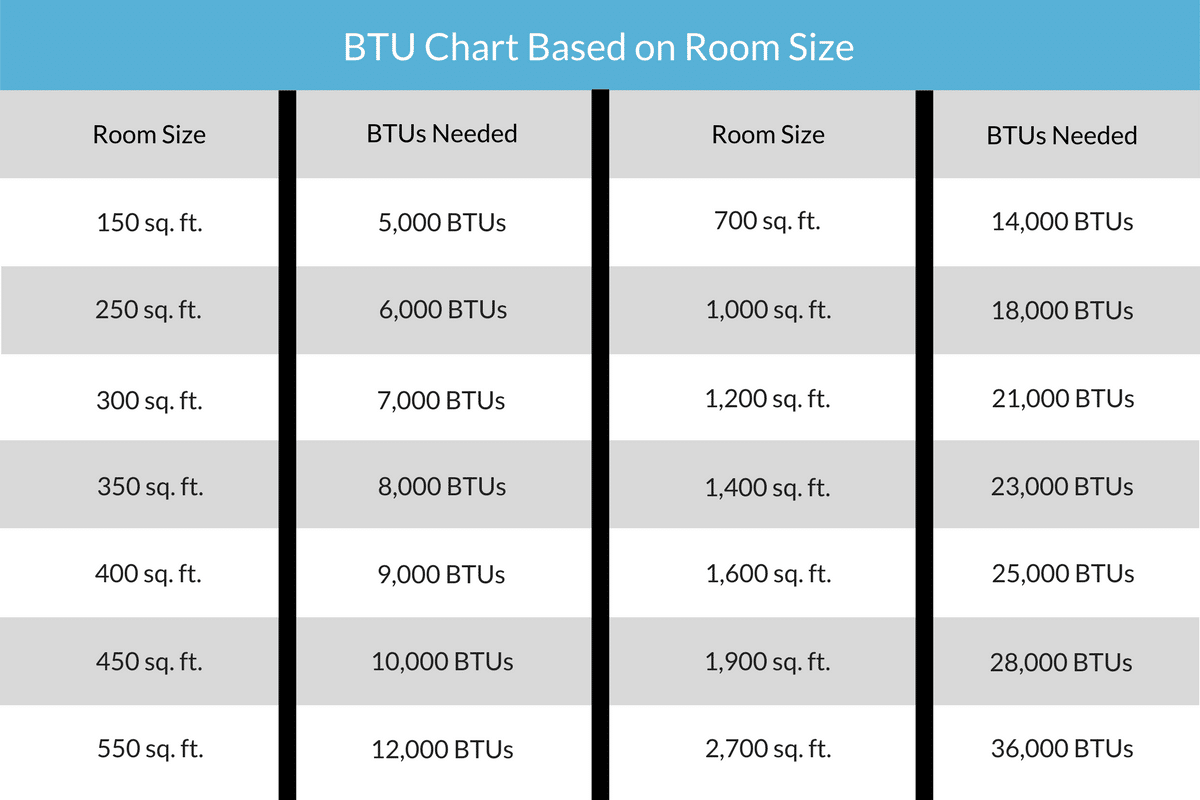
Image Source: lirp.cdn-website.com
Figuring Out What BTU Means
BTU stands for British Thermal Unit. It is a way to measure heat. In the world of air conditioners, BTU tells you how much heat the AC can take out of a room in one hour. A higher BTU number means the AC can remove more heat. It has more cooling power.
Think of it like this:
* A small AC with low BTU removes a little heat. It works for small spaces.
* A large AC with high BTU removes a lot of heat. It works for big spaces.
An 8000 BTU AC is a medium-sized unit. It’s good for spaces that are not too big and not too small.
Typical AC Cooling Area Chart
AC makers give a general idea of how much area their units can cool. This is a helpful starting point. Here is a basic AC cooling area chart showing common sizes and the rooms they usually cool.
| BTU Rating | Approximate Square Footage | Typical Room Size |
|---|---|---|
| 5,000 BTU | 100 to 150 sq ft | Small Bedroom, Office |
| 6,000 BTU | 150 to 250 sq ft | Small Bedroom, Small Living Room |
| 8,000 BTU | 300 to 350 sq ft | Medium Bedroom, Living Room, Office |
| 10,000 BTU | 350 to 450 sq ft | Larger Bedroom, Living Room, Small Apartment |
| 12,000 BTU | 450 to 550 sq ft | Living Room, Studio Apartment, Small House Zone |
| 14,000 BTU | 550 to 700 sq ft | Large Living Room, Larger Studio/Apartment |
| 18,000 BTU | 700 to 1000 sq ft | Several Rooms, Small House Zone |
| 24,000 BTU | 1000 to 1200 sq ft | Larger Area, Small House |
This chart shows that 8000 BTU is often listed for 300 to 350 square feet. This helps answer the question: what size room does 8000 BTU cool effectively? It’s effective in this range under normal conditions.
What Changes AC Coverage Area
The numbers in the chart are just a guess. The real area an 8000 BTU AC can cool depends on many things. These are the factors affecting AC coverage area. They can make the AC cool less area or, in some cases, a little more.
h4 Sun Exposure
Rooms that get a lot of direct sun need more cooling power. If your 350 sq ft room faces south and has big windows, an 8000 BTU unit might struggle. A room the same size that is always in the shade will be easier to cool.
h4 Room Location
Is the room on the top floor? Heat rises. A room under a hot roof will be warmer than a room on a lower floor. This extra heat means the AC has to work harder.
h4 How Good Your Insulation Is
Good walls, roofs, and floors keep heat out in the summer. If your room has poor insulation, heat from outside comes in easily. The AC has to fight this constant heat gain. Good insulation means the 8000 BTU unit can cool its area better.
h4 Window Size and Type
Windows let heat in. Big windows let in more heat than small ones. Old, single-pane windows let in much more heat than newer, double-pane or energy-efficient windows. Many windows or large windows can push the needed BTU higher than 8000 for 300-350 sq ft. Using blinds or curtains helps block some sun and heat.
h4 Ceiling Height
The standard room height is about 8 feet. If your room has higher ceilings, there is more air to cool. A room that is 300 sq ft but has 10-foot ceilings has more total air volume than a 300 sq ft room with 8-foot ceilings. This extra air volume needs more cooling power. An 8000 BTU unit on a room with high ceilings won’t cool as much square footage effectively.
h4 Heat From Appliances and People
Things inside the room make heat. Lights, TVs, computers, and other electronics give off heat. People give off heat too. A room with a lot of electronics or many people in it often needs more cooling power. An office with several computers and people will need a stronger AC than an empty bedroom of the same size.
h4 Climate in Your Area
If you live where it is very hot or very humid, the AC works harder. High humidity makes you feel hotter. An AC helps remove humidity, but this uses up some of its cooling power (BTU). In very hot, humid places, an 8000 BTU unit might cool slightly less area effectively compared to a drier, less hot place.
h4 Air Leaks
Cracks around windows, doors, or vents let hot outside air sneak in. This is like trying to cool a room with the door open. The AC runs constantly trying to cool air that is always being replaced by hot air. Fixing leaks makes the AC work better and cool the area it is rated for.
Different Types of 8000 BTU ACs
8000 BTU is a common size for different kinds of air conditioners. The type of AC can also affect how well it cools its rated area.
h4 8000 BTU Window Air Conditioner Square Feet
Window ACs are put in a window or through a wall. They are usually very good at cooling a single room. An 8000 BTU window air conditioner square feet coverage is usually right around the 300-350 sq ft mark. They put the hot air and noise outside. This makes them quite efficient at cooling the room they are in. They seal the window opening, so hot air doesn’t easily get back in.
h4 Portable Air Conditioner 8000 BTU Coverage
Portable ACs sit on the floor inside the room. They have a hose that sends hot air out through a window or wall vent. A portable air conditioner 8000 BTU coverage can sometimes feel less effective than a window unit of the same BTU. Why?
- The hose sending hot air out can get warm itself, adding some heat back into the room.
- Venting air out can create negative pressure in the room. This pulls warm air from other parts of the house or from outside into the room through gaps.
- Some portable units have two hoses (one intake, one exhaust), which are more efficient than single-hose units. But even two-hose units can sometimes be less powerful feeling than a window unit.
So, while an 8000 BTU portable AC is rated for 300-350 sq ft, its real cooling power in the room might feel more like a 7000 BTU window unit depending on the design and how well it’s vented.
How to Calculate BTU Needed for a Room
Don’t just guess the size you need. It’s best to figure out the right BTU for your specific room. This is how you how to calculate BTU needed for a room. It involves measuring your space and then thinking about those factors we talked about. This is part of the air conditioner sizing guide square feet.
h4 Step 1: Measure the Room
Measure the length and width of the room in feet. Multiply these two numbers to get the square footage.
- Example: Room is 15 feet long and 20 feet wide.
- Area = 15 ft * 20 ft = 300 sq ft.
An 8000 BTU unit is often a good fit for a 300 sq ft room.
h4 Step 2: Use the Base BTU Rule
The general rule is you need about 20 BTU for each square foot.
- For a 300 sq ft room: 300 sq ft * 20 BTU/sq ft = 6000 BTU.
Wait, the chart says 8000 BTU for 300-350 sq ft? Why is the rule 20 BTU/sq ft giving a lower number? The 20 BTU/sq ft rule is a very basic start. The chart and AC makers’ ratings build in some buffer and consider average room conditions. For example, the chart suggests 8,000 BTU for 300 sq ft. Let’s divide: 8000 BTU / 300 sq ft = 26.6 BTU/sq ft. This shows the real need is often higher than the simple 20 rule. The 8000 BTU unit is likely the smallest size recommended for that 300 sq ft area because of real-world factors. The BTU per square foot needed is often closer to 25-30 in practice.
h4 Step 3: Adjust for Other Factors
Now, take that base estimate (or the chart number) and adjust based on your room’s specific situation. This is key for getting the recommended AC size by square footage.
- Add 10% BTU: If the room gets a lot of sun.
- For our 300 sq ft room needing 8000 BTU base: 8000 * 0.10 = 800 BTU extra. Total needed: 8800 BTU.
- Add 10% BTU: If more than two people are regularly in the room. Add about 600 BTU for each extra person.
- For our 300 sq ft room (base 8000 BTU) with 4 people (2 extra): 8000 + (2 * 600) = 8000 + 1200 = 9200 BTU.
- Add BTU: If the room is a kitchen (gets hot from cooking). Add about 4000 BTU.
- Our 300 sq ft room is a kitchen: 8000 + 4000 = 12000 BTU. (See how a kitchen needs way more power?)
- Consider Ceiling Height: If ceilings are higher than 8 feet, the base BTU needs to be higher. There isn’t a simple universal formula, but you might need to go up one size (e.g., from 8000 to 10000 BTU) for every extra couple of feet in height for a room around 300-350 sq ft.
- Consider poor insulation or many old windows: These might also require bumping up the BTU size.
Let’s look at an example. You have a 350 sq ft living room. The chart says 8000 BTU is about right. But:
- It faces west and gets strong afternoon sun.
- You often have 4-5 people hanging out there.
- It has older, single-pane windows.
For this room, 8000 BTU is likely too small.
- Base needed (from chart): 8000 BTU (for 300-350 sq ft). Let’s use the higher end, maybe assume it covers up to 350 sq ft in ideal conditions.
- Add for sun: 8000 * 0.10 = 800 BTU.
- Add for extra people (assume 3 extra): 3 * 600 BTU = 1800 BTU.
- Old windows/poor insulation: This is harder to put a number on, but it’s a significant factor. Let’s estimate it adds another 10-15%. 8000 * 0.10 = 800 BTU.
Total needed: 8000 (base) + 800 (sun) + 1800 (people) + 800 (windows) = 11400 BTU.
In this case, you would need at least a 10000 BTU AC, or possibly even 12000 BTU to be safe. This example shows why simply looking at square footage is not enough. The room size for 8000 BTU air conditioner is 300-350 sq ft under average conditions, but many rooms are not average.
When 8000 BTU is a Good Fit
An 8000 BTU air conditioner is typically a good choice for:
- A bedroom that is 12 ft x 25 ft (300 sq ft) and doesn’t get direct sun.
- An office that is 15 ft x 20 ft (300 sq ft) with standard windows and few heat-making machines.
- A small living area that is 18 ft x 20 ft (360 sq ft) if it’s well-insulated, in the shade, and only used by 1-2 people at a time.
- Any room up to about 350 sq ft that has average conditions – not too sunny, average insulation, standard ceiling height, and typical use.
It is important to remember that 300-350 sq ft is the maximum area it can handle well under normal conditions. If your room has several heat sources or poor insulation, the effective area is smaller.
What Happens if the AC Size is Wrong?
Picking the wrong size air conditioner is a common mistake. Both too small and too big can cause problems.
h4 AC is Too Small
If you put an 8000 BTU unit in a room that really needs 12000 BTU (like our sunny, crowded living room example), it will run all the time. It will struggle to reach the set temperature, or it might never get the room cool enough on hot days. It will use a lot of energy because it’s always running flat out. It won’t be able to lower the humidity much, making the room feel sticky and less comfortable even if the air temperature drops a bit. The unit will wear out faster because it’s constantly overworked.
h4 AC is Too Big
Using an AC that is too large, like putting a 12000 BTU unit in a room that only needs 5000 BTU, also causes issues. A too-big AC cools the air temperature very quickly. It reaches the thermostat’s set point fast and then shuts off.
This sounds good, but it’s not. Air conditioners do two jobs: cool the air and remove moisture (dehumidify). To remove moisture, the AC coil needs to get cold enough for water vapor in the air to condense on it. This happens best when the AC runs for a longer time.
A too-big AC cycles on and off too fast. It cools the air temperature quickly but doesn’t run long enough to properly dehumidify the room. The room will feel cool but damp and clammy. This high humidity can also lead to mold and mildew growth over time. The constant starting and stopping (short cycling) also uses more energy than a correctly sized unit that runs for longer periods. Plus, larger units cost more to buy.
Getting the right size is part of the air conditioner sizing guide square feet. It saves energy, makes the room more comfortable, and helps the AC last longer. For an 8000 BTU unit, the sweet spot for room size for 8000 BTU air conditioner really is around 300-350 sq ft, adjusted based on your room’s unique traits.
Fine-Tuning Your Choice
Once you have an idea of the BTU range needed based on square footage and the factors, here are some more things to think about:
- Energy Efficiency: Look for units with a high Energy Efficiency Ratio (EER) or Seasonal Energy Efficiency Ratio (SEER). Higher numbers mean they use less energy to cool. An 8000 BTU unit with a high EER will be cheaper to run than one with a low EER, even if they cool the same area.
- Noise Level: ACs make noise. Check the decibel (dB) rating if possible. Lower numbers are quieter. This is important for bedrooms or living areas. Portable ACs are often louder than window units because the compressor is inside the room.
- Features: Do you need a remote control? A timer? A sleep mode (adjusts temp at night)? These features add cost but can make the AC easier to use and more energy-efficient.
- Installation: How easy is the unit to install? Window units need a secure fit. Portable units need a window venting kit that fits your window type.
Keeping Your 8000 BTU AC Working Well
Once you have your 8000 BTU air conditioner installed, keeping it clean helps it cool its area effectively.
- Clean the Filter: The air filter gets dirty over time. A dirty filter blocks airflow. This makes the AC work harder, cool less well, and use more energy. Clean or replace the filter often (check the manual, often every 2-4 weeks during heavy use).
- Keep Coils Clean: The cooling fins/coils can get dirty. This reduces their ability to release heat (for the outdoor part) or absorb heat (for the indoor part). If you can safely access them, gently cleaning them helps. Window units have coils inside and outside. Portable units have them inside.
- Seal Air Leaks: Make sure the area around a window AC is sealed well. For portable ACs, ensure the hose connection at the window is tight and sealed.
Taking care of your 8000 BTU AC ensures it cools the intended 300-350 sq ft area as promised, or close to it, for years to come.
Summarizing the 8000 BTU Area
To wrap up the question of how many square feet does 8000 BTU air conditioner cool:
- The standard answer is 300 to 350 square feet.
- This is based on average room conditions.
- Factors like sun, insulation, windows, ceiling height, heat sources, and climate can reduce the effective cooling area.
- For rooms with lots of heat or poor insulation, 8000 BTU might only be enough for a smaller area (maybe 250 sq ft), or you might need a bigger AC.
- To find the right size, measure the room and consider the factors using an air conditioner sizing guide square feet. The BTU per square foot needed is often higher than a simple 20, closer to 25-30 or more depending on conditions.
- Using a too-small AC won’t cool enough. Using a too-big AC cools too fast and doesn’t remove humidity properly.
- Both 8000 BTU window air conditioner square feet coverage and portable air conditioner 8000 BTU coverage are rated for this range, but portables can feel less powerful in practice due to how they work.
Choosing the right size AC is not just about making a room cool. It’s about making it comfortable, managing humidity, saving energy, and extending the life of the unit. While 8000 BTU is rated for 300-350 sq ft, always check your specific room’s needs before buying.
Frequently Asked Questions
h3 FAQ About 8000 BTU AC Coverage
h4 Is an 8000 BTU air conditioner good for a 400 sq ft room?
Usually, no. An 8000 BTU air conditioner is typically best for rooms up to 350 sq ft. A 400 sq ft room is likely too large for an 8000 BTU unit to cool effectively, especially on hot days or if the room has factors like lots of sun. You would likely need a 10,000 BTU unit or larger for a 400 sq ft space.
h4 Can an 8000 BTU AC cool two small rooms?
Generally, an 8000 BTU AC is designed to cool one single room or connected open space of its rated size (300-350 sq ft). It is not meant to cool two separate rooms, even if their total square footage is within that range. Air conditioners work best when cooling a contained space. Airflow between rooms is limited by walls and doorways. You would need a separate AC for each room or a multi-room system.
h4 How much energy does an 8000 BTU air conditioner use?
The energy use depends on the unit’s efficiency (EER/SEER rating) and how often it runs. An 8000 BTU AC might use roughly 700 to 900 watts per hour when running continuously. Look for the Energy Star label for more efficient models.
h4 Will an 8000 BTU portable AC cool the same as an 8000 BTU window AC?
They are rated the same, but often an 8000 BTU window AC will feel more powerful than an 8000 BTU portable AC in the same size room. This is because portable ACs can be less efficient due to their design (hot hose, negative pressure). For the same cooling feel, you might need a slightly higher BTU in a portable unit compared to a window unit.
h4 What is the smallest room size for an 8000 BTU air conditioner?
There isn’t really a minimum size, but putting an 8000 BTU unit in a much smaller room (like 100 sq ft) would be inefficient. The AC would cycle on and off very quickly, making the room feel damp and possibly leading to mold. It’s better to match the AC size closely to the room size. For a 100-150 sq ft room, a 5000 BTU unit is usually enough.
h4 How important is insulation for AC performance?
Insulation is very important. Good insulation keeps the hot air outside from getting in. This means the AC doesn’t have to work as hard to keep the room cool. With poor insulation, heat leaks in constantly, and the AC may struggle to cool the room, even if it is the right size based only on square footage.
h4 Should I get a bigger AC just to be safe?
No, getting an AC that is too big is not a good idea. As explained before, an oversized AC will cool the air too fast, cycle on and off constantly, and won’t remove humidity well. This leads to a cool but damp room, higher energy bills from inefficient starts and stops, and potential mold problems. Sizing it correctly is key for comfort and efficiency.