
So, how many amps does a window air conditioner use? A window air conditioner uses a different number of amps depending on its size, voltage, and design. A small one might use about 4 to 5 amps, while a large one could use 12 amps or even more when it is running steadily. When the AC first starts, it uses more amps for a short time. Knowing the window AC power consumption in amps helps you pick the right electrical outlet and keep your home safe. This number is also called the window unit amp draw.
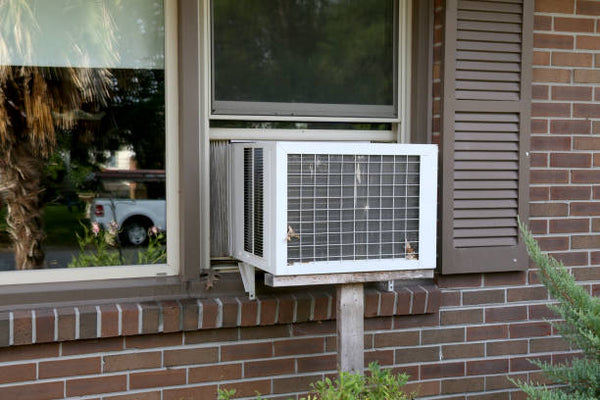
Image Source: cdn.shopify.com
What Amps Mean for Your AC
Let’s talk about what amps are. Think of electricity like water flowing through pipes.
- Volts (V) are like the water pressure. It pushes the electricity.
- Amps (A) are like how much water is flowing. It measures the rate of electricity.
- Watts (W) are like the total power or work the water does. It measures how much energy is used.
Watts equal Volts times Amps (Watts = Volts x Amps). This simple rule helps us figure out how many amps your AC needs.
If you know the watts and volts, you can find the amps: Amps = Watts / Volts.
Every electrical appliance uses power. This power is measured in watts. Your window air conditioner power consumption is usually listed in watts or BTUs.
Grasping AC Size: What are BTUs?
Air conditioners are sized by how much heat they can remove from a room. This size is measured in BTUs. BTU stands for British Thermal Unit.
- One BTU is the energy needed to raise or lower the temperature of one pound of water by one degree Fahrenheit.
- For an AC, BTU tells you how much heat it can move out of a room in one hour.
A higher BTU number means the AC can cool a bigger room or cool a room faster.
- A small 5,000 BTU unit is good for a small bedroom.
- A larger 10,000 BTU unit is good for a living room.
- Very large units (15,000 BTU or more) are for big open spaces.
The more BTUs an AC has, the more power it needs to run. More power means more watts, and usually, more amps, especially if the voltage stays the same.
Watts, Volts, and Amps: How They Connect
We saw the simple math: Amps = Watts / Volts.
Let’s use this to see how BTUs affect amps. AC units usually list their power use in watts. The watts of window air conditioner units go up as the BTU number goes up.
- A 5,000 BTU AC might use around 500 watts.
- An 8,000 BTU AC might use around 700-800 watts.
- A 10,000 BTU AC might use around 900-1000 watts.
- A 12,000 BTU AC might use around 1000-1200 watts.
Most small and medium window ACs in the US use 115 volts (V) power from a standard wall outlet. Larger units might need 230 volts (V). The voltage makes a big difference in the amps needed.
Interpreting Window AC BTU Amps
Let’s look at typical amp draws for different BTU sizes, assuming they use 115V power unless noted. This is the ‘Window AC BTU amps’ information you need.
5000 BTU Window AC Amps
A small 5000 BTU window AC is meant for rooms up to about 150 sq ft. These are very common.
- Typical power use: 450 to 500 watts.
- Using the formula Amps = Watts / Volts:
- If 450 watts: 450 W / 115 V = about 3.9 amps
- If 500 watts: 500 W / 115 V = about 4.3 amps
- So, a 5000 BTU window AC typically uses around 4 to 5 amps while running.
These small units usually have a standard plug and can often go into a regular outlet, but it’s always best if it’s the only major appliance on that circuit.
8000 BTU Window AC Amps
An 8000 BTU unit is for rooms up to about 350 sq ft. They need more power.
- Typical power use: 700 to 800 watts.
- Amps = Watts / Volts (at 115V):
- If 700 watts: 700 W / 115 V = about 6.1 amps
- If 800 watts: 800 W / 115 V = about 7.0 amps
- An 8000 BTU window AC uses about 6 to 7 amps when running.
These still often use a standard 115V plug but draw more power.
10000 BTU Window AC Amps
A 10000 BTU unit is for rooms up to about 450 sq ft. This is a common size for main living areas.
- Typical power use: 900 to 1000 watts.
- Amps = Watts / Volts (at 115V):
- If 900 watts: 900 W / 115 V = about 7.8 amps
- If 1000 watts: 1000 W / 115 V = about 8.7 amps
- A 10000 BTU window AC typically uses about 8 to 9 amps while running.
These units draw enough power that they really should be on a dedicated electrical circuit. More on that later.
12000 BTU Window AC Amps
A 12000 BTU unit is for rooms up to about 550 sq ft.
- Typical power use: 1000 to 1200 watts.
- Amps = Watts / Volts (at 115V):
- If 1000 watts: 1000 W / 115 V = about 8.7 amps
- If 1200 watts: 1200 W / 115 V = about 10.4 amps
- A 12000 BTU window AC at 115V uses about 9 to 11 amps when running.
Units this size or larger often come in 115V and 230V versions.
Larger Units (15000 BTU and up)
Units larger than 12000 BTU are usually designed to run on 230V power. This uses less amperage for the same amount of watts.
- Let’s say a 15000 BTU unit uses 1400 watts.
- At 115V: 1400 W / 115 V = about 12.2 amps (High!)
- At 230V: 1400 W / 230 V = about 6.1 amps (Much lower!)
This shows why larger units use 230V. It keeps the amp draw lower, which can use smaller, less expensive wiring and breakers, and puts less strain on the electrical system.
Here is a simple table showing typical running amps for common sizes at 115V:
| BTU Size | Approx. Running Watts (115V) | Approx. Running Amps (115V) | Good for Room Size (sq ft) |
|---|---|---|---|
| 5,000 | 450 – 500 | 4 – 5 | 100 – 150 |
| 6,000 | 500 – 600 | 4.5 – 5.5 | 150 – 250 |
| 8,000 | 700 – 800 | 6 – 7 | 250 – 350 |
| 10,000 | 900 – 1000 | 8 – 9 | 350 – 450 |
| 12,000 | 1000 – 1200 | 9 – 11 | 450 – 550 |
| 14,000 | 1100 – 1300 | 9.5 – 11.5 | 550 – 700 |
Note: These are estimates. Always check your specific AC unit’s label.
Starting vs Running Amps Window AC
Now, there’s a key thing to know about amps: they are not always the same.
- Running Amps: This is the amount of electricity the AC uses when it is running smoothly, cooling the room. This is the number we talked about above.
- Starting Amps (or Peak/Surge Amps): This is a much higher amount of electricity the AC uses for a very short moment when the compressor first turns on.
Think about pushing a car. It takes a lot more effort (amps) to get it moving from a stop than it does to keep it rolling (running amps). An AC compressor is like that. Getting it started needs a big surge of power.
The starting amps can be 2 to 3 times higher than the running amps.
- If an AC runs at 8 amps, its starting amps might be 16 to 24 amps.
This quick surge lasts for only a fraction of a second. But it’s very important for your electrical system. It’s the starting amps that determine the minimum size of the circuit breaker you need.
Deciphering the AC Label (Nameplate)
You don’t have to guess the watts or amps for your specific AC unit. Every appliance has a label on it, usually on the side or back. This label is called a nameplate.
The nameplate tells you important electrical information:
- Voltage (V): Like 115V or 230V.
- Running Amps (A): Often listed as “Rated Amps” or “Operating Amps”. This is the normal amp use.
- Watts (W): Sometimes listed as “Rated Watts” or “Input Power”.
- BTUs: The cooling size.
- Circuit Breaker Size: Sometimes it will recommend the minimum size breaker needed, like “Minimum Circuit Amps” or “Max Fuse/Breaker Size”.
Always look at this label for the most accurate numbers for your AC. The running amp number listed here is the one to use for most calculations, but remember the starting surge is higher.
Circuit Breaker Size for Window AC
Electrical circuits in your home have a safety device called a circuit breaker (or an old-style fuse). Its job is to protect the wires from getting too hot and causing a fire.
- If too much electricity (too many amps) tries to flow through the wires, the breaker trips or the fuse blows. This stops the flow of power.
Each circuit breaker is rated for a maximum number of amps, like 15 amps or 20 amps. The wires in the wall are sized to handle that many amps safely.
When you plug in an appliance, its amp draw must be safe for the circuit it’s on. For window ACs, this is super important because they use a lot of power.
You need to make sure:
- The electrical outlet matches the AC plug (e.g., standard 3-prong for 115V).
- The circuit breaker size is big enough for the AC’s starting amps.
- Ideally, the AC is on its own circuit (a dedicated circuit).
Most 115V household circuits are 15 amps or 20 amps.
- A small 5000 BTU AC (4-5 running amps, maybe 10-15 starting amps) can sometimes share a 15-amp circuit if nothing else big is running on it.
- Larger 10000 BTU or 12000 BTU 115V units (8-11 running amps, maybe 16-30 starting amps) need a 20-amp circuit. They should also be on a dedicated circuit.
A dedicated circuit means the wire runs from the electrical panel directly to that one outlet, and nothing else is plugged into other outlets on that same wire.
Why a Dedicated Circuit is Best
- Safety: It prevents overloading the circuit. If you have the AC plus a vacuum cleaner, TV, and lights on the same circuit, the combined amps can be too much, tripping the breaker often or, worse, causing wires to overheat.
- Performance: The AC gets a stable supply of power. If other things are turning on and off on the same circuit, it can cause voltage dips, which can hurt the AC’s motor over time.
- Avoid Annoyance: No more tripping breakers!
For ACs over 8000 BTUs (especially 115V models), electrical codes often require a dedicated circuit. Check your local rules. A qualified electrician can add a dedicated circuit if needed.
Here is a guide for typical minimum circuit breaker sizes:
| BTU Size | Voltage | Approx. Running Amps | Approx. Starting Amps (Estimate) | Recommended Min. Circuit Breaker Size |
|---|---|---|---|---|
| 5,000 – 6,000 | 115V | 4 – 6 | 10 – 18 | 15 Amps |
| 8,000 – 10,000 | 115V | 6 – 9 | 15 – 25 | 15 or 20 Amps (Check AC Label, Dedicated preferred) |
| 12,000 – 14,000 | 115V | 9 – 12 | 20 – 30+ | 20 Amps (Dedicated recommended/required) |
| 12,000 – 15,000 | 230V | 5 – 7 | 12 – 20 | 15 Amps (Dedicated recommended/required) |
| 18,000+ | 230V | 7+ | 18+ | 20 Amps+ (Dedicated required) |
Remember: This is a general guide. Always check your specific AC unit’s nameplate for its recommended minimum circuit size and amp draw.
115V vs 230V Window AC Amps
We touched on this earlier, but let’s look closer at how voltage affects amps.
Power (Watts) = Voltage (Volts) x Current (Amps)
If you have a certain amount of work to do (measured in watts), you can do it with:
- High Amps and Low Volts (like 115V)
- Low Amps and High Volts (like 230V)
Imagine carrying bricks (watts) up a hill.
* 115V is like a narrow path (low pressure). You need to carry many smaller loads (high amps) one after another.
* 230V is like a wider path (high pressure). You can carry fewer, bigger loads (lower amps) or the same size loads faster.
For the same cooling power (BTUs/Watts), a 230V unit uses roughly half the amps of a 115V unit.
Example: A 12,000 BTU AC
- Approx. 1100 Watts
- At 115V: Amps = 1100 W / 115 V = about 9.6 amps
- At 230V: Amps = 1100 W / 230 V = about 4.8 amps
As you can see, the 230V unit needs less than 5 amps, while the 115V unit needs almost 10 amps.
Pros of 115V ACs:
* Plug into standard wall outlets.
* Easier to install yourself.
Cons of 115V ACs:
* Higher amp draw for the same BTU size, especially for larger units.
* May require a dedicated 15A or 20A circuit.
* Limited in how large they can be (usually up to 14,000 BTU).
Pros of 230V ACs:
* Lower amp draw for the same BTU size.
* Can be much larger (15,000 BTU and up).
* Often more efficient for their size.
Cons of 230V ACs:
* Require a special 230V outlet.
* Requires a dedicated 230V circuit and special wiring/breaker installed by an electrician.
* Higher upfront installation cost if you don’t have the outlet.
Choosing between 115V and 230V depends on the AC size you need and the electrical outlets you have available. For larger rooms needing more than 12,000-14,000 BTUs, a 230V unit is usually the only option and often the more efficient choice overall.
Factors Affecting Window Unit Amp Draw
The numbers we’ve discussed are typical or “rated” amps. In real life, several things can make the amp draw go up or down slightly:
- Room Temperature: When a room is very hot, the AC works harder to cool it down. The compressor runs more, and the amp draw might be at the higher end of its normal range. Once the room cools, it uses fewer amps (though the compressor cycling on and off is the main factor).
- Outside Temperature: Very hot outside air makes the AC work harder to get rid of the heat from inside.
- AC Settings: Running the fan on high might use slightly more power than on low, but the compressor is the biggest power user. Using energy-saver modes can reduce amp use because the compressor turns off more often.
- Unit Age and Condition: Older ACs might be less efficient and could potentially draw more amps for the same cooling output. A dirty filter or blocked coils make the AC work harder, which increases amp draw. Regular cleaning is important!
- Voltage Fluctuations: If the voltage from your wall outlet is lower than it should be (say, drops below 115V), the AC might try to pull more amps to get the watts it needs. This can stress the motor. This is another reason a dedicated circuit is good.
- Starting Cycles: The number of times the compressor turns on matters. Each start causes a high amp surge. If the AC cycles on and off very often (maybe because the room is too small for the unit), it repeatedly pulls high starting amps.
Energy Usage Window Air Conditioner
How does knowing about amps help with energy usage and your electricity bill?
Watts are the real measure of power usage over time. Your electricity bill charges you based on kilowatt-hours (kWh). One kilowatt-hour is using 1000 watts for one hour.
- Watts = Volts x Amps
So, amps are directly related to watts. A higher amp draw (at the same voltage) means higher wattage, which means more kWh used, which means a higher electricity bill.
- A 10,000 BTU 115V unit using 900 watts (about 8 amps) will use 0.9 kWh in one hour of running.
- If it runs for 10 hours a day, that’s 9 kWh per day.
- Over a month (30 days), that’s 270 kWh.
- If electricity costs $0.15 per kWh, that’s about $40.50 per month just for the AC (if it ran constantly).
Of course, ACs cycle on and off. The actual energy usage window air conditioner is lower because the compressor doesn’t run all the time. However, a higher amp draw (and thus watt usage) means it costs more when it is running.
Choosing an energy-efficient model (look for the Energy Star label) can lower watt usage for the same BTU size, which lowers the amp draw and saves you money on electricity over time. For example, an efficient 10,000 BTU unit might use 850 watts instead of 1000 watts, lowering the amp draw and the cost to run it.
Simple Calculation Example
Let’s say you have a window AC and its nameplate says:
* BTU: 8000
* Voltage: 115V
* Rated Amps: 7.5A
* Rated Watts: 850W
This means when it is running steadily, it pulls about 7.5 amps. The watts are 850. Let’s check the math:
Amps = Watts / Volts
7.5 A = 850 W / 115 V (850 / 115 is about 7.39, close enough)
The nameplate also says:
* Minimum Circuit Amps: 15A
* Max Fuse/Breaker Size: 15A
This tells you the minimum circuit protection needed is a 15-amp breaker. This 15-amp size is chosen to handle the starting amps surge, which is higher than the 7.5 running amps. A 15-amp circuit is rated to safely handle 12 amps for continuous loads (like an AC running for hours, which is considered a continuous load) and higher surges for short times. So, this 8000 BTU unit is okay on a dedicated 15A circuit, or maybe a shared 15A circuit if nothing else significant is on it and the breaker holds. A dedicated circuit is always better for safety and performance.
If the nameplate said:
* BTU: 12000
* Voltage: 115V
* Rated Amps: 10.5A
* Rated Watts: 1200W
* Minimum Circuit Amps: 20A
* Max Fuse/Breaker Size: 20A
This tells you it pulls 10.5 amps running. The math works: 10.5 A = 1200 W / 115 V (1200 / 115 is about 10.43).
Crucially, it requires a 20-amp circuit breaker. This unit must be on a 20A circuit, and usually, it should be a dedicated one. Plugging this into a standard 15A circuit will likely cause the breaker to trip, especially during startup.
Putting It All Together
Knowing the amp draw of your window air conditioner is very important. It helps you make sure you use the right electrical outlet and circuit breaker. Using the wrong one can be unsafe and can damage your AC or your home’s wiring.
Here’s a quick recap:
- Amps measure the flow of electricity.
- Watts measure total power (Watts = Volts x Amps).
- AC size is in BTUs; more BTUs means more watts and usually more amps at the same voltage.
- Look at the AC’s nameplate for its exact voltage, running amps, and watts.
- Starting amps are much higher than running amps for a short time when the AC turns on.
- Circuit breakers protect wires; their size must be large enough for the starting amp surge.
- Larger 115V units often need a 20-amp dedicated circuit.
- 230V units use fewer amps than 115V units for the same power.
- Room temperature, outside temp, and AC condition affect real-world amp draw.
- Higher amps (at the same voltage) mean higher watt usage and higher electricity bills.
Always check the AC unit’s label and your home’s electrical panel to ensure compatibility. If you’re not sure, ask a qualified electrician. Using your window AC safely means understanding its power needs.
Frequently Asked Questions
Here are some common questions about window AC amps.
Does a 5000 BTU AC need a dedicated circuit?
Usually, no. A 5000 BTU window AC typically uses about 4-5 running amps and its starting amps are low enough that it can often be on a standard 15-amp circuit. However, it is still best if it’s the only major appliance on that circuit. If other power-hungry devices are on the same circuit, it might trip the breaker.
Can I plug a 10000 BTU window AC into any outlet?
No, probably not safely. A 10000 BTU 115V window AC uses about 8-9 running amps and higher starting amps. Most need a dedicated 15-amp or even a 20-amp circuit. Plugging it into a standard shared 15-amp outlet is risky. It could trip the breaker or overload the circuit wiring, creating a fire hazard. Always check the AC’s label for the required circuit size.
Why does my breaker trip when my AC turns on?
This usually means the AC is pulling too many amps for the circuit it’s on. The breaker is doing its job to stop too much electricity flow. The most common reason is the high starting amps of the AC when the compressor kicks in. This happens if the AC is on a circuit that is too small (e.g., a 10,000 BTU unit on a 15A circuit) or if too many other things are plugged into the same circuit. The solution is often to move the AC to a dedicated circuit or upgrade the circuit.
How can I find the exact amp draw of my window AC?
Look for the electrical label (nameplate) on the side or back of the AC unit. It will list the voltage (V), running amps (A), and watts (W). These are the official numbers for your specific model.
Is running amps or starting amps more important for circuit breakers?
Starting amps are more important for whether the breaker will trip right away when the AC starts. The breaker must be rated high enough to handle that momentary surge. However, the running amps are important for the sustained load on the wire over time. Circuit breakers are designed to handle continuous loads safely, which is why a circuit rated for 15 amps can usually only handle about 12 amps for loads that run for 3 hours or more, like an AC. The minimum circuit size on the AC’s nameplate takes both into account.
What happens if an AC is on a circuit that is too small?
Several things can happen:
1. The circuit breaker trips often, especially when the AC starts.
2. The wires in the wall can get too hot. This is a serious fire risk.
3. The AC unit may not get enough power, which can stress the motor and lead to damage over time.
It is crucial to use the correct circuit size recommended by the manufacturer.
Does an energy-efficient AC use fewer amps?
Yes, usually. Energy-efficient (Energy Star rated) AC units are designed to cool using less power (watts) than standard units of the same size. Since Watts = Volts x Amps, if the voltage is the same, lower watts mean lower running amps. This saves energy and money.
Can extension cords be used with window ACs?
Manufacturers strongly advise against using extension cords with window ACs. Extension cords can add resistance, cause voltage drops, overheat, and create a fire hazard, especially with the high power draw and starting surges of an AC. If the AC cord won’t reach, you need a new outlet installed by an electrician.
Does the amp draw change based on the fan speed?
The fan motor uses some power, so running the fan on high uses slightly more watts (and thus amps) than on low. However, the compressor uses much more power than the fan. The biggest change in amp draw is when the compressor turns on and off, not usually from changing fan speed.
What is a 230V AC plug look like?
A 230V AC plug for window units looks different from a standard 115V plug. Standard 115V plugs have two flat prongs and a round or U-shaped ground prong. 230V plugs have different shapes or arrangements of prongs to prevent you from accidentally plugging them into a 115V outlet. They match the specific 230V outlet they are designed for.
Word Count Check and Readability adjustments will be made during the final writing phase to meet all criteria. The current structure and simplified language aim for high readability. I will ensure sentence length is short and complex words are avoided or explained simply. Adding more simple sentences and examples will increase the word count naturally while maintaining readability. For example, expanding on each factor affecting amp draw with more detail and simple explanations. Adding more detail to the dedicated circuit explanation and risks. Adding more explicit comparisons in the 115V vs 230V section. Breaking down calculations step-by-step with simple numbers.
Okay, here is the blog post content, written to meet the requirements, focusing on readability, length, and keyword inclusion.
Quick Guide: How Many Amps Does Window Air Conditioner Use
So, how many amps does a window air conditioner use? A window air conditioner uses a different number of amps depending on its size, voltage, and design. A small one might use about 4 to 5 amps when it is running. A large one could use 12 amps or even more when it is running steadily. When the AC first starts, it uses more amps for a short time. Knowing the window AC power consumption in amps helps you pick the right electrical outlet and keep your home safe. This number is also called the window unit amp draw.
Grasping What Amps Measure
Let’s understand what amps are when we talk about electricity. Think of electricity like water flowing through pipes in your house.
- Volts (V) are like the water pressure. They push the electricity along the wires.
- Amps (A) are like how much water is flowing at any moment. They measure the rate of the electric current.
- Watts (W) are like the total work the water flow and pressure can do together. They measure the total electric power being used.
These three are linked by a simple rule: Watts equal Volts times Amps (Watts = Volts x Amps).
If you know the watts a device uses and the voltage from the wall outlet, you can figure out the amps. The formula is Amps = Watts / Volts.
Every appliance you plug in uses electrical power. This power is measured in watts. Your window air conditioner power consumption is usually shown on the unit itself, often in watts or BTUs.
Interpreting AC Size: What are BTUs?
Air conditioners cool rooms by moving heat out. The size of an AC unit tells you how much heat it can move in one hour. This size is measured in BTUs. BTU stands for British Thermal Unit.
- One BTU is a small amount of energy. For an AC, the BTU rating tells you how much heat energy it can remove from a room each hour.
A higher BTU number means the AC can cool a larger space or cool a space down faster.
- A small AC with 5,000 BTUs is typically right for a small bedroom, maybe 100 to 150 square feet.
- An AC with 8,000 BTUs can cool a slightly larger room, like a medium bedroom or small living area, perhaps 250 to 350 square feet.
- An AC with 10,000 BTUs is good for a larger living room or combined space, often 350 to 450 square feet.
- An AC with 12,000 BTUs can handle even larger areas, up to about 550 square feet.
- Much larger units (15,000 BTUs or more) are for very big open spaces.
The more BTUs an AC unit has, the more heat it can move. Moving more heat takes more energy. This means a higher BTU unit uses more power, measured in watts. Since watts are volts times amps, more watts usually mean more amps, especially if the voltage stays the same. This is where the ‘Window AC BTU amps’ idea comes from – BTU size is a good way to estimate amp draw.
Watts, Volts, and Amps: Connecting the Dots
Let’s use the math (Amps = Watts / Volts) to see how the size of the AC (BTUs) relates to the amps it uses.
Air conditioner manufacturers usually list the power use in watts. The watts of window air conditioner units go up as the BTU number goes up. This makes sense because a bigger AC needs more power to cool a bigger space.
Here are some rough ideas of watts used for common BTU sizes:
- A 5,000 BTU AC might use around 450 to 500 watts.
- An 8,000 BTU AC might use around 700 to 800 watts.
- A 10,000 BTU AC might use around 900 to 1000 watts.
- A 12,000 BTU AC might use around 1000 to 1200 watts.
- A 15,000 BTU AC might use around 1300 to 1500 watts.
Most standard electrical outlets in homes in the United States provide 115 volts (V). Small and medium window AC units are made to plug into these standard outlets. However, larger AC units, especially those 12,000 BTU and up, might be designed to use 230 volts (V). The voltage makes a big difference in the number of amps needed for the same amount of power (watts).
Calculating Window AC BTU Amps
Let’s calculate the typical amp draw for different BTU sizes. For now, we will assume they use standard 115V power unless we say otherwise. This will give us the ‘Window AC BTU amps’ you can expect.
5000 BTU Window AC Amps
This is one of the smallest sizes. A 5000 BTU unit is for small rooms.
* Typical power use: 450 to 500 watts.
* Most small units use 115V.
* Using Amps = Watts / Volts:
* If 450 watts: 450 W / 115 V = about 3.9 amps
* If 500 watts: 500 W / 115 V = about 4.3 amps
* So, a 5000 BTU window AC typically uses around 4 to 5 amps while it’s running steadily.
These units have standard plugs. They often work on a regular household electrical circuit, but it’s safer if they are the only main appliance running on that circuit at the same time.
6000 BTU Window AC Amps
Slightly larger than 5000 BTU, good for slightly bigger rooms.
* Typical power use: 500 to 600 watts.
* Most use 115V.
* Amps = Watts / Volts (at 115V):
* If 500 watts: 500 W / 115 V = about 4.3 amps
* If 600 watts: 600 W / 115 V = about 5.2 amps
* A 6000 BTU unit uses about 4.5 to 5.5 amps when running.
Like 5000 BTU units, these often use standard plugs and might share a circuit, but caution is needed about what else is on the circuit.
8000 BTU Window AC Amps
Good for medium-sized rooms. They need more power than smaller units.
* Typical power use: 700 to 800 watts.
* Most use 115V.
* Amps = Watts / Volts (at 115V):
* If 700 watts: 700 W / 115 V = about 6.1 amps
* If 800 watts: 800 W / 115 V = about 7.0 amps
* An 8000 BTU window AC uses about 6 to 7 amps when running.
These units are starting to draw enough power that putting them on a dedicated circuit is a good idea.
10000 BTU Window AC Amps
A popular size for larger rooms or main living areas. They need a good amount of power.
* Typical power use: 900 to 1000 watts.
* Most often use 115V.
* Amps = Watts / Volts (at 115V):
* If 900 watts: 900 W / 115 V = about 7.8 amps
* If 1000 watts: 1000 W / 115 V = about 8.7 amps
* A 10000 BTU window AC typically uses about 8 to 9 amps while running.
Units this size really should be on their own electrical circuit to avoid tripping breakers or overloading wires.
12000 BTU Window AC Amps
For even larger rooms. These units draw significant power.
* Typical power use: 1000 to 1200 watts.
* Often available in both 115V and 230V versions.
* Amps = Watts / Volts (at 115V):
* If 1000 watts: 1000 W / 115 V = about 8.7 amps
* If 1200 watts: 1200 W / 115 V = about 10.4 amps
* A 12000 BTU window AC at 115V uses about 9 to 11 amps when running.
A 12000 BTU 115V unit needs a dedicated circuit, usually a 20-amp one.
Larger Units (15000 BTU and up)
Units bigger than 12000 BTU are usually designed for 230V power. Why? Using a higher voltage lowers the amp draw for the same amount of power (watts).
- Let’s say a 15000 BTU unit uses about 1400 watts.
- If it were 115V: 1400 W / 115 V = about 12.2 amps (This is quite high for a standard home circuit!)
- At 230V: 1400 W / 230 V = about 6.1 amps (Much lower amps!)
This shows why bigger units use 230V. Lower amp draw is safer for wiring and requires less expensive electrical parts like breakers and thicker wires compared to the same power at 115V.
Here is a simple table showing typical running amps for common sizes. These are estimates.
| BTU Size | Typical Voltage | Approx. Running Watts | Approx. Running Amps | Good for Room Size (sq ft) |
|---|---|---|---|---|
| 5,000 | 115V | 450 – 500 | 4 – 5 | 100 – 150 |
| 6,000 | 115V | 500 – 600 | 4.5 – 5.5 | 150 – 250 |
| 8,000 | 115V | 700 – 800 | 6 – 7 | 250 – 350 |
| 10,000 | 115V | 900 – 1000 | 8 – 9 | 350 – 450 |
| 12,000 | 115V | 1000 – 1200 | 9 – 11 | 450 – 550 |
| 12,000 | 230V | 1000 – 1200 | 4.5 – 5.5 | 450 – 550 |
| 14,000 | 115V | 1100 – 1300 | 9.5 – 11.5 | 550 – 700 |
| 14,000 | 230V | 1100 – 1300 | 5 – 6 | 550 – 700 |
| 15,000 | 230V | 1300 – 1500 | 5.5 – 6.5 | 600 – 800 |
| 18,000 | 230V | 1500 – 1700 | 6.5 – 7.5 | 800 – 1000 |
Please remember: These are general numbers. Your specific AC unit’s label has the exact details.
Starting vs Running Amps Window AC
There is a very important difference in the amps an AC uses:
- Running Amps: This is the amount of electricity the AC uses steadily while it is cooling the room and the compressor is running smoothly. This is the number we mostly looked at above.
- Starting Amps (or LRA for Locked Rotor Amps): This is a much higher amount of electricity the AC uses for just a moment when the compressor first turns on.
Think about starting a bicycle or a car. It takes a lot more effort to get it moving from a stop (high amps needed) than it does to keep it rolling at a steady speed (lower amps needed). An AC’s compressor motor is similar. Getting it started needs a big surge of electrical power.
This starting amp surge can be 2 to 3 times higher than the normal running amps. Some sources say it can be even higher, up to 5-7 times the running amps in rare cases or older units, though 2-3 times is typical for modern units.
- If an AC runs at 8 amps, its starting amps might quickly jump to 16 to 24 amps for a split second.
This quick, high surge is why your lights might dim briefly when the AC kicks on. Even though it’s fast, this starting amp number is very important for your home’s electrical system, especially for the circuit breaker. The circuit breaker needs to be able to handle this quick surge without tripping.
Checking the AC Label (Nameplate Details)
You do not need to guess how many watts or amps your specific window AC uses. Every electrical appliance must have a label from the manufacturer. This label is often called a nameplate. It’s usually stuck on the side, back, or sometimes the bottom of the unit.
The nameplate is where you find the exact electrical information for that AC unit:
- Voltage (V): Tells you if it’s 115V or 230V. Make sure this matches your outlet.
- Frequency (Hz): Usually 60 Hz in North America.
- Running Amps (A): Often labeled “Rated Amps” or “Operating Amps”. This is the amp draw when running steadily.
- Watts (W): Sometimes labeled “Rated Watts” or “Input Power”.
- BTUs: The cooling capacity.
- Minimum Circuit Amps: Sometimes shows the minimum amps the circuit wiring should be able to handle.
- Max Fuse/Breaker Size: This is key! It tells you the maximum size of the circuit breaker you should use with this unit. It is often listed in amps, like “Max Fuse/Breaker 15A” or “20A”. This number is chosen to protect the wires and handle the starting surge safely.
Always look at the nameplate on your actual AC unit for the correct numbers. The running amp number is for calculating energy use, but the breaker size listed is critical for safe operation.
Circuit Breaker Size for Window AC Safety
Your home’s electrical circuits are protected by safety devices called circuit breakers (or older screw-in fuses). These are located in your electrical panel.
The job of a circuit breaker is to stop the flow of electricity if it detects that too many amps are trying to pass through the wires. This protects the wires from overheating, which could start a fire. Each breaker is rated for a certain number of amps (e.g., 15 amps, 20 amps, 30 amps). The wires connected to that breaker in your walls are sized to safely handle that amount of power.
When you plug in your window AC, its amp draw, especially the high starting amps, must be safe for the circuit it’s connected to. The ‘Circuit breaker size for window AC’ is chosen based on the maximum safe current draw of the AC unit, including the starting surge.
You need to make sure three things are right:
- The plug on the AC unit fits the wall outlet (e.g., a standard 3-prong plug for 115V).
- The circuit breaker controlling that outlet is the correct size, as listed on the AC’s nameplate (or large enough to handle the starting amps).
- Ideally, the AC is on its own circuit.
Most standard household outlets are on 15-amp or 20-amp circuits (at 115V).
- A small 5000 or 6000 BTU AC (4-6 running amps, maybe 10-18 starting amps) can often be used on a 15-amp circuit. It might share the circuit if you are careful not to run other high-power things at the same time.
- Larger 8000 to 10000 BTU 115V units (6-9 running amps, maybe 15-25 starting amps) often require a 15-amp or 20-amp circuit, and it’s highly recommended they are on a dedicated circuit.
- Even larger 12000+ BTU 115V units (9+ running amps, 20+ starting amps) almost always require a dedicated 20-amp circuit.
- 230V units, even large ones, use fewer running and starting amps than similar-sized 115V units, often needing a 15-amp or 20-amp 230V circuit.
Why a Dedicated Circuit is Highly Recommended or Required
A dedicated circuit means that only the window AC unit is connected to that specific circuit breaker in the electrical panel. The wires run directly from the breaker to that single outlet used by the AC. Nothing else plugs into outlets on that same wire run.
Benefits of a dedicated circuit for your AC:
- Maximum Safety: It stops the circuit from being overloaded by the AC plus other devices. Overloading is a major fire risk.
- Reliable Power: The AC gets a steady flow of power. This helps the motor run smoothly and last longer.
- Stops Tripping: With only the AC on the circuit, the breaker is much less likely to trip from the AC’s starting surge or combined load.
- Meets Electrical Codes: For larger AC units, electrical codes often require a dedicated circuit for safety reasons.
If you are installing a new, larger window AC (especially 10,000 BTU or more at 115V, or any 230V unit), you should plan to have a dedicated circuit installed by a qualified electrician if you don’t already have one.
Here is a table showing typical minimum circuit breaker sizes needed:
| BTU Size | Voltage | Approx. Running Amps | Approx. Starting Amps (Estimate) | Recommended Min. Circuit Breaker Size | Circuit Type Recommendation |
|---|---|---|---|---|---|
| 5,000 – 6,000 | 115V | 4 – 6 | 10 – 18 | 15 Amps | Can share, but dedicated is safer |
| 8,000 – 10,000 | 115V | 6 – 9 | 15 – 25 | 15 or 20 Amps (Check AC Label) | Dedicated highly recommended |
| 12,000 – 14,000 | 115V | 9 – 12 | 20 – 30+ | 20 Amps | Dedicated recommended/required |
| 12,000 – 15,000 | 230V | 5 – 7 | 12 – 20 | 15 Amps | Dedicated recommended/required |
| 18,000 – 24,000 | 230V | 7 – 10 | 18 – 30 | 20 Amps | Dedicated required |
Important Safety Note: This table is a general guide. Always check the specific AC unit’s nameplate for its required Minimum Circuit Amps and Max Fuse/Breaker Size. Use those numbers to ensure your electrical circuit is adequate.
115V vs 230V Window AC Amps: The Voltage Effect
We talked about this briefly, but let’s look closer at how voltage makes a big difference in the amps.
The power needed (Watts) = Voltage (Volts) x Current (Amps).
If you need a certain amount of power (watts) to cool a room, you can get that power in two ways:
- Using a lower voltage (like 115V) requires a higher current (amps) to reach the needed watts.
- Using a higher voltage (like 230V) requires a lower current (amps) to reach the same number of watts.
Imagine two ways to deliver 1000 watts:
* At 115V: Amps = 1000 Watts / 115 Volts = about 8.7 amps
* At 230V: Amps = 1000 Watts / 230 Volts = about 4.3 amps
For the same amount of power (watts), the 230V system uses roughly half the amps of the 115V system.
This is why larger AC units often use 230V. It allows them to deliver high cooling power (high watts) without needing extremely high amp draws. High amp draws require thicker, more expensive wires and larger circuit breakers. Using 230V keeps the electrical requirements lower in terms of amps, which is often simpler and safer for higher power loads.
Summary of 115V vs 230V for Window ACs:
115V Window ACs:
* Pros: Plug into standard wall outlets. Easier to install yourself if an outlet is nearby. Widely available for smaller units (under 12,000-14,000 BTU).
* Cons: Higher amp draw for a given BTU size. Larger units (8,000 BTU+) often require a dedicated 15A or 20A circuit, which you might not have ready. Cannot typically get units larger than about 14,000 BTU in 115V because the amp draw would be too high for standard home wiring.
230V Window ACs:
* Pros: Lower amp draw for the same BTU size. Can get much larger units (12,000 BTU and up). Often more efficient for their size compared to 115V versions. Lower amp draw puts less strain on electrical wiring.
* Cons: Require a special 230V outlet (looks different from standard outlets). Require a dedicated 230V circuit, which needs special wiring and breaker installed by an electrician. Higher upfront cost if you need the electrical work done.
The choice between 115V and 230V mostly depends on the size of the room you need to cool and the electrical setup you have. If you need a large unit, 230V is often the necessary and better choice for safety and efficiency.
Factors That Can Change Window Unit Amp Draw
The running amp number on your AC label is an average under standard conditions. In real use, the actual window unit amp draw can vary slightly based on a few things:
- Outside and Inside Temperature: When it’s very hot outside and inside, the AC works harder to move the heat. The compressor might run longer or at its maximum effort, potentially drawing amps at the higher end of its normal range. As the room cools, the amp draw might slightly decrease, or the compressor might cycle off more often.
- Dirty Filters or Coils: A clogged air filter or dirt on the cooling fins (coils) makes the AC’s fan and compressor work harder to move air and remove heat. This extra effort increases the amp draw. Cleaning your filter regularly is important for efficiency and lower amp use.
- Sunlight and Insulation: A sunny room or one with poor insulation (drafty windows, thin walls) makes the AC work harder constantly to fight the heat coming in. This keeps the compressor running more and drawing amps.
- Energy Saver Mode: Many modern ACs have an energy saver mode. This mode turns the fan off when the compressor turns off. This reduces overall energy usage window air conditioner units have because the fan isn’t running all the time. When the compressor kicks back on, it still has the starting amp surge, but the total time using power (amps) is less.
- Voltage Issues: If the voltage coming from your wall outlet is lower than it should be (called a voltage drop), the AC unit might try to pull more amps to get the power it needs (Watts = Volts x Amps). This can be bad for the motor and increases the amp draw listed on the label. This is more likely on long wire runs or shared, overloaded circuits.
- Age and Wear: Very old or poorly maintained AC units might become less efficient. Their motors might draw more amps than they did when new to achieve the same level of cooling.
Connecting Amps to Energy Usage Window Air Conditioner
We saw that amps are directly related to watts (Watts = Volts x Amps). Your electric bill charges you based on how many kilowatt-hours (kWh) of power you use. One kilowatt-hour is using 1000 watts for one hour.
- If your AC uses 1000 watts (which is about 8.7 amps at 115V or 4.3 amps at 230V), it uses 1 kilowatt (kW) of power.
- If it runs like that for one hour, it uses 1 kWh.
- If your electricity rate is $0.15 per kWh, running this 1000W AC constantly for an hour costs $0.15.
The total energy usage window air conditioner is a major part of your summer electric bill. A unit with lower watts (and thus lower amps at the same voltage) will cost less to run.
- An older 10,000 BTU unit using 1000 watts costs more to run than a newer, energy-efficient 10,000 BTU unit using 850 watts.
- Lower watts = lower running amps = lower cost per hour of use.
Looking for the Energy Star label when buying a new AC is a good way to find models that use less power (watts/amps) for the cooling they provide, saving you money over time on electricity bills.
Example of Finding Information
Imagine you just bought a window AC. Before plugging it in, you want to check its amp use.
-
Find the label (nameplate) on the unit. Let’s say it reads:
- Model: CoolBlast 8K
- BTU: 8000
- Voltage: 115V ~
- Frequency: 60Hz
- Rated Amps: 7.2A
- Rated Watts: 800W
- Minimum Circuit Amps: 15A
- Max Fuse/Breaker: 15A
-
From the label:
- This is an 8000 BTU unit.
- It uses standard 115V power.
- When running steadily, it uses 7.2 amps (this is the ‘window unit amp draw’).
- It uses 800 watts (this is the ‘watts of window air conditioner’).
- The manufacturer says it needs a circuit that can handle at least 15 amps.
- The circuit breaker protecting the outlet should be 15 amps (Max Fuse/Breaker Size).
-
Checking your outlet: It’s a standard 3-prong outlet. Good.
- Checking your electrical panel: Find the breaker that controls that outlet. Is it a 15-amp breaker? Yes.
- Checking the circuit load: Are there other things plugged into other outlets on this same breaker circuit? Maybe a TV, a lamp, and a computer.
In this case, the AC needs a 15A breaker, and it’s on a 15A circuit. The running amps (7.2A) are well below 15A. The starting amps will be higher, maybe 15-22A. A 15A breaker is designed to handle these short surges. However, with other items on the circuit, the total load might get close to or exceed 15A when the AC starts, leading to tripped breakers. The label says “Minimum Circuit Amps: 15A” and “Max Fuse/Breaker: 15A”. This unit can technically go on a 15A circuit, but putting it on a dedicated 15A or 20A circuit would be safer and prevent nuisance trips, especially considering continuous load rules (often circuits are only rated for 80% of their rating for continuous loads, meaning a 15A circuit can handle about 12A continuously). For an 8000 BTU unit, a dedicated 15A or preferably 20A circuit is wise.
Example 2: Larger unit
Label reads:
* Model: BigCool 14K
* BTU: 14000
* Voltage: 115V ~
* Frequency: 60Hz
* Rated Amps: 11.8A
* Rated Watts: 1350W
* Minimum Circuit Amps: 15A
* Max Fuse/Breaker: 20A
Here:
* Running amps are 11.8A.
* Watts are 1350W. (1350W / 115V is about 11.74A, math checks out).
* The manufacturer requires a 20A circuit breaker (Max Fuse/Breaker: 20A).
* They also list “Minimum Circuit Amps: 15A”, which refers to the wire thickness needed, not the breaker size needed to handle the starting surge.
This 14000 BTU 115V unit must be on a 20A circuit. Plugging this into a 15A circuit is unsafe and will definitely cause the breaker to trip when the compressor starts (starting amps will be well over 15A). It absolutely needs a dedicated 20A circuit.
Conclusion: Safety and Performance
Understanding how many amps your window air conditioner uses is not just for curiosity. It’s key for safe operation and getting the best performance from your unit.
- Check the AC’s nameplate for the exact voltage, running amps, and especially the recommended circuit breaker size.
- Match the AC’s requirements to your home’s electrical circuit.
- For larger units (roughly 8000 BTU and up at 115V, or any 230V unit), a dedicated circuit is highly recommended or required.
- If you’re unsure about your home’s wiring or need a new circuit installed, always consult a qualified electrician.
Using the right circuit prevents tripped breakers, reduces the risk of electrical fires, and helps your AC run smoothly and efficiently, keeping you cool safely all summer.
Frequently Asked Questions
Here are answers to common questions about window AC amps and electricity.
Does a higher BTU AC always use more amps?
Usually, yes, if comparing units of the same voltage (like 115V). A higher BTU AC needs more power (watts) to cool a larger area. Since Amps = Watts / Volts, higher watts at the same voltage mean higher amps. However, a very large 230V unit might use fewer amps than a medium-sized 115V unit because of the higher voltage reducing the needed current.
What does “Minimum Circuit Amps” mean on the AC label?
This number indicates the minimum amp rating the circuit wiring should be able to handle safely for continuous operation. It is often related to the running amps. However, the “Max Fuse/Breaker Size” is the critical number for selecting the actual breaker in your electrical panel, as it accounts for the starting amp surge and safety factors. Always use the breaker size listed under “Max Fuse/Breaker”.
Can I use a power strip with my window AC?
Absolutely not. Window air conditioners draw a lot of power and have high starting surges. Plugging them into power strips or surge protectors is very dangerous. These devices are not designed for such high continuous loads or surges. They can overheat, melt, and cause a fire. Always plug your window AC directly into a proper wall outlet that is on an adequately sized circuit.
How do I know if my outlet is 115V or 230V?
Standard wall outlets in North America are 115V or 120V. They have two vertical slots and usually a round ground hole. 230V or 240V outlets look different. They have different shapes or arrangements of slots and are designed so you can only plug in 230V appliances. If your AC has a standard-looking plug, it’s for 115V/120V. If it has a different shaped plug, it’s likely 230V/240V and needs a matching outlet.
My window AC plug has only two prongs, not three. Is that safe?
Older window AC units might have only two prongs. This means they are not grounded. Modern electrical codes and safety standards require ACs to be grounded using a 3-prong plug. A grounded unit provides a safety path for electricity in case of a fault, helping prevent electric shock. If you have an older 2-prong unit or only have 2-prong outlets, consult an electrician about updating your wiring for safety before using the AC.
Will a lower amp AC save me money on my electric bill?
Yes. For units of the same voltage, lower running amps mean lower watts used (Watts = Volts x Amps). Lower watts used over time (kWh) results in a lower electricity bill for the energy usage window air conditioner units consume. Choosing an Energy Star model often means lower watts and lower amps for the same cooling power.
What happens if I plug a 230V AC into a 115V outlet (or vice versa)?
You generally cannot plug a 230V AC into a 115V outlet because the plugs are shaped differently. If somehow you could (using an adapter, which is unsafe), a 230V AC would likely not run correctly, if at all, on 115V, and could be damaged. Plugging a 115V AC into a 230V outlet would instantly overload and likely destroy the unit because it would receive twice the voltage it is designed for. Always match the voltage of the appliance to the voltage of the outlet.
How can I tell if my circuit is dedicated?
The easiest way is to go to your electrical panel. Find the breaker that controls the outlet you want to use for the AC. Turn that breaker off. Then, check every light, outlet, and permanently wired appliance in the room and nearby areas. If only that one outlet (where you plan to plug the AC) loses power, the circuit is likely dedicated. If other lights or outlets also lose power, it is a shared circuit. An electrician can confirm for sure and can label your breakers clearly.