
When your air conditioner stops cooling properly and you suspect ice might be the problem, a common question is, “How long to defrost AC unit?” Letting your AC defrost by turning it off is the main way to fix it. A frozen AC coil often happens because the system is low on the special cooling liquid (refrigerant) or because not enough air is moving through the unit. You might also wonder, “Is it bad to run a frozen AC?” Yes, running an AC with ice on it can cause serious damage to the parts, especially the compressor, which is expensive to fix. This guide will help you understand why freezing happens, how to defrost your unit safely, how long it usually takes ice to melt on AC, and how to stop it from freezing again.
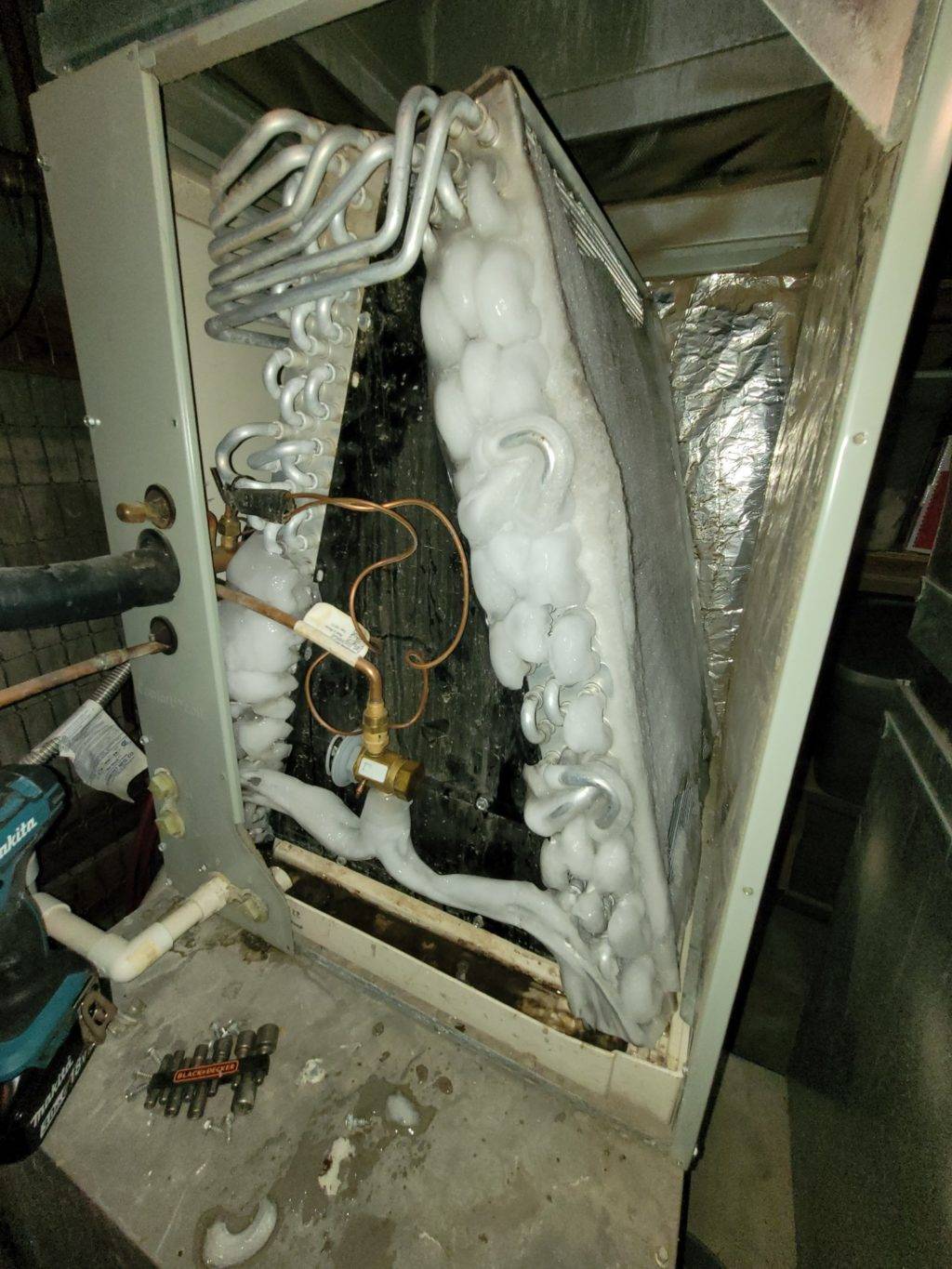
Image Source: www.manmadediy.com
Reasons Why Your AC Freezes
You might ask, “Why is my air conditioner freezing up?” There are a few main reasons why the inside part of your air conditioner, called the evaporator coil, gets covered in ice. This coil is supposed to get very cold to take heat and water out of the air in your home. But if something goes wrong, it can get too cold, causing water vapor in the air to freeze onto the coil.
Low Level of Special Cooling Liquid
Your AC uses a special liquid or gas called refrigerant (sometimes called coolant). This liquid moves through the system, picking up heat from inside your home and releasing it outside. If there isn’t enough of this liquid, the pressure in the system drops. When the pressure drops, the coil gets much colder than it should. This makes the moisture in the air turn into ice on the coil. A low level of this liquid usually means there is a leak somewhere in the system. This is a big reason for ice forming.
Not Enough Air Moving
Air needs to flow freely over the cold coil inside your home. This airflow is important for two reasons:
1. It helps the coil pick up heat from your home’s air.
2. It stops the coil from getting too cold by warming it up a little bit as the air passes over it.
If not enough air moves across the coil, it gets too cold, and ice forms. Why might air not move enough?
- Dirty Air Filter: This is the most common reason for poor airflow. The filter catches dirt and dust. If you don’t change it often, the dirt builds up. This block makes it hard for air to get into the AC system. Think of trying to breathe through a thick, dirty cloth – it’s hard!
- Blocked Vents: The air from your AC comes out of vents in your rooms. The air goes back to the AC through return vents. If these vents are blocked by furniture, curtains, or even just dust build-up, air cannot move properly. This cuts down the amount of air getting to the indoor unit.
- Issues with the Fan Motor: The fan inside your indoor unit blows air over the coil and pushes the cool air into your home. If the fan motor is weak, broken, or the fan itself is dirty, it won’t move enough air.
- Ductwork Problems: The air moves through tunnels called ducts. If the ducts are blocked, have leaks, or are too small, the airflow is reduced.
Other Possible Reasons
- Running the AC When It’s Too Cold Outside: Air conditioners are made to work in certain temperatures. If the temperature outside is too low (usually below 60-65°F or 15-18°C, but check your unit’s manual), the pressure and temperature in the system can drop too much, causing the coil to freeze.
- Mechanical Problems: Sometimes parts like the expansion valve or capillary tube, which help manage the flow of the special cooling liquid, can get stuck or blocked. This can cause pressure and temperature issues leading to freezing.
Understanding why your air conditioner is freezing up is the first step to fixing it and stopping it from happening again. It’s often a sign that something isn’t quite right with your system.
Identifying a Frozen AC Coil
How do you know if your AC coil is frozen? There are clear signs of a frozen AC coil that you can look for. Knowing these signs helps you act quickly to prevent more problems.
Weak or No Cold Air
This is often the first thing people notice. Your thermostat is set low, the AC is running, but the air coming out of the vents isn’t cold. Or maybe there’s very little air coming out at all. The ice on the coil acts like a wall, stopping heat transfer and blocking airflow.
Seeing Ice on the Unit or Pipes
Look at the indoor unit of your AC (usually in a closet, attic, or basement). If you can safely open the panel or see the coil, look for ice build-up. You might see ice directly on the coil itself, or on the copper pipes that connect to it. Sometimes the ice can be thick, completely covering the coil. You might also see ice or frost on the larger copper pipe outside near your outdoor unit. This is the suction line, and it should feel cold and perhaps damp when the AC is running correctly, but not have visible ice.
Water Leaking
As the ice melts (even a little bit while the unit is trying to run), the water has to go somewhere. If the ice builds up too much or melts too fast, the drain pan under the indoor unit can overflow. This leads to water dripping from the indoor unit or leaking through your ceiling.
The AC Runs Constantly
If the AC coil is frozen, the system can’t cool your home properly. The thermostat will still sense that the house isn’t cool enough, so it keeps telling the AC to run. This means the unit might run for a very long time without turning off, trying to reach the set temperature but failing because of the ice.
Unusual Noises
Sometimes, as ice forms or melts, you might hear strange sounds. These could be bubbling, hissing, or even cracking sounds coming from the indoor unit as the ice shifts or water runs off.
If you notice one or more of these signs, it’s very likely your AC coil is frozen. The next step is to turn off the unit immediately.
Steps for How to Defrost Your AC Unit (The Manual Way)
When you see signs of a frozen coil, you must stop the AC from running right away. Running a frozen unit can cause serious harm. The simplest and safest way to defrost AC unit is to turn it off and let the ice melt on its own. This is the core of how to manually defrost AC.
Step 1: Turn Off the System at the Thermostat
Go to your thermostat and change the setting from “Cool” to “Off.” Do not just raise the temperature setting. You need the compressor (the part that makes things cold) and the outdoor unit to stop running completely. Leaving the fan setting on “Auto” or “On” might actually help melt the ice a bit faster by blowing indoor air over the coil, but it’s safer and often recommended to turn the whole system off (both cooling and fan) to make sure the compressor doesn’t try to start again.
Step 2: Turn Off Power to the Unit
This is a very important safety step. You need to turn off the power supply to both the indoor and outdoor units. Find the breaker box in your home. Look for the breaker that controls the air conditioner or HVAC system. It might be labeled “AC,” “Furnace,” “Air Handler,” or “Heat Pump.” Flip the switch to the “Off” position. There is also often a shut-off switch near the outdoor unit – it might look like a light switch in a box or a pull-out block. Turn this off too. This makes sure that no part of the AC can accidentally turn on while the ice is melting, which could be dangerous or cause damage.
Step 3: Wait for the Ice to Melt
Now, you wait. This is the main part of how long it takes ice to melt on AC. You are letting the ice melt naturally from the air temperature around the coil. Keep the power off during this time. It’s best to leave the indoor unit’s access panel open if you can do so safely (sometimes they are just held on by clips or screws). This allows the warmer air in your home to reach the coil better.
Step 4: Help the Melting Process (Optional)
You can speed up the melting slightly by increasing airflow. If you left the power on at the breaker but turned the AC cooling off at the thermostat, you could set the thermostat’s fan setting to “On” (not “Auto”). This blows room temperature air over the coil. However, turning off the power at the breaker is safer. If the power is off at the breaker, you could use a portable fan to blow air directly onto the coil if you have safe access.
Do NOT:
* Use a hairdryer or heat gun. The sudden heat can damage the coil.
* Pour hot water on the coil. This can cause a sudden temperature shock and potential damage, plus you’ll have a lot of water to deal with at once.
* Try to chip or scrape the ice off. The fins on the coil are very delicate and easily bent or broken. Damaging the fins reduces the coil’s ability to transfer heat even when it’s not frozen.
Step 5: Check for Water
As the ice melts, a lot of water will be created. Make sure the drain pan under the indoor unit is not overflowing. You may want to place towels or buckets around the unit to catch any drips, especially if there was a lot of ice. Check that the drain line (a pipe usually made of PVC that carries the water away, often outside) is not blocked.
Step 6: Ensure All Ice is Gone
Be patient. Do not turn the power back on until you are absolutely sure all the ice and frost have completely melted from the coil and the pipes. This can take several hours. Look closely at all parts of the coil. Feel the pipes connected to it. They should be at room temperature and dry.
Step 7: Address the Cause
Once the ice is completely gone, you can turn the power back on at the breaker box and the outdoor switch. Before turning the AC back to “Cool,” you should try to figure out why it froze in the first place. Putting it back to “Cool” without fixing the cause means it will just freeze up again.
Determining How Long Defrosting Takes
So, how long does it take ice to melt on AC? There’s no single answer because it depends on several things.
Factors Affecting Defrost Time
- How Much Ice There Is: A thin layer of frost will melt much faster than several inches of solid ice covering the entire coil and pipes. If the coil is completely encased in ice, it will take a long time.
- Temperature of the Air Around the Coil: The warmer the air blowing over the coil (or just surrounding it if the fan is off), the faster the ice will melt. If your house is warm, the ice will melt faster than if it’s cool. Leaving the access panel open usually helps the warmer room air reach the coil.
- Airflow: If you are using the fan on the indoor unit or a separate fan to blow air over the coil while the power is off (safely), this will significantly speed up the melting process compared to just letting it sit.
- Humidity: Very humid air can sometimes slow down melting slightly, but temperature and airflow are bigger factors.
Estimated Timeframes
Given these factors, the time it takes for the ice to melt completely can range from a couple of hours to a full day or even longer in extreme cases.
- Light Frost: Might melt in 1-3 hours.
- Moderate Ice: Could take 3-8 hours.
- Heavy Ice Build-up: This could take 8-24 hours or even more, especially if there’s no airflow helping the process.
It’s important to be patient. Don’t rush the process. Turning the unit back on too soon, while there is still ice, can immediately cause it to freeze again and potentially harm the system.
Why Won’t My AC Defrost?
If you’ve waited for many hours (say, 8-10 hours) with the power off and there is still a large amount of ice, or it doesn’t seem to be melting at all, here are some possible reasons:
- Extreme Ice Build-up: You might just have a truly massive amount of ice that needs more time.
- Very Cold Ambient Temperature: If the area where your indoor unit is located is unusually cold (like an unheated basement in winter), the air isn’t warm enough to melt the ice effectively.
- Residual Power: Double-check that the power is truly off at the breaker and any outdoor switch. If the fan is still running, or the compressor is somehow cycling, it could be preventing full melting or causing water to refreeze.
- Blocked Drain: If the melting water has nowhere to go because the drain line is blocked, it might pool around the coil and potentially refreeze, making it seem like the ice isn’t melting when it’s just changing form or location.
If after a full 24 hours with power off in a reasonably warm space, significant ice remains, there might be an unusual issue, but this is rare. Most ice will eventually melt if the unit is off and the power is disconnected.
AC Frozen Coil Troubleshooting (After Melting)
Once the ice is gone, you need to take steps to figure out why it froze. Simply defrosting doesn’t fix the root problem, and the coil will just freeze up again if you turn the AC back on without addressing the cause. This is the core of AC frozen coil troubleshooting.
Start with Simple Checks
Before calling a repair person, check the easy things yourself.
- Check the Air Filter: This is the most common culprit. Pull out your air filter. Is it thick with dust and dirt? If yes, this was likely a major reason for poor airflow. Replace it with a clean, new filter. Make sure you put the new filter in facing the correct direction (there are arrows on the filter showing the direction of airflow towards the air handler).
- Check Return Vents: Walk around your house. Make sure all the air return vents (usually larger than the supply vents where cold air comes out) are not blocked by furniture, rugs, or anything else. Make sure the dampers inside the vents are open if your system has them.
- Check Supply Vents: While less likely to cause freezing, ensure most supply vents are open. Closing too many vents can also reduce overall airflow through the system.
- Check the Outdoor Unit: Look at the outdoor unit (the condenser). Is it clean? Are the fins (the metal slats around the sides) packed with dirt, leaves, or grass clippings? Blockages here make the unit work harder and can impact the system balance, sometimes contributing to freezing, though less directly than indoor airflow issues. You can gently rinse the fins with a garden hose with the power off. Also, make sure there’s nothing blocking airflow around the unit (bushes, fences, etc.).
When to Suspect a Bigger Problem
If the air filter is clean, vents are open, and the outdoor unit seems okay, the freezing is likely caused by something more serious.
- Low Refrigerant: As mentioned earlier, this is a very common cause of freezing after a dirty filter. You cannot add refrigerant yourself. It requires special tools, knowledge, and licensing. A leak must be found and fixed before adding more refrigerant.
- Mechanical Part Failure: Issues with the fan motor (indoor or outdoor), the expansion valve, or the compressor can lead to freezing.
When to Call a Professional
You should call a qualified HVAC technician for frozen AC coil repair if:
* You found a dirty filter and replaced it, but the unit freezes again after running for a while.
* You checked the filter and vents, and they were clean and clear.
* You suspect a refrigerant leak (you might hear a hissing sound, see oily residue near connections, or notice the system just doesn’t cool well even when not frozen).
* You hear strange noises from the indoor or outdoor unit.
* The outdoor unit’s fan isn’t spinning (make sure power is on first).
* The unit seems old and hasn’t had maintenance in a long time.
A professional technician has the tools to check refrigerant levels and pressure, find leaks, diagnose motor or valve problems, and properly clean coils that might be too dirty for simple home cleaning. Frozen AC coil repair often requires these specialized skills.
Ways to Prevent Air Conditioner From Freezing
Stopping your AC from freezing in the first place is much better than dealing with the problem after it happens. You can take steps to prevent air conditioner from freezing. Most of these involve regular care and maintenance.
Change Your Air Filter Regularly
This is the single most important and easiest thing you can do. Check your filter every month, especially during the cooling season. If it looks dirty, change it. Depending on the type of filter and how much you use your AC, you might need to change it every 1-3 months. A clean filter ensures good airflow, which is key to preventing freezing.
Keep Vents and Returns Clear
Make sure that furniture, rugs, curtains, or anything else isn’t blocking the vents where cool air comes out or, more importantly, the return vents where air is pulled back into the system. Good airflow is needed on both sides of the loop.
Keep the Outdoor Unit Clean
The outdoor unit needs to release heat efficiently. Keep bushes and debris away from it (at least 2 feet of clear space recommended). Gently rinse the fins with a garden hose once or twice a year to remove accumulated dirt and grass clippings, but only when the power to the unit is completely off.
Schedule Professional Maintenance
Get your AC system checked by a qualified technician once a year, preferably before the cooling season starts. They will perform tasks like:
* Checking and cleaning coils (indoor and outdoor).
* Checking refrigerant levels and pressures.
* Looking for and fixing potential refrigerant leaks.
* Checking the fan motor and other electrical components.
* Checking the drain line to ensure it’s clear.
* Making sure the thermostat is working correctly.
Regular maintenance catches small problems before they become big ones, like freezing.
Do Not Run the AC in Very Low Outdoor Temperatures
Be aware of the outdoor temperature. If it drops below the recommended operating temperature for your specific unit (check your manual, but often around 60-65°F or 15-18°C), avoid running the AC. Running it in temperatures that are too low increases the risk of coil freezing because the system pressures drop too much.
Consider Airflow Improvements
If your home has consistently poor airflow even with clean filters and clear vents, an HVAC professional might be able to suggest ways to improve the ductwork or upgrade your fan motor if needed.
Taking these simple steps can greatly reduce the chance of your AC coil freezing up, saving you the hassle of defrosting and potentially costly repairs.
Is It Bad to Run a Frozen AC?
We touched on this in the introduction, but it’s worth going into more detail because it’s crucial to understand why you must turn off a frozen unit immediately. The answer to “Is it bad to run a frozen AC?” is a definite yes. Continuing to run an air conditioner when the coil is frozen can cause serious damage to expensive components.
Damage to the Compressor
The most significant risk is harm to the compressor. The compressor is often called the “heart” of the AC system because it pumps the special cooling liquid (refrigerant). When the coil is frozen, the refrigerant can’t absorb heat properly inside your home. This can cause the refrigerant to return to the compressor in a liquid state instead of a gas. Compressors are designed to pump gas, not liquid. Pumping liquid can cause mechanical damage inside the compressor, leading to failure. Replacing a compressor is one of the most expensive AC repairs, often costing thousands of dollars.
Reduced Cooling Capacity
This is less “damage” and more “lack of function.” With ice blocking the coil, the AC can’t pull heat and moisture out of the air effectively. So, even though the unit is running, your house isn’t getting cooler. You’re just wasting electricity and potentially harming the unit.
Water Damage
As mentioned earlier, a frozen coil will eventually melt. If there’s a lot of ice, or if the drain pan or drain line is blocked (which can happen when ice fills everything up), the melting water can overflow. This water can leak into your home, causing damage to ceilings, walls, floors, and possibly leading to mold growth.
Strain on Other Components
The fan motor may have to work harder to push air through the ice blockage. Other electrical components might also be stressed if the system is trying to operate under unusual conditions.
In short, running an AC with a frozen coil provides no cooling benefits and puts the entire system at risk of costly breakdowns. Turning it off and letting it defrost is always the correct first step.
Repairing a Frozen AC Coil
Once the ice has melted and you’ve identified the likely cause, the necessary frozen AC coil repair depends entirely on why it froze. As mentioned, you can handle simple things like replacing a dirty filter or unblocking vents yourself. However, many causes require professional help.
What a Professional Technician Will Do
If you call a technician because your AC froze up and the easy checks didn’t solve it, here’s what they will typically do:
- Verify Defrost: First, they will make sure the ice has completely melted.
- Inspect the System: They will examine the indoor and outdoor units.
- Check Airflow: They will confirm the filter is clean and check for obvious airflow blockages in the unit or readily accessible ductwork. They might measure airflow if they suspect a fan issue.
- Check Refrigerant Levels: Using specialized gauges, they will measure the pressure of the refrigerant in the system. Low pressure indicates a potential leak or that the system was undercharged initially.
- Leak Detection: If refrigerant is low, they will use tools (like electronic leak detectors, UV dye, or soap bubbles) to try and find where the refrigerant is leaking out. Refrigerant is in a sealed system, so if it’s low, it means it leaked somewhere.
- Repair the Leak: If they find a leak, they must repair it. This might involve soldering a pipe, replacing a valve, or fixing a coil. Fixing the leak is crucial; simply adding more refrigerant without fixing the leak is a temporary fix that violates environmental laws and wastes money.
- Refrigerant Recharge: After fixing any leaks, they will add the correct type and amount of refrigerant to the system based on the manufacturer’s specifications. This is called recharging the system.
- Inspect Other Components: They will also check the fan motors, capacitor, contactor, and other electrical parts to ensure they are working correctly and not contributing to the problem. They might clean the coils more thoroughly than you can with just a hose if they are very dirty.
When Repair Is Needed
Professional repair is almost always needed if the cause of the freezing is:
* A refrigerant leak.
* A problem with the compressor.
* A faulty expansion valve or other refrigerant-handling component.
* A malfunctioning indoor or outdoor fan motor.
* Significantly dirty coils that require professional cleaning tools.
* Ductwork issues that cannot be easily fixed.
These repairs are complex, require specific knowledge and tools, and involve handling chemicals (refrigerant) that must be managed safely and legally.
In summary, for frozen AC coil repair, simple fixes are DIY, but anything pointing to refrigerant issues, motor problems, or complex blockages means it’s time to call a professional.
Frequently Asked Questions About Defrosting Your AC
Here are some common questions people ask about frozen air conditioners.
h4 Can I just run the fan to melt the ice faster?
Yes, running the indoor fan only (with the cooling turned off and power confirmed off at the breaker for safety first, then turned back on for just the fan) can help speed up the melting process by blowing warmer indoor air over the coil. However, ensure the compressor and outdoor unit are completely off first. Turning off the main power at the breaker is the safest way to ensure everything is off during the initial waiting period.
h4 How often should I check my AC for ice?
You don’t need to check for ice regularly unless you suspect a problem. Instead, focus on the prevention steps: check your air filter monthly, keep vents clear, and schedule annual maintenance. If you notice the AC isn’t cooling well, airflow is weak, or you see water leaks, then it’s time to check for ice.
h4 What should I do if water overflows while the ice is melting?
Immediately turn off the power to the unit at the breaker if you haven’t already. Use towels, buckets, and mops to clean up the water and prevent damage. Check the drain pan under the indoor unit and the drain line to see if they are clogged. A wet/dry vacuum can sometimes be used to clear a clogged drain line opening (usually outside).
h4 How can I tell if the ice is completely gone?
Look closely at the coil and the copper pipes attached to it. They should appear dry and be at room temperature, not visibly cold or covered in frost or ice. Feel the pipes; they should not feel significantly colder than the surrounding air. It’s better to wait a bit longer than to turn it back on too soon.
h4 What if my AC freezes up right after a technician worked on it?
Call the technician back immediately. If the unit freezes shortly after service, it suggests the underlying problem wasn’t fixed correctly, or a new issue was accidentally introduced.
h4 Is a little bit of ice okay?
No, any ice build-up on the evaporator coil indicates a problem. The coil is not supposed to operate below freezing temperatures in a way that causes ice to form. Even a little ice suggests poor airflow or a system issue that will likely get worse and lead to a full freeze-up.
Conclusion
Discovering that your air conditioner has frozen up can be frustrating, leaving you wondering, “How long to defrost air conditioner?” The key takeaway is patience and caution. Manually defrosting your AC by turning off the power and allowing the ice to melt naturally is the safest first step. This process can take anywhere from a few hours to over a day, depending on how much ice has formed.
Once the ice is gone, it is essential to find out why it froze. Simple causes like a dirty air filter or blocked vents can often be fixed yourself. However, if the freezing is due to low refrigerant (which usually means a leak), mechanical failure, or complex airflow problems, you will need professional help for frozen AC coil repair.
Remember, running an AC with a frozen coil is bad for the unit and can lead to expensive damage, especially to the compressor. Taking steps to prevent air conditioner from freezing in the first place through regular filter changes, clear vents, and annual professional maintenance is the best way to keep your system running smoothly and avoid the headache of a frozen coil.