
Image Source: wg.scene7.com
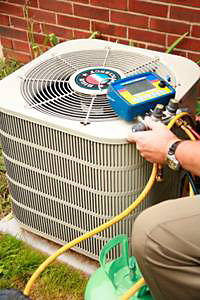
The Truth: How Long Does Freon Last In Air Conditioner?
Does air conditioner refrigerant, often called Freon, get used up like gas in a car? How often does AC need Freon recharge? The simple truth is, Freon, or refrigerant, should last for the entire life of your air conditioner. It is not something that gets used up during normal operation. If your AC unit is low on refrigerant, it means there is a leak somewhere in the system. You do not need to add refrigerant unless there is a problem causing it to escape.
What is AC Refrigerant?
Think of refrigerant as the special sauce that makes your air conditioner cool your house. It’s a chemical compound that moves heat. Your AC unit does not make cold air. It takes heat from inside your home and moves it outside. Refrigerant helps it do this job.
The refrigerant cycles through your AC system in a closed loop. It changes from a liquid to a gas and back again.
How Refrigerant Cycles
The Indoor Part (Evaporator)
- The refrigerant starts as a cool liquid.
- It flows through coils inside your house (the indoor unit).
- Warm air from your home blows over these coils.
- The refrigerant absorbs the heat from the air.
- As it absorbs heat, the liquid refrigerant turns into a cool gas.
- This gas then travels in a copper pipe to the outdoor unit.
The Outdoor Part (Condenser)
- The cool refrigerant gas reaches the outdoor unit.
- It goes through a compressor, which squeezes the gas.
- Squeezing the gas makes it hot. Very hot.
- This hot gas flows through coils in the outdoor unit.
- A fan blows outdoor air over these hot coils.
- The hot gas gives off its heat to the outside air.
- As it loses heat, the gas turns back into a warm liquid.
- This liquid then flows back to the indoor unit to start the cycle again.
This cycle repeats over and over. The refrigerant just keeps moving heat. It should stay inside the sealed system forever. It does not get used up or wear out.
Why Does Air Conditioner Lose Freon?
Since refrigerant stays in a closed loop, the only way your AC unit can lose it is if there is a hole or crack in the pipes or components. This is called a refrigerant leak.
Think of it like a car tire. The air in your tire should stay there unless there is a puncture. Refrigerant in your AC is the same. It stays put unless there’s a leak.
Leaks can happen for many reasons:
- Old age: Parts wear out over time. Metal pipes can get thin. Seals can dry out and crack.
- Corrosion: The metal pipes can rust or corrode, especially in certain environments or if exposed to certain chemicals.
- Vibration: The AC unit vibrates when it runs. This constant shaking can loosen connections or cause pipes to rub together and wear thin.
- Damage: The outdoor unit can be hit by things like lawnmowers, hailstones, or falling branches. This can damage the coils or pipes.
- Poor Installation: If the AC system was not put in correctly, connections might not be tight enough. This can lead to slow leaks over time.
- Manufacturing Defects: Sometimes, a part might just be made wrong and have a small hole from the start.
- Formicary Corrosion: This is a special type of corrosion that makes tiny pinholes in copper pipes. It’s often linked to indoor air quality issues or cleaning products used nearby.
A leak, no matter how small, lets refrigerant escape. When enough refrigerant leaks out, the AC system cannot move heat properly anymore.
Signs of Low AC Refrigerant
How can you tell if your AC system is running low on refrigerant? There are several common signs. If you notice any of these, it is time to call a technician.
Warm Air Blowing
- This is the most obvious sign.
- The air coming from your vents feels cool but not truly cold.
- The AC runs and runs, but your home never gets as cool as you want it.
- Air conditioner stopped cooling low Freon is a direct result. The system cannot absorb enough heat inside to make the air cold.
Ice on Coils
- Check the large copper pipe and the indoor unit’s coil (the evaporator coil).
- If there is not enough refrigerant flowing through, the pressure drops too low.
- This causes the coil to get too cold, below freezing.
- Moisture from the air freezes onto the coil.
- You might see ice forming on the copper lines or the indoor unit itself.
- This ice blocks airflow and makes the problem worse.
Hissing or Bubbling Noises
- Sometimes, you can actually hear the refrigerant leaking.
- A hissing sound might come from the leak point itself.
- A bubbling or gurgling sound inside the pipes can mean there is air or moisture mixed with the refrigerant, or that the refrigerant level is very low, causing it to boil differently.
AC Unit Runs Constantly
- If the system is low on refrigerant, it struggles to cool your home.
- It has to run for much longer periods to try and reach the temperature set on the thermostat.
- This leads to higher energy bills and wears out the system faster.
Higher Energy Bills
- An AC unit that is low on refrigerant is not working efficiently.
- It uses more electricity to produce less cooling.
- If your power bills jump without a change in usage habits, low refrigerant could be the cause.
Puddles of Water Near the Indoor Unit
- While AC units naturally produce condensation (water) that should drain away, excessive water or puddles near the indoor unit can be a sign of a frozen coil melting.
- When the coil freezes due to low refrigerant and then thaws during a cycle off, it can create more water than the drain system can handle, leading to overflow.
Seeing any of these signs means your system likely has a leak and is low on refrigerant. Just adding more refrigerant without fixing the leak is a waste of money and bad for the environment.
Different Types of AC Refrigerant
Not all air conditioners use the same type of refrigerant. Over the years, different types have been used, mainly because of environmental concerns.
R-22 (Freon)
- This was the most common type for many years.
- “Freon” is actually a brand name for R-22 and other refrigerants made by DuPont.
- R-22 is an HCFC (hydrochlorofluorocarbon).
- It was found to damage the Earth’s ozone layer.
- Because of this, R-22 production has been phased out.
- It is now very expensive and hard to find.
- Adding R-22 to an old system with a leak might not be the best long-term solution.
R-410A (Puron, etc.)
- This is the most common type used in newer AC systems.
- Brand names include Puron, Genetron AZ-20, and others.
- R-410A is an HFC (hydrofluorocarbon).
- It does not harm the ozone layer.
- However, it is a potent greenhouse gas, meaning it contributes to climate change if it leaks into the atmosphere.
- Future regulations may eventually phase out R-410A too, though that is still some time away.
- R-410A systems operate at higher pressures than R-22 systems. This means you cannot simply put R-410A into an old R-22 unit; the systems are built differently.
Newer Refrigerants (R-32, R-454B, etc.)
- The HVAC industry is developing and starting to use refrigerants with lower global warming potential (GWP).
- R-32 is one example being used in some newer equipment.
- These newer types aim to be more environmentally friendly.
- If you buy a new AC unit in the future, it might use one of these newer refrigerants.
It is important to know what type of refrigerant your AC system uses. This information is usually on a sticker on the outdoor unit. When you call a technician, tell them your unit’s age and the refrigerant type if you can. This helps them bring the right supplies.
Checking AC Refrigerant Levels
You cannot simply look at a gauge on your AC unit like a fuel tank to see the refrigerant level. Checking AC refrigerant levels requires special tools and training. It is not a DIY job.
Here’s why you need a professional:
- Special Gauges: Technicians use specific manifold gauges designed for HVAC systems. These gauges measure the pressure of the refrigerant at different points in the system.
- Pressure Readings Matter: The correct refrigerant level is determined by measuring the pressure while the system is running, taking into account the outdoor temperature and indoor humidity. There is no single “correct” pressure number; it changes based on conditions.
- System Knowledge: A technician knows what the pressure readings should be for your specific AC model and the current weather conditions. They use charts and their experience to figure out if the charge is low, correct, or even too high (which is also a problem).
- Safety: Refrigerants are chemicals. Handling them requires care to avoid frostbite and other dangers. The system is also under pressure.
- Legal Requirements: In many places, it is illegal for someone without a proper certification (like EPA certification in the US) to buy or handle refrigerants, especially R-22.
When a technician checks your refrigerant, they connect their gauges to service ports on the outdoor unit. They will let the system run for a bit to get stable readings. Based on these pressure readings compared to what is expected for your system, they can tell if the refrigerant charge is low.
AC Refrigerant Leak Detection
If the technician finds that your system is low on refrigerant, the next step is to find the leak. Simply adding more refrigerant without finding and fixing the leak is a temporary fix. The refrigerant will just leak out again.
AC refrigerant leak detection can involve several methods:
Electronic Leak Detectors
- This is the most common method.
- The technician uses a handheld electronic tool.
- The tool has a sniffer probe that detects the presence of refrigerant in the air.
- The technician moves the probe along pipes, connections, and coils.
- If the detector finds refrigerant, it usually beeps or lights up faster or louder.
- These detectors are very sensitive and can find even small leaks.
UV Dye and Black Light
- A special fluorescent dye is added to the refrigerant system.
- The dye mixes with the refrigerant.
- If there is a leak, the dye will escape with the refrigerant.
- The technician then uses a UV (black) light to scan the system components.
- The dye glows brightly under the UV light, making the leak point visible as a colorful stain.
- This method is good for finding leaks on visible parts of the system. It takes time for the dye to circulate and show up at the leak point.
Soap Bubbles
- This is a simple, old-school method, still useful for pinpointing a leak found by other means.
- The technician sprays a special soap solution (or sometimes just dish soap mixed with water) onto areas suspected of leaking, like joints or valve stems.
- If refrigerant is leaking from that spot, it will cause bubbles to form in the soap solution, much like finding a leak in a bicycle tire with water.
Nitrogen Pressure Test
- If the leak is hard to find, or if major repairs were done, the technician might remove the refrigerant and add nitrogen gas to the system.
- Nitrogen is an inert gas (it does not react with anything) and is often used to test for leaks under pressure.
- They pressurize the system with nitrogen to a certain level and then monitor the pressure gauge.
- If the pressure drops over time, it confirms there is a leak, even if the exact spot is not yet found. This also helps locate larger leaks quickly with the soap bubble method.
- Important: Nitrogen is just for testing pressure and finding leaks. You cannot run the AC system with nitrogen in it.
Ultrasonic Leak Detectors
- These detectors listen for the high-pitched sound that escaping gas makes as it passes through a small hole.
- They can be useful in noisy environments where other methods might be difficult.
Finding the leak can sometimes be quick and easy, like finding a clear stain with UV dye. Other times, it can be very difficult, requiring hours of searching, especially for very small leaks in hard-to-reach places like inside walls or under insulation.
Fixing AC Refrigerant Leak
Once the leak is found, it must be fixed. Fixing AC refrigerant leak is crucial before adding more refrigerant. The repair method depends on where the leak is and what caused it.
Repairing the Leak
- Soldering/Brazing: If the leak is in a copper pipe or a joint, the technician may be able to repair it by soldering or brazing the metal closed. This involves heating the area and applying a filler metal that melts and seals the hole or crack.
- Replacing the Part: If the leak is in a component like the coil (indoor or outdoor), the Schrader valve (where gauges connect), or the compressor seal, the entire faulty part usually needs to be replaced. Coils, in particular, often have many small leaks that cannot be individually patched. Replacing a coil is a significant repair.
- Tightening Fittings: Sometimes, a leak is simply due to a loose connection. The technician can tighten the fitting to seal it.
Evacuation and Recharge
- After the leak is fixed, the system is empty or has air and moisture in it. Air and moisture are bad for the AC system.
- The technician connects a vacuum pump to the system.
- The vacuum pump pulls all the air and moisture out. This is called evacuation. It is very important to get a deep vacuum to ensure the system is clean and dry.
- Only after a proper evacuation is complete can new refrigerant be added.
- The technician adds the correct type and amount of refrigerant for your specific AC unit. The amount is critical; too little or too much causes problems. They weigh the refrigerant as they add it, based on the system’s specifications found on the unit’s data plate.
Simply adding refrigerant without fixing the leak is like putting a band-aid on a deep cut. It might help for a little while, but the problem is still there and will get worse. The system will lose refrigerant again, leading to the same issues and potential damage to the compressor.
Cost to Add Freon to Home AC
Understanding the cost to add Freon to home AC involves more than just the price of the refrigerant itself. The total cost includes:
- Service Call Fee: The basic fee for the technician to come to your home. This varies by company and location.
- Leak Detection Cost: The time it takes the technician to find the leak using the methods described earlier. This can range from a quick check to several hours of searching.
- Cost of the Repair: This is often the largest part of the bill. Repairing a small pipe leak is relatively inexpensive. Replacing a major component like a coil or compressor is costly, potentially thousands of dollars.
- Cost of the Refrigerant: Refrigerant is sold by the pound. The price per pound varies greatly depending on the type (R-22 is much more expensive than R-410A now) and current market prices. Older systems using R-22 will have a significantly higher refrigerant cost. The amount needed depends on how much leaked out and the size of your AC system.
- Labor for Evacuation and Recharge: The time it takes to properly vacuum the system and add the new refrigerant.
Estimated Cost Breakdown (Very Rough Estimates – Costs Vary Widely)
| Service Item | Estimated Cost Range ($) | Notes |
|---|---|---|
| Service Call Fee | $75 – $150+ | Basic visit charge. |
| Basic Leak Check (Quick) | Included in service fee | Visual inspection, quick sniffer test. |
| Thorough Leak Detection | $200 – $500+ | Multiple methods, takes significant time. |
| Adding Refrigerant (No Leak Fix) | $200 – $600+ | “Top off” – Not recommended, only a very temporary fix. Cost per pound plus labor. |
| Fixing a Small Pipe Leak | $300 – $800+ | Includes brazing, evacuation, and recharge. |
| Replacing a Schrader Valve | $250 – $500+ | Includes valve replacement, evacuation, and recharge. |
| Replacing an Evaporator Coil | $1,500 – $4,000+ | Major repair, includes part cost, labor, evacuation, and recharge. |
| Replacing a Condenser Coil | $2,000 – $5,000+ | Major repair, includes part cost, labor, evacuation, and recharge. |
| Replacing the Compressor | $1,000 – $3,000+ | Can be a major repair, includes part, labor, evacuation, recharge. |
These costs are rough estimates. Actual prices depend on your location, the specific company, the type of refrigerant, the complexity of the leak, and the age/type of your system.
Because R-22 is so expensive and hard to get, repairing an older system with an R-22 leak, especially a large leak or a coil leak, might be almost as expensive as replacing the entire AC unit with a new, more efficient one that uses R-410A or another newer refrigerant. A good technician will discuss these options with you.
Interpreting Low Refrigerant Issues
When your air conditioner stopped cooling low Freon is usually the direct cause. As refrigerant leaks out, the system loses its ability to transfer heat effectively.
Imagine trying to cool a room with an ice pack. If you have a full, large ice pack, it will absorb a lot of heat. If you only have a tiny chip of ice, it won’t do much cooling. Similarly, if your AC has only a small amount of refrigerant circulating, it can only absorb a small amount of heat from your home.
This leads to:
- Reduced Cooling Capacity: The AC unit cannot make the air as cold. The temperature difference between the air going into the indoor unit and the air coming out is smaller than it should be.
- Longer Run Cycles: The thermostat keeps calling for cooling because the set temperature is not reached. The unit runs almost non-stop, trying to do its job with insufficient “working fluid.”
- Potential System Damage: The compressor, the heart of the AC system, relies on the circulating refrigerant for cooling and lubrication. Running the compressor while the refrigerant charge is low can cause it to overheat and eventually fail. Compressor replacement is one of the most expensive AC repairs.
Low refrigerant is not just about comfort; it’s about the health of your entire AC system. Ignoring the signs can lead to much more costly repairs down the road, or even the need to replace the whole unit prematurely.
How Often Does AC Need Freon Recharge?
This is a key point. As we established, your AC does not need a regular “Freon recharge” like you add gas to a car or change oil. If your AC is working correctly and not leaking, the refrigerant level should stay the same year after year.
You only need refrigerant added if:
- There is a confirmed leak that has been found and fixed.
- A component holding refrigerant was replaced (like a coil or compressor).
- The system was improperly charged during installation (rare, but possible).
Think of the refrigerant level as needing to be checked only when there are symptoms of a problem (like the ones mentioned earlier). A professional maintenance check might include verifying pressure readings as part of a broader system health check, but they should only add refrigerant if the readings are low AND they find a leak.
Some less reputable companies might try to sell you a “Freon top-off” as part of routine maintenance. This is generally unnecessary and potentially harmful if the system was already full. If the system is genuinely low, they should be looking for a leak, not just adding refrigerant. Always question why refrigerant needs to be added. The answer should always involve finding and fixing a leak.
Grasping the Problem: It’s the Leak, Not Consumption
It is essential to grasp this core concept: AC refrigerant is not consumed. The problem is never that the refrigerant “ran out” from normal use. The problem is always a leak.
Focusing on just adding refrigerant without fixing the leak is like repeatedly inflating a slow-leaking tire instead of patching it. You keep losing air (refrigerant), the tire (AC) underperforms, and eventually, the tire (compressor) could be damaged from running on low pressure.
A responsible technician will:
- Check the system’s performance.
- Look for signs of low refrigerant.
- If low refrigerant is suspected, perform leak detection.
- Locate the leak.
- Explain the needed repair to fix the leak.
- Get your approval for the repair.
- Fix the leak.
- Evacuate the system properly.
- Add the correct type and amount of refrigerant.
- Test the system to ensure it is working correctly.
They should not just add refrigerant without checking for and addressing the leak.
When to Consider Repair vs. Replacement
If your AC system is low on refrigerant due to a leak, you face a decision: repair the leak and recharge the system, or replace the entire AC unit? This decision often comes down to:
- Age of the System: If your system is old (10-15+ years), especially if it uses R-22, repairing a costly leak (like a coil) might not be wise. An old system is less efficient and other parts are likely nearing the end of their life.
- Type of Refrigerant: If your system uses R-22, the cost of the refrigerant itself is very high. This makes recharging the system much more expensive than with R-410A.
- Cost of the Repair: How much does it cost to fix the specific leak? A small pipe repair might be worthwhile. A major component replacement (coil, compressor) on an old system might not be.
- System Efficiency: Newer AC units are much more energy-efficient than older ones. Replacing an old system can significantly lower your electricity bills, which can offset the cost of the new unit over time.
- Future Reliability: Repairing one leak does not guarantee that other parts of an old system won’t fail soon after.
A good technician will help you weigh these factors. They can tell you the cost of the repair versus the estimated cost of a new, comparable system. They can also explain the potential energy savings of upgrading. Sometimes, replacing the system is the more economical decision in the long run.
Maintaining Your AC System
Regular maintenance helps prevent issues, including leaks. While maintenance cannot stop all leaks, it can help catch problems early.
- Annual Check-ups: Have a qualified technician inspect your system once a year, ideally before the cooling season starts.
- Cleanliness: Keep the outdoor unit free of debris, leaves, and dirt. Clean or replace air filters regularly (monthly during heavy use). Dirty components make the system work harder and can contribute to problems.
- Inspect Visually: Periodically look at your outdoor unit. Are there any signs of damage? Is it level? Are plants growing too close?
A maintenance check often includes:
- Checking thermostat settings.
- Checking airflow.
- Checking electrical connections.
- Lubricating moving parts (if applicable).
- Checking condensate drain.
- Checking system pressures (this is where they might spot potential low refrigerant signs, but should follow up with leak detection if pressures are off).
- Cleaning coils (if accessible and needed).
Regular maintenance helps ensure your system runs efficiently and can help spot minor issues before they become major problems like a significant refrigerant leak.
Frequently Asked Questions
Is it okay to just add Freon without fixing the leak?
No, this is not okay. Adding refrigerant without fixing the leak is a temporary fix at best and harmful to the environment (refrigerant is a greenhouse gas). It also does not solve the underlying problem and can lead to more costly damage to the system, especially the compressor. A responsible technician will always find and fix the leak before adding refrigerant.
How much refrigerant does my AC system need?
The exact amount of refrigerant your system needs is specified by the manufacturer. It is usually listed on a data plate sticker on the outdoor unit in pounds and ounces. Technicians use this information and weigh the refrigerant as they add it to ensure the correct charge. It is not a case of just filling it up until it looks full.
Can I add refrigerant to my AC myself?
No. Adding refrigerant requires specific tools (manifold gauges, vacuum pump, scales) and technical knowledge. It also requires certification (like EPA certification) to handle refrigerants legally, especially R-22. It can be dangerous due to the pressure and temperature of the refrigerant. This is a job for a trained professional.
Why is R-22 refrigerant so expensive now?
R-22 production has been phased out due to its harm to the ozone layer. The supply is now limited to what was already produced or reclaimed (cleaned and reused). As demand remains for older systems and supply shrinks, the price has increased dramatically.
My AC is still cooling a little, but not well. Could it be low on Freon?
Yes, this is a common sign. When refrigerant levels are only slightly low, the system might still cool somewhat, but not effectively. It will likely run longer cycles and struggle to reach the set temperature. As more refrigerant leaks out, the cooling will get worse until it stops cooling much at all.
Can a refrigerant leak make my home smell?
Some refrigerants have a slight odor, but leaks are often too small to smell easily in the air. A common smell associated with AC problems is a musty smell from mold or mildew in the ductwork or on a frozen coil as it melts, which can be caused by low refrigerant leading to freezing. An electrical burning smell would indicate a different, serious issue.
My AC unit was just installed, and it is not cooling well. Could it be low on refrigerant?
Yes, it is possible the system was not charged with the correct amount of refrigerant during installation. This would be an installation error and should be covered under the installer’s warranty. Call the installer immediately if a new unit is not cooling correctly.
Conclusion
The notion that air conditioners regularly need a “Freon refill” is a myth. Refrigerant in an AC system is designed to last for the unit’s entire lifespan. If your AC unit is low on refrigerant, it indicates a problem – specifically, a leak in the sealed system.
Spotting the signs of low refrigerant, understanding why leaks happen, and knowing that leak detection and repair are necessary steps before recharging are crucial for maintaining your system. While adding refrigerant might seem like a simple fix, addressing the root cause – the leak – saves you money in the long run, prevents environmental harm, and protects your AC system from serious damage. Always rely on a qualified HVAC technician to diagnose and fix refrigerant issues properly.