
Do you need to add refrigerant to your AC every year? No, you should not need to add refrigerant to your air conditioner regularly. If your AC system is working right, the refrigerant stays inside the system. It moves in a closed loop. It does not get used up like car gas. If your AC is low on refrigerant, it means there is a leak somewhere. This leak needs to be found and fixed. Simply adding more refrigerant without fixing the leak is like putting a band-aid on a bigger problem. It wastes money, harms the environment, and won’t fix your AC for long. The AC freon recharge frequency should be zero times, unless a leak repair is made first.
Image Source: wg.scene7.com
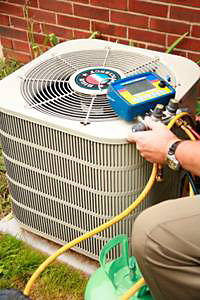
What AC Refrigerant Is and How It Works
Air conditioners cool your home using a special chemical. This chemical is called refrigerant. People often call it “Freon,” but that’s just a brand name for older kinds of refrigerant like R-22. Newer ACs use different types, most often R-410A.
Think of refrigerant as the blood of your AC system. It flows through copper tubes and coils inside and outside your home. The refrigerant changes between a liquid and a gas state. This change lets it soak up heat from inside your house and move it outside.
Here’s a simple way it works:
- Inside Coil (Evaporator): Warm air from your house blows over a cold coil. The liquid refrigerant inside this coil takes in the heat from the air. As it gets hotter, it turns into a gas. The air, now cooler, is blown back into your rooms.
- Outside Unit (Condenser): The hot refrigerant gas travels to the outdoor unit. Here, it releases the heat it picked up inside. As it cools down, it turns back into a liquid.
- Loop Continues: The cooled liquid refrigerant goes back inside to the indoor coil, ready to pick up more heat.
This movement of heat relies on the refrigerant staying inside the sealed system.
The True AC Refrigerant Lifespan
How long does AC refrigerant itself last? The chemical refrigerant does not really expire or wear out under normal conditions inside a sealed AC system. If the system stays sealed and works right, the original charge of refrigerant can last for the entire life of the air conditioner unit. This is the true AC refrigerant lifespan we hope for.
So, if someone tells you your AC just needs a “top-off” or that refrigerant gets “used up,” they are wrong or perhaps misleading you. A low refrigerant level is almost always a sign of a problem: a leak.
Why Does Why Does AC Lose Refrigerant?
The simple answer to why does AC lose refrigerant is leaks. AC systems are designed to be sealed shut. The copper lines, coils, and connections are meant to keep the refrigerant inside forever.
But over time, things happen that can create tiny holes or cracks. These are lifespan of AC refrigerant leaks. They might start small and grow larger.
Reasons for leaks include:
- Vibration: The AC unit vibrates when it runs. This can loosen connections or cause pipes to rub and wear thin.
- Corrosion: Over years, especially in areas near the coast or with polluted air, the metal parts (coils, pipes) can rust or corrode. This creates weak spots where leaks can form. The indoor coil is often a common leak spot because moisture sits on it.
- Physical Damage: Something hitting the outdoor unit, or damage during installation or other home repairs, can break pipes.
- Wear and Tear: Seals around valves or service ports can wear out over many years.
- Manufacturing Defects: Sometimes, parts have small flaws from the factory that don’t show up until later.
- Poor Installation: If connections were not tightened correctly when the AC was put in, they can leak slowly over time.
These leaks, no matter how small, let the refrigerant escape into the air. This is bad for the environment and bad for your AC’s ability to cool.
Common Places for Leaks
Leaks can happen anywhere in the refrigerant loop. Some common spots are:
- Evaporator Coil (Inside Unit): This is a very common spot for leaks due to corrosion caused by moisture and airborne contaminants.
- Condenser Coil (Outside Unit): The outdoor coil can be damaged by weather, debris, or corrosion.
- Refrigerant Lines (Line Set): The copper pipes connecting the indoor and outdoor units can be damaged, bent, or corroded.
- Service Valves: These are access points used by technicians. Seals here can sometimes leak.
- Fittings and Connections: Wherever pipes are joined together, there’s a potential leak point if not sealed correctly.
Signs of Low AC Refrigerant
How can you tell if your air conditioner might be low on refrigerant? There are several signs of low AC refrigerant you can look for. Knowing these can help you call for service before the problem gets worse.
Common signs include:
- Poor Cooling: This is the most obvious sign. The air coming from your vents isn’t as cold as it should be. The AC runs and runs, but your home doesn’t reach the temperature you set on the thermostat.
- Ice on the Coil: Check the indoor coil (sometimes called the evaporator coil). If it’s covered in frost or ice, it’s a strong sign of low refrigerant. Low refrigerant causes the coil to get too cold, freezing the moisture that collects on it.
- Frozen Lines: The larger copper pipe going from your outdoor unit into your house might be frozen or covered in ice. This is another sign the system isn’t working right, likely due to low refrigerant.
- AC Runs Constantly: If the system doesn’t have enough refrigerant, it struggles to cool your home. It might run non-stop trying to reach the set temperature but never get there.
- Strange Noises: A bubbling or hissing sound might come from the refrigerant lines. This can indicate a leak, letting gas escape or air get in.
- High Energy Bills: A struggling AC unit that runs constantly uses a lot more electricity. If your energy bills jump up unexpectedly, it could be a sign of low refrigerant forcing the system to work harder.
- Warm Air Vents: If the air blowing out of your vents feels only slightly cool or even warm, the system is definitely not cooling properly.
Seeing one or more of these signs means it’s time to call a qualified HVAC technician. Do not just assume you need more “Freon.” You need a professional to check the system.
AC Refrigerant Leak Detection: Finding the Problem
When you call an HVAC technician because you suspect low refrigerant, their first job is AC refrigerant leak detection. They don’t just hook up a gauge and add refrigerant. A good technician will try to find where the leak is coming from.
Finding leaks can be tricky. Refrigerant is a gas, and leaks can be very small. Technicians use several methods:
- Electronic Leak Detector (Sniffer): This is a common tool. The technician moves a wand along the refrigerant lines, coils, and connections. The sniffer detects the presence of refrigerant gas and beeps when it finds a leak.
- UV Dye: A special fluorescent dye can be added to the refrigerant. It mixes in and circulates with the refrigerant. If there’s a leak, the dye also escapes. The technician then uses a UV (ultraviolet) light to scan the system. Leaks show up as bright spots under the UV light. This method works well for smaller leaks that might be hard to find with a sniffer.
- Soap Bubbles: For larger, more obvious leaks, a technician might spray a soap and water solution on suspect areas. If refrigerant is leaking, it will create bubbles where the gas is escaping.
- Nitrogen Pressure Test: The technician might remove the old refrigerant safely. Then, they fill the system with pressurized nitrogen gas. Nitrogen is inert (safe) and helps locate leaks with a sniffer or by listening for hissing sounds. If the pressure drops over time, it confirms a leak exists.
- Ultrasonic Leak Detectors: These tools listen for the high-frequency sound made by gas escaping from a leak.
- Looking and Listening: Sometimes, technicians can spot signs of oil residue around a leak (refrigerant oil circulates with the refrigerant) or hear a faint hissing sound.
Finding the leak is a critical step. Just adding refrigerant without finding and fixing the leak is not a proper repair. The refrigerant will just leak out again, and you’ll be back to having AC problems and needing another expensive “recharge” soon after. This addresses the idea of lifespan of AC refrigerant leaks – the leak’s “lifespan” is how long it goes unrepaired, during which the refrigerant slowly escapes.
Repairing Leaks Before Adding Refrigerant
Once a leak is found, the technician must repair it. This might involve:
- Soldering or brazing a hole in a copper pipe or coil.
- Tightening a loose fitting.
- Replacing a faulty valve.
- Replacing a section of damaged pipe or a coil (in severe cases).
Repairing the leak is often the most difficult and costly part of fixing an AC system with low refrigerant. The cost depends greatly on where the leak is and how hard it is to reach and fix.
AC Freon Recharge Frequency (or lack thereof)
To be clear: the correct AC freon recharge frequency for a healthy, sealed system is never. Refrigerant levels should stay constant.
You should only need to add refrigerant (this is often called “recharging” or “topping off”) after a leak has been found and properly repaired. The system must be sealed first.
After the repair, the technician will:
- Evacuate the system using a vacuum pump. This removes any air and moisture that got in when the refrigerant leaked out and during the repair. Air and moisture are very bad for the AC system.
- Measure and add the correct amount of refrigerant based on the system’s specifications. The amount isn’t just guessed; the manufacturer specifies the exact weight of refrigerant needed for optimal performance.
- Test the system to make sure it cools properly and that the leak is fixed.
If a technician just adds refrigerant without looking for or fixing a leak, they are not doing a complete or correct job. This is a temporary fix that will lead to future problems and costs. How often to add freon to AC should be tied directly to leak detection and repair, not a routine schedule.
Is AC Refrigerant Consumed?
To reiterate clearly: is AC refrigerant consumed during normal operation? No, absolutely not. It’s not fuel. It’s a working fluid that changes state (liquid to gas and back) inside a closed loop to move heat.
If your AC technician says you need to add refrigerant regularly because it gets “used up” or “burns off,” that is incorrect information. This belief is a myth stemming from confusion with things like car gas or motor oil, which are consumed or used up.
Any loss of refrigerant means there is a breach in the system’s seal – a leak. The focus should always be on finding and fixing that leak.
Cost to Recharge AC Freon (and repair the leak)
The cost to recharge AC freon (or other refrigerant like R-410A) is not just the cost of the refrigerant itself. It includes the technician’s labor for:
- Coming to your home and diagnosing the problem.
- Performing
AC refrigerant leak detection. - Repairing the leak (which varies greatly in complexity and time).
- Evacuating the system.
- Adding the correct amount of new refrigerant.
- Testing the system.
The cost of the refrigerant itself is usually a small part of the total bill.
- Refrigerant Cost: R-410A is less expensive per pound than older R-22. R-22 is being phased out because it harms the ozone layer. It is now very difficult to get and very expensive. If you have an older system that uses R-22 and needs refrigerant, the cost just for the R-22 can be high.
- Labor Cost: This is the biggest part of the bill. Finding and fixing a leak takes time and skill. A simple leak repair might take a few hours. A difficult one, like replacing an indoor coil with multiple leaks, can take much longer and involve cutting into ductwork or plumbing.
Estimates for the total cost (finding leak, fixing leak, recharging) can range widely, from a few hundred dollars for a simple fix to well over a thousand dollars or more for complex repairs or systems needing expensive R-22. Just “adding Freon” might be cheaper initially, but if the leak isn’t fixed, you’ll pay that cost repeatedly, which is more expensive in the long run and bad for the planet.
| Service Item | Typical Cost Range (Estimate) | Notes |
|---|---|---|
| Service Call/Diagnosis | $75 – $200+ | To check system, confirm low refrigerant. |
| Leak Detection | $200 – $500+ | Depends on method used and complexity. Could be included in diagnosis. |
| Leak Repair | $200 – $1000+ | Varies greatly based on location and type of leak. Can be much higher. |
| Refrigerant (per pound) | $50 – $150+ (R-410A) | Amount needed depends on system size. |
| $200 – $600+ (R-22) | Much more expensive due to phase-out. | |
| Recharge Labor | $100 – $400+ | Evacuating system, adding refrigerant. |
| Total (Leak & Fix) | $500 – $2500+ or more | Highly variable. Does not include potential part replacement costs. |
Note: These are rough estimates. Costs vary by location, company, and system specifics.
AC Refrigerant Types Longevity
Different types of refrigerant are used in AC systems. The most common today is R-410A. Older systems, made before 2010 (and sometimes up to 2015), often use R-22 (Freon). There are also other types, though less common in homes.
Does the type of refrigerant affect its “longevity”? Not in terms of the chemical itself breaking down. Both R-22 and R-410A chemicals last indefinitely in a sealed system.
However, the type of refrigerant can indirectly affect the system’s overall AC refrigerant lifespan and tendency to develop leaks:
- R-22 Systems: These are older systems. Age itself makes leaks more likely due to wear, corrosion, and vibration over many years. R-22 systems operate at lower pressures than R-410A systems, but their age is the main factor affecting
lifespan of AC refrigerant leaksin these units. Finding parts and R-22 refrigerant for repairs is also getting harder and more expensive because of the phase-out. Sometimes, the cost of repairing a leak on an old R-22 system is so high that replacing the entire unit makes more sense. - R-410A Systems: These are newer systems. They operate at higher pressures than R-22 systems. This means the components (pipes, coils) are designed to be stronger. While leaks can still happen, especially due to installation issues, damage, or manufacturing defects, the system itself is built for the higher pressure. The “longevity” aspect here relates more to the system’s design and how well it was installed and maintained, rather than the refrigerant chemical itself.
So, while AC refrigerant types longevity isn’t about the chemical lasting, it’s about the system designed for that chemical and its age and condition affecting the likelihood of leaks.
How Often to Add Freon (If You Have a Leak)
If you have an old system with an R-22 leak that is too expensive to fix (like a leaking coil), some people choose to just add R-22 periodically instead of replacing the system. This is the only scenario where there’s a recurring need for a “recharge.”
However, this is:
- Expensive: R-22 is very costly.
- Bad for the Environment: R-22 is an ozone-depleting substance. Leaking it into the atmosphere is harmful.
- Inefficient: An AC system with a leak, even if topped off, is often not running at its best.
- Temporary: The leak will continue, and you’ll need to add more refrigerant again and again.
In this situation, how often to add freon to AC depends entirely on how fast the leak is. It could be every few months or even every few weeks for a bad leak. This is a sign the system is failing, and replacement is usually the more responsible and cost-effective long-term solution.
Proper Maintenance Extends Refrigerant Lifespan (System Lifespan)
While the refrigerant itself doesn’t wear out, taking care of your AC system helps protect it and maintain its seal, ensuring the refrigerant stays where it belongs for its full potential lifespan (the system’s life).
Regular maintenance by a qualified technician should include:
- Checking refrigerant levels and pressures (this can indicate a potential problem early).
- Inspecting coils for dirt and corrosion.
- Checking for visible signs of leaks (oil residue, damaged insulation on pipes).
- Checking all connections and valves.
- Cleaning components like coils.
- Checking airflow.
Good maintenance helps spot potential issues like small leaks or corrosion before they become big, expensive problems. It helps ensure the lifespan of AC refrigerant leaks is short because they are found and fixed early. This protects the environment and your wallet.
Summarizing AC Refrigerant Lifespan
Let’s put it all together regarding AC refrigerant lifespan:
- The refrigerant chemical itself doesn’t expire or get used up.
- In a properly sealed system, the original refrigerant charge should last for the entire life of the AC unit (15-20 years or more).
- If an AC system is low on refrigerant, it has a leak.
- The
AC refrigerant lifespanin practice is limited by the integrity of the system’s seals and pipes – how long it can go without developing a leak. - Leaks can happen due to age, wear, corrosion, damage, or faulty installation.
- Finding and fixing leaks is necessary before adding more refrigerant.
- Simply adding refrigerant without fixing a leak is a waste of money and harms the environment.
- Older R-22 systems may be more prone to leaks due to age, and R-22 is very expensive to replace if it leaks.
- Regular maintenance can help detect and prevent leaks, preserving the system’s charge and its operational lifespan.
The goal is zero AC freon recharge frequency over the system’s life, because that means zero leaks.
Lifespan of AC Refrigerant Leaks: Why Fixing Matters
The term lifespan of AC refrigerant leaks might sound strange. It refers to how long a leak is active and releasing refrigerant before it is discovered and repaired.
- Short lifespan: A small leak is found early during maintenance or when symptoms first appear. It’s repaired quickly. Minimum refrigerant is lost.
- Long lifespan: A leak is not found for a long time. Maybe the signs of low refrigerant (poor cooling, high bills) are ignored. Or maybe the leak is very slow and hard to find. Over this long period, a lot of refrigerant escapes. This causes more damage to the AC system (running low on refrigerant can stress components like the compressor) and is worse for the environment.
The longer a leak lasts, the more costly and damaging it becomes. This is why prompt AC refrigerant leak detection and repair are so important when you first notice signs of low AC refrigerant.
Frequently Asked Questions
H4: Is It Okay to Just Add a Little Refrigerant for a Small Leak?
No, it’s not okay. Even a small leak means the system isn’t sealed. Adding refrigerant without fixing the leak is against the law (because refrigerants harm the environment). It’s also a temporary fix. The refrigerant will leak out again. The best approach is always to find and fix the leak, no matter how small, and then add the correct amount of refrigerant.
H4: Can I Buy AC Refrigerant and Add It Myself?
In most places, it is illegal for homeowners to buy or handle refrigerants like R-22 or R-410A. These chemicals require special training and tools to handle safely and legally. They can cause serious injury if not handled correctly. Only certified technicians should work with AC refrigerant.
H4: Why is R-22 Refrigerant So Expensive Now?
R-22 is being phased out worldwide because it damages the Earth’s ozone layer. Production has stopped or is very limited. The supply is low, but there are still many older AC systems that use it. Basic economics of low supply and existing demand make the price very high. This is another reason why repairing leaks in old R-22 systems can be costly and replacing the unit is often a better choice.
H4: How Long Should a New AC System’s Refrigerant Last?
If installed correctly and maintained well, the refrigerant in a new AC system should last for the entire life of the unit. This is usually 15 to 20 years or even longer. The only reason it would need more refrigerant is if a leak develops.
H4: Does Adding Refrigerant Make My AC Colder?
Adding refrigerant will only make your AC colder if it was low on refrigerant because of a leak. If your system is already at the correct refrigerant level, adding more does not improve cooling. In fact, adding too much refrigerant (overcharging) can damage the compressor and other parts, leading to poor cooling and costly repairs. Always use a technician who can measure the correct charge.
H4: Can a Leak Be So Small It’s Hard to Find?
Yes, absolutely. Some leaks are very slow and small. They might take a long time to cause noticeable symptoms. Finding these small leaks often requires advanced tools like electronic sniffers or UV dye. This is why professional AC refrigerant leak detection is important.
Conclusion
The simple truth about AC refrigerant lifespan is that the refrigerant itself should last forever inside your system. If your air conditioner needs refrigerant added, it has a leak that needs to be found and fixed. Why does AC lose refrigerant? Leaks caused by wear, corrosion, damage, or faulty installation. There is no standard AC freon recharge frequency for a healthy system. Is AC refrigerant consumed? No. Look for signs of low AC refrigerant like poor cooling or ice. If you see them, call a technician for AC refrigerant leak detection and repair. The cost to recharge AC freon includes finding and fixing the leak, which is the most important part. AC refrigerant types longevity is more about the system’s design and age than the chemical itself. Don’t ignore lifespan of AC refrigerant leaks; fix them quickly to save money and protect the environment. Proper maintenance is key to keeping your system sealed and its refrigerant charge intact for the long haul.