
The best height for a TV stand depends on several factors, primarily the size of your TV and your seating height, aiming to position the middle of the screen at or slightly below eye level for optimal TV viewing height. Finding the right height makes watching TV more comfortable. It helps your neck and eyes. This guide helps you find the perfect spot for your TV.
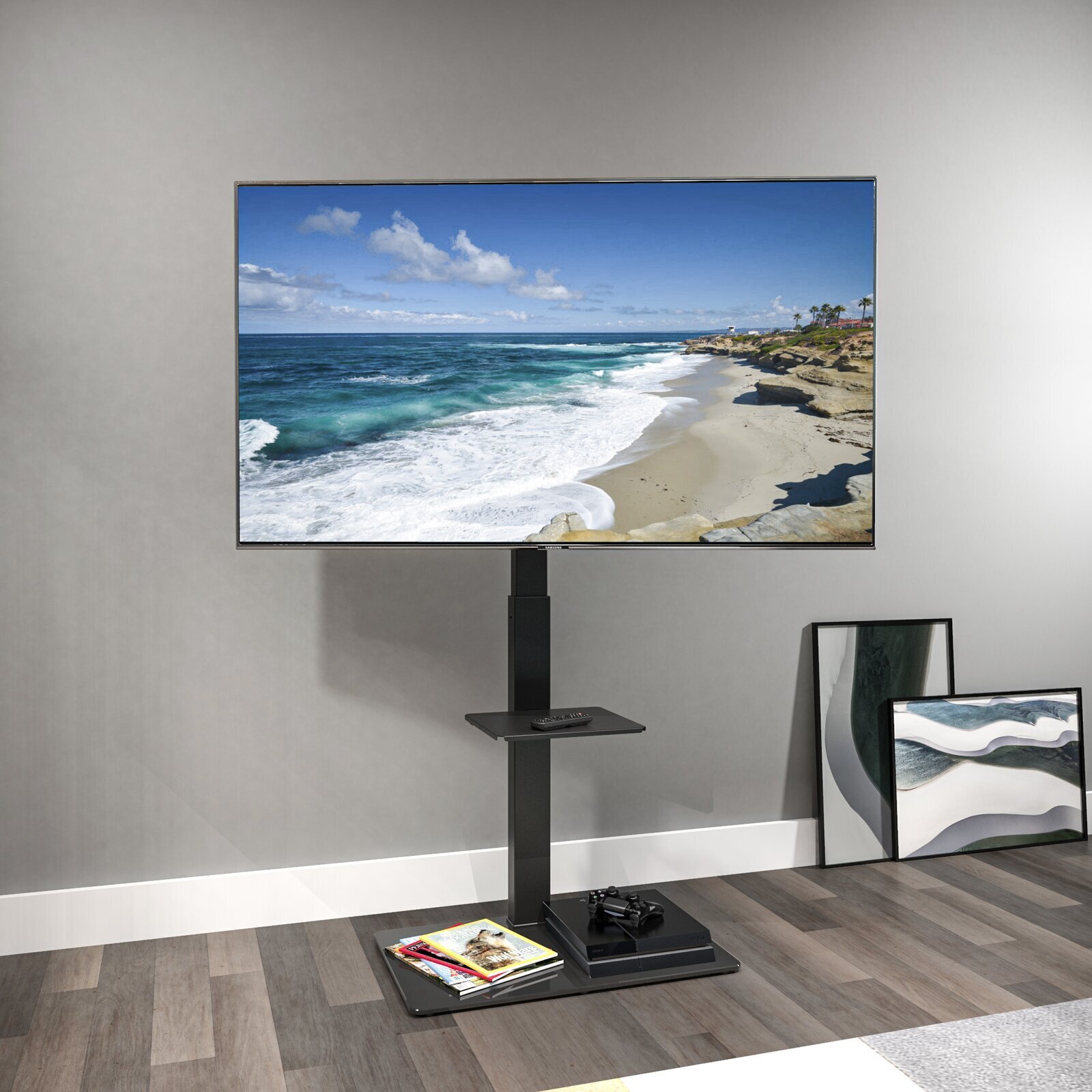
Image Source: foter.com
Why TV Stand Height Matters
Watching TV should be easy on your body. The height of your TV stand plays a big role in this. If the TV is too high, you might crane your neck. If it’s too low, you might slump over. Neither is good for you. The goal is to find the ergonomic TV height. This means the height that is best for your body posture and health.
A TV at the right height looks better in the room, too. It fits in with your furniture. It makes your viewing area look neat and planned. It’s not just about comfort; it’s about the overall look and feel of your space.
Key Factors for Recommended TV Stand Height
Several things affect the recommended TV stand height for your home. Thinking about these points helps you make the right choice.
Your TV’s Size
The size of your TV is key. We measure TV size by the screen’s diagonal length. A bigger TV needs a different stand height than a small one. Why? Because the screen itself is taller. The middle point of a large screen is higher up than the middle point of a small screen.
Imagine a small TV, say 32 inches. The screen is not very tall. Its middle point is low. Now think of a big TV, like 75 inches. The screen is much taller. Its middle point is higher.
You want the middle of the screen to be at eye level. So, for a bigger TV, you need a lower stand. This brings the screen’s middle down to your eye level. For a smaller TV, a slightly taller stand might work. It helps lift the screen’s middle up.
- Small TVs (under 40 inches): Might work with taller stands (around 30-35 inches high).
- Medium TVs (40-55 inches): Often need stands in the standard range (around 22-28 inches high).
- Large TVs (over 55 inches): Usually require lower stands (18-24 inches high or even lower).
These are just rough ideas. We need to look at more factors to get it exactly right.
Where You Sit
Where you sit and how high your seat is matters a lot. Are you watching TV from a low couch? A high armchair? A dining chair? Your eye level changes based on your seat.
The best height for TV viewing puts your eyes level with or slightly below the center of the screen. So, if you sit low, your eye level is low. You need a lower TV stand. If you sit high, your eye level is higher. You might need a taller stand.
Think about the main place people watch TV from. Is it a big, soft sofa where you sink down? Is it a firm chair? Measure the height from the floor to your eyes when you are sitting in your usual spot. This measurement is crucial for determining the correct TV stand height.
How Far Away You Sit
The distance from your seat to the TV also affects things. If you sit very close, looking up even a little can strain your neck. If you sit far away, a slight angle up or down is less noticeable.
Experts suggest sitting a certain distance from your TV based on its size. This distance is for the best viewing experience. It also plays a role in finding the optimal TV viewing height.
- For high-definition TVs (like 1080p), sit about 1 to 1.5 times the screen size (diagonal measurement).
- For 4K TVs, you can sit closer, about 0.5 to 1 times the screen size.
Once you know the right distance, check your eye level from that spot. This helps you find the ideal height for your screen.
Room Shape and Layout
Sometimes, the room itself affects where the TV goes. Maybe there’s only one wall it can go on. Maybe there’s a window or fireplace to work around. These things can limit your choices for placing the TV and stand.
If the TV must go in a certain spot, you might have to adjust the seating area. Or you might need a specific type of stand or mount to get the right height.
Also, think about glare from windows or lights. Putting the TV at a certain height or angle can help reduce reflections.
Grasping Optimal TV Viewing Height
The main goal is optimal TV viewing height. This means the TV is at a height that is comfortable and easy to watch for a long time. For most people, this means having the center of the screen at or slightly below eye level.
Why below eye level? Looking slightly down is more natural for your neck over long periods. It’s like reading a book on your lap. Looking up for a long time is tiring.
So, the perfect setup has your eyes lining up with the middle of the TV screen, or a bit higher, so you look slightly down at the center. This is the core idea behind ergonomic TV height.
The 5-10 Degree Rule
Some experts talk about viewing angles. They suggest the top of the TV screen should be no more than 10-15 degrees above your eye level. Ideally, the center of the screen should be at or slightly below eye level, maybe looking down 5 to 10 degrees.
This slight downward angle prevents neck strain. It keeps your head in a more neutral position.
A Simple TV Stand Height Guide
Ready to find the right height? Follow these simple steps.
- Sit in your main viewing spot: Use the chair or sofa you use most often to watch TV. Sit naturally, as you usually would.
- Measure your eye level: Have someone measure the height from the floor to your eyes. Use a tape measure. Keep your head level. This is your eye level height while seated.
- Find the middle of your TV screen: Measure the full height of your TV screen. Divide this number by two. This is the height of the screen’s center point from its bottom edge.
- Calculate the target stand height: Your target height for the top of the stand is your seated eye level height minus half the TV screen height.
- Target Stand Height = Seated Eye Level Height – (TV Screen Height / 2)
Let’s use an example:
- You sit on a couch. Your eye level is 35 inches from the floor.
- You have a 55-inch TV. Let’s say its screen height is 27 inches. (Note: screen diagonal is not the screen height. You need to check the specs or measure).
- Half of the screen height is 27 inches / 2 = 13.5 inches.
- Your target stand height is 35 inches (eye level) – 13.5 inches (half screen height) = 21.5 inches.
So, you would look for a TV stand that is around 21.5 inches tall. This places the center of your 55-inch TV screen right at your 35-inch eye level when you are seated.
If you want the screen center slightly below eye level (say, 3 inches below):
- Target Stand Height = (Seated Eye Level Height – 3 inches) – (TV Screen Height / 2)
- Target Stand Height = (35 inches – 3 inches) – 13.5 inches = 32 inches – 13.5 inches = 18.5 inches.
So, a stand between 18.5 and 21.5 inches would likely be best in this example. This process helps you determine correct TV stand height based on your specific situation.
Calculating TV Stand Height More Simply
Sometimes, you don’t need exact math. You can use general rules based on TV size and standard seating.
Most couches put eye level around 24-30 inches from the floor. Using the center-at-eye-level rule:
- For a 40-inch TV (screen height ~20 inches): Half height is 10 inches. Eye level 30 inches. Stand height needed: 30 – 10 = 20 inches.
- For a 55-inch TV (screen height ~27 inches): Half height is 13.5 inches. Eye level 30 inches. Stand height needed: 30 – 13.5 = 16.5 inches.
- For a 65-inch TV (screen height ~32 inches): Half height is 16 inches. Eye level 30 inches. Stand height needed: 30 – 16 = 14 inches.
- For a 75-inch TV (screen height ~37 inches): Half height is 18.5 inches. Eye level 30 inches. Stand height needed: 30 – 18.5 = 11.5 inches.
See a pattern? As TVs get bigger, the needed stand height gets lower if your eye level stays the same.
This shows that many “standard height for TV stand” options might be too tall for large TVs and typical seating.
What is a Standard Height for TV Stand?
There isn’t one single standard height that works for everyone or every TV. However, many TV stands you find in stores are made to fit average room sizes and furniture heights.
Common stand heights range from:
- Low Profile Stands: 16-20 inches high.
- Standard Height Stands: 21-28 inches high.
- Taller Stands/Chests: 29-36 inches high or more.
These standard heights don’t always match the optimal TV viewing height calculation we just did, especially for large TVs. A stand that is 24 inches tall is often called a “standard height TV stand.” But as our calculation showed, this might be too high for a large 65 or 75-inch TV if you’re sitting on a typical couch.
This is why using a TV stand height guide and calculating for your specific situation is important. Don’t just buy a stand because it says “standard.” Check if its height works for your TV and your couch.
The Ideal TV Console Height
The term “TV console” often refers to longer, sometimes lower stands that look like furniture cabinets. Ideal TV console height follows the same rules as any TV stand height: get the screen center to or slightly below eye level.
Since consoles are often used with larger TVs in living rooms, the ideal height for a TV console is often on the lower side, perhaps 18 to 24 inches. This range works well for placing the center of a large screen (like 55-75 inches) at eye level when seated on a couch (eye level typically 25-30 inches).
A lower console also looks good aesthetically with a large TV. It prevents the TV from looking too dominant or high up on the wall.
Understanding TV Eye Level Height
Let’s look closer at TV eye level height. This is the height from the floor to the center of the TV screen. For the best experience, this height should be about the same as your eye level when seated, or a little lower.
If your seated eye level is 30 inches from the floor, the TV’s center should ideally be around 30 inches from the floor.
To get the TV’s center to be 30 inches from the floor using a stand:
- Take your target TV center height (30 inches).
- Subtract half the height of your TV screen.
- Stand Height = Target TV Center Height – (TV Screen Height / 2)
Example: Your eye level is 30 inches. You have a TV with a 27-inch screen height.
* Stand Height = 30 inches – (27 inches / 2)
* Stand Height = 30 inches – 13.5 inches
* Stand Height = 16.5 inches
This simple method for calculating TV stand height aims for the TV eye level height that is most comfortable.
Types of Stands and Height
Different types of TV stands and mounts affect the final height and placement.
Standard TV Stands
These are like pieces of furniture. They have a flat top where the TV sits. Their height is fixed. You pick one based on the calculation we discussed. They often have shelves or cabinets for storing media players, games, or remotes. The height you choose is the top of the stand. The TV sits on this.
TV Stands with Mounts
Some stands have a pole or frame on the back. You attach the TV to this frame, like a smaller version of a wall mount. This lifts the TV above the stand’s surface. These are good because they allow you to adjust the TV’s height slightly after placing the stand. They also let you swivel the TV. The height calculation here is slightly different. You’d calculate the needed height for the mounting point on the stand.
Wall Mounts
While not a stand, wall mounts are another way to place a TV. They offer the most flexibility in height. You can mount the TV at exactly the height you want. You still use the same rule: center of the screen at or slightly below seated eye level. Wall mounts free up floor space. They can be tilted or articulated to get the perfect angle. If you can’t find a stand at the correct height, a wall mount is a good alternative.
Entertainment Centers
These are large furniture pieces that surround the TV. The TV might sit on a shelf or in a dedicated opening. The height of this shelf or opening is what matters. Again, apply the eye-level rule to the center of the screen when it’s in place. Entertainment centers are often quite tall overall, but the TV platform might be low.
Benefits of the Best Height for TV Viewing
Getting the height right gives you real benefits.
- Less Neck Pain: This is the biggest one. Looking straight ahead or slightly down is much better than looking up. The ergonomic TV height prevents you from straining your neck muscles.
- Less Eye Strain: When the TV is at the right height and distance, your eyes don’t have to work as hard. The angle is natural.
- Better Picture Quality: TVs are designed to be viewed straight on. Watching from a steep angle (looking way up or way down) can sometimes make the picture look worse, especially on older screen types. The optimal TV viewing height puts you in the prime viewing spot.
- Improved Room Appearance: A TV at the right height looks balanced in the room. It doesn’t look awkwardly high or too low. An ideal TV console height matches the scale of your room and furniture.
- More Immersive Experience: When the screen is positioned correctly, it feels more natural. It pulls you into the movie or show more easily.
Confirming the Correct TV Stand Height
Once you think you’ve found the right stand or height, do a test.
- Place something the same size as your TV on the stand. A cardboard cut-out works well.
- Sit in your viewing spot.
- Imagine the center of your TV screen on the cardboard.
- Is it level with your eyes, or slightly below?
- Is the top edge of the imaginary TV below a comfortable upward glance angle (not more than 15 degrees up)?
If it feels right, you likely have the correct TV stand height. If it feels too high or too low, adjust your plan. Look for a different stand height. Or consider a stand with a mount that lets you adjust height.
Common Mistakes to Avoid
When picking a TV stand height, people sometimes make mistakes.
- Buying based on looks only: A stand might look nice, but its height might be wrong for your TV and room. Function comes first for comfort.
- Ignoring seating height: Assuming all couches are the same height is a mistake. Measure your eye level from your seat.
- Using the wrong TV measurement: Using the diagonal screen size instead of the screen’s vertical height when calculating half the height. Check the TV’s specs for screen height or measure it.
- Thinking higher is better: Some people put the TV high up like in a bar or gym. This is usually bad for home viewing comfort over long periods.
- Not considering the TV’s legs: Some TVs come with feet that add height. The stand height you choose is the height of the top surface the TV sits on. Add the height of the TV’s feet to find the total bottom-of-screen height.
Calculating TV Stand Height: A Deeper Dive (Optional Math)
Let’s refine the calculation slightly.
You need:
1. Your seated eye level height (E).
2. The vertical screen height of your TV (S). Find this in the TV’s specifications or measure it. Do not use the diagonal size.
3. Your desired vertical offset (O). This is how much below eye level you want the center of the screen to be. Experts often suggest 0 to 6 inches below eye level (O can be 0 to 6). Let’s use an average of 3 inches for a slight downward glance (O=3).
The height from the floor to the center of the screen should be E – O.
The TV stand’s top surface height (H) should be the height needed to place the center of the screen at E – O.
The center of the screen is located S / 2 inches above the bottom edge of the screen.
If the TV sits directly on the stand:
* Bottom of screen is at height H.
* Center of screen is at height H + (S / 2).
We want H + (S / 2) = E – O.
To find the stand height (H):
* H = E – O – (S / 2)
Example:
* Seated Eye Level (E) = 30 inches.
* TV Screen Height (S) for a 65-inch TV = approx 32 inches.
* Desired Offset (O) = 3 inches (screen center 3 inches below eye level).
- H = 30 inches – 3 inches – (32 inches / 2)
- H = 27 inches – 16 inches
- H = 11 inches
Wow, 11 inches is very low! This calculation shows that for large TVs, the theoretically ideal stand height can be much lower than what you find in stores. Many people compromise or use a wall mount.
Let’s try making the screen center at eye level (O=0):
* H = E – 0 – (S / 2)
* H = 30 inches – (32 inches / 2)
* H = 30 inches – 16 inches
* H = 14 inches
Still quite low. This confirms that standard height for TV stand options (21-28 inches) are often too high for larger TVs (55+ inches) if you follow the ergonomic guidelines strictly for typical couch heights.
What if your eye level is higher, say 35 inches (maybe a taller chair or bar stool)?
* E = 35 inches, S = 32 inches (65-inch TV), O = 3 inches.
* H = 35 inches – 3 inches – (32 inches / 2)
* H = 32 inches – 16 inches
* H = 16 inches
Still on the low side, but getting closer to standard stand heights.
What if your eye level is 30 inches, but you have a smaller 40-inch TV (screen height ~20 inches)?
* E = 30 inches, S = 20 inches, O = 3 inches.
* H = 30 inches – 3 inches – (20 inches / 2)
* H = 27 inches – 10 inches
* H = 17 inches
If O=0 (screen center at eye level):
* H = 30 inches – 0 – (20 inches / 2)
* H = 30 inches – 10 inches
* H = 20 inches
These calculations help determine correct TV stand height more precisely. They show why smaller TVs often work better with standard height stands.
Remember, these calculations give you a target. You might not find a stand exactly that height. Choose the closest height that places the screen center at or just below your eye level.
Putting It All Together
Choosing the recommended TV stand height is about finding the sweet spot for comfort and viewing.
- Measure Your Space: Know your room, seating height (eye level), and viewing distance.
- Measure Your TV: Find its screen height (vertical), not just the diagonal size.
- Calculate Your Target Height: Use your eye level and TV screen height to figure out where the center of the screen should be (at or slightly below eye level). Calculate the stand height needed to achieve this.
- Shop Based on Height: Look for stands that match your calculated height. Don’t just guess or pick one that looks nice. Use the TV stand height guide principles.
- Consider Options: If you can’t find a stand the right height, think about a stand with a mount or a wall mount for more flexibility.
- Test Before Committing: Use a mock-up to check the height before setting up the real TV.
Finding the optimal TV viewing height makes a big difference in how you enjoy your TV. It’s worth taking the time to get it right. The ideal TV console height or any TV stand height should prioritize your comfort first. Use this guide to help you determine correct TV stand height for your home.
Frequently Asked Questions
Q: What is the best height for TV viewing?
A: The best height places the center of the TV screen at or slightly below your eye level when you are seated in your main viewing spot.
Q: What is a standard height for a TV stand?
A: Many stands sold are between 21 and 28 inches tall. However, this standard height might be too high for large TVs (55+ inches) paired with typical couch seating if aiming for ergonomic viewing.
Q: How do I determine the correct TV stand height for my TV?
A: Measure your seated eye level. Measure the vertical height of your TV screen. The ideal stand height is roughly your seated eye level minus half the screen height. Adjust slightly lower if you prefer looking down at the screen center.
Q: Does TV size affect the recommended TV stand height?
A: Yes, greatly. A larger TV screen is taller. To keep the screen’s center at eye level, a larger TV needs a lower stand than a smaller TV would in the same room with the same seating.
Q: Is TV eye level height the same for everyone?
A: No. Your seated eye level depends on your height and the chair or couch you sit on. This is why personal measurement is important for finding the optimal TV viewing height.
Q: What is ergonomic TV height?
A: Ergonomic TV height is a height that promotes good posture and reduces strain on your neck, eyes, and shoulders while watching TV. This is usually achieved by placing the screen center at or slightly below eye level.
Q: Can I use a wall mount instead of a stand?
A: Yes. A wall mount gives you the most control over height. You can mount the TV at exactly the calculated ideal height for your room and seating.
Q: My current stand is too high. What can I do?
A: If your stand is too high, you might need a different stand or a wall mount. You can also try adjusting your seating if possible (e.g., using taller cushions). But changing the TV placement is often the best solution for achieving the correct TV stand height.
Q: How far away should I sit from my TV?
A: For 4K TVs, sit about 0.5 to 1 times the screen diagonal. For 1080p HD TVs, sit about 1 to 1.5 times the screen diagonal. Sitting at the recommended distance helps with both viewing quality and determining optimal TV viewing height.
This guide gives you the tools to find the best height for your TV stand, making your viewing experience comfortable and enjoyable.