
When deciding how high to hang your television, the main question often asked is “How Far From The Ceiling Should You Hang A Tv?”. The simple answer is that the distance from the ceiling is not the most important measurement. What truly matters is the distance from the floor to the television, or more precisely, where the TV sits in relation to your eyes when you are watching it. The goal is to have the screen at the ideal TV mounting height for comfortable viewing.
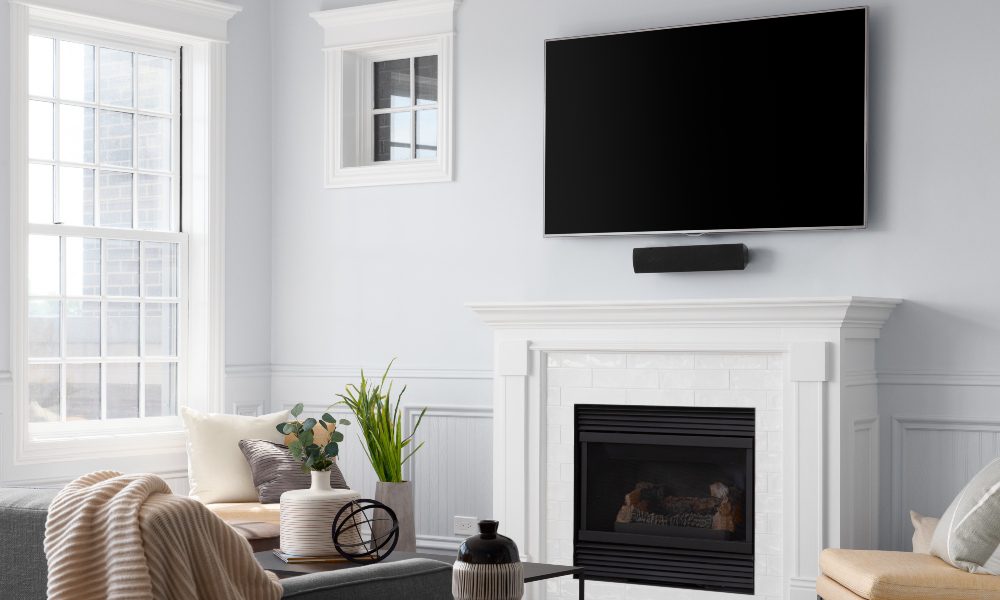
Image Source: www.cepro.com
Why The Ceiling Does Not Matter Much
People look at the ceiling when thinking about hanging things on a wall. It is a fixed line. But the ceiling height changes from room to room. It does not tell us where your eyes will be when you watch TV. Your eyes are the key point. So, thinking about how far the TV is from the ceiling is not the best way to start. We need to think about where you sit or stand. We need to think about how far your eyes are from the floor.
The Right Focus: Your Eyes
The best height to hang a TV puts the center of the screen at or slightly below your eye level. This is the optimal TV viewing height. When the TV is at the right height, your head is straight. Your neck is relaxed. This gives you an ergonomic TV wall mount height. It helps you watch for a long time without feeling pain. Your TV height eye level is the most important measure.
Things That Change The Right Height
Many things affect the proper TV hanging height. There is no one-size-fits-all answer. We must look at different factors affecting TV height.
- Where You Watch: Are you sitting on a couch? Are you standing in a kitchen? Are you lying in bed? Your body position changes where your eyes are.
- How Far Away You Sit: If you sit close, looking up even a little bit can be bad for your neck. If you sit far away, you can look up a bit more.
- How Big Your TV Is: A very large TV takes up more space up and down. The middle of a big TV will be higher than the middle of a small TV if the bottom edges are at the same height.
- What The Room Is For: A living room where you relax needs a different height than a kitchen where you glance at the news while cooking.
- Who Is Watching: Are you hanging the TV for a very tall person or a shorter person? Is it for kids? Think about the main people who will watch.
Let’s look at these factors in more detail.
Where You Watch Matters
Imagine watching TV in different places.
- Sitting on a Sofa: You are likely sitting back. Your eyes are straight ahead or slightly looking down. The TV should be around this height.
- Sitting Up in Bed: You might be propped up with pillows. Your eye line is higher than when sitting on a sofa.
- Lying Down in Bed: Your eyes look up towards the ceiling. The TV needs to be much higher on the wall in this case.
- Standing in a Kitchen: Your eyes are much higher than when sitting. The TV needs to be higher too.
This shows why the ceiling height is not the main point. Your body position is.
How Far Away You Sit Changes Things
Think about looking at a picture on a wall. If you stand close, your eyes move more to see the whole picture. If you stand back, you see it all easily. The same is true for a TV.
If you sit very close to a big TV that is hung too high, you have to tilt your head up a lot. This is bad for your neck.
If you sit far away, your viewing angle is less steep. You can hang the TV a bit higher without hurting your neck. But hanging it too high is still not good.
The general rule is this: the closer you sit, the lower the TV should be.
TV Size Is A Big Factor
Let’s say you decide the bottom of your TV should be 30 inches from the floor.
- A 32-inch TV is small. The middle of this TV is not very high up.
- An 85-inch TV is very big. The middle of this TV is much higher up, even if the bottom edge is also 30 inches from the floor.
For bigger TVs, some people still aim for the center of the screen to be at eye level. But with a very large screen, this might mean the bottom edge is quite low. Others aim for the bottom edge to be near eye level, so you are looking slightly up at the screen. Both ways can work, but the eye-level-center rule is the most common guide for the optimal TV viewing height.
Room Type Changes Needs
- Living Room: This is where you relax and watch movies or shows for a long time. Comfort is key. The TV height eye level rule for sitting is best here.
- Bedroom: If you mostly lie down, the TV must be higher on the wall. If you mostly sit up, it is like a living room height but maybe a bit higher.
- Kitchen: People usually stand. The TV needs to be high enough to see over counters and things. But not so high you strain your neck looking up while chopping vegetables.
- Gym/Exercise Room: You might be standing or sitting on equipment. A higher mount might be needed.
Who Is Watching Matters Too
If a TV is only for kids playing video games on the floor, you might put it lower. If it is in a family room, you need to find a height that works best for most people most of the time. Think about the average height of the viewers when they are in their typical watching position.
Finding The Right Height
Now we come to calculating ideal TV height. There is a simple way to do this. This is your TV mounting height guide.
The Simple Eye-Level Method (For Sitting)
This is the best way to find the recommended height for wall mounted TV when you will be sitting.
- Sit Down: Go to the spot where you will sit most often to watch TV. Sit in your usual chair or sofa. Get comfortable.
- Look Ahead: Look straight ahead, just like you would if the TV was already there.
- Mark The Spot: Have a friend mark the wall at your eye level. If you are alone, you can hold a level or a ruler against the wall and make a light pencil mark or put a piece of tape there. This mark is your TV height eye level.
- Center The TV: This mark should be where the center of your TV screen will go.
Adjusting For Different Positions
- For Lying Down (Bedroom): Lie in bed how you normally would watch TV (with pillows, etc.). Have someone mark your eye level on the wall opposite you. This mark is where the bottom of the TV should go, or slightly lower. You will be looking up at the screen.
- For Standing (Kitchen): Stand where you will watch TV. Mark your eye level. The middle or bottom of the TV screen should be around this height. Think about if you need it higher to clear things on counters.
Using Numbers To Calculate (For Sitting)
If you like using numbers, here is another way to find the calculating ideal TV height for sitting:
- Measure Your Eye Height: Sit on your sofa. Measure the distance from the floor to your eyes. Let’s say this is 40 inches.
- Find TV Center: You want the center of the TV to be at 40 inches from the floor.
- Measure TV Height: Measure the total height of your TV screen (not including the frame). Let’s say it is 30 inches.
- Calculate TV Bottom: The center is half the height. Half of 30 inches is 15 inches. If the center is at 40 inches, the bottom of the screen will be 15 inches below that. So, 40 inches – 15 inches = 25 inches. The bottom of the TV screen should be about 25 inches from the floor.
So, for this example, the proper TV hanging height has the bottom of the screen around 25 inches from the floor. The center is at 40 inches. This is the ideal TV mounting height for this seating position.
This method works well as a TV mounting height guide for standard living room setups.
Table of Common Heights (Estimates)
This table gives general ideas. Remember that your personal comfort and measurements are most important.
| Room Type | Typical Position | Approx. Eye Level (from floor) | Approx. Center of TV (from floor) | Notes |
|---|---|---|---|---|
| Living Room | Sitting | 36 – 42 inches | Same as eye level (36 – 42 inches) | Most common, focus on comfort. |
| Bedroom | Sitting Up | 40 – 45 inches | Same as eye level (40 – 45 inches) | Might need to adjust based on bed height. |
| Bedroom | Lying Down | Not useful | Aim for bottom of screen higher | Screen should be above your feet. |
| Kitchen | Standing | 55 – 65 inches | Same as eye level (55 – 65 inches) | High enough to see over counters. |
| Gym/Exercise | Standing/Sitting | Varies | Varies | Consider different workout positions. |
Remember these are just starting points. Always use your own measurements to find the best height to hang a TV in your specific room.
How To Hang Your TV At The Right Spot
This is a step-by-step TV mounting height guide after you have found your ideal spot.
- Find Your Spot: Use the eye-level method or the measurement method to find the exact height from the floor where the center of your TV screen should go. Mark this point lightly on the wall. Let’s call this the “Center Mark”.
- Check Your TV Mount: Look at your wall mount. How does the TV attach to it? Most mounts have a piece that screws onto the back of the TV and another piece that screws onto the wall.
- Measure Your Mount: Put the piece that goes on the TV onto the TV. Then, measure the distance from your “Center Mark” on the TV screen (which you can mark with tape) down to the top of the mount piece that will hook onto the wall part. Or, measure from the center mark on the TV up to where the screws for the wall plate will go. This measurement is key.
- Transfer The Measurement: Now go back to the wall. You have your “Center Mark” on the wall (where the middle of the TV screen should be). Use the measurement from step 3. Measure from your “Center Mark” on the wall up or down to find where the mount’s screw holes need to be. Mark these points accurately.
- Install The Mount: Use a level to make sure your screw hole marks are perfectly straight across. Drill holes (use anchors if not hitting a stud). Screw the wall mount firmly to the wall.
- Attach TV Plate: Attach the other mount piece to the back of your TV.
- Hang The TV: With help from a friend, lift the TV and hook it onto the wall mount.
- Check The Height: Step back and look. Sit in your viewing spot. Does the center of the screen look like it is at your eye level? Is it comfortable?
This careful process ensures you achieve the proper TV hanging height you calculated.
Mistakes To Avoid When Hanging Your TV
Doing things the wrong way can make watching TV uncomfortable.
- Hanging Too High: This is the most common mistake. Especially when mounting over a fireplace. Looking up for a long time strains your neck and shoulders. It is not an ergonomic TV wall mount height.
- Ignoring The Viewer’s Position: Hanging a TV at a standard height without thinking about if you will be sitting, standing, or lying down. Always plan for how you will watch.
- Not Using A Level: A crooked TV looks bad. Always use a level when marking holes and attaching the mount.
- Not Finding Studs or Using Anchors: A TV is heavy. The mount needs to be held strongly by the wall. Find wood studs inside the wall or use strong wall anchors made for the weight of your TV and mount.
- Thinking Only About The Ceiling: As we said, the distance from the ceiling is not the right way to think about TV height. Focus on your eye level from the floor.
Specific Rooms and Situations
Let us look at finding the ideal TV mounting height for different places in your home.
Living Room Height
This room is usually for comfortable sitting. The recommended height for wall mounted TV here is key for long watching periods.
- Goal: Center of screen at eye level when sitting.
- How to Find: Sit on the sofa, mark eye level. Or measure eye height from the floor and calculate where the screen center or bottom should be.
- Typical Result: The bottom edge of the TV is often between 24 and 30 inches from the floor for standard sofa heights and TV sizes. The center is higher, around 36-42 inches.
This is the most common scenario for finding the best height to hang a TV.
Bedroom Height
Bedroom TV height depends a lot on how you watch.
- Sitting Up in Bed: Similar to a living room, but your eye level might be a bit higher with pillows. Measure while sitting up.
- Lying Down in Bed: Your eyes are looking towards the ceiling. The TV needs to be much higher than eye level. You are creating a cinema-like view looking up. The bottom of the TV might be 40-50 inches or more from the floor. You want the screen to be comfortably in your line of sight without needing to crane your neck too much down from looking up.
Kitchen Height
In the kitchen, you stand most of the time.
- Goal: High enough to see from standing, often over counters.
- How to Find: Stand where you watch TV. Mark your eye level. The bottom or center of the TV could be around this height.
- Typical Result: The bottom edge might be 45-55 inches from the floor. The center would be higher, maybe 55-65 inches.
The key is to see it easily while doing kitchen tasks, but not so high it is awkward.
Mounting Above A Fireplace
This is a very common spot but often leads to hanging the TV too high.
- Problem: Fireplaces are often high off the floor. If you center the TV above it, the TV will be much higher than sitting eye level. This means looking up constantly.
- When It Might Work:
- If you have seats that recline far back.
- If you have special mounts that let you pull the TV down lower when watching.
- If you only watch TV here for very short times (like for background news).
- Alternatives: Consider putting the TV on a different wall. If it must go above the fireplace, think about the reclining mount option to get an ergonomic TV wall mount height for actual watching. Do not just hang it high because it looks nice when off. Comfort while watching is more important.
Even with a reclining mount, you still need to think about the heat from the fireplace. Too much heat can damage the TV.
The Benefits Of Proper TV Height
Getting the proper TV hanging height right is worth the effort.
- Comfort: Your neck and shoulders will thank you. No more craning your neck up or slouching down. This is the main point of ergonomic TV wall mount height.
- Better Picture: When you look at the screen straight on, you usually see the best picture quality. Looking up at steep angles can sometimes make the colors or brightness look less good, especially on older types of screens.
- Full Immersion: When the screen is in your natural line of sight, it feels more like the action is happening right in front of you. It makes watching more enjoyable.
Achieving the optimal TV viewing height makes a big difference in how you experience your television.
More Than Just Height: Other Factors For Best View
While height is key, other things also matter for the best view.
- Viewing Distance: How far you sit from the TV is important. Too close can be hard on your eyes. Too far and the picture looks small. There are guides for the best distance based on screen size and resolution.
- Viewing Angle: Sitting directly in front of the TV is usually best. Sitting far to the side can make the picture look worse.
- Glare: Sunlight or lights shining on the screen can make it hard to see. Think about where lights and windows are when choosing the TV wall.
These factors, along with the ideal TV mounting height, create the best watching experience.
Getting It Right The First Time
Taking the time to figure out the best height to hang a TV saves you trouble later. You do not want to drill holes, hang the TV, and then realize it is too high and you need to move it. Using a TV mounting height guide like measuring your eye level is the best way to start.
Remember that the distance from the ceiling is not the main thing to measure. Focus on the distance from the floor to your eyes when you are in your usual watching spot. This gives you the needed TV height eye level. Then use that information to calculate the proper TV hanging height for your specific TV size and mount type.
Whether you use the simple eye-level marking method or the measurement method for calculating ideal TV height, the goal is the same: comfortable, strain-free viewing. Your personal comfort is the best guide for the recommended height for wall mounted TV.
By considering the factors affecting TV height and following a step-by-step guide, you can achieve the optimal TV viewing height in any room. This makes your TV setup not just look good, but feel good to watch.
Summary of Key Points
- Forget the distance from the ceiling.
- Focus on your eye level from the floor when sitting or standing.
- The center of the TV screen should ideally be at eye level when sitting.
- For lying down, the TV needs to be higher.
- For standing, the TV needs to be higher.
- TV size and distance from the screen affect the angle you look up.
- Measure your eye level in your main viewing spot.
- Use this eye level to figure out where the TV’s center or bottom edge should go.
- Use a TV mounting height guide to mark the wall correctly for your mount.
- Avoid hanging the TV too high, especially over a fireplace.
- Proper height means comfort and a better picture.
Taking these steps helps you set up your TV for the most enjoyable viewing. It makes sure your TV is not just on the wall, but on the wall at the best spot for you.
Frequently Asked Questions
How high should a 65-inch TV be from the floor?
The height does not depend on the size of the TV screen itself, but on where you sit and where your eyes are. For sitting on a sofa, you still want the center of the 65-inch screen to be at your eye level. If your eye level is 40 inches from the floor, and the 65-inch TV screen is 32 inches tall, the center is 16 inches from the bottom. So the bottom edge would be 40 – 16 = 24 inches from the floor. Always measure your eye level to find the ideal TV mounting height.
Is it OK to mount a TV high on the wall?
It depends on how you watch it. If you will be standing (like in a kitchen) or lying down (like in a bedroom), a higher mount might be needed. But for sitting on a sofa, mounting the TV high means you must look up. This is not good for your neck during long watching times. It is better to aim for eye level when sitting.
Should the top or bottom of the TV be at eye level?
For sitting and watching for a long time, the goal is usually to have the center of the TV screen at eye level. This means your eyes are looking straight ahead at the middle of the picture. Looking straight ahead is the most comfortable for your neck and eyes.
What is the best height for a TV over a fireplace?
Mounting over a fireplace often makes the TV too high for comfortable sitting viewing. It is often better to use a different wall. If you must mount over a fireplace, consider a special mount that lets you pull the TV down lower when you are watching. Without such a mount, it is very likely the TV will be too high for comfortable viewing from a sofa.
How do I find the right height if I watch from different spots?
Think about where you watch most often. Use that position to find the main recommended height for wall mounted TV. If you use the room in very different ways, you might have to find a compromise height that works okay for a few positions, or accept that one position will be better than others. For example, in a kitchen, the standing height is most important.
Can the TV be too low?
Yes. If the TV is too low, you might find yourself looking down all the time. This can also cause neck strain, similar to looking up. It can also be blocked by furniture or people. Aim for your eye level as the center point for the most comfortable viewing experience.
How does TV size affect the recommended height?
The center of the TV should still aim for eye level. But for larger TVs, the bottom edge will be lower if the center is at eye level. For a very large TV, some people choose to put the bottom edge slightly higher than eye level, so they are looking slightly up, because the screen is so large it fills more of their view. But starting with the center at eye level is a good guide. The TV mounting height guide should always start with the viewer’s position.
Is there a standard height for hanging a TV?
While there is no single rule that works for everyone and every room, a common guideline for living rooms with standard sofas is that the center of the TV screen should be about 42 inches from the floor. This height roughly matches the average seated eye level. However, this is just a starting point. Your own eye level measurement is the most accurate guide for your specific situation and finding the optimal TV viewing height.