
A propane fridge works using a process called absorption refrigeration, where heat, not electricity, drives the cooling cycle. This system is particularly useful for off-grid cooling and is a common feature in RV refrigerators.
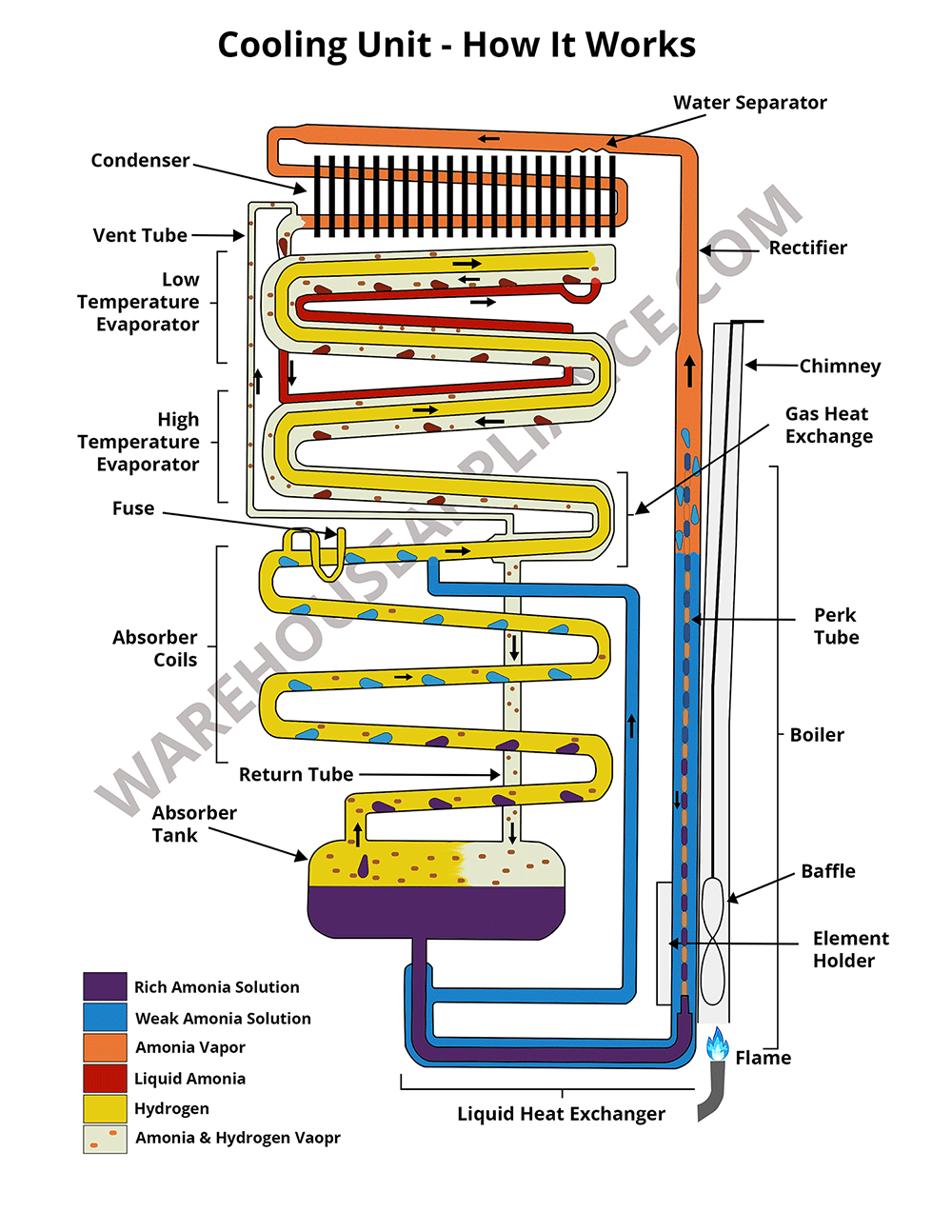
Image Source: www.warehouseappliance.com
The Magic of Absorption Refrigeration
Imagine a refrigerator that doesn’t need a compressor whirring away. That’s the beauty of a propane fridge. It uses a clever chemical process powered by heat to create cold. Instead of mechanical parts like a typical compressor, it relies on the properties of certain liquids and gases.
Deciphering the Core Components
At its heart, a propane fridge is a closed loop system containing a mixture of chemicals. The main players in this chemical drama are:
- Refrigerant: This is the substance that absorbs heat. In propane fridges, this is typically ammonia.
- Absorbent: This substance absorbs the refrigerant. Water is usually the absorbent for ammonia.
- Inert Gas: Helium is often used as an inert gas to help manage pressure differences within the system.
The Heat Source: Propane Gas
The magic begins with the heat source. In most propane fridges, this is a small burner that ignites propane gas. This flame provides the thermal energy needed to kickstart the cooling process. Even a small amount of propane can keep the fridge running for days, making it incredibly efficient for extended trips or power outages.
The Cooling Cycle: Step-by-Step
The vapor absorption cycle in a propane fridge is a fascinating journey of phase changes and pressure shifts. Let’s break down how it all happens:
Step 1: The Generator and the Boil
The propane burner heats a solution of ammonia and water in a component called the generator. As the mixture heats up, the ammonia boils and turns into a gas. This is the first crucial step in separating the refrigerant from the absorbent. The water, which has a higher boiling point, stays behind.
Step 2: The High-Pressure Ammonia Gas
The ammonia gas, now under pressure, rises up through the system. It’s essentially a hot, concentrated stream of refrigerant vapor.
Step 3: The Condenser and Liquefaction
This hot ammonia gas then travels to the condenser, usually located on the back of the refrigerator. The condenser is a set of fins designed to dissipate heat into the surrounding air. As the ammonia gas cools, it turns back into a liquid. Think of it like steam turning into water droplets on a cold window. This liquid ammonia is now at high pressure.
Step 4: The Evaporator and Cooling
The high-pressure liquid ammonia then enters the evaporator. This is where the real cooling happens. The evaporator is a low-pressure area. As the liquid ammonia enters this low-pressure environment, it starts to evaporate and turn back into a gas. This process requires energy, which it draws from the inside of the refrigerator compartment, thus making it cold. This is the core of the cooling cycle.
Step 5: The Absorbent and Reabsorption
The “spent” ammonia gas, which has absorbed heat from the fridge’s interior, then moves to the absorber. Here, it meets the water that was left behind in the generator. The water, acting as an absorbent, reabsorbs the ammonia gas. This mixture of ammonia and water is now a weak solution.
Step 6: The Pumping Action (Thermosiphon Effect)
This weak ammonia-water solution then flows back down to the generator. This is often facilitated by a natural circulation process called the thermosiphon effect, or sometimes a small electrical pump is used in more complex systems. This circulation ensures that the cycle can continue. The ammonia-water system is a closed loop, meaning these chemicals are continuously reused.
Step 7: The Inert Gas
Helium, the inert gas, plays a supporting role. It helps to maintain pressure differentials within the evaporator and absorber, ensuring that the ammonia can easily evaporate and be absorbed. This is crucial for efficient heat transfer.
Advantages of Propane Refrigeration
Propane refrigerators offer a unique set of benefits, especially for specific use cases:
Off-Grid Independence
One of the biggest draws of propane fridges is their ability to provide off-grid cooling. They don’t rely on a constant electricity supply, making them ideal for:
- Remote Cabins: Where grid power is unavailable or unreliable.
- Camping and Boating: Allowing for fresh food storage without a generator.
- Disaster Preparedness: Providing refrigeration during power outages.
Quiet Operation
Unlike compressor-based refrigerators that can be noisy, propane fridges operate almost silently. This is a significant advantage in living spaces, bedrooms, or any area where noise is a concern.
Energy Efficiency (When Used Appropriately)
While they use propane, their thermal energy consumption can be quite low for the cooling they provide. This makes them very efficient for their intended purpose, especially when compared to running a generator constantly for a standard electric fridge.
Durability and Simplicity
With fewer moving parts than compressor fridges, propane units are generally more robust and less prone to mechanical failure. The absorption refrigeration principle is inherently simple and reliable.
Propane Fridge vs. Electric Fridge: Key Differences
It’s helpful to compare propane fridges to their more common electric counterparts to fully appreciate their function.
| Feature | Propane Fridge | Electric Fridge (Compressor) |
|---|---|---|
| Cooling Method | Absorption refrigeration | Vapor-compression refrigeration |
| Primary Power | Heat (from propane, AC electric, or DC electric) | Electricity |
| Moving Parts | Few (mostly fluid movement) | Many (compressor, fan motors) |
| Noise Level | Very low / Silent | Noticeable humming or whirring |
| Power Dependence | Can run solely on propane | Requires continuous electricity |
| Efficiency | Efficient for off-grid use, low continuous use | Highly efficient with grid power |
| Initial Cost | Can be higher | Generally lower |
| Complexity | Chemically complex, mechanically simple | Mechanically complex, chemically simple |
| Location Suitability | RVs, cabins, off-grid living, boats | Homes, apartments, anywhere with grid power |
Common Applications: The RV Refrigerator
The RV refrigerator is perhaps the most iconic example of a propane fridge in action. In an RV, power is a precious commodity. The ability to switch between propane, 12V DC (from the RV battery), and 120V AC (from shore power or a generator) offers incredible flexibility.
How RV Refrigerators Utilize Propane
When an RV is parked at a campsite without hookups, or while driving, the refrigerator will often run on propane. The propane tank provides the fuel, and the RV’s plumbing directs it to the fridge’s burner. This allows for consistent cooling of food and drinks without draining the RV’s batteries or requiring a generator.
- Flexibility: The multi-power option (propane, AC, DC) is a major selling point for RV owners.
- Convenience: It means you can keep your food fresh wherever your travels take you.
- Efficiency: Propane is a cost-effective way to power the fridge for extended periods.
Maintaining Your Propane Fridge
To ensure your propane fridge operates efficiently and safely, regular maintenance is key.
Cleaning the Burner Assembly
The burner assembly, located where the propane ignites, can get dirty or clogged with soot and debris. This can reduce the efficiency of the heat transfer.
- Frequency: Check and clean annually, or if you notice reduced cooling performance.
- Method: Carefully disconnect the propane. Use a soft brush or compressed air to clean the burner orifice and surrounding areas. Never use sharp objects that could damage the burner.
Inspecting the Flue and Vent
The flue is responsible for safely expelling exhaust gases from the burner. A blocked flue can be dangerous.
- Frequency: Inspect regularly, especially before extended use.
- Method: Visually check for any obstructions like bird nests or debris. Ensure the vent is clear and properly sealed.
Checking the Refrigerator Seals
Worn or damaged door seals can allow cold air to escape and warm air to enter, making the fridge work harder.
- Frequency: Inspect monthly.
- Method: Perform the “dollar bill test”: close the door on a dollar bill. If you can easily pull it out, the seal might be compromised and needs replacing.
Leveling the Refrigerator
Propane fridges are highly sensitive to being level. If the unit is not perfectly vertical, the circulation of the ammonia-water solution can be impaired, leading to poor cooling.
- Frequency: Always ensure it’s level when you set it up, and check periodically.
- Method: Use a spirit level on both the top and sides of the refrigerator. Adjust the RV or cabin floor, or the fridge’s leveling feet, until it’s perfectly level.
Propane Tank and Lines
Ensure your propane tank is filled and that the gas lines are free from leaks.
- Frequency: Check tank levels before long trips. Inspect lines visually for damage.
- Method: Use a soapy water solution applied to connections; bubbles indicate a leak.
Troubleshooting Common Issues
Even with proper maintenance, you might encounter minor issues.
Fridge Not Cooling Effectively
- Check Leveling: This is the most common cause.
- Inspect Burner: Ensure it’s clean and the flame is consistent.
- Check Condenser Fins: Make sure they are clean and not blocked by dust or debris.
- Verify Propane Flow: Ensure the propane tank is open and has fuel.
Refrigerator Freezing Up
This is usually a sign of the cooling element working too well or an issue with the thermostat.
- Adjust Thermostat: Turn the setting down slightly.
- Check Door Seals: A poor seal can let warm, moist air in, causing frost.
Ammonia Smell
A faint ammonia smell might indicate a small leak.
- Immediate Action: Turn off the propane supply to the refrigerator and ventilate the area.
- Inspection: Carefully inspect all connections and the coils for any signs of leaks. If you find a leak, the unit will need professional repair.
Safety First
Working with propane requires caution.
- Ventilation: Propane appliances produce exhaust gases, including carbon monoxide. Ensure adequate ventilation for the appliance and the space it’s in.
- Leak Detection: Always use a reliable method for detecting propane leaks.
- Professional Servicing: For any significant issues or repairs, consult a qualified technician.
The Future of Absorption Refrigeration
While propane fridges are a staple in RVs and off-grid applications, the principle of absorption refrigeration continues to evolve. Research is ongoing to improve efficiency and explore alternative heat sources. However, for reliable off-grid cooling powered by readily available propane gas, the traditional ammonia-water system remains a tried-and-true technology. The cooling process it employs is a testament to ingenious engineering, turning simple heat into the comfort of cold.
Frequently Asked Questions (FAQ)
How much propane does a refrigerator use?
The amount of propane a refrigerator uses varies depending on its size, efficiency, and ambient temperature. However, a typical RV refrigerator can run for several days to over a week on a standard 20-pound propane tank.
Can a propane fridge run on electricity?
Yes, many propane refrigerators, especially those found in RVs, are designed as “three-way” refrigerators. This means they can run on propane, 12V DC electricity, or 120V AC electricity. The ability to switch power sources makes them incredibly versatile.
Is it safe to run a propane fridge indoors?
Propane refrigerators must be properly installed and vented to the outdoors. The combustion process produces carbon monoxide, which is a dangerous gas. Ensure the appliance is installed according to manufacturer specifications and in a well-ventilated area.
Why doesn’t my propane fridge cool as well as my home fridge?
Propane fridges are designed for efficiency and often use a different cooling mechanism (absorption refrigeration vs. compressor-based). They also rely on natural convection and airflow for heat dissipation. Factors like proper leveling, clean condenser fins, and the absence of drafts are crucial for optimal performance.
What is the main difference between propane and electric refrigerators?
The fundamental difference lies in how they generate cold. Electric (compressor) refrigerators use mechanical compression to circulate a refrigerant, requiring continuous electricity. Propane refrigerators use thermal energy from propane (or other heat sources) to drive a chemical cooling cycle involving vapor absorption and evaporation, making them independent of electrical grids.