
Image Source: www.arprv.com
Simple Guide: How Does A Camper Fridge Work?
How does an RV refrigerator work? Unlike the fridge in your home that uses a compressor and refrigerant gas, a camper fridge (often called an absorption refrigerator) works by using heat to power a special cooling cycle. It uses a mix of liquids and gases, mainly water and ammonia, to create cold. These fridges are very common in RVs because they can run on different power sources like AC electricity (when plugged in), DC electricity (12V camper fridge when driving), and propane fridge (when camping without power). This makes them very flexible, leading to many being 3-way refrigerator models.
Grasping the Basics: Heat Makes Cold?
It sounds strange, but a camper fridge truly uses heat to make the inside cold. Instead of squeezing a gas with a motor like your kitchen fridge does, these fridges use a clever chemical process. This process moves heat from inside the fridge to the outside.
Think of it like this:
* In your house fridge, a motor runs, and you hear it hum. It squeezes a special liquid (refrigerant) into a gas, which gets cold and absorbs heat inside. Then it squeezes the gas back into a liquid outside, releasing the heat.
* In a camper fridge, there’s no motor. There are no moving parts in the main cooling system. It uses heat from an electric element or a propane flame to make the special liquids and gases move around inside sealed tubes. This movement is what makes the cold happen.
This is why they are called absorption refrigerators. They use the process of ammonia absorption into water to help the cycle along.
The Core Engine: The RV Cooling Unit
The heart of a camper fridge is its RV cooling unit. This is a sealed system of pipes and tanks. Inside this system is the special mix of water, ammonia, and sometimes a rust inhibitor. The cooling unit is where all the magic happens. It’s designed so that the liquids and gases flow through it in a specific path, changing state (from liquid to gas and back) and absorbing heat as they go.
This sealed unit is why you can’t easily fix the main cooling problem yourself if it breaks. It requires special knowledge and tools to handle the chemicals inside.
The Magic Circle: The Absorption Cooling Cycle Explained
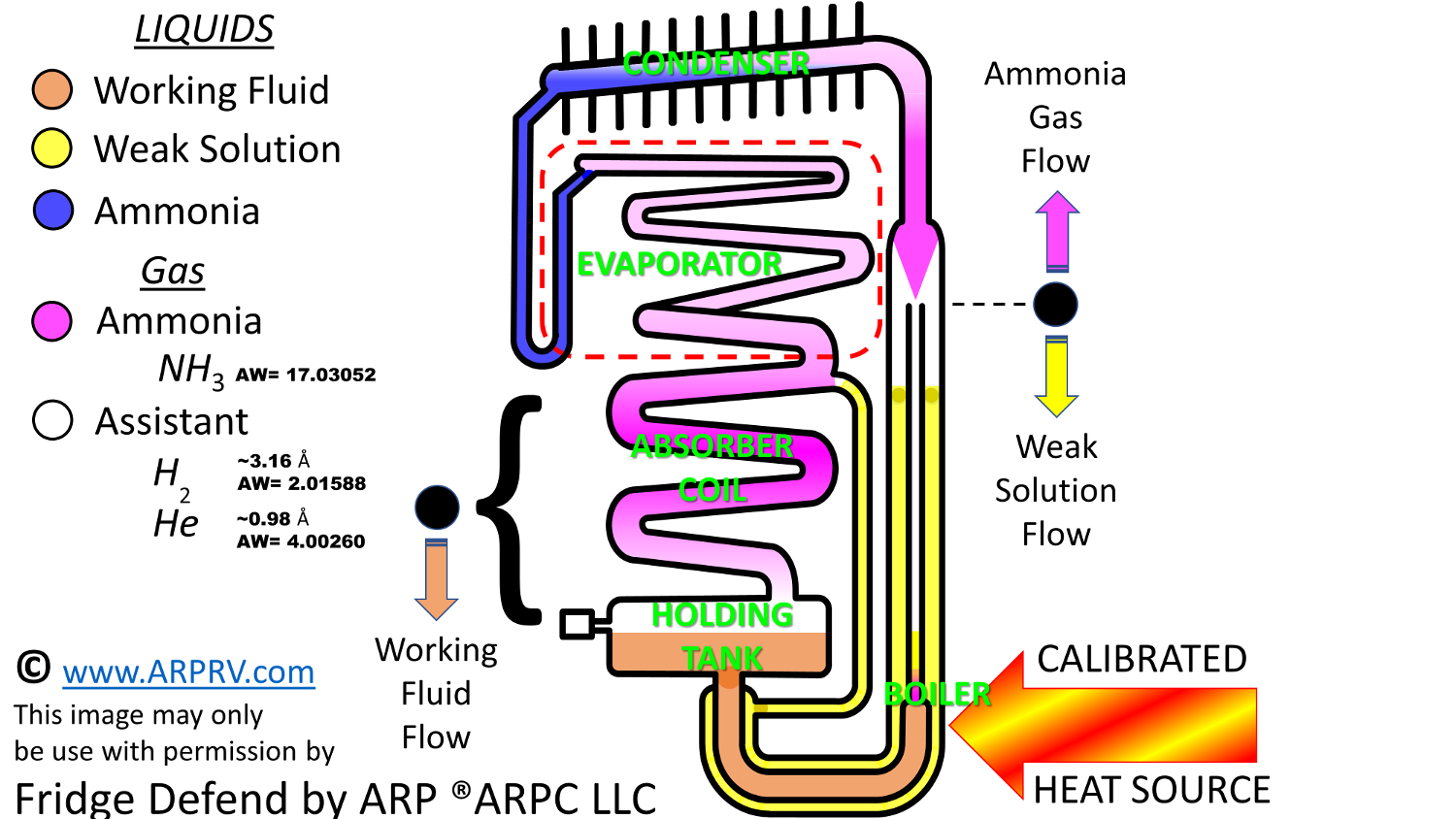
Let’s take a closer look at how the absorption cooling cycle actually works. It’s a continuous loop. Heat energy starts the whole thing.
Here are the simple steps:
- Heating: Heat is applied to a part of the
RV cooling unitcalled the generator. This heat comes from either an electric heating element or apropaneflame. Inside the generator is a strong solution ofammoniadissolved in water. - Separating: The heat boils the
ammoniaout of the water solution. Think of it like boiling water and the steam comes off. In this case,ammoniagas rises, leaving most of the water behind. A little water vapor might go with theammoniagas. - Condensing: The hot
ammoniagas travels up to a part called the condenser, usually located on the back of the fridge, often with cooling fins. Here, the heat is removed (given off to the outside air), and theammoniagas turns back into a liquid. This is the same process as steam hitting a cold window and turning back into water droplets. - Evaporating (Making Cold): The liquid
ammoniaflows down into the evaporator coils. These coils are inside the freezer and fridge sections. Here, the pressure is lower, and the liquidammoniabegins to boil and turn back into a gas. Turning from a liquid to a gas requires heat. Theammoniatakes this heat from inside the fridge and freezer compartments. This is what makes the inside cold! - Absorbing: The
ammoniagas, which is now warmer after absorbing heat, flows to a part called the absorber. Here, it meets up with the water that was left behind in the generator. The water absorbs theammoniagas very easily. This process is calledammonia absorption. - Returning: The resulting strong solution of
ammoniain water flows back down to the generator, ready to be heated again.
And the cycle repeats! It keeps going as long as heat is applied, constantly moving heat from the inside of the fridge to the outside, keeping your food cold.
Key Parts of the RV Cooling Unit
The sealed system has specific parts that make the absorption cooling cycle work:
- Generator: Where heat boils the
ammoniaout of the water solution. - Separator: A place where any remaining water vapor that went up with the
ammoniagas is removed before theammoniagoes to the condenser. - Condenser: Where hot
ammoniagas cools down and turns back into liquid. It looks like coils with fins on the back of the fridge. - Evaporator: Coils inside the fridge and freezer where liquid
ammoniaboils and absorbs heat from the inside. This is the cold part. - Absorber: Where
ammoniagas mixes back with water. A small amount of hydrogen gas is also present in the system to help theammoniaevaporate at low pressure in the evaporator. The absorber allows the ammonia to dissolve back into water, ready to return to the generator.
Here is a simple look at the parts and their job:
| Part | Main Job | What Happens Here |
|---|---|---|
| Generator | Starts the cycle with heat | Water and ammonia are heated; ammonia boils off |
| Condenser | Gives off heat to the outside | Hot ammonia gas cools and becomes liquid |
| Evaporator | Makes the inside cold | Liquid ammonia boils, absorbs heat from inside |
| Absorber | Prepares ammonia to return to the generator | Ammonia gas mixes with water; solution is formed |
Power for Your Fridge: The Options
One big advantage of RV refrigerators is their ability to run on different kinds of energy. This is why many are called 3-way refrigerators (AC, DC, and propane) or sometimes 2-way refrigerators (AC and propane).
AC Electric Power
- How it works: When you are plugged into shore power (like at a campground) or running a generator, the fridge uses a standard electric heating element in the generator section.
- When to use it: This is the most common way to run your fridge when you are stopped and have access to hookups. It’s efficient and doesn’t use up your propane supply.
12V Camper Fridge Power (DC Electric)
- How it works: Some RV fridges can run on 12-volt DC power from your RV’s batteries or vehicle’s alternator. Like AC, it uses an electric heating element, but one designed for 12V.
- When to use it:
- Often used while driving. The vehicle’s engine charges the batteries and powers the fridge. This keeps things cool on the road.
- It generally uses a lot of battery power, so it’s usually not good for running the fridge for long periods when stopped without the engine running or without solar panels.
Propane Fridge Power
- How it works: When using propane, a small
propaneflame heats the generator section. - When to use it: This is perfect for boondocking (camping without hookups) or when you are parked without AC power. A small amount of propane can keep the fridge cold for a long time.
- Important Note: For safety, many people turn off
propanewhen driving, especially when getting gas or going through tunnels. Running on 12V is preferred while driving.
The 3-Way Refrigerator
As mentioned, a 3-way refrigerator can automatically or manually switch between AC electric, DC electric (12V camper fridge), and propane fridge power sources. This flexibility is key to RVing, letting you keep your food cold no matter where you are or what power sources are available.
Why Use These Fridges in RVs?
Given their unique design, why are absorption refrigerators the standard in many RVs instead of regular home fridges?
- Multiple Power Options: This is the biggest reason. Running on propane means you don’t need electricity at all to keep your food cold. This is essential for camping off-grid.
- No Moving Parts (in the cooling cycle): The
RV cooling unititself has no motors or compressors. This means they are very quiet and have fewer mechanical parts to wear out in the cooling loop itself (though other parts like thermostats or igniters can fail). - Durability: The lack of a compressor means they can often handle the vibration and movement of being in a moving vehicle better than a compressor-based fridge.
Common Problems: RV Fridge Not Cooling
One of the most common headaches for RV owners is discovering their RV fridge not cooling. Since there are no moving parts in the cooling unit itself, the problem is usually related to how the cycle is started or maintained.
Here are common reasons your RV fridge not cooling might happen and simple things to check:
1. Not Level Enough
- The Problem: The
absorption cooling cyclerelies on gravity to help move the liquids and gases through the pipes. If the RV is not reasonably level (within a few degrees), the flow can stop or slow down. This breaks the cycle. - Fix: Make sure your RV is parked on a level spot. Use leveling blocks or your leveling system. The fridge needs to be level side-to-side and front-to-back for the system to flow right.
2. Not Given Enough Time
- The Problem: Absorption fridges take a long time to cool down compared to home fridges. It can take 6-8 hours, sometimes even 12-24 hours, to get fully cold inside, especially when starting from warm.
- Fix: Turn the fridge on the day before your trip or loading food. Give it plenty of time to get cold. Pre-cool food before putting it in.
3. Airflow Blocked on the Outside
- The Problem: The condenser on the back of the fridge needs to get rid of heat into the outside air. If the vents on the side of the RV (or on the roof for slide-out fridges) are blocked by dirt, nests, or storage items, the fridge can’t release heat and won’t cool well.
- Fix: Check the outside vents. Make sure they are clear. Clean them if needed.
4. Wrong Power Source Selected or Not Working
- The Problem: The fridge isn’t getting the heat source it needs. Maybe it’s set to propane, but the gas is off, or the igniter is dirty. Maybe it’s set to AC, but there’s no power. Maybe it’s set to 12V, but the engine isn’t running.
- Fix:
- Check the controls. Is it on the right power source for your situation?
- If on AC: Is the RV plugged in? Is the circuit breaker tripped? Is the outlet working?
- If on
propane: Is the propane tank open? Is there gas in the tank? Did the flame light (you might hear a faint hiss or see a small flame through a viewing port)? Is the igniter sparking? Are the burner and chimney clean? - If on 12V: Is the engine running? Is the switch set correctly? Is the fuse blown?
5. Too Much Food or Hot Food
- The Problem: Putting too much warm food into the fridge at once or packing it so tightly that air cannot flow inside makes it very hard for the fridge to cool down.
- Fix: Load the fridge gradually. Try to pre-cool food before putting it in. Don’t pack it full to the brim. Leave space for air to move around.
6. Door Seal Problem
- The Problem: If the door seal is cracked or doesn’t close tightly, cold air escapes, and warm air gets in.
- Fix: Check the door seal. Is it clean? Does it seal all the way around? You can try the “dollar bill test” – close the door on a dollar bill. If you can pull it out easily, the seal is bad in that spot.
7. Thermostat or Control Board Issue
- The Problem: The electronic controls or the thermostat might not be telling the cooling unit to turn on or might be reading the temperature wrong.
- Fix: This often requires troubleshooting specific to your fridge model. Sometimes resetting the fridge (turning it off and on at the breaker or main switch) can help. If not, a technician might be needed.
8. RV Cooling Unit Failure
- The Problem: This is less common but serious. The sealed system can develop a leak, or corrosion can block the flow. If the yellow/greenish powder leaks out, or if the cooling unit gets extremely hot and smells like burnt ammonia (a strong, bad smell), the cooling unit has likely failed.
- Fix: A failed
RV cooling unitusually cannot be repaired easily. It needs to be replaced. This is the most expensive type of fridge failure.
When your RV fridge not cooling, start with the simple checks (level, time, power, door seal, airflow) before assuming a major problem.
Tips for Getting the Best Cooling
To help your absorption refrigerator work its best, try these tips:
- Pre-cool: Turn the fridge on hours before you load it.
- Load Cold Food: Put food that is already cold into the fridge.
- Don’t Overpack: Allow air to circulate inside the fridge and freezer.
- Keep it Level: Always park as level as possible when running the fridge on AC or propane.
- Check Vents: Make sure the outside vents are clear for good airflow.
- Minimize Door Opening: Only open the door when you need to and close it quickly.
- Use Fans: Some people add small fans inside the fridge to help air circulation. There are also small external fans you can add to the outside vents to improve airflow over the condenser in hot weather.
Keeping Your Camper Fridge Running: Simple Maintenance
Regular simple checks can help prevent your RV fridge not cooling issues:
- Clean the Burner and Chimney (Propane): Dust, dirt, and even spiderwebs can clog the propane burner and the chimney above it. A clogged burner won’t produce enough heat. Clean these areas regularly. Follow your fridge’s manual for how to do this safely.
- Check Electric Elements: For electric operation, ensure the heating elements are working. This often requires testing with a multimeter by a knowledgeable person.
- Clean Vents and Coils: Keep the outside condenser coils (fins) and the vent areas clean. Brush away dust, leaves, or insect nests.
- Check Door Seals: Clean the door seals with mild soap and water. Check for cracks or tears.
- Check for Leaks: Periodically inspect the back of the fridge for any signs of yellow or greenish residue or a strong ammonia smell. This indicates a serious problem.
- Keep it Level During Storage: If storing your RV for a long time, make sure the fridge is level. Some suggest leaving the doors slightly ajar to prevent mold, but check your manual.
Absorption vs. Compressor Fridges (Briefly)
While this guide is about absorption refrigerators, it’s helpful to know the main difference from the compressor fridges found in some newer RVs or used as portable units (12V camper fridge often refers to these types too, which can be confusing).
- Absorption: Uses heat, no moving parts in cooling loop, runs on multiple power types (AC, DC, Propane), quiet, needs to be level, slower cooling, sensitive to outside temperature.
- Compressor: Uses electricity (AC or DC, typically
12V camper fridgeor 120V), has a motor/compressor, more efficient with electricity, cools faster, works on slopes, less sensitive to outside temperature, can be louder, only runs on electricity.
Most older and many new RVs still use the absorption refrigerator because of the vital propane option for off-grid camping.
Fathoming the Technology
The absorption refrigerator is a clever piece of engineering. By using the natural properties of chemicals and the simple power of heat, it creates a cooling effect without the need for a complex mechanical compressor. The cycle of heating, separating, condensing, evaporating, and absorbing allows ammonia to act as the refrigerant, transferring heat out of the insulated space.
Understanding the absorption cooling cycle helps you troubleshoot problems like your RV fridge not cooling and appreciate why levelness and proper airflow are so important. The ability to switch between camper fridge power sources (AC, DC, propane fridge), making it a 3-way refrigerator, is what makes this technology so suitable for the varied adventures of RV travel.
Keeping this unique system clean, level, and supplied with the correct power source are the keys to keeping your food and drinks cold on the road or at the campground.
Frequently Asked Questions
Q: How long does it take for a camper fridge to get cold?
A: It usually takes 6 to 8 hours, and sometimes even up to 12-24 hours, for an absorption refrigerator to reach its proper cold temperature inside. Start it the day before you need it.
Q: Can I drive with my RV fridge running on propane?
A: Technically, yes, many RV fridges are designed to run on propane while driving. However, for safety, it’s often recommended or required to turn propane off when fueling up or going through tunnels. Running on 12V DC power while driving is a common and often preferred alternative.
Q: How level does my RV need to be for the fridge to work?
A: Your RV needs to be reasonably level, typically within a few degrees (like being slightly off, but not so much that you feel like you’re walking uphill). If it’s noticeably sloped, especially side-to-side, the fridge might not cool properly.
Q: What does it mean if I smell ammonia?
A: A strong ammonia smell, especially combined with a yellowish or greenish powder near the back of the fridge, is a sign that the sealed RV cooling unit has likely leaked. This is a serious problem, and the cooling unit will need to be replaced. Turn the fridge off and ventilate the area immediately.
Q: Why does my 12V camper fridge drain my battery so fast when I’m not driving?
A: If you have an absorption refrigerator that has a 12V option, the 12V heating element uses a significant amount of power. Unlike AC or propane, it’s not very efficient for continuous cooling. It’s mainly meant to maintain temperature while driving using power from the alternator. If it’s a compressor-type 12V camper fridge, it might be more efficient but still uses battery power continuously.
Q: Why does my fridge work fine on propane but not on electric (or vice versa)?
A: This suggests the problem is with the specific heating source or its controls, not the main RV cooling unit. If propane works but electric doesn’t, check the AC heating element, circuit breaker, or electric controls. If electric works but propane doesn’t, check the propane supply, burner, igniter, or gas valve.