
If your air conditioner has ice on ac unit, it means your ac evaporator coil frozen. To unfreeze your air conditioner, the first and most important step is to turn off ac to unfreeze it safely. Then, you need to find out what caused the ac freezing up causes so you can fix the problem and stop it from happening again.
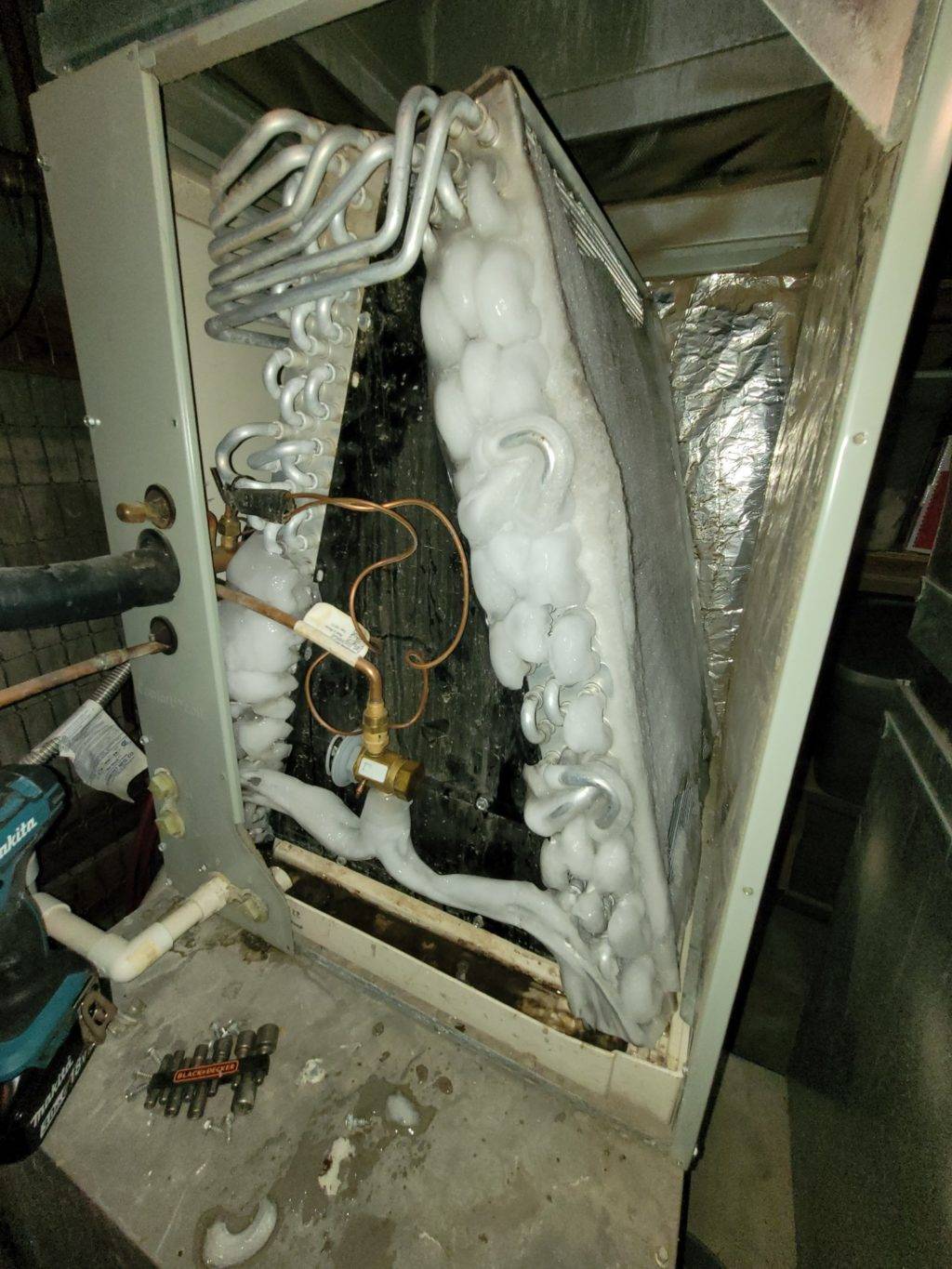
Image Source: www.manmadediy.com
Why Your AC Gets Ice
Your air conditioner makes cool air for your home. It uses parts that get very cold. One key part is the evaporator coil. Air blows over this coil. This makes the air cool. Then this cool air goes into your house.
Sometimes, ice forms on the ac unit. You might see ac unit ice build up on the pipes or the coil inside your home’s air handler. This happens when the coil gets too cold. It gets colder than the freezing point of water. The water in the air turns into ice on the coil.
Dangers of Ice on Your AC
Seeing ice on your AC is a big warning sign. Do not just keep running the unit. Running an AC with a frozen coil can cause more damage.
- It can harm the compressor. This is a very expensive part.
- It stops your house from getting cool. The ice blocks airflow.
- It can cause water damage. As the ice melts, a lot of water comes out. Your drain system might not handle it.
The First Step: Turn Off the AC
The very first thing you must do is turn off ac to unfreeze it. Go to your thermostat. Change the setting from ‘Cool’ to ‘Off’.
Do not just turn the temperature up. This will not work. You need to stop the cooling process completely.
If you see ice on the outdoor unit too, turn off the power to the outdoor unit as well. You can usually find a shut-off switch near the outdoor unit. It looks like a light switch in a small box.
How to Defrost Your AC Coil
Once the power is off, you need to let the ice melt. This can take time. It might take a few hours. It could even take up to 24 hours for a lot of ice.
Be ready for water. Place towels or buckets around the indoor unit. This is where the evaporator coil is. The melting ice will turn into water.
Speeding Up the Melting
You can help the ice melt faster.
Use ac fan only mode to melt ice. After you turn the system ‘Off’, go back to your thermostat. Change the setting from ‘Off’ to ‘Fan’. Make sure the fan is set to ‘On’ (not ‘Auto’).
This makes the indoor fan blow air over the frozen coil. The air from your home is warmer than the ice. Blowing warmer air helps the ice melt faster. This does not use the cooling system. It just runs the fan.
Keep the fan running until all the ice is gone. Do not turn the cooling back on until you are sure there is no ice left. Look closely at the coil and pipes.
Do Not Try to Chip Ice
Never use a sharp tool to chip or break off the ice. You can easily damage the delicate parts of the coil. This can cause leaks. Damaging the coil means very costly repairs. Just let the ice melt naturally or with the fan.
Grasping Why Your AC Freezes Up
Once the ice is gone, you need to find out why it happened. There are several common ac freezing up causes. Fixing the cause is key. If you do not, the ice will just come back.
Most reasons for ac freezing up causes come down to one thing: Not enough warm air is flowing over the evaporator coil. When less warm air hits the coil, the coil gets too cold.
Think about putting your hand in front of a fan. If the fan blows hard, your hand feels cool. If it blows softly, it feels less cool. The AC coil is like your hand. It needs air blowing over it to work right. If not enough air blows, the coil gets too cold and freezes.
Here are the main reasons for low airflow or pressure problems:
- Dirty air filters
- Low refrigerant levels
- Blocked vents or ducts
- Faulty blower motor
- Clogged drain line
- Issues with the outdoor unit
Let’s look at these causes in more detail.
Dirty Air Filter Freezing AC
This is the most common reason. Your AC system has an air filter. This filter catches dust, dirt, and other stuff in the air. It stops this stuff from getting into your AC unit and your home’s air.
Filters get dirty over time. When a filter is full of dirt, air cannot pass through it easily. It blocks the flow of air to the evaporator coil.
Imagine trying to breathe through a thick blanket. It is hard to get air. A dirty filter does the same thing to your AC.
When less warm air blows over the coil, the coil’s temperature drops too much. It drops below freezing. The moisture in the air then freezes onto the coil.
A dirty air filter freezing ac is easy to check and often easy to fix yourself.
Checking the filter: Find your air filter. It’s usually near the indoor air handler unit. It might be in a return air vent in your wall or ceiling. Pull it out and look at it.
What a dirty filter looks like: A clean filter lets light pass through easily. You can see the filter material clearly. A dirty filter looks gray or black. It might look like a thick mat of dust and hair. You cannot see light through it easily.
Fixing it: If the filter is dirty, change it. Buy a new filter that is the same size as the old one. There will be numbers on the side of the filter (like 20x20x1). Make sure the new filter has the same numbers. Put the new filter in. Make sure the arrow on the filter points in the direction of the airflow (usually towards the air handler).
Changing your air filter regularly is very important. Check it every month. Change it every 1-3 months, depending on the type of filter and how much you use your AC.
Low Refrigerant AC Freezing
Refrigerant is the special fluid inside your AC system. It cycles through the system. It picks up heat from inside your home and releases it outside. This process is how your AC cools the air.
The refrigerant changes state from a liquid to a gas and back. This change helps move heat.
If your AC has low refrigerant, it means there is a leak. Refrigerant is in a closed system. It should not run out like gas in a car. If it is low, it has leaked somewhere.
Low refrigerant causes the pressure inside the cooling system to drop. Lower pressure causes the evaporator coil to get much colder than it should. This temperature drop goes below freezing.
Low refrigerant ac freezing is a common cause of ice.
Signs of low refrigerant: Besides freezing, other signs include:
* Your house is not getting cool enough.
* Warm air comes from the vents.
* You might hear a bubbling or hissing sound (this can be the refrigerant leaking).
* Higher electricity bills (the system works harder but does not cool).
Fixing it: Low refrigerant is not something you can fix yourself. You cannot just add more refrigerant. A trained AC technician must find the leak, fix it, and then add the correct amount of refrigerant. Adding too much or too little is bad for the system.
If you suspect low refrigerant, call an AC repair company.
Blocked Vents or Ducts
Your AC system uses ducts to move air. Cool air goes through supply vents into your rooms. Warm air from your rooms goes back through return vents to the air handler.
If these vents or ducts are blocked, it stops air from flowing freely.
- Blocked supply vents: These are the vents cool air comes out of. If furniture, curtains, or rugs block these vents, less cool air gets into the room. This also means less warm air returns to the air handler.
- Blocked return vents: These are the vents where air is pulled back into the system. If these are blocked (like with furniture or a pile of laundry), the air handler cannot pull enough air in. This is similar to a dirty filter.
Not enough warm air returning to the coil causes it to get too cold and freeze.
Checking for blocks: Walk around your home. Check every vent.
* Make sure nothing is sitting on or right in front of supply vents.
* Check return vents (they are usually larger than supply vents). Make sure they are not blocked.
* Look into the vents if you can. Do you see toys or other things blocking the duct right inside?
Fixing it: Move anything blocking the vents. If something is stuck inside a vent or duct, you might need a tool to reach it. For blockages deep in the ducts, you might need professional duct cleaning.
Faulty Blower Motor
The blower motor is the part that pushes air through your duct system. It’s the fan inside your indoor air handler.
If the blower motor is not working correctly, it will not move enough air. It might be weak, or it might stop working completely.
If the blower motor runs slow or stops, not enough air flows over the evaporator coil. This leads to the coil getting too cold and freezing.
Signs of a bad blower motor:
* Very little or no air coming from your vents.
* The indoor unit sounds like it is running, but you don’t feel air moving.
* Strange noises from the indoor unit (grinding, squealing).
Fixing it: A faulty blower motor usually needs a professional to fix or replace it. This is not a DIY job for most people. Call an AC technician.
AC Drain Line Clogged Freezing
Your AC system removes moisture from the air. This moisture turns into water. The water drips into a drain pan under the evaporator coil. From the pan, the water flows through a drain line, usually outside your home.
If this ac drain line clogged freezing occurs, it’s not usually the cause of the coil freezing, but a clogged drain line is a consequence of too much moisture or a frozen coil melting. However, sometimes, a primary blockage can affect the system leading to issues. More often, the ice melting causes the pan to overflow because the drain is blocked.
A clogged drain line itself doesn’t directly cause the coil to freeze in the same way as airflow or refrigerant issues. But a serious clog can lead to water backing up. In some systems, this might trip a safety switch that shuts off the unit. Or, if the pan overflows near electrical components, it can cause problems.
The main issue with an ac drain line clogged freezing situation is the water damage it can cause when the ice melts.
Signs of a clogged drain line:
* Water overflowing from the drain pan under the indoor unit.
* Water stains on the ceiling or walls near the indoor unit (if it’s in an attic).
* Smell of mildew or mold near the indoor unit.
Fixing it:
* Clearing a small clog: You can sometimes clear a small clog using a shop-vac at the end of the drain line outside. This pulls the blockage out.
* Using vinegar: You can pour a cup of white vinegar into the drain line access point near the indoor unit. This helps kill mold and algae that cause clogs. Do this a few times a year as prevention.
* Using a snake: For tough clogs, you might need a plumber’s snake.
* Professional help: If you can’t clear the clog, or if it keeps happening, call a technician.
While a clogged drain line is often a result of ice melting, ensuring it’s clear is vital to handle the melting water correctly and prevent water damage.
Issues with the Outdoor Unit
The outdoor unit (condenser) works with the indoor unit. It releases the heat that was removed from inside your home.
Problems with the outdoor unit can sometimes affect the whole system pressure, potentially leading to the indoor coil freezing.
- Dirty condenser coils: The fins on the outdoor unit can get covered in dirt, leaves, or grass clippings. This stops the unit from releasing heat properly. This can affect the system’s pressure and might contribute to freezing inside.
- Fan not working: The fan on the outdoor unit blows air over the hot coil to cool it down. If this fan breaks, the unit overheats and cannot work right. This can mess up the refrigerant cycle and lead to freezing.
Checking the outdoor unit:
* Look at the fins around the outside of the unit. Are they covered in dirt or debris?
* Listen to the unit when it is trying to run (only after the indoor ice is melted and you are testing). Is the fan spinning?
Fixing it:
* Cleaning: Turn off the power to the outdoor unit at the shut-off switch. Use a garden hose to gently spray the fins from the inside out to remove dirt. Be careful not to bend the fins.
* Fan repair: If the fan is not spinning, turn off the power immediately and call a technician. Do not try to fix it yourself.
Interpreting the Signs After Defrosting
Once the ice is completely melted (which might take many hours), clean up the water. Then, you need to figure out the cause before turning the AC back on in cooling mode.
Here is a simple way to think about it:
| Sign | Most Likely Cause | What to Do Next |
|---|---|---|
| Filter looks dirty/clogged | Dirty air filter freezing ac | Replace the filter. |
| Little air from vents | Dirty filter OR Blocked vents/ducts | Check filter, check all vents/ducts. Check blower. |
| Unit not cooling well | Low refrigerant ac freezing OR Airflow issue | Check filter/vents. If still poor cooling, call pro. |
| Hissing/bubbling sound | Low refrigerant ac freezing | Call a professional technician. |
| Water overflowing from drain pan | AC drain line clogged freezing OR Lots of melted ice | Clear the drain line. Check for underlying cause of ice. |
| Blower fan inside not running right | Faulty blower motor | Call a professional technician. |
| Outdoor fan not running right | Faulty outdoor fan | Call a professional technician. |
| Outdoor unit fins very dirty | Dirty condenser coils | Turn power off, clean fins gently. |
Start with the simplest and most common cause: the air filter. Always check that first.
Steps to Take After Ice Melts
- Confirm all ice is gone: Look closely at the coil and pipes. No ice anywhere.
- Clean up water: Make sure the drain pan is empty and dry. Clean up any water on the floor or nearby. Check for water damage.
- Check the air filter: Is it dirty? Replace it if it is. Even if it looks only slightly dirty, put in a clean one to be sure.
- Check all vents: Make sure no supply or return vents are blocked by furniture, rugs, or anything else.
- Check the drain line: If you had water overflow, try to clear the drain line. Pour vinegar or use a shop-vac.
- Turn power back on: If you turned off the power switch near the unit, turn it back on.
- Test the fan: Turn the thermostat to ‘Fan’ and ‘On’. Feel the air coming from your vents. Is it strong? If not, the blower motor might be weak.
- Turn AC to Cool: If the fan airflow seems good and you think you fixed the likely cause (like the filter or a blocked vent), turn the thermostat back to ‘Cool’. Set the temperature lower than your room temperature to make it run.
- Monitor the AC: Let the AC run for an hour or two. Check the indoor unit again. Is ice starting to form again? Is the air coming out cool?
- Call a Pro: If ice starts to form again quickly, or if you suspect low refrigerant, a bad motor, or another issue you can’t fix, it is time to call a qualified AC technician.
When to Call a Professional
You should call an AC technician if:
* You found ice on ac unit, let it melt, checked the filter and vents, but the unit freezes up again soon after running in ‘Cool’ mode.
* You hear sounds like hissing or bubbling, which point to low refrigerant ac freezing issues.
* The blower fan is not moving much air, suggesting a faulty blower motor.
* The outdoor unit fan is not working.
* You cannot clear a clogged ac drain line clogged freezing situation, or it happens often.
* You see damage to the unit or wiring.
* You are not comfortable checking or fixing the potential causes yourself.
Fixing AC problems like low refrigerant requires special tools and knowledge. It is illegal for people without certification to handle refrigerants. A professional can correctly diagnose the problem, fix leaks, add the right amount of refrigerant, and check other parts of the system.
Fathoming Prevention
Stopping your AC from freezing again is better than dealing with ice. Most prevention steps are about keeping good airflow.
- Regular Filter Changes: This is the easiest and most effective step. Check your filter monthly. Change it when it looks dirty. Mark it on your calendar or set phone reminders.
- Keep Vents Clear: Make sure furniture and other items are not blocking any supply or return vents.
- Regular Maintenance: Schedule professional AC maintenance once a year (usually in the spring before cooling season). A technician will clean the coils, check refrigerant levels, check the blower motor, inspect the drain line, and look for other potential problems. This yearly check-up can catch small issues before they cause bigger ones, like ac unit ice build up.
- Check Drain Line: Periodically check the drain pan for water. You can pour a little vinegar down the drain line access a few times a year to help prevent clogs.
- Keep Outdoor Unit Clean: Gently spray the outdoor unit fins with a hose yearly or when they look dirty. Keep plants and debris away from the unit.
By doing these simple things, you greatly reduce the chances of your ac freezing up causes from happening.
Summary of Actions When You See Ice
- STOP: Turn the AC thermostat to ‘Off’ immediately.
- MELT: Let the ice melt completely. Use ac fan only mode to melt ice faster. Put towels/buckets down for water. Do NOT chip ice.
- FIND CAUSE: Once melted, check the air filter, vents, and drain line. Think about other signs (sounds, airflow).
- FIX: Replace the filter, clear vents, try to clear the drain line.
- TEST: Turn power back on. Test the fan mode. If airflow is good, try ‘Cool’ mode.
- MONITOR: Watch for ice reforming. Feel the air.
- CALL A PRO: If ice comes back or you suspect low refrigerant or mechanical issues, call a technician.
Remember, seeing ice means something is wrong. Ignoring it will likely cause more damage and cost you more money later. Taking the right steps helps protect your AC system and keeps your home cool safely.
Table of Common AC Issues and Causes
| Issue Seen | What It Means | Possible Cause(s) | Action Steps |
|---|---|---|---|
| Ice on indoor coil/pipes | AC evaporator coil frozen | Low airflow, Low refrigerant, other issues | Defrost, then diagnose the cause. |
| Weak airflow from vents | Air not moving well through the system | Dirty filter, Blocked vents, Blower issue | Check/change filter, Clear vents, Check blower. |
| Unit not cooling enough | System not removing heat effectively | Low refrigerant, Airflow issue, Other fault | Defrost (if frozen), Check filter/vents, Call pro. |
| Water leaking indoors | AC drain line clogged freezing OR melting ice | Clogged drain line, Lots of melted ice | Clear drain line, Defrost if frozen. |
| Hissing/Bubbling sounds | Refrigerant leak | Low refrigerant ac freezing | Call a professional. |
| Outdoor unit not running right | Problem with condenser fan, coil, or compressor | Dirty coil, Fan issue, Compressor problem | Turn off power, Check for dirt/fan, Call pro. |
This table gives a quick look at common problems related to AC ice and their likely sources.
FAQs
Q: How long does it take for an AC coil to unfreeze?
A: It can take anywhere from a few hours to 24 hours. It depends on how much ice there is and the temperature of the air blowing over the coil. Using the fan mode helps it melt faster.
Q: Can I run my AC with ice on it?
A: No. Never run your AC in cooling mode if there is ice on it. This can seriously damage the system, especially the compressor, which is very expensive to fix.
Q: What should I do if the drain pan is overflowing?
A: Turn off the AC immediately. This water can cause damage. Once the ice is melted, clear the drain line. You can use a shop-vac or vinegar. If you can’t clear it, call a technician.
Q: How often should I change my air filter?
A: Check your filter at least once a month. Most standard filters need changing every 1-3 months. Thicker filters (3-5 inches) can last longer, maybe 6-12 months. But always check them regularly. A dirty filter is a top reason for ac freezing up causes.
Q: Is low refrigerant dangerous?
A: Refrigerant itself can be harmful if mishandled. More importantly, low refrigerant ac freezing means there is a leak, and leaks are bad for the environment. It also makes your AC work poorly and can damage the unit if not fixed.
Q: My AC froze, I let it melt, but it froze again. What now?
A: This means the underlying problem was not fixed. If you already checked and replaced the filter and checked for blocked vents, the issue is likely more complex, like low refrigerant or a faulty motor. You need to call a qualified AC technician to diagnose and fix it.