
How do you stop your air conditioner from freezing up? You stop it by fixing the main problem causing the freeze. This usually means you need to improve airflow or fix a problem with the cooling stuff inside the unit. A frozen air conditioner coil happens for clear reasons. We will look at why AC units turn into blocks of ice and how you can fix it and keep it from happening again. When your AC freezes, it stops cooling your home. You get warm air instead of cold. This is a big sign of a frozen air conditioner coil.
Let’s break down why your AC might freeze. We will look at common causes. We will talk about how to spot the issue. Then, we will show you how to safely thaw the ice. Most importantly, we will give you steps to prevent this headache in the future. Keeping your AC in good shape is key. Simple air conditioner maintenance tips can save you trouble and money.
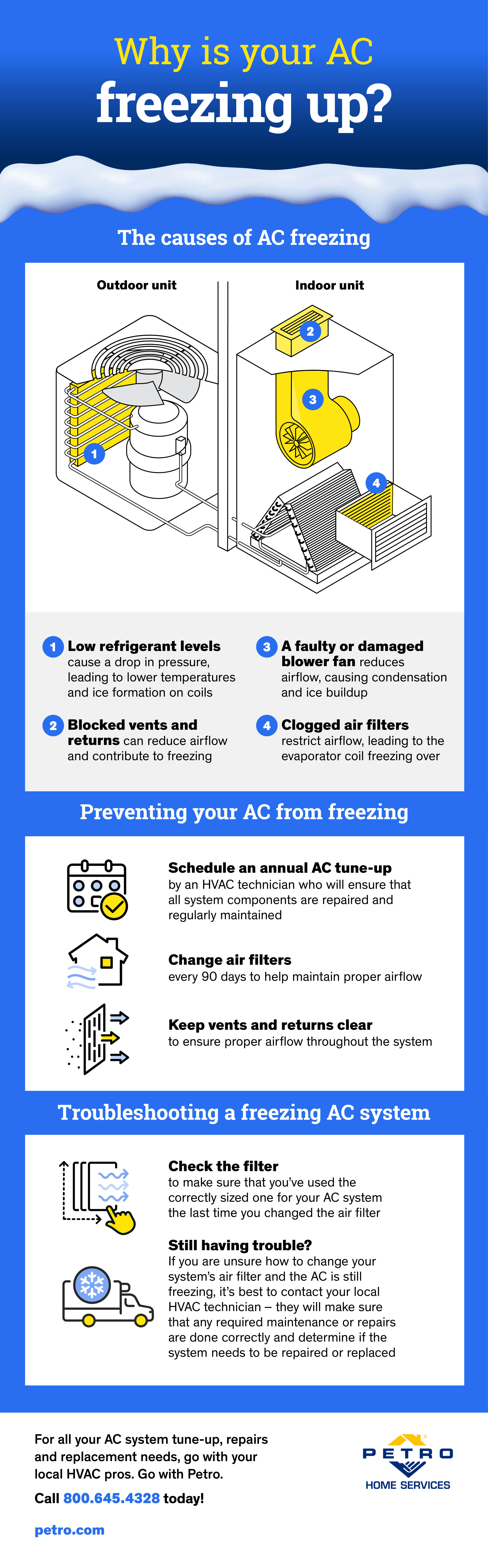
Image Source: www.petro.com
What Causes AC Units to Freeze?
An air conditioner works by moving heat from inside your home to the outside. It uses a special liquid or gas called refrigerant to do this. Inside your house, warm air blows over a cold part called the evaporator coil. The refrigerant inside this coil soaks up the heat from the air. Then, the air blows back into your room, feeling cold.
But sometimes, this coil gets too cold. When the coil gets colder than the freezing point of water, and warm, moist air hits it, the water vapor in the air turns into ice on the coil. This is like frost forming on a cold windowpane in winter.
What makes the coil get too cold? There are two main reasons:
- Not enough air flowing over the coil (AC airflow restriction).
- Not enough of the special cooling stuff (low AC refrigerant).
Let’s look closer at these problems.
Grasping Airflow Problems
Airflow is very important for your AC. Air needs to move freely over the evaporator coil. This movement helps the coil soak up heat from the air. It also keeps the coil from getting too cold. If the air cannot move easily, the coil gets colder and colder. Water in the air freezes onto it.
Think of it like this: The coil is pulling heat out of the air. If there’s not much air flowing, it keeps pulling heat from the same small bit of air near it. This makes that air super cold. Then, moisture freezes.
Several things can cause AC airflow restriction:
- Dirty Air Filter: This is the most common reason. Your AC filter catches dust and dirt. It cleans the air before it goes over the coil. But if the filter gets full of gunk, air cannot pass through easily. This is a dirty air filter AC. A blocked filter greatly limits how much air gets to the coil.
- Blocked Return Vents: Return vents are where your AC sucks air in from your rooms. If furniture, rugs, or curtains block these vents, your AC can’t pull enough air.
- Blocked Supply Vents: Supply vents are where cold air blows out into your rooms. If these are closed or blocked, the system gets unbalanced. Pressure builds up, and airflow drops overall.
- Dirty Evaporator Coil: The coil itself can get coated in dirt and grime over time. This stops heat from being soaked up well. It also blocks air from flowing smoothly over the coil fins.
- Issues with the Blower Fan: The blower fan in your furnace or air handler pushes air through the system. If this fan is weak, broken, or dirty, it won’t move enough air.
- Ductwork Problems: Leaks, kinks, or blockages in the air ducts can reduce airflow to and from the AC unit.
When airflow is low, the evaporator coil can’t properly absorb heat from the air. Its temperature drops sharply. Water vapor in the limited amount of air hitting it freezes, creating a frozen air conditioner coil. This ice makes the airflow problem even worse, causing more ice to form. It’s a bad cycle.
Deciphering Refrigerant Problems
Refrigerant is the substance that absorbs and releases heat. It changes from a liquid to a gas and back again inside the AC system. If your AC has low AC refrigerant, it means there isn’t enough of this stuff flowing through the coil.
Why does low AC refrigerant happen? Usually, it’s because of a leak somewhere in the system’s pipes. Refrigerant is in a closed loop. It should never run out or need refilling unless there is a leak.
When there isn’t enough refrigerant:
- The pressure inside the system drops.
- The evaporator coil gets much colder than it should.
- This very low temperature causes moisture in the air to freeze instantly onto the coil.
Even good airflow can’t stop a coil from freezing if the refrigerant is too low. The coil just gets too cold for the air to keep it warm enough. Low refrigerant is a serious issue. It’s not something you can fix yourself easily. It needs a trained HVAC technician. They use special tools to find the leak, fix it, and add the right amount of refrigerant back.
Other Possible Reasons
Less common reasons for a frozen air conditioner coil include:
- Running the AC in Very Cold Weather: ACs are designed for certain outdoor temperatures. If it’s too cold outside, the system pressure drops, which can make the indoor coil too cold. Most systems have safety controls to prevent this, but sometimes they fail or are bypassed.
- Drain Line Blockage: The AC removes humidity from the air. This water usually drips into a pan and goes down a drain line. If the drain line is blocked, water can back up. In some system designs, this can lead to moisture freezing on the coil.
Knowing these causes helps you troubleshoot air conditioner ice.
Spotting a Frozen AC Unit
How do you know if your AC is frozen? There are several signs.
Clear Signs of Ice
- Visible Ice: The most obvious sign is seeing ice or heavy frost on the copper lines going into the outdoor unit or, more commonly, on the evaporator coil itself inside your air handler or furnace. You might see ice on the big, insulated pipe and the smaller pipe. The big pipe should feel cold and wet, but not frozen solid.
- Water Puddles: As the ice melts (especially after you turn the AC off), you might see water pooling around the indoor unit. If your drain pan or drain line is not working right, this water can overflow.
Your AC Not Cooling Air
- Warm Air from Vents: This is a key sign. The AC is running, the fan is blowing, but the air coming out of your vents is not cold. It might even feel just like room temperature air. This is because air isn’t moving over the cold coil effectively anymore due to the ice block. This is a classic symptom of AC not cooling air because of freezing.
- AC Runs Constantly: Because the AC isn’t cooling, the thermostat keeps telling it to run to reach the set temperature. But it can’t. So the unit just keeps running and running.
Strange Noises
- Unusual Sounds: As ice builds up, it can sometimes scrape against fan blades or other parts, making scraping or rattling sounds. As it melts, you might hear dripping or gurgling.
If you see or hear these things, you likely have a frozen air conditioner coil.
How to Defrost a Frozen AC Coil
You cannot fix a frozen AC unit by just letting it run. Running a frozen AC can damage it. The first step to fix a frozen AC unit is always to defrost it. You must melt the ice before you can find and fix the problem that caused the ice.
Here is how to defrost frozen AC coil:
Step 1: Turn Off the System
- Go to your thermostat.
- Switch the system setting from “Cool” to “Off.”
- Crucially, keep the “Fan” setting on “On.” This is important!
Why keep the fan on? The fan will blow air over the frozen coil. Since the cooling (refrigeration) part is off, this air won’t get colder. The room temperature air blowing over the ice will help it melt faster. It’s like blowing warm air on an ice cube.
Step 2: Let it Melt
- Leave the system off (but fan on) for several hours.
- The time it takes depends on how much ice there is and how warm your home is. It could take anywhere from 2 to 24 hours.
- Check the indoor unit every few hours. Look for dripping water. Make sure the drain pan isn’t overflowing. You might need to use towels or a wet/dry vacuum to handle the melting ice water, especially if your drain line is also blocked.
- Look at the coil. You will see the ice start to shrink and disappear.
Step 3: Check for Complete Melting
- Do not turn the AC back to “Cool” until all the ice is gone from the coil and the refrigerant lines.
- Feel the lines coming out of the indoor unit and leading outside. Both should be free of ice. The larger insulated line should be cold and perhaps wet, but not frozen.
Step 4: Address the Water
- Make sure all the meltwater has drained away.
- Check the drain pan under the indoor unit. If it has water, dry it out.
- Check the drain line. If it seems blocked, try to clear it. A simple way is to use a wet/dry vacuum at the outdoor end of the drain line or pour a cup of vinegar down the access opening near the indoor unit (if you have one) to break up clogs.
Once the coil is fully defrosted, you can start looking for the reason it froze in the first place. Do NOT turn the AC back on until you have tried to figure out the cause. If you turn it back on without fixing the issue, it will just freeze up again, possibly causing damage.
Pinpointing the Cause: Troubleshoot Air Conditioner Ice
Now that the ice is gone, you need to find out why it happened. This is the troubleshoot air conditioner ice part.
Step 1: Check Your Air Filter
- This is the easiest and most common fix.
- Find your air filter. It’s usually in the return air vent in a wall or ceiling, or in the air handler/furnace unit itself.
- Pull it out.
- Look at it. Is it thick with dust and dirt? Can you see light through it? If not, it’s dirty.
- Replace a dirty filter with a clean one right away. Make sure you put the new filter in the correct direction (look for arrows showing airflow).
- Filters should be checked monthly, especially during heavy use seasons, and replaced every 1-3 months depending on the type and how much your system runs. A dirty air filter AC is a leading cause of freezing.
Step 2: Check Your Vents
- Go around your house.
- Are any return air vents blocked by furniture, rugs, or anything else? Move items away.
- Are any supply vents (where cold air comes out) closed or blocked? Open them all up. You should not close vents in unused rooms. This can cause system imbalance and restrict airflow.
Step 3: Inspect the Coil (If Accessible and You’re Comfortable)
- Turn the power OFF to your indoor unit at the breaker box for safety.
- If you can safely access the evaporator coil (often located above your furnace or in the air handler), open the panel.
- Look at the coil fins. Are they caked with dirt? Even if your filter is clean, dust can build up on the coil over years.
- A dirty coil needs cleaning. This can be a tricky job. You can buy special coil cleaner sprays, but it’s often best left to a professional during routine maintenance.
Step 4: Check the Blower Fan
- The power should still be OFF.
- The blower fan is usually inside your furnace or air handler. You might need to open a panel to see it.
- Look at the fan blades (the squirrel cage). Are they coated in dirt? Heavy dirt on the fan can make it unbalanced and less effective at moving air.
- Cleaning the blower fan can be hard. Often requires taking it out. This is usually a job for a pro.
Step 5: Check Refrigerant Lines (Carefully!)
- Look at the two copper pipes coming out of your indoor unit and going to the outdoor unit.
- The larger pipe should be cold and wet when the system is running correctly.
- The smaller pipe should be cooler than the air, but not ice-cold.
- If the large pipe is iced over again shortly after defrosting and turning the system back on (after checking airflow), or if it feels only slightly cool and the small pipe is extremely cold, it could point to low AC refrigerant. Do not touch the pipes for long when the system is running, they can be very cold or hot.
Step 6: Listen to the Outdoor Unit
- When the system is running, listen to the outdoor unit (the condenser). Does it sound normal? Strange noises could mean problems with the compressor or fan, which can affect the refrigerant cycle.
After checking the simple things like filters and vents, if the AC freezes again quickly, the problem is likely more serious, like low AC refrigerant or a bad fan motor.
Preventing Future Freezing: Air Conditioner Maintenance Tips
The best way to stop your AC from freezing is to keep it in good shape. Regular air conditioner maintenance tips are key.
Tip 1: Replace Your Air Filter Regularly
- This is the MOST important easy thing you can do.
- Check your filter every month.
- Change it every 1-3 months, or more often if you have pets or lots of dust.
- Mark your calendar or set reminders on your phone.
- Using a clean filter ensures good airflow and helps prevent a dirty air filter AC.
Tip 2: Keep Vents Clear
- Make it a habit to look at your return and supply vents.
- Make sure furniture, curtains, and other items are not blocking them.
- Do not close off vents in rooms. This saves little energy and can harm your system.
Tip 3: Schedule Professional Tune-Ups
- Have a qualified HVAC technician inspect and service your system every year, ideally before the cooling season starts.
- A pro will:
- Clean the evaporator and condenser coils.
- Check refrigerant levels and look for leaks (low AC refrigerant check).
- Inspect the blower motor and fan.
- Check electrical connections and components.
- Clear the condensate drain line.
- This yearly check-up helps catch small problems before they become big ones like HVAC system freezing problems. It’s like getting the oil changed in your car – it prevents major breakdowns.
Tip 4: Check the Drain Line
- Check the condensate drain line occasionally, especially during humid weather when the AC makes a lot of water.
- Make sure water is draining freely from the outdoor end of the pipe.
- If you have an access point near the indoor unit, you can pour a cup of vinegar or bleach (check your manual for what is safe) a couple of times a year to help keep algae and gunk from growing and blocking it.
Tip 5: Listen and Watch Your System
- Pay attention to how your AC sounds and performs.
- Are there new noises? Is the air flow from the vents weaker than usual? Is the house not getting as cool?
- Noticing small changes early can help you fix issues before they cause a frozen air conditioner coil.
Regular maintenance is the best defence against a frozen air conditioner coil. It ensures proper airflow and correct refrigerant levels.
When to Call a Professional
While you can do some basic troubleshoot air conditioner ice steps yourself, like checking the filter and vents, many causes of freezing require a skilled technician.
Call an HVAC pro if:
- Your AC freezes up again after you’ve checked and replaced the filter and made sure vents are open.
- You suspect low AC refrigerant. This is a closed system; low levels mean there is a leak, which needs to be found and fixed properly. Adding refrigerant without fixing the leak is a temporary fix and harmful to the environment.
- The blower fan appears dirty or is making strange noises.
- The evaporator coil is heavily dirty and you don’t feel comfortable cleaning it yourself.
- You hear unusual noises from the outdoor unit.
- You cannot find the cause of the airflow issue.
- You are not comfortable working on or around the unit.
A professional has the tools and knowledge to diagnose complex HVAC system freezing problems. They can safely work with refrigerant and electrical parts. Trying to fix a frozen AC unit yourself when the problem is complex can lead to more damage or even injury.
The Costs of a Frozen AC Unit
A frozen air conditioner coil isn’t just annoying because it stops cooling your home. It can also cost you money.
- Higher Energy Bills: A frozen unit runs and runs without cooling. This wastes electricity.
- System Damage: Running a frozen unit can damage the compressor, which is the most expensive part of your AC. Ice can also damage the coil fins.
- Water Damage: Melting ice can overflow drain pans and cause water damage to your home, walls, or ceiling.
- Repair Costs: Fixing the root cause, like a refrigerant leak or replacing a fan motor, costs money. These repairs are often more expensive than routine maintenance.
Preventing the freeze through simple steps like changing your filter is much cheaper than repairing damage caused by freezing.
Common Causes of Frozen Coils and How to Address Them
Here is a quick summary of the main causes and actions:
| Problem Cause | What Happens? | How to Spot It | What You Can Do | When to Call a Pro |
|---|---|---|---|---|
| Dirty Air Filter (Airflow) | Restricts air to coil. Coil gets too cold. | Filter looks grey/black, hard to see through. | Replace the filter. Check monthly. | If filter is clean but airflow still seems low. |
| Blocked Vents (Airflow) | Not enough air drawn in or sent out. | Furniture over return vents; supply vents closed. | Move blockages; open all supply vents. | If vents are clear but airflow is weak. |
| Dirty Evaporator Coil (Airflow) | Blocks air & heat transfer. Coil gets too cold. | Coil looks dirty, caked with grime (requires access). | Some DIY coil cleaner sprays (use caution). | If coil is heavily dirty; during yearly maintenance. |
| Blower Fan Problem (Airflow) | Fan doesn’t move enough air over coil. | Weak airflow from vents; fan looks dirty/damaged. | Check if fan is running; check if it looks dirty. | To clean fan; if fan isn’t running right or is noisy. |
| Low AC Refrigerant (Refrigerant) | System pressure drops. Coil gets very cold. | Ice forms even with good airflow; AC not cooling well. | Cannot fix yourself. | Immediately. Need to find and fix the leak and refill. |
| Drain Line Blockage (Other) | Water backs up, potentially leading to ice. | Water overflow near indoor unit; no water draining outside. | Clear clog with wet/dry vac or vinegar (if accessible). | If you can’t clear the blockage or water damage happens. |
This table helps summarize the troubleshoot air conditioner ice process.
Putting It All Together: Steps to Take
If your AC freezes:
- Turn off cooling at the thermostat. Leave the fan ON.
- Let it defrost completely. This may take hours. Manage meltwater.
- Once fully defrosted, turn system OFF at the thermostat (Fan also Off now).
- Check the air filter. Replace it if dirty.
- Check all vents. Make sure they are open and not blocked.
- Turn the system back on to COOL.
- Watch it closely. Does it freeze again within a short time?
- If it freezes again, or if you suspect low refrigerant, call a professional HVAC technician.
Following these steps helps you fix a frozen AC unit safely and correctly.
HVAC System Freezing Problems Beyond the Coil
While the evaporator coil freezing is the most common issue, freezing can sometimes point to wider HVAC system freezing problems. For instance, a refrigerant leak might affect the outdoor unit too. Ice can sometimes form on the large suction line leading to the outdoor unit. This is another sign of low refrigerant.
Addressing freezing isn’t just about melting the ice. It’s about solving the root problem in your HVAC system freezing problems so it doesn’t happen again. This is why the maintenance tips and knowing when to call a pro are so important.
Final Thoughts on Keeping Your Cool
Dealing with a frozen air conditioner coil is frustrating. It leaves you with an AC not cooling air when you need it most. But most freezing problems come down to poor airflow or low refrigerant.
You have the power to prevent the most common cause: a dirty air filter AC. Making filter changes a routine part of your home care will go a long way. Keeping your vents open is also simple.
For more complex issues like low AC refrigerant or a dirty coil you can’t reach, professional help is needed. Investing in yearly air conditioner maintenance tips from a qualified technician is wise. It keeps your system running well, saves energy, and helps prevent costly breakdowns like repeated HVAC system freezing problems.
Don’t ignore a frozen AC. It’s a clear sign something is wrong. Address it promptly using the steps above to keep your home cool and comfortable without damaging your system.
Frequently Asked Questions (FAQ)
How long does it take for an AC coil to defrost?
It can take anywhere from a few hours to 24 hours for a frozen air conditioner coil to fully defrost. It depends on how much ice there is, the temperature of your home, and how well the fan is blowing air over the coil. Keep the system fan on to help speed up the melting.
Can I pour hot water on my frozen AC coil to defrost it faster?
No, you should not do this. Pouring water on the coil can damage the delicate fins and other parts of the unit. It can also cause water to go into electrical parts, which is dangerous. The safest way to defrost frozen AC coil is to turn off the cooling and let the system’s fan blow air over it.
Why is my AC filter dirty so quickly?
How quickly your filter gets dirty depends on several things:
* The type of filter you use (thicker filters last longer).
* How often your AC runs.
* How many people and pets live in the house.
* How much dust, pollen, or other particles are in your air.
* If you have ongoing construction or renovation nearby.
Check it monthly and change it when it looks dirty, no matter what the filter packaging says about its lifespan. A dirty air filter AC is a main cause of freezing.
Is a frozen AC unit dangerous?
Running a frozen AC unit is not safe for the unit itself. It can damage the compressor, which is very expensive to fix. It can also cause water damage in your home as the ice melts. While not usually a direct danger to people (unless water reaches electrical points), it’s a sign of a problem that needs fixing to prevent costly damage. HVAC system freezing problems should be addressed quickly.
My AC is frozen, but I just changed the filter. What else could it be?
If your filter is clean and your vents are open, the next most likely causes are low AC refrigerant (indicating a leak) or a problem with the blower fan or dirty coils. These issues usually require a professional technician to diagnose and fix a frozen AC unit.
How can I tell if my AC has low refrigerant?
You cannot easily tell if you have low AC refrigerant without special tools. Signs might include ice on the coil even with good airflow, the larger refrigerant line outside icing up, or the air coming from your vents not being as cold as it should be, even though the system is running constantly (AC not cooling air). If you suspect low refrigerant, call an HVAC professional.
How often should I get professional AC maintenance?
It is generally recommended to have your AC system professionally checked and serviced once a year, preferably in the spring before the cooling season begins. This helps prevent problems like HVAC system freezing problems and keeps your system running at its best.