
Do you have an old air conditioner you need to get rid of? You cannot just throw it away like regular trash. Proper disposal of AC unit is very important. It helps protect our planet. It also follows the law. You need to handle old air conditioners carefully. This is because they contain harmful chemicals. These chemicals are called refrigerants, like Freon. They can damage the environment. Luckily, there are many ways to dispose of air conditioners the right way. This guide will show you how. It covers recycling, special services, and important rules like HVAC disposal regulations.
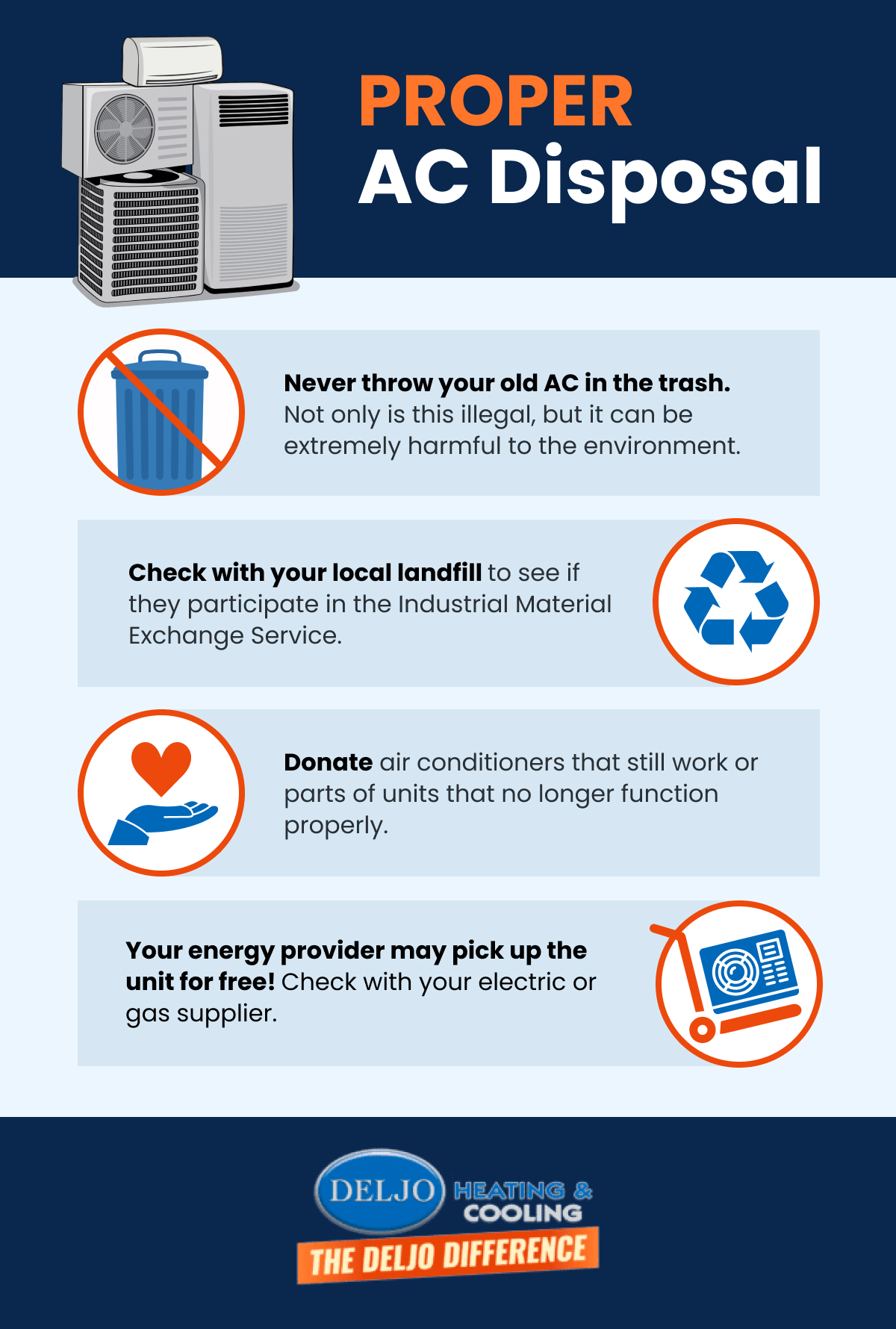
Image Source: deljoheating.com
Why Proper Disposal Is Key
Getting rid of an old AC unit is not simple. It holds more than just metal and plastic. Inside is a special cooling liquid. This liquid helps cool the air. It is often called Freon, though newer units use different kinds. These liquids are very bad for the Earth’s air layer. This layer is called the ozone layer. It protects us from the sun. When these liquids escape, they harm the ozone layer. They also trap heat in the air. This adds to climate change.
There are also heavy metals and oils inside AC units. These can pollute the soil and water if left in landfills. So, proper disposal is a must. It protects nature and follows important rules.
The Problem with Refrigerants (Freon)
Most old air conditioners use refrigerants. The most well-known is Freon (a type of CFC or HCFC). Newer ones use HFCs. All these coolants can cause big problems.
- They harm the ozone layer.
- They are strong greenhouse gases. This means they help warm the planet.
- Letting them escape is against the law in many places.
Because of this, Freon disposal must be done correctly. It needs to be removed by trained people. They use special tools to capture the liquid. This stops it from going into the air.
Scrap Metal Concerns
An air conditioner is mostly metal. It has steel, copper, and aluminum. These metals are valuable. They can be used again. If you just trash the unit, these metals get buried. Digging up new metal harms the earth.
Recycling the metal saves energy. It also saves resources. An old air conditioner is a good source of scrap metal air conditioner parts. These can be melted down and used in new things. This is much better for the environment.
Legal Requirements
There are laws about disposing of appliances with refrigerants. These laws come from the main government and state governments. They are part of HVAC disposal regulations. You cannot just dump an AC unit. You could face fines if you do.
These rules say that refrigerants must be removed safely. Only people with a special license can do this. They follow strict steps to make sure the harmful gases do not get out. Knowing these rules helps you avoid problems. It also makes sure you dispose of air conditioner the right way.
Interpreting Your Disposal Options
You have several choices for getting rid of an old AC unit. Some are easier than others. Some might cost money. Some might even give you a little money. Here are the main ways people handle appliance disposal services and more.
Appliance Disposal Services
Many cities or towns offer this service. They might pick up large appliances like AC units. Sometimes it is free. Sometimes there is a small fee. This is often an easy option. You call them. You set a time. They come and take the unit. This service usually knows about Freon disposal rules. They take the unit to the right place. This might be an air conditioner recycling center or a special waste site. Check your local city or town website. Look under waste or sanitation services. Ask about large item pickup or appliance disposal services.
Municipal Recycling Programs
Some local recycling centers take old appliances. They might have a specific place where to take old air conditioner. These places are often set up to handle the refrigerants safely. They work with companies that can remove Freon. Then, they break down the unit. They separate the metals and other parts for recycling. This is a great way to recycle air conditioner parts. Not all recycling centers can do this, though. Call ahead to be sure. Ask if they accept appliances with refrigerants. Ask if they are an air conditioner recycling center.
Retailer Take-Back Programs
Did you buy a new air conditioner? Some stores might take your old one. This is common when they deliver and set up the new unit. They haul away air conditioner for you. This is very convenient. Ask the store about their take-back policy before you buy a new AC. They might charge a fee for this service. Or it might be included in the price of the new unit. This ensures proper disposal of AC unit.
Scrap Metal Yards
Some scrap yards will buy old appliances. They are interested in the scrap metal air conditioner contains. But be careful here. Most scrap yards cannot legally handle the refrigerant. You must have the Freon removed before taking it to a scrap yard. A certified technician needs to do this. They will give you proof that the Freon was removed. The scrap yard will need to see this proof. Taking a unit with Freon to a scrap yard can cause problems for them and for you.
Professional Haul Away Services
Many private companies offer to haul away air conditioner units. These are often junk removal services. They pick up unwanted items from your home. They might charge a fee based on the item or the truck space used. Ask them if they handle AC units with refrigerants. A good service will know the rules for Freon disposal. They will take the unit to a place that can process it correctly. This is a simple option if you do not want to lift or move the unit yourself.
Donation or Resale
Is your old air conditioner still working? Or can it be easily fixed? You might be able to donate it or sell it. Charities like Habitat for Humanity ReStore take working appliances. Selling it on sites like Craigslist or Facebook Marketplace is another option. Check if the unit is in good shape. If it uses older refrigerants, its value might be low. Someone buying it should also know about proper handling if it ever needs repairs or later disposal. This option works best for newer, functional units.
Complying with Disposal Regulations
Following the rules is not just about avoiding fines. It is about protecting the Earth. HVAC disposal regulations are in place for good reasons. They stop harmful chemicals from escaping.
Federal Regulations (EPA and Freon disposal)
In the United States, the Environmental Protection Agency (EPA) sets rules for refrigerants. These rules are under the Clean Air Act. The main rule is that refrigerants must be removed from appliances before disposal. This must be done by a certified technician. Letting refrigerants vent into the air is illegal. The technician must use special equipment to recover the refrigerant. They must then properly dispose of it or send it for recycling. If you use a service to haul away air conditioner, they should follow these rules. If you take it yourself somewhere, make sure that place follows the rules. This is very important for Freon disposal.
State and Local Rules
Besides federal rules, your state or city might have its own rules. These local rules can be stronger than federal ones. They might require certain paperwork. They might have specific places where to take old air conditioner. Some places might ban AC units from landfills completely. Always check with your local waste management department. Their website or a phone call can give you the specific HVAC disposal regulations for your area. This step is key for proper disposal of AC unit.
The Importance of Certified Technicians
You cannot just cut a pipe on your old AC unit. This would release the refrigerant. As mentioned, this is against the law. Only technicians certified by the EPA can legally remove refrigerants. They have the training and tools to do it safely. If you take your unit to a scrap yard or other place that does not handle refrigerants, you must first get a certified technician to remove the Freon. They will pump it out and give you proof. This proof might be a tag on the unit or a form. Any place accepting the unit later will likely ask for this proof. This step is crucial for safe and legal Freon disposal.
Getting Ready for Disposal
Before you get rid of your AC unit, there are a few things you need to do. These steps make the process easier and safer.
Unplugging and Disconnecting
This seems simple, but it is the first step. Make sure the unit is turned off. Then, unplug it from the wall outlet. If it is a larger unit or hooked up directly to your home’s wiring, you might need an electrician to disconnect it safely. For window units, just unplugging is enough. Make sure the cord is not damaged.
Checking for Refrigerant Leaks
Look at the unit. Do you see any oily residue or weird smells? This could mean a refrigerant leak. If you suspect a leak, handle the unit with extra care. Call a professional HVAC technician. They can check for leaks. They can also recover any remaining refrigerant safely. A leaking unit is even more important to dispose of properly.
Checking Local Rules
We talked about this before, but it is worth saying again. Before you decide how to dispose of air conditioner, check your local rules. Call your city or county waste department. Look at their website. Ask about:
- Bulk trash pickup rules for appliances.
- Specific locations where to take old air conditioner.
- If they require proof of Freon removal.
- Information about HVAC disposal regulations in your area.
Knowing the local rules prevents problems later. It helps you choose the right method from the start. This ensures proper disposal of AC unit.
Deeper Look at Key Methods
Let us look closer at the most common and recommended ways to dispose of air conditioner units.
Recycling Your Old Unit
Recycling is often the best choice for the environment. It handles the harmful parts safely. It also reuses valuable materials. Many areas have places where you can recycle air conditioner units.
Finding a Recycling Center
How do you find an air conditioner recycling center?
- Local Government Website: Start here. Your city or county waste site is the best source. They often list specific recycling locations.
- Utility Company: Sometimes power companies have appliance recycling programs. They might even pay you a small amount or give you a credit on your bill to recycle air conditioner units.
- EPA Website: The EPA has information on responsible appliance disposal. Their website might help you find programs in your area.
- Earth911.com: This website lets you search for recycling centers by material and location. Search for “appliances” or “refrigerants.”
When you call a center, ask if they accept AC units. Ask if they handle the refrigerant. Ask if there is a fee. Knowing this helps you choose the right place where to take old air conditioner.
What Happens During AC Recycling?
At a proper air conditioner recycling center, here is what usually happens:
- Refrigerant Removal: Trained staff use special machines to remove all the refrigerant gas. They make sure none escapes. This is the most important step.
- Oil Drainage: Oils used to keep the compressor running are drained. These oils also need proper handling.
- Component Separation: The unit is taken apart. Plastic, copper, aluminum, and steel are separated.
- Scrap Metal: The large metal parts become scrap metal air conditioner components. They are sent to metal recyclers to be melted down.
- Other Materials: Plastics and other materials are processed for recycling if possible. Hazardous parts are sent to special disposal sites.
This process ensures that the unit is broken down safely. Harmful substances are controlled. Useful materials are reused. This is the ideal way to recycle air conditioner units.
Using Appliance Disposal Services
Using a service is very convenient. They come to your home and take the unit away.
How These Services Work
You typically call the service or book online. You tell them what you need picked up (an old AC unit). They give you a price. They schedule a pickup time. On the scheduled day, their team arrives and carries the unit out. They then transport it to a proper processing facility. A good appliance disposal service will know about Freon disposal rules. They will take the unit to a place that recovers the refrigerant legally. They handle the haul away air conditioner task completely.
Costs Involved
Appliance disposal services are not always free. They charge for their time, labor, and transport. The cost can depend on:
- Your location.
- The size and weight of the unit.
- How easy it is to access the unit (e.g., upstairs vs. in the garage).
- Local disposal fees they have to pay.
Get a clear price quote before agreeing to the service. Compare prices from a few different companies. Ask how they ensure proper disposal of AC unit and refrigerant handling.
Handling Window Units
Dispose of window air conditioner units follows the same general rules as larger units. They contain refrigerants and valuable metals.
Special Considerations for Window ACs
Window units are smaller and lighter than central air conditioning units. This makes them easier to move. You might be able to take a window unit to a drop-off location yourself. However, the rules for refrigerant removal still apply. Even a small window unit needs its Freon removed before it can be recycled for scrap metal air conditioner parts or taken to a regular scrap yard.
- Check Local Drop-Offs: Your city might have a specific place where to take old air conditioner window units. Some might even have special days for appliance drop-offs.
- Retailer Programs: If buying a new window unit, ask if the store will take the old one.
- Junk Removal: Private haul away air conditioner services are also an option for window units.
Always confirm they handle the refrigerant correctly when you dispose of window air conditioner.
What About Freon?
Freon and other refrigerants are the main reason AC disposal is tricky. Their safe handling is guided by strict rules.
Rules for Freon Removal
The EPA rule (Section 608 of the Clean Air Act) says you cannot knowingly release refrigerants when disposing of appliances. This is true for anyone, not just businesses. The refrigerant must be recovered by a certified technician. They must use EPA-approved recovery equipment. This equipment pumps the refrigerant out and stores it safely.
Who Can Remove Freon?
Only technicians certified under the EPA’s Section 608 program can remove refrigerants from appliances legally. Look for HVAC technicians or appliance repair services that offer refrigerant recovery. They will have the right certification and tools. They can come to your home to remove the Freon before you arrange for the rest of the unit to be taken away. This step ensures legal and safe Freon disposal.
Looking at Costs and Savings
Getting rid of an old AC unit might have costs. But there could also be ways to save or even earn a little money.
Common Disposal Fees
- Municipal Pickup: Your city might charge a fee for large item pickup. This could be a flat fee per item or per pickup.
- Appliance Disposal Services: Private companies charge for their service. Costs can vary widely (e.g., $50 – $150 or more depending on location and unit size).
- Recycling Centers: Some centers charge a fee to accept units with refrigerants. This fee covers the cost of safe Freon disposal. It might be $10 – $30.
- HVAC Technician: If you need a technician to remove Freon before disposal, they will charge for their time and service. This could be $100 – $200 or more.
It is wise to call around and get quotes. Compare costs for different options before deciding.
Potential for Scrap Metal Value
An old AC unit has valuable metals, especially copper. If you can get the Freon removed legally first, a scrap yard might pay you for the metal. The amount you get depends on:
- The size of the unit (more metal = more money).
- Current metal prices (they change daily).
- The scrap yard’s policy (some pay per pound).
The value might not be huge, maybe $5 – $20 for a window unit or more for a large central air unit. But it can help offset some costs or give you a small return. Remember, you must prove the Freon was removed for most legitimate scrap yards. They are interested in the scrap metal air conditioner parts, not the refrigerant.
Rebate Programs
Sometimes, power companies or local governments offer rebates for recycling old, inefficient appliances. These programs aim to save energy. Older AC units use a lot of power. Replacing them with new, efficient ones saves energy. Recycling the old one properly is often part of the deal. Check with your local utility company or municipal website. Search for “appliance recycling rebate” or “air conditioner recycling program.” These programs can give you $25 – $50 or even more for recycling air conditioner units through their approved process.
Frequently Asked Questions
Here are answers to common questions about getting rid of air conditioners.
Q: Can I just put my old air conditioner on the curb for trash day?
A: No, in almost all places, this is illegal. AC units contain refrigerants and other harmful parts that cannot go to a regular landfill. They require special handling and Freon disposal. Check local rules for large item pickup or appliance disposal services instead.
Q: What if the AC unit is very old and doesn’t work anymore?
A: Age does not change the rules. Even non-working units still contain refrigerants that must be removed safely by a certified technician before disposal or recycling. The age might make it more likely to contain older, more harmful types of Freon.
Q: Does the size of the AC unit matter for disposal?
A: The size can affect the cost of disposal services or the amount paid for scrap metal. But the rules for refrigerant removal apply to all units, from small window ACs to large central air systems. Dispose of window air conditioner units still needs care.
Q: How can I be sure the refrigerant is handled correctly?
A: Use a certified professional for Freon removal. If using an appliance disposal service or recycling center, ask for proof that they use certified technicians for refrigerant recovery. Reputable services follow the HVAC disposal regulations strictly.
Q: Can I remove the refrigerant myself?
A: No, it is illegal for someone without EPA certification to remove refrigerants. It is also dangerous without the right tools and training. Improper removal harms the environment and can lead to fines. Always use a certified professional for Freon disposal.
Q: Is an air conditioner recycling center different from a regular recycling center?
A: Yes. A regular recycling center might take metal or plastic, but they likely are not equipped or licensed to handle refrigerants. An air conditioner recycling center specializes in appliances with refrigerants. They have the staff and equipment for safe Freon removal and processing. Make sure you go to the right place where to take old air conditioner units.
Q: Will a scrap yard take an AC unit?
A: Some will, but only after the refrigerant has been properly removed by a certified technician. You will need proof of removal. Scrap yards are interested in the scrap metal air conditioner parts. They cannot legally handle the harmful refrigerant.
Q: What are Appliance disposal services?
A: These are companies or municipal services that pick up old appliances from your home. They charge a fee but handle the transport and often take the item to a proper recycling or disposal facility. Make sure they handle AC units with refrigerants correctly. They provide a haul away air conditioner service.
Q: How can I find information about HVAC disposal regulations in my area?
A: Check the website for your city or county waste management department. Call their office. You can also check your state’s environmental protection agency website. These sources will have the most accurate and up-to-date local rules for proper disposal of AC unit.
Disposing of an air conditioner requires a little effort. But doing it the right way protects our planet. It also keeps you out of trouble with the law. Use the options like appliance disposal services or an air conditioner recycling center. Make sure Freon disposal is done by a professional. By following these steps, you can properly dispose of AC unit safely and responsibly.