
How many amps does a camper air conditioner use? A camper air conditioner typically uses between 10 to 20 running amps. It needs more power, often 30 to 60 amps, to start up. This amount changes based on the size of the air conditioner and how hot it is outside. Knowing this helps you pick the right power source like a generator or know if a campground hookup is enough.
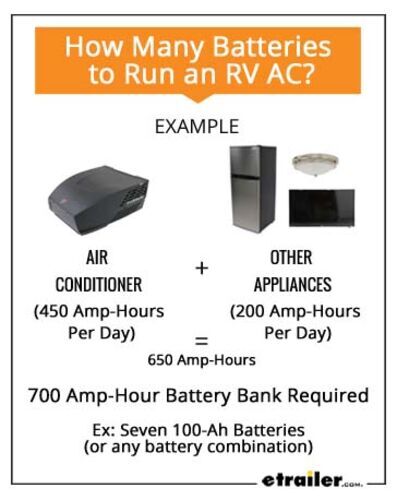
Image Source: www.etrailer.com
Grasping Camper AC Power Needs
Campers are fun homes on wheels. They let you travel and see new places. Many campers have air conditioners, or ACs. The AC keeps you cool inside when it’s hot outside. But these AC units use power. How much power? That’s the question many camper owners ask. The power an AC uses is often measured in amps. Amps tell you the strength of the electric current needed.
Knowing the amps your camper AC uses is important. It helps you plan your trips. It helps you know if your power cord is safe. It helps you know if you need a special tool to run the AC on a smaller generator. It’s key information for enjoying your camper comfortably.
Deciphering Camper AC Power Consumption
Your camper’s air conditioner uses power. This is called its power consumption or electrical draw. It pulls electricity from a source. This source could be the power outlet at a campground. It could be a generator you brought with you. It could even be a battery system, though most camper ACs need 120-volt power, not the 12-volt power that runs your lights and fans.
The amount of power your AC uses changes. It uses a lot more power when it first turns on. Then, it uses less power while it’s running. This difference is important. People talk about two main types of amps for an RV air conditioner:
- Starting amps: This is the high amount of power the AC needs for a brief moment to get the motor going. Think of it like pushing a heavy swing. You need a big push to get it moving.
- Running amps: This is the lower amount of power the AC needs to keep running and cooling the air. Once the swing is moving, you only need small pushes to keep it going.
The starting amps are much higher than the running amps. This is why starting your AC can sometimes trip a breaker or overload a small generator.
What Affects How Many Amps Your AC Uses?
Not all camper AC units are the same. They come in different sizes and types. Several things change how many amps a specific unit will use.
BTU Ratings RV Air Conditioner
AC size is measured in BTUs. BTU stands for British Thermal Unit. It’s a way to measure cooling power. A higher BTU number means a bigger, more powerful AC. It can cool a larger space better.
- Small campers might have an 8,000 BTU AC.
- Medium campers might have a 13,500 BTU AC.
- Large campers or those with two ACs might have 15,000 BTU or even bigger units.
A bigger AC with a higher BTU rating will use more power. It will need more running amps and more starting amps than a smaller one. This is a main factor in Camper AC power consumption.
How Old Is the Unit?
Older AC units can be less energy-efficient. They might use more power to do the same job as a newer unit. Parts might be worn, making the motor work harder.
How Hot Is It Outside?
When it’s very hot, your AC has to work harder. The compressor runs for longer periods. It might even run constantly. This increases the total electrical draw camper AC has over time. The running amps might stay about the same, but the unit just runs more.
Is the Unit Working Right?
If your AC is dirty or has problems, it might use more power. Dirty filters make the unit work harder to pull air through. Low coolant levels also make the compressor work harder. Keeping your AC clean and well-maintained helps it run better and use less power.
Voltage Levels
Most RV ACs run on 120 volts. But if the voltage coming into your camper is low (like from a weak generator or old power hookup), the AC might try to pull more amps to get the power it needs. Low voltage can hurt your AC over time.
Typical RV Air Conditioner Running Amps and Starting Amps
Let’s look at some common numbers. Remember, these are estimates. Your specific unit might be a little different. Always check the sticker on your AC unit or the owner’s manual for exact numbers.
Common BTU Sizes and Amp Draw
Here’s a table showing typical amp usage for common RV AC sizes:
| BTU Size | Typical Running Amps | Typical Starting Amps |
|---|---|---|
| 8,000 BTU | 8 – 10 amps | 25 – 35 amps |
| 10,000 BTU | 10 – 12 amps | 30 – 40 amps |
| 13,500 BTU | 12 – 15 amps | 40 – 55 amps |
| 15,000 BTU | 14 – 17 amps | 50 – 65 amps |
| 16,000 BTU | 16 – 18 amps | 55 – 70 amps |
Note: These are estimates. Real numbers vary by brand and model.
You can see the big jump for Starting amps RV AC. This short burst of high power is often the problem when trying to run an AC on limited power.
How Many Watts RV Air Conditioner Uses?
Power can also be measured in watts. Watts tell you the total power being used. The simple formula is:
Watts = Volts × Amps
Most camper ACs use about 120 volts. So, if your AC uses 15 running amps at 120 volts, it uses:
120 volts × 15 amps = 1800 watts
Knowing watts helps you figure out what size generator you need. Generators are rated in watts.
Here are typical wattage numbers for common RV ACs based on the running amps:
| BTU Size | Typical Running Amps | Typical Running Watts (at 120V) |
|---|---|---|
| 8,000 BTU | 8 – 10 amps | 960 – 1200 watts |
| 10,000 BTU | 10 – 12 amps | 1200 – 1440 watts |
| 13,500 BTU | 12 – 15 amps | 1440 – 1800 watts |
| 15,000 BTU | 14 – 17 amps | 1680 – 2040 watts |
| 16,000 BTU | 16 – 18 amps | 1920 – 2160 watts |
Again, these are estimates. The actual How many watts RV air conditioner uses depends on the unit and conditions.
The starting watts are much higher because the starting amps are higher. For a 15,000 BTU unit needing 60 starting amps:
120 volts × 60 amps = 7200 watts
This is a massive amount of power needed for just a second or two. This peak demand is why Generator size for camper AC is so important.
Power Sources and Your AC
Your camper AC can get power from different places.
Shore Power at Campgrounds
This is power from an outlet at a campsite. Campgrounds have different types of hookups:
- 15/20 amp outlets: Like a regular house outlet. Usually not enough to start or run a typical RV AC, especially if other things are on.
- 30 amp outlets: Common in many campgrounds. A 30-amp hookup can usually run one RV AC (13,500 BTU or 15,000 BTU) along with a few other small things, as long as you manage your power use. The starting amps of the AC might push the limit, though. The RV AC breaker size inside your camper for a 30-amp system is usually 20 or 30 amps.
- 50 amp outlets: Found in larger campgrounds. A 50-amp hookup gives you more power, often like having two 50-amp lines. This is usually enough to run one or even two ACs at the same time, plus other appliances. The RV AC breaker size on a 50-amp system is typically 20 amps per AC unit, but the total power available is much higher.
Knowing your Camper AC power consumption and the available power at the hookup is key to avoiding tripped breakers.
Generators
When you are camping without hookups (boondocking), you might use a generator. Generators make electricity. You need a generator big enough to handle the power your camper uses.
The biggest power need for most campers is starting the AC. This is why the Generator size for camper AC is often based on the AC’s starting amps, not just the running amps.
- A small 2000-watt generator might be able to run a small 8,000 BTU AC if nothing else is on and the AC has a low starting surge.
- To reliably start and run a 13,500 BTU AC, you typically need a generator with a starting wattage capacity of 3500 to 4000 watts. Some newer generators have high “starting power” ratings that help with this.
- For a 15,000 BTU AC, you might need a generator with 4000 watts or more of starting capacity.
Running multiple ACs needs an even bigger generator, maybe 5000 watts or more.
12V Camper Air Conditioner Amps
Most rooftop or built-in camper AC units run on 120 volts, not 12 volts. The term 12V camper air conditioner amps usually refers to small portable or window-style units designed for smaller spaces, or swamp coolers (evaporative coolers) which use much less power but only work well in dry heat.
A true 12V AC that uses a compressor is rare and very expensive. It would need a huge battery bank to run for long. The amps for a 12V AC would be very high compared to 120V because the voltage is lower (Watts = Volts × Amps). For example, 1200 watts at 12V is 100 amps (1200 / 12 = 100). This is why most standard RV ACs use 120V.
Some small 12V fans or coolers might be called “AC,” but they don’t cool like a regular air conditioner. A typical roof AC is 120V.
Soft Start for RV AC: Taming the Surge
As we talked about, the high starting amps are the biggest challenge for running a camper AC on limited power. This is where a soft start device comes in.
A Soft start for RV AC is a small electronic box added to your AC unit. It helps the AC motor start slowly. Instead of needing one big burst of power, it uses a gentle ramp-up.
Think of it like easing into a heavy push instead of one hard shove.
Benefits of a Soft Start
- Lower Starting Amps: This is the main benefit. It can reduce the starting amps by 60-70%. This means a 15,000 BTU AC that needed 60 amps to start might now only need 20 amps or less.
- Run AC on Smaller Generators: With a soft start, you might be able to start and run your 13,500 BTU AC on a 2000-watt generator. This saves money and makes the generator easier to carry.
- Less Stress on Equipment: Lower starting surge is easier on your AC motor, your generator, and your camper’s electrical system.
- Run More Things on 30-Amp Hookups: A soft start helps prevent tripping the breaker on a 30-amp hookup when your AC cycles on. You might have enough power left to run another appliance at the same time.
- Use with Inverters: If you have a large battery bank and an inverter (a device that changes 12V battery power to 120V AC power), a soft start makes it much easier for the inverter to start the AC.
Installing a soft start is a popular upgrade for many RV owners, especially those who camp without hookups often.
Electrical Draw Camper AC: Finding Your Specific Unit’s Needs
The numbers we’ve looked at are averages. To know the exact electrical draw camper AC has, you need to check your unit.
Look for a sticker or plate on the air conditioner unit itself. This is often on the side of the bottom part that hangs inside the camper, or on the outside unit on the roof. It will list important electrical information.
What to look for on the sticker:
- Model Number: Helps you find the manual online.
- Serial Number: Unique number for your unit.
- Voltage: Should be 115V or 120V for most RV ACs.
- Running Amps (RLA or FLA): This is the power it uses while running normally. RLA stands for Rated Load Amps. FLA stands for Full Load Amps.
- Starting Amps (LRA): This is the peak power surge needed to start the motor. LRA stands for Locked Rotor Amps.
The LRA number is the most important for figuring out if a generator or small power source can handle the start-up.
Also check your camper’s main power panel. This is where the breakers are. There should be a breaker labeled for the AC. The RV AC breaker size tells you the maximum amps allowed for that circuit before the breaker trips. This breaker size must be larger than the AC’s running amps.
For example, a 15,000 BTU AC might have 15 running amps and a 20 amp breaker. This is normal and safe.
Managing Your Camper AC Power Consumption
Knowing the amp usage helps you manage power. Here are some tips:
- Turn off other things: Before starting the AC on a small generator or 30-amp hookup, turn off power-hungry items like the microwave, coffee maker, or hairdryer.
- Start things one by one: Don’t turn everything on at once. Start the AC first, let it run for a minute, then turn on other appliances.
- Use a Soft Start: As discussed, this is one of the best ways to reduce the starting surge.
- Cool before it gets too hot: If you know it will be a very hot day, start cooling your camper in the morning while you still have good power (e.g., plugged in at a campground) or when the outside temperature is lower. It takes less power to maintain a cool temperature than to cool down a hot camper.
- Insulate well: Keep your blinds closed. Use vent pillows in roof vents. Make sure your camper is well-sealed. Good insulation keeps the cool air inside and the hot air outside, so your AC doesn’t have to run as much. Less running time means less total Camper AC power consumption.
- Clean your AC: Regularly clean or replace air filters. Clean the coils (the metal fins) on the outside unit. Dirty coils make the AC work much harder and use more power.
- Use fans: Ceiling fans or small portable fans help circulate the cool air. This makes you feel cooler, and you might be able to set the AC thermostat a little higher, saving power.
Generator Size for Camper AC: Making the Right Choice
Choosing the right generator depends on what you want to run. If you only want to run lights, fans, and maybe charge your batteries, a small generator is fine. If you want to run your AC, you need a bigger one.
Consider these points when choosing a generator for your AC:
- AC Size (BTU): A bigger AC needs a bigger generator.
- Starting Amps/Watts: Look at the LRA or starting watts of your AC. The generator must be able to handle this surge. Generators have two wattage ratings: running watts (what it can provide constantly) and peak/starting watts (what it can provide for a short burst). The generator’s peak watts must be higher than the AC’s starting watts.
- Other Appliances: Will you run anything else while the AC is on? Add the running watts of those items to the AC’s running watts to get the total power needed while the AC is running.
- Soft Start: If you plan to install a soft start, you can often use a smaller generator than listed in the table above. A 2000-watt inverter generator might run a 13,500 BTU AC with a soft start.
- Generator Type: Inverter generators are usually quieter and produce cleaner power, which is better for sensitive electronics like your AC’s control board. Conventional generators are often louder but can be cheaper for high wattage.
- Altitude: Generators lose power at high altitudes. You might need a bigger generator if you camp in the mountains often.
Here’s a general guide for Generator size for camper AC, assuming no soft start:
| AC Size | Minimum Running Watts Generator Needed | Typical Peak Watts Generator Needed |
|---|---|---|
| 8,000 BTU | 1200 – 1500 watts | 2500 – 3000 watts |
| 13,500 BTU | 1500 – 2000 watts | 3500 – 4000 watts |
| 15,000 BTU | 1800 – 2200 watts | 4000 – 4500 watts |
Note: These are estimates. Always check your AC’s specs and the generator’s specs.
If you have two ACs, you will likely need a much larger generator, like 5000 watts or more, or two smaller generators that can be linked together (parallel capability).
RV AC Breaker Size: A Safety Feature
Every electrical circuit in your camper has a breaker or fuse. These are safety devices. They protect the wires from getting too hot and starting a fire.
The RV AC breaker size is chosen based on the wires running to the AC unit and the maximum running amps of the unit. The breaker’s amp rating is usually slightly higher than the AC’s running amps but lower than the wire’s safe limit.
- A 13,500 BTU AC using 13-15 running amps will typically have a 20-amp breaker.
- A 15,000 BTU AC using 14-17 running amps might have a 20-amp or 30-amp breaker.
If your AC tries to pull more amps than the breaker’s rating for too long (like if the motor is struggling), the breaker will trip. This cuts power to the AC. The high starting amps won’t usually trip the breaker right away because it’s for a very short time. However, if the starting amps are extremely high, or the breaker is weak, it can trip.
Tripping the breaker means something is drawing too much power on that circuit. It could be just the AC starting up on weak power, or it could be the AC running along with other things on the same circuit (though the AC usually has its own dedicated circuit).
Do not replace a tripped breaker with one that has a higher amp rating. This is dangerous and can cause a fire. If your breaker keeps tripping, have an electrician check your AC unit and wiring.
Summarizing Camper AC Electrical Needs
To wrap it up, understanding your Camper AC power consumption boils down to a few key numbers:
- Running Amps: How much power it uses normally.
- Starting Amps (LRA): The high surge needed to start. This is usually the most important number for power source compatibility.
- BTU Rating: The size of the unit, which tells you how powerful it is and gives a good idea of its amp use.
- Watts: Another way to measure power (Volts x Amps). Useful for matching with generator sizes.
Knowing these numbers helps you:
- Choose the right Generator size for camper AC.
- Understand if a campground hookup is enough power.
- Decide if a Soft start for RV AC is a good investment.
- Manage your power usage in the camper to avoid tripped RV AC breaker size limits.
- Troubleshoot power issues.
Checking the sticker on your specific unit is the best way to get accurate numbers for its electrical draw camper AC has. Planning for the starting amp surge is often the most critical step in ensuring you can run your AC when you need it.
Frequently Asked Questions
Q: Can I run my camper AC on a regular house outlet?
A: Maybe, but probably not well. A regular house outlet is usually 15 or 20 amps. Your camper AC’s running amps might be okay, but the starting amps will almost certainly be higher than the outlet can provide. You might trip the house breaker or worse, damage the outlet or cord over time due to overheating from the high draw. It’s best to use proper RV hookups or a suitable generator.
Q: Why does my AC trip the breaker when it starts?
A: This usually happens because the starting amps (LRA) of your AC are too high for the power source or the breaker. This is common on 30-amp hookups or with smaller generators. A soft start device can often fix this problem by lowering the starting amp surge. It could also mean the breaker is old and weak, or there are other high-draw appliances on the same circuit trying to start at the same time.
Q: How can I find the exact amps my specific AC uses?
A: Look for a sticker on the AC unit itself, either on the inside part, outside cover, or under the filter cover. It will list the RLA (running amps) and LRA (starting amps). You can also check the owner’s manual for your camper or the AC unit.
Q: Will running my AC damage my generator?
A: Running an AC that requires more starting power than your generator can provide can overload the generator. This might cause it to shut down or trip its own breaker. Consistently overloading a generator can shorten its life. Make sure the generator’s starting watts are higher than your AC’s LRA.
Q: What does 12V camper air conditioner amps mean?
A: This usually refers to small portable units or evaporative coolers that run on 12-volt battery power. True 12V compressor-based ACs for cooling a whole camper are rare and use a lot of battery power (very high amps at 12V). Most standard camper roof ACs run on 120 volts, not 12 volts.
Q: Do newer RV ACs use less power?
A: Generally, yes. Newer units are often designed to be more energy-efficient. They might have slightly lower running amps for the same cooling power and sometimes have technologies built-in that help reduce the starting surge compared to older models without a soft start.
Q: How does temperature affect amp usage?
A: The hotter it is, the more the AC has to run. While the running amps might stay constant per minute, the total time the AC runs increases. This means higher overall electrical draw camper AC has during the day. The AC also works harder, which can slightly increase running amps in extreme heat or if the unit is struggling.
Knowing the power needs of your camper AC is essential for a smooth and cool camping experience. By understanding amps, watts, and the difference between starting and running power, you can better manage your electricity and enjoy comfortable temperatures wherever your adventures take you.