
Image Source: boggsinspect.com
How Long Does It Take For Fridge To Get Cold: A Guide
It takes about 4 to 24 hours for a refrigerator to get cold enough to keep food safe. For a new refrigerator initial cooling time, it is usually closer to the 24-hour mark. How long for freezer to get cold first time often takes the full 24 hours or even a bit longer before it reaches freezing temperatures. When fridge cooling down after moving, it also needs time, often 4-12 hours after letting it stand upright first. If you are asking why is my fridge taking so long to get cold, many things can slow it down. The average time for fridge to cool varies based on these things. Let’s look closer at what affects this timing and what the optimal refrigerator temperature setting should be. We will also cover how to check if fridge is cold enough and what to do if your fridge not cold after 24 hours. We will also touch on mini fridge first cool down time.
Seeing How Your Fridge Gets Cold
A refrigerator works like a tiny heat pump. It does not make cold air. Instead, it removes heat from inside the box and sends it outside.
Here is a simple look at how it works:
- A special liquid or gas called a refrigerant flows through coils.
- Inside the fridge, this refrigerant soaks up heat from the food and air. This makes the inside cooler.
- The warm refrigerant then moves to coils on the outside (usually on the back or bottom).
- A compressor helps push the refrigerant along.
- Outside the fridge, the refrigerant lets go of the heat into the room. This is why the back of your fridge feels warm.
- The refrigerant cools down and goes back inside to grab more heat.
This process takes time. The fridge needs to move a lot of heat out to get the inside temperature low.
New Refrigerator: First Cool Down
Getting a new fridge is exciting. But you cannot just plug it in and fill it up right away. A new refrigerator initial cooling time is important.
Think of the fridge box and all its parts. They are all at room temperature. The fridge has to work hard to pull all that warmth out.
- It usually takes a new fridge about 4 to 8 hours to feel cool inside.
- But it takes longer to reach the safe temperature for keeping food.
- Most makers say you should wait at least 24 hours before putting food inside.
This waiting time helps the fridge get to the right cold level. It also helps the temperature stay steady.
Putting food in too soon can make the fridge work even harder. It might not cool down right. This could spoil your food.
So, for a new fridge, plan for it to run for a full day before you load it up. This is standard practice.
How Long For Freezer To Get Cold First Time
The freezer part needs to get much colder than the fridge part. The fridge needs to be above freezing, but the freezer needs to be well below it.
How long for freezer to get cold first time takes longer than the fridge section.
- The freezer section usually needs 12 to 24 hours to get cold enough for frozen food.
- Sometimes, it can take up to 48 hours to reach its lowest temperature, like 0°F (-18°C) or colder.
Wait until the freezer feels truly frozen inside before adding food. You can place a thermometer inside to be sure. We will talk more about checking temperatures later.
Adding warm food to a freezer that is not fully cold can raise the temperature inside. This can make food that is already frozen start to thaw. It can also make the new food freeze slowly, which can hurt its quality.
So, patience is key for both the fridge and the freezer when they are new.
Fridge Cooling Down After Moving
Moving a fridge needs care. After moving it, you should not plug it in right away.
Why? The oil that helps the compressor work can get into the cooling lines during the move. If you plug it in right away, the compressor could be damaged.
- Most experts say you should let a fridge stand upright for at least 4 hours after moving it.
- If the fridge was laid on its side, you might need to wait longer. Some suggest 12 hours or even 24 hours. Check your fridge’s manual if you can.
After letting it stand, you can plug it in.
How long does fridge cooling down after moving take?
- It usually takes less time than the first cool down for a new fridge.
- It might take 4 to 12 hours to get back to its normal cold temperature.
- This depends on how long it was off and how warm it got inside.
Give it a few hours to feel cold. Wait until it reaches the correct safe temperature before putting food back in.
Finding Out Why Your Fridge Is Taking So Long
Sometimes, your fridge might seem slow to cool down. This can happen with a new fridge or an old one.
If you are thinking, “why is my fridge taking so long to get cold?”, several things could be the reason.
Let’s look at common problems:
- The Door Is Open Too Much: Every time the door opens, warm air gets in. The fridge has to work to cool it down. If the door is opened often, it slows things down a lot.
- The Door Seal Is Bad: The rubber seal around the door keeps cold air in and warm air out. If it is dirty, damaged, or old, it lets warm air leak in all the time. You can test the seal by closing the door on a piece of paper. If you can pull the paper out easily, the seal might be bad.
- Too Much Food Inside: Putting a lot of warm food in at once makes the fridge work very hard. This is especially true for new fridges. The fridge needs time to remove the heat from all that food.
- Not Enough Space Around the Fridge: Fridges need air flow around them to let out heat. If the coils on the back or bottom are blocked by walls or cabinets, the heat stays trapped. This makes the fridge less able to cool down.
- Dirty Coils: The coils (condenser coils) are where the fridge releases heat. If they are covered in dust and dirt, they cannot release heat well. This makes the fridge work harder and cool slower.
- The Temperature Setting Is Wrong: Make sure the thermostat is set to a cold level. If it is set too warm by mistake, the fridge will not get cold enough.
- A Part Is Broken: Sometimes, a part like the compressor, condenser fan, or evaporator fan might not be working right. This is less likely with a new fridge but can happen with older ones.
- It Was Just Moved: As we talked about, moving a fridge needs settling time before plugging in and then cooling time after plugging in.
- The Room is Very Hot: If the room where the fridge is located is very warm, the fridge has to work much harder to get rid of heat. This slows down the cooling process.
If your fridge is taking much longer than the usual time, check these simple things first.
Average Time For Fridge To Cool
Based on what we have discussed, what is the average time for fridge to cool?
Here is a quick summary:
- New Fridge (First Time): 4 to 24 hours for the fridge section. 12 to 24 hours (or more) for the freezer section. Plan for 24 hours before loading food.
- After Moving (Plugged in correctly): 4 to 12 hours.
- After Cleaning or Power Outage: 2 to 6 hours, depending on how long it was off and open.
These times are averages. The actual time can be shorter or longer based on the factors we just looked at.
Optimal Refrigerator Temperature Setting
Setting your fridge to the right temperature is key for food safety and efficiency. What is the optimal refrigerator temperature setting?
Food safety guides say your fridge should be at or below 40°F (4°C).
- The best temperature for the fridge part is usually 37°F (3°C).
- The best temperature for the freezer part is usually 0°F (-18°C).
Setting it much colder than this does not help much with food safety and uses more energy. Setting it warmer is not safe.
Most fridges have a dial or digital control.
- Dials often have numbers from 1 to 5 or 1 to 7. Higher numbers usually mean colder settings. Check your manual to be sure. A setting in the middle range (like 3 or 4) is often about right.
- Digital controls let you set the exact temperature in degrees.
Once you set the temperature, give the fridge time to reach it.
| Part | Safe Temperature | Recommended Temperature |
|---|---|---|
| Fridge | 40°F (4°C) or lower | 37°F (3°C) |
| Freezer | 0°F (-18°C) or lower for long term storage | 0°F (-18°C) or lower (e.g., -2°F) |
Setting the right temperature from the start helps your fridge work well.
How To Check If Fridge Is Cold Enough
You cannot just guess if your fridge is cold enough. You need to check the temperature inside. How to check if fridge is cold enough?
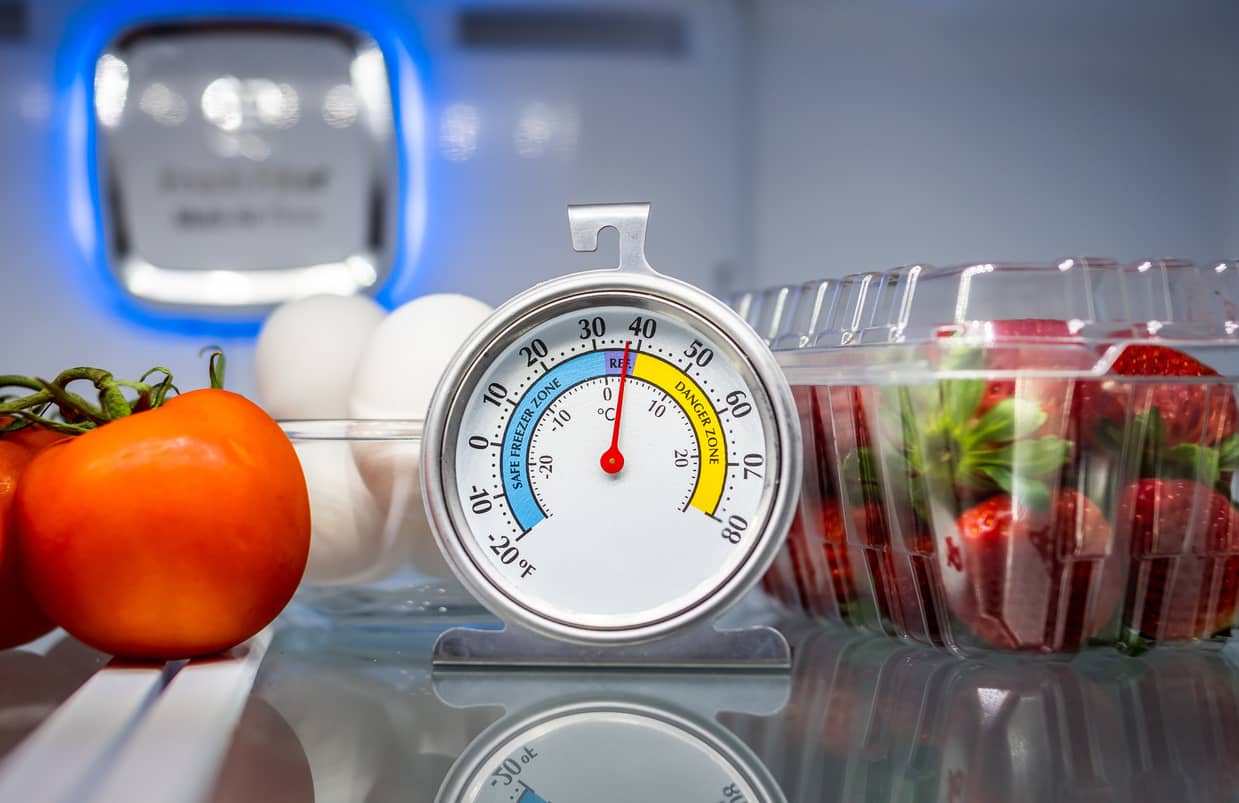
Use an appliance thermometer. These are made for fridges and freezers. You can buy them at grocery stores, hardware stores, or online. They are not expensive.
Here is how to use one:
- Place the thermometer inside the fridge section, away from the door. Put it in a spot where you usually keep food.
- Leave it there for at least 5 to 8 hours, or even overnight. This gives the temperature time to settle.
- Read the temperature on the thermometer without leaving the door open for too long.
- Check if the temperature is 40°F (4°C) or lower.
Do the same for the freezer:
- Place a freezer thermometer in the freezer section. Put it among frozen items if you have any already in there, or simply on a shelf.
- Leave it for several hours.
- Check the temperature quickly.
- Make sure it is 0°F (-18°C) or lower.
Check the temperature regularly, not just when the fridge is new or has been moved. This helps make sure your food stays safe. Check it once a week or so.
If your thermometer shows the temperature is too high, adjust the setting and check again later.
Factors Influencing Fridge Cool Down Time
Many things can change how fast a fridge gets cold. We touched on some. Let’s list the main factors influencing fridge cool down time more clearly.
These factors are why there is a range of time for cooling, not just one exact time.
- Room Temperature: A fridge in a very hot room (like a garage in summer) takes much longer to cool than one in a cool house.
- Fridge Size: Bigger fridges have more space to cool down. They might take longer to get cold all the way through compared to smaller ones.
- How Empty or Full It Is:
- An empty fridge cools faster initially because there is less to cool.
- But once it is cool, a mostly full fridge (not overstuffed) stays cold better. The cold food helps keep the temperature steady.
- Putting lots of warm food in slows down cooling a lot.
- Door Opening Frequency: How often and how long the doors are open lets warm air in, making the fridge work harder and longer.
- Condition of Door Seals: Leaky seals let warm air sneak in all the time, stopping the fridge from getting cold enough.
- Cleanliness of Coils: Dirty coils make it hard for the fridge to release heat, slowing the whole cooling process.
- Ventilation Around the Fridge: The fridge needs space (usually a few inches) around the back and sides for air to move and carry heat away.
- The Fridge’s Age and Condition: Older fridges or fridges with worn parts might not cool as well or as fast as new ones.
- Setting Temperature: If you set it to a very low temperature (very cold), it will take longer to reach that point.
Keeping these factors in mind helps you know what to expect and what you can do to help your fridge cool properly.
Fridge Not Cold After 24 Hours
You have waited a full day, but your fridge not cold after 24 hours. This is not normal, especially for a new fridge.
If this happens, here are steps to take:
- Check Power: Is it plugged in? Is the outlet working? Check the circuit breaker.
- Check Controls: Are the temperature controls set correctly? Make sure they are set to a cold level (like 37°F or a middle setting on a dial). Is there a “demo” or “showroom” mode that might be on? Turn it off.
- Check the Door Seals: Are the doors closing fully? Are the seals clean and sealing well all around?
- Check Airflow: Is anything blocking the vents inside the fridge? Cold air needs to move freely. Is there enough space around the outside of the fridge?
- Listen: Is the compressor running? It makes a humming or whirring sound. If you hear nothing at all, the fridge might not be trying to cool. If it is running constantly but not getting cold, there might be a problem.
- Check Coils: If you can safely access the coils (usually on the back or underneath, unplug the fridge first!), are they very dirty? Clean them carefully if needed after unplugging.
- Was It Just Moved? Did you wait the required time after moving before plugging it in? If not, you might have damaged it.
- Is the Room Too Hot? Extreme room temperatures can prevent proper cooling.
- Contact Support: If you have checked these simple things and the fridge is still not cold after 24 hours (or much longer than expected for an older fridge), call the manufacturer or a repair person. There might be a problem with a part like the compressor, fan, or refrigerant.
It is important to fix this quickly so you can use your fridge safely.
Mini Fridge First Cool Down Time
Mini-fridges are smaller and often have simpler cooling systems than full-size fridges.
How does this affect mini fridge first cool down time?
- Mini-fridges often cool down faster than large ones because there is less space and mass to cool.
- They typically take 2 to 4 hours to start feeling cool inside.
- To reach the safe temperature for food (40°F or lower) or freezing temperatures, it might take 4 to 12 hours.
Just like larger fridges, do not fill a mini-fridge right away. Let it cool down for a few hours first, ideally overnight if possible, before adding food.
Factors affecting a mini-fridge’s cool down time are similar to large fridges: room temperature, how full it is, door openings, and air flow around it. Make sure it has space for air to move.
Ways To Help Your Fridge Cool Faster (Carefully!)
While you cannot magically make a fridge instantly cold, you can help the process along, especially with a new fridge.
Here are simple tips:
- Place It Right: Put the fridge in a cool spot, away from direct sunlight and heat sources like ovens. Make sure it has space around it for air flow.
- Clean Coils: If it is an older fridge, clean the condenser coils (unplug first!). This helps it release heat better. New fridges should have clean coils.
- Set the Temperature Correctly From the Start: Set it to the recommended 37°F for the fridge and 0°F for the freezer. Do not set it much lower right away; let it reach the standard temp first.
- Keep the Doors Closed: Once you plug it in, keep the doors closed as much as possible until it feels cold. Do not stand there with the door open checking it every few minutes.
- Let it Run Empty First: For a new fridge, let it run for the recommended 24 hours empty. This lets it reach and stabilize its temperature without the added work of cooling food.
- Add Food Gradually (For New Fridges): Once it is cold, add food in stages over a few hours, rather than filling it completely with warm groceries all at once.
- Check Door Seals: Make sure the doors seal tightly. Clean the seals if they are sticky.
These steps help the fridge work as it should and reach safe temperatures as quickly as possible within its normal range.
Keeping Your Fridge Cold Over Time
Getting your fridge cold is just the first step. Keeping it cold is just as important for food safety and saving energy.
Here are simple rules for daily use:
- Open the Door Less: Try to get everything you need out at once. Close the door quickly.
- Do Not Overpack: Packing too much food blocks air vents inside. Cold air cannot move around, leading to warm spots.
- Let Hot Food Cool Down First: Putting hot food straight into the fridge warms up everything inside. Let leftovers cool to room temperature on the counter first before putting them in the fridge.
- Check the Temperature Regularly: Use that appliance thermometer! Quick checks tell you if something is wrong before food spoils.
- Clean Coils Yearly: Dirty coils make the fridge work too hard. Cleaning them helps it run better and saves energy.
- Check Door Seals Often: Make sure they are clean and creating a tight seal.
- Defrost the Freezer (If Needed): If you have a manual defrost freezer, let ice build-up get too thick. Thick ice makes the freezer less efficient and can affect the fridge section too.
Following these steps helps your fridge stay at the right cold temperature all the time. This keeps your food safe to eat and helps your fridge last longer.
Learning About Fridge Types and Cooling
Not all fridges are exactly the same. The type of fridge can slightly change how it cools.
- Top Freezer: Often cools the freezer first, then blows cold air down into the fridge section.
- Bottom Freezer: Cools the freezer and fridge parts separately or uses fans to move air in different ways.
- Side-by-Side: Each side has its own space to cool.
- French Door: Similar to bottom freezer, but with two doors on top.
Most modern fridges use fans to move cold air around inside. This helps keep all areas cold. If a fan is blocked or broken, it can create warm spots and make the whole fridge seem less cold.
Even with different types, the basic idea is the same: removing heat. And the time it takes to get cold initially follows the same general rules we discussed. The average time for fridge to cool still falls within that 4-24 hour range for the fridge and longer for the freezer.
Checking On Your Fridge’s Cooling Power
If you think your fridge is not cooling right, here are some simple checks you can do yourself:
- Is the Motor Running? Listen for the hum of the compressor. If you hear nothing, it’s likely not cooling.
- Feel the Outside: The sides, back, or bottom near the coils should feel warm when the compressor is running. If they are not warm at all, it might mean the cooling system is not working.
- Feel Inside Air: After the fridge has been closed for a while, open it quickly. Does the air inside feel cold right away? Or does it feel room temperature?
- Check for Frost: Too much frost in the freezer (if not a manual defrost) or on cooling parts can mean an issue. A little is normal, but heavy frost can block air flow.
- Test the Thermometer: Make sure your appliance thermometer is working right. You can put it in a glass of ice water. It should read 32°F (0°C).
These checks can give you clues. If the fridge is not running, not getting warm outside, not feeling cold inside, or has strange frost, you might need help from a repair person. If your fridge not cold after 24 hours and you have checked the basic things, calling for service is the next step.
Keeping Track of Temperatures
Using an appliance thermometer regularly is one of the best ways to know if your fridge is working right.
- Place one in the warmest spot in your fridge section (often the top shelf or near the door).
- Place one in the middle of your freezer section.
Check them at the same time each day for a few days when you first get the fridge or after moving it. Once you know it is stable, check them maybe once a week or if you notice the fridge does not seem as cold.
Writing down the temperatures for a few days can help you see if the temperature is steady or going up and down too much.
Remember, the goal is 40°F (4°C) or lower for the fridge and 0°F (-18°C) or lower for the freezer. Keeping temperatures in these safe zones stops bacteria from growing quickly and keeps your food fresh for longer.
What Happens If It Does Not Get Cold Enough?
If your fridge stays too warm (above 40°F / 4°C), your food is at risk. Bacteria that can make you sick grow fast in temperatures between 40°F and 140°F (4°C and 60°C). This is called the “danger zone.”
Food left in the danger zone for more than two hours should be thrown away, as harmful bacteria can grow to dangerous levels even if the food looks and smells okay.
This is why waiting for the new refrigerator initial cooling time or fridge cooling down after moving is so important before adding food. It is also why addressing the issue if your fridge not cold after 24 hours is critical.
Do not risk food poisoning. If your fridge cannot keep food cold safely, get it fixed or replaced.
Final Thoughts on Cool Down Times
The time it takes for a fridge to get cold is not instant. It is a process of removing heat.
- For a new fridge, plan for 24 hours before adding food.
- For a freezer, plan for 24 hours or more to reach freezing temps.
- After moving, give it time to settle, then expect 4-12 hours to cool.
- Mini-fridges are often faster, maybe 4-12 hours to be fully cold.
Factors like room temp, how full it is, and airflow all play a big role.
Knowing the average time for fridge to cool helps you know what is normal. If it takes much longer, or if your fridge not cold after 24 hours, look for simple problems like door seals, controls, or airflow first. Use an appliance thermometer to be sure it is cold enough. The optimal refrigerator temperature setting is 37°F for the fridge and 0°F for the freezer.
Being patient and checking temperatures are the best ways to make sure your fridge is working correctly and keeping your food safe.
Frequently Asked Questions
h4: How long does a new fridge take to get cold enough for food?
A new fridge needs about 4 to 24 hours to reach safe temperatures. Most makers tell you to wait a full 24 hours before putting food inside. This gives it time to get truly cold and stable.
h4: How long does the freezer part of a new fridge take to freeze?
The freezer section takes longer than the fridge part. It needs 12 to 24 hours, sometimes up to 48 hours, to get to freezing temperatures like 0°F (-18°C). Wait until it feels very cold or a freezer thermometer confirms the temperature before adding frozen food.
h4: Can I put food in my new fridge after just a few hours?
It is best not to. While it might feel cool, it likely has not reached the safe temperature (40°F or lower) yet. Putting food in too soon makes it work harder and could cause food to spoil. Wait the recommended 24 hours.
h4: Why is my fridge not getting cold after 24 hours?
Many things can cause this. Check if it is plugged in and the power is on. Make sure the temperature controls are set correctly. Check if the doors are sealing tightly. Look for too much food blocking vents inside. Check if there is good airflow around the fridge. If these are okay, there might be a part broken, and you may need to call a repair person.
h4: How long after moving my fridge can I plug it in?
You should let a fridge stand upright for at least 4 hours after moving it before plugging it in. If it was on its side, wait 12 to 24 hours. This lets the oil in the cooling system settle back where it belongs.
h4: How long does it take a fridge to get cold after moving and plugging it in?
After waiting for it to settle and then plugging it in, it usually takes 4 to 12 hours for the fridge to get back to its normal cold temperature.
h4: What temperature should my fridge and freezer be set to?
The safe temperature for the fridge is 40°F (4°C) or lower. A good setting is 37°F (3°C). The safe temperature for the freezer for long storage is 0°F (-18°C) or lower.
h4: How can I check the exact temperature inside my fridge?
Use an appliance thermometer made for fridges and freezers. Place it inside for several hours and then quickly read the temperature. Check both the fridge and freezer sections.
h4: What things make a fridge take longer to cool down?
Factors include a hot room, opening the door often, too much warm food inside, poor airflow around the fridge, dirty cooling coils, and bad door seals.
h4: How long does a mini fridge take to get cold the first time?
A mini fridge usually takes 4 to 12 hours to get fully cold the first time. It might start feeling cool sooner, in 2-4 hours. Wait until it reaches the correct temperature before adding food.
h4: What should I do if my fridge temperature goes above 40°F (4°C)?
If the temperature has been above 40°F (4°C) for more than two hours, food safety guides say you should throw away any food that could spoil, like meat, dairy, and leftovers. Foods like some condiments, jams, and whole fruits might be okay, but it is best to be safe. Fix the fridge problem right away and wait for it to get back to a safe temperature before putting new food in.