
How do you become a TV show writer? Becoming a TV show writer takes hard work, learning, and getting your foot in the door. It means learning the rules of writing for TV, writing lots of scripts, meeting people in the business, and working your way up, often starting as an assistant or in a special program.
Writing for television is a dream for many people. Imagine creating stories and characters that millions watch every week! But getting one of those Hollywood writing jobs is not easy. It takes talent, much practice, and knowing how the TV business works. This guide will walk you through the steps needed to chase that dream.
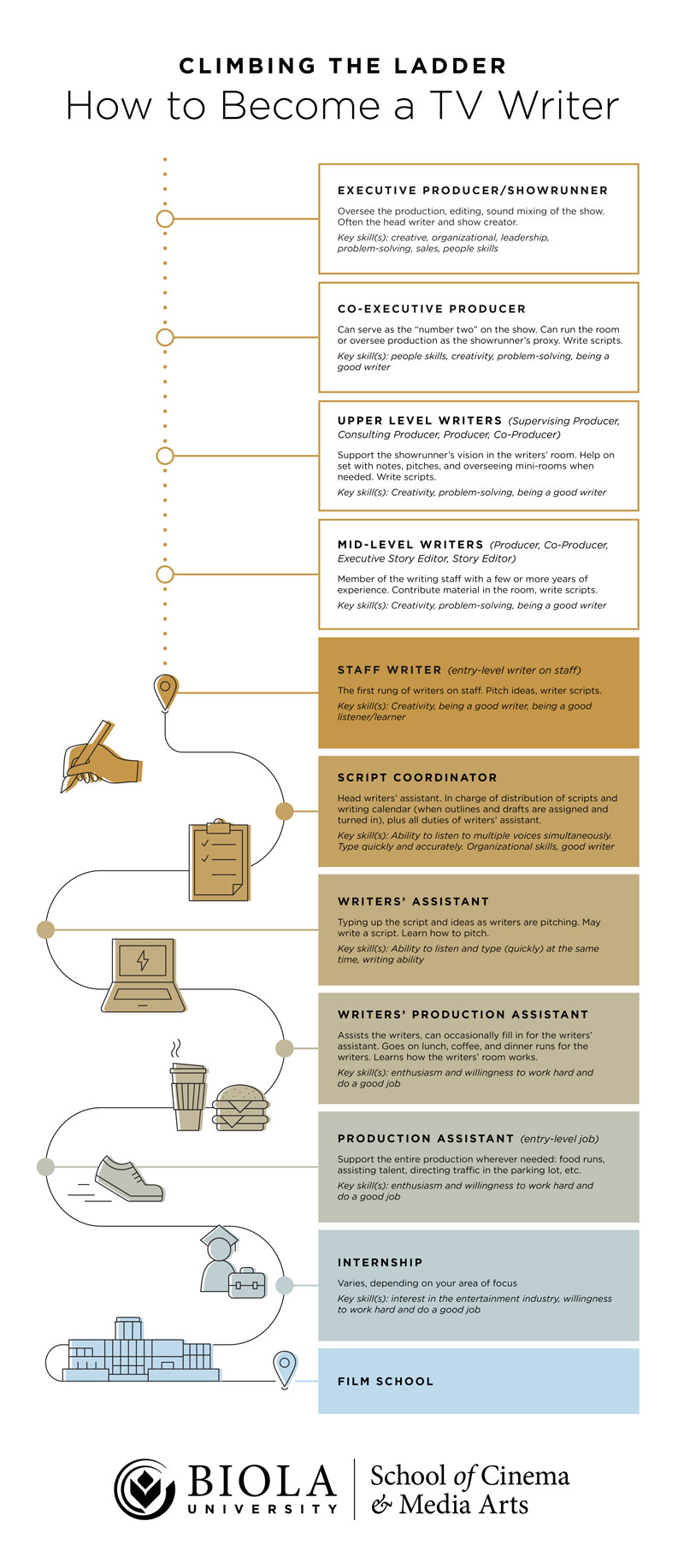
Image Source: assets.biola.edu
Grasping the Basics of TV Writing
Before you write a single word, you must learn the rules. Writing TV scripts is different from writing a movie or a book. TV has its own pace, structure, and format.
The Look and Feel of a TV Script
TV scripts have a specific format. This format helps everyone working on the show understand the story quickly.
- Scene Headings: These tell you where and when the scene happens (e.g., INT. COFFEE SHOP – DAY).
- Action Lines: These describe what is happening on screen. Keep them short and clear.
- Character Names: Centered above their dialogue.
- Dialogue: The words the characters speak.
- Parentheticals: Little notes for the actor about how to say a line or what to do.
Learning this format is key. You can find examples online or in screenwriting software. Using the right format makes you look professional.
Story Structure for TV
TV shows tell stories over many episodes and seasons. Each episode also needs its own story structure.
- Pilot Episode: This is the first episode. It sets up the characters, world, and main conflicts of the series. Writing a TV pilot is one of the most important steps in starting your career. It shows your unique voice and idea.
- Episode Structure: Most TV shows use acts. Think about where commercials might go. Each act builds tension or moves the story forward, often ending with a hook to make people keep watching.
- Season Arcs: A season of a show usually has a bigger story that plays out over all the episodes. Characters change and grow across the season.
Learning how to structure stories for TV is like learning the show’s engine. It makes everything run right.
Learning the Craft Formally or Alone
How do you get good at writing TV scripts? You practice, read scripts, and learn from others. There are a few main ways to do this.
Going to School: Screenwriting Programs
Many writers learn their craft in screenwriting programs. These programs are in universities or special schools.
- What You Learn: In these programs, you study script format, story structure, character development, and how to write dialogue. Teachers are often writers who work in the business.
- Pros: You get structured learning, feedback on your work, and often make connections with teachers and classmates who could help you later. Some programs have ties to the industry.
- Cons: Screenwriting programs can be expensive. There is no guarantee of a job after finishing.
Some well-known screenwriting programs are at schools like USC, UCLA, NYU, and AFI. Doing research to find the right fit for you is important.
Learning By Doing
You don’t need a degree to become a TV writer. Many successful writers learned by themselves.
- Read Scripts: Get your hands on scripts of shows you love. See how they are written, how the dialogue sounds, and how the stories are structured. Spec script examples from famous shows are easy to find online. Reading these helps you see the format and style.
- Write Constantly: The best way to learn is to write. Write scenes, write short scripts, write a TV pilot, write spec scripts. The more you write, the better you get.
- Get Feedback: Share your writing with others. Join a writing group. Get notes on your scripts. It can be hard to hear criticism, but it helps you see where your writing can improve.
Learning on your own takes discipline. But it costs less money and lets you learn at your own speed.
Building Your Writing Samples
To show people you can write, you need samples of your work. These are your writing resume.
Writing Your Own TV Pilot
This is often the most important sample. A TV pilot shows off your unique idea for a show and your writing voice.
- Pick an Idea: Choose an idea you are excited about. It should be a show you would love to watch.
- Know Your World and Characters: What is the show about? Who are the main people? What problems do they face?
- Write the Script: Follow the correct TV format. Make the story grab people. Show off your best writing.
- Rewrite, Rewrite, Rewrite: Your first draft won’t be perfect. Get feedback and make it better.
A strong TV pilot can open doors. It shows you can create a whole world and start a story.
Writing Spec Scripts
A spec script is a script you write for an existing TV show. You don’t get paid for it. You write it to show you can write in the style and voice of that show.
- Choose the Right Show: Pick a popular show that is currently on the air. Make sure it’s a show you know well. Some writers suggest picking shows that are similar in tone to the shows you want to write for.
- Study the Show and Scripts: Watch episodes closely. Read scripts for that show. Pay attention to character voices, story types, and episode structure.
- Write Your Story: Come up with an original story idea for an episode of that show. Do not just copy an episode that already happened.
- Make it Sound Like the Show: Use the show’s style and character voices. Make it feel like a real episode.
Spec script examples are used to show you can write professionally and fit into a TV writer’s room. Many new writers get jobs because someone liked their spec script.
Getting Noticed: Breaking Into TV Writing
Having great scripts is the first step. The next step is getting people who can hire you to read them. Breaking into TV writing is very hard. It takes persistence.
Move to Where the Jobs Are
Most Hollywood writing jobs are in Los Angeles, California. If you are serious about a TV writing career, you will likely need to move there. Being in LA makes it easier to network and find entry-level jobs.
Start at the Bottom: Assistant Jobs
Many writers start as assistants. This is not a writing job, but it gets you inside the TV world.
- Types of Assistant Jobs: You might be a writer’s assistant, showrunner’s assistant, or production assistant.
- What You Do: You do tasks like answering phones, managing schedules, running errands, and sometimes taking notes in the TV writer’s room.
- Why It Helps: You learn how a TV show is made. You meet writers, producers, and other people in the business. You can learn how a writer’s room works by being there. It’s a way to show people you are reliable and serious.
These jobs don’t pay a high staff writer salary at first, but they are key for making connections.
Enter Fellowships and Contests
Many TV networks and studios have writing fellowships. These are programs for new writers from different backgrounds.
- What They Are: Fellowships usually involve workshops, meetings with executives, and sometimes a small salary. The goal is to help writers develop their skills and meet people.
- How to Apply: You usually need to submit scripts (pilots and/or specs) and sometimes essays or other materials. They are very competitive.
- Contests: There are also many screenwriting contests. Winning or placing high can get your script read by industry people.
Fellowships and contests are good ways to get your scripts seen by gatekeepers.
Networking
Meeting people is super important in TV. This business is built on relationships.
- Go to Events: Attend industry events, panels, and parties if you can.
- Informational Interviews: Ask writers or other TV professionals if they will meet for coffee to talk about their careers. Be respectful of their time.
- Use Your Network: Stay in touch with people from screenwriting programs, old jobs, or writing groups.
- Be Kind and Professional: You never know who might help you later. Treat everyone well.
Networking isn’t just about getting a job. It’s about building a community and learning from others.
Inside the TV Writer’s Room
If your script gets noticed and people like you, you might get hired as a staff writer. This means you get a job in a TV writer’s room.
What Happens There?
The writer’s room is where the magic happens. A group of writers, led by the showrunner, creates the show.
- Breaking Story: Writers brainstorm ideas for episodes and seasons. They figure out the main plot points and character arcs.
- Outlining Episodes: The room works together to create a detailed plan for each episode.
- Writing Scripts: Once the outline is ready, a writer is assigned to write the script for that episode.
- Rewriting: The room gives notes on the script, and the writer rewrites it. This happens many times.
- Collaboration: It’s a team effort. You need to be able to share ideas and take notes on your work.
Working in a writer’s room requires different skills than writing alone. You need to be good at working with others and thinking on your feet.
Staff Writer Salary
What can you expect to earn as a staff writer? The staff writer salary varies a lot based on experience, the type of show, and the network or studio.
- Guild Minimums: The Writers Guild of America (WGA) sets minimum salaries for writers. These minimums depend on the writer’s level (staff writer, story editor, executive story editor, producer, etc.) and the type of show (network, cable, streaming).
- Starting Out: A starting staff writer salary is usually at the WGA minimum or slightly above.
- Moving Up: As you gain experience and move up the ranks (Story Editor, Executive Story Editor, Co-Producer, Producer, Supervising Producer, Co-Executive Producer, Executive Producer), your salary increases.
- Overall Range: A staff writer salary can range from about $3,500 to $5,000+ per week, depending on the contract and show. Higher-level writers earn much more.
It’s important to know the WGA minimums when you get your first writing job offer.
The Business Side: Agents and the WGA
Once you are ready to sell your work or get a job, you need to understand the business parts.
Getting an Agent or Manager
Agents and managers help writers find work and make deals.
- Agents: They find you jobs and negotiate your contract and salary. They take a percentage of your earnings (usually 10%). You usually need to have strong writing samples and perhaps some industry connections before an agent will sign you.
- Managers: They help guide your career, give creative feedback, and help you meet people. They also take a percentage (usually 10%). Some writers get a manager before an agent.
Getting representation is a big step. It means someone believes in your talent and wants to help you succeed.
How to Pitch a TV Show
Pitching is telling people your idea for a TV show to try and get them to buy it.
- Logline: A one or two-sentence summary of your show. It should grab attention.
- Synopsis: A short summary of the pilot episode and maybe the first season.
- Show Bible: A document that explains the world, characters, and ongoing stories of your show. It shows how the show can last many seasons.
- The Pitch Meeting: You meet with executives (from studios, networks, or streaming services) and tell them about your show idea. You need to be prepared, passionate, and answer questions well.
Learning how to pitch a TV show is a key skill for any TV writer who wants to create their own series.
The Writers Guild of America (WGA)
The Writers Guild of America (WGA) is a labor union for writers in film, television, and radio.
- Why it Matters: If you work on a union TV show, you must join the WGA. The WGA fights for fair pay (including minimum staff writer salary), good working conditions, health benefits, and retirement plans for its members.
- Joining: You usually join the WGA after you get your first writing job on a union show. You earn WGA ” وحدات” (units) based on your work, and once you have enough units, you can become a member.
- Strikes: The WGA can call for strikes when negotiating contracts with studios and producers if they cannot agree on terms. This happened recently in 2023.
Being a member of the Writers Guild of America (WGA) gives you important protections and benefits.
Keeping Going: Persistence is Key
Becoming a TV writer is a marathon, not a sprint. It takes years of hard work and not giving up.
Handling Rejection
You will face a lot of rejection. Your scripts won’t get read. You won’t get into programs. You won’t get jobs. This is normal. Learn from it and keep going. Use feedback to make your writing better.
Stay Creative
Keep writing new scripts and generating new ideas. The TV landscape changes, and you need to keep your skills sharp and your ideas fresh. Work on new TV pilots and different spec script examples.
Build Relationships
The people you meet as assistants, in programs, or in early jobs will be your peers. Some will rise with you. Support others and build real connections. These relationships are part of how people find out about Hollywood writing jobs.
Key Steps on the Path
Let’s recap the journey to becoming a TV writer.
- Learn the Craft: Study script format, structure, and how to write for TV. Consider screenwriting programs or self-study.
- Write Samples: Create a strong TV pilot and practice with spec script examples.
- Move to LA: Position yourself where the industry is centered for Hollywood writing jobs.
- Get Entry-Level Work: Start as an assistant to learn the business and make connections.
- Network: Meet people in the industry.
- Apply Everywhere: Submit to fellowships, contests, and for assistant jobs.
- Get Hired: Land your first staff writer job, often through connections or impressive samples.
- Join the WGA: Become a member of the Writers Guild of America (WGA) when eligible to protect your rights.
- Work in the Room: Learn how to collaborate and write within a TV writer’s room structure.
- Keep Writing and Moving Up: Continue to hone your skills and aim for higher-level writing positions.
Here is a simple look at the typical path:
| Step | Action | Goal |
|---|---|---|
| 1. Learn the Rules | Study format, structure. Read scripts. | Know how TV scripts work. |
| 2. Create Portfolio | Write a TV pilot. Write spec script examples. | Show off your writing talent. |
| 3. Get Insider View | Work as an assistant (LA recommended). | Learn the business. Meet people. |
| 4. Improve Skills/Connect | Join screenwriting programs or groups. Apply for fellowships/contests. | Get feedback. Get seen. Learn from pros. |
| 5. Get Hired | Use network. Apply for staff writer jobs. | Get first job in a TV writer’s room. |
| 6. Grow | Learn in the room. Write more. Move up. | Establish career. Increase staff writer salary. |
This path can take many years. Be patient and determined.
FAQ: Getting Started as a TV Writer
Here are some common questions people ask about becoming a TV writer.
h4 Is a screenwriting degree necessary?
No, a screenwriting degree is not necessary. Many successful writers did not go to film school or get a specific screenwriting degree. However, screenwriting programs can provide valuable training, feedback, and connections. You can learn the craft on your own by reading scripts, writing a lot, and getting feedback from writing groups.
h4 How important is networking?
Networking is extremely important in the TV industry. Many Hollywood writing jobs are found through knowing people. Getting assistant jobs, attending industry events, and making connections in screenwriting programs or writing groups can help you meet people who might hire you or recommend you later.
h4 What is a good first script sample to write?
Many people suggest writing an original TV pilot script. This shows your unique voice and ability to create a world and characters. Some also write spec scripts for existing shows to show they can write in a professional format and mimic a show’s style, which is useful for showing you can work in a TV writer’s room. Having both can be helpful.
h4 What kind of assistant job should I aim for?
Writer’s assistant or showrunner’s assistant jobs are great because they put you directly in or near the TV writer’s room. You hear pitches, see how stories are broken, and understand the day-to-day work. Production assistant jobs also get you on set and in the TV world, just in a different area. Any job that gets you inside the industry is a good start.
h4 How long does it take to become a staff writer?
There is no set timeline. For some, it might take a few years of being an assistant and writing scripts. For others, it could take ten years or more. It depends on talent, hard work, luck, and making the right connections. Persistence is key.
h4 What does the Writers Guild of America (WGA) do for writers?
The Writers Guild of America (WGA) protects writers’ rights. They negotiate contracts that set minimum salaries (like the staff writer salary), ensure writers get health and retirement benefits, and protect their creative rights. Being a member is vital for working on union TV shows and movies.
h4 Can I break in if I don’t live in Los Angeles?
It is much harder to break into TV writing if you do not live in Los Angeles, as most Hollywood writing jobs and industry events are there. However, it’s not impossible. You can write scripts and enter contests or fellowships from afar. But at some point, likely after you have strong samples, you will likely need to move to LA to network and be available for jobs and meetings.
h4 How much should I expect to earn as a starting staff writer?
A starting staff writer salary will likely be at or slightly above the minimum set by the Writers Guild of America (WGA). As of recent contracts, this minimum is typically several thousand dollars per week, but it varies based on the show type and budget. It is enough to live on, especially in LA, but it is not millions instantly. Salaries grow as you move up to story editor, producer, and executive producer levels.
Becoming a TV show writer is a challenging but rewarding path. It requires dedication to learning the craft, writing constantly, building a strong portfolio, and actively seeking ways to enter the industry. By taking these steps, understanding the business, and not giving up, you can work towards your goal of writing for television.