
Does your air conditioner need refrigerant added regularly? No, it does not. How often should you add Freon to an AC? You should only need to add it if there is a leak. Is AC refrigerant permanent? Yes, in a properly working system, the refrigerant lasts forever because it moves in a closed loop and is not used up like fuel. If your AC needs more refrigerant, it means the system has a leak, and the leak must be found and fixed before adding more.
Air conditioners are complex machines that keep our homes cool and comfortable when it’s hot outside. They use a special substance called refrigerant to do this important job. Sometimes people talk about “recharging” their AC or “adding Freon” to make it cool better. But what does this really mean? And how often should it happen? Let’s look closely at what makes your AC work and why adding refrigerant isn’t a routine task.
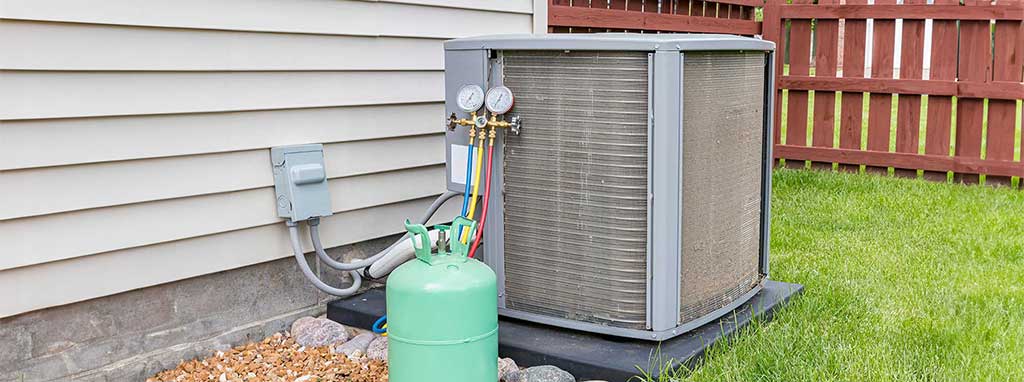
Image Source: bluevalleyheatingcooling.com
The Stuff That Makes Air Cold
Your air conditioner uses a special chemical substance to make your home cool. This stuff is called refrigerant. You might hear older names like “Freon,” but that’s just one brand name from the past. Today, many different types of refrigerant are used.
Think of refrigerant as the blood in your AC system. It moves through tubes, picking up heat from inside your home and moving it outside. This movement of heat is what makes your indoor air feel cool.
What The Coolant Does In Your Home
The refrigerant has a simple but very important job. It goes through a cycle inside your air conditioner.
- It starts as a cool liquid.
- It moves to a part inside your home (the evaporator coil). Here, it sucks up heat from the warm air in your rooms. As it takes in heat, the liquid turns into a gas.
- The gas then travels outside to a different part (the condenser coil). Here, a fan blows air over the hot gas. The gas gives up its heat to the outside air and turns back into a cool liquid.
- The liquid goes back inside to start the cycle again.
This happens over and over. The refrigerant doesn’t get used up in this process. It just changes from a liquid to a gas and back again, carrying heat each time.
Why Your AC Shouldn’t Lose Its Cool Stuff
Because refrigerant just goes around and around in a sealed system, it should never run out. It’s not like gasoline in a car or water in a garden hose that gets used up. The amount of refrigerant in your AC system is set when it is made. This amount is just right for the system to work well.
So, if your air conditioner needs more refrigerant, it means there is a problem. The problem is almost always a leak. A leak lets the refrigerant slowly escape from the sealed tubes.
Leaks: The Real Reason Refrigerant Goes Missing
Think of your AC system like a bicycle tire. The air in the tire stays there forever unless there is a hole or a leaky valve. Your AC’s refrigerant system is sealed tight, just like a good tire. If it loses refrigerant, there’s a “hole” somewhere.
Leaks can happen for many reasons:
- Old Age: Parts get old and wear out. Rubber seals can crack. Metal tubes can get thin.
- Vibrations: The AC unit shakes a little when it runs. Over time, this can loosen fittings or rub tubes against each other, causing tiny holes.
- Damage: Something might hit the outside unit (like a lawnmower) or the inside unit. This can bend or break a tube.
- Poor Installation: If the AC was not put in correctly, some connections might not be tight enough from the start.
- Corrosion: Over time, parts can rust or break down because of chemicals or moisture.
These leaks can be very small, like a pinhole. But even a small leak lets the refrigerant slowly seep out.
Grasping AC Recharge Frequency
Many people ask, “How often should I recharge my AC?” or “What is the normal AC recharge frequency?” The simple answer is: almost never, if the system is working right.
Your air conditioner does not need regular “recharging” as part of normal maintenance. Think of it like changing the oil in your car – that’s routine. Adding refrigerant is not routine. It’s a repair.
If your AC needs refrigerant, it means there’s a leak that needs finding and fixing. Just adding more refrigerant without fixing the leak is like topping off a leaky bucket of water. The water level goes up for a bit, but it will just leak out again. And the problem that caused the leak (the hole) is still there.
So, the idea of a set “AC recharge frequency” is wrong. A properly working AC should never need refrigerant added. If it does, it’s time to call a professional to find and fix the leak.
How Often Add Freon AC?
This is the same question, just using an older term (“Freon”). Again, you only add it if there’s a leak and after the leak is fixed. There is no calendar schedule for adding Freon.
Signs Your AC Is Asking For Help
How can you tell if your air conditioner might be low on refrigerant because of a leak? Your AC will usually give you some clues. Pay attention to these signs:
AC Not Cooling Well
This is the most common sign. If your AC is running but the air coming out of the vents isn’t as cold as it used to be, or if your home just doesn’t get cool enough, it could be low on refrigerant. The refrigerant is what carries the heat away. If there isn’t enough of it, the system can’t move enough heat out of your home.
Warm Air From Vents
If the air coming out feels only a little cool, or even warm, this is a strong sign something is wrong. A healthy AC should blow distinctly cold air.
Ice On The AC Coils
This might sound strange – ice on something that cools? But it happens when refrigerant is low. The part inside your home (the evaporator coil) gets very cold when refrigerant is low. Why? Because there isn’t enough refrigerant flowing through it to pick up heat from the air properly. When warm, humid air hits the super-cold coil, moisture in the air freezes onto the coil. You might see ice build-up on the indoor unit or on the copper line outside where it connects to the house.
Hissing or Bubbling Noises
Sometimes, a leak makes a sound. A larger leak might make a hissing sound as gas escapes. A small leak might let air or moisture into the system, causing bubbling sounds inside the refrigerant lines.
High Electric Bills
If your AC is running constantly trying to cool your home but not succeeding, it uses a lot of power. A sudden jump in your electric bill without changing how you use your AC could mean it’s working harder than it should because of a problem like low refrigerant.
Unit Runs All The Time
An AC system low on refrigerant struggles to reach the temperature you set on your thermostat. It might run nonstop, never quite getting your home cool enough to shut off.
Summary of Low Refrigerant Signs
| Sign | What You Might See/Hear | Why It Happens |
|---|---|---|
| AC not cooling well | Air from vents feels cool, but not cold; house stays warm | Not enough refrigerant to move heat out of the house. |
| Warm air from vents | Air feels barely cool or warm when AC is running | Very low on refrigerant, little to no cooling happening. |
| Ice on coils | White build-up on indoor coil or outdoor pipe connection | Coil gets too cold due to low refrigerant flow, freezing moisture from air. |
| Hissing or bubbling | Sounds near the AC unit (indoor or outdoor) | Refrigerant leaking out (hiss) or air/moisture getting in (bubble). |
| High electric bills | Your energy usage goes up without explanation | AC runs constantly to try and cool, using more power. |
| Unit runs non-stop | AC never shuts off, doesn’t reach set temperature | System can’t cool the house enough to satisfy the thermostat setting. |
If you notice one or more of these Signs low AC refrigerant, it’s time to call a qualified AC technician. Don’t wait, as running an AC when it’s low on refrigerant can cause more serious damage to the system, especially the compressor (a very expensive part).
How Long AC Charge Lasts
Many wonder, “How long does an AC charge last?” or “What is the average AC refrigerant lifespan?” This is a key point to understand.
In a perfect world, or rather, in a perfect AC system with no leaks, the initial charge of refrigerant should last for the entire life of the unit. We’re talking 15, 20, maybe even 25 years or more, depending on the system. Refrigerant does not wear out or get used up. It’s a closed loop.
So, if your AC was properly installed and has no leaks, you should never need to add refrigerant. The average AC refrigerant lifespan in a healthy system is indefinite – it lasts as long as the AC unit itself.
If a technician tells you your AC just needs a “top-up” of refrigerant without finding a leak, be cautious. They are likely putting a temporary fix on a problem that will just happen again. It’s like putting air in that leaky tire without patching the hole. It needs the leak fixed first.
When Refill AC Refrigerant?
You should only When refill AC refrigerant after a trained technician has done the following:
- Diagnosed the problem: They check to make sure low refrigerant is the actual issue, not something else causing poor cooling (like a dirty filter or a bad fan motor).
- Found the leak: They use special tools (like electronic sniffers or UV dye) to locate where the refrigerant is escaping.
- Fixed the leak: This is the most important step. They repair or replace the faulty part that was leaking.
- Evacuated the system: They use a vacuum pump to remove all air and moisture from the lines. Air and moisture can damage the system and mix with the refrigerant.
- Properly recharged the system: They add the exact amount of the correct type of refrigerant specified by the AC maker. Too much or too little refrigerant can hurt the system’s performance and lifespan.
Just adding refrigerant without fixing the leak is illegal (because refrigerants can harm the environment if released) and doesn’t solve the underlying problem. It’s a waste of money and can damage your AC further.
The Process of Getting More Refrigerant
When you call an AC technician because you suspect your unit is low on refrigerant (due to signs like AC not cooling well), here’s a general idea of what they will do:
- Check System Pressure: They connect gauges to the AC’s service ports to measure the pressure of the refrigerant inside. Low pressure indicates low refrigerant.
- Look for Signs of a Leak: They visually inspect common leak points (coils, connections, valves). They might look for oily spots, as refrigerant oil often leaks out with the refrigerant.
- Perform a Leak Test: They use specialized tools.
- Electronic Leak Detector: A device that “sniffs” the air around the AC components for traces of refrigerant gas.
- UV Dye: They might add a special dye to the refrigerant. After the AC runs for a bit, they use a UV light to look for glowing spots where the dye (and refrigerant) has leaked out.
- Soap Bubbles: For larger leaks, they might spray a soap solution on suspect areas. If bubbles form, there’s a leak.
- Fix the Leak: This step depends on where the leak is. They might tighten a fitting, replace a valve, patch a coil (though patching coils is often a temporary fix), or replace a section of tubing. Sometimes, if the coil is badly corroded and leaking in multiple spots, the coil (or even the whole unit) might need replacing.
- Evacuate the System: Once the leak is fixed, they use a vacuum pump to pull all the air and moisture out of the refrigerant lines. This is very important for the system’s health and performance.
- Add Refrigerant: They connect a tank of the correct type of refrigerant and use a scale to add the precise amount needed, based on the AC unit’s specifications. They will add liquid refrigerant to one side of the system and gas refrigerant to the other, or add it all as liquid depending on the method and the specific refrigerant type.
- Test the System: They run the AC to ensure it’s cooling correctly and that the pressures are now right.
This full process – finding the leak, fixing it, and then recharging – is more involved than just hooking up a tank and adding gas. That’s why it costs more than just the price of the refrigerant itself.
Cost To Get More Refrigerant
The Cost add Freon AC (or other refrigerant) varies a lot. It’s not just the price of the gas itself. The total cost depends on several things:
- Type of Refrigerant: Some refrigerants, like the older R-22, are much more expensive now because they are being phased out and are harder to get. Newer refrigerants (like R-410A) might be less expensive per pound, but the cost of refrigerant fluctuates.
- Amount Needed: How much refrigerant leaked out? More leaked means more needs to be added, which costs more.
- Location of the Leak: A leak in an easy-to-reach pipe is simpler to fix than a leak deep inside a coil or compressor. The difficulty of finding and fixing the leak affects the labor cost.
- Labor Cost: This is usually the biggest part of the bill. It includes the technician’s time to diagnose, find the leak, fix the leak, vacuum the system, and add the new refrigerant. Labor rates vary by region and company.
- Cost of Parts: If a part needs to be replaced to fix the leak (like a valve, a section of pipe, or even a coil), that adds to the cost.
Putting it all together, just adding a little refrigerant might cost a few hundred dollars. But if there’s a significant leak that requires finding and fixing, the total cost can easily range from $500 to $1500 or more, depending on the complexity of the repair and the amount/type of refrigerant needed. Replacing a major part like a coil can be even more expensive.
It’s important to get a detailed estimate from the technician that includes the leak detection, the repair, and the cost of the refrigerant.
Should You Try To Do It Yourself?
Can you just buy a can of refrigerant and add it to your AC yourself? No, absolutely not. There are several important reasons why this is a bad idea:
- It’s Illegal: In many places, it is against the law for people without proper certification to buy or handle AC refrigerants. Refrigerants are harmful to the environment if released.
- You Need Special Tools: You need pressure gauges, vacuum pumps, scales to measure the amount of refrigerant, and leak detection tools. These are expensive and require training to use correctly.
- You Won’t Fix the Leak: Remember, low refrigerant means a leak. Adding more doesn’t fix the leak. The refrigerant will just leak out again, wasting money and harming the environment.
- You Can Damage Your System: Adding the wrong type of refrigerant, adding too much, or not properly removing air and moisture before adding refrigerant can cause serious, expensive damage to your AC’s compressor and other parts.
- Safety Risks: Refrigerants are chemicals. They are under pressure. Handling them without knowing what you’re doing can be dangerous.
Always hire a qualified, licensed AC technician to deal with refrigerant issues. They have the right tools, knowledge, and certifications to do the job safely, legally, and correctly.
Keeping Your AC From Losing Its Cool
While you can’t stop leaks from ever happening, regular maintenance can help catch problems early and reduce the chance of leaks starting.
- Schedule Yearly Check-ups: Have a qualified technician inspect your AC system every year, usually in the spring before you start using it heavily. They can clean the coils, check pressures, look for potential leak spots (like worn insulation or loose connections), and make sure everything is running smoothly.
- Keep the Area Around Units Clean: Make sure the outdoor unit is free from leaves, grass clippings, and debris that could get inside and cause damage or corrosion. Trim bushes or trees away from the unit.
- Change Your Air Filters Regularly: A dirty air filter restricts airflow, which can cause the indoor coil to get too cold and potentially ice up. While icing isn’t a direct cause of refrigerant leaks, it puts stress on the system. Changing filters is simple preventative care.
Think of annual maintenance as getting a check-up at the doctor. It helps catch small issues before they become big, expensive problems. A technician might spot a potential leak issue during a routine visit.
Interpreting Older Refrigerant Issues
You might hear about different types of refrigerant. The most common types in homes today are R-410A (often called Puron) and the older R-22 (often called Freon).
R-22 is a type of refrigerant that is being phased out because it harms the ozone layer. It’s now very hard to find and expensive. It’s illegal to make new R-22 or import it into the country. You can still use R-22 in older systems, but if you have a leak, getting more R-22 is costly.
If you have an older system that uses R-22 and it has a leak, you have a few choices:
- Repair the leak and add R-22: This might be an option if the leak is small and the system is otherwise in good shape, but the R-22 itself will be expensive.
- Replace the system: Often, if an older R-22 system has a leak, especially if it’s a major leak or the system is already old (10-15+ years), it makes more sense financially to replace the entire AC unit with a new one that uses the modern, less harmful, and less expensive R-410A refrigerant. New systems are also much more energy efficient, saving you money on electric bills over time.
A qualified technician can help you figure out the best option for your specific situation if you have an older R-22 system with a leak.
Bringing It All Together
Let’s quickly go over the key points about your AC and refrigerant:
- Refrigerant is the special stuff that cools your home. It flows in a sealed loop.
- It is not used up like fuel.
- A healthy AC system should never need more refrigerant added.
- If your AC is low on refrigerant, it means there is a leak.
- Signs of a leak include AC not cooling well, warm air from vents, ice on coils, odd noises, and high electric bills (Signs low AC refrigerant).
- The Average AC refrigerant lifespan is the same as the unit’s lifespan, provided there are no leaks (How long AC charge lasts, Is AC refrigerant permanent).
- You should When refill AC refrigerant only after a leak has been found and fixed by a professional (How often air conditioner recharge, AC recharge frequency, How often add Freon AC).
- Adding refrigerant without fixing the leak is bad for your AC, the environment, and your wallet (Why AC loses refrigerant).
- The Cost add Freon AC includes finding/fixing the leak and adding the correct amount of refrigerant. It can be expensive.
- Don’t try to add refrigerant yourself. Call a pro.
- Regular maintenance helps prevent leaks and catches problems early.
Understanding that low refrigerant means a leak is the most important thing you need to know. Don’t just add refrigerant. Get the system checked, get the leak fixed, and then add the refrigerant. This will keep your AC running right for a long time.
Frequently Asked Questions (FAQ)
Q: How often should I have my AC “topped off” with refrigerant?
A: You should never have your AC “topped off” unless a leak has been found and fixed. Refrigerant is not a consumable item that needs routine refilling.
Q: My AC is blowing warm air. Does it just need more Freon?
A: Warm air is a common Sign low AC refrigerant, but it’s not the only possible cause. It could also be a problem with airflow (dirty filter, blocked vent), a fan motor issue, or an electrical problem. A technician needs to check it to know for sure. If it is low refrigerant, it means there’s a leak.
Q: Why did my AC lose refrigerant?
A: Why AC loses refrigerant is almost always because of a leak somewhere in the sealed system. Leaks can be caused by normal wear and tear, vibrations, physical damage, corrosion, or improper installation.
Q: Is adding refrigerant a standard part of AC maintenance?
A: No, it is not. Standard AC maintenance includes cleaning coils, checking electrical parts, checking airflow, and checking system pressures. If pressures are low, it indicates a potential leak, which then needs to be investigated as a repair, not just routine maintenance.
Q: How much does it typically cost to add refrigerant to an AC?
A: The Cost add Freon AC (or other refrigerant) depends on many factors like the type and amount of refrigerant, the location and difficulty of fixing the leak, and labor rates. It’s not just the cost of the gas. A repair involving leak detection and fix before adding refrigerant can range from a few hundred to over a thousand dollars or more.
Q: Can a leak be repaired?
A: Yes, many leaks can be repaired. The repair might involve tightening connections, replacing valves, or patching/replacing a section of the refrigerant line. Sometimes, if the leak is in a major component like the coil and is severe or one of many leaks, replacing the component or the entire unit might be recommended.
Q: What happens if I keep running my AC when it’s low on refrigerant?
A: Running an AC system when it’s low on refrigerant makes the system work much harder than it should. This can cause damage to the compressor, which is the heart of the AC system and very expensive to replace. It also wastes electricity because the unit runs longer without cooling effectively.
Q: How can I tell what kind of refrigerant my AC uses?
A: The type of refrigerant is usually listed on a nameplate or sticker on the outdoor unit of your air conditioner. Common types are R-22 (in older systems) or R-410A (in newer systems).
Q: Does refrigerant lose its cooling power over time?
A: No, the refrigerant itself does not lose its ability to cool. It’s a stable chemical. If your AC isn’t cooling well and the issue is refrigerant, it’s because the amount of refrigerant is low due to a leak, not because the existing refrigerant has gone bad.