
Image Source: wg.scene7.com
Why Does My Window Air Conditioner Keep Tripping The Breaker?
Your window air conditioner keeps tripping the breaker usually because it is pulling too much electrical power, more than the circuit is designed to handle. This overload can happen due to several AC tripping breaker causes, including problems within the AC unit itself like an air conditioner overload, a short circuit AC unit, a faulty AC compressor, or a window AC capacitor failure. It could also be electrical problems outside the unit, such as the wrong size breaker for AC or wiring issues AC unit. Knowing how to troubleshoot AC tripping breaker problems can help you find the reason your AC unit drawing too much power.
Deciphering Why Breakers Trip
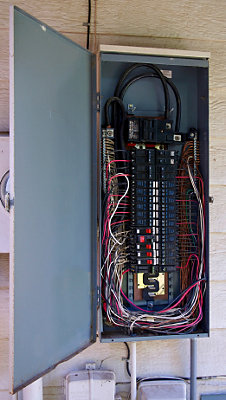
Let’s talk about what a breaker does. A circuit breaker is a safety switch. It lives in your home’s electrical panel. Its job is simple: stop electricity flow when it becomes unsafe.
Think of electricity like water flowing through pipes. The wires are the pipes. The breaker is a safety valve. If too much water (electricity) tries to go through, the valve shuts off. This prevents pipes from bursting (wires overheating and starting fires).
An AC unit uses a lot of power. When it starts or runs, it needs a certain amount of electricity. If it suddenly needs much more, or if there is a fault, the breaker sees this extra demand. It thinks there is a problem. Snap! It trips. The power turns off. This protects your home and the AC unit.
Many things can make an AC unit draw too much power. We will look at the most common ones.
Main Reasons Your AC Trips the Breaker
Several issues can make your window AC unit trip the breaker. These problems can be inside the AC or in your home’s electrical system. It helps to know the possible AC tripping breaker causes.
1. The AC is Pulling Too Much Power
This is called an air conditioner overload. It means the AC unit is trying to use more electricity than the circuit can safely give. This is a common reason for tripping.
Why would an AC unit pull too much power?
- It’s too hot outside. On very hot days, the AC has to work much harder. The compressor runs longer and uses more energy. This extra work means more power needed. More power can overload the circuit.
- The AC unit is too old. Older AC units can become less efficient. Parts wear out. They might need more power to do the same job they did when new. This extra power can trip the breaker.
- The AC filter is dirty. A dirty air filter blocks airflow. The AC fan has to work harder to pull air through. The compressor might also work harder because the unit is not cooling well. This extra work uses more power. A dirty filter is a simple fix that can cause an
air conditioner overload. - Ice on the coils. If the filter is very dirty or there is another issue, ice can form on the cooling coils. This ice blocks airflow completely. The compressor keeps running, but the fan cannot move air. This makes the unit work inefficiently and can cause it to pull too much power.
- The unit is the wrong size. If the AC unit is too big for the room, it might cool too quickly and cycle on and off often. If it’s too small, it might run all the time. Running constantly, especially in high heat, means constant high power use, potentially causing an
air conditioner overload.
An AC unit drawing too much power is the most direct reason for a trip. The breaker senses this high draw and shuts off for safety.
2. Problems Inside the AC Unit
Sometimes, the problem is with a specific part inside the air conditioner. These parts might be failing and causing the unit to use too much power or have a fault.
h4: Faulty AC Compressor
The compressor is a major part of the AC. It is often called the “heart” of the system. It pumps the refrigerant (the stuff that makes the air cool) through the unit.
Starting the compressor takes a lot of energy. If the compressor is old, damaged, or starting to fail, it can require even more power to get going. This high start-up power surge can be much larger than usual. This surge can easily trip the breaker.
A faulty AC compressor might also run less efficiently, constantly drawing higher-than-normal power while running. It might make strange noises, like loud humming or clicking, before tripping the breaker. A failing compressor is a significant issue and often requires repair or replacing the AC unit.
h4: Window AC Capacitor Failure
A capacitor is like a battery that gives the motor (especially the compressor motor) a big jolt of energy to start. Window AC units usually have two main capacitors: a start capacitor and a run capacitor. Some units combine these functions into one dual capacitor.
- Start Capacitor: Provides a big boost of power to help the compressor and fan motors start moving.
- Run Capacitor: Helps the motors run efficiently once they are going.
If a capacitor is failing or dead, the motor it serves (usually the compressor) will struggle to start or run. It will try to start but won’t get the needed boost. This struggle causes the motor to draw a huge amount of power in a failed attempt to run. This high power draw happens because the motor is effectively short-circuited while trying to start without the capacitor’s help. This sudden, large power draw is a common AC tripping breaker causes.
You might hear the motor hum loudly for a few seconds before the breaker trips if a capacitor is bad. A window AC capacitor failure is a very common reason for breakers tripping, especially when the unit tries to start.
h4: AC Fan Motor Problem
The fan motor circulates air over the cooling coils (to cool the air) and the condenser coils (to release heat outside). There are usually two fans or a double-shaft motor with fans on each end.
If the fan motor is failing, worn out, or has bad bearings, it can become harder to spin. It might seize up completely. A motor that is hard to turn or seized will draw excess power because it is trying to move but cannot. This can cause an air conditioner overload on the circuit.
Also, if the fan is not moving air properly, the unit cannot cool well. This can lead to ice buildup or the compressor working harder, adding to the power draw and increasing the chance of tripping the breaker. An AC fan motor problem impacts the entire cooling process and can lead to excessive power use.
h4: Internal Wiring Issues
Loose or damaged wires inside the AC unit can cause problems. A loose wire might cause a poor connection, leading to resistance and heat buildup, which can increase power draw. More seriously, if the insulation on a wire is damaged, the wire can touch another wire or the metal casing of the unit. This creates a short circuit AC unit.
A short circuit is when electricity finds a path it shouldn’t take. It’s like water bypassing the pipes and just flooding the area. A short circuit allows a massive amount of current to flow very quickly. The breaker is designed to detect this sudden surge instantly. A short circuit AC unit is a direct and immediate cause for a breaker trip. This is a dangerous situation as it can cause fires if the breaker does not trip.
3. Problems with Your Home’s Electrical System
Sometimes, the AC unit itself is fine, but the electrical system powering it has a problem.
h4: Wrong Size Breaker or Circuit
Every electrical circuit is designed for a maximum amount of power it can safely carry. This limit is set by the wire size and the breaker size. Breakers come in different amp ratings (like 15 amp, 20 amp, 30 amp). This rating tells you how much current can flow before it trips.
Window AC units have specific power needs. A small unit might work on a standard 15 amp circuit. A larger unit, especially 10,000 BTU or more, often requires a 20 amp circuit, and sometimes a dedicated circuit (meaning only the AC unit is on that breaker).
If your AC unit is plugged into a circuit with a breaker that is too small for its power needs, it will trip regularly, especially when the compressor starts. This is a classic case of the wrong size breaker for AC. The breaker is doing its job; it is protecting the undersized circuit from the AC’s normal power draw.
Check the power cord on your AC unit. It should have a label near the plug stating the required circuit size (e.g., “Requires 15A Circuit,” “Requires 20A Circuit”). Look at the breaker in your electrical panel. Does the number on the breaker match what the AC needs? If the breaker number is lower, you have the wrong size breaker for AC.
h4: Worn or Faulty Breaker
Circuit breakers can wear out over time, especially older ones. If a breaker is old or has tripped many times, it can become weak. A weak breaker might trip too easily, even when the AC unit is not drawing excessive power. It might trip during the normal start-up surge of the compressor, even if it’s the correct size.
Checking if a breaker is faulty can be tricky. Sometimes you can see visible damage, but often you cannot. If other things on the same circuit also cause trips, or if the breaker feels loose or looks burnt, it might be faulty. However, a breaker tripping consistently with the AC is a strong sign of an AC tripping breaker causes, and a weak breaker is one possibility.
h4: Wiring Issues AC Unit Circuit
Problems with the wiring in your walls or the outlet itself can also cause the breaker to trip. Wiring issues AC unit circuit might include:
- Loose connections: At the outlet, in the wall, or at the breaker panel. Loose connections can cause resistance, heat, and intermittent power problems that look like an overload to the breaker.
- Damaged wires: Wires that are old, chewed by pests, or damaged during renovations can have frayed insulation. This can lead to a
short circuit AC unitif the bare wire touches metal or another wire. - Outlet problems: A worn or damaged outlet might not make good contact with the AC plug. This can cause heating and resistance, leading to the breaker tripping. Some large ACs require specific outlet types (like a 20 amp outlet with a different plug shape). Using a standard outlet with a unit that needs a different one is both dangerous and a form of
wiring issues AC unitusage. - Too many things on one circuit: If the AC is sharing a circuit with other high-power items (like a hair dryer, vacuum cleaner, or even other ACs), the combined power draw can easily exceed the circuit’s limit, causing an
air conditioner overloadon that circuit and tripping the breaker. This is related to thewrong size breaker for ACproblem – the circuit is too small for the total load.
Wiring issues AC unit circuits are serious. They can be fire hazards. If you suspect wiring problems, it is best to call an electrician.
h4: The AC Power Cord or Plug
Inspect the power cord and plug of your window AC unit. If the cord is damaged (frayed, cut) or the plug is bent or looks burnt, it could be causing a short circuit AC unit or poor connection that leads to excess power draw. Do not use an AC unit with a damaged cord or plug. This is a significant fire risk.
Deciphering the Cause: How to Troubleshoot AC Tripping Breaker
When your AC trips the breaker, don’t panic. You can do some basic checks yourself to help figure out the problem. This is how you can troubleshoot AC tripping breaker issues.
Step 1: Reset the Breaker
- Go to your electrical panel.
- Find the breaker that tripped. It will likely be in the OFF position or somewhere between ON and OFF.
- To reset it, push the breaker firmly to the full OFF position first.
- Then, push it firmly back to the full ON position.
Step 2: Try the AC Again – Watch and Listen
- Go back to the AC unit.
- Turn it on.
- Watch and listen very carefully.
- Does it trip right away?
- Does it trip when the compressor tries to start?
- Does it trip after running for a while?
- Do you hear any strange noises (humming, clicking, grinding) just before it trips?
- Do you smell anything burning? (If yes, turn it off immediately and call a professional).
Step 3: Check Simple Things on the AC Unit
- Air Filter: Pull out the air filter. Is it thick with dust? A very dirty filter can cause the unit to overwork and trip the breaker due to
air conditioner overload. Clean or replace the filter. Try the AC again. - Airflow: Is anything blocking the vents outside or inside? Make sure there is clear space around the unit for air to move.
- Ice: Look at the cooling coils behind the filter. Is there any ice buildup? Ice means there is an airflow problem or a refrigerant issue. Let the unit thaw completely (turn it off for several hours, maybe put a fan on it). Clean the filter, ensure good airflow, and try again. If it ices up again quickly, you likely have a problem needing professional help.
- Power Cord/Plug: Visually inspect the cord and plug for damage, burning signs, or bent prongs. Do not use it if damaged.
Step 4: Check the Outlet
- Unplug the AC unit (with the breaker OFF).
- Look at the outlet itself. Does it look damaged? Are there burn marks?
- Is the plug loose in the outlet?
- Only if you are comfortable and knowledgeable about electrical testing: You can use a voltage tester to see if the outlet is getting the correct voltage. Be very careful with electricity. If unsure, skip this step or call an electrician.
Step 5: Check What Else is on the Circuit
- Look at your electrical panel. Often, circuits are labeled (e.g., “Living Room Outlets,” “Kitchen Lights”).
- If the AC circuit is labeled, see what else is on it.
- Unplug everything else on that circuit.
- Reset the breaker.
- Plug in only the AC unit and turn it on.
- Does it still trip? If not, the circuit was likely overloaded by having too many devices running at once. This is related to the
wrong size breaker for ACfor the total load. If it still trips with only the AC running, the problem is likely the AC unit itself or issues specific to that circuit’s wiring or breaker.
Step 6: Check the Breaker Size
- Find the breaker that is tripping the AC.
- Look for the number printed on the handle (e.g., 15, 20). This is the amp rating.
- Now look for a sticker or label on the AC unit (often near the power cord or on the side/front panel) that states the required circuit size.
- Does the breaker amp rating match or exceed the required circuit size? If the breaker is smaller than required, this is likely the problem (
wrong size breaker for AC). - Also, note if the breaker is an older type. Older breakers can weaken.
Step 7: Isolate the AC Unit (Advanced Step)
- If possible, try plugging the AC unit into an outlet on a different circuit, preferably one you know is rated correctly for the AC and is not heavily loaded. You might need a heavy-duty extension cord rated for the AC’s power draw for this test (check the cord’s rating carefully!). Using the wrong extension cord is a fire hazard.
- If the AC runs fine on a different, properly sized circuit, the problem is likely with the original circuit’s wiring or breaker (
wiring issues AC unit,wrong size breaker for AC, faulty breaker). - If the AC still trips a different, properly sized circuit, the problem is almost certainly with the AC unit itself (
AC unit drawing too much power,faulty AC compressor,window AC capacitor failure,short circuit AC unit,AC fan motor problem, internal wiring issues).
By following these steps, you can often narrow down the AC tripping breaker causes.
Common Causes and Troubleshooting Actions Table
| Possible Cause | What It Means | Things to Check | Action to Take | When to Call a Professional |
|---|---|---|---|---|
Air conditioner overload |
AC using too much power for the circuit. | Filter condition, airflow blockages, ice on coils, outdoor temperature, other items on the circuit. | Clean filter, clear blockages, thaw unit, unplug other devices. | If overload persists after cleaning/clearing. |
Short circuit AC unit |
Electricity flowing where it shouldn’t. Immediate, loud trip. Dangerous. | Look for damaged cord/plug. Listen for bangs/pops before trip. | Immediately turn off the AC and breaker. Do NOT use it. | Immediately. This is a fire risk. |
Faulty AC compressor |
Compressor is failing or hard to start. High power surge on start. | Unit hums loudly then trips on start. Unit tries to start but doesn’t run. | Listen for start-up noises. Cannot easily fix yourself. | If AC hums/struggles to start or runs poorly before tripping. |
Window AC capacitor failure |
Capacitor not giving motor start boost. Motor struggles, draws high power. | Unit hums loudly for seconds then trips on start. Fan might spin slowly or not at all initially. | Listen for start-up hum. Cannot easily fix yourself unless very experienced with electrical components. | If unit hums loudly on start and trips, or fan seems weak on start. |
AC fan motor problem |
Fan is hard to spin or seized. | Fan moves slowly or not at all. Unit might overheat or ice up. | Gently try to spin the fan blade (with unit unplugged!). Listen for grinding. | If fan seems weak, noisy, or doesn’t spin freely. |
Wrong size breaker for AC |
Breaker is too small (amps) for the AC’s power needs. Trips on start/heavy use. | Check amp rating on breaker vs. AC label. Check what else is on the circuit. | Move AC to a properly sized, less loaded circuit if possible (use correct heavy-duty cord). Do NOT upsize breaker yourself. | To install a dedicated, correctly sized circuit. |
Wiring issues AC unit circuit |
Loose, damaged wires or bad outlet on the circuit. | Look at outlet for damage/burns. Check if plug is loose. Other things on circuit might have issues. | Inspect cord/plug/outlet visually (with power OFF). Avoid using damaged outlets/cords. | If you suspect bad wiring or outlet damage. |
| Worn/Faulty Breaker | Breaker is old/weak, trips too easily. | Breaker feels loose. Looks burnt. Other things on circuit might cause trips. Trips even with light load. | Can only confirm by replacing it or having an electrician test it. | To test or replace the breaker. |
Disclaimer: Working with electricity is dangerous. If you are not comfortable or knowledgeable, do not attempt repairs yourself. Call a qualified electrician or appliance repair technician.
Preventing Future Tripping Problems
Once you figure out why your AC is tripping the breaker, fixing it prevents future issues. Here are some tips:
- Use the Right Circuit: Make sure your window AC unit is plugged into a circuit that is rated for its power needs. Check the AC’s manual or label for the required amperage. Avoid using extension cords unless they are heavy-duty and specifically rated for the AC’s power. Never plug a large AC into a circuit with many other items. This is key to avoiding
air conditioner overloadcaused by the circuit being too small (wrong size breaker for ACfor the load). - Keep it Clean: Regularly clean or replace the air filter. A clean filter ensures good airflow. Good airflow means the unit works more efficiently and is less likely to overheat or ice up, which can lead to
air conditioner overload. Clean the coils if they look dirty (follow your manual’s instructions). - Ensure Good Airflow Around the Unit: Make sure nothing inside or outside is blocking the vents. Curtains, furniture, or bushes can restrict airflow.
- Check the Seal: Ensure the seal around the window AC is good. Air leaks make the unit work harder, using more power.
- Consider a Dedicated Circuit: For larger window AC units (10,000 BTU and up), it is often recommended to have a dedicated circuit. This means the breaker and wiring are sized only for the AC, and nothing else is plugged into outlets on that circuit. This prevents tripping caused by
air conditioner overloadfrom sharing the circuit. An electrician can install a dedicated circuit and ensure thewrong size breaker for ACisn’t used. - Inspect Cord and Plug: Periodically check the AC’s power cord and plug for any signs of damage or wear.
- Professional Check-up: If your unit is older or you suspect an internal problem, consider having an appliance technician look at it. They can check components like the
faulty AC compressororwindow AC capacitor failurebefore they cause major problems.
Taking these steps can help your AC run smoothly and safely without constantly tripping the breaker.
When to Call a Professional
While some troubleshooting can be done yourself (like checking the filter or resetting the breaker), many AC tripping breaker causes require a professional.
Call an electrician if:
- You suspect
wiring issues AC unitin your walls or outlet. - You believe the
wrong size breaker for ACis installed and need a dedicated circuit. - The breaker looks damaged or feels loose.
- You are not comfortable inspecting or working near electrical outlets or the breaker panel.
- The problem started after recent electrical work in your home.
Call an appliance repair technician or HVAC professional if:
- You suspect an internal AC problem like a
faulty AC compressor,window AC capacitor failure, orAC fan motor problem. - The unit hums or makes loud noises before tripping.
- The unit is icing up repeatedly.
- You have cleaned filters, checked airflow, isolated the unit, but it still trips the breaker.
- The AC unit is old and likely needs internal component replacement.
Tripping breakers are a safety warning sign. Ignoring the problem or repeatedly resetting a tripping breaker without finding the cause can be dangerous. Do not tape down a breaker! This bypasses the safety feature and can lead to wires overheating and causing a fire.
Getting professional help ensures the problem is found and fixed correctly and safely.
FAQ Section
h3: Frequently Asked Questions
h4: How can I tell if my window AC unit is too big for the circuit?
Check the label on your AC unit or in the manual. It will say the required circuit size in amps (like 15A or 20A). Then, look at the number on the breaker handle in your electrical panel. If the breaker number is less than the required amps for the AC, or if the AC is on a circuit shared with many other things, it is likely too much for the circuit (wrong size breaker for AC or air conditioner overload on the circuit).
h4: Can a dirty air filter really cause the breaker to trip?
Yes, absolutely. A very dirty filter blocks air flow. This makes the AC work much harder to cool the air. This extra effort can cause the unit to draw more power than normal, leading to an air conditioner overload that trips the breaker. Cleaning or replacing the filter is one of the easiest things to check.
h4: My AC hums loudly and then trips the breaker. What does that mean?
A loud humming sound before tripping often points to a motor struggling to start. This is commonly caused by a window AC capacitor failure or a faulty AC compressor. The capacitor gives the motor a start boost. If it fails, the motor tries to start but draws a huge amount of power instead, causing the trip.
h4: Is it safe to just reset the breaker every time it trips?
No, it is not safe to just keep resetting a tripping breaker without knowing why it’s tripping. A breaker trips for a reason – to prevent damage or fire from an air conditioner overload or short circuit AC unit. Repeatedly resetting it without fixing the cause can lead to the breaker failing, wires overheating, or even a fire. Figure out the AC tripping breaker causes first.
h4: Can using an extension cord cause the breaker to trip?
Yes, often. Standard household extension cords are usually not thick enough (not the right gauge wire) to handle the high power draw of an AC unit. Using an undersized extension cord can cause it to overheat, damage the cord, and potentially trip the breaker due to the extra resistance and power draw. Always use a heavy-duty extension cord specifically rated for air conditioners if you must use one, and even then, it is generally not recommended for safety.
h4: The breaker trips as soon as I turn the AC on. What could that be?
If it trips instantly, it could be a short circuit AC unit or a severely faulty AC compressor or window AC capacitor failure trying to start. It could also be a very sensitive or wrong size breaker for AC that cannot handle the normal start-up power surge. An instant trip suggests a serious issue that needs immediate attention.
h4: Can voltage problems in my home cause the AC to trip the breaker?
Yes. If the voltage supplying the AC is too low, the unit might try to draw more current to get the power it needs. This increased current draw can lead to an air conditioner overload on the circuit and trip the breaker. Voltage issues usually require an electrician to diagnose.
Understanding the potential AC tripping breaker causes helps you decide if it’s a simple fix like a dirty filter or a more serious problem requiring a professional. Always prioritize safety when dealing with electricity.