
If your air conditioner is spitting water out the front, it’s a sign of a common problem where the system can’t handle the water it creates during cooling. This water should normally drain away safely. The main reasons your AC might be leaking water indoors or even spitting it out can be a clogged AC drain line, an evaporator coil frozen AC that thaws, an AC drain pan overflowing, or sometimes for window units, an installation issue causing the unit to tilt the wrong way. Whether you have a window AC spitting water or a split system AC leaking indoors, water coming from AC vent areas or dripping out the front is a fixable issue often linked to the AC unit not draining correctly.
When your air conditioner cools your home, it does more than just lower the temperature. It also pulls moisture out of the air. Think of it like a cold glass of water on a hot day; water forms on the outside. Your AC’s indoor part, called the evaporator coil, gets very cold. As warm, moist air from your home passes over this coil, the moisture in the air turns into liquid water.
This water normally collects in a tray, called the drain pan, located below the evaporator coil. From the drain pan, the water should flow through a pipe, known as the condensate drain line, and out of your home, usually outside or into a drain. When this system works right, you never see the water. But if something goes wrong in this process, water can back up and find other ways out, often dripping or spitting from the front of the unit or the indoor vents.
Figuring out why your AC is spitting water is the first step to fixing it. Let’s look at the main culprits behind this watery mess.
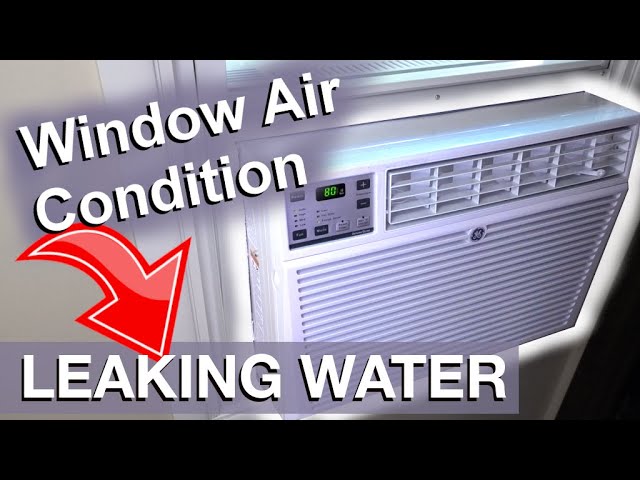
Image Source: i.ytimg.com
Finding the Source of the Water Problem
Pinpointing why your AC is spitting water involves checking a few key areas. It’s like being a detective for your air conditioner. You need to look at where the water should go and see if something is blocking its path or if too much water is being made.
Common Reasons for Water Spitting
There are several usual suspects when it comes to an AC leaking water indoors. Most relate to how the water created during the cooling process is handled (or not handled) by the system.
A Clogged AC Drain Line
This is one of the most common reasons for an AC unit not draining properly, leading to water leaks. The drain line is a small pipe that carries the water away from the drain pan. Over time, algae, mold, dirt, dust, and other debris can build up inside this pipe. This buildup can slow down or completely block the flow of water.
When the drain line gets blocked, the water in the drain pan has nowhere to go. The pan fills up, and if the problem isn’t fixed, the water will eventually overflow. Depending on your AC system’s design, this overflow can spill out from the unit itself, causing water coming from AC vent areas, or, in the case of a window unit, spill out the front.
Think of your drain line like a sink drain. If you pour too much down it without cleaning it, it gets clogged, and the sink overflows. Your AC’s drain pan and line work the same way. A clogged AC drain line is a frequent cause of an AC drain pan overflowing.
A Frozen Evaporator Coil
The evaporator coil is the part of your AC that gets cold. If this coil freezes over, it can cause major problems, including water leaks. A frozen coil often looks like a block of ice on the indoor unit. This happens when warm air cannot flow over the coil correctly, or if the system is low on coolant (refrigerant).
What causes poor airflow? A very dirty air filter is a prime suspect (dirty air filter AC water leak). Other reasons include blocked return vents, closed supply vents, or a problem with the blower fan that pushes air. When airflow is reduced, the coil gets too cold, and the moisture in the air freezes onto it instead of turning into liquid water.
When the AC cycle stops, or the ice gets too thick, the frozen coil begins to melt. This melting ice creates a large amount of water very quickly. Sometimes, the drain system cannot handle this sudden rush of water, especially if the drain line is also partially clogged. The excess water can then overflow the drain pan and lead to water spitting out, often appearing as water coming from AC vent areas or the front of the unit. This is a clear sign of an evaporator coil frozen AC issue that is now thawing.
An Overflowing AC Drain Pan
As mentioned, the drain pan catches the water dripping from the evaporator coil. If the drain line is clogged, the pan will fill up and overflow. However, sometimes the pan itself can be the problem. The pan could be cracked, allowing water to leak out before it even reaches the drain line. Or, the pan might not be seated correctly, causing water to spill over the edge.
An overflowing AC drain pan is usually a symptom of another problem – most often a clogged drain line or a thawing frozen coil producing too much water too fast. But it’s the immediate cause of the water leaving the system in the wrong place.
Installation Issues with Window Units
Window air conditioners work slightly differently from split systems. They have a base pan that collects water. These units are designed to tilt slightly downwards towards the outside. This tilt helps the water drain out through small holes in the back of the unit, preventing water from pooling inside.
If a window unit is not installed with this slight downward tilt towards the exterior, or if it’s tilted inwards, the water will collect in the base pan but won’t drain outside. Instead, it will build up and can start leaking or spitting out the front vents inside your room. So, if you see your window AC spitting water, check its angle.
Other Less Common Reasons
- Damaged or Missing Drain Pan: A crack in the pan or if the pan isn’t installed correctly can cause leaks.
- Condensate Pump Failure: Some AC systems (especially those in basements or where the drain line has to go upwards) use a pump to push the water out. If this pump breaks, water will back up and the pan will overflow.
Checking Your AC Unit
Before you try to fix anything, it’s helpful to look closely at your AC unit to see what might be wrong.
- Check the Air Filter: Is it thick with dust and dirt? A very dirty air filter AC water leak is common because it restricts airflow, which can freeze the coil.
- Look at the Evaporator Coil: Open the panel on your indoor unit (or the front of your window unit) where the filter goes. Do you see ice on the metal fins? If so, you have an evaporator coil frozen AC problem.
- Find the Drain Pan: Locate the tray under the indoor coil. Is it full of water? Is it overflowing? Does it look cracked?
- Follow the Drain Line: Find the pipe (often PVC or a flexible hose) that leaves the drain pan. Can you see if it’s clogged near the unit or where it exits your home? Sometimes you can see a blockage near the end of the pipe outside. This is key to knowing if you have a clogged AC drain line.
- Look at the Window Unit Tilt: Stand back and look at your window unit from the side. Is it lower on the outside than the inside? It should be. If it’s level or lower on the inside, it’s installed wrong, causing the window AC spitting water issue.
How to Fix Your AC Water Leak
Once you have an idea of what’s causing the water spitting, you can take steps to fix it. Some fixes are simple DIY tasks, while others might need a professional. Here’s how to fix AC water leak issues based on the problem.
Dealing with a Clogged Drain Line
This is often a DIY fix. You need to clear the blockage in the pipe that carries the water away.
- Step 1: Turn off the Power: Safety first! Go to your thermostat and turn the system off. For extra safety, turn off the power switch near the indoor unit or at your home’s electrical panel.
- Step 2: Locate the Drain Line: Find the drain pan under the coil and follow the pipe coming from it. It’s usually a small white or clear pipe, maybe 3/4 inch in size. Find where it ends outside your home.
- Step 3: Clear the Clog (Indoors): If you can easily access the pipe near the indoor unit, you can try pouring something down it to clear minor clogs.
- Use Vinegar: Slowly pour about a quarter cup of distilled white vinegar into the opening of the drain line near the indoor unit. Vinegar helps kill mold and algae buildup. Wait about 30 minutes.
- Use Hot Water (Carefully): You can follow the vinegar with a small amount of hot (not boiling) water, about a cup.
- Avoid Bleach: While some people use bleach, vinegar is safer for your system and less harsh.
- Step 4: Clear the Clog (Outdoors): If the clog is further down the line or near the end, you can try clearing it from the outside.
- Use a Shop Vac: A wet/dry vacuum (shop vac) can be very effective. Set it to vacuum mode and create a tight seal around the end of the drain line pipe outside. Turn on the shop vac for a few minutes. The suction can pull out the clog.
- Use a Drain Brush or Snake: For stubborn clogs, a small flexible brush or drain snake designed for narrow pipes can help break up the blockage. Gently push it into the pipe from the outside end.
- Step 5: Test the Drain: After trying to clear the line, you need to test if water is flowing freely. You can pour a cup or two of water into the drain pan (if it’s accessible) or directly into the drain line opening near the indoor unit. Watch the outside end of the pipe. Water should flow out steadily.
- Step 6: Clean the Drain Pan: If the pan was overflowing, clean it out. Remove any visible gunk or debris.
- Step 7: Turn Power Back On: Once you’re confident the drain line is clear and water is flowing, turn the power back on and restart your AC. Keep an eye on the drain pan and the areas where water was spitting to make sure the problem is solved.
Clearing a clogged AC drain line is a very common fix for an AC unit not draining and is a frequent solution when you need to fix AC water leak issues.
Fixing a Frozen Evaporator Coil
Thawing a frozen coil is usually simple, but fixing the reason it froze takes more work.
- Step 1: Turn off the System: Turn off your AC at the thermostat. Set it to “Fan Only” or turn it completely off. Do not run the AC in cool mode if the coil is frozen; this makes the problem worse.
- Step 2: Let it Thaw: This is the easiest part, but takes time. It can take anywhere from a few hours to 24 hours for a heavily frozen coil to completely melt. You can speed this up by setting the fan to “ON” (not AUTO) if your system allows. This circulates warmer air from your home over the coil. Place towels around the indoor unit to catch the melting water. You will see water coming from AC vent areas or dripping down as the ice melts. This confirms it was a frozen coil.
-
Step 3: Find and Fix the Cause of Freezing: While the coil is thawing, figure out why it froze.
- Check and Change the Air Filter: This is the most likely cause, especially if you haven’t changed it recently. A dirty air filter AC water leak is a classic symptom of restricted airflow leading to freezing. Replace your old filter with a clean one. Make sure you use the correct filter size and type for your system. Cheap, thick filters can sometimes restrict airflow too much.
- Check Vents: Make sure return air vents (where air is pulled into the system) are not blocked by furniture or curtains. Also, check that supply vents (where cool air blows out) are open.
- Check for Blockages: Look inside the return air duct near your air handler for large objects that might have been sucked in.
- Ensure Blower Fan Works: Can you hear or feel air coming out when the system is on (even just the fan)? If the fan motor is bad, air won’t move over the coil.
- Low Refrigerant: If the filter is clean, vents are open, and the fan works, low refrigerant (coolant) is a likely cause. This is not a DIY fix. Low refrigerant means there’s a leak somewhere in the sealed system. You need an HVAC technician to find and fix the leak and add more refrigerant. Running an AC with low refrigerant damages the compressor.
-
Step 4: Clean the Drain Pan and Check Line: After the coil thaws completely, the drain pan might be full. Empty it and clean it. It’s also a good idea to check the drain line (as described above) to make sure it’s not clogged. The large amount of water from thawing can overwhelm a partly blocked line.
- Step 5: Restart the AC: Once the coil is fully thawed and the underlying cause (like a dirty filter) is fixed, turn the power back on and run the system in cool mode. Monitor it to ensure the coil doesn’t freeze again and that water is draining properly.
Addressing an evaporator coil frozen AC is crucial not just to stop the water spitting but also to protect your AC system from serious damage.
Handling an Overflowing Drain Pan
If the drain pan is overflowing, the immediate fix is to empty it.
- Step 1: Turn off Power: Always turn off the power first.
- Step 2: Empty the Pan: Carefully scoop or use a wet/dry vacuum to remove the standing water in the pan. Mop up any spilled water around the unit.
- Step 3: Check the Pan: Once empty, inspect the pan for cracks or damage. If it’s plastic, cracks can happen over time. A damaged pan needs to be replaced.
- Step 4: Check the Drain Line: An overflowing pan is usually caused by a clogged drain line. Follow the steps above to clear the drain line.
- Step 5: Check for Thawing Ice: Make sure the overflow wasn’t caused by a large amount of water from a recently thawed frozen coil.
- Step 6: Replace Pan if Needed: If the pan is cracked, you’ll need to order a replacement part specific to your AC model. Replacing a drain pan can range from simple to complex depending on how accessible it is within the unit.
An overflowing AC drain pan is the direct reason water is leaking, but you must fix the root cause (clogged line, frozen coil, damaged pan) to stop it from happening again.
Adjusting a Window Unit Tilt
If your window AC spitting water issue is due to incorrect installation tilt, this is a simple adjustment.
- Step 1: Turn off Power: Unplug the unit from the wall outlet.
- Step 2: Access Installation Hardware: You’ll need access to the screws or brackets that hold the unit in the window frame. This might require removing the side filler panels.
- Step 3: Adjust the Tilt: Carefully lift the inside part of the unit slightly while letting the outside part drop a little. The goal is a slight downward slope towards the outside. A common rule of thumb is about a half-inch tilt for every foot of the unit’s depth. Use a small level if you have one, but often just eyeballing a clear downward slope outside is enough.
- Step 4: Secure the Unit: Tighten the installation hardware to hold the unit in its new tilted position. Make sure it is secure in the window frame. Reattach any side panels.
- Step 5: Test: Plug the unit back in and turn it on. Run it in cool mode for a while and check if water is still accumulating inside or spitting out the front. It should now be draining properly outside.
This fix for window AC spitting water is often quick and easy if the unit wasn’t installed correctly from the start.
When to Call an HVAC Professional
While many AC water leaks can be fixed with DIY steps like cleaning a drain line or changing a filter, some problems require the skills and tools of a trained technician.
You should call a professional if:
- You suspect low refrigerant: As mentioned, this needs special tools and licensed handling of refrigerants.
- The evaporator coil keeps freezing: Even after changing the filter and checking airflow, if the coil freezes again, it points to a more complex issue like low refrigerant, a failing blower motor, or a problem with the system’s controls.
- The clog in the drain line is impossible to clear: If you’ve tried vinegar and a shop vac and water still doesn’t drain, there might be a more stubborn blockage deeper in the pipe or a structural issue with the line.
- The drain pan is cracked and you can’t replace it: Some drain pans are hard to access or require taking apart parts of the indoor unit.
- You find water leaking from inside the unit’s casing (not just the pan area): This could mean an internal leak or a serious problem with the coil itself.
- You are uncomfortable performing the fix yourself: Don’t feel pressured to do something you’re not sure about. Hiring a professional prevents potential damage to your system or injury to yourself.
- You have a complex split system AC leaking indoors: These systems are more intricate than window units, and diagnosing leaks can be harder.
A professional technician can quickly identify the cause of the leak, whether it’s a clogged AC drain line, an evaporator coil frozen AC issue, an AC drain pan overflowing, or something else. They have the tools to safely and effectively clear drain lines, check refrigerant levels, diagnose fan problems, and repair or replace damaged parts. Getting a professional to fix AC water leak issues can save you time and prevent more expensive damage down the road.
Preventing Future AC Water Leaks
Stopping the water spitting from happening again is much easier than fixing it after it starts. Regular maintenance is key.
Regular Filter Changes
This is the single most important thing you can do to prevent many AC problems, including frozen coils and resulting water leaks (dirty air filter AC water leak). Check your filter every month, especially during heavy use seasons. If it looks dirty, change it. Clean filters allow air to flow freely, which prevents the coil from getting too cold and freezing. The rule of thumb is to change standard fiberglass filters every 30-90 days, but pleated or higher-efficiency filters might last longer. Check the manufacturer’s recommendation.
Keep the Drain Line Clear
Get into the habit of cleaning your AC’s drain line once or twice a year, even if it’s not clogged. Pouring a quarter cup of vinegar followed by water down the line helps prevent algae and mold from building up in the first place. Doing this as part of your seasonal AC tune-up is a great idea. This simple step can prevent most clogged AC drain line issues.
Schedule Annual Maintenance
Have a qualified HVAC technician inspect your system every year, ideally before the cooling season starts. They will clean the coil, check the drain pan and line, test refrigerant levels, inspect electrical components, and make sure everything is working correctly. This can catch small problems, like a partially clogged drain line or slightly low refrigerant, before they cause a major issue like an AC leaking water indoors. Regular check-ups help ensure your AC unit not draining problems are caught early.
Check Window Unit Tilt
If you have window units, double-check that they have the proper slight downward tilt towards the outside. Ensure the seals around the unit are also in good condition to prevent rain or outside water from getting in.
Keep Vents Open and Clear
Make sure all return and supply air vents inside your home are open and not blocked by furniture, curtains, or rugs. This ensures proper airflow, helping to prevent frozen coils.
By following these simple prevention steps, you can greatly reduce the chances of experiencing an AC leaking water indoors problem, whether it’s a split system AC leaking indoors or a window AC spitting water.
Summary of Water Spitting Causes and Fixes
Here’s a quick look at the main reasons your AC might be spitting water and how to address them:
| Problem Cause | What Happens | How to Identify | DIY Fix? | When to Call a Pro |
|---|---|---|---|---|
| Clogged Drain Line | Water backs up from drain pan. | Pan is full/overflowing; check drain pipe end. | Yes (Vinegar, Shop Vac) | Clog won’t clear; pipe damaged or hard to reach. |
| Frozen Evaporator Coil | Ice builds on coil; melts into excess water. | See ice on indoor coil; water appears after unit off. | Yes (Thaw, Change Filter) | Coil freezes repeatedly; filter/airflow is good; suspect low coolant. |
| Overflowing Drain Pan | Pan fills & spills over edges. | Pan is full; often caused by clog or thaw. | Yes (Empty, Check Pan) | Pan is cracked/damaged and needs replacement. |
| Window Unit Incorrect Tilt | Water collects in base pan, doesn’t drain out. | Unit is level or slopes inwards. | Yes (Adjust tilt) | Unit difficult to access/adjust safely. |
| Damaged Drain Pan | Crack allows water to leak directly. | See crack in pan when empty. | Maybe (if accessible) | Pan is hard to reach or replace; unsure of model. |
| Condensate Pump Failure | Pump that pushes water out is broken. | Pan overflows, pump not running (if applicable). | No (Requires diagnosis) | System uses pump; pump isn’t working. |
This table provides a simple guide to help you fix AC water leak problems.
Comprehending the AC Drainage System
To fully grasp why water spits out, it helps to know a bit more about the AC’s design. For split systems, the indoor unit (often in a closet, attic, or basement) contains the evaporator coil and drain pan. The drain line typically runs from this unit, sometimes through walls or ceilings, to an exit point outside. In some setups, there might be a primary drain line and a secondary, or emergency, drain line or pan. The secondary system is usually placed where a leak would be visible (like over a window or doorway) to alert you to a problem before it causes significant damage inside your home. Water spitting out the front of your indoor unit or water coming from AC vent areas means the primary drainage system has failed.
Window units collect water in a base pan and rely on gravity and the unit’s tilt to get the water out through specific drain holes at the back. When a window AC is spitting water, it means this simple gravity drainage is not working.
Whether it’s a split system AC leaking indoors or a window AC spitting water, the core issue is that the water generated by cooling the air is not making it safely out of the system.
Step-by-Step Guide to Cleaning a Clogged AC Drain Line
Let’s go over the drain line cleaning process in more detail, as this is a frequent fix for AC leaking water indoors.
What You’ll Need:
- Wet/Dry Vacuum (Shop Vac)
- White Distilled Vinegar
- Funnel (optional, for pouring vinegar)
- Towels or Rags
- Protective Eyewear and Gloves (recommended)
- Small Brush or Drain Snake (optional, for stubborn clogs)
The Process:
- Power Off: Turn off your AC system at the thermostat and breaker box.
- Locate the Drain Line: Find the indoor air handler. The drain line is a PVC pipe or hose coming from the drain pan, usually 3/4 inch in diameter.
- Clear Water from Pan (If Full): If the drain pan is overflowing, use a wet/dry vac or scoop out the water.
- Access the Drain Line Opening: There may be a cap or vent tee (a T-shaped fitting) on the drain line near the indoor unit. This is often where you’ll pour vinegar. If there’s no easily accessible opening near the unit, you’ll primarily work from the outside end.
- Clean from the Indoor End (If Accessible): Remove the cap from the vent tee. Look down the pipe opening. Is there visible gunk? Use a small brush to gently clean the opening. Place towels below to catch spills.
- Pour Vinegar: Using a funnel if needed, pour about 1/4 cup of distilled white vinegar into the drain line opening. Vinegar kills mold and algae. Do not use chemicals like drain cleaner.
- Wait: Let the vinegar sit for about 20-30 minutes to work on any buildup.
- Follow with Water (Optional): Pour about a cup of warm water down the pipe to help flush it.
- Clear from the Outdoor End: Go outside and find where the drain line ends. It usually sticks out of the side of your house near the outdoor AC unit.
- Use the Shop Vac: This is key. Set your shop vac to vacuum liquids. Create a tight seal around the end of the drain pipe outside. You might need tape or just hold it firmly. Turn on the shop vac for 2-3 minutes. This creates suction that can pull the clog out. Be prepared for some messy water or debris to come into the vacuum.
- Alternative – Drain Snake: If the shop vac doesn’t work, try gently pushing a small drain snake or flexible brush into the pipe from the outside end to break up the clog.
- Test the Drain: Go back inside. Pour a few cups of water into the drain pan or the drain line opening near the indoor unit.
- Check Outdoor Flow: Go back outside. Water should now be flowing freely from the drain line end.
- Clean Up: Clean the drain pan if needed and wipe up any spills. Empty your shop vac.
- Restore Power: Turn the power back on to your AC system. Run it in cool mode and check in about an hour to ensure water is draining properly outside and no longer spitting inside.
This method is highly effective for most clogged AC drain line issues, which often cause the AC unit not draining problem. Successfully performing this fix can often resolve the AC leaking water indoors issue yourself.
Grasping Why Airflow Matters
We talked about how a dirty air filter AC water leak is linked to a frozen coil. Let’s look closer at why airflow is so important for your AC. The evaporator coil is designed to work within a specific temperature range. Warm air from your house passes over it, and the coil absorbs the heat, making the air cool. This process also causes moisture in the warm air to condense into water on the cold surface.
If not enough warm air reaches the coil, it gets too cold. The temperature of the coil drops below freezing. Instead of water forming, the moisture in the air turns directly into ice on the coil surface. This ice then blocks even more airflow, making the problem worse. Soon, the coil is covered in ice.
When the system turns off, or the ice layer gets thick enough that some parts start to melt, all that built-up ice turns into a large volume of water. The standard drainage system isn’t built to handle this much water at once. The drain pan overflows, and you end up with water coming from AC vent areas or spitting from the front.
This is why changing your air filter regularly is such a critical part of AC maintenance and a key way to prevent an evaporator coil frozen AC issue that leads to leaks. It’s a simple task that has a big impact on system performance and prevents that annoying AC leaking water indoors problem.
Frequently Asked Questions (FAQ)
Here are some common questions people ask about their AC spitting water.
Q: Is it bad if my AC spits water?
A: Yes, it’s a sign something is wrong with your AC’s drainage system or airflow. While a small drip might not seem like much, ongoing leaks can cause damage to your walls, floors, or furniture, and the underlying cause (like a clogged drain or frozen coil) can harm the AC unit itself. It’s important to fix AC water leak problems quickly.
Q: How quickly should I fix an AC spitting water?
A: As soon as possible. The longer you wait, the more potential for water damage and the more stress you put on your AC system. Fixing a clogged AC drain line early is much better than dealing with ceiling damage from an overflowing pan.
Q: Can I still run my AC if it’s spitting water?
A: It depends on the cause. If it’s just a minor clog causing slow dripping, you might be able to run it briefly while you plan the fix. However, if the drain pan is overflowing rapidly, or if you see ice on the coil (evaporator coil frozen AC), you should turn the system off immediately to prevent damage to the unit and more water damage to your home. Running a unit with a frozen coil is particularly harmful.
Q: Will cleaning my air filter stop the water leak?
A: If the water leak is caused by a frozen evaporator coil, and the coil froze because of a dirty air filter AC water leak, then yes, changing the filter and allowing the coil to thaw should stop the leak and prevent it from happening again.
Q: Why is my window AC spitting water but my drain holes are clear?
A: If the drain holes are clear, the most likely cause is that the unit is not tilted downwards towards the outside. Water is collecting in the base pan but can’t drain out the back. Adjusting the tilt should fix this window AC spitting water issue.
Q: My split system AC is leaking indoors, near the furnace. Is that related?
A: Often, yes. For many split systems, the air handler (which contains the evaporator coil and drain pan) is installed on top of the furnace. The drain line comes from this air handler. So, if you have a clogged AC drain line or a problem with the drain pan, the water will appear to be leaking from the area around your furnace.
Q: What does the water dripping from my AC mean if it’s outside?
A: Water dripping from the outdoor unit of a split system is usually normal, especially on hot, humid days. This is condensation from the condenser coil (the hot coil outside) or just water that made it safely through the drain line from the indoor unit. If you see large amounts of water or it’s leaking from unusual spots on the outdoor unit, it might indicate a different issue, but standard dripping from the base is fine. The problem is when your AC unit not draining properly causes leaks indoors.
Q: Can a full drain pan cause mold?
A: Yes, standing water in the drain pan is a perfect breeding ground for mold, mildew, and bacteria. This isn’t just a leak risk; it can also affect the air quality in your home. Cleaning the pan regularly is important.
Q: Can I use duct tape to fix a cracked drain pan temporarily?
A: Temporary fixes like duct tape might slow a leak but are rarely a permanent solution for a cracked drain pan. Water will usually find a way around or through the tape over time. It’s best to replace a damaged pan.
Addressing the issue when you see your AC spitting water is key to keeping your home dry and your system running right. Most times, it’s a problem with water management – either a clogged AC drain line, an evaporator coil frozen AC melting, or an AC drain pan overflowing. By understanding these causes and knowing how to check your unit, you can often solve the problem yourself or know when it’s time to call for professional help to fix AC water leak issues. Regular maintenance, especially changing that dirty air filter AC water leak culprit and keeping the drain line clear, will go a long way in preventing future leaks.