
The compressor is a key part of your air conditioner. It is often called the heart of the system. So, how long does an air conditioner compressor last? A typical residential AC compressor can last between 10 to 15 years. Some might last longer with great care. Others might fail sooner if not looked after well. This part of the system works hard. Its lifespan depends on many things.
Your AC system cools your home. The compressor does the main job of moving refrigerant. Refrigerant is the special stuff that absorbs heat from inside and lets it go outside. Without a working compressor, your AC cannot cool your air. Knowing how long this part should last helps you plan for repairs or replacement.
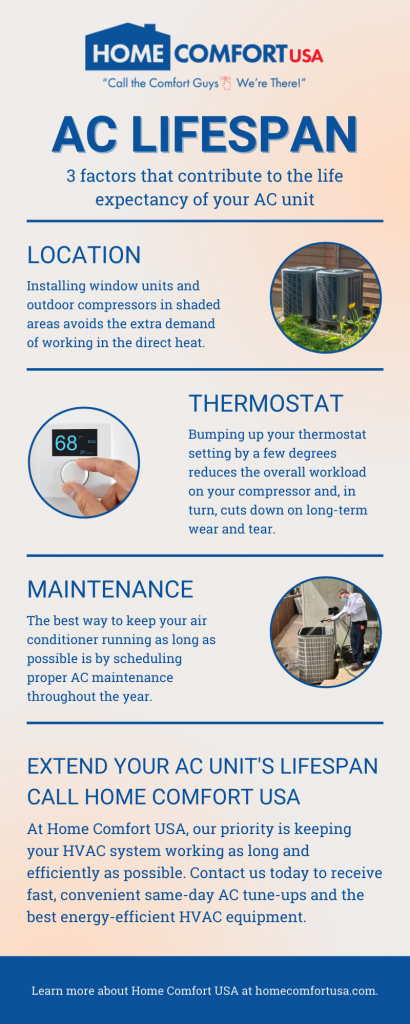
Image Source: www.homecomfortusa.com
Average Life of AC Compressor
People often ask about the average life of AC compressor. For home systems, this is usually between 10 and 15 years. Some sources might say 12 years is a common number. This number is an average. It means some compressors last longer and some last less time.
Think of it like a car engine. Some last 200,000 miles. Some might need big fixes much earlier. The same is true for an AC compressor. The Residential AC compressor life expectancy sits in that 10-15 year range. This applies to most homes.
For larger systems, like in big buildings, the HVAC compressor lifespan can vary. These systems are often bigger and built differently. But for home central air conditioners, the 10-15 year range is a good guide. The Central air conditioner compressor lifespan for a typical house falls right into this timeframe.
Several things impact how long your compressor keeps running. We will look at those next.
Factors Affecting AC Compressor Lifespan
Many things can make an AC compressor last longer or shorter. Some things you can control. Some you cannot.
Importance of Regular Care
Taking good care of your AC system is huge. It makes a big difference. Skipping regular check-ups is bad for the compressor. Dirt and grime build up. Parts get stressed. A technician checks things like refrigerant levels and electrical parts during a service. They clean parts. This helps the compressor work easier. It does not have to work as hard. This adds years to its life. Poor maintenance is a top reason why do AC compressors fail.
How Often You Use It
How much you use your AC matters. If you live in a place that is hot all year, your AC runs a lot. This puts more wear and tear on the compressor. If you only need AC a few months a year, the compressor gets a break. Running constantly wears out parts faster.
Where Your AC Lives
The weather outside affects your AC. Very hot weather makes the compressor work harder. If the outside unit is in direct sun all day, that is extra heat it has to deal with. Being near things that block airflow, like bushes or fences, also makes it work harder. Your AC needs space to breathe. Dirty or dusty air outside can also get into the system. This can harm parts over time.
Getting the Right Size System
An AC unit needs to be the right size for your home. If the unit is too small, it runs all the time trying to cool the house. This is called short cycling. It wears out the compressor fast. If the unit is too big, it cools the house too quickly. It turns on and off often. This stop-and-go is also hard on the compressor. Getting the size right when you buy an AC is important for its life.
How It Was Put In
Proper installation is key. A bad install can cause problems right away or down the road. Things like not pulling a proper vacuum on the lines, incorrect refrigerant levels, or bad electrical hookups hurt the compressor. Always use a qualified HVAC technician for installation.
Power Surges and Electrical Issues
Compressors use electricity. Power surges or bad wiring can damage the electrical parts in the compressor. This can cause it to fail suddenly. Using surge protectors can help guard against this.
How Clean Your Filters Are
This sounds small, but it is big. A dirty air filter blocks airflow. The AC system, including the compressor, has to work harder to pull air through. This extra work strains the compressor. It also causes parts to freeze up sometimes. Changing your air filter regularly is one of the easiest ways to help your compressor last longer.
Refrigerant Leaks
Refrigerant is needed for cooling. If there is a leak, the system loses refrigerant. This makes the compressor work much harder to try and cool the air. Running low on refrigerant is very bad for the compressor. It can cause it to overheat and fail. Leaks need to be fixed right away.
Quality of the System
Like anything else, some AC brands and models are built better than others. Higher quality systems often have better components, including the compressor. They might cost more upfront but can last longer.
Signs of a Failing AC Compressor
Compressors usually do not just stop working without warning. They often show signs that they are having trouble. Knowing these signs can help you call a technician before the problem gets worse. Fixing an issue early might save the compressor.
Here are common Signs of a failing AC compressor:
- Strange Noises: A healthy compressor makes a low hum when running. If you hear loud grinding, rattling, clicking, or banging sounds, something is wrong. These noises mean internal parts are struggling or broken.
- AC Blowing Warm Air: This is a clear sign something is not right. If the compressor is not working, the refrigerant is not flowing. The system might still blow air, but it will not be cool.
- Tripping Circuit Breakers: A failing compressor might draw too much power. This can cause the circuit breaker to trip often. This protects your home’s wiring. But it shows the compressor is pulling too much electricity, which points to a problem.
- Unit Shuts Off Often: If your outside AC unit starts and then quickly shuts off, this could be the compressor cycling on and off due to an internal problem or overheating.
- Difficulty Starting: The compressor might struggle to start. You might hear a hum but it doesn’t kick on fully, or it takes a long time to start.
- High Energy Bills: If your power bill suddenly jumps up without changing how much you use the AC, the compressor might be working harder than it should. It is using more energy to do the same job, which means it’s struggling.
- Leaking Fluid: While refrigerant leaks themselves cause issues, sometimes a dying compressor can leak oil. This might be seen around the unit.
If you see any of these signs, it is best to call an HVAC professional quickly. Ignoring these signs can lead to a full compressor failure.
Why Do AC Compressors Fail
Let’s take a closer look at the common reasons Why do AC compressors fail. It’s often not one single thing but a mix of factors.
- Lack of Maintenance: This is the most common reason. Not changing filters, not cleaning coils, skipping annual check-ups. All these things make the compressor work harder. Hard work causes parts to wear out faster.
- Electrical Issues: Problems with power supply are bad. Low voltage, high voltage, or frequent power surges can damage the compressor’s motor or electrical controls.
- Refrigerant Problems:
- Low Refrigerant: Caused by leaks. Makes the compressor run hot and work too hard.
- Too Much Refrigerant: This can also happen. It can flood the compressor with liquid, which can damage it.
- Wrong Refrigerant: Using the wrong type of refrigerant can ruin a compressor.
- Overheating: Compressors can overheat for many reasons. Low refrigerant, dirty coils, poor airflow, high outdoor temps, or electrical problems. Overheating causes internal parts to seize up.
- Lubrication Problems: The compressor has oil inside to keep parts moving smoothly. Low oil levels or contaminated oil mean parts rub together. This causes wear and failure. Leaks can cause oil loss.
- Age: Parts just wear out over time. After 10-15 years, the parts inside the compressor have worked millions of times. They reach the end of their useful life.
- Dirt and Contaminants: Dirt, moisture, or other stuff can get into the refrigerant system. This can happen during repairs or if the system is open. These things can damage the delicate parts inside the compressor.
- Short Cycling: As mentioned before, the unit turning on and off too often is hard on the compressor’s motor and starting components. This can be caused by an oversized unit, thermostat problems, or other system faults.
- Factory Defect: Sometimes, a compressor just has a problem from when it was made. This is less common but can happen. Often, this shows up early in the unit’s life.
Knowing these causes helps you see how important care and proper setup are.
How to Extend AC Compressor Life
You want your AC compressor to last as long as possible. Luckily, there are many things you can do. These actions help keep the compressor running well for years. Following these tips is the best way to learn How to extend AC compressor life.
Get Yearly Professional Tune-Ups
This is the single best thing you can do. Hire an HVAC technician each spring before the cooling season starts. They will:
- Clean the outdoor condenser coils. This helps the unit release heat better.
- Check refrigerant levels. They add refrigerant if it’s low (and find the leak!).
- Check electrical connections and components. They tighten loose wires and look for problems.
- Clean the indoor evaporator coil (if needed).
- Check the fan motors.
- Look for any other issues that could strain the system.
This regular check-up catches small problems before they become big, expensive ones. It keeps the whole system running smoothly and efficiently.
Change Your Air Filter Often
This is a simple task you can do yourself. Check your air filter every month, especially during heavy use. If it looks dirty, change it. A clean filter lets air flow freely. This reduces stress on the system, including the compressor.
Keep the Outdoor Unit Clean
The outdoor unit (condenser) needs space around it. Trim bushes and plants. Keep it free from leaves, grass clippings, and dirt. Do not store things next to it. Air needs to flow freely over the coils. You can gently spray the outside of the coils with a hose to remove surface dirt. Make sure the power is off first!
Use a Programmable Thermostat
A programmable or smart thermostat helps manage temperature. It can reduce how hard your system works when you are not home or while you are sleeping. This reduces overall run time on the compressor, saving wear and tear. Avoid setting the temperature very low suddenly. This makes the compressor work extra hard. Raise the temp a little when you leave. Lower it a little when you get home.
Seal Air Leaks in Your Home
Drafts around windows, doors, and outlets make your AC work harder. Sealing these leaks with caulk and weatherstripping keeps cool air inside. Your AC runs less often. This gives the compressor a break.
Ensure Proper Airflow Inside
Make sure vents inside your home are open and not blocked by furniture or curtains. Good airflow inside helps the system cool your home more efficiently.
Listen to Your System
Pay attention to how your AC sounds and feels. If you hear new noises or notice it is not cooling as well, call a technician early. Fixing small problems prevents larger ones.
AC Compressor Warranty Period
Knowing the AC compressor warranty period is important. Compressors are expensive parts. A warranty can save you a lot of money if the compressor fails within the warranty time.
Most residential AC units come with two main warranties:
- Parts Warranty: This covers the cost of replacement parts if they fail due to defect. The compressor usually has its own warranty.
- Labor Warranty: This covers the cost of the technician’s time to install the new part. This is often separate and might be shorter.
The AC compressor warranty period is typically longer than the warranty on other parts of the AC unit.
- A standard parts warranty for a compressor is often 5 years.
- Many manufacturers offer an extended warranty if you register your unit after installation. This can extend the compressor warranty to 10 years, and sometimes even 12 years.
It is very important to register your new AC unit with the manufacturer shortly after it is installed. If you do not register it, you might only get the basic warranty (maybe 5 years) instead of the extended one (10-12 years).
Warranty only covers failure due to a defect in the part itself. It usually does not cover failures caused by:
- Lack of maintenance.
- Improper installation.
- Using the wrong refrigerant.
- Damage from power surges or accidents.
- Wear and tear after the warranty expires.
Keep your warranty papers in a safe place. Know the terms. Make sure you follow the maintenance required by the warranty (often, this means getting annual professional check-ups). If you need a warranty repair, you will likely need proof of purchase and installation.
Cost to Replace AC Compressor
Replacing an AC compressor is one of the most expensive repairs you can face for your air conditioner. It is a complex job. The Cost to replace AC compressor can vary a lot. It depends on several things.
Here are factors that affect the cost:
- Type and Size of AC Unit: Larger units or special high-efficiency units often have more expensive compressors.
- Brand: Different brands have different part costs.
- Warranty Status: If the compressor is still under parts warranty, you only pay for labor and refrigerant. If the warranty is expired, you pay for the part and labor.
- Labor Rates: Rates vary by region and by the specific HVAC company.
- Amount of Refrigerant Needed: The system needs to be refilled with refrigerant after replacing the compressor. The type and amount needed add to the cost. Refrigerant itself can be expensive.
- Other Parts Needed: Sometimes, when a compressor fails, it can damage other parts in the system. These might also need replacing.
- Complexity of the Job: Some units are harder to work on than others.
Generally, you can expect the Cost to replace AC compressor to be anywhere from $1,000 to $3,000 or more.
- On the lower end (closer to $1,000-$1,500), this might be for a smaller, older unit where only the compressor is replaced and labor is less complex.
- The average cost is often in the $1,500 to $2,500 range.
- For larger units, high-efficiency models, or if other parts are damaged, the cost can go above $3,000.
This cost often includes the new compressor, the refrigerant, and the labor to remove the old one and install the new one. The technician also has to pull a vacuum on the lines and test the system.
Given the high cost of replacing a compressor, especially if it is out of warranty, people often consider a full system replacement. If your AC unit is already old (close to or past its Average life of AC compressor or Residential AC compressor life expectancy), and the compressor fails, replacing the whole outdoor unit or even the whole system (indoor and outdoor) might be a better investment. A new system will be more energy-efficient and come with a new warranty. Your HVAC technician can help you compare the costs and benefits.
Replacing just the compressor might make sense if the rest of the unit is relatively new and in good shape. However, if the unit is over 10 years old, putting $1500-$3000+ into a compressor repair might not be the most cost-effective long-term solution.
Knowing When It’s Time to Replace the Whole System
The failing compressor might be telling you it is time for a new AC unit. Here are signs that replacing the whole system is likely better than just fixing the compressor:
- Age: Your system is 10-15 years old or more.
- Frequent Breakdowns: You have had other costly repairs recently.
- Poor Efficiency: Your energy bills are high, and the system struggles to cool.
- Outdated Refrigerant: Your system uses R-22 refrigerant, which is being phased out and is expensive to replace. New systems use R-410A or other newer types.
- High Repair Cost: The cost of the compressor repair is 50% or more of the cost of a new unit.
Replacing an old, inefficient system with a new, high-efficiency one can save you a lot on energy bills over time. These savings can help offset the cost of the new unit. Plus, you get a new warranty on all parts.
Figuring Out AC Compressor Issues
When your AC unit is not working right, figuring out if the compressor is the problem requires some steps. It is best to have a trained technician do this. They have the right tools and knowledge.
Initial Checks (What a Technician Does)
- Listen to the unit: Does it make a sound? Is it trying to start? Are there strange noises?
- Check the thermostat: Is it set correctly? Is it working?
- Check the circuit breaker: Has it tripped?
- Look at the outdoor unit: Is the fan running? Are the coils clean?
- Check Refrigerant Pressure: Using special gauges, the technician checks the pressure in the refrigerant lines. Low or high pressure can point to many issues, including a failing compressor or a leak.
- Check Electrical Readings: They test the electrical parts of the compressor. They look at voltage and amperage draw. Incorrect readings can show the compressor motor is failing.
- Inspect the Capacitor and Contactor: These are electrical parts that help the compressor start and run. If they are bad, the compressor won’t start or run right. Sometimes replacing these fixes the problem, not the compressor itself.
- Look for Physical Damage or Leaks: They visually inspect the compressor and pipes for signs of oil leaks or damage.
Based on these checks, the technician can usually tell if the compressor is the main problem or if something else is causing the unit to not cool. Because the compressor is so expensive, technicians are usually very careful to make sure it is actually the part that needs replacing.
Getting to Know the HVAC Compressor Lifespan More
We talked about the HVAC compressor lifespan for homes being 10-15 years. For bigger commercial HVAC systems, the compressors might be different. They are often larger and built for heavier use. Their lifespan can also be affected by many factors, just like residential ones.
Types of compressors also exist:
- Scroll Compressors: Common in newer, more efficient home systems. They are generally reliable.
- Reciprocating Compressors: Older type. Works like pistons in a car engine. Can be less efficient and louder.
- Rotary Compressors: Used in smaller units or window ACs.
- Screw Compressors: Often used in larger commercial systems.
The lifespan can differ slightly based on the type of compressor, but maintenance and operating conditions are still the biggest factors. A well-maintained reciprocating compressor might outlast a poorly maintained scroll compressor.
Understanding the Central air conditioner compressor lifespan specifically for your home means looking at the unit’s age, its maintenance history, and how hard it works each year.
Deciphering the Cost to Replace AC Compressor Details
Let’s break down the Cost to replace AC compressor a bit more.
- Compressor Part Cost: This is usually the largest part of the bill if the unit is out of warranty. It can range from a few hundred dollars for smaller, less common units to well over a thousand dollars for standard residential scroll compressors, and much more for large commercial ones.
- Refrigerant Cost: Refrigerant is sold by the pound. The amount your system needs depends on its size. R-410A is less expensive than R-22. This can add a few hundred dollars to the bill.
- Labor Cost: This includes the technician’s time to diagnose the issue, remove the old compressor, install the new one, recover and add refrigerant, check for leaks, pull a vacuum on the system (to remove air and moisture), and test the unit. This can easily be several hundred to over a thousand dollars, depending on the complexity and hourly rate.
- Other Material Costs: This can include things like solder, nitrogen (used for testing and purging), drier filters (often replaced when the system is opened), and electrical parts if needed.
When you get a quote to replace the compressor, make sure it lists everything included. Ask if it includes new refrigerant, a new drier, and the vacuum/testing process. A good quote will be detailed.
Comparing this quote to the cost of a new outdoor unit or a full new system is a smart financial step.
Frequently Asked Questions (FAQ)
Is it worth replacing just the AC compressor?
It depends on the age of your system. If your AC unit is less than 10 years old and has been well-maintained, replacing just the compressor might be worth it, especially if it’s under warranty. If the system is 10-15 years old or older, or has needed other major repairs, replacing the whole unit is often a better long-term investment. Get quotes for both repair and replacement and compare them.
How can I tell if my AC compressor is broken?
Look for signs like the unit blowing warm air, making strange noises (grinding, banging), tripping the circuit breaker repeatedly, or struggling to start. These are common signs of a failing compressor.
Does a clean AC filter help the compressor?
Yes, absolutely. A clean air filter allows air to flow easily through the system. This means the compressor does not have to work as hard to move air and cool your home. It reduces strain and helps the compressor last longer.
How often should I have my AC serviced?
You should have your AC system serviced by a professional HVAC technician at least once a year, ideally in the spring before you start using it heavily for cooling. This regular maintenance is key to extending the life of the compressor and the whole system.
What is the average lifespan of a residential AC unit?
The entire residential AC unit (including the indoor coil, outdoor coil, and compressor) typically lasts between 10 and 15 years. The compressor is often the most expensive part to replace when it fails within this timeframe.
Will low refrigerant kill my compressor?
Yes, running your AC system with low refrigerant levels is very bad for the compressor. It makes the compressor work too hard, causes it to overheat, and can lead to premature failure. Low refrigerant is usually a sign of a leak that needs to be found and fixed.
Does the AC warranty cover the compressor?
Most AC warranties cover the compressor, as it’s a major component. The length of the compressor warranty is often 5 years standard, but can be extended to 10 or 12 years if you register the unit. Check your specific warranty documents for details.
Can I replace the AC compressor myself?
Replacing an AC compressor is a complex job that involves working with refrigerant (which requires special handling and certifications), electrical wiring, and plumbing lines. It should only be done by a trained and certified HVAC professional. Attempting it yourself is dangerous and can cause further damage or injury.
How long does it take to replace an AC compressor?
The actual replacement process by a professional technician can take several hours, typically between 4 and 8 hours, depending on the system and how easily the compressor can be accessed. This includes testing and recharging the system.
Does short cycling damage the compressor?
Yes, short cycling (when the AC unit turns on and off too often) is very hard on the compressor. It puts extra strain on the motor and starting components. This can happen if the unit is oversized, if the thermostat has issues, or if there are other problems causing the system to stop prematurely.
In Summary
Your AC compressor is vital. Its life, often 10-15 years, depends heavily on good care. Regular maintenance, clean filters, and proper installation are crucial. Watch for signs of trouble like strange noises or warm air. If it fails, weigh the high cost of replacement against getting a new, efficient system, especially if your current unit is old. Knowing your AC compressor warranty period can save you money. By taking simple steps, you can help your compressor keep your home cool for a long time.