
Image Source: www.hitachiaircon.com
How To Calculate Air Conditioner Tonnage: Find The Right Size
What is air conditioner tonnage? Air conditioner tonnage refers to the cooling capacity of an air conditioner. It’s a measure of how much heat the unit can remove from a space in one hour. Typically, this is expressed in British Thermal Units (BTUs). An AC unit size is often described in terms of tons, where one ton of cooling is equivalent to 12,000 BTUs per hour. Knowing how to calculate air conditioner tonnage is crucial for ensuring your home or building stays comfortable and your HVAC system runs efficiently. An incorrectly sized unit can lead to poor performance, high energy bills, and premature wear and tear on the system. This guide will walk you through the process of determining the right AC unit size for your needs, covering everything from basic BTU calculation to more complex heat load calculation factors.
Deciphering AC Tonnage: The Basics
The term “tonnage” in air conditioning might sound like it refers to the weight of the unit, but it actually relates to its cooling power. A standard ton of air conditioning is defined as the amount of heat required to melt one ton (2,000 pounds) of ice in 24 hours. This is equivalent to 12,000 British Thermal Units (BTUs) per hour. Therefore, a 2-ton air conditioner has a cooling capacity of 24,000 BTUs per hour, and a 3-ton unit offers 36,000 BTUs per hour.
BTU Calculation: Your Starting Point
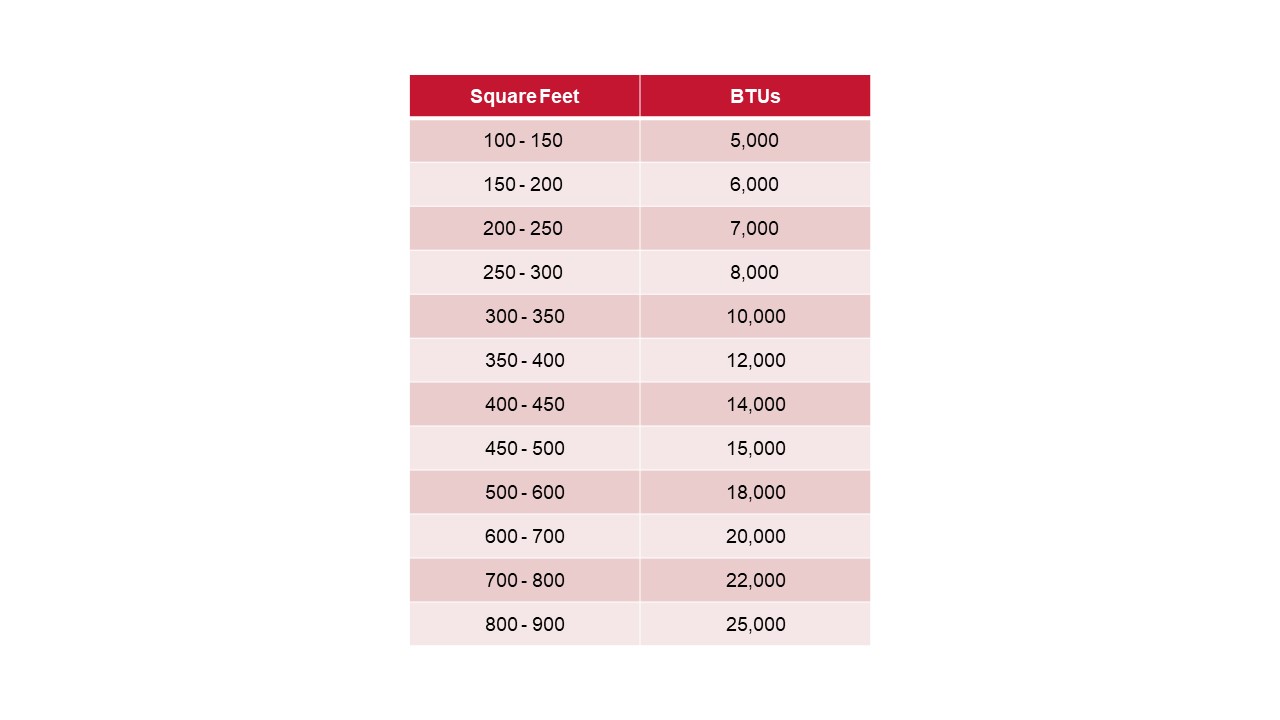
The most fundamental way to start figuring out your AC needs is through a basic BTU calculation based on the square footage of the space you want to cool. This is a good starting point but often needs adjustments for other factors.
Here’s a general guideline:
- 150 sq ft: 5,000 BTU
- 200 sq ft: 6,000 BTU
- 250 sq ft: 7,000 BTU
- 300 sq ft: 8,000 BTU
- 350 sq ft: 9,000 BTU
- 400 sq ft: 10,000 BTU
- 450 sq ft: 11,000 BTU
- 500 sq ft: 12,000 BTU (1 ton)
- 550 sq ft: 13,000 BTU
- 600 sq ft: 14,000 BTU
- 700 sq ft: 15,000 BTU
- 800 sq ft: 16,000 BTU
- 900 sq ft: 18,000 BTU (1.5 tons)
- 1,000 sq ft: 20,000 BTU
- 1,200 sq ft: 21,000 BTU
- 1,400 sq ft: 23,000 BTU
- 1,500 sq ft: 24,000 BTU (2 tons)
- 1,800 sq ft: 27,000 BTU
- 2,000 sq ft: 30,000 BTU
- 2,500 sq ft: 32,000 BTU
- 3,000 sq ft: 36,000 BTU (3 tons)
You can convert BTUs to tonnage by dividing the BTU value by 12,000. For example, 24,000 BTUs / 12,000 BTUs/ton = 2 tons.
HVAC Sizing: Beyond Square Footage
While square footage is a good starting point for your BTU calculation, it’s not the only factor that influences the heat load calculation. HVAC sizing requires a more comprehensive approach to ensure the air conditioner can effectively cool your space. Factors like ceiling height, insulation, window type and number, climate, and even how many people typically occupy the space can significantly impact the required cooling capacity.
Factors Influencing Heat Load Calculation
A proper heat load calculation takes into account all the sources of heat gain and loss in a building. This is crucial for accurate HVAC sizing.
1. Square Footage and Ceiling Height
As we’ve seen, square footage is a primary factor. However, ceiling height matters too. A room with 10-foot ceilings has more air volume to cool than a room with 8-foot ceilings of the same square footage.
Rule of Thumb Adjustment for Ceiling Height:
* For ceilings higher than 8 feet, increase the BTU requirement by approximately 10% for every extra foot of height.
2. Insulation Levels
The quality and type of insulation in your walls, attic, and floors play a huge role. Well-insulated homes lose less cool air and gain less heat from the outside.
- Poor Insulation: May require a larger AC unit to compensate for heat gain.
- Good Insulation: Allows for a slightly smaller, more efficient unit.
3. Window Type and Number
Windows are significant sources of heat gain, especially if they are old, single-paned, or not energy-efficient. Sunlight shining directly into a room will also increase the heat load.
- Number of Windows: More windows generally mean more heat gain.
- Window Size: Larger windows allow more solar radiation.
- Window Treatments: Blinds, curtains, or shutters can reduce heat gain.
- Energy Efficiency: Double or triple-paned, low-E coated windows are much better at preventing heat transfer.
Adjustment Factors for Windows:
* For each large window facing south or west, add approximately 4,000 BTUs.
* For each window facing east, add approximately 2,500 BTUs.
* For each window facing north, add approximately 1,000 BTUs (less significant heat gain).
4. Climate Zone
The climate you live in is a major determinant of how powerful your AC needs to be. Homes in hot, humid climates will require a larger AC unit than those in cooler, drier regions, even for the same square footage.
- Hot & Humid Climates: Require higher BTU capacities to handle both temperature and humidity.
- Mild Climates: May be able to get by with slightly smaller units.
5. Sunlight Exposure (Solar Gain)
Direct sunlight entering your home through windows and skylights adds a considerable amount of heat.
- Sun-Facing Rooms: Rooms that receive direct sunlight for extended periods will need higher BTU capacities.
- Shaded Areas: Rooms shaded by trees or other buildings will have less solar gain.
6. Occupancy and Activity
The number of people in a room and their activity levels contribute to the heat load. People generate body heat.
- General Rule: Add 600 BTUs for each person who regularly occupies the room beyond the first two.
7. Appliances and Electronics
Heat-generating appliances and electronics also contribute to the internal heat load.
- Kitchens: Often require higher BTU capacities due to ovens, stovetops, refrigerators, and microwaves.
- Home Offices: Computers, monitors, and other electronics can add significant heat.
Adjustment Factors for Appliances:
* For kitchens, add 4,000 BTUs.
* For rooms with significant electronic equipment, consider adding an extra 1,000-2,000 BTUs.
8. Air Leakage and Ventilation
Drafty homes with poor sealing allow cool air to escape and hot air to enter, increasing the cooling load. The amount of fresh air that needs to be brought in through ventilation also affects the cooling capacity needed.
Performing a Comprehensive Heat Load Calculation
A detailed heat load calculation, often performed using specialized software or by a professional HVAC technician, considers all the above factors. This is also known as a Manual J calculation.
Manual J Calculation Explained
The Manual J calculation is the industry standard for HVAC sizing in residential settings. It’s a complex calculation that takes into account:
- Building Envelope: The thermal resistance (R-value) of walls, ceilings, floors, and windows.
- Air Infiltration: How much outside air leaks into the home.
- Ventilation Rates: How much fresh air is intentionally brought into the home.
- Internal Heat Gains: Heat generated by people, appliances, and lighting.
- Climate Data: Local temperature and humidity statistics.
The output of a Manual J calculation is a precise BTU requirement for your home. This is the most accurate way to ensure your AC unit size is correct.
Residential AC Tonnage vs. Commercial AC Tonnage
While the principles of calculating cooling capacity are similar, residential AC tonnage needs and considerations can differ from commercial AC tonnage.
- Residential: Focuses on comfort for a smaller number of occupants, often with a more uniform occupancy pattern. Simpler ductwork is usually involved.
- Commercial: May deal with larger, more open spaces, varying occupancy levels throughout the day, higher internal heat loads from equipment (servers, machinery), and more complex ductwork systems. Compressor size and redundancy are often more critical considerations in commercial applications. Commercial buildings also typically require larger AC units, often measured in many tons.
Calculating Tonnage for Different Scenarios
Let’s look at how these factors come together for different scenarios.
Scenario 1: A Simple Living Room
- Square Footage: 300 sq ft
- Ceiling Height: 8 ft
- Windows: Two medium-sized windows, one facing south, one east.
- Insulation: Average
- Occupancy: 2 people
Basic BTU Calculation:
* For 300 sq ft, the base BTU is around 8,000 BTU.
Adjustments:
* South-facing window: +4,000 BTU
* East-facing window: +2,500 BTU
* Extra person (beyond the first two): +600 BTU (but we’re at 2, so no addition here for now)
Total BTU: 8,000 + 4,000 + 2,500 = 14,500 BTU
Tonnage: 14,500 BTU / 12,000 BTU/ton ≈ 1.2 tons.
Given standard AC unit sizes, you would likely look at a 1.5-ton (18,000 BTU) unit for a bit of buffer.
Scenario 2: A Master Bedroom with High Heat Load
- Square Footage: 250 sq ft
- Ceiling Height: 9 ft
- Windows: One large west-facing window, one small north-facing window.
- Insulation: Older home, average insulation.
- Occupancy: 2 people
- Appliances: A television and a computer are often used in the room.
Basic BTU Calculation:
* For 250 sq ft, the base BTU is around 7,000 BTU.
Adjustments:
* Ceiling height: Add 10% for the extra foot: 7,000 * 0.10 = 700 BTU
* Large west-facing window: +4,000 BTU (assuming west is as significant as south)
* Small north-facing window: +1,000 BTU
* Occupancy: 2 people, no additional BTUs.
* Appliances (TV, computer): +2,000 BTU
Total BTU: 7,000 + 700 + 4,000 + 1,000 + 2,000 = 14,700 BTU
Tonnage: 14,700 BTU / 12,000 BTU/ton ≈ 1.23 tons.
Again, a 1.5-ton (18,000 BTU) unit would be appropriate.
Scenario 3: An Entire Home (Simplified Example)
For an entire home, you’d sum up the square footage and then apply average factors. However, it’s more accurate to calculate for each room or zone and then determine the total system capacity needed. A whole-house calculation using a simplified method would look like this:
- Total Square Footage: 1,500 sq ft
- Climate: Hot and humid
- Insulation: Average
- Windows: Moderate number, some facing sun.
Simplified Whole-House BTU Calculation:
* A common rule of thumb for whole-house calculations, especially in moderate climates, is to estimate 20 BTUs per square foot.
* For hotter climates, this can increase to 25-30 BTUs per square foot.
Let’s use 25 BTUs/sq ft for a hotter climate:
* 1,500 sq ft * 25 BTU/sq ft = 37,500 BTU
Tonnage: 37,500 BTU / 12,000 BTU/ton ≈ 3.13 tons.
In this simplified example, a 3-ton (36,000 BTU) or possibly a 3.5-ton (42,000 BTU) unit might be considered, depending on further adjustments for humidity and specific heat loads within the house.
The Dangers of an Incorrectly Sized AC Unit
Choosing the wrong AC unit size can lead to significant problems.
Oversized Air Conditioner
An oversized AC unit will cool your home too quickly. This leads to:
- Short Cycling: The unit turns on, cools the space rapidly, and then turns off before it has a chance to adequately dehumidify the air. This leaves the air feeling clammy and uncomfortable, even if the temperature is low.
- Increased Humidity: The lack of proper dehumidification can lead to mold and mildew growth.
- Wasted Energy: The constant starting and stopping of the compressor is less energy-efficient than a unit running for longer, steadier cycles.
- Premature Wear and Tear: Frequent starts and stops put extra strain on the compressor and other components, potentially shortening the lifespan of the AC unit.
- Uneven Cooling: Can create hot and cold spots throughout the house.
Undersized Air Conditioner
An undersized AC unit will struggle to cool your home adequately, especially during hot weather. This results in:
- Constant Running: The unit will run almost continuously without reaching the desired temperature.
- High Energy Bills: While it might seem counterintuitive, a unit running constantly to try and keep up can consume a lot of energy.
- Poor Air Quality: The system won’t be able to circulate air effectively or filter it properly if it’s always working at its maximum capacity.
- Reduced Comfort: Your home will never feel as cool as you want it to.
- Overworked Compressor: The continuous strain can lead to the compressor failing prematurely.
When to Call a Professional
While the basic BTU calculation can give you a general idea, for accurate HVAC sizing, it’s always best to consult a qualified HVAC professional. They have the tools and expertise to perform a precise heat load calculation (Manual J) specific to your home.
A professional can:
- Accurately measure your square footage.
- Assess your home’s insulation, window efficiency, and air sealing.
- Factor in local climate data and specific heat gain sources.
- Recommend the appropriate AC unit size and type.
- Ensure proper compressor size and overall system match.
- Advise on energy efficiency ratings and features.
For larger installations, such as for commercial buildings, professional assessment is absolutely essential. Commercial AC tonnage calculations are far more complex due to the varied environmental and operational factors.
Frequently Asked Questions (FAQ)
Q1: Can I use online BTU calculators to find my AC size?
A1: Yes, online calculators can be a helpful starting point for a basic BTU calculation. However, they often rely on generalized assumptions and may not account for all the unique factors of your home. For precise HVAC sizing, a professional calculation is recommended.
Q2: How do I convert BTUs to AC tonnage?
A2: To convert British Thermal Units (BTUs) to tons of cooling capacity, divide the BTU value by 12,000. For example, 24,000 BTUs / 12,000 BTUs per ton = 2 tons.
Q3: What if my house has zones? Do I need multiple AC units?
A3: For homes with distinct zones that have different cooling needs or usage patterns, a zoned HVAC system is often recommended. This can involve multiple thermostats controlling different parts of the house, allowing for more efficient and customized cooling. Your HVAC professional can advise on the best zoning strategy for your home.
Q4: How does humidity affect AC sizing?
A4: Humidity significantly increases the cooling load because the air conditioner must also remove moisture from the air. In hot and humid climates, you may need a larger AC unit size or a system with enhanced dehumidification capabilities. Proper heat load calculation will account for local humidity levels.
Q5: Is a bigger AC unit always better?
A5: No, a bigger AC unit is not always better. An oversized unit can lead to short cycling, poor dehumidification, wasted energy, and premature wear. It’s crucial to select an AC unit size that accurately matches your home’s cooling requirements.
Q6: What is the role of the compressor in AC tonnage?
A6: The compressor is the heart of the air conditioning system. Its compressor size and efficiency directly impact the unit’s overall cooling capacity and energy consumption. A correctly sized compressor is vital for efficient operation.
Q7: How do I know if my current AC unit is the right size?
A7: Signs your AC unit is the wrong size include: it’s constantly running but not cooling enough (undersized), it cools the house too quickly and then shuts off, leaving it humid (oversized), or you experience uneven temperatures throughout your home.
By carefully considering all the factors that contribute to a heat load calculation and, when in doubt, consulting with an HVAC professional, you can ensure you select the correct AC unit size for optimal comfort and efficiency. This is the key to achieving the right cooling capacity for your specific needs, whether it’s for residential AC tonnage or commercial AC tonnage.