
A distinct acetic odor wafting from your car’s air conditioning system can be quite unpleasant. If you’re wondering, “Why does my car air conditioner smell like vinegar?”, the most common culprits include mold, mildew, bacterial growth, and sometimes, a coolant leak. These issues create a strong vinegar smell AC that can permeate your car’s cabin.
Don’t let that pungent smell ruin your drives. This in-depth guide will help you identify the source of the vinegar smell and provide practical solutions to get your car’s AC smelling fresh again.
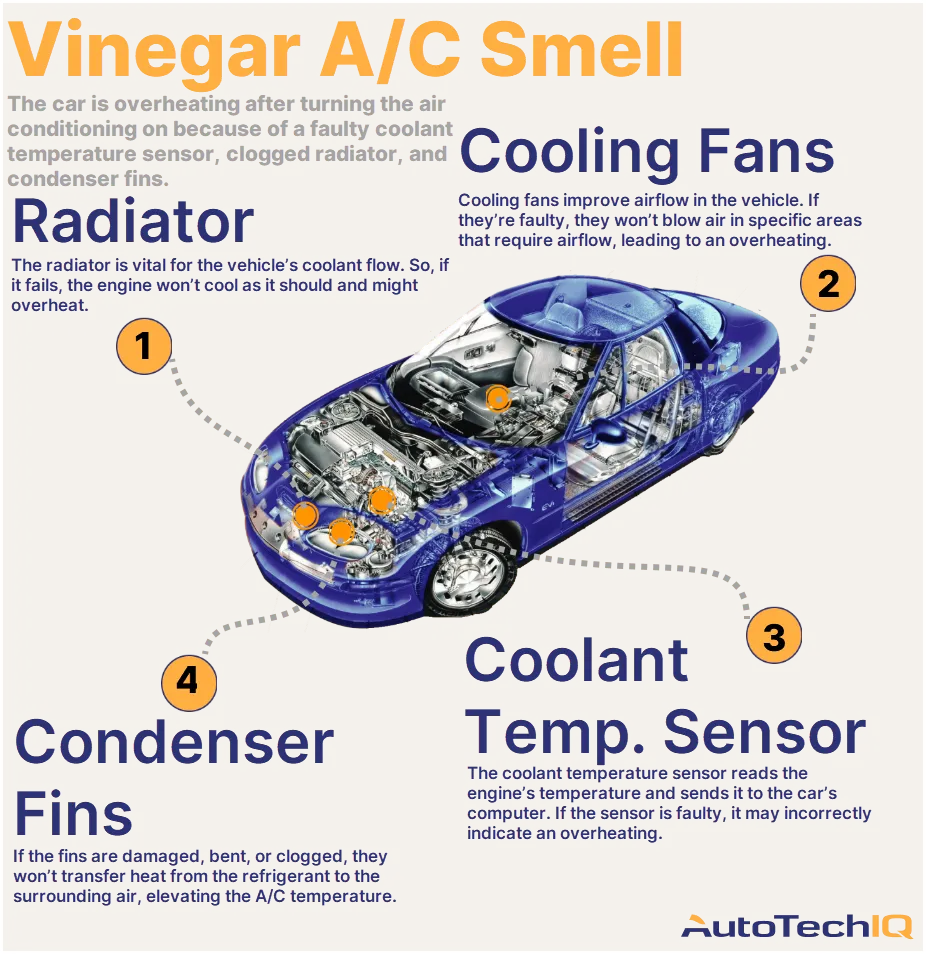
Image Source: www.autotechiq.com
Deciphering the Vinegar Smell: Common Causes
The smell of vinegar coming from your car’s AC isn’t just a minor annoyance; it often signals an underlying problem within the system. Let’s break down the most frequent reasons for this distinct acetic odor.
1. Mold and Mildew Growth: The Silent Culprit
The interior of your car’s AC system provides a perfect breeding ground for mold and mildew. Damp, dark, and stagnant environments are ideal for these fungi.
How Mold and Mildew Develop in Your AC
- Condensation: When your AC runs, it cools the air. This process causes moisture to condense on the evaporator coil and other internal components.
- Trapped Moisture: If this moisture doesn’t drain properly, it sits in the AC system, creating a damp environment.
- Organic Matter: Dust, dirt, and other organic particles can accumulate within the system, providing food for mold and mildew spores.
- Recirculation: When you use the recirculation setting frequently, especially with the windows closed, you’re essentially circulating the same air, which can promote mold growth if moisture is present.
The result is often a car cabin mold problem, and the metabolic byproducts of these fungi can produce that characteristic sour, vinegar-like smell. This is a very common reason for a car AC musty smell.
2. Bacterial Growth: Another Microbial Menace
Similar to mold and mildew, bacteria thrive in the moist conditions found within a car’s AC system.
The Bacterial Breeding Ground
- Moisture: As mentioned, condensation is key. Standing water within the AC housing or drain lines allows bacteria to multiply rapidly.
- Dust and Debris: Accumulated dust, pollen, and other airborne particles mix with moisture, creating a nutrient-rich soup for bacteria.
- Warm Temperatures: When the car is off, the AC system can remain warm, further encouraging bacterial proliferation.
Certain types of bacteria produce volatile organic compounds (VOCs) as they metabolize organic matter. Some of these VOCs have a sharp, acidic smell that can be perceived as a vinegar odor. This bacterial growth AC issue is directly linked to the vinegar smell AC.
3. Stagnant Water and Poor Drainage
A critical component of your car’s AC system is the condensate drain. This small tube allows the water collected on the evaporator coil to drip out of the vehicle, usually underneath the car. If this drain is blocked, water will back up.
Why Drainage Matters
- Clogged Drain Lines: Common culprits for clogging include leaves, dirt, debris, and even mold or mildew growth within the drain tube itself.
- Improper Installation: Sometimes, a drain line might be installed incorrectly, preventing water from flowing out.
- Accumulated Water: When the drain is blocked, water accumulates in the AC housing, on the evaporator, and in the blower motor area. This creates a perfect environment for mold, mildew, and bacteria to flourish, leading to that pungent acetic odor. The presence of stagnant water AC is a significant factor.
4. Evaporator Plate Issues
The evaporator coil is the component responsible for cooling the air. It’s a metal plate that gets very cold when the AC is running.
What Happens at the Evaporator Plate
- Condensation Surface: Moisture naturally condenses on this cold surface.
- Debris Accumulation: Dust, dirt, and organic matter can stick to the damp evaporator plate over time.
- Microbial Colonization: This combination of moisture and debris becomes an ideal habitat for mold, mildew, and bacteria. The evaporator plate smell is often the primary source of the vinegar odor as these microbes colonize the surface.
5. Coolant Leaks: A Less Common, More Serious Cause
While less frequent than microbial issues, a leaking coolant can sometimes contribute to unpleasant smells in your car, including something that might be mistaken for vinegar.
The Role of Coolant
- Ethylene Glycol: Most automotive coolants contain ethylene glycol, which has a slightly sweet smell when hot. However, if it leaks into the HVAC system and mixes with other contaminants or burns off, it could produce a sharp, acidic smell.
- Leak Location: A leak in the heater core or a related component could allow coolant to enter the ventilation system.
- Distinctive Smell: While typically sweet, a burnt or altered coolant smell might be misinterpreted. It’s important to differentiate this from the typical acetic odor. A coolant leak AC issue requires immediate attention.
6. Refrigerant Leaks: Unlikely for Vinegar Smell
It’s important to note that car AC refrigerant itself typically doesn’t smell like vinegar. Refrigerants are designed to be odorless. If you suspect a refrigerant leak, the smell is usually not acidic. The term AC refrigerant smell is generally associated with other types of odors, or a lack thereof.
Identifying the Source: Diagnostic Steps
Before you can fix the vinegar smell, you need to pinpoint where it’s coming from. Here’s how you can investigate:
h4. Initial Checks Inside the Cabin
- Turn off the AC: Does the smell disappear immediately? If it lingers strongly, the source might be the cabin air filter or something else inside the car.
- Run the Fan: Turn the fan on without the AC. If the smell persists or worsens, it points to an issue within the blower motor or ductwork.
- Recirculation vs. Fresh Air: Switch between recirculation and fresh air modes. If the smell is worse on recirculation, it suggests the problem is contained within the AC system itself. If it’s worse on fresh air, it might indicate an external source or a leak allowing outside air in.
h4. Visual Inspection (If Accessible)
- Cabin Air Filter: This filter is designed to trap dust, pollen, and debris. If it’s old and saturated, it can harbor mold and mildew. Accessing and inspecting it is often straightforward.
h4. Listening for Clues
- Water Dripping: Park your car on a level surface and turn on the AC. Check underneath the car for a steady drip of water. If there’s no drip, the condensate drain might be blocked.
Practical Fixes for Your Car AC’s Vinegar Smell
Once you have a better idea of the cause, you can take steps to eliminate the vinegar smell.
h3. Cleaning the AC System: DIY and Professional Options
The most common solution involves cleaning the AC system to remove mold, mildew, and bacteria.
h5. Cleaning the Cabin Air Filter
This is often the first and easiest step.
- Locate the Filter: Consult your car’s manual. It’s usually behind the glove box or under the dashboard.
- Inspect and Replace: If the filter looks dirty, discolored, or smells musty, replace it. It’s a good preventative measure to replace it annually or as recommended by your manufacturer. A clogged filter can contribute to mildew car AC issues.
h5. Using AC Cleaning Sprays
These products are designed to kill mold and bacteria within the AC system.
- Application: Follow the product instructions carefully. Typically, you’ll spray the cleaner into the air intake vents (often located at the base of the windshield) or directly into the interior vents.
- Run the System: After spraying, you’ll usually run the AC system on a specific setting (e.g., fan only, high fan, with recirculation) for a period to allow the cleaner to circulate and work.
- Ventilation: Ensure good ventilation during and after the process.
h5. Professional AC Cleaning Service
If DIY methods don’t work or you’re not comfortable performing the cleaning yourself, a professional detailing or auto repair shop can deep clean your AC system. They have specialized equipment and chemicals to thoroughly sanitize the ducts, evaporator, and blower motor. This is the most effective way to tackle car cabin mold and bacterial growth AC.
h3. Addressing Drainage Issues
A blocked condensate drain needs to be cleared to prevent stagnant water AC.
h5. Clearing the Condensate Drain Line
- Locate the Drain: This is usually a rubber hose extending from the firewall underneath the car.
- Use Compressed Air: Gently blow compressed air into the drain line from underneath the car to dislodge any blockages. Be careful not to blow debris back into the system.
- Wire or Flexible Rod: You can also try gently probing the drain line with a flexible wire or a specialized AC condensate cleaning tool.
- Test: After clearing, run the AC and check for proper drainage underneath the car.
h3. Dealing with Potential Coolant Leaks
If you suspect a coolant leak AC issue, this is a more serious problem.
h5. Professional Diagnosis and Repair
- Check Coolant Levels: Regularly check your coolant level in the reservoir.
- Look for Leaks: Inspect hoses, the radiator, and the heater core for any signs of leaks or residue. A leaking heater core is often located behind the dashboard near the HVAC system.
- Mechanic Consultation: If you notice a coolant leak or suspect one is entering the AC system, take your car to a qualified mechanic immediately. Ignoring a coolant leak can lead to engine damage and health hazards from inhaling coolant fumes.
h3. Deodorizing the System
Even after cleaning, a lingering smell might be present.
h5. Activated Charcoal Filters
These filters can be placed in the cabin to absorb odors, including residual acetic smells.
h5. Baking Soda
Placing an open box of baking soda in the car overnight can help absorb lingering odors.
h3. Preventative Measures: Keeping the Vinegar Smell at Bay
The best way to deal with a vinegar smell is to prevent it from happening in the first place.
h5. Use the “Fresh Air” Setting More Often
Avoid constant recirculation, especially on humid days. Using the fresh air setting helps dry out the system and brings in drier outside air.
h5. Turn Off AC Before Shutting Off Engine
A simple but effective trick: about 2-5 minutes before reaching your destination, switch the AC to the “fan only” mode and turn off the cooling. This helps blow out excess moisture from the evaporator, reducing the chance of mildew car AC development and bacterial growth AC.
h5. Regular Cabin Air Filter Replacement
Stick to your car’s recommended schedule for replacing the cabin air filter. This is your first line of defense against airborne contaminants entering your HVAC system.
h5. Periodic AC System Cleaning
Consider having your AC system professionally cleaned or using a DIY cleaning spray annually as a preventative measure, especially if you live in a humid climate.
Troubleshooting Table: Vinegar Smell in Car AC
Here’s a quick reference guide to help you diagnose and fix the vinegar smell:
| Symptom | Likely Cause(s) | Recommended Action |
|---|---|---|
| Vinegar smell when AC is on and off | Mold, mildew, or bacteria in the ventilation system; contaminated cabin air filter. | 1. Replace cabin air filter. 2. Use AC cleaning spray. 3. Professional AC system cleaning. |
| Smell is stronger on recirculation mode | Mold, mildew, or bacteria within the AC system itself. | 1. Use AC cleaning spray. 2. Professional AC system cleaning. 3. Ensure proper AC operation (e.g., fan-off before engine shutoff). |
| No water dripping under the car when AC is on | Blocked condensate drain line. | 1. Locate and clear the condensate drain line using compressed air or a flexible tool. |
| Sweet, burning smell mixed with AC smell | Potential coolant leak into the HVAC system (e.g., heater core). | Immediate Professional Attention Required: Have the system checked for coolant leaks by a qualified mechanic. |
| Smell is faint but persistent | Minor mold/mildew buildup or residual odors. | 1. Use AC cleaning spray. 2. Air out the car frequently. 3. Use odor absorbers like baking soda or activated charcoal. |
Frequently Asked Questions (FAQ)
Q1: Is the vinegar smell from my car AC harmful?
A: While the smell itself is unpleasant, the mold, mildew, and bacteria that cause it can release spores and volatile organic compounds (VOCs) into the air you breathe. Prolonged exposure to these can potentially trigger allergies, respiratory issues, or worsen existing conditions for sensitive individuals. It’s best to address the source of the smell.
Q2: Can I just spray air freshener to cover up the smell?
A: Air fresheners only mask the odor temporarily. They do not address the underlying cause of the vinegar smell. In fact, spraying air fresheners into a system with mold or bacteria might even create a more complex and unpleasant odor profile. It’s crucial to clean the system.
Q3: How often should I replace my cabin air filter?
A: Most manufacturers recommend replacing the cabin air filter every 12,000 to 15,000 miles or once a year. However, if you drive in dusty or polluted environments, you may need to replace it more frequently. Check your owner’s manual for specific recommendations.
Q4: What’s the difference between a vinegar smell and a general musty smell in my car AC?
A: While both indicate microbial growth, a vinegar smell typically suggests the presence of acetic acid-producing bacteria or certain types of mold. A general musty smell might be due to a broader range of fungi and bacteria. Both point to moisture and the need for cleaning.
Q5: If I have a coolant leak, will it definitely smell like vinegar?
A: Not always. Coolant typically has a sweet smell. However, if the coolant leaks into the HVAC system and interacts with other substances, or if it burns off on hot engine components, the smell can change. A sharp, acidic smell could be a sign, but it’s less common than mold or bacteria causing the vinegar odor.
Conclusion
That persistent vinegar smell AC in your car doesn’t have to be a driving companion. By understanding the common causes – primarily car cabin mold, mildew car AC, and bacterial growth AC fueled by stagnant water AC and poor drainage – you can take targeted action. From simple DIY fixes like replacing the cabin air filter and using cleaning sprays to more involved tasks like clearing the condensate drain, or even seeking professional help for a suspected coolant leak AC, restoring freshness to your car’s climate control is achievable. Regular maintenance and preventative habits are key to enjoying a clean and comfortable driving experience, free from unpleasant odors.