
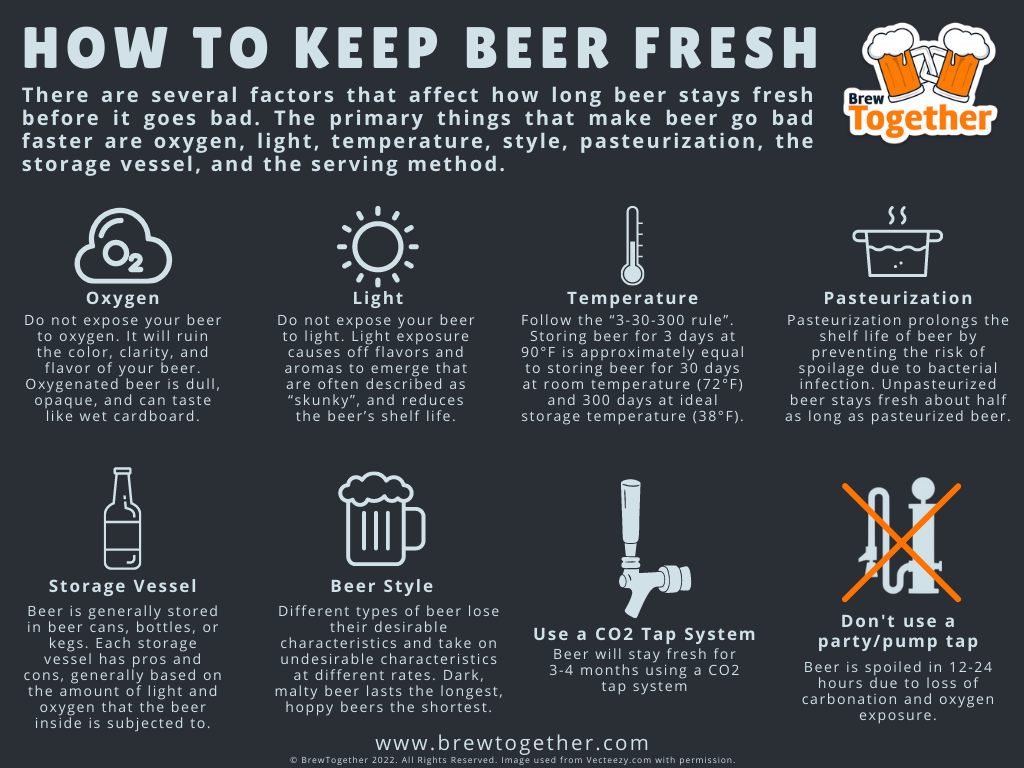
Image Source: brewtogether.com
Fridge Beer: How Long Can Beer Last In The Fridge?
What is fridge beer? Fridge beer refers to beer that is kept cold in a refrigerator. How long can beer last in the fridge? Generally, unopened beer can last for many months to over a year in the fridge, while opened beer should be consumed within a few days.
The allure of a cold, crisp beer is undeniable, especially when it’s readily available from your refrigerator. But have you ever wondered about the true beer shelf life and how long your beloved brews can actually stay good in the chill of your fridge? This isn’t just about avoiding a stale sip; it’s about appreciating the nuances of flavor and understanding the delicate balance that keeps beer enjoyable. Let’s dive deep into the world of refrigerated beer storage and uncover the secrets behind keeping your beer at its best.
The Science of Beer Preservation
Beer, at its core, is a fermented beverage susceptible to various forms of degradation. Factors like light, heat, and oxygen can all contribute to a decline in quality. Refrigeration plays a crucial role in slowing down these processes, but it’s not a magic bullet that extends beer expiration date indefinitely, especially once the seal is broken.
Beer Temperature Effects on Quality
Temperature is arguably the most significant factor influencing beer’s lifespan.
- Ideal Cold Storage: Refrigeration (around 35-45°F or 1-7°C) significantly slows down oxidation and the breakdown of hop compounds, which are responsible for bitterness and aroma. This is why your fridge is the best place for most beers you intend to drink relatively soon.
- The Danger Zone: Temperatures above 50°F (10°C) accelerate the aging process. Warmer temperatures can lead to skunking (from light exposure), stale flavors, and a quicker loss of carbonation.
- Freezing Woes: While a freezer might seem like a good idea for rapid chilling, it’s not ideal for long-term storage. Freezing can cause the beer to expand, potentially pushing out the cap and leading to oxidation. It can also permanently alter the beer’s texture and flavor by damaging yeast cells and protein structures.
The Role of Oxygen and Light
- Oxygen: Exposure to oxygen is the primary enemy of beer flavor. It causes oxidation, which leads to stale, cardboard-like, or sherry-like flavors. Bottles with good seals and cans are designed to minimize oxygen ingress.
- Light: Light, particularly UV light, can cause a reaction in the hops that creates a “skunky” aroma and flavor. This is why many beers are packaged in brown or green bottles. Clear glass offers little protection.
How Long Does Unopened Beer Last in the Fridge?
The longevity of unopened beer in the fridge largely depends on the style of beer and its packaging.
Beer Styles and Their Fridge Lifespans
Not all beers are created equal when it comes to aging. Here’s a general guide:
- Lagers and Pilsners: These lighter, crisper beers are best enjoyed fresh. While refrigerating them will extend their quality for several months (typically 3-6 months), their delicate hop flavors can fade quickly.
- IPAs and Pale Ales: Hoppy beers are highly sensitive to oxidation and light. Their vibrant hop aroma and bitterness are their defining characteristics, and these diminish rapidly over time. Aim to consume these within 2-4 months of purchase, even when refrigerated.
- Wheat Beers (Hefeweizens, Witbiers): Similar to lagers, these are best when fresh to appreciate their fruity and spicy notes. Refrigeration will keep them drinkable for 3-6 months, but freshness is key.
- Stouts and Porters: The roasted malts and higher alcohol content in these beers often allow them to age gracefully. They can last for 6 months to a year or even longer in the fridge, with some developing richer, more complex flavors.
- Belgian Ales and Sours: These beers often have higher alcohol content and can contain wild yeasts and bacteria that contribute to their complexity. Many Belgian styles and sours can improve with age, and keeping them refrigerated will slow this process, preserving their intricate flavors for a year or more.
- Barrel-Aged Beers: These can be incredibly long-lived, with flavors developing and evolving over several years, especially when stored properly in a cool, dark place or the fridge.
Understanding Beer Expiration Dates
Many commercially produced beers do not have a strict “expiration date” in the same way milk or eggs do. Instead, you’ll often find a “best by” or “bottled on” date.
- “Best By” Date: This date indicates when the brewer believes the beer will be at its peak flavor. Drinking it after this date doesn’t necessarily mean it’s unsafe, but the flavor and aroma will likely have degraded.
- “Bottled On” Date: This is a much more helpful date for storing craft beer. It tells you when the beer was packaged, allowing you to gauge its freshness based on its style. For highly hopped beers, you’ll want to drink them soon after this date.
Packaging Matters for Unopened Beer
- Cans vs. Bottles: Cans offer superior protection against light and oxygen compared to most glass bottles. This means canned beer generally has a slightly longer optimal lifespan. Brown glass offers better protection than green or clear glass.
- Crown Caps vs. Corks: Bottles sealed with crown caps are generally well-protected. Champagne-style corks, especially those with cages, can be more susceptible to leaks if not handled carefully.
How Long Does Opened Beer Last in the Fridge?
Once a beer is opened, its exposure to oxygen and potential contaminants increases dramatically. This significantly reduces its drinkable lifespan.
The Clock Starts Ticking: Opened Beer in Fridge
For opened beer in fridge, the timeline is much shorter:
- Carbonation Loss: The primary issue with opened beer is the rapid loss of carbonation. As soon as the seal is broken, the dissolved CO2 begins to escape, leading to a flat, unappealing drink.
- Oxidation: Exposure to air accelerates oxidation, causing the flavors to go stale much faster than in unopened beer.
General Guidelines for Opened Beer:
- Lagers, Pilsners, Wheat Beers: Consume within 24-48 hours. They will become noticeably flat and stale beyond this point.
- IPAs, Pale Ales: Ideally, consume within 24 hours. Their delicate hop aromas are very fragile and will dissipate quickly.
- Stouts, Porters: You might get 48-72 hours out of these before they become too stale or lose too much carbonation.
- Belgian Ales, Sours: Some of these, particularly those with higher carbonation and complex flavor profiles, might hold up a little better for 48-72 hours, but freshness is still paramount.
Re-sealing Opened Beer: Does it Help?
You might be tempted to re-seal an opened beer bottle or can.
- Beer Bottle Caps: For bottles, using a proper beer bottle cap sealer can help preserve some carbonation and slow down oxidation, but it won’t completely stop it. You might extend the drinkability by an extra day or two, but it won’t return to its original state.
- Cans: Once a can is opened, it’s very difficult to effectively re-seal it to preserve carbonation. Any attempt to use plastic wrap or a rubber band will be largely ineffective against the escape of CO2.
Storing Craft Beer: Best Practices for Flavor
Storing craft beer often involves a bit more nuance. Brewers put a lot of effort into creating specific flavor profiles, and improper storage can quickly ruin that.
The Best Way to Store Beer
The best way to store beer at home involves a few key principles:
- Keep it Cold: The refrigerator is your best friend for most beers. Avoid storing beer in pantries, garages, or on countertops where temperatures fluctuate.
- Keep it Dark: Store beer away from direct sunlight and bright artificial light. This is why beer is often sold in dark bottles and why refrigerators are generally dark inside.
- Keep it Upright (Mostly): For bottles with corks, storing them upright is generally fine. For crown-capped bottles and cans, storing them upright is also the standard. Some argue that storing beer on its side might expose more surface area to oxygen if there’s a slight leak, but for well-sealed containers, it makes little difference to the beer itself. The main reason for upright storage is to prevent potential leakage from the cap or seal.
Fridge Beer Aging: The Slow Process
Fridge beer aging is a reality for some styles. While refrigeration slows down aging, it doesn’t halt it. Over extended periods, even in the cold, subtle changes will occur.
- Hop Aroma Fade: Even with ideal storage, hop aromas will eventually fade. This is a natural process of chemical degradation.
- Malt Flavor Development: For darker beers like stouts and porters, malt flavors can become richer and more complex as they age, even in the fridge. This is one of the reasons why some people intentionally age certain beers.
Beer Spoilage Symptoms: What to Look For
Recognizing beer spoilage symptoms is crucial to avoid consuming a drink that’s past its prime.
Visual and Olfactory Clues
- Off-Smells: This is the most immediate indicator.
- Cardboard/Papery: A classic sign of oxidation.
- Skunky: Caused by light exposure; smells like cannabis or sulfur.
- Sour/Vinegary: Can indicate bacterial contamination, though some sour beers are intentionally made this way.
- Fruity/Metallic: Often another sign of oxidation.
- Taste Changes:
- Stale: Lacking crispness, flavors are muted.
- Dull Bitterness: Hop bitterness is lost.
- Sweetness: Sometimes sweetness can increase as certain compounds break down.
- Appearance:
- Cloudiness: While some beers are naturally hazy (like Hefeweizens), a sudden cloudiness in a clear beer could indicate spoilage or infection.
- Lack of Carbonation: Flat beer is a clear sign it’s lost its fizz, either due to aging or a faulty seal.
Fridge Beer Aging: A Look at Specific Styles
Let’s break down the fridge beer aging potential for some common styles.
Lagers and Pale Ales: Best Fresh
- Lagers: Best within 3-6 months.
- Pale Ales/IPAs: Best within 2-4 months, particularly those with delicate hop profiles.
- Fridge Impact: Refrigeration significantly helps maintain the crispness and hop character of these beers, but it cannot prevent the eventual fading of volatile hop oils.
Stouts, Porters, and Strong Ales: Built to Last
- Stouts/Porters: Can be good for 6 months to a year, sometimes longer. Fridge storage slows down any potential development, making them taste closer to their original state for longer.
- Barleywines/Imperial Stouts: These high-alcohol beers can age for years, and while a cellar is often preferred, a fridge will significantly extend their drinkability without altering the aging trajectory too drastically.
- Fridge Impact: The cold helps preserve the complex malt and roast flavors, preventing them from becoming overly oxidized or stale.
Belgian and Sour Beers: Complex and Enduring
- Belgian Ales: Many Belgian styles, especially strong ales, can age well. Refrigeration will keep them stable for 1-2 years, allowing you to enjoy their complex yeast-driven flavors.
- Sours: These beers are often intentionally designed to be complex and can develop over time. Refrigeration will slow this development, preserving the tartness and funk for a longer period, potentially 1-3 years or more depending on the specific beer.
- Fridge Impact: The fridge acts as a stabilizing force, allowing the brewer’s intended complexity to remain accessible for a much longer time.
Table: Beer Shelf Life in the Fridge by Style
| Beer Style | General Fridge Lifespan (Unopened) | Best Consumption Window (Post-Opening) | Fridge Aging Potential Notes |
|---|---|---|---|
| Lagers & Pilsners | 3-6 months | 24-48 hours | Delicate hop flavors fade. Refrigeration preserves crispness but doesn’t prevent aroma degradation. |
| Pale Ales & IPAs | 2-4 months | 24 hours | Highly sensitive to oxidation and light. Hop aroma is paramount and degrades rapidly. |
| Wheat Beers | 3-6 months | 24-48 hours | Best enjoyed fresh to appreciate fruity and spicy notes. |
| Stouts & Porters | 6 months – 1 year+ | 48-72 hours | Malt and roast flavors can mellow and develop. Refrigeration slows this, preserving them closer to their original state. |
| Belgian Ales | 1-2 years+ | 48-72 hours | Complex yeast character is preserved. Some styles may develop subtly even in the fridge over very long periods. |
| Sours | 1-3 years+ | 48-72 hours | Tartness and funk are preserved. Refrigeration slows down the complex evolution of these beers. |
| Barrel-Aged Beers | 1-5 years+ | 48-72 hours | Flavors can continue to develop over long periods. Refrigeration provides stability. |
| High ABV Beers (e.g., Barleywine) | 1-5 years+ | 48-72 hours | Alcohol content helps preserve the beer. Flavors can become smoother and more integrated with time. |
Frequently Asked Questions (FAQ)
Q1: Can I drink beer that has passed its expiration date?
A: Generally, yes. Beer typically doesn’t become unsafe to drink after its “best by” date, but its flavor and aroma will likely have degraded. It might taste stale, flat, or have off-flavors.
Q2: How do I know if beer has gone bad?
A: Look for off-smells like cardboard, skunky odors, or a vinegary smell. Taste changes like staleness, dull bitterness, or unpleasant metallic flavors are also indicators. A lack of carbonation is another common sign.
Q3: Does storing beer upright or on its side make a difference in the fridge?
A: For well-sealed cans and bottles, the orientation makes little difference to the beer itself. Upright storage is generally recommended to minimize any potential risk of leakage from the cap or seal.
Q4: Will refrigerating beer stop it from aging?
A: Refrigeration slows down the aging process significantly, but it doesn’t stop it entirely. Over long periods, even in the cold, some subtle flavor changes can occur.
Q5: Is it okay to freeze beer?
A: No, it is not recommended to freeze beer. Freezing can cause the liquid to expand, potentially pushing out the cap and leading to oxidation. It can also permanently alter the beer’s texture and flavor profile.
In conclusion, while your refrigerator is the ideal haven for most beers, recognizing the nuances of beer shelf life and beer temperature effects will ensure you’re always enjoying your brews at their peak. From the delicate hop notes of an IPA to the rich complexities of a stout, proper refrigerated beer storage is key to unlocking the full potential of every pint. Happy chilling, and cheers to great beer!