
A 12000 BTU air conditioner uses about 900 to 1500 watts of electricity when running. This number can change based on the unit’s design and how well it uses power.
Air conditioners cool air in your home. They use electricity to do this job. The amount of electricity they use is measured in watts. A 12000 BTU air conditioner is a common size. BTU stands for British Thermal Unit. It tells you how much heat the air conditioner can remove from a room in one hour. A 12000 BTU unit is often good for rooms about 400 to 550 square feet in size. Knowing the wattage helps you figure out how much power the AC uses and how much it costs to run.
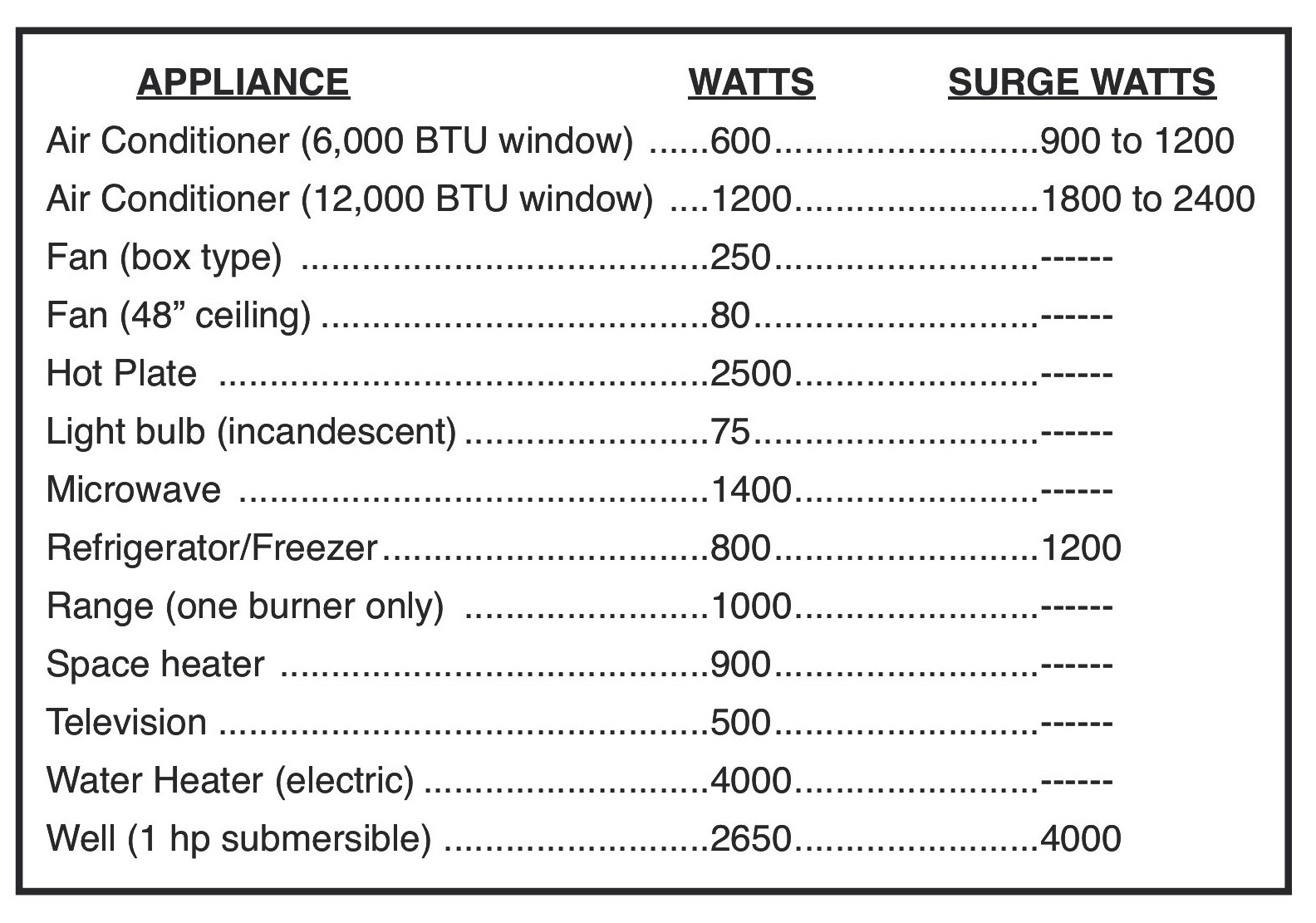
Image Source: www.howtolookatahouse.com
Decoding Air Conditioner Watts
Watts tell us how much power an electric device needs to work. For an air conditioner, watts show how much power the motor and fan use to cool the air. A higher wattage means the air conditioner uses more electricity.
The wattage for 12000 BTU air conditioner is not just one number. It is a range. Different air conditioners, even if they are both 12000 BTU, can use different amounts of power. This is because some are built better than others. Some are made to use less power while still cooling well.
Why Wattage Varies for 12000 BTU Units
Several things make the wattage of a 12000 BTU air conditioner go up or down.
- How well it uses power: This is a big one. Some units are more efficient than others.
- The type of unit: Window units, portable units, and central AC parts use power differently.
- How old it is: Older units often use more power than new ones.
- The temperature outside: The AC works harder when it is very hot. This can use more power.
- How cold you set it: Setting a very low temperature makes the AC work harder.
These points help explain why there is a range for 12000 BTU AC power consumption. It is not fixed.
The Range of 12000 BTU AC Wattage
Most 12000 BTU air conditioners use between 900 watts and 1500 watts.
- An older unit might use closer to 1500 watts.
- A newer, very efficient unit might use closer to 900 watts or even less.
- An average unit might use around 1100-1300 watts.
You can usually find the exact average wattage of 12000 BTU air conditioner for a specific model on its label or in its book. We will talk more about where to find this info later.
EER Rating and Watts
The EER rating is very important for how much power an air conditioner uses. EER stands for Energy Efficiency Ratio.
- EER tells you how many BTUs of cooling you get for each watt of electricity used.
- Formula: EER = Cooling Output (BTU) / Power Input (Watts).
So, if a 12000 BTU AC uses 1200 watts, its EER is 12000 / 1200 = 10.0.
If another 12000 BTU AC uses 1000 watts, its EER is 12000 / 1000 = 12.0.
A higher EER number means the air conditioner is more efficient. It uses less wattage for 12000 BTU air conditioner to produce the same amount of cool air.
Look for the Energy Star label. Air conditioners with the Energy Star label are tested to be more efficient than others. They usually have a higher EER rating. A 12000 BTU unit with Energy Star will use less power than one without it.
Let’s look at some examples in a table.
| 12000 BTU AC Unit Type | Example Wattage Range | Example EER Range | Efficiency Level |
|---|---|---|---|
| Older/Standard Efficiency | 1300 – 1500 watts | 8.0 – 9.2 | Lower |
| Average New Unit | 1100 – 1300 watts | 9.2 – 10.9 | Medium |
| High Efficiency (Energy Star) | 900 – 1100 watts | 10.9 – 13.5+ | Higher |
This table shows that 12000 BTU AC power consumption goes down as the EER goes up. Choosing a unit with a higher EER saves you money on electricity usage 12000 BTU AC over time.
Amps and Your 12000 BTU AC
Besides watts, people often ask how many amps does a 12000 BTU AC draw. Amps measure the flow of electric current. Watts, volts, and amps are related by a simple math rule:
Watts = Volts * Amps
In most homes in the United States, wall outlets give 115 or 120 volts. Larger appliances sometimes use 230 or 240 volts. Most 12000 BTU air conditioners use 115V or 120V power.
If a 12000 BTU AC uses 1200 watts and plugs into a 120V outlet:
Amps = Watts / Volts
Amps = 1200 watts / 120 volts = 10 amps
If it uses 1000 watts at 120V:
Amps = 1000 watts / 120 volts = about 8.3 amps
So, a 12000 BTU AC usually draws between 8 and 12 amps while running.
Why is knowing the amp draw important?
* It tells you if the circuit in your wall can handle the AC.
* Circuit breakers protect wires from too much current (amps). A standard home circuit might be 15 amps or 20 amps.
* An AC needs its own circuit, or at least share with only very light loads, to avoid tripping the breaker.
* The nameplate on the AC unit will show the max amps it might draw. This helps you know if your outlet and circuit are safe to use it.
You must make sure the circuit and outlet can safely handle the amps your AC needs. Check the air conditioner’s label for the needed amps.
Running Cost of 12000 BTU AC
Knowing the wattage for 12000 BTU air conditioner helps you figure out how much it costs to run. Electricity is measured in kilowatt-hours (kWh). A kilowatt-hour is 1000 watts used for one hour.
Let’s say your 12000 BTU AC uses 1200 watts.
To find kWh per hour: 1200 watts / 1000 watts/kW = 1.2 kWh per hour.
The cost comes from how many kWh you use and how much your power company charges per kWh. This rate is different for everyone and every place. Let’s say your electricity costs 15 cents per kWh ($0.15/kWh).
Cost per hour = kWh per hour * Cost per kWh
Cost per hour = 1.2 kWh * $0.15/kWh = $0.18 per hour.
If you run this AC for 8 hours a day:
Daily cost = $0.18/hour * 8 hours = $1.44 per day.
If you run it for 30 days in a month:
Monthly cost = $1.44/day * 30 days = $43.20 per month.
This is just an example. Your actual running cost of 12000 BTU AC will be different. It depends on:
* The exact wattage for 12000 BTU air conditioner (which depends on efficiency and conditions).
* How many hours per day you run it.
* How many days per month you run it.
* Your electricity rate per kWh.
A more efficient unit (lower wattage, higher EER) will have a lower running cost. Even a small difference in wattage can add up over many hours of use.
Different Types of 12000 BTU AC Units
The 12000 BTU air conditioner specifications can vary by the type of unit. The most common types for this size are window units and portable units.
12000 BTU Window Unit Power
12000 BTU window unit power is often more efficient than portable units of the same size. This is because window units place the hot parts of the AC outside your window. The heat goes straight outside. This helps the unit cool your room better with less effort.
Window units typically have an EER of 9.0 or higher. Many new ones have EERs of 10.0, 11.0, or more, earning the Energy Star label.
Their wattage often falls in the 900 to 1300 watt range, depending on the EER.
12000 BTU Portable AC Watts
12000 BTU portable AC watts are often higher than window units for the same cooling effect. Portable units sit inside the room. They use a hose to send hot air outside.
* The hose itself can get hot and add heat back into the room.
* Portable units create negative air pressure. This means they push air out, and new, warm air gets pulled into the room from under doors and through cracks. This makes the AC work harder.
Because of these reasons, portable ACs are usually less efficient. A 12000 BTU portable AC might have an EER of 8.0 to 10.0.
Their wattage might be in the 1100 to 1500 watt range, or sometimes even higher, to get the same amount of cooling as a window unit. Even though they both say 12000 BTU, a portable unit might not cool the room as well or use more power to do it.
Where to Find 12000 BTU Air Conditioner Specifications
You can find the exact 12000 BTU air conditioner specifications, including its wattage and amp draw, in a few places:
-
The Nameplate or Sticker: Every air conditioner has a sticker on the unit itself. It is usually on the side, back, or bottom. This sticker lists important electrical info:
- Voltage (V)
- Wattage (W) while running (sometimes labeled “Rated Power Input”)
- Amps (A) while running (sometimes labeled “Rated Current”)
- BTU output
- EER rating
- Maybe startup amps (LRA or Locked Rotor Amps) – this is a higher spike when the compressor first starts.
-
The User Manual: The book that came with the AC unit will have a section with full specifications.
- The Box: The side of the box often lists key features and specs.
- The Manufacturer’s Website: If you know the model number, you can look up the specs online.
Checking these sources gives you the real numbers for wattage for 12000 BTU air conditioner you own or plan to buy. Do not just guess based on the BTU size.
Factors Affecting Real Electricity Usage
The 12000 BTU AC power consumption on the label is usually the power used when running steady under test conditions. In your home, the actual electricity used can change.
- Outdoor Temperature: On very hot days, the AC compressor runs longer and harder. This can use more power.
- Room Temperature Setting: Setting a much colder temperature than the outside air makes the unit work non-stop. Setting a temp closer to the outside temperature (but still cool and comfy) lets the unit cycle on and off, saving power.
- Home Insulation: A home with good insulation keeps cool air inside and hot air outside. The AC does not need to run as much. A poorly insulated home leaks cool air, making the AC run constantly and use more electricity.
- Sunlight: Direct sunlight heating the room makes the AC work harder. Using blinds or curtains can help.
- Heat Sources Inside: Things like ovens, computers, and many people in a room add heat. This increases the load on the AC.
- Air Filter Cleanliness: A dirty air filter makes the AC work harder to pull air through. This uses more power and cools less well. Cleaning or changing the filter often is important.
- Coil Cleanliness: The cooling coils (inside) and condenser coils (outside) must be clean. Dirt on the coils stops the AC from moving heat well. It has to run longer and use more power to cool.
All these things impact the total electricity usage 12000 BTU AC over a day or month, even if the peak wattage is the same.
Reducing 12000 BTU AC Power Consumption
You can take steps to lower the electricity usage 12000 BTU AC.
- Buy Efficient: Choose a unit with a high EER rating. Look for the Energy Star label.
- Right Size: Make sure 12000 BTU is the right size for your room. An AC that is too big will cool too fast and cycle on and off a lot (which can be less efficient and not remove humidity well). An AC that is too small will run forever and might not cool enough.
- Use a Timer or Smart Thermostat: Set the AC to turn off or run less when you are not home or at night. Smart thermostats can learn your habits or be controlled by phone.
- Keep Up Maintenance:
- Clean or change the air filter every month.
- Clean the coils if you can safely do so. (Check the manual).
- Make sure nothing is blocking the airflow around the outside part of the unit (for window units).
- Improve Your Home:
- Add insulation to walls and the attic.
- Seal cracks around windows and doors to stop air leaks.
- Use blinds or curtains to block direct sun.
- Use fans (ceiling or floor) to help move cool air. A fan uses much less power than the AC and makes the room feel cooler, allowing you to set the AC temp a little higher.
- Set Temperature Wisely: Set the temperature as high as you feel comfortable. Each degree lower adds to the cost. Try to keep the difference between indoor and outdoor temp smaller.
- Vent Portable AC Correctly: If using a portable AC, make sure the exhaust hose is straight and well-sealed to the window kit. Insulate the hose if possible to reduce heat entering the room from the hose itself.
By doing these things, you can lower the running cost of 12000 BTU AC and use less power.
Grasping Startup vs. Running Watts
Air conditioners use more power for a very short time when the compressor first turns on. This is called startup wattage or surge wattage. It is higher than the running wattage.
- Running Watts: This is the power used when the unit is cooling steadily. This is the number usually listed in the
12000 BTU air conditioner specifications. It is the number we used for cost calculations. - Startup Watts: This is a quick spike in power needed to start the compressor motor. It might be 2-3 times the running wattage for just a fraction of a second.
For most home uses, like plugging into a wall outlet, you only need to worry about the running wattage for calculating cost. The home’s electrical system is built to handle small, short surges.
However, if you plan to power your AC with a generator or a battery backup system, you need to know the startup wattage. The generator or battery system must be strong enough to handle this short surge, or it might not start the AC at all. The startup amps (LRA) can also be found on the unit’s label or in the manual.
Comparing 12000 BTU Unit Types and Power Use
We touched on this earlier, but let’s look a bit more at 12000 BTU window unit power versus 12000 BTU portable AC watts.
| Feature | 12000 BTU Window Unit | 12000 BTU Portable AC |
|---|---|---|
| Efficiency | Generally higher EER | Generally lower EER |
| Wattage | Lower range (e.g., 900-1300W) | Higher range (e.g., 1100-1500W) |
| Installation | Sits in window or wall | Sits on floor, needs window kit for hose |
| Noise | Part of unit outside, can be quieter inside | All inside, often louder |
| Cooling Power | Often feels stronger due to better design | Can struggle in larger or leakier rooms |
| Air Leaks | Less likely to pull in outside air if sealed well | Can create negative pressure, pulling in outside air |
For the same stated 12000 BTU, a window unit almost always uses less power to cool a room compared to a portable unit. This means lower 12000 BTU AC power consumption and lower running costs. If you want the most cooling for the least power, a window unit is usually the better choice.
Interpreting Air Conditioner Labels
Let’s look closer at the info on the label (the 12000 BTU air conditioner specifications). Here is what you might see and what it means for power use:
- Model No.: Unit’s specific ID. Useful for looking up details online.
- Capacity: 12000 BTU/h (or just 12000 BTU). This is the cooling power.
- Voltage (V): Often 115V or 120V for this size. Tells you what outlet it needs.
- Frequency (Hz): Usually 60 Hz in North America.
- Rated Power Input (W): This is the running wattage. This is key for
wattage for 12000 BTU air conditionerandelectricity usage 12000 BTU AC. - Rated Current (A): This is the running amps. Important for circuit loading (
how many amps does a 12000 BTU AC draw). - EER: Energy Efficiency Ratio. Higher is better for saving power. Directly relates to wattage (EER = BTU / Watts).
- LRA (A): Locked Rotor Amps. This is the maximum amp surge when starting. Important for generators/battery backups.
- Refrigerant: Type of cooling chemical used. (Doesn’t affect wattage directly, but important for repairs).
Pay most attention to “Rated Power Input (W)” and “EER” when thinking about 12000 BTU AC power consumption and running cost of 12000 BTU AC. The “Rated Current (A)” tells you if the outlet and circuit are safe.
Why Efficiency Matters Long Term
Buying a more efficient 12000 BTU air conditioner might cost a little more upfront. But it saves you money over the many years you use it. The electricity usage 12000 BTU AC makes up a large part of the total cost of owning an AC.
Let’s say you run your AC 500 hours a year (for example, 4 hours a day for about 4 months).
- Unit A (Less Efficient): 1300 watts. Uses 1.3 kWh per hour. Over 500 hours: 1.3 kWh/hr * 500 hours = 650 kWh.
- Unit B (More Efficient, Energy Star): 1000 watts. Uses 1.0 kWh per hour. Over 500 hours: 1.0 kWh/hr * 500 hours = 500 kWh.
Using our example rate of $0.15/kWh:
* Cost for Unit A: 650 kWh * $0.15/kWh = $97.50 per year.
* Cost for Unit B: 500 kWh * $0.15/kWh = $75.00 per year.
That is a saving of $22.50 per year just by choosing a more efficient model. Over 5 years, that is $112.50. Over 10 years, that is $225.00. These savings add up and can quickly cover the extra cost of the efficient unit.
When looking at 12000 BTU air conditioner specifications, comparing the wattage or EER is a good way to see which unit will be cheaper to run over time.
Seasonal Energy Efficiency Ratio (SEER)
You might also see a SEER rating, especially for central air conditioners. For window and portable units, EER is more common.
- EER measures efficiency at a single hot temperature (95°F outside).
- SEER measures efficiency over a whole cooling season, thinking about different outdoor temperatures.
A higher SEER rating also means better efficiency and lower power use over a season. While EER is the key rating on most 12000 BTU window/portable units, understanding SEER helps if you look at larger systems. The idea is the same: higher number means less electricity used for the cooling provided.
Summing Up 12000 BTU AC Power Use
So, how many watts is a 12000 BTU air conditioner? Usually between 900 and 1500 watts.
- The exact number is found on the unit’s label or in its specs.
- This
wattage for 12000 BTU air conditionertells you its12000 BTU AC power consumption. - Lower wattage means lower
electricity usage 12000 BTU AC. - Efficiency (EER rating) is the main reason for different wattages. Higher EER means lower wattage for the same 12000 BTU output.
How many amps does a 12000 BTU AC drawis linked to wattage and voltage (Watts = Volts * Amps). It is usually 8-12 amps for 120V units.- The
running cost of 12000 BTU ACdepends on its wattage, how long it runs, and your electricity rate. 12000 BTU window unit poweris often lower than12000 BTU portable AC wattsbecause window units are typically more efficient.- Checking the
12000 BTU air conditioner specificationsis key to knowing the real power use of a specific unit.
By choosing an efficient unit and using it wisely, you can stay cool without using too much power.
Frequently Asked Questions (FAQ)
h4 What is the typical wattage range for a 12000 BTU air conditioner?
h5 Answer: The running wattage for a 12000 BTU air conditioner is usually between 900 watts and 1500 watts.
h4 Does a higher EER rating mean lower wattage for a 12000 BTU AC?
h5 Answer: Yes, exactly. For the same 12000 BTU cooling power, a unit with a higher EER (Energy Efficiency Ratio) uses less wattage than a unit with a lower EER. Higher EER means better efficiency and lower power use.
h4 How do I find the exact wattage of my 12000 BTU air conditioner?
h5 Answer: Look for the sticker or nameplate on the air conditioner unit itself. It will list the “Rated Power Input” in watts (W). You can also find this information in the user manual or on the manufacturer’s website by looking up the model number.
h4 How many amps does a 12000 BTU air conditioner usually need?
h5 Answer: A 12000 BTU air conditioner running on 120V power typically draws between 8 amps and 12 amps. Check the unit’s nameplate for the “Rated Current” (A) to be sure. This helps you know if your electrical circuit can handle it.
h4 Is a 12000 BTU portable AC less power efficient than a 12000 BTU window unit?
h5 Answer: Generally, yes. 12000 BTU portable AC watts are often higher compared to 12000 BTU window unit power for the same stated BTU capacity. Portable units are usually less efficient at cooling a room because of how they work and can pull warmer air into the space.
h4 How does outdoor temperature affect 12000 BTU AC power consumption?
h5 Answer: When it is very hot outside, the air conditioner has to work harder and run longer to cool the room. This increases the total electricity usage 12000 BTU AC over time, even though the wattage at any single moment might be within the usual range.
h4 Does cleaning the air filter save electricity?
h5 Answer: Yes, keeping the air filter clean is an easy way to reduce 12000 BTU AC power consumption. A dirty filter makes the unit work harder to move air, using more electricity and providing less cooling. Clean or change the filter often, usually every month.
h4 How can I estimate the running cost of my 12000 BTU AC?
h5 Answer: Find the wattage (W) on the unit’s label. Convert watts to kilowatts (kW) by dividing by 1000. Multiply the kW by the number of hours you run the AC per month. Then, multiply that total kWh by your electricity rate per kWh (found on your power bill). This gives you an estimated monthly running cost of 12000 BTU AC.
h4 What is the difference between running watts and startup watts?
h5 Answer: Running watts is the power an AC uses when it is cooling steadily. Startup watts is a brief, higher spike in power needed just to turn the compressor on. The wattage listed on the label is usually the running wattage. Startup wattage is important if using a generator or battery backup.
h4 Does an Energy Star label matter for wattage for 12000 BTU air conditioner?
h5 Answer: Yes, definitely. Air conditioners with the Energy Star label are tested to be more energy efficient. This means a 12000 BTU unit with Energy Star will have a lower wattage and a higher EER compared to a standard unit of the same size. Choosing Energy Star lowers your electricity usage 12000 BTU AC.