
Can you strap a fridge in a truck? Yes, you absolutely can and must strap a fridge in a truck securely to prevent it from shifting, tipping over, or causing damage during transit. Proper appliance securing is crucial for the safety of your refrigerator, your vehicle, and everyone on the road. This guide will walk you through the essential steps and considerations for refrigerator transport, ensuring your appliance arrives at its destination intact.
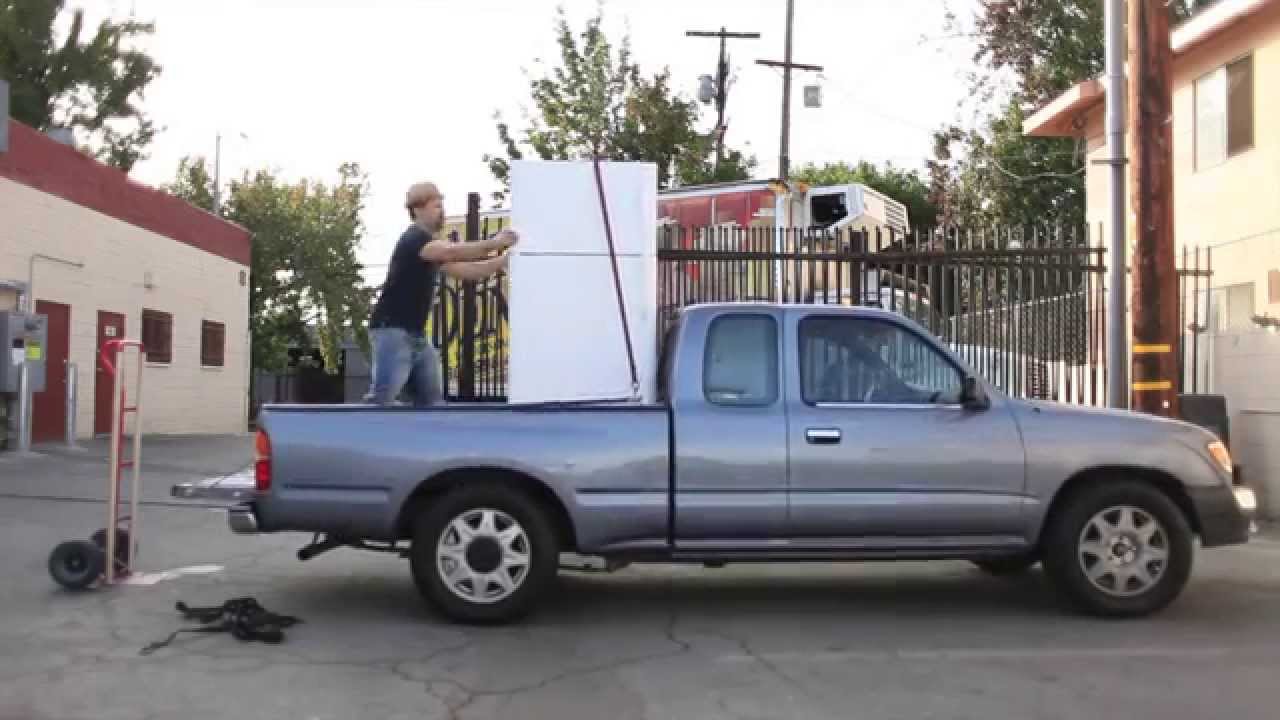
Image Source: i.ytimg.com
Preparing Your Fridge for the Journey
Before you even think about strapping, a few preparatory steps are vital for a smooth refrigerator transport. These actions protect your appliance and make the strapping process much easier.
Cleaning and Emptying
h4 Why Clean and Empty?
- Reduces Weight: An empty fridge is lighter, making it easier to maneuver.
- Prevents Spills: Any remaining liquids or food can spill and create a mess.
- Hygienic: Ensures the fridge remains clean throughout the move.
h5 Steps to Take:
- Unplug: Disconnect the fridge from the power outlet well in advance (at least 24 hours if possible) to allow coils to stabilize.
- Remove Shelves and Drawers: Take out all interior components like shelves, drawers, ice makers, and any loose parts. Store these separately, perhaps wrapped in moving blankets or bubble wrap.
- Defrost: If there’s any ice buildup, allow the fridge to defrost naturally or use a fan to speed up the process. Wipe down the interior and exterior thoroughly.
- Secure the Door: Use strong packing tape or specialized moving straps to keep the refrigerator door(s) firmly shut. Avoid duct tape, as it can leave a sticky residue.
Protecting the Exterior
Moving a fridge can expose it to bumps and scrapes. Protecting its finish is a smart move.
h4 Protective Measures:
- Moving Blankets: Wrap the entire appliance in thick moving blankets. These provide cushioning against impacts and prevent scratches. Secure the blankets with tape or more straps.
- Cardboard: For extra protection, especially for the corners and edges, consider adding pieces of sturdy cardboard over the moving blankets.
Choosing the Right Truck Tie-Downs
The type of truck tie-downs you use significantly impacts the security of your fridge. Not all straps are created equal.
h4 Essential Tie-Down Equipment:
- Ratchet Straps: These are the workhorses of securing heavy items. They offer adjustable tension and a strong grip. Look for straps with a working load limit (WLL) that far exceeds the weight of your fridge. A WLL of at least 2000 lbs per strap is recommended.
- E-Track or L-Track Systems: If your truck has an E-track or L-track system installed in the cargo area, this is ideal. E-track straps attach to these rails, providing multiple secure anchor points and excellent adjustability.
- Chain and Binders: While effective for extremely heavy loads, chain and binders can be overkill and potentially damage the fridge if not used carefully with padding. Ratchet straps are generally preferred for appliances.
- Furniture Straps: While designed for furniture, some heavy-duty furniture straps can also work, provided they have sufficient strength and can be anchored securely.
h5 What to Avoid:
- Rope: Rope can stretch, loosen, and is difficult to tension properly, making it unsuitable for securing a heavy, valuable appliance like a fridge.
- Bungee Cords: Bungee cords offer very little tension and are prone to snapping. They are completely inadequate for this task.
- Weak Straps: Using straps with a low working load limit is a recipe for disaster.
The Art of Strapping: Step-by-Step
Properly anchoring and tensioning your straps is the most critical part of appliance securing.
h3 Strategic Placement of Straps
h4 Horizontal Securing:
The primary goal is to prevent the fridge from sliding forward, backward, or sideways.
-
First Strap (Forward/Backward):
- Run a ratchet strap over the top of the fridge.
- Anchor one end to a secure point on one side of the truck bed (e.g., E-track fitting, sturdy stake pocket, or frame anchor).
- Thread the strap through the ratchet mechanism.
- Anchor the other end to a secure point on the opposite side of the truck bed.
- Crucially, position the strap so it pulls the fridge backwards towards the rear of the truck bed. This is paramount for preventing forward movement during braking.
-
Second Strap (Sideways):
- Run another ratchet strap across the front or back of the fridge.
- Anchor one end to a secure point on one side of the truck.
- Thread through the ratchet.
- Anchor the other end to a secure point on the opposite side.
- Position this strap to pull the fridge sideways against the wall of the truck bed, preventing lateral movement.
h4 Vertical Securing (Optional but Recommended):
While often not strictly necessary if horizontal straps are tight, vertical straps add an extra layer of security and prevent any upward movement.
- Third Strap (Vertical):
- Run a strap down the front or back of the fridge.
- Anchor it to a secure point on the truck bed floor or side.
- Ensure this strap is also tensioned firmly.
h5 Ensuring Proper Tension:
- Snug Fit: The straps should be tight enough that the fridge cannot wobble or shift when you push on it.
- Avoid Over-Tensioning: While tightness is important, over-tensioning can damage the fridge or the truck’s anchor points. Aim for a firm, secure fit.
- Check for Slack: Periodically check the straps during your journey, especially after the first hour, to ensure they haven’t loosened.
h4 Using the Appliance Dolly in Conjunction
An appliance dolly is a key piece of moving equipment that simplifies getting the fridge into and out of the truck.
- Secure the Fridge to the Dolly: Use furniture straps or moving blankets and straps to secure the fridge firmly to the dolly itself. This prevents it from tipping or sliding off the dolly.
- Maneuvering: Tilt the dolly and roll the fridge carefully. Get help if needed, especially for stairs.
- Loading: Once at the truck, use the dolly to position the fridge directly where you want it. This minimizes the risk of dropping or dragging it.
Anchoring Points: The Foundation of Security
The effectiveness of your straps depends entirely on the strength and placement of your anchoring points.
h4 Types of Truck Anchoring Points:
- E-Track/L-Track: The best option if available. These systems offer versatile and strong anchor points. You’ll need E-track straps with appropriate fittings (e.g., O-rings, E-fittings).
- Stake Pockets: Many pickup trucks have stake pockets along the bed rails. You can use specialized E-track fittings that slide into these pockets or use heavy-duty tie-down rings that bolt into them.
- Tie-Down Rings: Many trucks come with factory-installed tie-down rings. Ensure these are rated for the weight of your load. If not, consider aftermarket tie-down anchors.
- Rub Rails: The metal rails along the sides of some truck beds can be used, but ensure your straps are protected from sharp edges.
- Floor D-Rings: Some trucks have D-rings mounted to the floor of the cargo area. These are excellent for securing items from the bottom.
h5 What to Avoid for Anchoring:
- Plastic Bumpers or Trim: Never use these as anchor points.
- Suspension Components: Avoid anchoring to anything that moves or is not part of the vehicle’s frame.
- Loose or Damaged Points: Inspect all anchor points for rust, damage, or looseness before use.
Advanced Securing Techniques
For added peace of mind and enhanced stability, consider these advanced methods.
h4 Cross-Strapping Method:
This involves running straps in an ‘X’ pattern over the fridge.
- First Strap: Run a strap from the front-left anchor point to the rear-right anchor point, passing over the top of the fridge.
- Second Strap: Run another strap from the front-right anchor point to the rear-left anchor point, again passing over the top.
- Tension Both: Ensure both straps are equally and firmly tensioned. This method creates a strong, secure cage around the appliance.
h4 Edge Protection:
Sharp corners on your fridge or the truck bed can damage straps.
- Cardboard or Corner Protectors: Place pieces of cardboard or specialized cargo corner protectors between the straps and the fridge or truck bed edges to prevent wear and tear on the straps.
h4 Multiple Straps for Heavy Fridges:
For larger, heavier refrigerators, don’t be shy about using more than two primary straps. Distribute the load across multiple anchor points for maximum stability.
Common Mistakes to Avoid
Even with the best intentions, some common errors can compromise your refrigerator transport.
h4 Neglecting the Weight of the Fridge:
- Fridges are heavy! Attempting to move or strap them without proper equipment or enough people is dangerous.
- Always factor in the appliance’s weight when selecting straps and anchor points.
h4 Under-Tensioning Straps:
- Straps that are too loose are ineffective. The fridge will shift and can cause damage or accidents.
- Regularly check tension, especially on longer trips.
h4 Incorrect Strap Routing:
- Straps rubbing against sharp edges can fray and break.
- Ensure straps are routed smoothly and protected where necessary.
h4 Using Inadequate Equipment:
- Relying on bungee cords or weak ropes is a serious mistake.
- Always use properly rated cargo straps.
h4 Forgetting to Secure the Door:
- An opening door can swing out, hit other cargo, or cause the fridge to tip.
- Always tape or strap the door shut securely.
Checklist for Secure Refrigerator Transport
h4 Pre-Trip Checklist:
- [ ] Fridge unplugged and empty?
- [ ] Shelves and drawers removed and stored?
- [ ] Fridge cleaned and defrosted?
- [ ] Fridge wrapped in moving blankets?
- [ ] Door securely taped or strapped shut?
- [ ] Appropriate ratchet straps selected (with adequate WLL)?
- [ ] Truck anchor points inspected and deemed secure?
- [ ] Straps routed to prevent sharp edge abrasion?
- [ ] Straps tensioned firmly?
- [ ] Additional padding or corner protectors used if needed?
- [ ] A helper available for maneuvering if required?
h4 During-Trip Checkpoints:
- [ ] Check strap tension after the first 30-60 minutes of travel.
- [ ] Periodically check straps at rest stops for any loosening.
h4 Arrival Checklist:
- [ ] Carefully unstrap the fridge.
- [ ] Use the appliance dolly for safe unloading.
- [ ] Inspect the fridge for any transit damage.
Frequently Asked Questions (FAQ)
Q: What is the best type of strap for moving a fridge?
A: Ratchet straps are generally the best option due to their adjustability and strong holding power. Ensure they have a high working load limit suitable for the weight of your refrigerator.
Q: Can I use regular rope to strap a fridge?
A: No, regular rope is not recommended. It stretches, loses tension easily, and can be difficult to secure properly, making it unsafe for transporting heavy appliances.
Q: How many straps do I need to strap a fridge in a truck?
A: At a minimum, you should use two strong ratchet straps to secure the fridge horizontally, pulling it against the truck’s walls. Using a third strap vertically can provide additional stability. For very large or heavy units, more straps might be advisable.
Q: What if my truck doesn’t have many anchor points?
A: If your truck lacks sufficient anchor points, consider installing aftermarket tie-down anchors or using E-track rails if your truck bed allows. You can also utilize stake pockets with appropriate fittings.
Q: Do I need moving blankets when transporting a fridge?
A: Yes, moving blankets are highly recommended. They protect the exterior finish of the fridge from scratches and minor impacts during transit and handling. They also provide a cushion for the straps to rest on, reducing the risk of damage to both the fridge and the straps.
Q: How tight should the straps be?
A: The straps should be tensioned firmly enough to prevent any movement or wobbling of the fridge. However, avoid over-tightening, which could damage the appliance or the truck’s anchor points. You want it snug and secure, not stretched to its breaking point.
Q: Can I transport a fridge on its side?
A: It is generally not recommended to transport a refrigerator on its side. Many manufacturers advise keeping them upright to prevent oil from the compressor from migrating into the refrigerant lines, which can cause damage. Always check your specific refrigerator’s manual for transport recommendations.
Q: What is the role of an appliance dolly in this process?
A: An appliance dolly is a specialized piece of moving equipment that makes it much easier and safer to maneuver a heavy appliance like a fridge. It helps in loading, unloading, and positioning the fridge within the truck, reducing the risk of injury or damage. It should be used in conjunction with straps to secure the fridge to the dolly itself.
Q: How do I prevent the straps from damaging the fridge’s finish?
A: Use moving blankets or cardboard as padding between the straps and the fridge. Ensure straps are routed over the thickest parts of the appliance and avoid direct contact with delicate surfaces or corners.
Q: When should I check the straps during the trip?
A: It’s crucial to check the tension of your straps shortly after starting your journey (within the first 30-60 minutes) and then again at regular rest stops. Straps can sometimes loosen due to vibration and movement, so these checks are vital for ongoing security.
By following these detailed steps and using the right moving equipment, you can ensure your appliance securing efforts are successful, making refrigerator transport a much less stressful experience. Safe travels!