
So, how long do air conditioner compressors last? A typical AC compressor lifespan is usually about 10 to 15 years. This is the average life of an AC compressor. The air conditioning compressor life expectancy depends a lot on how well you take care of your system and other important things we will talk about. The compressor is a very important part of your air conditioner. People often call it the heart of the system. It makes the cold air possible. Knowing how long it should last helps you plan and know what to expect from your cooling system.
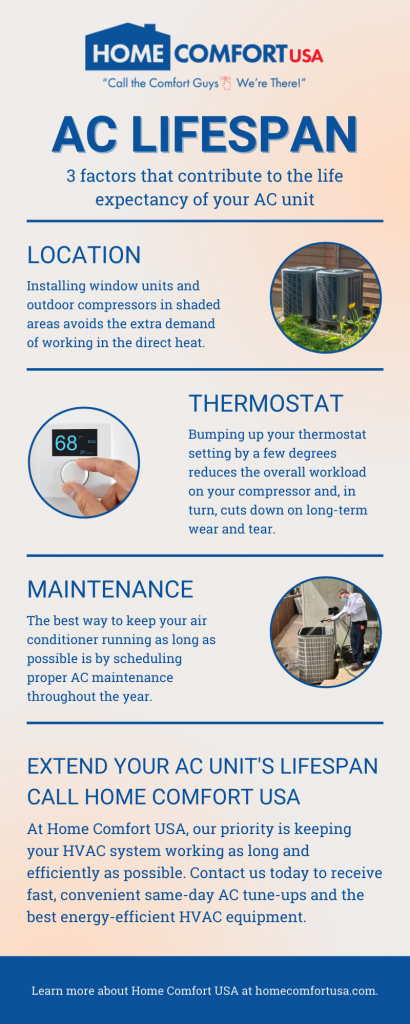
Image Source: www.homecomfortusa.com
The Compressor’s Role in Your AC System
Let’s talk about what the compressor does. Your air conditioner has two main parts. One is inside your house. The other is outside. The outside part is called the condenser unit. Inside the condenser unit is the compressor.
What does it do? It takes a special liquid called refrigerant. It squeezes this liquid. This turns the liquid into a hot gas. This hot gas then travels through coils in the outside unit. As air blows over these hot coils, the heat goes from the gas into the air outside. The gas cools down and turns back into a liquid.
This liquid then goes back inside to the inside part of your AC, called the evaporator coil. Here, the liquid pulls heat and wetness from the air inside your house. This makes the air cool and dry. A fan then blows this cool, dry air into your rooms. The liquid refrigerant warms up, turns back into a gas, and goes back outside to the compressor to start again.
So, the compressor is key. It keeps the refrigerant moving and changing state. If the compressor doesn’t work, your AC won’t cool your house. It might just blow air that isn’t cold. This is why the typical lifespan of HVAC compressor matters so much. It’s the engine that drives the whole cooling process.
Learning About AC Compressor Lifespan
As mentioned, the AC compressor lifespan is usually around 10 to 15 years. But this is just an average. Some compressors last longer, maybe up to 20 years. Others might fail sooner, sometimes in just a few years. Why the big difference? Many things play a part. We will look at these factors affecting compressor lifespan.
It’s helpful to know that the average life of AC compressor is often similar to the life of the whole outdoor unit. If the compressor fails, it’s a big repair. Because it’s so costly, sometimes replacing the compressor is almost as expensive as getting a whole new outdoor unit. This is why the compressor’s life often sets the limit for how long your whole outdoor AC unit lasts.
Factors Affecting Compressor Lifespan
Many things can make an AC compressor last longer or shorter. It’s not just about how old it is. Think of it like a car engine. How you drive it, how you take care of it, and where you drive it all affect how long it lasts. The same is true for an AC compressor.
Let’s look at the most important things that affect how long your air conditioning compressor life expectancy will be.
Quality of Installation
How well the AC system was put in matters a lot. If the people who installed it made mistakes, it can hurt the compressor.
- Wrong Size Pipes: The pipes that carry the refrigerant need to be the right size. If they are too small or too big, the compressor works harder. This extra work can wear it out faster.
- Not Enough Refrigerant: The system needs the right amount of refrigerant. If it has too little, the compressor can get too hot. It also has to run longer to cool the house. Both are bad for its life. If it has too much, it can also cause problems and make the compressor work too hard.
- Not Cleaning the Pipes: When they put the system in, they need to clean the pipes very well. Dirt or tiny bits of metal left in the pipes can travel through the system. If these bits get into the compressor, they can damage the moving parts inside.
- Wrong Electrical Hookup: The compressor needs the right amount of power. If the wires are hooked up wrong or the power is not right, it can harm the compressor’s motor. Power surges can also hurt it.
A good installation by skilled workers helps make sure the system starts life the right way. This gives the compressor the best chance to last a long time.
How Often You Take Care of It
Just like a car needs oil changes, your AC system needs check-ups. Not taking care of your AC is a big reason why compressors fail early. Regular maintenance is key to extending AC compressor life.
- Dirty Filters: The air filter on your inside AC unit needs to be clean. If it’s dirty, air cannot flow well over the inside coil. This makes the inside coil get too cold. It can even freeze. When this happens, the refrigerant goes back to the compressor as a liquid, not a gas. Compressors are made to pump gas, not liquid. Pumping liquid can damage the compressor inside. A dirty filter also makes the whole system work harder to pull air, which stresses the blower fan and indirectly the compressor.
- Dirty Coils: The coils, both inside and outside, need to be clean. The outside coil gets dirty from dirt, leaves, grass clippings, and other stuff in the air. If this coil is dirty, the system cannot get rid of heat well. The compressor then gets too hot. Running too hot wears out the motor and other parts quickly.
- Missing Refrigerant Checks: A technician should check the refrigerant level. Small leaks can happen over time. If the refrigerant gets low, the compressor has to work harder and gets hotter. This is a common cause of early failure. A check-up finds these small leaks before they cause big problems.
Getting regular tune-ups, usually once a year, helps keep the system clean and running right. This helps the compressor last longer.
How Much You Use It
How often and how long you run your AC affects its life.
- Heavy Use: If you live in a very hot place where you use your AC almost all year, or if you keep your house very cold, the compressor works more hours each day, each week, and each year. More running time means more wear and tear. A system used heavily in Florida will likely not last as long as one used only a few months a year in a milder climate.
- Short Cycling: This is when the AC unit turns on and off very quickly, many times in an hour. This is very bad for the compressor. Starting up takes a lot of power and puts stress on the motor. If it keeps starting and stopping, it wears out fast. Short cycling can happen for many reasons, like the AC unit being too big for the house, thermostat problems, or other system issues.
Running your AC smartly, maybe setting the temperature a little higher when you’re not home, can reduce running time and stress on the compressor.
The Environment Around the Unit
Where your outdoor unit sits matters.
- Heat: If the unit is in direct sun all day, or if things are blocking it and stopping air flow, it can get very hot. This makes the compressor run hotter too. High temperatures are bad for electrical parts and motor windings.
- Dirt and Debris: If the unit is near plants that shed a lot of leaves or cottonwood fluff, or if it’s on the ground where dirt and grass clippings get blown into it, the coils get dirty faster. We already know dirty coils make the compressor work harder and get hotter.
- Salt Air: If you live near the ocean, salt in the air can cause parts to rust and break down faster, including parts inside the compressor or the electrical connections going to it.
Keeping the area around the outdoor unit clean and clear helps it run better and protects the compressor. Make sure there are no plants growing too close to it.
The Size of the AC System
Having the right size AC unit for your house is very important. Size is measured in ‘tons’.
- Too Big: If the AC unit is too big, it cools the house too fast. It reaches the set temperature quickly and shuts off. But it doesn’t run long enough to remove the wetness from the air. This leads to a cold but damp house. Worse for the compressor, it leads to short cycling. The unit turns on and off too often, wearing out the compressor motor fast.
- Too Small: If the AC unit is too small, it has to run almost all the time to try to reach the set temperature. It might not even reach it on the hottest days. Running constantly puts a lot of wear and tear on the compressor. It also uses a lot of power.
A qualified HVAC expert should do a ‘load calculation’ to figure out the right size AC for your home. This helps the system run right and protects the compressor.
Power Problems
The electricity that runs your AC can affect the compressor.
- Wrong Voltage: If the power coming to the unit is not the right voltage (either too high or too low), it can damage the compressor motor over time.
- Power Surges: Lightning strikes or problems on the power lines can send a rush of extra power (a surge) that can instantly burn out the compressor’s motor or its electrical parts. Using surge protectors for your HVAC system can help protect it.
- Frequent Power Outages: If your power goes on and off a lot, the stress of starting and stopping the compressor repeatedly can be bad for it.
Signs of Failing AC Compressor
How can you tell if your AC compressor is starting to have problems? There are several warning signs of failing AC compressor. Spotting these early might help you fix the problem before the compressor completely breaks down, although often, once the compressor starts to fail, replacement is the likely next step.
- No Cool Air: This is the most obvious sign. The system might be running, the fan might be blowing air inside, but the air coming out of the vents is not cold. The compressor is not squeezing the refrigerant to start the cooling process. This could be a sign the compressor is dead or not running right.
- Strange Noises: The outdoor unit makes noise when it runs, but you get used to that sound. If you start hearing new noises, it could be a problem.
- Clicking or Grinding: Sounds like parts are rubbing or breaking inside the compressor.
- Loud Buzzing or Hum:* The motor might be trying to start but can’t, or there’s an electrical problem.
- Loud Bang or Clunk: This could happen when the unit tries to start and fails, or if a part breaks suddenly.
- Tripping the Circuit Breaker: The compressor motor needs a lot of power to start up. If it’s having trouble starting or if there’s an electrical issue inside it, it can draw too much power. This causes the breaker in your home’s electrical panel to trip, shutting off power to the AC unit. If you reset the breaker and it trips again right away when the AC tries to start, it’s a strong sign of a compressor or related electrical problem.
- Outdoor Unit Shakes or Vibrates Heavily: The compressor does vibrate a bit when running, but if the whole outdoor unit is shaking more than usual, it could mean something is wrong inside the compressor or with how it’s mounted.
- High Energy Bills: If your electricity bills suddenly jump up, and you are using your AC the same amount, it could mean the compressor is losing its efficiency. It’s working harder and using more power to do the same amount of cooling, which it may not even be achieving.
- Ice on the Outdoor Unit: If you see ice forming on the copper line that connects to the outdoor unit, or on the outside coil itself, it’s a bad sign. This often happens when the refrigerant is low or there’s a problem with air flow (like a dirty filter), but a failing compressor can also cause the system to run strangely and freeze up.
- Unit Doesn’t Turn On: Sometimes, if the electrical issue is severe, the compressor won’t even try to start, and the whole outdoor unit remains silent when the thermostat calls for cooling.
If you notice any of these signs of failing AC compressor, it’s best to call an HVAC technician quickly. They can check the system and find out what’s wrong. Ignoring these signs can lead to more damage or higher repair costs.
Reasons for Compressor Failure
Why do compressors fail? While age is a factor (they do wear out over time), many reasons for compressor failure happen before the compressor reaches its expected life.
- Electrical Problems: This is a very common cause.
- Motor Overheating: The motor inside the compressor can get too hot. This can happen if the voltage is wrong, if the system runs too long because it’s too small, or if the refrigerant is low. The wire coating inside the motor can melt, causing a short circuit.
- Start Capacitor Failure: The compressor needs a special part called a start capacitor to give it an extra boost of power to get going. If this part fails, the compressor motor may just hum or buzz and not start. Trying to start without a good capacitor can damage the motor.
- Relay or Contactor Problems: These parts switch the power on and off to the compressor. If they are faulty, they can send wrong power signals or cause the compressor to short cycle.
- Wiring Issues: Loose or damaged wires can cause power problems.
- Refrigerant Problems:
- Low Refrigerant (Leaking): As mentioned before, low refrigerant makes the compressor work harder, run hotter, and can cause damage from liquid returning instead of gas.
- Too Much Refrigerant: Overcharging a system with refrigerant also makes the compressor work too hard. The pressure gets too high.
- Wrong Type of Refrigerant: Using the wrong type of refrigerant in a system not designed for it can cause severe internal damage. Older systems use R-22, while newer ones use R-410A. These are not interchangeable.
- Contaminants in Refrigerant: Dirt, moisture, or air getting into the refrigerant loop can cause corrosion or blockages, hurting the compressor.
- Overheating: Beyond electrical or refrigerant issues, the compressor itself can just get too hot. This happens if the outdoor unit is dirty, blocked, or if the outside temperature is extremely high and the unit is running constantly. There’s oil inside the compressor to keep it cool and lubricated, but extreme heat breaks down this oil.
- Lack of Lubrication: The oil inside the compressor is vital. If the oil level is low, or if the oil is dirty or broken down by heat, the moving parts inside grind against each other, causing wear and eventually failure. Refrigerant leaks can also lead to oil leaks.
- Liquid Floodback: This is when liquid refrigerant returns to the compressor instead of gas. This is very damaging because liquids cannot be compressed. Trying to compress a liquid can break the internal parts of the compressor. Causes include dirty air filters, low airflow over the inside coil, or wrong refrigerant charge.
- Physical Damage: While less common, the outdoor unit can be hit by something, or parts inside can break due to age or fault.
Many of these reasons for compressor failure are linked to poor maintenance or incorrect installation. This highlights why proper care and setup are so important for the air conditioning compressor life expectancy.
How Long Does Central Air Last?
When we talk about how long does central air last, the compressor’s lifespan is a key part of the answer. A central air conditioning system includes the indoor unit (furnace or air handler and evaporator coil), the outdoor unit (condenser coil and compressor), the thermostat, and the ductwork.
- Overall System Life: A typical central air conditioning system, including the outdoor unit where the compressor lives, usually lasts about 15 to 20 years.
- Compressor’s Role: Since the compressor is one of the most complex and expensive parts of the outdoor unit, its failure often means the end of the outdoor unit’s life. While you can replace just the compressor, it’s often close in cost to replacing the entire outdoor unit. Also, if the compressor failed due to age, other parts in the outdoor unit (like the condenser coil, fan motor, contactor, etc.) are likely also old and nearing the end of their life.
- Indoor Unit: The indoor unit (air handler or furnace with the evaporator coil) might last a bit longer, sometimes 20-25 years, especially if it’s just the air handler part. However, if the outdoor unit is replaced with a new type of refrigerant or technology, the indoor coil might also need to be replaced to match the new system.
- Ductwork: The ductwork system, if installed well and maintained (cleaned, sealed), can last for many decades, often the life of the house.
So, while the whole central air system might last longer than the compressor alone, the compressor is usually the part in the outdoor unit that fails first and drives the decision to replace the whole outdoor unit, or sometimes the whole system. This means the average life of AC compressor (10-15 years) is a good estimate for the life of the outdoor part of your central air system.
Cost to Replace AC Compressor
This is often the painful part of compressor failure. The cost to replace AC compressor is high. The compressor itself is an expensive part. Then you have to pay a skilled technician many hours of labor to do the complex work of taking out the old one, putting in the new one, welding pipes, pulling a vacuum on the system (to remove air and moisture), and adding the right amount of refrigerant.
- Estimated Cost: Replacing just the compressor in a residential AC system can cost anywhere from $1,500 to $3,000 or more. The price depends on the size of the compressor, the type of refrigerant it uses (R-22 is harder and more expensive to get now), where you live, and the company doing the work.
- Compressor vs. New Unit Cost: Often, a new outdoor condenser unit (which includes a new compressor, coil, fan, etc.) might cost between $3,000 and $5,000 installed. Sometimes even less, depending on the size and brand.
- Making the Decision: Look at the numbers. If replacing the compressor costs $2,500 and a new outdoor unit costs $3,500, it might make more sense to pay the extra $1,000 for a new unit with all new parts and a new warranty. If your system is already 10-12 years old, putting a new compressor into an aging unit might not be the best use of money. Other parts could fail soon after.
- Full System Replacement: Sometimes, it makes sense to replace the indoor unit as well, especially if it’s old or uses the older R-22 refrigerant. Replacing the whole system (indoor and outdoor) can cost $5,000 to $8,000 or more, depending on the system size, type, and changes needed. While this is a higher upfront cost, a new system is much more energy efficient, saves money on electric bills, uses the modern R-410A refrigerant, and comes with a full warranty. This longer-term saving can make it the better choice if your system is old and the compressor fails.
Because the cost to replace AC compressor is so high compared to the cost of a new unit, compressor failure is often the point where homeowners decide to replace their old AC system rather than repair it.
Extending AC Compressor Life
While you can’t make a compressor last forever, you can take steps to help it reach or even exceed its expected life. Extending AC compressor life is mainly about reducing the stress and wear on the unit.
Get Regular Professional Maintenance
This is the single most important thing you can do. Have a qualified HVAC technician check your system every year, ideally in the spring before you need to use the AC heavily.
- What They Do: A technician will clean the coils, check the refrigerant levels and look for leaks, check electrical connections and components (like the capacitor and contactor), check the airflow, make sure the thermostat works right, and look for any other potential issues.
- Why it Helps: They can spot small problems before they become big, damaging ones. They can make sure the system is running efficiently, which means less stress on the compressor. Clean coils and the right refrigerant charge mean the compressor doesn’t overheat or work too hard.
Change Air Filters Regularly
This is something you can easily do yourself. The air filter on your indoor unit cleans the air before it goes over the cooling coil.
- How Often: Check your filter every month, especially during cooling season. Change it when it looks dirty. Some filters need changing every month, others every few months. It depends on the filter type and how much you run your system.
- Why it Helps: A clean filter ensures good airflow over the indoor coil. This prevents the coil from freezing up, which can send liquid refrigerant back to the compressor. Good airflow also helps the system cool your home more efficiently, reducing how hard the compressor has to work.
Keep the Outdoor Unit Clean and Clear
Make sure the outdoor condenser unit can “breathe”.
- Clear Around It: Remove leaves, grass clippings, dirt, and other stuff that collects around the unit. Make sure plants are trimmed back. There should be at least 2-3 feet of clear space on all sides for good airflow.
- Clean the Coils (Carefully): You can gently spray water through the fins of the outdoor coil from the inside out to remove surface dirt. Be very careful not to bend the thin metal fins. For deeper cleaning, a professional is recommended.
- Why it Helps: Clean coils allow the system to release heat properly. This keeps the refrigerant pressure at the right level and prevents the compressor from overheating.
Make Sure Your System is the Right Size
If you are installing a new system, make sure the installer does a proper calculation to size the unit correctly for your home. If you have an existing system and suspect it’s too big (it cools the house very fast but leaves it feeling damp), talk to an HVAC expert about potential solutions, although resizing often means replacement.
- Why it Helps: A properly sized system runs for the right amount of time to cool your home and remove moisture without short cycling. This reduces wear and tear on the compressor.
Address Problems Quickly
If you notice any of the signs of failing AC compressor or other strange behavior from your AC, call a technician right away.
- Why it Helps: Sometimes a small problem, like a failing capacitor or low refrigerant from a small leak, can be fixed relatively cheaply. If ignored, these small problems can put extra stress on the compressor and cause it to fail completely, leading to a much more expensive repair or replacement.
Use a Programmable or Smart Thermostat
These thermostats help you manage your AC use. You can set it to be warmer when you are away and cooler when you are home.
- Why it Helps: Reducing the time the AC runs, especially during the hottest parts of the day when you don not need it as cool, reduces the overall work the compressor has to do over its lifetime. Avoid setting the temperature extremely low, which forces the unit to run constantly.
By following these tips, you can help ensure your compressor runs smoothly and efficiently, increasing the chances it reaches its full air conditioning compressor life expectancy.
Typical Lifespan of HVAC Compressor Summarized
Let’s bring together what we’ve learned about the typical lifespan of HVAC compressor.
- Average Expectation: Most residential AC compressors are built to last about 10 to 15 years.
- Factors That Hurt Life: Bad installation, not getting regular check-ups, dirty filters or coils, being too big or too small for the house, short cycling, electrical issues, refrigerant leaks, and being in a harsh environment can all make a compressor fail sooner.
- Factors That Help Life: Proper installation, regular professional maintenance (cleaning, checking refrigerant and electrical parts), changing air filters often, keeping the outdoor unit clean, having the right size system, and fixing small problems quickly can help a compressor last longer.
- When it Fails: A failing compressor means your AC won’t cool. It might make strange noises, trip breakers, or just blow warm air.
- The Cost: Replacing just the compressor is expensive, often $1,500 to $3,000+. This high cost often leads people to buy a new outdoor unit or even a whole new system because the cost difference isn’t huge, and new equipment is more efficient and has a warranty.
Knowing the average life of AC compressor helps you prepare. If your AC is 10-15 years old and starts having problems, especially with the compressor, it’s smart to think about replacing the whole unit instead of paying a lot to fix an old one. If your system is younger, fixing a small issue quickly is the best way to protect the compressor and get the most out of its potential AC compressor lifespan.
Caring for your AC system throughout its life is the best way to help its compressor live a long and productive life, keeping your home cool and comfortable for many years.
Frequently Asked Questions (FAQ)
h4> How long do air conditioner compressors usually last?
A typical AC compressor lasts about 10 to 15 years. Some last longer with good care, while others fail sooner if not well maintained or if there are problems with the system or installation.
h4> Is it cheaper to replace the compressor or the whole AC unit?
Replacing just the compressor is usually cheaper than replacing the whole outdoor unit or system, but not by a lot. Replacing the compressor can cost $1,500-$3,000+, while a new outdoor unit might be $3,000-$5,000 installed. Because the costs are close and an old unit may have other parts failing soon, many people choose to replace the whole outdoor unit or system for better value and a new warranty.
h4> What are the main reasons AC compressors fail?
Common reasons include electrical problems (like overheating or issues with start parts), low or incorrect refrigerant levels, lack of regular maintenance (dirty filters/coils), the system being the wrong size for the house (causing short cycling), and the compressor getting too hot.
h4> What are the signs that my AC compressor is failing?
Signs include the AC blowing air that isn’t cold, hearing strange noises from the outdoor unit (grinding, buzzing, loud clicks), the unit tripping the circuit breaker often, the outdoor unit shaking a lot, or a sudden increase in electricity bills without extra AC use.
h4> Can I make my AC compressor last longer?
Yes. The best ways are getting regular professional maintenance every year, changing your air filters on time, keeping the outdoor unit clean and clear of plants and dirt, making sure your system is the right size for your home, and fixing any small problems right away.
h4> Does how often I use my AC affect the compressor’s life?
Yes. If you use your AC very heavily, especially in hot climates, the compressor runs more hours and will likely wear out faster than a unit used less often in a milder climate. Short cycling (turning on and off quickly) is also very bad for the compressor.
h4> How long does a whole central air conditioning system last?
A whole central air system, including the indoor and outdoor units, typically lasts about 15 to 20 years. The compressor is often the part in the outdoor unit that fails first and leads to replacing that unit or the whole system.
h4> If my compressor fails, do I have to replace the indoor unit too?
Not always, but often it’s recommended, especially if the indoor unit is old or uses an older type of refrigerant (like R-22). A new outdoor unit uses newer, more efficient technology and refrigerant (R-410A), and the indoor coil needs to match this technology for the system to work correctly and efficiently.