
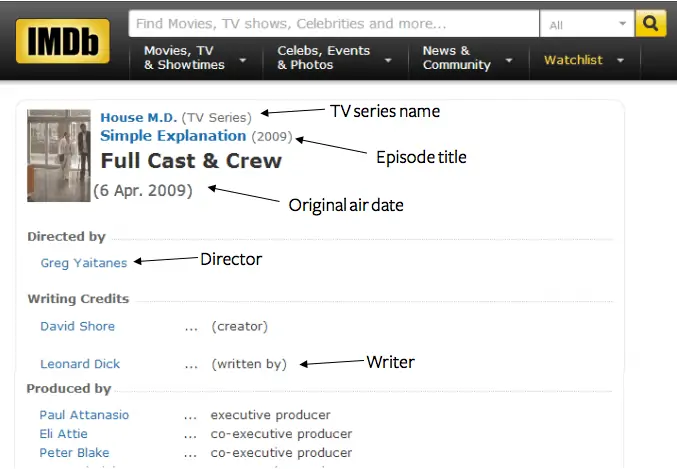
Image Source: www.easybib.com
Complete How To Cite A Tv Show In Chicago Style Guide
Citing a TV show in Chicago style is important for academic papers and other works. It lets readers find the exact show or episode you used. This guide will show you exactly how to do it.
When you use Chicago style, you pick one of two main ways to cite things. The first is the notes and bibliography style. You use footnotes or endnotes in your text and a list of sources at the end. The second is the author-date style. You put short notes in your text with the author’s last name and the date, and you have a reference list at the end. You need to pick one style and use it all the way through your paper.
Grasping the Basics of TV Citations
Citing a TV show is like citing other sources, but you use different details. You need information like the show name, the episode name, who made it, and when it first aired. The rules change a little depending on if you watched it live, on DVD, or on a streaming service like Netflix. The Chicago Manual of Style, especially the Chicago style 17th edition TV citation rules, gives clear guidance.
Whether you use notes and bibliography or author-date, you need to give readers enough information to find the show or episode you are talking about. This helps show where your ideas come from and lets others check your work.
Chicago Style Notes and Bibliography for TV
The notes and bibliography style is common in history, art, and literature papers. When you use a TV show, you add a note (footnote or endnote) the first time you mention it. You also add a full listing for it in your bibliography at the end of your paper.
Decoding the Footnote/Endnote Format
A Chicago style footnote TV show citation usually includes the episode title, the series title, the names of key people (like director or writer), the production company or network, the original air date, and possibly where you accessed it (like a streaming service).
Here is the basic structure for a note:
Episode Title,” Series Title, season number, episode number, directed by Director Name(s), written by Writer Name(s), aired Original Air Date (Network/Streaming Service, Year of Release), URL or Access Point (if applicable).
Let’s break this down.
- “Episode Title,”: Put the episode title in quotation marks.
- *Series Title*,: Write the series title in italics.
- season number, episode number,: Include the season and episode numbers if known and relevant. Use “season X, episode Y.”
- directed by Director Name(s),: Add director names. Use “directed by” before the names. If more than one, list them.
- written by Writer Name(s),: Add writer names. Use “written by” before the names. If more than one, list them.
- aired Original Air Date: Give the date the episode first aired.
- (Network/Streaming Service, Year of Release): Put the network that aired it or the streaming service you used in parentheses. Add the year it was released or the year you accessed it if different from the air date.
- URL or Access Point (if applicable): If you got it from a specific online source or service, you can add a URL or just the name of the service.
Remember, the first note gives all the details. Shorter notes can be used later if you cite the same episode again. A short note usually only has the series title and episode title or just the series title if you are talking about the show in general.
Examples of Footnotes/Endnotes
Here are some Chicago style footnote TV show examples:
Example 1: Citing a specific episode from a network broadcast
- “The One Where Everybody Finds Out,” Friends, season 5, episode 14, directed by Michael Lembeck, written by Alexa Junge, aired February 11, 1999 (NBC).
Example 2: Citing an episode watched on a streaming service
- “The Mandalore,” The Mandalorian, season 1, episode 3, directed by Deborah Chow, written by Jon Favreau, aired November 22, 2019 (Disney+).
Example 3: Citing an episode with no specific director/writer mentioned or needed
- “Pilot,” Breaking Bad, season 1, episode 1, aired January 20, 2008 (AMC/Netflix).
You can see the CMOS television episode reference changes slightly depending on the information you have and how you watched it. The key is to give enough detail for someone else to find it.
Constructing the Bibliography Entry
The bibliography entry TV show Chicago format is similar to the first note but has different punctuation and spacing. It goes in your full list of sources at the end of your paper, listed in alphabetical order by the series title.
Here is the basic structure for a bibliography entry:
Series Title. Episode Title, season number, episode number. Directed by Director Name(s). Written by Writer Name(s). Original Air Date. Network/Streaming Service, Year of Release. URL or Access Point (if applicable).
Notice the differences from the note:
- The Series Title comes first and is followed by a period.
- The Episode Title is followed by a period.
- Directed by and Written by sections are followed by periods.
- The Network/Streaming Service and Year of Release are followed by a period.
Examples of Bibliography Entries
Here are some bibliography entry TV show Chicago examples matching the footnotes above:
Example 1: Matching footnote 1
Friends. “The One Where Everybody Finds Out,” season 5, episode 14. Directed by Michael Lembeck. Written by Alexa Junge. Aired February 11, 1999. NBC.
Example 2: Matching footnote 2 (citing streaming service TV Chicago style)
The Mandalorian. “The Mandalore,” season 1, episode 3. Directed by Deborah Chow. Written by Jon Favreau. Aired November 22, 2019. Disney+, 2019.
Example 3: Matching footnote 3
Breaking Bad. “Pilot,” season 1, episode 1. Aired January 20, 2008. AMC/Netflix.
These examples show the Chicago style notes and bibliography TV format. It is important to be consistent. If you cite multiple episodes from the same series, you can list them separately or list the series as a whole and clarify in your notes which episode you mean. Citing streaming service TV Chicago style often means adding the service name and the year you watched it, especially if the original air date is different or hard to find.
Citing a Whole TV Series
Sometimes you talk about the whole series, not just one episode. In this case, your citation focuses on the series itself.
Note:
Series Title. Created by Creator Name(s). Production Company(s), Year(s) of Release. Streaming Service (if applicable).
Bibliography:
Series Title. Created by Creator Name(s). Production Company(s), Year(s) of Release. Streaming Service (if applicable).
Example Note (Whole Series):
- The West Wing. Created by Aaron Sorkin. Warner Bros. Television, 1999–2006. Netflix.
Example Bibliography (Whole Series):
West Wing, The. Created by Aaron Sorkin. Warner Bros. Television, 1999–2006. Netflix.
Notice how the bibliography entry lists the series title as “West Wing, The” for alphabetical order, even though the actual title starts with “The”.
Handling Specific Details
- Director/Writer: Include these if they are key to your point (e.g., you are discussing a specific director’s style). If not, you can leave them out, especially for a general mention of an episode or series. The Chicago manual of style TV episode example often includes these, but it is not always required if the show itself is the focus.
- Production Company/Network: Include the main production company or the network that originally aired it. For streaming originals, list the streaming service here.
- Original Air Date vs. Release Year: Use the original air date for a specific episode. For a series, use the range of years it aired or the year it was released on a platform if it is a streaming original.
- Streaming Services: When citing streaming service TV Chicago style, list the service name clearly. For citing Netflix show Chicago style, just write “Netflix.” Add the year you accessed it if it helps identify the version or if the original date is unclear.
Using these rules helps you build a correct Chicago style television citation format using the notes and bibliography system.
Chicago Style Author-Date for TV
The author-date style is often used in social sciences and sciences. It uses short notes in the text (author’s last name and date) and a full reference list at the end. While less common for media like TV shows, it can be adapted. This requires creating a kind of “author” for the show.
Fathoming the In-Text Citation
In the author-date style, you put a short note in parentheses right after you use information from the source. For a TV show, there isn’t a single “author” like a book. The Chicago Manual of Style suggests using the series title or the main creator’s name as the author stand-in. The “date” is usually the original air date or the year of release.
The basic in-text format is:
(Series Title or Creator Last Name Year)
Or, if citing a specific episode:
(Series Title Year, “Episode Title”)
Or (less common but possible):
(Director Last Name Year)
Let’s look at examples for TV series citation Chicago author-date style:
Example 1: Citing an episode using the series title and year
The show used humor to handle tough topics (Friends 1999, “The One Where Everybody Finds Out”).
Example 2: Citing an episode using the creator’s name and year
The creator’s style was clear from the first episode (Sorkin 1999, “Pilot”).
Example 3: Citing the whole series
The entire show ran for seven seasons (The West Wing 1999–2006).
Choose one way to represent the source (Series Title or Creator Name) and stick with it. Using the series title is often the clearest method for TV shows.
Building the Reference List Entry
The reference list in author-date style is like the bibliography in notes and bibliography style. It lists all your sources in alphabetical order by the “author” (which is usually the series title or creator’s name).
The basic structure for a reference list entry is:
Series Title or Creator Last Name, First Name. Year of Release. Series Title. Episode Title, season number, episode number. Directed by Director Name(s). Written by Writer Name(s). Original Air Date. Network/Streaming Service.
Notice the differences from the notes/bibliography bibliography format:
- The “author” element comes first (Series Title or Creator Name).
- The year comes right after the “author”.
- The series title is in italics.
- Punctuation is different (periods after main elements).
Examples of Reference List Entries
Here are some examples for the reference list in TV series citation Chicago author-date style:
Example 1: Matching in-text example 1 (using series title as author)
Friends. 1999–2004. Friends. “The One Where Everybody Finds Out,” season 5, episode 14. Directed by Michael Lembeck. Written by Alexa Junge. Aired February 11, 1999. NBC.
Self-correction: The year should be the series run for the main entry, or the episode year if only citing the episode. Let’s refine the structure for clarity in author-date.
Let’s adjust for better clarity, focusing on the episode as the main unit if that’s what you used.
Revised Basic Structure for Reference List Entry (Focus on Episode):
Series Title. Original Air Year. “Episode Title.” Season number, episode number. Series Title. Directed by Director Name(s). Written by Writer Name(s). Original Air Date. Network/Streaming Service.
Or, using creator/director as “author”:
Creator Last Name, First Name. Original Air Year. “Episode Title.” Season number, episode number. Series Title. Directed by Director Name(s). Written by Writer Name(s). Original Air Date. Network/Streaming Service.
This feels more aligned with typical author-date use where the entry starts with the person or main entity responsible and the date relevant to the specific item used.
Revised Examples for Reference List:
Example 1: Citing an episode using Series Title and Episode Year
Friends. 1999. “The One Where Everybody Finds Out.” Season 5, episode 14. Friends. Directed by Michael Lembeck. Written by Alexa Junge. Aired February 11, 1999. NBC.
Example 2: Citing an episode using Creator Name and Episode Year
Sorkin, Aaron. 1999. “Pilot.” Season 1, episode 1. The West Wing. Directed by Thomas Schlamme. Written by Aaron Sorkin. Aired September 22, 1999. NBC.
Example 3: Citing the Whole Series
West Wing, The. 1999–2006. The West Wing. Created by Aaron Sorkin. Warner Bros. Television.
This shows how the TV series citation Chicago author-date works. The key is the “author” element (Series Title or Creator) followed by the date. For citing streaming service TV Chicago style in author-date, you would add the service name at the end of the reference list entry, similar to notes and bibliography. For citing Netflix show Chicago style, just add “Netflix.”
Citing Streaming Service TV Chicago Style in Author-Date
When using author-date and citing a show on a service like Netflix or Hulu, you include this information in the reference list entry.
Example In-Text:
(Harling 2017, “Blind Man’s Bluff”)
Example Reference List:
Harling, Stephen Knight. 2017. “Blind Man’s Bluff.” Season 1, episode 2. Peaky Blinders. Directed by Anthony Byrne. Written by Stephen Knight. Aired October 19, 2017. BBC Two/Netflix.
This CMOS television episode reference in author-date includes the service name clearly. The year in the in-text citation and at the start of the reference entry usually refers to the original air date or the year of release if it’s a streaming original.
Deciphering Specific Scenarios and Details
Chicago style offers flexibility because TV information isn’t always easy to find or presented in a standard way. Here’s how to handle common situations, keeping the Chicago style 17th edition TV citation guidelines in mind.
What to Do When Information Is Missing
Sometimes you cannot find the director, writer, or even the exact original air date. Do not worry. Just include the information you can find.
If you cite an episode:
* Include the series title and episode title.
* Include season and episode numbers if available.
* Include the original air date if you can find it (a quick web search often helps).
* Include the network or streaming service you used.
* Leave out director or writer if you cannot find them.
Example (Notes – Missing Director/Writer):
- “The City of New York vs. Homer Simpson,” The Simpsons, season 9, episode 1, aired September 21, 1997 (Fox).
Example (Bibliography – Missing Director/Writer):
Simpsons, The. “The City of New York vs. Homer Simpson,” season 9, episode 1. Aired September 21, 1997. Fox.
Example (Author-Date Reference List – Missing Director/Writer):
Simpsons, The. 1997. “The City of New York vs. Homer Simpson.” Season 9, episode 1. The Simpsons. Aired September 21, 1997. Fox.
The goal is to give your reader enough detail to locate the episode using the most important information: the series name, episode name, and possibly season/episode number and date/source.
Citing a Show on DVD or Blu-ray
If you watched the show on physical media, include that information.
Note:
Series Title, season number, episode number, “Episode Title,” directed by Director Name, written by Writer Name, original air date (Network, Year of Release; DVD/Blu-ray Publisher, Year of DVD/Blu-ray Release).
Bibliography:
Series Title. Season number, episode number, “Episode Title.” Directed by Director Name. Written by Writer Name. Original Air Date. Network, Year of Release. DVD/Blu-ray Publisher, Year of DVD/Blu-ray Release.
Example Note (DVD):
- Fargo, season 1, episode 1, “The Crocodile’s Dilemma,” directed by Adam Bernstein, written by Noah Hawley, aired April 15, 2014 (FX, 2014; 20th Century Fox Home Entertainment, 2014).
Example Bibliography (DVD):
Fargo. Season 1, episode 1, “The Crocodile’s Dilemma.” Directed by Adam Bernstein. Written by Noah Hawley. Aired April 15, 2014. FX, 2014. 20th Century Fox Home Entertainment, 2014.
In author-date, the reference entry would include the DVD information at the end.
Citing Different Versions
Sometimes a show exists in different versions (e.g., original broadcast, director’s cut, remastered version on streaming). If the version matters to your argument, mention it in the citation or in your text. For instance, “In the director’s cut version of the episode…”
CMOS Television Episode Reference: Key Elements Summary
Here is a quick look at the main parts you often need for a Chicago style television citation format, relevant for both styles:
- Episode Title (in quotes)
- Series Title (in italics)
- Season and Episode Numbers
- Director Name(s) (optional but helpful)
- Writer Name(s) (optional but helpful)
- Original Air Date
- Network that aired it or service you watched it on
- Year of release/access
- Specific access point (like a URL or physical media info)
Using the Chicago manual of style TV episode example formats as a guide, gather as much of this information as you can.
Putting It All Together: Tables
Here are summary tables to help you see the format for citing a specific TV episode in both Chicago styles.
Table 1: Chicago Notes and Bibliography – Citing a Specific Episode
| Element | Note (First Use) Example | Bibliography Example |
|---|---|---|
| Episode Title | “Battle of the Bastards,” | “Battle of the Bastards.” |
| Series Title | Game of Thrones, | Game of Thrones. |
| Season/Episode | season 6, episode 9, | Season 6, episode 9. |
| Director | directed by Miguel Sapochnik, | Directed by Miguel Sapochnik. |
| Writer | written by David Benioff and D.B. Weiss, | Written by David Benioff and D.B. Weiss. |
| Original Air Date | aired June 19, 2016 | Aired June 19, 2016. |
| Network/Service/Year | (HBO, 2016). | HBO, 2016. |
| Full Citation (Note) | 7. “Battle of the Bastards,” Game of Thrones, season 6, episode 9, directed by Miguel Sapochnik, written by David Benioff and D.B. Weiss, aired June 19, 2016 (HBO, 2016). | N/A |
| Full Citation (Bib) | N/A | Game of Thrones. “Battle of the Bastards,” season 6, episode 9. Directed by Miguel Sapochnik. Written by David Benioff and D.B. Weiss. Aired June 19, 2016. HBO, 2016. |
| Short Note Example | 8. Game of Thrones, “Battle of the Bastards.” OR 9. Game of Thrones. | N/A |
Table 2: Chicago Author-Date – Citing a Specific Episode (Using Series Title as “Author”)
| Element | In-Text Citation Example | Reference List Example |
|---|---|---|
| “Author” + Date | (Game of Thrones 2016) or (Game of Thrones 2016, “Battle of the Bastards”) | Game of Thrones. 2016. |
| Episode Title | N/A (Often included in text or with page/time info if needed, or sometimes in the cite) | “Battle of the Bastards.” |
| Season/Episode | N/A (Often included in text if needed) | Season 6, episode 9. |
| Series Title (Italic) | N/A (Part of the “author” element or in text) | Game of Thrones. |
| Director | N/A | Directed by Miguel Sapochnik. |
| Writer | N/A | Written by David Benioff and D.B. Weiss. |
| Original Air Date | N/A | Aired June 19, 2016. |
| Network/Service | N/A | HBO. |
| Full Citation (In-Text) | The battle was epic (Game of Thrones 2016). OR The episode “Battle of the Bastards” was epic (Game of Thrones 2016). | N/A |
| Full Citation (Ref List) | N/A | Game of Thrones. 2016. “Battle of the Bastards.” Season 6, episode 9. Game of Thrones. Directed by Miguel Sapochnik. Written by David Benioff and D.B. Weiss. Aired June 19, 2016. HBO. |
These tables provide a quick reference for the core Chicago style television citation format.
Comprehending Differences Between Styles
The key difference between Chicago style notes and bibliography TV and TV series citation Chicago author-date lies in how you tell your reader where information comes from within the text.
- Notes and Bibliography: Uses numbered notes (footnotes or endnotes) that correspond to longer notes at the bottom of the page or end of the paper, and a full bibliography at the end. This style is good if you have many different types of sources or need to add extra comments in your notes.
- Author-Date: Uses short parenthetical notes in the text ([Author Last Name Year]) that point to a reference list at the end. This is good if you often refer to the author and date of publication and want a less cluttered look on the page bottom.
For citing a TV show episode (a CMOS television episode reference), the information you need is largely the same for both styles. It is just presented differently in the in-text note vs. footnote/endnote and in the bibliography vs. reference list. Citing streaming service TV Chicago style is possible in both systems; you just add the service name.
Frequently Asked Questions (FAQ)
How do I cite a TV show I watched on Netflix in Chicago style?
For citing Netflix show Chicago style, you follow the standard format for the style you are using (notes/bibliography or author-date). Include the episode title, series title, season/episode numbers (if applicable), original air date (if known), and list “Netflix” as the streaming service at the end of the citation.
What if a show does not have traditional seasons and episodes (like a documentary series or miniseries)?
If the show does not have clear season/episode numbers, you can leave them out. Cite the specific part you used by its title (if it has one) or just cite the series as a whole if you are referring to the entire program. Use the date it was released or aired.
Do I need to include the URL for a streaming service?
Generally, for major streaming services like Netflix, Hulu, Amazon Prime Video, or Disney+, you do not need to include a specific URL for the show’s page. Just naming the service is enough. If you are using a less common or potentially unstable online source, a URL might be helpful, but Chicago style prefers stable information over links that might break.
How do I cite a live TV broadcast?
Cite the episode title, series title, network, and the exact date and time you watched it, especially if it is news or a live event where the time matters.
How do I cite a specific quote from a TV show?
In your in-text note or parenthetical citation, after the basic show information, you can add a timestamp or a range of timestamps (e.g., 1:25:30 or 25:00-26:15) to point your reader to the exact moment of the quote. This is very helpful for Chicago style footnote TV show or author-date in-text citations.
Do I need to cite every single time I mention a show or episode?
No. Like other sources, you cite the first time you use information from a specific episode or when you refer to it directly. If you continue talking about the same episode in the same paragraph or section, you usually do not need a new note or citation unless you switch to a different source or reference a different episode. Use short notes in the notes/bibliography style for repeated citations.
By following these guidelines and examples, you can confidently create Chicago style television citation format entries for your academic work. Remember to be consistent in the style you choose and the details you include.