
Can you recharge your RV air conditioner yourself? Yes, you can. But it is not a simple task. It needs special tools and knowledge. Adding refrigerant to an RV AC system is something you do after you fix a leak. It is not a simple fill-up like adding gas to your car. This guide will tell you how to do it. We will talk about the steps, the tools, and the things you need to know. This way, you can decide if doing it yourself is right for you.
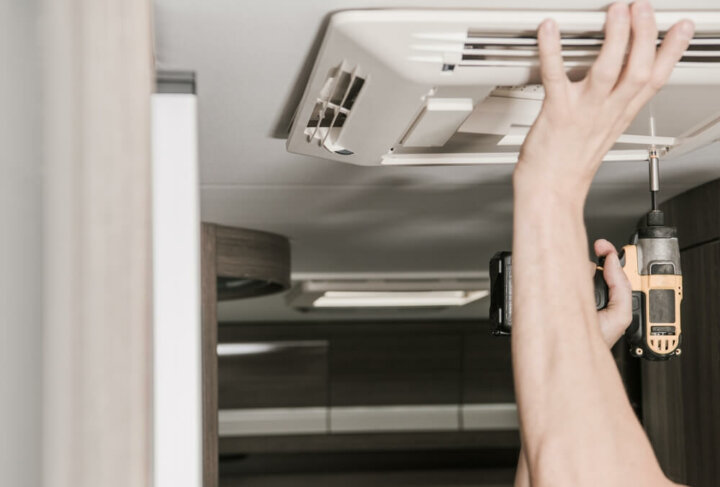
Image Source: www.jeffsetter.com
Why Your RV Air Conditioner Stops Making Cold Air
Imagine your RV is hot. You turn on the air conditioner. But the air is just not cold. Why does this happen? Many things can cause this. But one common reason is that the system does not have enough of the special liquid that makes air cold. This liquid is called refrigerant. People often call it “Freon.” But “Freon” is just a brand name. The real name is refrigerant.
When your AC does not have enough refrigerant, it cannot cool the air well. There are signs your RV AC might be low on this special liquid. These are called symptoms low RV AC refrigerant.
Some easy-to-spot signs are:
* The air coming out is not cold. It might be cool, but not cold like it should be.
* The AC runs and runs, but the RV stays warm. The system works hard but does not do its job.
* Sometimes, ice forms on the outside part of the AC unit. Or you might see ice on the pipes going to the unit. This happens because the low pressure makes parts get too cold.
* You might hear strange noises. Or the unit might cycle on and off too fast.
* You might see an oily spot near the AC unit. This is often where the refrigerant is leaking out. Refrigerant has oil in it.
If you see these symptoms low RV AC refrigerant, it often means your AC has a leak. AC systems are sealed tight. The refrigerant should not escape. If it is low, it leaked out. Adding more refrigerant without fixing the leak is like trying to fill a bucket that has a hole in it. You just waste the new refrigerant. This is why fixing the leak is the most important step.
Deciphering How Your RV AC Works
Let’s think about how your RV AC makes cold air. It’s like a tiny factory that moves heat. It takes heat from inside your RV and moves it outside. It uses the refrigerant to do this job.
The refrigerant goes around and around in a loop of pipes.
1. Inside, it sucks up heat from the air in your RV. When it sucks up heat, it turns from a liquid into a gas.
2. Then, a pump called a compressor pushes this gas outside.
3. Outside, the gas gives up the heat to the air outside. When it gives up heat, it turns back into a liquid.
4. The liquid goes back inside to start over.
This is a closed loop system. The refrigerant stays inside the pipes all the time. If the loop is broken, the refrigerant leaks out.
Knowing the right RV air conditioner refrigerant type is very important. Different AC systems use different types of refrigerant. Using the wrong type can damage your AC system. It can also be dangerous. Most newer RV AC units use a type called R-410A. Older ones might use R-22. But R-22 is bad for the environment and hard to find now. Some systems might use R-134a, like car ACs. You must check your RV AC unit’s sticker or its manual. It will tell you the exact RV air conditioner refrigerant type it needs. Make sure you get the right one. Never mix different types of refrigerant.
Is Doing It Yourself Right For You?
Fixing and recharging an RV AC is not for everyone. It takes time, patience, and the right tools. It also has some risks. Refrigerant is a chemical under pressure. It can cause frostbite if it touches your skin. The AC system runs on high voltage electricity. That can be very dangerous.
Before you try to add Freon RV air conditioner, ask yourself:
* Do I have the right tools? You need more than just a can of refrigerant. You need a special gauge set (RV AC manifold gauge set), a pump to pull a vacuum (RV AC vacuum system), and other items.
* Am I okay working with chemicals and electricity? Do I know how to be safe?
* Am I good at finding small leaks? RV AC leak repair can be tricky.
* Am I willing to spend money on tools I might only use once or twice?
* What is the cost to recharge RV AC DIY compared to paying a pro?
Think about the cost to recharge RV AC DIY. You need to buy tools like a vacuum pump, an RV AC manifold gauge set, a leak detector, safety gear, and the refrigerant itself. These tools can cost several hundred dollars. If you only need to fix your AC one time, paying a professional might be cheaper than buying all the tools. But if you plan to work on ACs often, buying the tools might be a good idea.
Hiring a pro to recharge your RV AC can cost anywhere from $200 to $500 or more. This price often includes finding and fixing a simple leak and adding the refrigerant. The cost to recharge RV AC DIY could be less if you already have the tools. But if you have to buy everything, it might cost more than paying a pro.
This work involves pressure. It involves chemicals. It involves electricity. If you are not careful, you can hurt yourself or damage your RV AC system more. If you are not comfortable with these things, it is better to call a professional.
Gathering Your Tools and Materials
If you decide to go forward, you need the right gear. Do not start without having everything ready. Here is a list of things you will likely need to add Freon RV air conditioner after fixing a leak:
- RV AC manifold gauge set: This is a must-have tool. It has two pressure gauges and several hoses. It lets you read the pressure in the system. It also lets you connect a vacuum pump and add refrigerant. You need a gauge set that works with the RV air conditioner refrigerant type you are using. Most sets work with common types like R-134a or R-410A.
- Vacuum pump: You need this to pull a vacuum (RV AC vacuum system). This pump sucks out all the air and moisture from the pipes. Air and moisture stop the refrigerant from working right. They can also create acid that damages the system. The pump needs to be strong enough for an AC system.
- Refrigerant: You need the correct RV air conditioner refrigerant type. Check your unit! Buy enough for the system. The unit or manual should say how much it needs.
- Refrigerant scale: It is best to add the exact amount of refrigerant the system needs. A scale helps you measure how much you add.
- Leak detector: This helps you find leaks. There are different kinds.
- Soap bubbles: You can make soapy water and put it on the pipes and connections. Bubbles will form where gas is leaking out. This is simple and cheap.
- Electronic leak detector: This is a tool that beeps when it finds refrigerant gas. It can find smaller leaks that bubbles might miss.
- UV dye kit: You add a special dye to the system. The dye leaks out with the refrigerant. You then use a UV light to see where the leak is. This needs the system to run for a bit.
- Safety glasses or goggles: Protect your eyes from liquid refrigerant or debris.
- Gloves: Protect your hands from frostbite from liquid refrigerant.
- Wrench set: To loosen and tighten connections.
- Valve core tool: To remove and put back the small valve cores in the RV AC service port fittings.
- Vacuum rated hoses: Make sure the hoses for your gauge set are made for pulling a vacuum.
- Piercing valve or service ports: Your RV AC system needs places to connect your tools. These are called RV AC service port fittings. They look like tire valve stems. Sometimes, RV AC units do not have these ports easily available. You might need to add a piercing valve. This valve pokes a small hole in a pipe to create a connection point. Using these requires care and they are often seen as a temporary solution or for recovery, not standard charging. It’s better if your system has proper RV AC service port fittings. Make sure you know where they are. Usually, there is a high side and a low side port. The low side is where you typically add refrigerant.
Make sure all your tools work with the RV air conditioner refrigerant type you have. For example, R-410A systems use different hose fittings than R-134a or R-22 systems. This stops you from mixing refrigerants by mistake.
Finding the Problem: The Leak
Remember, low refrigerant means there is a leak. You MUST find and fix the leak before adding more refrigerant. If you just add refrigerant, it will leak out again. Your AC will stop working soon, and you will waste money.
How do you find a leak?
1. Look and Listen: Sometimes you can hear a hissing sound where gas is escaping. You might see oily spots on pipes or fittings. Refrigerant oil often leaks out with the gas.
2. Soap Bubbles: Mix dish soap with water until it’s very soapy. Put this soapy water on all the joints, connections, and pipes you can reach. Turn the AC fan on (but not the compressor, if possible, or just watch closely if you can’t isolate). Watch for bubbles forming. Bubbles mean gas is pushing out there. This shows the leak spot. This is a simple method for RV AC leak repair finding.
3. Electronic Leak Detector: Turn on the AC compressor. Move the tip of the electronic leak detector slowly along the pipes, joints, and near components like the compressor or condenser. The detector will make a sound or light up when it finds refrigerant gas. This tool can find very small leaks.
4. UV Dye: If you added UV dye to the system before it lost charge, run the AC for some time (check the dye instructions). Then, use a UV light to look at the pipes and parts. The dye will glow brightly at the leak location. This is good for finding leaks that are hard to see or reach.
Check all parts of the system you can see: the lines going in and out of the AC unit on the roof, the connections, the compressor, and any parts under covers. Finding the leak is the first big step in RV AC leak repair.
Performing the RV AC Leak Repair
Once you find the leak, you have to fix it. How you fix it depends on where the leak is.
* Loose Fitting: If the leak is at a connection point between two pipes, try tightening the fitting with a wrench. Do not overtighten, as you could break the pipe or fitting.
* Bad Seal (O-ring): Many connections use rubber rings called O-rings to seal. These O-rings can get old, crack, or shrink. If the leak is at a fitting, take the fitting apart carefully (make sure there is no pressure in the system first!), replace the old O-ring with a new one of the correct size, and put the fitting back together.
* Hole in a Pipe: This is harder to fix. Small holes in copper pipes might be fixed by soldering. But this needs soldering skills and the right tools. Holes in aluminum pipes are even harder.
* Leak in a Component: If the leak is in the compressor, condenser, or evaporator coil (the part inside the RV), you usually cannot repair it easily. The whole part often needs to be replaced.
Fixing leaks can be simple like tightening a bolt or replacing a rubber ring. Or it can be hard, like needing to solder pipes or replace a main part. If the leak repair seems too hard or you cannot find the leak, this is a good time to stop and get professional help. A proper RV AC leak repair is key to a working AC.
Preparing the System: Vacuuming
After you fix the leak, you cannot just add refrigerant. You must first make sure there is no air or moisture left inside the pipes. You do this by pulling a vacuum. Using an RV AC vacuum system (which is a vacuum pump and your manifold gauge set) is very important.
Why pull a vacuum?
* Remove Air: Air stops the refrigerant from working right. It makes the system less efficient.
* Remove Moisture: Water inside the system is very bad. When the AC runs, water can mix with the refrigerant and create acid. This acid slowly eats away at the inside of the AC system, causing more leaks and damage. Pulling a vacuum makes water boil at a much lower temperature. The vacuum pump then sucks the water vapor out.
Here is how you use your RV AC manifold gauge set and vacuum pump to pull a vacuum:
1. Make sure the system is completely depressurized (no refrigerant or pressure inside). If you just fixed a leak, any remaining refrigerant should have escaped safely (it’s illegal to just vent it to the air).
2. Connect your RV AC manifold gauge set hoses. Usually, you connect the blue hose to the low-side RV AC service port and the red hose to the high-side RV AC service port. The yellow hose connects to your vacuum pump.
3. Make sure the valves on your RV AC manifold gauge set are open. This lets the vacuum pump pull air from the system.
4. Start the vacuum pump. It will start sucking air and moisture out of the system.
5. Watch the vacuum gauge on your manifold set (it might be part of the blue gauge or a separate gauge). It should show the pressure dropping into a vacuum. A good vacuum is typically below 500 microns (or around 29.92 inches of mercury vacuum). Your pump and gauge set instructions will tell you the target.
6. Let the pump run for a good amount of time. How long depends on the size of the system and the strength of your pump. It might be 30 minutes, an hour, or even longer. The goal is to get rid of all moisture. A sign you might be done is when the vacuum level stops dropping and stays steady for 15-20 minutes.
7. Close the valves on your RV AC manifold gauge set.
8. Turn off the vacuum pump.
9. Watch the vacuum gauge for 15-30 minutes. The vacuum level should NOT rise. If it rises, it means there is still a leak in the system you did not find or fix. You must find that leak and fix it before adding refrigerant. A rising vacuum means you wasted the last step and will damage the system if you add refrigerant. This leak check after vacuuming is very important.
Using an RV AC vacuum system correctly is a critical step. Do not skip it or rush it.
Adding the Correct Refrigerant
Now that your system has no leaks (you checked after vacuuming!) and no air or moisture, you can finally add Freon RV air conditioner (or the correct refrigerant). You will use your RV AC manifold gauge set for this step too.
Here is how you add Freon RV air conditioner:
1. Get your can or tank of the correct RV air conditioner refrigerant type.
2. Connect the yellow hose from your RV AC manifold gauge set to the refrigerant can/tank. Make sure the valves on the gauge set are still closed (from the vacuum test).
3. “Purge” the yellow hose. This means letting a tiny bit of refrigerant out of the can/tank for just a second before connecting it to the gauge set. This pushes any air out of the hose. Be careful not to let much refrigerant out.
4. Connect the yellow hose to the center port of your RV AC manifold gauge set.
5. Some refrigerants (like R-410A) must be added as a liquid. To do this, turn the refrigerant can/tank upside down. If you are using a large tank, you might need a special valve that pulls liquid. Other refrigerants (like R-134a) are often added as a gas into the low side. Check the instructions for your specific refrigerant.
6. Start your RV’s engine (if needed to power the AC) or connect to shore power. Turn the RV AC unit ON to its coldest setting and highest fan speed. The compressor should be running.
7. Slowly open the valve on the LOW side of your RV AC manifold gauge set (this is usually the blue valve). The vacuum in the system will start to pull the refrigerant in.
8. Watch the pressure on the LOW side gauge (recharge RV AC gauges). It will start to rise. You might also see the high side pressure rise.
9. Add refrigerant slowly. Let some go in, then close the valve for a moment. Watch the pressures. RV AC systems need a specific amount of refrigerant, measured by weight (ounces or pounds). This is why a scale is helpful.
10. Add the amount of refrigerant specified on your RV AC unit’s sticker or in its manual. Use the scale to measure how much you add. Adding too much refrigerant is just as bad as not having enough. It can damage the compressor.
11. As you add refrigerant, the air coming out of the AC vent inside your RV should start to get colder.
12. Monitor your recharge RV AC gauges. There are typical pressure ranges for the low side and high side based on the outside temperature and the type of refrigerant. You can find charts online or in AC service manuals. Use these charts as a guide, but adding the correct weight is usually the best method.
13. Once you have added the correct amount of refrigerant, close the valve on the LOW side of your RV AC manifold gauge set.
14. Close the valve on the refrigerant can/tank.
15. Turn off the RV AC unit.
16. Carefully disconnect the hoses from the RV AC service port fittings. A little bit of refrigerant might escape – this is normal, but be quick and wear your safety gear.
17. Put the caps back on the RV AC service port fittings to keep dirt out.
Using recharge RV AC gauges while adding refrigerant helps you see what is happening inside the system. It confirms that pressure is building. However, relying only on pressure readings without knowing the correct weight of refrigerant can lead to over or undercharging. Always try to add the exact weight specified by the manufacturer.
Checking Your Work
After you have added the refrigerant, turn the RV AC unit back on.
* Is the air coming out cold now?
* Does it feel as cold as you remember it being when it worked right?
* Let it run for a while. Does it keep producing cold air?
* Listen to the unit. Does it sound like it is running smoothly?
You can also reconnect your RV AC manifold gauge set (carefully!) while the system is running to check the pressures. Compare the running pressures to the charts for your specific refrigerant and the current outside temperature. The pressures should be within the normal range. This confirms the system is running correctly with the right amount of refrigerant. If the pressures are still low, you might not have added enough refrigerant, or you still have a small leak. If the pressures are too high, you might have added too much refrigerant, or there is another problem like a blocked airflow or a bad fan.
Safety First!
Working with RV AC systems is not without risk. Always put safety first.
* Electricity: RV AC units run on high voltage (120V or 240V AC). Make sure the RV is unplugged from shore power and the generator is off before you touch any wires or open the unit cover. Turn off the circuit breaker for the AC unit.
* Pressure: Refrigerant is under high pressure, especially on the high side when the system is running. Never disconnect hoses or open parts of the system when it is under pressure. Use your RV AC manifold gauge set to check the pressure first.
* Chemicals: Refrigerant is very cold as a liquid. If it touches your skin or eyes, it can cause severe frostbite. Always wear safety glasses or goggles and gloves when handling refrigerant or connecting/disconnecting hoses.
* Ventilation: Work in a well-aired area. Refrigerant gas is heavier than air. In a closed space, it can push out oxygen, which can be dangerous to breathe.
Follow all safety instructions that come with your tools and the refrigerant.
When to Call a Professional
Even with this guide, recharging an RV AC might be too much for some. It is wise to know when to stop and get help from an expert. Call a pro if:
* You cannot find the leak. Some leaks are very small or hidden.
* The leak requires complex RV AC leak repair, like soldering pipes or replacing a major component.
* You do not have the necessary tools (like a vacuum pump or the correct RV AC manifold gauge set) and buying them is too expensive for a one-time fix.
* You pull a vacuum, and the vacuum level rises quickly, meaning there is a big leak you cannot find or fix.
* You add Freon RV air conditioner (refrigerant), but the AC still does not get cold, or the pressures on your recharge RV AC gauges do not look right. This might mean you have a problem other than low refrigerant, like a bad compressor, a blocked pipe, or an electrical issue.
* You are not comfortable working with the pressure, chemicals, or electricity involved.
A professional RV AC technician has the right tools, training, and experience to diagnose and fix complex problems safely and correctly.
Cost Comparison: DIY vs. Pro
Let’s look at the money side of things. What is the cost to recharge RV AC DIY compared to paying a pro?
Cost to Recharge RV AC DIY (Initial Investment):
* RV AC manifold gauge set: $50 – $200
* Vacuum pump: $100 – $300
* Refrigerant (correct type): $20 – $50 per can/small tank
* Leak detector (electronic or UV kit): $30 – $200+
* Safety gear (glasses, gloves): $10 – $30
* Other tools (wrenches, valve core tool): $20 – $50
* Total DIY Initial Tool Cost: ~$230 – $830+ (This is if you buy everything new)
* Cost per Recharge (after buying tools): $20 – $50 (just the refrigerant)
Cost to Recharge RV AC by Professional:
* Service call fee: $100 – $200
* Hourly labor rate: $100 – $150 per hour
* Refrigerant cost: $50 – $150 (they charge more per pound)
* Leak detection and repair time/parts: Can add $100 – $500+ depending on the leak.
* Total Professional Cost: ~$250 – $800+ (This can be much higher for complex repairs)
As you can see, the first time you do it yourself, the cost to recharge RV AC DIY might be higher than paying a pro because you have to buy the tools. But if you need to do it again, or you work on other AC systems (like car ACs if your tools are compatible), the cost per recharge becomes very low.
If the problem is just a simple low charge from a tiny, hard-to-find leak that maybe sealed itself, a pro might just add refrigerant after a quick check. This could be on the lower end of their cost scale. But if they have to spend hours finding a leak, vacuuming, and recharging, the price goes up quickly.
Deciding based on cost depends on how often you think you will need these tools and your comfort level with the work.
Summary: Getting Your RV Cold Again
Getting your RV air conditioner to blow cold air again after it stops can be done. If the problem is low refrigerant, you can recharge it yourself. But it is not a quick or easy job.
Here are the main steps:
1. See the symptoms low RV AC refrigerant (like not getting cold).
2. Know that low refrigerant means a leak.
3. Find the correct RV air conditioner refrigerant type for your unit.
4. Gather all the right tools, including an RV AC manifold gauge set, a vacuum pump for the RV AC vacuum system, refrigerant, and leak detection tools.
5. Find the leak (RV AC leak repair). This might need soapy water or a special detector.
6. Fix the leak. This is a must!
7. Pull a vacuum on the system (RV AC vacuum system) using your RV AC manifold gauge set and vacuum pump. This removes air and moisture. Check that the vacuum holds.
8. Add Freon RV air conditioner (the correct refrigerant) into the system using your RV AC manifold gauge set (recharge RV AC gauges) and a scale to measure the amount.
9. Check that the AC is now blowing cold air.
10. Always put safety first during every step.
The cost to recharge RV AC DIY involves buying tools that can be expensive at first. Paying a pro might be cheaper for one job, but doing it yourself can save money over time if you use the tools often.
Remember, if any step seems too hard or risky, it is always okay to call a professional RV technician. They have the knowledge and tools to fix your AC safely and correctly. But for those willing to learn and invest in tools, recharging your RV AC yourself is possible.
Frequently Asked Questions (FAQ)
Q: What kind of refrigerant does my RV AC use?
A: You must check the sticker on your RV AC unit, usually on the side or under a cover. It will tell you the specific RV air conditioner refrigerant type, like R-410A or R-134a. Using the wrong type will damage the system.
Q: Can I just add a can of refrigerant from the auto parts store?
A: Maybe, but it is not recommended and likely won’t fix your problem long-term. Car AC uses R-134a, while most RV ACs use R-410A. They are different. Also, just adding refrigerant does not fix the leak that caused it to be low. And you need special tools (RV AC manifold gauge set, vacuum pump) to do the job right after a leak repair. Auto parts store cans often have sealants which can cause problems in RV AC systems.
Q: Why do I need an RV AC vacuum system?
A: You need to pull a vacuum to remove all air and moisture from the AC pipes after they have been open (due to a leak or repair). Air makes the AC work poorly. Moisture creates acid that damages the system over time. A vacuum pump is needed for this critical step.
Q: Where are the RV AC service port fittings?
A: The RV AC service port fittings (where you connect your gauges/hoses) are usually small metal ports with caps that look like tire valve caps. They are typically located on the refrigerant lines near the compressor or on the AC unit itself. There is usually a low-side port and a high-side port. Check your RV AC manual or look closely at the pipes.
Q: How much does it cost to just add refrigerant if there’s no leak?
A: If there is truly no leak (which is very rare if the refrigerant is low), a pro might charge less, perhaps $150-$300, for just hooking up gauges and adding some refrigerant. However, they will likely still want to check for leaks because low refrigerant almost always means a leak. The cost to recharge RV AC DIY (after buying tools) for just the refrigerant is maybe $20-$50. But again, low charge almost always means a leak needs fixing first.
Q: My RV air conditioner not cooling, is it always low on refrigerant?
A: Not always. While low refrigerant is a common cause and shows symptoms low RV AC refrigerant, other issues can stop your RV air conditioner not cooling. These include a bad fan motor (inside or outside), a dirty air filter, blocked airflow over the coils (inside or outside), a bad thermostat, or an electrical problem with the compressor or controls. Always check simple things like filters and airflow first.