
Is your camper’s air conditioner not blowing cold air like it used to? You might wonder if it needs more “freon” (which is a common name for the special cooling stuff called refrigerant). Can you just add it yourself, like you might with a car? Often, no. Most camper air conditioners are sealed systems, made so you cannot easily add more refrigerant yourself. This job usually needs special tools and training. We will look at why your AC might not be cool and what steps are involved in recharging it, even if it’s often a job for a pro.
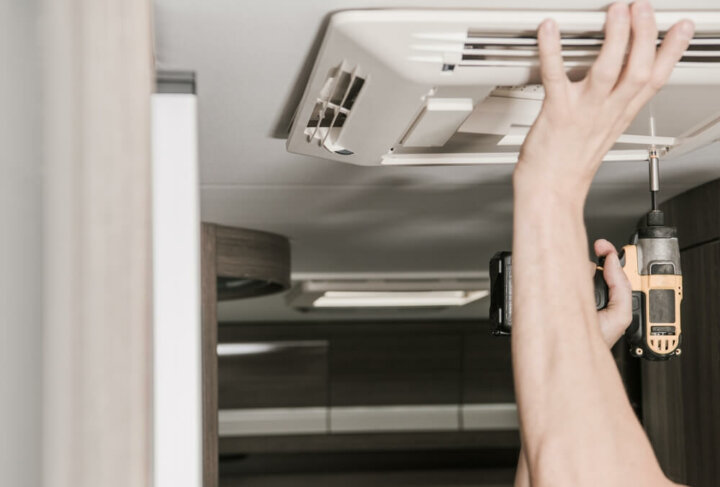
Image Source: www.jeffsetter.com
Grasping How Your Camper AC Makes Cold Air
Your camper’s air conditioner works by moving heat. It takes heat from inside your camper and puts it outside. It uses a special liquid or gas called refrigerant to do this job.
Here is a simple idea of how it works:
- The refrigerant starts as a cool, low-pressure liquid.
- It flows through coils inside your camper. Warm air from inside blows over these coils.
- The liquid refrigerant gets warm and turns into a gas. As it changes state, it pulls heat out of the air inside your camper.
- This warm gas goes to a pump outside called a compressor. The compressor squeezes the gas, making it hot and high-pressure.
- The hot, high-pressure gas flows through coils outside your camper. A fan blows outside air over these coils.
- The hot gas cools down and turns back into a liquid, releasing the heat to the outside air.
- The liquid then goes through a small valve that lowers its pressure, making it cool again.
- The cool liquid goes back inside to start the process over.
This cycle keeps going, moving heat from inside to outside, making your camper cool.
Why Your AC Isn’t Cold
When your camper’s air conditioner does not cool well, the first thought might be that it needs more refrigerant. While low refrigerant is one reason, it is not the only one. And if the refrigerant is low, it usually means there is a leak. Refrigerant does not just “get used up.”
Let’s look at common Symptoms of low freon in camper AC (meaning low refrigerant) and other things that cause poor cooling.
Symptoms of Low Refrigerant
- Air is cool, but not cold: The air coming out feels a bit cool but does not get your camper truly cold, even when running a long time.
- Ice on coils: You might see ice building up on the indoor or outdoor coils. This happens because the low pressure from low refrigerant makes parts of the system too cold.
- Compressor runs constantly: The AC runs and runs, trying to cool, but never reaches the temperature you set.
- Strange sounds: Sometimes, low refrigerant can cause odd noises, though this is less common than other symptoms.
- Lower than normal pressure readings: If you were to check the system pressure (which needs special tools), the numbers would be low.
Other Reasons Your AC Isn’t Cooling
- Dirty filters: A clogged air filter stops air from flowing well over the indoor coils. This makes the system work harder and cool less.
- Dirty coils: Both the indoor and outdoor coils can get covered in dirt, dust, and grime. Dirty coils cannot transfer heat well. This is a very common reason for bad cooling. Cleaning coils is often the first step in Troubleshooting RV air conditioner not cooling.
- Fan problems: If the fans (inside or outside) are not running or running slowly, air cannot move over the coils properly.
- Electrical issues: Problems with power, the thermostat, capacitors, or wiring can stop the AC from working right.
- Compressor problems: The compressor is the heart of the system. If it fails or runs poorly, the AC cannot cool.
- Air leaks: Cold air might be escaping through gaps around the AC unit or seals.
If your AC is not cooling, always check the simple things first: filters, clean coils, and make sure it has power. These are easy steps in Troubleshooting RV air conditioner not cooling. If those checks do not fix it, low refrigerant might be the problem, but finding and fixing the leak is key before adding more.
Comprehending Camper AC Recharge
What does it mean to “recharge” a camper AC? It means adding more refrigerant to the system. This is only needed if some refrigerant has leaked out.
As mentioned earlier, most RV rooftop AC units are made as sealed systems at the factory. They are filled with the right amount of refrigerant and sealed shut. They do not have simple ports (like the valves on car ACs) where you can easily connect gauges or Add freon to RV air conditioner.
Why DIY Recharge is Difficult (Often Impossible)
- No Service Ports: The biggest hurdle is that most RV AC units do not have built-in service ports. To Add freon to RV air conditioner, a service port usually needs to be added by a trained person. This involves tapping into the sealed lines.
- Special Tools: You need specific tools like an RV AC manifold gauge set to check system pressures safely, a Vacuum pump for camper air conditioner to pull out air and moisture (very important!), and possibly a recovery machine to remove old refrigerant without letting it into the air (which is bad for the environment and often illegal).
- Finding Leaks: If refrigerant is low, there is a leak. You must find and fix the leak before adding more refrigerant. Camper air conditioner leak detection needs special tools like electronic leak detectors or UV dye kits (which require adding UV dye to the system, another pro job).
- Knowing the Refrigerant Type: Different AC systems use different Types of RV AC refrigerant. You must know exactly which type your unit uses (like R-22, R-410A, or others). Mixing types can damage the system. Many older RV ACs use R-22, which is being phased out and is harder for people to buy now.
- Knowing the Right Amount: You need to know How much refrigerant RV AC unit needs. This exact amount is critical. Too little means poor cooling; too much can damage the compressor. This info is often only found on a label on the unit or in the manual, and you need a way to measure the amount added accurately (like a charging scale).
- Safety and Rules: Refrigerants are chemicals that can cause frostbite if they touch your skin. Some are also linked to environmental rules about venting them into the air. Handling them safely needs knowledge.
Because of these points, using a simple DIY camper AC recharge kit (like those sold for cars) is usually not possible or advisable for a camper rooftop AC. Most RV AC units need RV rooftop AC service by a trained AC technician who has the right tools, knowledge, and certifications.
However, if you are curious about the process or want to understand what a professional would do, we can look at the steps involved if the system had service ports and you had the correct tools and knowledge.
Steps Involved in Recharging (Requires Specific Tools and System Access)
Again, remember that for most RV ACs, these steps would be done by a professional. They involve skills and tools beyond what is typically found in a DIY camper AC recharge kit.
Step 1: Check the System and Find the Leak
Before adding any refrigerant, you must find and fix any leaks. If you just Add freon to RV air conditioner without fixing the leak, it will just leak out again.
Methods for Camper air conditioner leak detection:
- Soap Bubbles: Apply a mix of soap and water to likely leak spots (joints, connections). Bubbles will form if refrigerant is escaping. This only works for larger leaks that are easy to see and reach.
- Electronic Leak Detector: A tool that sniffs the air for traces of refrigerant. This is more effective for finding small leaks.
- UV Dye: A special dye can be added to the system (requires opening the system, another pro job). It mixes with the refrigerant. After the AC runs, you use a UV light and special glasses to look for glowing spots where the dye (and refrigerant) has leaked out.
Finding the leak often means getting access to parts of the system that might be hard to reach or see on the roof unit.
Step 2: Fix the Leak
Once the leak is found, it must be properly fixed. This might mean tightening a fitting, replacing a valve, or repairing a cracked line or coil. Repairing AC lines or coils often needs special skills like brazing (a type of welding).
Step 3: Prepare the System (Evacuation)
After fixing a leak and opening the system, or if the system was empty due to a leak, it is full of air and moisture. This air and moisture must be removed. If not, they will mix with the refrigerant, create acids that damage the system parts, and stop the AC from cooling properly.
This is done using a Vacuum pump for camper air conditioner.
- Connect the RV AC manifold gauge set to the service ports (if they exist or were added).
- Connect the vacuum pump to the center hose of the manifold gauge set.
- Open the valves on the manifold gauges to the system and start the vacuum pump.
- The pump pulls a deep vacuum, removing air and boiling off moisture inside the system.
- This process takes time (often 30-60 minutes or more, depending on system size and pump strength) and needs to reach a very low pressure (measured in microns) to ensure all moisture is gone. A gauge called a micron gauge is needed to check this properly.
- Once the target vacuum is reached, close the manifold valves and turn off the pump. The system should hold this vacuum for a period (at least 15-30 minutes). If the vacuum rises, there is still a leak that was not found or fixed.
This evacuation step is vital and cannot be skipped or rushed.
Step 4: Determine Refrigerant Needs
Before adding refrigerant, you need to know:
- What type of refrigerant: Check the unit label or manual for the specific Types of RV AC refrigerant it uses (e.g., R-22, R-410A, etc.). Using the wrong type can ruin the system.
- How much refrigerant: The exact amount (How much refrigerant RV AC needs) is often listed on a sticker on the unit in ounces or pounds. Adding the wrong amount is harmful. Adding by weight using a charging scale is the most accurate way. Simply adding until pressures look “right” on gauges is not accurate and can lead to problems.
Step 5: Add Refrigerant
This step involves connecting the refrigerant container to the system using the manifold gauge set and a charging hose. The process differs slightly depending on the refrigerant type (some are added as liquid, some as gas, some as a mix).
- Make sure the vacuum is holding after Step 3.
- Connect the center hose of the manifold gauge set to the refrigerant container.
- Purge the air from the charging hose (a small, but important step).
- Open the valves on the manifold gauges in the correct way to let refrigerant flow into the system.
- If adding a specific weight, use a charging scale under the refrigerant container and watch the scale.
- Monitor the system pressures on the RV AC manifold gauge set as you Add freon to RV air conditioner.
- Allow the system to run and stabilize. Check pressures and cooling performance.
Adding the correct How much refrigerant RV AC needs is critical. It’s not a matter of just filling it up until it’s cold.
Step 6: Disconnect Tools and Test
Once the correct amount of refrigerant is added and the system is cooling properly with stable pressures, disconnect the manifold gauge set safely. This needs to be done quickly to avoid letting air into the system or releasing too much refrigerant. Test the AC for proper cooling.
Alternatives to DIY Recharge
Given how complex and often impossible DIY recharging is for sealed RV AC units, what should you do if your camper is not cooling?
-
Start with Easy Checks:
- Check and clean or replace the air filter (inside the camper).
- Clean the indoor and outdoor coils thoroughly. Use a coil cleaner spray and water according to product directions. Make sure the power is off first! This is often the fix for Troubleshooting RV air conditioner not cooling.
- Check the thermostat settings and make sure it’s working right.
- Listen to the unit. Do the fans run? Does the compressor start?
- Check fuses and breakers in your RV’s power panel.
-
Address Airflow Issues: Make sure vents are open and not blocked. Check that the fan settings are correct.
-
Inspect Visually: Look for obvious damage, loose wires (with power off!), or large amounts of ice buildup.
-
Call a Professional: If simple cleaning and checks do not work, the best step is to call a qualified RV RV rooftop AC service technician.
A professional technician has:
- The tools to safely recover any remaining refrigerant.
- The equipment for accurate Camper air conditioner leak detection.
- The skills to repair leaks (like brazing).
- The Vacuum pump for camper air conditioner and micron gauge needed for proper evacuation.
- The RV AC manifold gauge set and charging scale to add the correct Types of RV AC refrigerant in the exact How much refrigerant RV AC needs.
- Knowledge of electrical components and Troubleshooting RV air conditioner not cooling.
They can properly diagnose if the issue is low refrigerant, a bad compressor, a faulty capacitor, or something else entirely. They can then fix the problem correctly and safely, following all rules about handling refrigerants.
While a DIY camper AC recharge kit might seem tempting, it is usually not made for RV AC units, and trying to force refrigerant into a system not designed for it, or doing so without proper steps like leak repair and evacuation, will likely cause more damage or simply not fix the problem.
Keeping Your AC Healthy
Simple, regular care can help your camper AC run better and perhaps avoid future problems that might make you think about needing to Add freon to RV air conditioner.
- Clean or change filters: Do this often, especially if you use your AC a lot.
- Clean the coils: Do this yearly, or more if you camp in dusty or dirty places. Make sure to clean both the indoor and outdoor coils. You can often access the outdoor coil from the roof and the indoor coil by taking off the cover inside.
- Check the seals: Make sure the seal between the AC unit and the roof is good to stop air leaks and water leaks.
- Clear debris: Keep leaves, dirt, and other stuff off the top of the AC unit.
- Check power supply: Make sure you have enough power (amperage) for the AC to run correctly, especially when starting up. Using a power surge protector is also wise.
Taking care of your unit helps prevent stress on the parts and keeps the refrigerant working well inside its sealed system.
Frequently Asked Questions (FAQ)
Is it normal for camper AC refrigerant to run out?
No. The refrigerant in a sealed system should last the life of the unit. If it is low, there is a leak somewhere in the system.
Can I use car AC refrigerant in my camper AC?
Almost certainly not. Car ACs typically use R-134a refrigerant (older cars used R-12), while camper ACs usually use different Types of RV AC refrigerant, such as R-22 (older units) or R-410A (newer units). These refrigerants are not the same and cannot be mixed. Using the wrong type will damage the system.
How can I tell if my camper AC unit uses R-22 or R-410A?
Look for a label on the AC unit itself (often on the side or under the top cover). The label should list the refrigerant type and the required charge amount (How much refrigerant RV AC needs). If you cannot find a label, check your owner’s manual or search online for the specific model number of your AC unit.
How much does RV rooftop AC service cost to recharge the system?
The cost varies a lot based on where you are, the service company, and what work is needed (finding and fixing the leak is often the most time-consuming part). Simply adding refrigerant is usually a smaller part of the bill compared to the leak detection, repair, evacuation, and testing steps. Expect costs potentially in the hundreds of dollars.
Can a small leak be ignored?
No. A small leak will become a large leak, and the refrigerant will continue to escape. As the refrigerant level drops, the AC will cool less and less. Running a system with low refrigerant can also cause damage to the compressor, leading to a much more expensive repair or the need to replace the whole unit. Camper air conditioner leak detection and repair are essential before adding refrigerant.
What is that noise I hear on my RV AC unit?
Common noises include the fan running, the compressor starting or running (a deeper hum), and sometimes water dripping (normal condensation). Gurgling, hissing, or clicking noises could point to problems, possibly related to refrigerant levels or other internal issues. Troubleshooting RV air conditioner not cooling often includes listening carefully to the unit.
Wrapping Up
While learning How To Recharge Camper Air Conditioner DIY Step-by-Step might seem like a good way to save money, the reality for most modern RV rooftop AC units is that DIY recharging is very difficult, often impossible, and can be unsafe or cause more damage if done wrong.
Most RV ACs are sealed systems without easy access points. Properly recharging requires special tools like an RV AC manifold gauge set, a Vacuum pump for camper air conditioner, and accurate methods for Camper air conditioner leak detection and knowing How much refrigerant RV AC needs of the correct Types of RV AC refrigerant. Trying to use a simple DIY camper AC recharge kit meant for cars will not work for most RV units.
If your camper AC is not cooling, start with simple maintenance like cleaning filters and coils. If the problem is more serious, like a suspected refrigerant leak, the best and safest path is usually to contact a professional for RV rooftop AC service. They have the knowledge, tools, and legal ability to handle refrigerants and properly Troubleshooting RV air conditioner not cooling issues. They can correctly Add freon to RV air conditioner (the right type and amount) after finding and fixing any leaks, getting your camper cool again safely and effectively.