
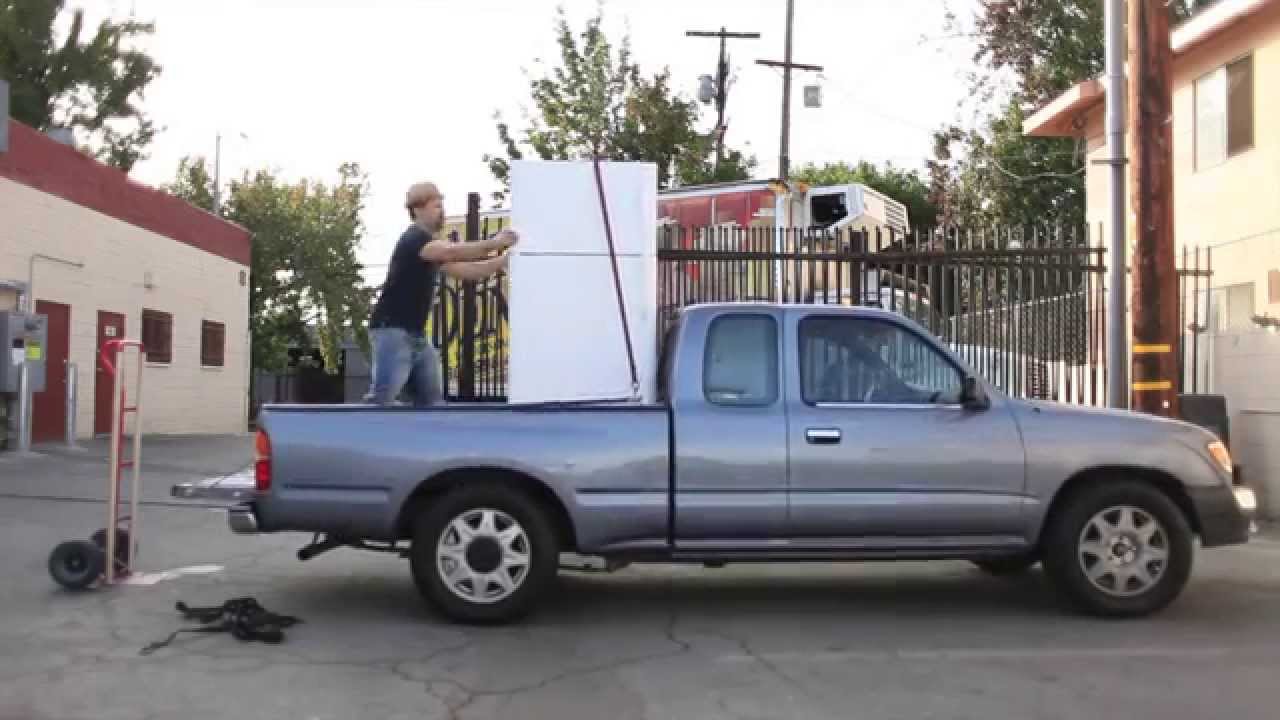
Image Source: i.ytimg.com
Learn How To Transport A Fridge In A Pickup Truck Safely
Moving a fridge in a pickup truck is a big job, but you can do it safely with the right steps. This guide will show you how to prepare the fridge, get it into the truck, tie it down, and make sure it stays safe during the trip. Knowing how to secure fridge in truck bed properly is key to a safe move. Many people wonder if they should move refrigerator upright truck or if they can transport fridge laying down. While upright is best, sometimes laying it down is necessary, and we’ll cover how to do that too. Using the right straps for moving fridge is also very important. Let’s get into the details so you can move your fridge without problems.
Readying the Fridge for Travel
Before you even think about lifting, you need to get the fridge ready. This part is important for keeping the fridge clean and preventing damage.
Empty and Clean the Inside
Take everything out of the fridge and freezer. Food, shelves, drawers – remove it all. Clean the inside well. Any spills or smells can get worse during the move. Use a simple cleaner or just soap and water. Dry the inside completely to stop mold or bad smells.
Defrost the Freezer
If your freezer has ice buildup, you need to defrost it. This can take hours, maybe even a day. Put towels inside and on the floor to catch the water. Ice can melt in the truck and make a mess. It can also add extra weight.
Take Out or Secure Loose Parts
Shelves, drawers, and bins inside the fridge can bounce around during the move. They can break or scratch the inside walls. You have two choices:
* Take them out and wrap them in moving blankets refrigerator or bubble wrap. Pack them in a box separately.
* If you can’t take them out, secure them tightly inside. Use packing tape or stretch wrap. Make sure they cannot move at all.
Secure the Doors
The doors must stay shut. If a door swings open during loading or moving, it can get damaged. It could also hit someone or something.
* Use strong packing tape to tape the doors shut. Wrap the tape around the whole fridge side to side.
* Be careful with the tape you use. Some tape can pull off the finish. Test a small spot first. Blue painter’s tape is usually safer for finishes, but you might need several layers or stronger tape over it for security.
* Do NOT tape over door seals (the rubber edge). This can damage them.
* Tape handles to the door if they stick out a lot.
Disconnect Power and Water Lines
Unplug the fridge. Wrap the power cord neatly. You can tape it to the back of the fridge so it’s not in the way.
If your fridge has an ice maker or water dispenser, disconnect the water line. Make sure all water is drained out. There’s usually a valve behind the fridge or under the sink that you turn off first. You don’t want water leaking everywhere.
Grasping the Loading Process
Getting the fridge into the truck bed is the hardest physical part. It often takes more than one person. Knowing how to handle the loading refrigerator into truck safely is vital.
Gather Your Team
A fridge is heavy and hard to lift. Do not try to move a large refrigerator by yourself. You will need at least one other strong person, possibly two. Plan who will lift where and who will guide.
Use the Right Tools
Moving a fridge without help and tools is very risky.
* Hand truck for moving fridge: This is almost a must-have. Use a heavy-duty appliance dolly. These dollies have straps to secure the fridge and sometimes have stair climbers or extra-large wheels for rough ground.
* Ramp: A sturdy loading ramp is essential for getting the fridge from the ground level up to the truck bed height. Make sure the ramp can hold the weight of the fridge and the people pushing it. It should be wide enough for the fridge and hand truck. The ramp must be secured to the truck so it doesn’t slip.
The Loading Steps
- Position the Dolly: Tilt the fridge back slightly. Slide the hand truck plate under the front edge. Push the dolly forward until it’s securely under the fridge.
- Secure the Fridge to the Dolly: Use the built-in strap on the appliance dolly to tie the fridge to the dolly frame. Make it tight so the fridge doesn’t shift on the dolly.
- Tilt and Balance: Have your helpers hold the fridge steady. Slowly tilt the dolly and fridge back until the weight balances over the dolly wheels. One person holds the dolly handle, keeping the weight balanced.
- Move Towards the Truck: Carefully roll the dolly towards the truck bed. Make sure the ramp is securely attached to the truck.
- Push Up the Ramp: This is where teamwork is key.
- One person holds the dolly handle at the back, guiding and pushing.
- Other person(s) push the fridge or dolly from the front or sides.
- Walk slowly and in step. Do not rush.
- Keep the fridge tilted back slightly to clear the lip of the truck bed.
- Make sure the ramp stays steady.
- Get into the Truck Bed: Once the dolly reaches the top of the ramp, carefully roll it onto the truck bed floor. Be mindful of the step up from the ramp to the truck bed.
Figuring Out the Moving Position
This is a big question: Should you move refrigerator upright truck or transport fridge laying down?
The Ideal: Upright is Best
Appliance makers nearly always say to move refrigerator upright truck. Why?
* Compressor Oil: Refrigerators have a compressor with oil inside. When the fridge is upright, the oil stays where it’s supposed to be.
* Internal Parts: Parts inside, like coils and lines, are designed to handle vibrations when the fridge is standing.
* Stability: A tall, heavy item is most stable standing on its base.
If you can fit the fridge standing up in your truck bed, this is the safest way for the fridge itself.
When Laying Down is Needed
Sometimes, a fridge is too tall to stand up in a truck, especially if there’s a rack or cover. If you must transport fridge laying down, here’s how to do it right and why:
* Lay it on its Side: Never lay a fridge on its back or front. The back has exposed components (like the condenser coils and compressor) that can be easily crushed or damaged. Laying it on the front can damage the door and hinges. Always lay it on one of its sides.
* Why the Side? Laying it on its side is better because the compressor is often sprung to handle movement in that direction better than front/back. Also, this position helps control how the compressor oil might move.
* Prepare the Truck Bed: Clear the truck bed of any debris. Put down moving blankets refrigerator or cardboard to cushion the fridge.
* Careful Lowering: Use the ramp and your helpers to carefully lower the fridge onto its side in the truck bed. Do not drop it.
* Support the Weight: Make sure the side it’s laying on is sturdy and can handle the weight. Some fridges have handles or parts on the side; try to avoid resting the full weight on these if possible.
Even when laying it on its side, there’s a risk of oil moving into parts of the cooling system where it shouldn’t be. This is why letting the fridge sit upright after moving is so important.
Deciphering How to Secure the Load
Once the fridge is in the truck bed, whether upright or on its side, you must secure fridge in truck bed. This stops it from sliding, tipping, or falling out. This is not optional; it’s critical for safety.
Anchor Points in the Truck Bed
Most pickup trucks have tie-down points or rings in the corners of the bed. Use these. They are designed to hold heavy loads.
The Right Straps
Do not use old rope or weak bungee cords. You need strong straps for moving fridge.
* Ratchet Straps: These are the best choice. They have a ratcheting mechanism that lets you tighten the strap very, very securely. They apply constant tension, keeping the load from shifting. Get straps rated for the weight of your fridge (check the fridge manual or online specs for weight).
* Cam Buckle Straps: These use a buckle you thread the strap through and pull tight. They are easier and quicker than ratchet straps but might not hold tension as well over bumps. Use them for extra security or lighter items, but rely mostly on ratchet straps for the main hold.
How to Strap the Fridge (Upright)
- Bottom Straps: Run at least one strap around the bottom part of the fridge, as close to the base as possible without interfering with movement. Connect the ends of the strap to the truck bed anchor points on either side. Tighten firmly. This stops the base from sliding.
- Top Straps: Run at least one strap around the top part of the fridge. Connect the ends to the truck bed anchor points. Tighten firmly. This stops the top from tipping forward or backward.
- Side Straps (Optional but Recommended): If you have side anchor points, run straps over the sides of the fridge, connecting to points on opposite sides of the truck bed. This adds extra stability against side-to-side movement.
- Corner Straps (Ideal): The most secure method uses straps going diagonally from the top corners of the fridge to the furthest bottom anchor points in the truck bed, and vice versa. This “X” pattern locks the fridge in place.
How to Strap the Fridge (Laying Down)
If the fridge is on its side:
1. Lengthwise Straps: Run straps over the length of the fridge. Connect the ends to anchor points at the front and back of the truck bed. This stops it from sliding forwards or backwards.
2. Widthwise Straps: Run straps over the width of the fridge. Connect the ends to anchor points on opposite sides of the truck bed. This stops it from rolling or sliding side-to-side.
3. Use Multiple Straps: Even when laying down, use at least two straps lengthwise and two widthwise for a large refrigerator. More straps are better than fewer.
Checking the Straps
After you strap it down, push and pull on the fridge. It should not move much at all. Re-check the tension on your straps for moving fridge before you start driving and again after driving a short distance (like a mile or two). Straps can loosen as the load settles.
Protecting the Fridge During the Trip
Besides securing it, you need to protect fridge during transit. Scratches, dents, and scrapes can happen easily in the back of a truck.
Use Moving Blankets
Wrap the entire fridge in moving blankets refrigerator. These thick blankets provide cushioning.
* Wrapping: Drape blankets over the top and sides. Use packing tape or stretch wrap to hold the blankets in place. Make sure corners and edges are well covered.
* Between Fridge and Truck: If possible, place extra blankets or cardboard between the fridge and the truck bed sides or front wall. This prevents metal-on-metal rubbing.
* Around Straps: If straps will rub on the fridge’s surface, put padding (like a piece of blanket or cardboard) under the strap where it touches the fridge. Straps can cause friction damage.
Guard Against Shifting Items
If you are moving other things in the truck bed with the fridge, make sure they cannot shift and hit the fridge. Pack other items snugly around the fridge (without putting heavy weight on the fridge) or use more straps to hold other items in place separately.
Mind the Weather
If it might rain or snow, cover the fridge with a tarp after blanketing it. Secure the tarp so it doesn’t blow off. Water can damage electrical parts or the finish. On a hot sunny day, cover dark-colored fridges to prevent the surface from getting too hot, although this is less critical than protection from impact and water.
The Drive
Driving with a heavy, tall load like a fridge requires extra care.
Drive Slowly and Smoothly
Avoid fast starts, hard braking, and quick turns. Drive slower than usual. Take corners very gently. Go slow over bumps, potholes, and speed limits. Sudden movements can cause the fridge to shift, no matter how well you strapped it.
Check Your Load
Stop after a short distance (a mile or two) and check everything. Are the straps for moving fridge still tight? Has anything shifted? Re-tighten straps as needed. Check again periodically on a long trip.
After the Move: Unloading and Letting it Settle
You’ve arrived! Now you need to get the fridge out and set it up.
Unloading Safely
Unloading is basically the reverse of loading.
1. Remove Straps and Protection: Carefully unstrap the fridge. Remove moving blankets and any other protection.
2. Position Dolly and Ramp: Get the hand truck ready. Secure the ramp to the truck bed.
3. Slide onto Dolly: If the fridge was laid down, carefully get it upright onto the hand truck. If it was upright, position the hand truck and secure it.
4. Roll Down the Ramp: With your helpers, slowly and carefully roll the fridge down the ramp. One person guides the dolly, others steady the load.
Setting it Up and Plugging it In
Do NOT plug in fridge after moving time right away, especially if you transported fridge laying down.
* Let it Sit Upright: Once the fridge is in its final spot, leave it standing upright for a period of time. This lets the compressor oil settle back into the right place.
* How Long? The general rule is to wait at least 4 hours. If you laid the fridge on its side, waiting 24 hours is much safer and highly recommended. Check the fridge manual if you have it; it might give a specific waiting time.
* Why Wait? Plugging it in too soon when the oil is in the wrong part of the system can cause serious damage to the compressor. This is a common mistake that can ruin a fridge.
* Leveling: Once the waiting time is up, plug it in. Use a level to make sure the fridge is standing straight. Adjust the leveling feet at the bottom corners if needed. A level fridge runs more efficiently and doors close properly.
Handling a Large Refrigerator
Moving a standard fridge is one thing, but how to move a large refrigerator adds extra challenges due to size and weight.
- Know the Weight: Large fridges, especially side-by-side or French door models, are very heavy. Look up the weight online before you start. This helps you know how many people you need and if your equipment (dolly, ramp, truck) can handle it.
- More Help: You will likely need at least three strong people for a large refrigerator. The weight is harder to manage, and the size makes it awkward to grip and balance.
- Appliance Dolly Capacity: Ensure your hand truck for moving fridge is rated for the weight of a large unit. Standard dollies might not be strong enough. An appliance dolly with a higher weight limit and better straps is essential.
- Wider Ramps: A large fridge might be wider. Make sure your loading ramp is wide enough to safely accommodate the fridge on the dolly.
- Door Clearance: Measure doorways and hallways in both the old and new locations. You might need to remove house doors to get the fridge through. The fridge doors might also need to be removed (this is possible on most models but requires tools and care – look up your specific model online).
- Truck Bed Size: Make sure your pickup truck bed is large enough to fit the large refrigerator. Check the height if you plan to move it upright.
- Extra Protection: More surface area means more risk of scratches. Use extra moving blankets refrigerator to protect fridge during transit. Pay special attention to corners and edges.
- Secure Extra Well: Due to the weight and size, securing is even more critical. Use more straps for moving fridge. Ensure they are heavy-duty ratchet straps. Don’t skimp on straps when trying to secure fridge in truck bed.
Moving a large appliance is serious work. If you’re unsure or it feels too risky, hiring professional movers who specialize in appliances is a wise choice. They have the right tools, training, and insurance.
Summary of Key Steps
To move a fridge in a pickup truck safely:
| Step | Action | Why? |
|---|---|---|
| Preparation | Empty, clean, defrost, secure doors, unplug, disconnect water. | Prevents messes, damage to parts, door swings. |
| Gather Equipment | Get a heavy-duty appliance dolly (hand truck for moving fridge), ramp, moving blankets refrigerator, straps for moving fridge. | Makes lifting easier/safer, protects fridge, secures load. |
| Gather Help | Get at least one, preferably two strong helpers. | Fridges are very heavy; moving alone is dangerous. |
| Loading | Use the dolly and ramp. Push slowly and together. | Safest way to get it into the truck bed (loading refrigerator into truck). |
| Positioning | Move refrigerator upright truck if possible. If not, transport fridge laying down on its side. | Best for compressor oil and internal parts. Protects back/front. |
| Securing | Use strong straps for moving fridge (ratchet straps are best). Connect to truck anchor points. Tighten firmly. | Prevents sliding, tipping, falling (secure fridge in truck bed). |
| Protection | Wrap fridge in moving blankets refrigerator to protect fridge during transit. Pad points where straps touch. | Avoids scratches and dents. |
| Driving | Drive slowly, smoothly. Avoid bumps and quick turns. Check straps often. | Minimizes load shifting and damage. |
| Unloading | Reverse of loading. Use dolly and ramp. | Safest way to get it out. |
| After Move | Leave upright for 4-24 hours before you plug in fridge after moving time. Level the fridge. | Allows compressor oil to settle, preventing damage. Ensures proper function. |
| Large Fridge Tips | Know the weight, get more help, use heavy-duty gear, check door/hallway sizes (how to move a large refrigerator). | Accounts for extra size and weight challenges. |
Moving a fridge is a task that needs respect for the weight and size. Taking your time and following these steps will greatly improve your chances of getting your fridge to its new home safely and in good working order.
Frequently Asked Questions
h4 Can I move a fridge on its back?
No, you should never transport fridge laying down on its back. The back has exposed parts like the compressor and coils that can be easily crushed or damaged. It also puts extreme stress on the internal cooling system. If you must lay it down, always put it on its side.
h4 How long do I have to wait before plugging in a fridge after moving?
You should wait at least 4 hours before you plug in fridge after moving time. If the fridge was laid on its side for the move (transport fridge laying down), it is highly recommended to wait 24 hours. This allows the compressor oil to flow back to where it needs to be, preventing potential damage.
h4 Do I need a special dolly to move a fridge?
Yes, using a heavy-duty appliance dolly (hand truck for moving fridge) is strongly recommended. These dollies are built to handle the weight and often have straps to secure the fridge, making the process of loading refrigerator into truck and moving it much safer and easier than using a standard hand truck.
h4 What kind of straps are best for securing a fridge in a truck?
Ratchet straps for moving fridge are the best choice. They allow you to tighten the load very securely and maintain tension during transit. Cam buckle straps can also be used for extra support but rely on ratchet straps for the main securement (secure fridge in truck bed). Avoid using rope or bungee cords alone.
h4 How do I protect the fridge from scratches in the truck bed?
Wrap the entire fridge in moving blankets refrigerator. Place extra padding between the fridge and the truck bed walls. Put padding under the straps where they touch the fridge surface. This will protect fridge during transit from rubbing and impact damage.
h4 Is it better to move refrigerator upright truck or transport fridge laying down?
Moving a move refrigerator upright truck is always the preferred method. It’s best for the internal components and compressor oil. Only transport fridge laying down on its side if it won’t fit upright, and always let it sit for a longer period (24 hours) before plugging it in afterwards.
h4 What’s the biggest challenge when learning how to move a large refrigerator?
The main challenge when learning how to move a large refrigerator is managing its significant weight and awkward size safely. This requires more helpers, heavy-duty equipment (like a strong hand truck for moving fridge and ramp), and careful planning for navigating tight spaces like doorways. Securing it well (secure fridge in truck bed) with adequate straps for moving fridge is also critical due to its weight.