
How long does an air conditioner compressor last? Most air conditioner compressors last between 10 and 15 years. This is the average lifespan you can expect from this important part of your AC system.
The compressor is like the heart of your air conditioner. It moves the stuff that makes your home cool (refrigerant) around the system. When the compressor works well, your AC cools your home. When it starts to fail, your AC stops cooling right. Many things affect how long a compressor lasts. We will look at what makes a compressor live a long life or die early.
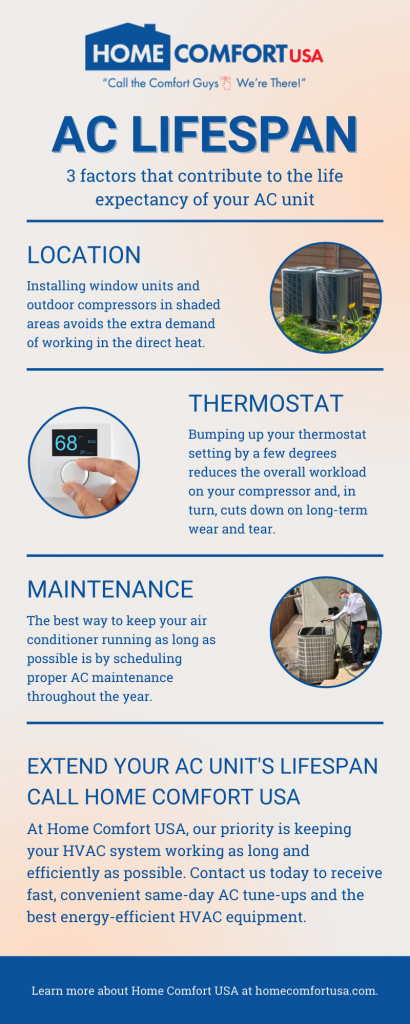
Image Source: www.homecomfortusa.com
What the Compressor Does
Think of your air conditioner as a big machine that moves heat. It takes heat from inside your house and puts it outside. The compressor makes this happen.
It squeezes the refrigerant. This makes the refrigerant hot and turns it into a gas. This hot gas goes outside to the coil. The fan blows air over the coil. This cools the hot gas down. It turns back into a liquid. The liquid then goes inside to the coil there. It takes heat from your indoor air. As it gets hot, it turns back into a gas. Then it goes back to the compressor to start over.
This cycle needs the compressor to run. It runs a lot, especially when it’s hot outside. This hard work means it wears out over time.
Factors Affecting AC Compressor Lifespan
Many things can change how long an AC compressor lasts. Some are about how it’s made. Some are about how you use it and care for it. Let’s look at the main ones.
Quality of the Unit
Better made AC units often have better compressors. A good brand might use stronger parts. These parts can handle the work better. They last longer. Cheaper units might have parts that wear out faster.
How Often You Use It
An AC unit in a very hot place works harder. It runs more hours each year. More running means more wear and tear on the compressor. An AC in a cooler climate won’t run as much. Its compressor will likely last longer.
Regular Maintenance
This is a big one. Keeping your AC clean and checked helps a lot. When filters are dirty, the system works harder. This extra stress hurts the compressor. When coils are dirty, heat doesn’t move well. This also makes the compressor work too hard. A technician checks things like refrigerant levels. Low refrigerant makes the compressor run hot. This can cause it to fail early. Simple checks keep things running right. They take stress off the compressor.
Correct Installation
Installing an AC unit is not a simple job. It needs to be done right. If the system isn’t the right size for your home, it works too hard. If the refrigerant level isn’t exactly right, it causes problems. Bad wiring or wrong piping can also hurt the compressor. A bad install can cut years off its life. Always use a trained expert to install your AC.
Proper Sizing of the System
Having an AC unit that is too big or too small is bad.
If it’s too small, it runs all the time trying to cool your house. It can’t keep up. This wears out the compressor fast.
If it’s too big, it cools the house too quickly. It turns on and off a lot. This is called short cycling. Starting up takes a lot of power. Each start puts stress on the compressor. Short cycling is very bad for the compressor’s life. The unit needs to be just the right size for your home.
Electrical Problems
The compressor needs the right amount of power. Power surges or not enough power can hurt it. Electrical parts like capacitors help the compressor start. If these parts fail, the compressor might struggle or fail to start. This causes damage. Protecting your AC with surge protectors can help.
Environmental Conditions
Where your outdoor unit sits matters. If it’s in direct sun all day, it gets very hot. This makes the compressor work harder. If it’s near things that block air flow (bushes, fences), it can’t get rid of heat well. This also stresses the compressor. Keeping the area around the outdoor unit clear helps it work easier.
How You Use the Thermostat
Constantly changing the temperature up and down makes the AC cycle more. Letting the house get very hot before turning the AC on makes it run for a long time. Setting a steady temperature helps the unit run more smoothly. Using a programmable thermostat to slowly change temperature can reduce stress.
Average Air Conditioner Compressor Life Expectancy
Most sources say an AC compressor should last about 10 to 15 years. Some might fail sooner. Some might go longer, maybe 20 years if everything is perfect.
Here is a general idea:
- Less than 8 years: This is early failure. Often due to poor maintenance, bad installation, or a faulty part.
- 8 to 12 years: This is a common range. It might be failing here.
- 12 to 15 years: This is good. It’s lived a full life.
- More than 15 years: This is excellent. You got great value from this part.
Keep in mind this is an average. Your actual experience might be different based on the factors we talked about.
Signs of a Bad AC Compressor
How do you know if your compressor is going bad? There are often clues before it completely stops working. Knowing these signs can help you call a technician early. This might save the compressor or prevent other damage.
Here are common signs:
- Warm Air Blowing: The most obvious sign. If your AC is running but the air coming out is warm, the compressor might not be squeezing refrigerant.
- Strange Noises: Compressors make noise, but you get used to it. New, loud noises are a problem.
- Clicking: A single click is normal when it starts. Repeated clicking or loud clicks could mean a bad start capacitor or internal problem.
- Grinding or Rattling: This often means parts are loose or wearing down inside the compressor.
- Humming or Buzzing: A loud hum without the unit running might mean an electrical issue. A loud buzz when starting could be the compressor trying to start but failing.
- Unit Won’t Start: You turn the AC on, the fan might run, but the outside unit does nothing. The compressor isn’t kicking on.
- Tripped Breaker: If your AC unit keeps tripping the electrical breaker, it might be the compressor drawing too much power. This can happen when it’s failing.
- Outside Unit Shaking: Excessive vibration when the unit is running can point to a compressor problem.
- High Electric Bills: If your power bill suddenly jumps up without using the AC more, the compressor might be working harder and less efficiently to do its job.
If you notice any of these signs, it’s best to call an HVAC technician. They can check the unit and see if the compressor is the problem.
Cost to Replace AC Compressor
Replacing an AC compressor is not cheap. It’s often one of the most expensive repairs you can have on an AC unit. The cost depends on several things:
- Type of AC unit: Central air, heat pump, etc.
- Size of the unit: Larger compressors cost more.
- Brand of the compressor: Some brands are more expensive.
- Where you live: Labor costs vary by region.
- Warranty: Is the compressor still under warranty?
- Who you hire: Different companies charge different rates.
On average, the cost to replace an AC compressor can range from $1,000 to $3,000 or even more. This includes the part and the labor to put it in.
Here’s a rough breakdown:
- Compressor Part: $400 – $1,200+ (depends on size/type)
- Labor: $600 – $1,800+ (includes draining refrigerant, installing, recharging)
Sometimes, other parts might need replacing at the same time, like the start capacitor or contactor. This adds to the cost.
Compare this cost to buying a whole new AC unit. A new central AC system can cost anywhere from $3,000 to $7,000 or much more, depending on size, efficiency, and brand. This is why deciding between replacing the compressor or getting a new unit is important.
Extend AC Compressor Life
You can do things to help your AC compressor last longer. Good care is the best way to get the most years out of it.
Here are key ways to extend AC compressor life:
- Get Annual Maintenance: This is the single best thing you can do. A technician cleans coils, checks refrigerant, looks for issues, and makes sure everything is running smoothly. They catch small problems before they become big, expensive ones.
- Change Air Filters Regularly: Dirty filters block air flow. This makes the whole system work harder, including the compressor. Check your filter every month. Change it when it looks dirty, usually every 1-3 months.
- Keep Outdoor Unit Clean: Clear away leaves, grass clippings, and dirt from around the unit. Trim bushes and trees so air can flow freely around it. You can gently spray the coils with a hose to clean off surface dirt, but be careful not to bend the fins.
- Make Sure It’s Sized Right: If you are getting a new system, ensure the technician does a proper calculation (called a “load calculation”) to size it correctly for your home.
- Use a Programmable Thermostat: Avoid big temperature swings. Set a temperature and leave it there. Use the programmable features to raise the temperature a few degrees when you’re away, but don’t set it too high. Allow it to cool down slowly before you get home.
- Check for Leaks Early: If you suspect a refrigerant leak (system isn’t cooling well, ice on coils), call a technician right away. Low refrigerant makes the compressor run hot and can ruin it.
- Protect from Surges: Power surges can damage electrical parts. A surge protector for your HVAC system can offer protection.
- Ensure Proper Airflow Indoors: Don’t block vents inside your house with furniture or curtains. Good airflow inside helps the system work easily.
Following these steps can add years to your compressor’s life.
Central Air Conditioner Compressor Life
The lifespan we discussed, 10 to 15 years, mainly applies to central air conditioner compressors. These are the most common type in many homes. They are built to handle cooling a whole house.
Heat pump compressors are also similar. A heat pump does cooling in summer and heating in winter. Because the compressor runs in both seasons, it might have a slightly shorter lifespan than an AC-only compressor that only runs half the year. However, with good maintenance, they often fall into the same 10-15 year range.
Window AC units and portable AC units also have compressors. These are usually smaller and not built for such long lifespans or continuous heavy use like central units. Their compressors might only last 5-10 years, depending on the unit’s quality and usage. But replacing the compressor in these smaller units is usually not cost-effective; people typically replace the whole unit.
So, when we talk about the average air conditioner compressor life expectancy of 10-15 years, we are mostly talking about the central air units.
Air Conditioner Lifespan
How long does a whole air conditioner unit last? This is a bit different from just the compressor. The compressor is the most expensive part, but other parts can fail too.
A typical central air conditioning unit (outside unit and inside coil) lasts about 15 to 20 years. The compressor is a key part of this lifespan. If the compressor lasts 15 years, the whole unit likely needs replacement soon anyway.
Other parts like the fan motor, coils, and electronic controls can also wear out. Sometimes, it makes sense to fix these other parts. But if the compressor fails late in the unit’s life (say, after 12-15 years), replacing the compressor might not be the best choice. The other parts are old too and might fail next.
Thinking about the overall air conditioner lifespan helps when deciding on repairs.
Compressor Replacement vs New AC Unit
This is a big decision homeowners face when the compressor fails. Should you pay to replace the compressor, or is it better to buy a whole new AC system?
Here’s how to think about it:
- Age of the Unit: How old is your current AC unit?
- Less than 10 years old: If the unit is relatively young and has been well-maintained, replacing the compressor might be a good option. The rest of the system likely has many good years left.
- 10-15 years old: This is the tricky zone. The compressor is at the end of its expected life, and so are other parts. Replacing the compressor might give you a few more years, but another major part could fail soon.
- More than 15 years old: If the unit is this old, it’s usually better to replace the whole system. Even with a new compressor, other old parts will likely fail soon. The unit is also much less energy-efficient than new models.
- Cost of Repair vs. New Unit: Compare the cost of the compressor replacement to the cost of a new unit. If the repair cost is half or more than half the cost of a new unit, replacing the whole unit is often smarter in the long run.
- Energy Efficiency: Older AC units use a lot more electricity than new ones. New units have much higher efficiency ratings (SEER ratings). Replacing an old unit with a new, efficient one can save you a lot on your electricity bills over its life. These savings can help offset the cost of the new unit.
- Refrigerant Type: Older units (before 2010) often use R-22 refrigerant. This refrigerant is being phased out because it harms the ozone layer. It is now very expensive and hard to find. Newer units use R-410A, which is better for the environment and cheaper. If your old unit uses R-22, replacing the compressor means you’ll still need R-22, adding to future costs and problems. A new unit uses the modern refrigerant.
- Warranty: Check if your compressor is still under warranty (more on this below). A warranty can significantly reduce the cost of the compressor itself.
Table: Compressor Repair vs. New System
| Factor | Replace Compressor | Install New AC System |
|---|---|---|
| Unit Age | Good for units under 10 years. Maybe 10-15 years. | Best for units over 15 years. Also good for 10-15 years. |
| Cost | Lower upfront cost. | Higher upfront cost. |
| Likely Future Repairs | Other old parts may fail soon. | System is all new, fewer repairs expected soon. |
| Energy Use | Efficiency stays the same (low on old units). | Much higher efficiency, lower energy bills. |
| Refrigerant | Uses old refrigerant (R-22 if unit is old). | Uses new, common refrigerant (R-410A). |
| Warranty | Maybe under warranty (part only). Labor not usually. | Full warranty on parts and labor for entire system. |
| Long-term Value | Limited additional life. | Many years of reliable, efficient cooling. |
Most HVAC experts recommend replacing the entire system if the compressor fails on a unit that is 10 years or older. While the initial cost is higher, the long-term savings on energy bills, lower repair costs, and peace of mind often make it the better investment.
HVAC Compressor Failure: Why It Happens
Compressors fail for many reasons. These often relate back to the lifespan factors we discussed. Here are some common causes of HVAC compressor failure:
- Overheating: This is a very common cause. It can happen due to dirty coils, blocked airflow, low refrigerant, or the unit being the wrong size (too small working too hard, or short cycling from being too big).
- Liquid Floodback: Refrigerant is supposed to be a gas when it enters the compressor. If liquid refrigerant gets back into the compressor, it can cause severe damage because liquids don’t compress. This can happen if the system has too much refrigerant or problems with the metering device (like an expansion valve).
- Electrical Issues: Problems with the power supply, starting components (capacitors), or internal motor windings can cause the compressor to fail electrically. Power surges are also harmful.
- Lack of Lubrication: The compressor needs oil to run smoothly. If the oil breaks down, is low, or isn’t circulating right, the compressor can seize up.
- Contaminants: Dirt, moisture, or acid can get into the refrigerant system. These can damage the internal parts of the compressor. This often happens after a repair if the system isn’t properly cleaned and vacuumed.
- Wear and Tear: Over many years of starting and running, the mechanical parts inside the compressor simply wear out. This is normal aging.
- Short Cycling: As mentioned, turning on and off too often puts huge stress on the compressor every time it starts.
- Manufacturing Defect: Sometimes, a compressor just has a flaw from the factory. This is less common but can cause early failure.
Proper maintenance helps prevent many of these issues. A technician checks for signs of these problems before they ruin the compressor.
Warranty on AC Compressor
Most new AC units come with a warranty. This warranty covers parts that fail due to defects in how they were made. The length of the warranty on the compressor is often longer than the warranty on other parts of the unit.
- Standard Parts Warranty: Usually 5 years for most parts.
- Standard Compressor Warranty: Often 10 years.
Sometimes, if you register your unit after installation, the warranty might be extended. For example, a standard 5-year parts warranty might become 10 years, and a 10-year compressor warranty might become 12 years. It’s very important to register your new unit to get the full warranty period.
What the warranty covers:
- The warranty usually covers the cost of the replacement compressor part itself.
- It does not typically cover the labor cost to install the new compressor. This can be a significant expense ($600 – $1800+).
- It doesn’t cover damage from improper installation, poor maintenance, or external factors like power surges.
If your compressor fails while under warranty, you can get the part for free (or a reduced cost). You will still need to pay a technician for the labor to replace it. This is still much cheaper than paying for both the part and labor.
Make sure you know your warranty details. Keep your proof of purchase and records of annual maintenance. Many warranties require proof of regular maintenance for the warranty to be valid.
Grasping Key Points About Compressor Life
Let’s summarize the main things to remember about how long your AC compressor will last:
- Average life is 10-15 years for central AC.
- Many things change this lifespan, like maintenance, installation, usage, and quality.
- Maintenance is the best way to make it last longer.
- Watch for signs like warm air, strange noises, or the unit not starting.
- Replacing a compressor is expensive, often $1000-$3000+.
- If your unit is old (10+ years), replacing the whole system is often better than just replacing the compressor.
- Warranties can cover the part cost for 10+ years but usually not the labor.
By taking care of your AC system and knowing the signs of trouble, you can help your compressor run well for as many years as possible. And when it’s time, you’ll be ready to make the best decision about repair or replacement.
Frequently Asked Questions (FAQ)
h4 Is a 15-year-old AC compressor expected to fail?
Yes, a compressor that is 15 years old has reached or passed its typical life expectancy. While some might last longer, it’s very likely to fail soon due to normal wear and tear.
h4 How much life is left in my compressor if it’s 12 years old?
At 12 years old, your compressor is in the later part of its expected lifespan. It might last another few years with good care, or it could fail soon. It’s a good time to start thinking about replacement options for the whole unit.
h4 Can I just replace the compressor myself?
No, replacing an AC compressor is a job for a licensed and trained HVAC technician. It involves handling high-voltage electricity and dangerous refrigerants that must be recovered and recharged using special tools. Trying to do it yourself is dangerous and can cause more damage.
h4 Does short cycling definitely mean the compressor is bad?
Not always. Short cycling (turning on and off too often) is bad for the compressor and can cause it to fail over time. But short cycling itself can be caused by other issues like a thermostat problem, an oversized unit, or dirty coils. A technician needs to figure out why it’s short cycling.
h4 How do I know if my AC compressor is still under warranty?
You would need to check the paperwork you received when you purchased and had the AC unit installed. Look for a warranty certificate. You may also need the serial number of your outdoor unit and the installation date. Contacting the installing company or the manufacturer directly is the best way to check.
h4 Is it worth putting a new compressor in an old unit?
Generally, no, if the unit is over 10-12 years old. The high cost of replacing the compressor plus the age of the other parts and lower energy efficiency of an old unit usually make replacing the whole system a better long-term investment.
h4 Can a bad capacitor cause the compressor to fail?
Yes, a failing start capacitor can prevent the compressor from starting properly. If the compressor keeps trying to start without the boost from the capacitor, it can overheat and be damaged, leading to failure. Replacing a bad capacitor early is a cheap repair that can save the compressor.
h4 How long does the repair take to replace a compressor?
Replacing a compressor is a complex job. It can take a technician anywhere from 4 to 8 hours, sometimes even longer, depending on the specific unit and how easily the compressor can be accessed.